
The thrill of sports betting lies in the unpredictability of the game. The last-minute goal, the underdog victory, and the buzzer-beater are what make watching sports exciting, and having a wager on the outcome amplifies that adrenaline. However, the very nature of gambling involves risk. Without a disciplined approach, that risk can quickly spiral from a fun hobby into a financial and emotional burden.
For enthusiasts using cryptocurrency to bet, the stakes and speed of play are often higher. The instant nature of Bitcoin or Ethereum transactions, combined with the volatility of the crypto markets themselves, makes establishing a solid framework for responsible gambling framework not just a recommendation, but a necessity.
This guide is designed for beginners entering the world of crypto sports betting. It is not just about how to avoid addiction; it is about how to act like a professional. Professional bettors (sharps) are defined by their discipline and their ability to manage their bankroll. By learning to set limits and recognize the signs of problem gambling, you ensure that your betting experience remains sustainable, safe, and, most importantly, fun.
Understanding Responsible Gambling
Responsible gambling is a broad concept that encompasses several policies and requirements found among gambling stakeholders (operators and vendors) and players to ensure the highest standards of quality and to protect people from the potential negative consequences of online gambling.
For the individual bettor, responsible gambling means:
- Viewing betting as a form of entertainment, not a way to make money.
- Betting only with money you can afford to lose.
- Understanding the odds and knowing that the "House" (the sportsbook) always has a mathematical edge.
- Keeping track of the time and money spent on gambling.
The Crypto Context
In the realm of crypto sports-betting, responsible gambling takes on a new dimension. Unlike traditional fiat sportsbooks where bank transfers might take days, crypto deposits are near-instant. The 24/7 nature of the blockchain and the ability to bet anonymously can erode the natural "friction" that usually slows down impulsive behavior. Therefore, crypto bettors must be more vigilant and self-disciplined than their fiat counterparts.
The Pillars of Bankroll Management
The most practical way to engage in responsible gambling is through strict bankroll management. This is the financial foundation that prevents you from losing more than you intended.
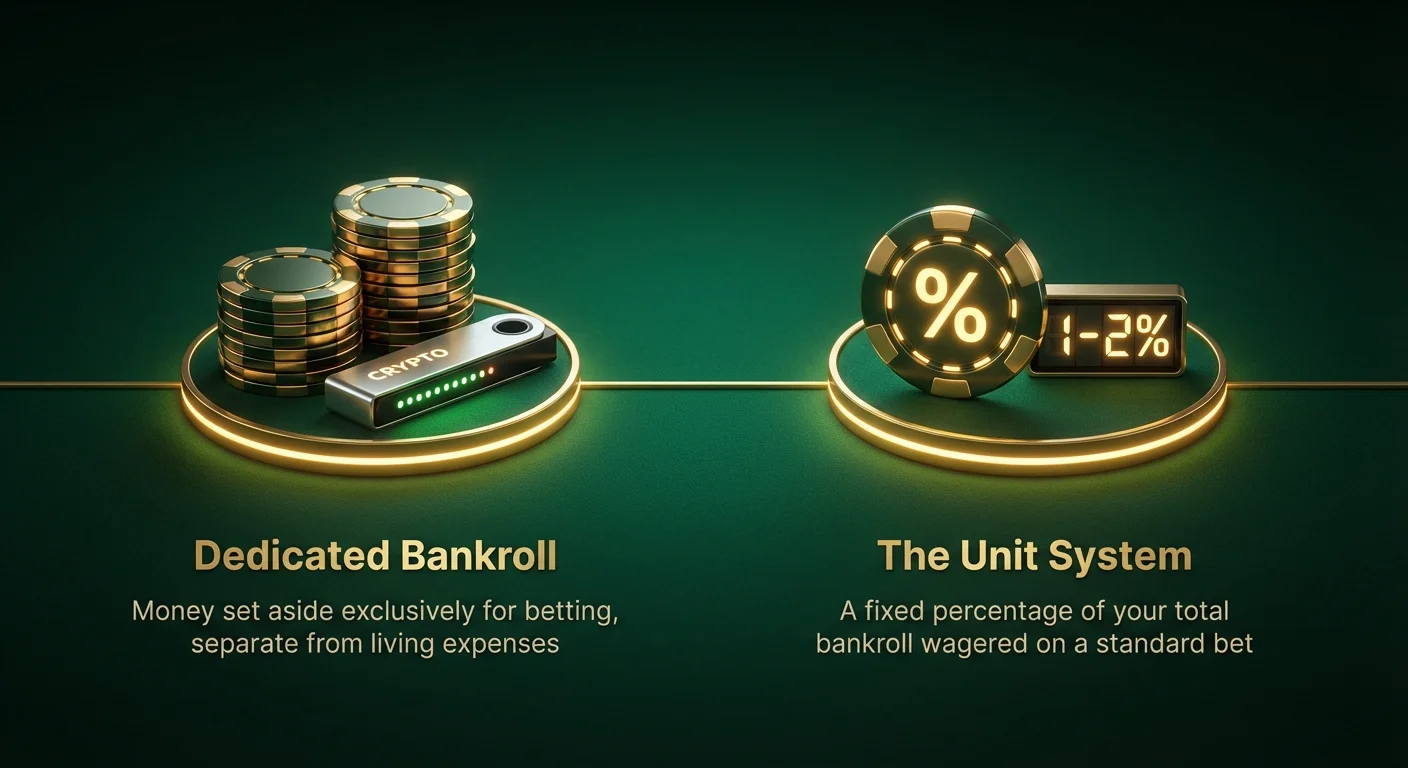
1. establishing a Dedicated Bankroll
Your bankroll is a set amount of money set aside exclusively for betting. This money should be completely separate from your living expenses, savings, rent, or grocery money.
- The Golden Rule: If you lost 100% of your bankroll tomorrow, it should not impact your lifestyle in any way.
2. The Unit System
Once you have a bankroll, you must determine your "Unit Size." A unit is a percentage of your total bankroll that you wager on a standard bet.
- Conservative: 1% to 2% of bankroll.
- Aggressive: 3% to 5% of bankroll.
- Reckless: 10%+ of bankroll.
For example, if you deposit 0.01 BTC (approx. $500 value depending on market) as your bankroll, a conservative 1% unit size would be 0.0001 BTC. You should never deviate from this unit size to chase losses.
3. Understanding Crypto Volatility
When setting limits in crypto, you must account for the asset's volatility. If you are betting with Bitcoin, the value of your bankroll fluctuates against the dollar even if you don't place a bet.
- Strategy: Many responsible gamblers prefer to use Stablecoins (like USDT or USDC) for their betting bankroll to ensure that a $100 limit remains a $100 limit, regardless of market conditions.
Setting Concrete Limits: A Practical "How-To"
Most reputable crypto sportsbooks provide built-in tools to help you manage your activity. You should set these up before you place your first bet.
Financial Limits
| Limit Type | Description | Best For |
|---|---|---|
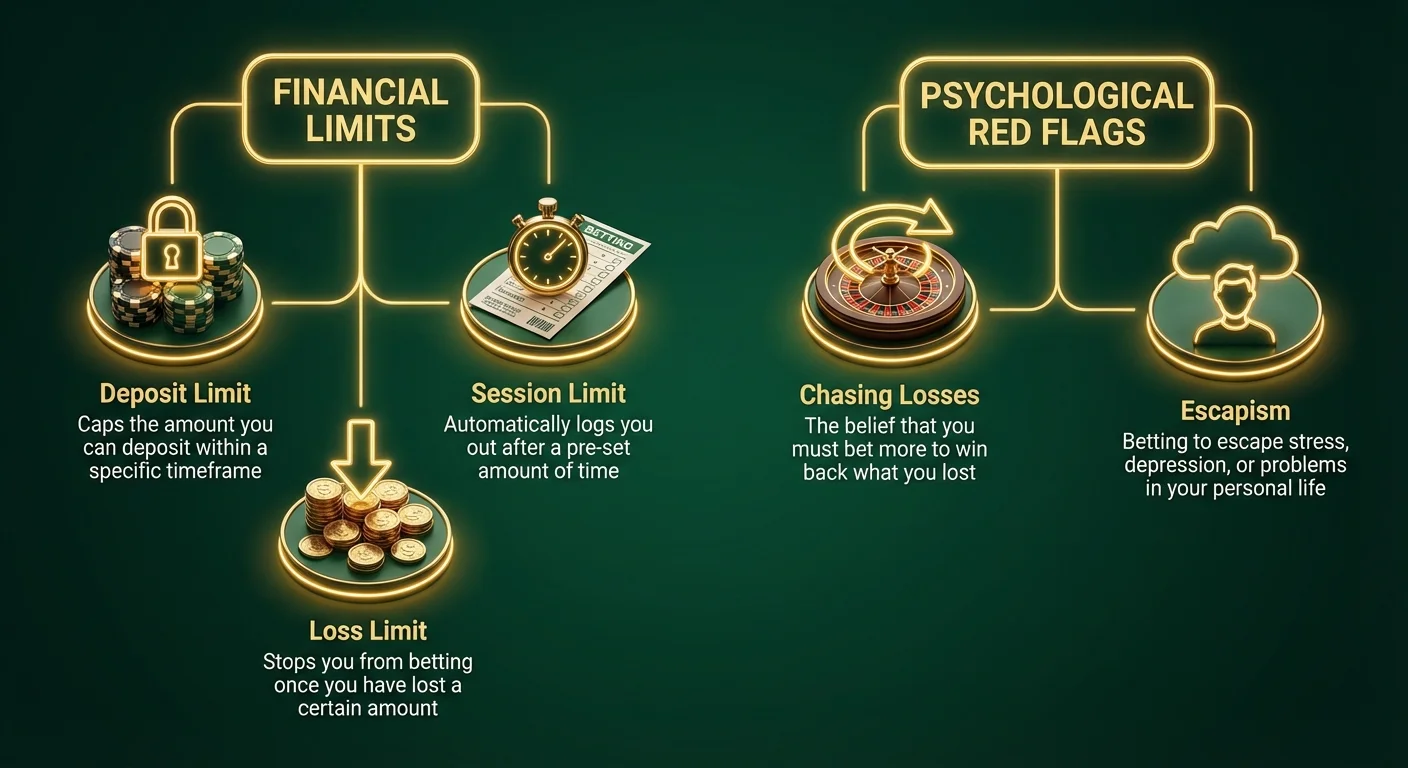
| Deposit Limit | Caps the amount you can deposit within a specific timeframe (Daily, Weekly, Monthly). | Preventing "revenge depositing" after a loss. |
| Wager Limit | Caps the maximum amount you can bet on a single slip or total volume in a period. | Controlling impulse bets on long-shot odds. |
| Loss Limit | Stops you from betting once you have lost a certain amount of your bankroll in a session. | protecting the remainder of your bankroll during a losing streak. |
| Session Limit | Automatically logs you out after a pre-set amount of time. | Preventing "zombie mode" where you bet out of boredom. |
Implementing the Strategy
- Calculate your discretionary income: Look at your monthly budget. After bills, savings, and essentials, what is left for entertainment?
- Allocate a percentage: Take 10-20% of that entertainment budget for betting.
- Log in and set the cap: Go to the "Responsible Gambling" or "Account Settings" tab of your sportsbook immediately upon registration and input these numbers as your Deposit Limit.
Recognizing the Signs of Problem Gambling
Problem gambling is often called the "hidden addiction" because there are no physical signs like needle marks or slurred speech. However, the behavioral and psychological signs are distinct. Being honest with yourself is crucial.
Psychological Red Flags
- Chasing Losses: The belief that you must bet more to win back what you lost. This is the fastest route to financial ruin.
- The Gambler's Fallacy: Believing that a win is "due" because you have lost several times in a row. In sports betting, past events (a team losing 3 games) do not guarantee future results (winning the 4th).
- Escapism: Betting to escape stress, depression, or problems in your personal life.
- Preoccupation: Thinking about handicapping games, checking odds, or planning your next bet when you should be working or spending time with family.
Financial Red Flags
- Borrowing money to gamble.
- Selling crypto assets held for long-term investment to fund a betting account.
- Hiding transaction history or lying about the amount of crypto spent.
- Betting with money allocated for bills.
Behavioral Checklist
Ask yourself the following questions. If you answer "Yes" to two or more, you may need to reassess your relationship with gambling:
- Do you feel irritable or anxious when you are not betting?
- Have you ever tried to stop or control your betting but failed?
- Do you increase your bet size to feel the same level of excitement?
- Do you return to the sportsbook specifically to win back money you lost yesterday?
Tools Available at Crypto Sportsbooks
Crypto sportsbooks operate differently than traditional sites. Some are "DeFi" (Decentralized Finance) apps with no central authority, while others are centralized entities similar to traditional books but with crypto rails. The tools available depend on the platform type.
1. Self-Exclusion
This is the "nuclear option." If you feel you cannot control your gambling, you can request a self-exclusion. This blocks your account for a substantial period (6 months, 1 year, or permanently).
- Note: In crypto, because you can theoretically open a new anonymous wallet, self-exclusion requires a high degree of personal will. The operator can block your email/IP, but the blockchain is open.
2. Time-Out / Cool-Off Periods
If you are on a losing streak or feel yourself getting "tilted" (emotionally compromised), use a Cool-Off tool. This locks your account for 24 hours to 7 days. It forces you to step away, let the emotions subside, and return with a clear head.
3. Reality Checks
Some platforms offer pop-up notifications that appear every hour, showing you exactly how long you have been logged in and your net win/loss for the session. This breaks the trance of continuous betting.
4. Transaction History (The Blockchain Advantage)
One responsible gambling tool unique to this sector is the blockchain itself.
- Transparency: You cannot lie to yourself about your losses. The blockchain ledger is immutable.
- Audit: Regularly export your wallet history or view your transaction hash on a block explorer. Seeing a long list of outgoing red transactions can be a powerful "reality check" that helps you rein in your spending.
Psychology: Why We Lose Control
Understanding the psychology behind betting helps you maintain betting limits. Our brains are wired to seek rewards, and gambling triggers dopamine releases similar to other pleasurable activities.
The "Near Miss" Effect
Psychologists have found that a "near miss" (e.g., your team losing by 1 point, or a horse finishing second by a nose) triggers almost the same brain activity as a win. This encourages you to bet again immediately because you feel you "almost had it."
- Counter-strategy: Recognize a loss is a loss. Close the app immediately after a near miss to prevent an emotional follow-up bet.
The Illusion of Control
In sports betting, knowledge of the game (stats, injuries, form) gives an illusion of control. While skill plays a part, luck is a massive factor. Overestimating your control leads to over-betting.
- Counter-strategy: Always assume you could be wrong. Never bet more than your unit size, no matter how "sure" the lock seems.
Practical Tips for Sustainable Betting
To keep your betting fun and sustainable over the long term, adopt these practical habits:
1. The "HALT" Method
Never gamble when you are:
- Hungry
- Angry
- Lonely
- Tired
These states compromise your decision-making abilities and lower your impulse control.
2. Sobriety is Key
It is a cliché for a reason: alcohol and drugs lower inhibitions. Mixing substance use with instant crypto deposits is a recipe for disaster. Make a rule: If you drink, you don't click.
3. Treat it as an Expense
Shift your mindset. Do not view your betting bankroll as an investment (unless you are a full-time professional with a proven edge). View it as the cost of a movie ticket or a dinner out. You pay for the entertainment of sweating the game. If you win, it's a bonus. If you lose, the money was spent on entertainment.
4. Separate Your Crypto Wallets
Do not bet directly from your main investment hardware wallet (like a Ledger or Trezor).
- Create a "Hot Wallet" specifically for betting (e.g., a separate MetaMask or Exodus wallet).
- Only transfer your weekly allowance to this hot wallet.
- This adds a layer of friction. If you lose your betting funds, you have to physically go to your cold storage to get more, giving you time to rethink.
5. Take Regular Breaks
Sports seasons are long. The NFL season is 18 weeks; the NBA is 82 games. You do not need to bet every day. Taking weeks off helps reset your dopamine receptors and keeps the hobby from becoming a compulsion.
Resources for Help
If you or someone you know is struggling with gambling limits, crypto or otherwise, help is available. Because crypto is global, these organizations help people worldwide:
- Gamblers Anonymous (GA): A 12-step program for people who have a gambling problem. (www.gamblersanonymous.org)
- GamCare: A leading provider of information, advice, and support for anyone affected by gambling harms. (www.gamcare.org.uk)
- BeGambleAware: Offers help and confidential advice. (www.begambleaware.org)
- Gordon Moody: specialized support for those with severe gambling addiction.
Summary: Control is the Ultimate Strategy
Setting limits is not about restricting your fun; it is about protecting your longevity in the game. The crypto betting world offers high speed, anonymity, and excitement, but these features demand a higher level of personal responsibility.
Key Takeaways:
- Define your bankroll and stick to a strict unit size (1-2%).
- Use the tools: Set deposit and loss limits immediately upon signing up.
- Monitor your mental state: Don't bet when emotional, intoxicated, or chasing losses.
- Use the blockchain: Keep a separate betting wallet to create friction between your savings and your gambling.
- Seek help early: If the fun stops, stop.
By treating sports betting with the respect and discipline it requires, you ensure that it remains a thrilling addition to your sports viewing experience, rather than a source of stress. Stay disciplined, set your limits, and enjoy the game responsibly.