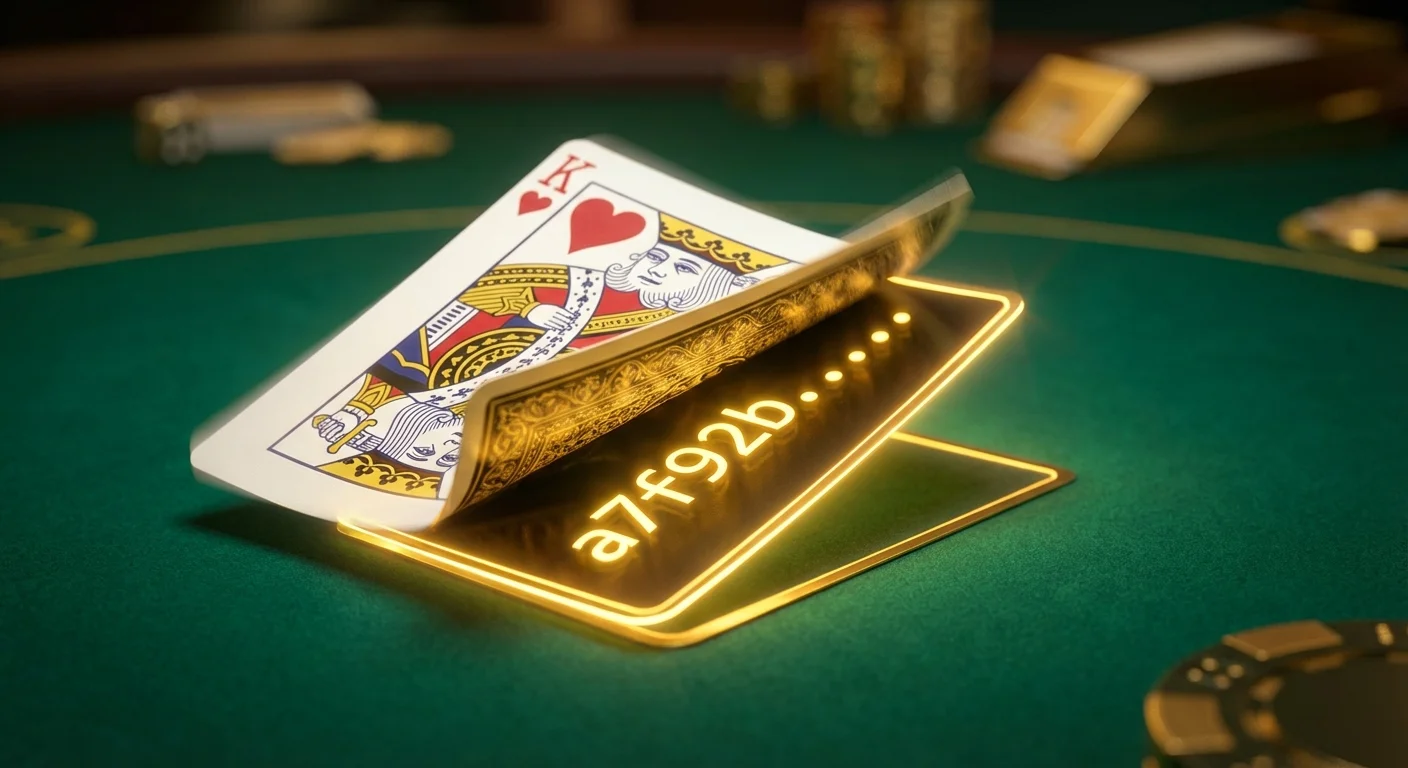
In the high-stakes world of online gambling, trust is the ultimate currency. For decades, players of digital Baccarat had to rely on "black box" Random Number Generators (RNGs), hoping that the casino's audit seal was legitimate and that the software wasn't subtly tweaking the outcome of a Dragon streak. The arrival of blockchain technology has fundamentally shattered this paradigm.
Provably Fair Baccarat is not just a marketing term; it is a cryptographic standard that allows players to verify the integrity of every single hand dealt. It transforms the casino from a trusted authority into a verifiable service provider. However, while many players see the green "Provably Fair" badge, few understand the complex mechanics occurring under the hood or how to actually perform the verification.
This guide is designed for the advanced crypto gambler. We will move beyond basic game rules and delve into the technical architecture of blockchain baccarat. You will learn how to manipulate client seeds to ensure randomness, how to reverse-engineer card shuffles using hash functions, and how to mathematically confirm that the House Edge remains strictly at the theoretical 1.06%.
The Architecture of Trust: How Provably Fair Works
To understand how to verify a game, you must first understand the cryptographic handshake that occurs before the first card is even drawn. Unlike traditional RNGs, which run on a server closed to the public, Provably Fair algorithms rely on variables that are mutually agreed upon by the casino and the player.
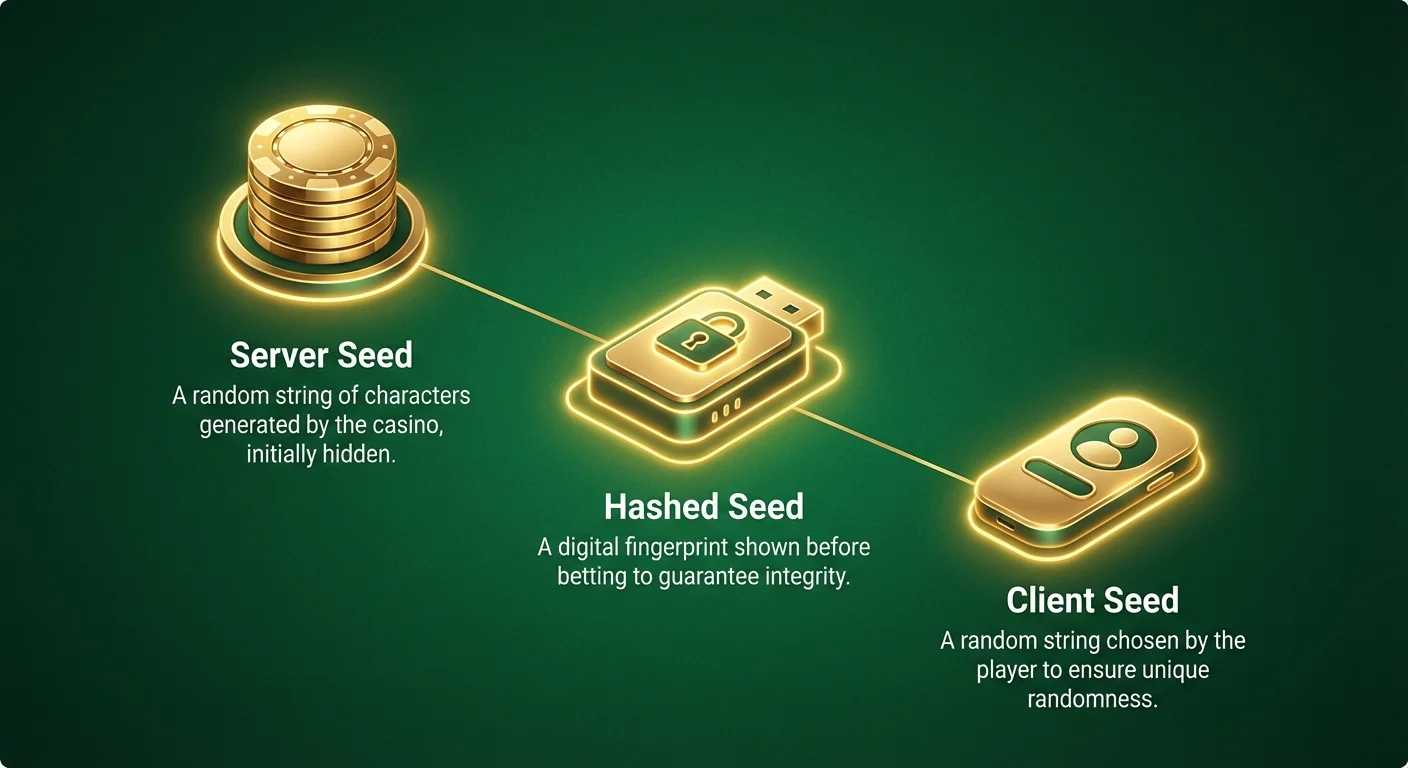
The fairness of a Baccarat hand relies on three distinct variables:
- The Server Seed (The Casino's Secret): A random string of characters generated by the casino.
- The Client Seed (The Player's Input): A random string chosen by the player (or their browser).
- The Nonce (The Cursor): A counter that increments with every bet made (0, 1, 2, 3...).
The Commitment Scheme
The integrity of the system relies on a cryptographic concept called a "commitment scheme."
Before you place your bet, the casino generates the Server Seed. However, they cannot show it to you yet, as that would allow you to predict the outcome. Instead, they show you a Hashed Server Seed.
Think of the Hash (usually SHA-256) as a digital fingerprint.
- Server Seed:
8b29d...[hidden] - Hashed Seed:
a7f92...[visible to you]
The casino guarantees that the hand will be played using the data inside the Server Seed. If they change the Server Seed after you bet, the Hashed Seed will no longer match, proving fraud instantly. This prevents the casino from altering the cards based on your wager size.
The Verification Workflow: A Step-by-Step Guide
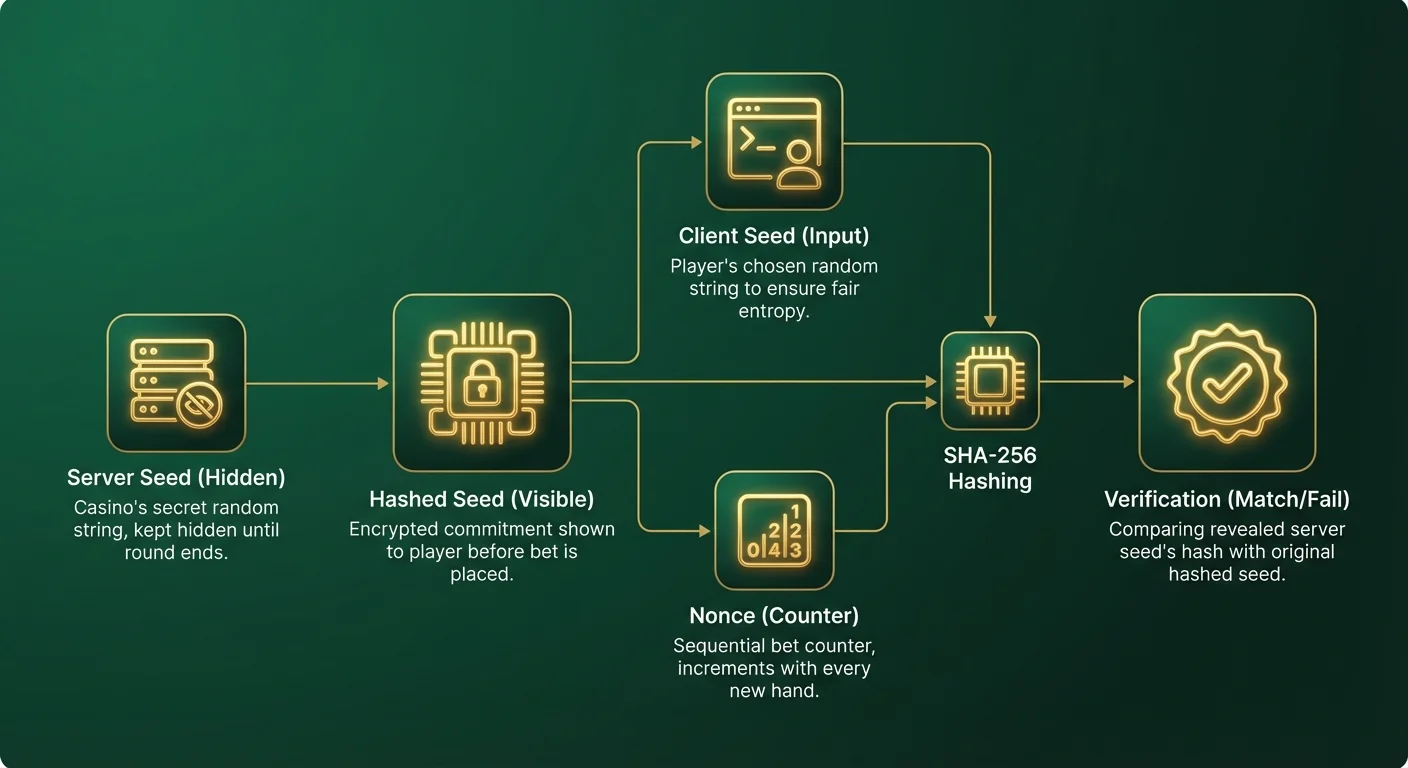
Verifying a hand of Baccarat requires a specific workflow. While most crypto casinos offer a built-in "Verify" button, understanding the manual calculation ensures you aren't just trusting another tool provided by the house.
Step 1: Configuring the Client Seed
Most players ignore the Client Seed, leaving it on the default setting provided by the browser. This is a mistake. To ensure provably fair gambling, you must contribute your own entropy (randomness) to the game.
- Strategy: Before starting a high-volume session, click the fairness settings and type a unique string into the Client Seed field. It can be anything - a phrase, a random number, or a specialized string.
- Why: By controlling half of the data used to generate the random numbers, you make it mathematically impossible for the casino to pre-determine the results.
Step 2: Playing the Hand
Place your bets as usual. Whether you bet on the Banker, Player, or Tie, the underlying RNG process is the same. The algorithm combines:HMAC_SHA256(Server_Seed, Client_Seed + Nonce)
This produces a long hexadecimal string (e.g., d8a928b2...). This string is the raw "DNA" of the card shuffle for that specific round.
Step 3: Revealing the Server Seed
Once the round is over (or when you choose to rotate your seed pair), the casino must reveal the previously hidden unhashed Server Seed.
Step 4: The Verification Calculation
Now you have all the components. To verify the integrity, you run the calculation backward:
- Take the revealed Server Seed.
- Combine it with your Client Seed and the Nonce of the specific hand.
- Run them through a SHA-256 Hasher (available via third-party tools or Python scripts).
- Compare the resulting Hash with the one the casino showed you before the bet.
- Result: If the strings match perfectly, the game was not manipulated.
Translating Hashes to Cards: The Baccarat Shuffle
This is the most technically complex part of verification. A hex string is just data; how does a7f92... become the "King of Hearts"?
Most crypto gambling tech uses a conversion process often referred to as "Bytes to Float" or a direct modulo operation. In Baccarat, the system simulates an 8-deck shoe (416 cards).
The Byte-to-Card Algorithm
The hexadecimal string is broken down into pairs of characters (bytes). Each byte is converted into a decimal number.
| Hex Pair | Decimal Value | Calculation | Card Result |
|---|---|---|---|
a7 |
167 | 167 / 256 |
0.6523 (Float) |
f9 |
249 | 249 / 256 |
0.9726 (Float) |
2b |
43 | 43 / 256 |
0.1679 (Float) |
Note: Different casinos use slight variations of this formula. Always check the site's "Fairness" documentation for their specific code snippet.
To map these numbers to an 8-deck shoe:
- The algorithm calculates
Float * Remaining Cards. - It selects that card from the array of 416 cards.
- The selected card is removed from the array (to ensure no duplicate cards beyond the physical limit of 8 decks).
- The process repeats for the Player's first card, Banker's first card, etc.
Verifying the Third Card Rule
In Baccarat, the third card is not random; it is drawn based on strict rules. When verifying, you must ensure the RNG drew a 5th or 6th card only when the rules dictated it.
If your verification script shows the RNG generated a 5th card, but the Player stood on a 7, the integration is flawed.
Reference Check: According to standard rules, if the Player's total is 0-5, they draw. If 6-7, they stand. If the integrity script generates a card when the Player holds a 7, the game is malfunctioning or rigged.
Card Counting in Provably Fair Baccarat: Myth vs. Reality
A common question among advanced players is whether blockchain baccarat allows for card counting. In traditional brick-and-mortar casinos, card counting works because the shoe is depleted over time.
The Infinite Deck Problem
In most Provably Fair crypto baccarat games, the "shoe" is reset every single hand.
- Nonce 1: Fresh 8-deck shuffle.
- Nonce 2: Fresh 8-deck shuffle.
Because the deck does not deplete, card counting is mathematically useless in these specific versions of the game. The probability of drawing an Ace remains constant in every single hand.
The "Pre-Shuffled" Shoe Exception
Some advanced crypto casinos offer "Live Feed" or "Pre-Shuffled" seeds. In this format:
- A hash representing the entire 8-deck shoe is generated at Nonce 0.
- You play through the shoe (Nonce 1 through ~70).
- The deck does deplete.
In this specific configuration, verification is done at the end of the shoe. You verify that the sequence of 70 hands matches the initial shoe hash. If you find a crypto casino offering this specific "Non-Resetting Seed" mode, card counting strategies become viable again, though you must verify the penetration points.
Troubleshooting Verification Errors
Even with a legitimate casino, verification attempts often fail due to user error. Here are the most common technical pitfalls:
1. The Nonce Mismatch
The nonce is strictly sequential. If you play 10 hands, refresh the page, and the browser caches the old state, you might be trying to verify Hand #11 using the Nonce for Hand #10.
- Fix: Always double-check the Hand ID or Nonce number listed in your bet history before running the script.
2. Client Seed Modifications
If you change your Client Seed in the middle of a session, the hash chain changes entirely.
- Fix: When verifying a specific hand, ensure you are using the Client Seed that was active at that exact moment, not your current active seed.
3. Confusion on Card Values
Remember the Baccarat valuation rules when checking results:
- Tens and Faces: Value of 0.
- Aces: Value of 1.
- Hand Total: Modulo 10 (e.g., 15 becomes 5).
Pro Tip: Do not manually calculate the hex-to-card conversion. Use Python or JSFiddle scripts provided by the community for the specific casino you are playing at. The math is too dense for manual calculation.
Strategic Implications of Fairness
Knowing the game is fair does not change the odds, but it should change your bankroll management.
The House Edge is Immutable
As verified by the math behind the game, the Banker bet consistently holds a house edge of 1.06%, while the Player bet sits at 1.24%. The Tie bet, despite its attractive 8:1 payout, carries a massive 14.36% house edge.
- Provably Fair Reality: No matter how fair the RNG is, betting on the Tie is mathematically a losing proposition long-term. Fairness ensures you aren't cheated; it doesn't protect you from bad bets.
Spotting "Sticky" RNGs
Some players believe that even fair RNGs can have "clumping" due to the specific algorithm used (e.g., Mersenne Twister vs. SHA-256). By exporting your hand history and verifying thousands of nonces, you can run a statistical analysis (Chi-Square test) to see if the distribution of Banker/Player wins deviates from the expected norm (approx. 45.86% Banker, 44.62% Player, 9.52% Tie).
- If the deviation is statistically significant over 10,000 hands, the implementation of the Provably Fair code might be flawed, even if not malicious.
Summary: The Trustless Future
Provably Fair Baccarat represents the pinnacle of digital gambling transparency. It removes the need to trust a casino manager or a regulatory body located on a remote island.
Key Takeaways for the Advanced Player:
- Always Customize: Never play with the default Client Seed. Input your own to guarantee randomness.
- Verify the Chain: Periodically check the hashes to keep the casino honest.
- Know the Architecture: Understand if you are playing a "Resetting Deck" (standard) or a "Persistent Shoe" (rare). This dictates whether past hands influence future probabilities.
- Don't Trust, Verify: Use third-party tools to confirm the hex-to-card conversion matches the Baccarat Third Card Rules.
By mastering these verification techniques, you are no longer just a gambler; you are an auditor of your own game, ensuring that every chip won or lost is the result of pure, unadulterated probability.