
The digital economy is rapidly shifting from passive asset holding to active network participation. As cryptocurrencies evolve, ownership often comes with the responsibility—and the reward—of securing the underlying blockchain. This responsibility is primarily managed through staking, a foundational component of Proof-of-Stake (PoS) networks.
However, participating in staking is more complex than simply holding coins; it requires a specific type of wallet that not only protects your assets but also securely facilitates delegation, governance voting, and reward claiming—all while ensuring your private keys remain completely under your control.
This comprehensive guide serves as your framework for evaluating the security and functionality of staking wallets. We will move beyond the basic concept of storing crypto to provide a detailed, actionable blueprint for implementing a highly secure, non-custodial staking setup that maximizes both your yield and your self-sovereignty.
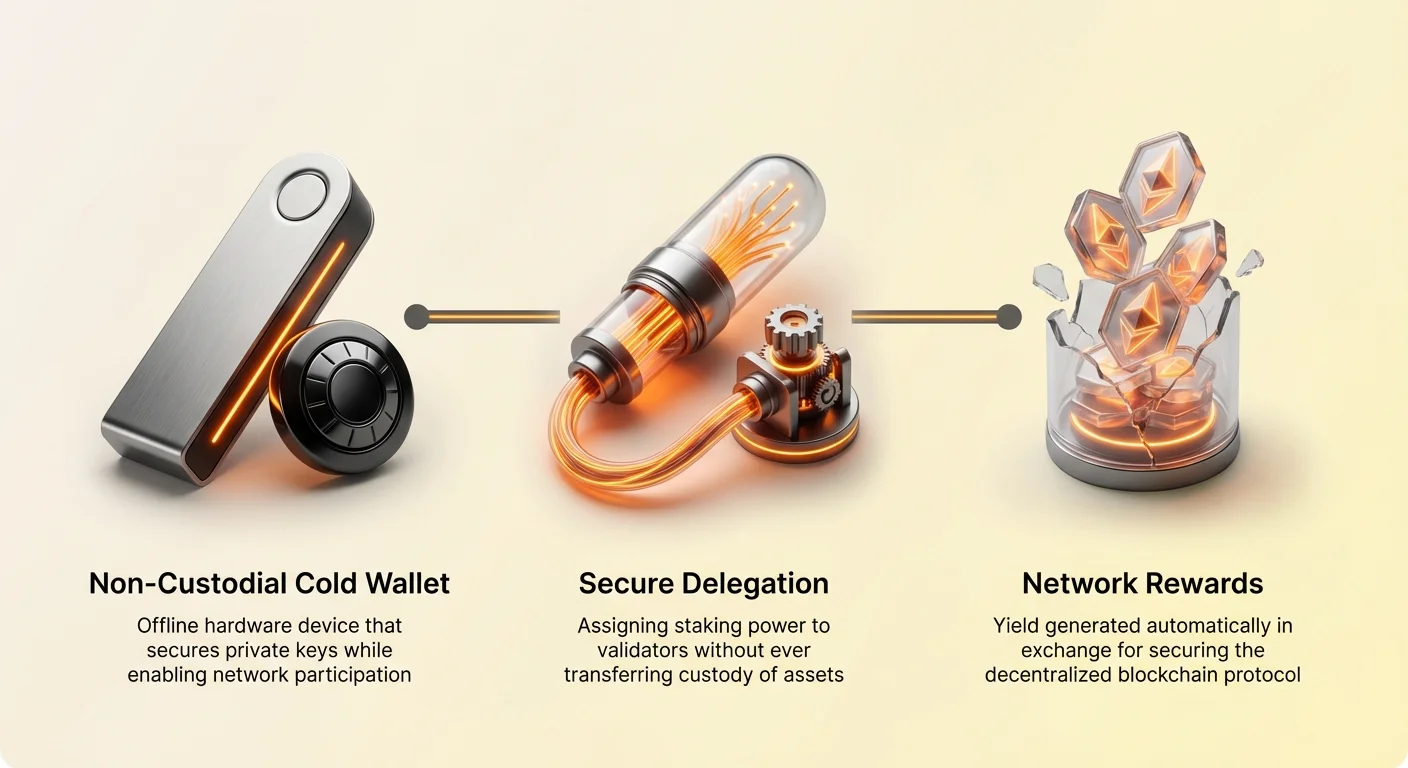
The Foundations of Staking and Delegation
Staking is the mechanism used by Proof-of-Stake (PoS) blockchains to secure the network, validate transactions, and create new blocks. In exchange for committing (locking up) your native currency, you earn rewards, similar to earning interest in a traditional bank account, but far more fundamental to the system's operation.
The wallet you choose acts as the gateway to this participatory ecosystem, defining how easily, securely, and effectively you can engage with the network’s staking mechanics.
What is Proof-of-Stake (PoS)?
Proof-of-Stake is an algorithm that determines how a decentralized network achieves consensus (agreement on the order of transactions). Unlike Bitcoin’s Proof-of-Work (PoW), which relies on energy-intensive mining hardware, PoS relies on economic incentive.
Validators (network participants who run specialized software) are selected to propose and attest to new blocks based on how much cryptocurrency they have staked. The more coins staked, the higher the chance they have of being selected, which prevents malicious actors because any attempt to cheat would result in their staked assets being penalized or “slashed.”
Staking vs. Delegation: Understanding the Roles
While the term "staking" is often used broadly, there are two distinct ways a typical user participates:
- Direct Staking (Running a Validator Node): This requires technical expertise, a dedicated server running 24/7, and significant capital (often requiring large minimum coin amounts, like 32 ETH for Ethereum). If the node goes offline or performs maliciously, the staked funds are penalized (slashed).
- Delegation (Indirect Staking): This is the method most common for individual users. You “delegate” your holding power to an existing, established validator node. Your coins remain in your wallet and under your control, but the validator uses your delegated stake to increase its probability of proposing blocks and earning rewards. You then receive a portion of those rewards, minus the validator's commission fee.
For the purpose of achieving maximum security and convenience for the average user, this guide focuses heavily on delegation facilitated by non-custodial wallets.
Why Wallet Choice Matters for Staking
A specialized staking wallet is not just a storage solution; it is an interface for network activity. The ideal staking wallet must provide three core functions:
- Security: It must protect your private keys, ensuring you alone control the funds (non-custodial).
- Functionality: It must enable the creation of delegation transactions, allow you to choose a validator, and claim rewards easily.
- Compatibility: It must seamlessly integrate with the specific blockchain’s staking protocol (e.g., Cosmos, Cardano, Solana). A wallet designed for simple Bitcoin storage won't have the features needed to interact with a PoS chain's delegation smart contracts.
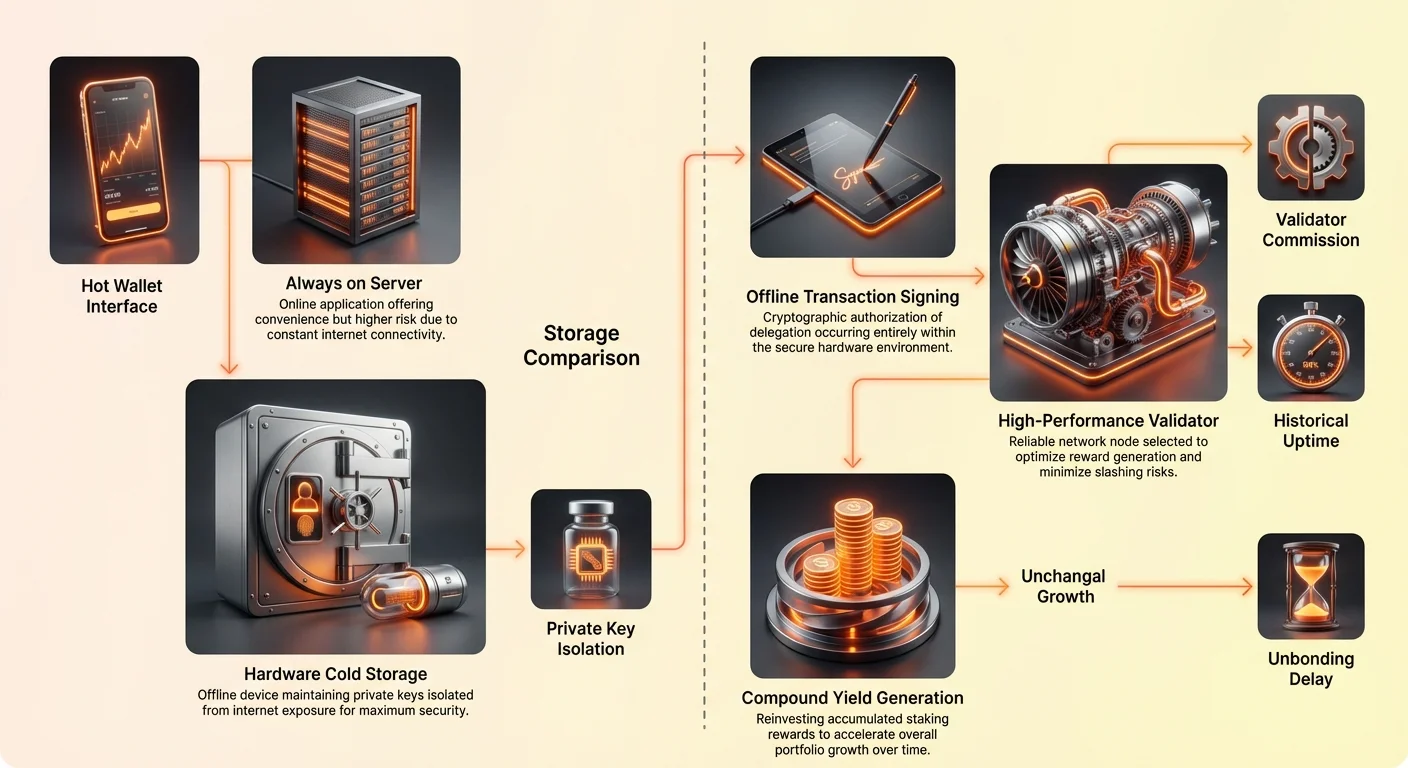
Security First: Hot Staking vs. Cold Staking
When deciding how to participate in staking, the primary decision revolves around balancing security (protecting the private key) with accessibility (the ease of interacting with the network). This leads to the fundamental distinction between hot and cold staking.
Defining Hot Staking (The Convenience/Risk Trade-off)
Hot staking occurs when the crypto assets used for delegation are held in a wallet that is regularly connected to the internet. This includes funds held on exchanges, in mobile apps, or in desktop wallets that are constantly active.
| Characteristic | Description | Risk Profile |
|---|---|---|
| Connectivity | Always online. | High exposure to remote hacking attempts and malware. |
| Convenience | Instant access, easy delegation and claim transactions. | Very high. If the device is compromised, the private keys are vulnerable. |
| Use Case | Small amounts, high-frequency trading, or very active DeFi participation. | Not recommended for long-term holders or significant capital. |
While hot staking wallets offer immediate convenience, the risk posed by holding large amounts of stakeable assets in an online environment violates the fundamental security principle of self-custody: minimizing exposure.
Understanding Cold Staking (The Gold Standard for Security)
Cold staking refers to the practice of delegating or locking your funds for staking while the private keys remain stored offline, typically on a hardware device.
The key innovation here is the ability to sign the delegation transaction (committing the funds) and subsequent reward claim transactions without ever exposing the private key to an internet-connected computer.
The Cold Staking Mechanism:
- Hardware Signature: The user uses a hardware wallet (like Trezor or Ledger) to generate the delegation transaction.
- Offline Signing: The private key, securely isolated within the hardware device's secure chip, signs the transaction.
- Broadcast: The signed transaction (which only instructs the network, not transfers the underlying coins) is broadcast to the network using a connected software interface (a desktop or mobile app).
- Immutability: Once delegated, the funds are locked by the network protocol to the validator, but the private keys remain offline and untouched. The funds cannot be moved without the hardware device’s signature.
This setup achieves a critical goal: you participate in yield generation and network security while maintaining the highest level of cryptographic security for your principal investment.
Identifying the Best Cold Staking Wallet Features
If you are a long-term holder, utilizing a cold staking setup is the best cold staking wallet strategy. The primary requirement is that the wallet acts as a secured signing device, not a simple storage app.
When selecting a cold staking wallet, look for these specific features:
- Integrated Staking Dashboard: The supporting software (e.g., Trezor Suite or Ledger Live) should have native integration with the staking protocol (e.g., Cosmos, Polkadot), allowing you to browse, select, and delegate to validators directly within the secure interface.
- Clear Transaction Visibility: Before signing, the hardware wallet screen must clearly display the transaction details, specifically showing that the transaction is a delegation or reward claim, not a transfer (spend).
- Non-Custodial Design: The solution must be explicitly non-custodial, meaning the hardware wallet is the source of the private keys, and the seed phrase never touches an online environment. (See: The Cold Storage Hierarchy: Hardware, Air-Gapped, and Deep Offline Security for more details on secure storage.)
- Broad Protocol Support: Look for hardware wallets that continually update firmware to support emerging PoS protocols like Solana, Polygon, and newer Ethereum staking models.
The Non-Custodial Staking Imperative
The core principle of self-custody—that you are your own bank—is fundamentally challenged when you use a centralized exchange for staking. The greatest risk in crypto is often counterparty risk, and non-custodial staking is the solution.
What is Non-Custodial Staking?
Non-custodial staking means that your private keys, which control access to your cryptocurrency, remain exclusively in your possession, typically stored and managed by a self-custody wallet (hardware, desktop, or mobile).
When you delegate non-custodially:
- You retain ownership: You sign a transaction committing the funds to delegation, but you never send the coins away.
- The network enforces the lock: The blockchain protocol, not a third-party company, locks the tokens.
- Only you can unlock/undelegate: To stop staking and move your coins, you must use your private keys to sign an unbonding transaction.
This self-sovereign approach is the cornerstone of a secure non custodial staking guide.
The Risks of Custodial Staking (Exchanges)
Custodial staking is when you deposit your coins onto a centralized exchange (CEX) and allow the exchange to handle the staking process on your behalf. While convenient, this introduces several critical risks:
1. Counterparty Risk (Not Your Keys)
The exchange holds your private keys. If the exchange is hacked, becomes insolvent, or decides to freeze your account (as seen during high-profile collapses), you lose access to your funds, regardless of whether they are staked or sitting idle.
2. Hidden Fees and Censorship
Exchanges often take a significant, non-transparent cut of staking rewards. Furthermore, by delegating massive amounts of stake through a single entity, CEXs exert disproportionate control over the network. If a government or regulator mandates that the exchange refuse to process certain transactions, they have the power to enforce censorship on the chain.
3. Slashing Risk Absorption (Without Transparency)
While exchanges often promise to cover losses from validator slashing, the specific validators they choose are opaque. You rely entirely on the exchange’s internal security practices, rather than choosing an independently verifiable validator.
How Wallets Enable Non-Custodial Delegation
A specialized non-custodial wallet provides the secure framework for delegation by facilitating complex smart contract interactions.
Consider a system like Cardano (ADA) or Polkadot (DOT):
- Wallet Selection: You open your non-custodial wallet interface (connected to your hardware device).
- Validator Browser: The wallet presents a list of active validators on the network, along with critical metrics (fees, uptime).
- Delegation Transaction: You select a validator and input the amount you wish to stake. The wallet constructs a transaction that points your assets to that validator’s staking pool address.
- Signing: The hardware device signs the transaction, confirming that you authorize the delegation commitment.
- No Transfer: Crucially, the signed transaction does not move your principal funds into the validator’s custody; it merely registers your stake with the network protocol. The coins never leave the address controlled by your offline private key.
Understanding Slashing Risks
While using a non-custodial wallet protects your private key, delegation itself does carry a risk associated with the performance of the validator you choose: Slashing.
Slashing is the penalty imposed by the PoS network if a validator breaks the network rules (e.g., double-signing blocks, going offline for extended periods). When slashing occurs, a portion of the validator’s staked funds—and the delegated funds—is confiscated by the network.
When pursuing non-custodial staking, you take on the responsibility of due diligence in selecting a high-performing validator. This transfers the risk from centralized exchange failure to validator node reliability, a risk you can mitigate through careful research, which we address in the next section.
The Art of Validator Selection
The profitability and security of your non-custodial staking portfolio hinges almost entirely on your ability to evaluate and select reliable validators. A poor choice can result in sub-optimal returns or even exposure to slashing events. This due diligence process is what distinguishes an informed staker from a passive participant.
Introduction to Validators and Network Role
Validators are the operational backbone of any Proof-of-Stake network. They are responsible for:
- Block Proposal: Creating new blocks of verified transactions.
- Attestation: Confirming the validity of other proposed blocks.
- Security: Locking up significant capital to demonstrate commitment and deter malicious behavior.
When you delegate, you are essentially lending your financial weight to increase the validator's chances of performing these tasks, thereby ensuring the health and decentralization of the network.
Critical Validator Selection Criteria
A successful staking validator selection process requires evaluating three key quantitative metrics provided within your staking wallet interface or a dedicated block explorer:
1. Commission Fee (The Cost of Service)
The commission is the percentage of the gross staking rewards that the validator keeps before distributing the remainder to their delegators.
- Low Commission (e.g., 0% to 5%): Attractive for maximizing short-term yield, but potentially risky. Validators need to charge a sustainable fee to cover operational costs (servers, bandwidth, maintenance). A 0% fee often indicates a temporary promotion, a validator using its own capital to subsidize operations, or a risk that they might suddenly raise fees dramatically.
- Stable, Medium Commission (e.g., 5% to 15%): Generally represents a healthier long-term choice. This fee range demonstrates a professional operation committed to sustainability and high uptime.
Actionable Tip: Prioritize validators with a stable, published fee structure that is above zero but reasonable for the chain’s standard. Avoid validators that have minimum commission settings (some chains enforce a minimum, like 5%).
2. Uptime and Performance (Minimizing Slashing Risk)
Uptime refers to the percentage of time the validator node has been online and performing its duties correctly. Low uptime directly translates to fewer rewards for delegators and a higher risk of being slashed for unresponsiveness.
- Look for: Near 100% uptime (e.g., 99.9% or higher) over a long history (at least six months).
- Warning Signs: Consistent dips in performance or public reports of network faults indicate poor maintenance or unreliable infrastructure. Use the staking wallet’s explorer to confirm the validator’s historical metrics.
3. Total Staked Value (TSV) and Saturation
TSV is the total amount of tokens delegated to a validator.
- Avoid Over-Concentration: While high TSV suggests popularity and trust, delegating to the single largest validator concentrates power, harming network decentralization. In some protocols (like Cardano), delegation to an "over-saturated" pool yields diminishing returns, incentivizing users to delegate to smaller pools.
- Optimal Strategy: Select mid-tier validators with strong, proven uptime and moderate TSV. This supports decentralization while still ensuring your stake is secure and productive.
Evaluating Decentralization and Community Trust
Beyond the numbers, assessing the validator’s background is crucial for the health of the broader ecosystem.
1. Validator Identity and Transparency
The best validators are transparent about who they are, where they operate, and the infrastructure they use.
- Do they have a public website?
- Do they actively participate in the community forums (e.g., Reddit, Discord)?
- Do they explicitly state their infrastructure (e.g., using geographically diverse servers, utilizing specific cloud providers)?
A reputable validator is often an established team, not an anonymous entity.
2. Geographical and Infrastructure Diversity
True network decentralization requires validators that are not all operating out of the same data center or country. By choosing validators with diverse infrastructure, you hedge against large-scale failures (e.g., a natural disaster taking out a major regional data center). While this data may require external research, some advanced staking wallets now integrate this information into their dashboards.
3. Commitment to Governance
Check if the validator actively participates in governance votes. A good validator views delegation as a holistic responsibility, not just a money-making exercise. They should vote on proposals that affect the network's future. Delegating to a validator that ignores governance means your delegated voting power is effectively wasted.
Mehanizmi zaslužka: Nagrade in upravljanje
Ko varno delegirate svoj staking z nekustodijsko denarnico, je zadnji korak razumevanje, kako zaslužite, zahtevate in maksimizirate te nagrade ter kako vaš staking prispeva k prihodnji smeri omrežja.
Mehanizmi zahtevanja nagrad in samodejnega ponovnega vlaganja
Nagrade stakinga se izplačujejo periodično (npr. vsak blok, vsako obdobje ali dnevno, odvisno od protokola). Vmesnik vaše denarnice igra ključno vlogo pri upravljanju tega toka.
1. Ročno zahtevanje
V mnogih verigah (kot Polkadot ali Cosmos) se nagrade kopičijo, vendar jih je treba ročno zahtevati prek podpisane transakcije.
- Upoštevanje provizije za plin: Vsaka transakcija zahtevanja prinese majhno omrežno provizijo (plin). Če pogosto zahtevate zelo majhne nagrade, se kopičenje provizij za plin lahko pojé vaš dobiček.
- Vloga denarnice: Vaša denarnica mora varno omogočiti to transakcijo zahtevanja, ki zahteva podpis iz vaše strojne naprave (v nastavitvi hladnega stakinga).
2. Samodejno ponovno vlaganje (Moč reinvestiranja)
Najhitrejši način za rast vaših stavljenih sredstev je prek sestavljanja – reinvestiranje nagrad za povečanje skupnega stavljenega glavnega zneska.
- Samodejni protokoli sestavljanja: Nekatere verige (kot Solana) samodejno dodajo nezahtevane nagrade nazaj v vaš bazen stakinga, kar pomeni, da zaslužite obresti na obrestih brez dodatnih provizij za transakcije.
- Integracija denarnice: Vmesniki najboljše denarnice za hladni staking pogosto ponujajo gumb »Reinvestiraj« ali »Sestavi« za verige, ki zahtevajo ročno dejanje, kar poenostavi proces dodajanja kopičene nagrade nazaj v bazen delegacije. To je ključna lastnost za dolgoročno pasivno rast.
Razumevanje obdobij razvezave in likvidnosti
Nujna varnostna lastnost PoS sistemov je obdobje razvezave – čas, ki ga je treba počakati po začetku postopka umika vašega stakinga, preden postanejo žetoni porabni v vaši denarnici.
Namen razvezave
Ta zakasnitev zagotavlja, da če validator zagreši kaznivo dejanje, ima omrežje čas za obdelavo kazni, preden se delegirana sredstva odstranijo. To je temeljni mehanizem, ki ohranja ekonomsko varnost verige.
| Primer protokola | Tipično obdobje razvezave | Implikacija za likvidnost |
|---|---|---|
| Cosmos (ATOM) | ~21 dni | Srednja omejitev likvidnosti |
| Polkadot (DOT) | ~28 dni | Znatna omejitev likvidnosti |
| Cardano (ADA) | Takojšnje | Visoka likvidnost (sredstva niso zaklenjena, le proces nagrad je zamaknjen) |
Upravljanje razvezave s denarnico
Zanesljiva denarnica za staking mora jasno prikazati:
- Preostali čas: Točen število dni ali obdobij, dokler vaša stavljena sredstva ne bodo popolnoma likvidna in prenosljiva.
- Status razvezave: Preprost, vizualni indikator, ki loči aktivno stavljena sredstva od sredstev, ki so trenutno v procesu razvezave.
Izvedljiv nasvet: Nikoli ne delegirajte sredstev, ki jih pričakujete takojšen dostop, saj lahko obdobje razvezave zaklene vaš kapital za tedne.
Udeležba v upravljanju (Moč glasovanja)
Ključna, pogosto spregledana korist nekustodijskega stakinga je sposobnost udeležbe v upravljanju omrežja. Ko delegirate svoje žetone, delegirate tudi svojo moč glasovanja.
Neposredno proti dedovanemu upravljanju
V večini modelov delegacije moč glasovanja privzeto pripada validatorju, ki ga izberete. Validator nato glasuje o predlogih glede nadgradenj omrežja, porabe blagajne in sprememb parametrov.
Vendar napredne denarnice za staking za določene protokole (npr. Tezos, Polkadot) omogočajo, da prekrijete glas validatorja in oddate svojega.
- Aktivno upravljanje: Uporaba vaše denarnice za oddajo neodvisnega glasu (ali spremembo delegacije k validatorju, ki se ujema z vašim mnenjem) je najvišji izraz samo-suverenosti v digitalni gospodarstvu.
- Lastnosti denarnice: Poiščite denarnice za staking, ki vključujejo namenski zavihek »Upravljanje« ali »Glasovanje«, ki zagotavlja kontekst o tekočih predlogih in preprost vmesnik za oddajo vašega glasu, vse zavarovano z vašim zasebnim ključem. Ta lastnost povzdigne preprosto rešitev za shranjevanje v polno participativni hub.
Zaključek
Denarnice za staking so bistveni komplet orodij za aktivno udeležbo v revoluciji Dokaz o deležu. Z prioritetiziranjem nekustodijske nastavitve, zlasti z uporabo strojnih denarnic za hladni staking, zagotovite maksimalno zaščito za svoj glavni znesek, medtem ko maksimizirate generiranje nagrad.
Prava vrednost samo-suverenosti ne leži le v držanju vaših ključev, temveč v varni in strateški uporabi teh ključev za interakcijo in zavarovanje decentraliziranih omrežij, na katerih se gradi prihodnje digitalno gospodarstvo. Z izvajanjem podrobnih kriterijev za izbiro validatorja – osredotočenih na razpoložljivost, trajnostno provizijo in zavezanost decentralizaciji – preidete iz pasivnega imetnika kovancev v obveščenega, visoko uspešnega prispevnega omrežja. Ta odgovoren pristop k stakingu je naslednji ključni korak na vaši kripto poti.