
Iesaistīšanās kriptovalūtā — tradicionālās fiat valūtas (piemēram, USD vai EUR) konvertēšana digitālajos aktīvos — ir pazīstama kā "optimal fiat on-ramp." Daudziem iesācējiem tas ir viņu sākotnējās mācīšanās centrālais elements. Tomēr patiesā sarežģītība, izmaksas un risks bieži parādās, mēģinot veikt pretējo: izņemšanas maršrutu jeb "off-ramp."
Izņemšanas maršruts (Off-ramping) ir stratēģisks process, kurā jūsu digitālie aktīvi tiek konvertēti atpakaļ izmantojamā fiat valūtā, kas ir gatava iemaksai tradicionālā bankas kontā. Apstrādājot mazas, regulāras summas, šis process parasti norit bez aizķeršanās. Bet, ja jūs rīkojaties ar lielām summām, īpaši pāri starptautiskām robežām vai vairākās jurisdikcijās, process no vienkārša darījuma pārvēršas par sarežģītu finanšu operāciju, kas prasa rūpīgu plānošanu.
Šī rokasgrāmata sniedzas tālāk par pamata 'kā pārdot' instrukcijām. Mēs koncentrējamies uz jūsu izstāšanās stratēģijas optimizēšanu, pamatojoties uz trim kritiskiem faktoriem: darījumu izmaksu mazināšanu, ātruma palielināšanu un, pats svarīgākais, stingras normatīvās atbilstības nodrošināšanu, lai izvairītos no bankas konta iesaldēšanas, revīzijām vai nelabvēlīgiem nodokļu notikumiem. Izņemšanas maršruta optimizēšana ir būtiska, lai saglabātu pašpārvaldi un efektivitāti digitālajā ekonomikā.
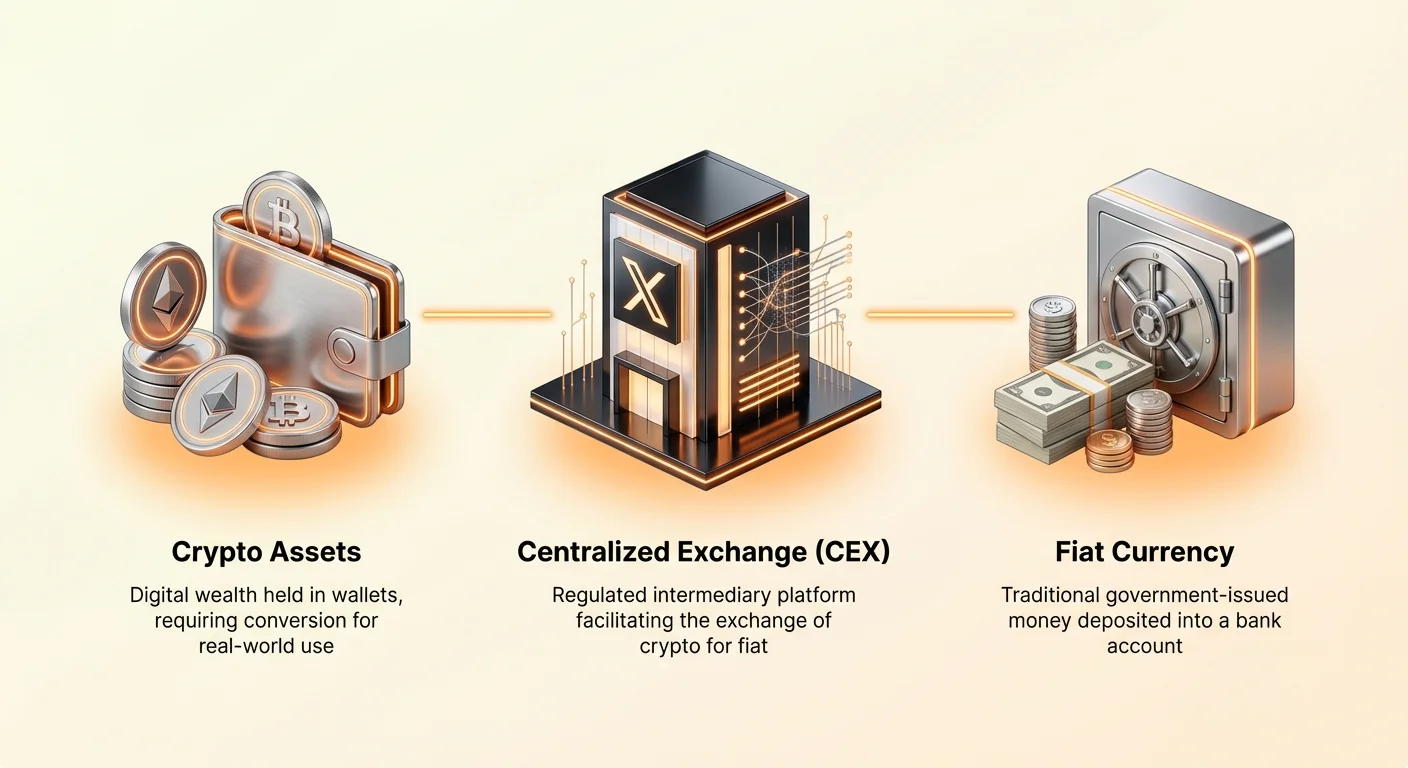
The Core Mechanism: Understanding Centralized Exchange Off-Ramps (CEX)
The primary and most regulated path for converting significant crypto holdings back to fiat is through a Centralized Exchange (CEX deep dive). These platforms act as necessary intermediaries, providing liquidity and the crucial link to the traditional banking system. However, they are not uniform, and selecting the wrong platform or fiat rail can drastically erode your profits.
Exchange Selection Criteria for Large Liquidations
When selecting an exchange for a major off-ramp event, beginners often prioritize name recognition. Strategic practitioners, however, focus on technical capabilities crucial for high-value transfers: performance benchmarks
- Fiat Liquidity and Pairing: Ensure the exchange offers deep liquidity for the specific crypto asset you hold and offers a direct trading pair to your target fiat currency (e.g., BTC/EUR, not just BTC/USD). Liquidating crypto into USD on an exchange, only to wire the USD to a European bank account, introduces unnecessary foreign exchange (FX) fees and currency risk.
- Withdrawal Limits and Verification Tiers: Most CEXs impose tiered daily and monthly withdrawal limits based on your Know-Your-Customer (KYC) verification level. For large off-ramps (e.g., $100,000+), you must be on the highest verification tier, which typically requires proof of address, advanced ID verification, and sometimes, a video call. Ensure your limits far exceed your planned withdrawal amount.
- Jurisdictional Support: Does the exchange support seamless bank transfers in your jurisdiction? For example, a US-based exchange might not offer cost-effective SEPA (Single Euro Payments Area) transfers required for EU banking, forcing you onto the more expensive SWIFT network.
Transaction Costs and Tiered Fees
The cost of off-ramping is rarely a flat fee. It’s often a combination of three elements, which vary wildly based on volume and destination:
- The Trading Fee (Execution Cost): This is the fee charged by the exchange for converting crypto (e.g., Bitcoin) into fiat (e.g., USD). High-volume traders often negotiate lower “maker” (adding liquidity) and “taker” (removing liquidity) fees. If you use the exchange’s immediate conversion feature (a simple 'Sell' button), you often pay a higher fee hidden within the asset spread.
- The Withdrawal Fee: This is the flat fee the exchange charges to initiate the transfer from your exchange account to your external bank account. While some exchanges offer free ACH or SEPA withdrawals, wire transfers (necessary for high velocity or large international transfers) carry fixed costs, often between $15 and $50.
- Bank Transfer Network Fees (Hidden Costs): This is the fee charged by the receiving bank or intermediary banks for processing the transfer. SWIFT transfers, in particular, often involve several correspondent banks, each taking a small cut (sometimes called a "landing fee"), meaning the final amount deposited might be less than the amount sent.
Choosing the Right Fiat Rail
The method you choose for transferring fiat from the exchange to your personal bank is the 'fiat rail.' Selecting the optimal rail impacts speed and cost significantly.
| Fiat Rail | Geography | Speed | Cost | Typical Use Case |
|---|---|---|---|---|
| ACH (Automated Clearing House) | USA Only | 3–5 Business Days | Very Low / Free | Standard, small to medium domestic withdrawals. |
| SEPA (Single Euro Payments Area) | Eurozone | Same Day / 1 Business Day | Very Low / Free | Standard, small to medium domestic EU withdrawals. |
| Wire Transfer (Domestic) | USA Only | Same Day / 1 Business Day | Low to Medium ($15–$35) | Large, time-sensitive domestic withdrawals (often required for sums >$50k). |
| SWIFT (Society for Worldwide Interbank Financial Telecommunication) | Global/Cross-Border | 3–7 Business Days | High (Variable Fees) | International transfers. Slow, expensive, and involves multiple correspondent banks. |
Strategic Tip: For optimizing speed and cost, always prioritize using a local rail (ACH or SEPA) if possible, even if it requires using an exchange that specializes in that currency (e.g., using a European-focused exchange for SEPA transfers into an EU bank). Avoid SWIFT unless absolutely necessary for large cross-border movements, due to its high cost and complexity.
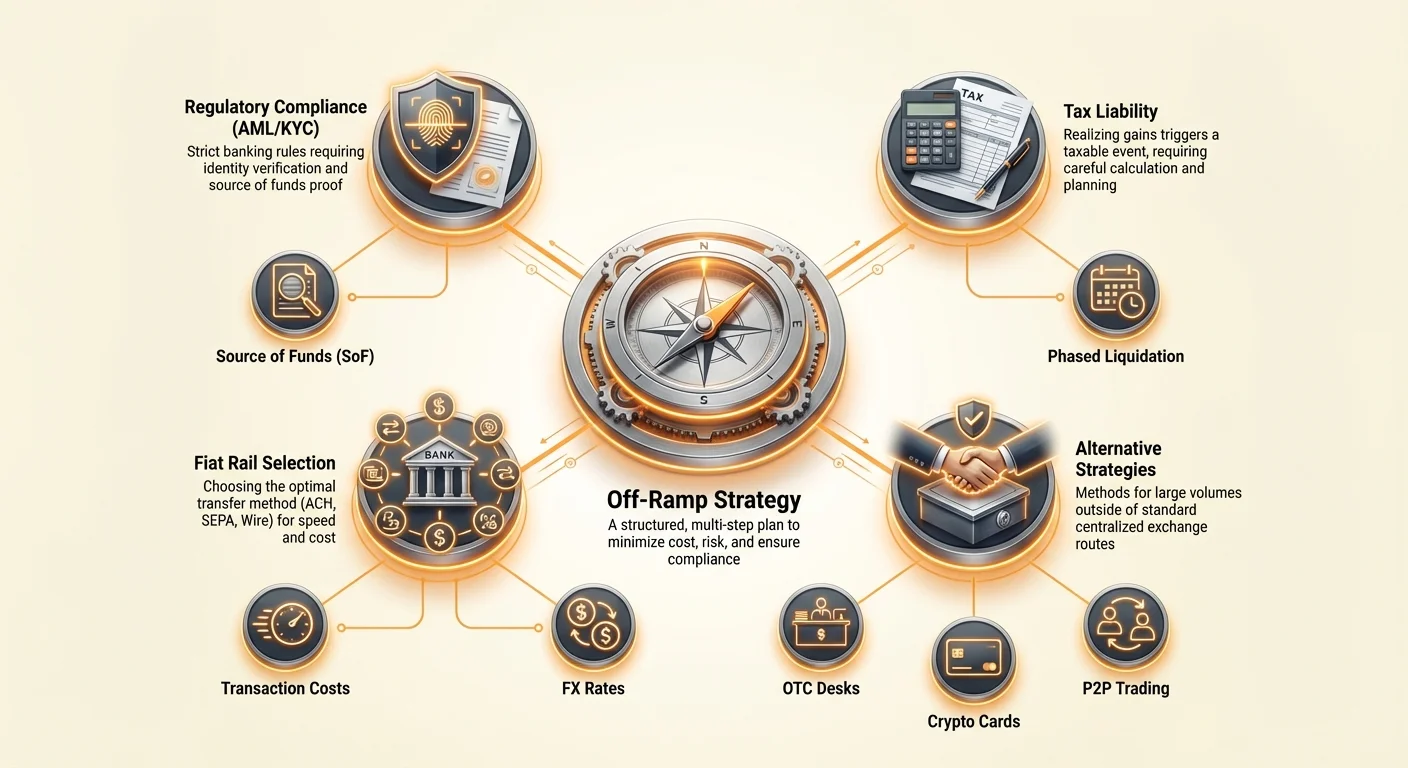
Navigating Regulatory Compliance and Banking Scrutiny
The single greatest risk in an optimized off-ramp strategy is not the transaction fee, but the risk of having your funds frozen or your bank account closed due to heightened regulatory scrutiny. Banks operate under strict Anti-Money Laundering (AML) and Know-Your-Customer (KYC/AML regulations) and view large, sudden incoming wires from crypto exchanges as high-risk.
The Anti-Money Laundering (AML) Ceiling
Financial institutions are required to file Suspicious Activity Reports (SARs) or Currency Transaction Reports (CTRs) for large transactions exceeding specific thresholds (e.g., $10,000 USD in many jurisdictions).
While the exchange itself is compliant and follows AML rules on its side, your receiving bank will conduct its own due diligence. They look for consistency: if your regular income is $5,000 a month, and you suddenly receive a $200,000 wire, the automated system will flag it. This doesn't mean you've done anything illegal, but it requires the bank's compliance team to investigate the Source of Funds (SoF).
The result of a flag is typically a temporary freeze on the incoming funds (or the entire account) until you provide satisfactory documentation.
De-Risking Your Bank Relationship
A proactive approach is mandatory for large off-ramps (generally defined as anything over $50,000). You must communicate with your bank before initiating the wire transfer.
- Call Your Bank Relationship Manager (or Local Branch): Inform them that a substantial incoming wire transfer is expected from a regulated financial institution (the crypto exchange).
- State the Purpose and Source: Clearly state that the funds originate from the sale of digital assets (cryptocurrency) and that the originating entity (the exchange) has already performed its regulatory checks.
- Confirm Documentation Readiness: Ask what documentation they will require to clear the funds immediately. This shows preparation and transparency.
Why this works: When a compliance team sees a pre-notified, documented transfer, they are far more likely to process it smoothly than an unannounced, large sum appearing suddenly.
Essential Documentation: Source of Funds Tracing and Audit Trails
To successfully navigate banking scrutiny, you must maintain a robust, auditable trail proving where the funds originated. This documentation is your defense against AML flags.
Key documents to prepare:
- Initial On-Ramp Proof: Records (bank statements) showing the fiat money leaving your bank account to purchase crypto initially.
- Exchange Trade History: Comprehensive transaction logs (exported CSVs) from the exchange detailing the date and price of the final sale (e.g., BTC sold for USD).
- Wallet Address Traceability (If applicable): If the crypto was moved from a self-custody wallet to the exchange for sale, you need the public ledger transaction IDs to prove the funds came from your verified private wallet.
- Tax Compliance Reports: While the tax event is separate from the transfer, showing the bank that you are actively tracking and preparing for tax liability strengthens your legitimacy. (Platforms specializing in crypto tax reporting, as noted in Source 1, are vital here.)
The goal is a seamless narrative: I bought X amount of crypto on Date A for Price B using Fiat Rail C, held it in Wallet D, sold it on Exchange E on Date F for Price G, and now I am wiring the profit H to my account.
Critical Tax Implications for Off-Ramping
While the off-ramp focuses on logistics, it cannot be separated from tax compliance. The act of selling (converting crypto to fiat) is the realization of a gain or loss, triggering a tax event. Failure to plan for this can lead to catastrophic consequences upon audit.
Jurisdiction Matters: Capital Gains vs. Income Classification
Tax laws concerning crypto vary dramatically across jurisdictions (Source 1). Your off-ramp strategy must reflect how your local tax authority treats your crypto activity:
- Capital Gains Tax (Most Common): Applicable if you are generally viewed as an investor who bought and held assets. The gains are typically taxed at a favorable rate, often lower than standard income, and sometimes reduced further if the assets were held long-term (e.g., over one year).
- Income Tax (Less Common, but Critical): Applicable if you are viewed as a "trader" or if you received crypto as compensation (e.g., mining rewards, staking rewards, salary). If classified as income, it is taxed at the highest standard marginal income rate.
Strategy: Always understand your local classification before off-ramping large sums. If your activity could be deemed trading, the tax liability will be significantly higher, and you must budget for this deduction immediately.
Withholding Taxes and Exchange Responsibilities
A key consideration for cross-border off-ramping involves mandatory tax withholding.
In some jurisdictions, the exchange may be legally required to withhold a percentage of the fiat withdrawal for tax purposes, particularly if the user is not a resident of the exchange’s primary operating country. For example, a US-based exchange might withhold taxes on funds being wired to a foreign resident, requiring the user to seek a tax credit in their home country.
Actionable Insight: Verify the exchange's policy on international transfers and withholding. If an exchange operating in Country A sends money to your bank in Country B, there must be clarity on which country's tax obligations the exchange is prioritizing. Using an exchange regulated in your home jurisdiction generally simplifies tax reporting.
The FIFO/LIFO/Average Cost Dilemma
When you sell crypto, you must determine the cost basis—which specific coins, purchased at which specific time and price, are you selling? This calculation method dictates your realized gain or loss, directly affecting your advanced tax optimization bill.
- FIFO (First-In, First-Out): Assumes the oldest coins purchased are the first ones sold. This is the default requirement in many countries and usually maximizes the long-term capital gains benefits, but it can inflate your short-term gain if prices have appreciated significantly over time.
- LIFO (Last-In, First-Out): Assumes the most recent coins purchased are the first ones sold. This is generally disallowed for investment tracking in many major economies but can be useful for minimizing short-term gains during market downturns.
- Average Cost: Calculates the average price of all the crypto you hold and uses that as the cost basis. This simplifies accounting but may prevent optimization for specific tax advantages.
The Off-Ramp Connection: When planning a large off-ramp, calculating the exact tax liability using the mandated cost basis method must precede the withdrawal. You must ensure you off-ramp enough fiat to cover the tax bill, rather than realizing a large gain and then struggling to liquidate further crypto just to pay the unexpected tax liability.
Pārrobežu likvidācija un jurisdikcionālie šķēršļi
Lielu kriptovalūtas summu likvidēšana pāri starptautiskām robežām rada nopietnu berzi, galvenokārt vairāku regulējošo vides un nelabvēlīgas valūtas konvertācijas veidā. Šī sarežģītība bieži vien ir vieta, kur ātrgaitas kriptovalūtas darījuma efektivitāte pilnībā tiek zaudēta tradicionālajā finanšu sistēmā.
Valūtas konvertēšanas riska pārvaldīšana (FX kursi)
Šī ir slēpta izmaksa, kas var viegli samazināt lielu izņemšanu par 1% līdz 3%:
- Biržas FX starpība: Ja pārdodat BTC par USDT, un pēc tam pārdodat USDT par EUR biržā, kas galvenokārt nodarbojas ar USD, platforma piemēros nelabvēlīgu FX kursu, konvertējot pamatā esošo aktīvu vai fiat izņemšanas procesa laikā.
- Bankas FX maksa: Ja veiksmīgi pārskaitāt USD uz EUR denominētu bankas kontu, saņēmējbanka veiks galīgo valūtas konvertāciju. Bankas bieži izmanto nelabvēlīgus mazumtirdzniecības valūtas maiņas kursus un papildus SWIFT nosēšanās maksai iekasē skaidru FX konvertēšanas maksu.
Optimizācijas stratēģija: Visefektīvākā pārrobežu stratēģija ir pārdot kriptovalūtu tieši mērķa fiat valūtā (piemēram, pārdot BTC par EUR) biržā, kurai ir tiešas banku attiecības (SEPA) galamērķa jurisdikcijā. Tas samazina konvertēšanas slāņus.
Globālie KYC ierobežojumi
Jūsu spēja efektīvi veikt off-ramp bieži ir saistīta ar to, kur jūs veicāt savu sākotnējo KYC. Ja esat izveidojis savu kontu ar pases no Valsts A, un tagad mēģināt veikt lielu pārskaitījumu uz banku Valstī B, birža var radīt papildu berzi vai pilnībā atteikties no pārskaitījuma, atsaucoties uz stingrāku starpjurisdikcionālo AML politiku.
Labākā prakse: Vienmēr mēģiniet saskaņot saņēmējbankas konta jurisdikciju ar to, kas tika izmantota primārās KYC verifikācijas laikā biržā. Ja jums ir jāmaina dzīvesvieta, pārliecinieties, ka jūsu biržas konta dokumentācija ir pilnībā atjaunināta pirms liela apjoma izņemšanas uzsākšanas.
Netradicionālo banku un Fintech risinājumu loma
Fintech bankas (neobankas) un digitālajiem aktīviem draudzīgas finanšu iestādes ir kļuvušas par spēcīgiem rīkiem optimizētai aktīvu plūsmai, īpaši pāri robežām.
- Ātrāka apstrāde: Atšķirībā no vecajām bankām, kurām var paiet dienas, lai apstrādātu ar kriptovalūtu saistītu pārskaitījumu un kurām nepieciešamas manuālas atbilstības pārbaudes, daudzām kriptovalūtām draudzīgām neobankām ir automatizēti atbilstības protokoli, kas paātrina noskaidrošanas procesu.
- Zemākas FX izmaksas: Daudzas neobankas piedāvā starpbanku (spot) valūtas maiņas kursus valūtas konvertēšanai, dramatiski samazinot tradicionālo banku plēsonīgās likmes SWIFT pārskaitījumiem.
- Vairāku valūtu konti: Šie pakalpojumi ļauj lietotājiem turēt fiat atlikumus vairākās valūtās (USD, EUR, GBP) vienlaicīgi, saņemot līdzekļus tieši valūtā, ko nosūtījusi birža, tādējādi pārvaldot FX risku saskaņā ar savu, nevis bankas, grafiku.
Alternative Off-Ramp Strategies for Large Volumes
While Centralized Exchanges (CEXs) are the standard route, they are not always the fastest, cheapest, or most private, particularly for extremely large or highly specialized liquidation needs.
High-Net-Worth Desks and OTC Brokers
For institutions or individuals needing to liquidate sums typically exceeding $250,000 to $1,000,000 USD in a single transaction, the standard CEX order book can lead to slippage (the price drops as your order fills). Over-The-Counter (Understanding OTC trading) brokers solve this problem.
- Functionality: OTC desks offer direct, private trading between two parties, bypassing the public order book. They provide a guaranteed execution price for the entire block of crypto.
- Optimization Benefit: Eliminates slippage and provides immediate settlement. Since the broker is often dealing with institutional banks, the fiat transfer tends to be smoother and less prone to retail banking scrutiny.
- Compliance: OTC desks require deep KYC/AML checks, often requiring explicit documentation regarding the origin and holding period of the funds, ensuring a compliant exit path.
The Efficiency of Crypto-Linked Cards
Crypto debit cards (Source 2 inspiration) are ideal for managing liquidity for routine expenses without initiating a full, high-friction bank off-ramp.
- Mechanism: These cards are linked to a crypto balance held either by the card provider or directly by the user via a private wallet. When a purchase is made, the required amount of crypto is instantly sold and converted to fiat by the card issuer.
- Optimization Benefit: Provides immediate utility for smaller withdrawals (ATM limits) and daily spending. Crucially, this strategy avoids large, sudden wires to a bank account that would trigger AML scrutiny.
- Limitation: These cards usually have low daily spending and withdrawal limits (e.g., $10,000 per day), making them unsuitable for major purchases like real estate or investments, which require direct bank-to-bank wire transfers.
P2P and Direct Settlement
Peer-to-Peer (P2P) trading involves directly exchanging crypto for fiat with another individual, often using escrow services provided by an exchange or a dedicated P2P platform.
- Optimization Benefit (Cost and Speed): P2P can bypass some exchange withdrawal fees and may offer slightly better rates if you negotiate directly. It also potentially offers greater privacy, as the fiat transfer is technically person-to-person, not from a named crypto exchange.
- Risk vs. Reward (Compliance): This strategy carries significant compliance risks for large sums. The incoming fiat funds deposited into your account come directly from a stranger, potentially complicating your own bank’s SoF investigation if the transfer is flagged. Furthermore, the risk of dealing with scams or fiat chargebacks is substantially higher than using regulated exchanges.
Recommendation: P2P should generally be avoided for major liquidations unless the user has advanced legal counsel and a robust, pre-agreed contract with the counterparty.
Building Your Optimized Off-Ramp Playbook (Actionable Steps)
An effective off-ramp strategy is not a single transaction; it is a structured plan executed over time to minimize cost, manage risk, and ensure total compliance.
The Phased Liquidation Strategy
The fastest way to attract unwanted regulatory attention is to dump a massive, unscheduled wire transfer into a personal checking account. The Phased Liquidation Strategy involves breaking down a large liquidation into smaller, managed steps:
- Allocate and Budget: Determine the total fiat required and separate it into three buckets: (1) Immediate Needs (e.g., tax payments, short-term expenses), (2) Investment Needs (e.g., real estate down payment), and (3) Long-Term Savings.
- Define Withdrawal Tiers: Set a maximum per-transfer limit that you are confident your bank will process without immediate scrutiny. This may be $25,000, $49,999, or $99,999, depending on your bank relationship and jurisdiction.
- Schedule Transfers: Initiate transfers sequentially, allowing the previous transfer to clear the bank's compliance checks (usually 3–7 business days) before sending the next one.
- Diversify Destinations (If Necessary): If you are off-ramping extremely large sums (multi-millions), consider distributing the fiat across multiple, separate financial institutions (traditional banks, neobanks, investment accounts) to avoid hitting the internal compliance limits of a single bank.
Checklist: Before Hitting ‘Withdraw’
Every single time you execute an off-ramp transaction, you should run through this checklist:
- Verification: Is the CEX account verified to the highest tier required for this withdrawal limit? Is the receiving bank account linked, verified, and active?
- Tax Planning: Have you calculated the estimated capital gains/income tax due on the specific batch of crypto being sold? Is there enough cash buffer in the withdrawal to cover this immediate liability?
- Bank Communication: Have you proactively notified your receiving bank manager about the incoming wire and confirmed the required documentation?
- Rail Optimization: Have you confirmed you are using the cheapest, fastest fiat rail available (e.g., SEPA/ACH vs. SWIFT/Wire)?
- Cost Confirmation: Have you verified the exact fees for the exchange withdrawal, the rail fee, and confirmed the potential landing fees or FX spreads?
- Audit Trail: Have you saved the trade execution receipt and the exchange’s withdrawal confirmation number for your records?
Secinājums
Kriptovalūtas off-ramp optimizēšana ir pēdējais, būtiskais solis stratēģiskās aktīvu plūsmas apgūšanā. Digitālās bagātības viegla konvertēšana atpakaļ vecajā finanšu sistēmā nav garantēta; tā tiek nopelnīta, rūpīgi plānojot.
Stratēģiskais praktiķis saprot, ka patiesās off-ramp izmaksas nav tikai darījuma maksa, bet gan potenciālie izdevumi un kavējumi, kas rodas normatīvo aktu neievērošanas dēļ. Dodot priekšroku proaktīvai komunikācijai ar bankām, saglabājot nevainojamas audita pēdas, izvēloties atbilstošus fiat kanālus un strukturējot lielas likvidācijas, izmantojot fāzētu pieeju, lietotāji var nodrošināt efektīvu, zemu izmaksu un pilnībā atbilstošu pāreju no digitālo aktīvu turētāja uz fiat saņēmēju pāri jebkurai globālajai robežai.