
Desmitgadēm ilgi investīciju stratēģijas pamats balstījās uz labi izveidotiem principiem, kas galvenokārt tika definēti ar aktīvu klasēm, piemēram, akcijām, obligācijām un precēm. Šīs klases piedāvāja paredzamus, kaut arī dažreiz ierobežotus, ienesumus, balstītus uz zināmiem ekonomiskajiem faktoriem. Bitcoin parādīšanās, aktīvs, ko raksturo ārkārtīga svārstīgums, bet nepiedzīvoti ienesumi, sākotnēji mulsināja tradicionālo finanšu profesionāļus. Kā kaut kas tik svārstīgs varētu tikt integrēts stabilā investīciju plānā?
Atbilde slēpjas Modernajā portfeļa teorijā (MPT), kvantitatīvā ietvarā, ko izstrādāja Nobela laureāts Harry Markowitz. MPT māca mums, ka risku nevajadzētu skatīt izolēti, bet gan kopējā portfeļa kontekstā. Aktīva vērtība portfelim ir mazāk saistīta ar tā individuālo svārstīgumu un vairāk ar tā saikni (korelāciju) ar citiem turētajiem aktīviem.
Šis ceļvedis sniedz analītisku ietvaru Bitcoin integrēšanai tradicionālajā investīciju struktūrā. Mēs pāriesim pāri vienkāršām definīcijām un izvērtēsim Bitcoin, izmantojot investīciju analītiķu rīkus: vidējās-variances optimizāciju, efektīvo robežu un riska koriģētos ienesuma rādītājus, piemēram, Sharpe Ratio. Izprotot Bitcoin unikālo zemo korelāciju un asimetrisko ienesuma profilu, investori var stratēģiski izmantot nelielas piešķiršanas, lai potenciāli uzlabotu portfeļa sniegumu un sasniegtu labākus riska koriģētos ienesumus nekā tikai ar tradicionālajām piešķiršanām.
Modernās portfeļa teorijas (MPT) pamati
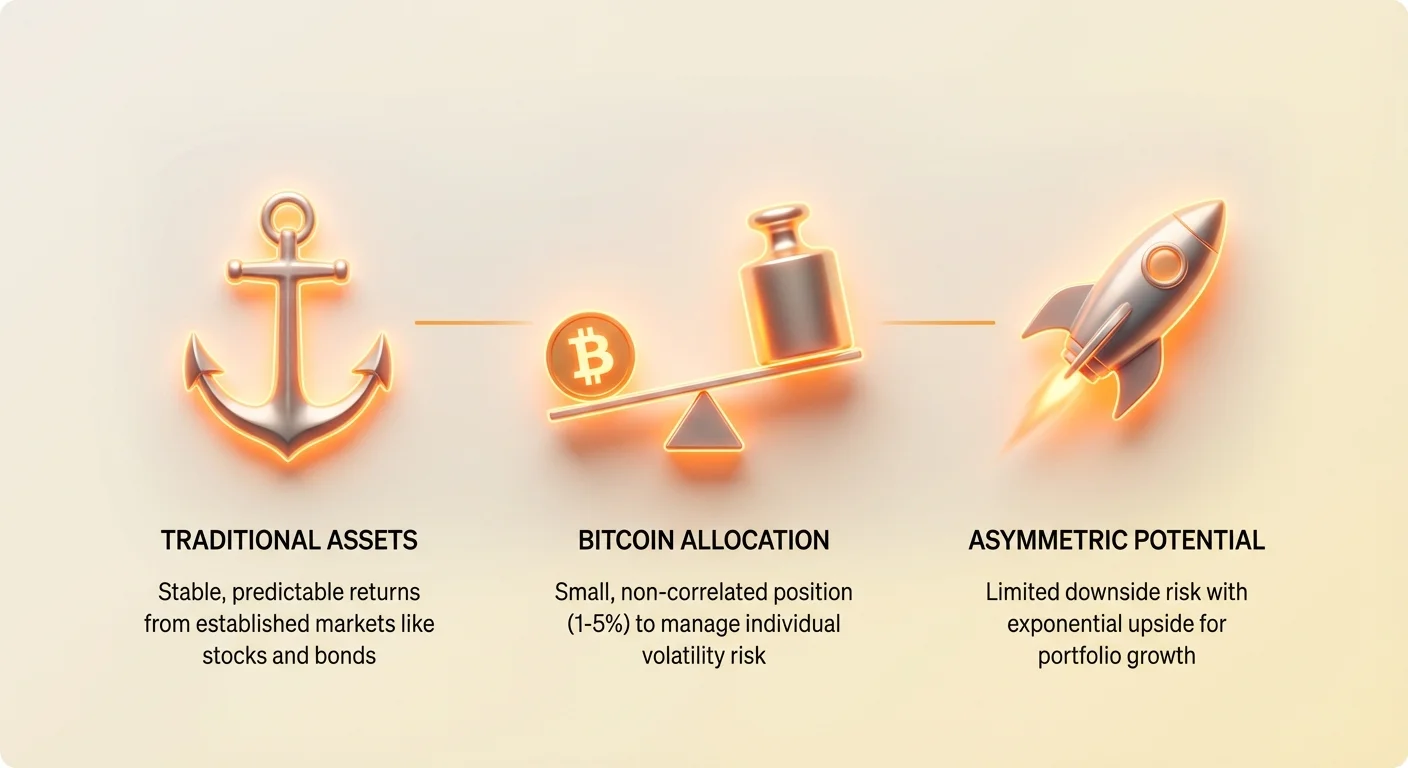
Modernā portfeļa teorija (MPT), kas ieviesta 1952. gadā, radikāli mainīja veidu, kā investori pieiet riskam. Tās galvenais atklājums ir tas, ka diversifikācija nav tikai dažādu lietu turēšana; tā ir aktīvu turēšana, kas nepārvietojas sinhroni. MPT mērķis ir vienkāršs: izveidot portfeli, kas nodrošina augstāko iespējamo paredzamo ienesumu noteiktam pieņemtā riska līmenim.
Riska un ienesuma pamattranzakcija
Finansēs risku parasti mēra ar svārstīgumu, kas ir pakāpe, kādā aktīva cena svārstās uz augšu vai leju noteiktā periodā. Parasti aktīvi ar augstākiem potenciālajiem ienesumiem (piemēram, izaugsmes akcijas) nāk ar augstāku svārstīgumu, savukārt aktīvi ar zemākiem ienesumiem (piemēram, Valsts kases obligācijas) piedāvā lielāku stabilitāti.
MPT skata šos divus faktorus kā koordinātas uz grafika. Katru portfeli var uzplot, balstoties uz tā paredzamo ienesumu (Y-ass) un tā paredzamo risku/svārstīgumu (X-ass). Optimizācijas mērķis ir pārvietot portfeli pēc iespējas tālāk "uz augšu un pa kreisi" — tas nozīmē augstāku ienesumu ar zemāku risku. Bez jauna aktīvu veida ieviešanas šī tranzakcija ir fiksēta. Lai palielinātu ienesumu, jāpieņem lielāks svārstīgums.
Nekorelācijas spēks: Diversifikācijas princips
MPT spēcīgākā sastāvdaļa ir korelācijas jēdziens. Korelācija mēra, kā divi aktīvi pārvietojas attiecībā viens pret otru.
- Pozitīva korelācija (tuvu +1): Aktīvi pārvietojas kopā. Ja aktīvs A ceļas, aktīvs B parasti arī ceļas. (Piemērs: Naftas akcijas un naftas cena). Šo aktīvu pievienošana palielina kopējo risku, jo abi krīt tajos pašos tirgus stresa notikumos.
- Negatīva korelācija (tuvu -1): Aktīvi pārvietojas pretēji. Ja aktīvs A ceļas, aktīvs B parasti krīt. (Piemērs: Akcijas un dažas īstermiņa svārstīguma fondi). Tas ir diversifikācijas svētais grāls, lai gan patiesa negatīva korelācija ir reta un īslaicīga.
- Nulla/zema korelācija (tuvu 0): Aktīvi pārvietojas neatkarīgi. Cenas izmaiņas aktīvā A maz saistās ar cenas izmaiņām aktīvā B.
Apvienojot aktīvus ar zemu korelāciju, individuālo aktīvu specifiskie riski bieži savstarpēji iznīcina viens otru, samazinot kopējo portfeļa svārstīgumu bez ienesuma zaudēšanas. Tas ir mehānisms, ar kura palīdzību Bitcoin var dramatiski uzlabot portfeli, neskatoties uz tā augsto individuālo svārstīgumu.
Bitcoin unikālā loma tradicionālajos portfeļos
Bitcoin ir pilnīgi jauna aktīvu klase, kas darbojas neatkarīgi no tradicionālo tirgu galvenajiem vadītājiem (centrālās bankas politika, IKP izaugsme, korporatīvie ienākumi). Šī strukturālā neatkarība padara to par potenciāli ideālu rīku mūsdienu portfeļa diversifikācijai.
Bitcoin svārstīguma profila analīze
Nav noliedzams, ka Bitcoin ir ārkārtīgi svārstīgs aktīvs. Kopš tā izveides ikdienas cenas kustības ir pārsniegušas galveno indeksu, piemēram, S&P 500 vai pat individuālo izaugsmes akciju, svārstības. Investoram, kurš koncentrējas tikai uz īstermiņa svārstību minimizēšanu, šis svārstīgums šķiet tūlītējs diskvalifikators.
Tomēr Bitcoin svārstīguma raksturs jāizprot:
- Koncentrēts piešķiršanas risks: Ja Bitcoin veido 50% no jūsu portfeļa, tā svārstīgums pārņem visu pārējo.
- Atšķaidīts portfeļa risks: Ja Bitcoin veido tikai 3% no jūsu portfeļa, tā individuālais svārstīgums tiek atšķaidīts 97% stabilāku aktīvu (piemēram, obligāciju un galveno akciju) vidū. Šajā konfigurācijā milzīgo asimetrisko ienesumu potenciāls atsver nelielo kopējā portfeļa svārstīguma pieaugumu.
Šis skatupunkts maina perspektīvu: problēma nav Bitcoin augstais svārstīgums, bet tā piešķiršanas apmērs. Nelielas ārkārtīgi svārstīgu, zema korelācijas aktīvu piešķiršanas ir matemātiskā salda vieta, ko MPT meklē.
Bitcoin kā unikāls nekorelēts aktīvs
Bitcoin tirgus vadītāji fundamentāli atšķiras no tiem, kas vada akcijas un obligācijas.
- Akcijas un obligācijas: Vadītas ar procentu likmēm, inflāciju, korporatīvajiem peļņām un valdības politiku.
- Bitcoin: Vadīts ar strukturāliem piedāvājuma šoka notikumiem (Halving), decentralizēta tīkla adopcijas līknēm, institucionālās infrastruktūras attīstību (piemēram, ETF plūsmas) un globālo pāreju uz digitālo retumu.
Kaut arī Bitcoin korelācija ar tehnoloģiju akcijām (Nasdaq) palielinājās dažos makro periodos (piemēram, 2020.–2022. gada likviditātes buma laikā), tā ilgtermiņa strukturālā korelācija paliek zema salīdzinājumā ar tradicionālo aktīvu pāru korelāciju (piemēram, Eiropas akcijas pret ASV akcijām).
Šī zemā korelācija nozīmē, ka periodos, kad tradicionālais 60/40 portfelis (60% akcijas, 40% obligācijas) cieš — piemēram, vienlaicīgu akciju un obligāciju avāriju laikā, ko izraisa augsta inflācija un likmju paaugstināšana —, Bitcoin var reaģēt uz savu iekšējo ekonomisko grafiku (piemēram, Halving ciklu) vai globālajām adopcijas tendencēm, piedāvājot diversifikāciju tieši tad, kad tā visvairāk vajadzīga.
Riska un atlīdzības asimetrija
Bitcoin vēsturiski ir demonstrējis asimetrisko ienesuma profilu. Tas nozīmē, ka potenciālais pieaugums pārsniedz potenciālo kritumu, īpaši vairāku gadu ciklos.
Ja aktīvam ir maksimālais iespējams zaudējums 100% (tas nonāk līdz nullei), bet vēsturiskais maksimālais pieaugums tūkstošos procentu, potenciālā atlīdzība lielā mērā atsver katastrofālo risku, ja piešķiršana ir maza.
Tradicionālam portfelim pat maza 2% Bitcoin piešķiršana piedāvā augstu "opciju vērtību". Ja 2% piešķiršana neizdodas (nonāk līdz nullei), kopējais portfeļa zaudējums ir minimāls (2%). Tomēr, ja 2% piešķiršana pieaug 5x vai 10x, kapitāla pieaugums nodrošina milzīgu uzlabojumu kopējam portfeļa ienesumam, attaisnojot svārstīgā komponenta iekļaušanu. Šī asimetrija ir dzinējs, kas uzlabo Efektīvo robežu.
The Efficient Frontier and Mean-Variance Optimization
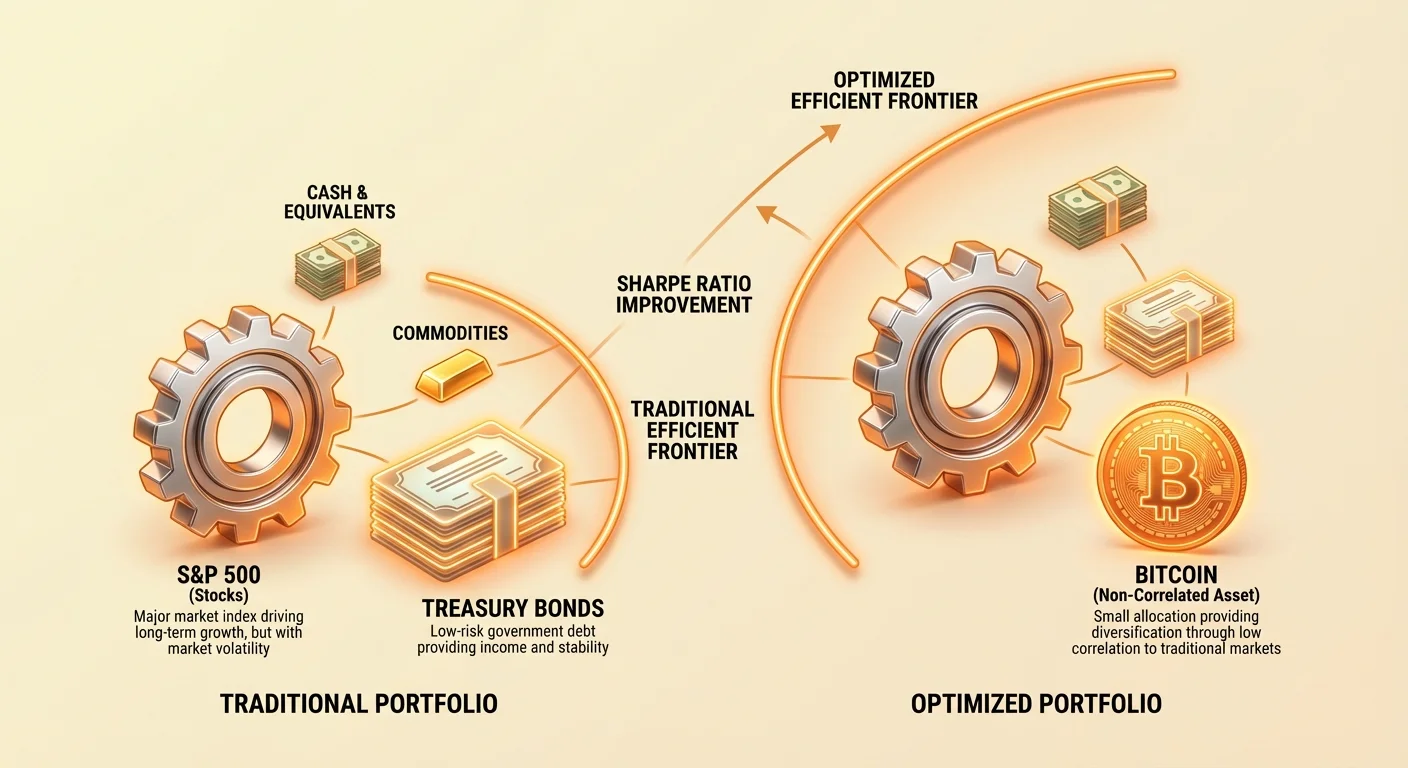
The core objective of utilizing Bitcoin within MPT is to shift the Efficient Frontier—the graphical representation of optimal risk-return portfolios—up and to the left. This process is called Mean-Variance Optimization.
Defining the Efficient Frontier
Imagine a graph where the X-axis measures risk (volatility) and the Y-axis measures expected return. If you plot every possible combination of traditional assets (stocks, bonds, cash), the resulting cloud of points forms a boundary. The Efficient Frontier is the upper edge of that boundary.
Any portfolio combination that sits below the Efficient Frontier is considered inefficient, because it is possible to achieve the same return with lower risk, or a higher return with the same risk, simply by reallocating.
The key limitation of the traditional Efficient Frontier is that it is defined only by the assets included in the model (e.g., S&P 500 and Treasury Bonds).
How Bitcoin Shifts the Frontier
When Bitcoin is introduced into the optimization calculation, even at small allocations (typically 1% to 5%), its low correlation and high historical returns create new, previously unattainable portfolio combinations.
The effect is dramatic: The entire Efficient Frontier curve shifts outward, demonstrating that optimal portfolios now exist with higher returns for every level of risk compared to the traditional universe.
Consider a hypothetical portfolio aimed at a 10% annual return:
| Portfolio Type | Allocation | Expected Return | Expected Volatility (Risk) |
|---|---|---|---|
| Traditional 60/40 | 60% Stocks, 40% Bonds | 9.8% | 10.5% |
| Optimized w/ BTC | 58% Stocks, 40% Bonds, 2% BTC | 10.3% | 10.1% |
In this simplified example, the addition of a small, volatile Bitcoin allocation allows the investor to achieve a higher return while simultaneously lowering the overall portfolio volatility. This is the mathematical proof of diversification via non-correlation, and it is the central justification for Bitcoin inclusion.
The Optimal Portfolio: Maximizing Risk-Adjusted Returns
In MPT, the ultimate goal is not just high returns, but achieving the highest risk-adjusted return. This is often represented by the Capital Market Line (CML), which connects the risk-free rate (like short-term US Treasury bills) to the market portfolio (M).
When Bitcoin is added, the CML rotates upward, creating a new "tangency portfolio" that offers a better balance between risk and reward. The specific allocation that creates the best tangency portfolio is the "optimal" allocation under MPT.
Historically, quantitative analyses covering the last decade often show that the inclusion of 1% to 5% Bitcoin in an otherwise diversified portfolio significantly outperforms pure traditional allocations on a risk-adjusted basis. This is crucial for institutional investors and pension funds where capital preservation and stability are paramount, yet mandates require meeting return targets.
Portfeļa uzlabošanas kvantificēšana: Sharpe Ratio
Kamēr Efektīvā robeža sniedz vizuālu optimizācijas izpratni, Sharpe Ratio sniedz kritisko kvantitatīvo rādītāju snieguma uzlabošanas mērīšanai. Tas ir nozīmīgākais rādītājs diversifikācijas stratēģijas panākumu novērtēšanai.
Sharpe Ratio dekonstrukcija
Sharpe Ratio mēra pārmērīgo ienesumu uz riska vienību. Tas palīdz atbildēt uz jautājumu: Vai papildu ienesums bija vērts papildu svārstībai?
Kur:
- : Portfeļa paredzamais ienesums.
- : Bezriska likme (ienesums no nulles riska aktīviem, piemēram, T-bills).
- : Standartnovirze (svārstīgums/risks) portfelim.
Augstāka Sharpe Ratio vienmēr ir labāka. Fonda vadītājs vai investors, kurš sasniedz 10% ienesumu ar Sharpe Ratio 1,0, tiek uzskatīts par labāku riska vadītāju nekā tas, kurš sasniedz 12% ienesumu, bet ar Sharpe Ratio 0,8, jo pirmais vadītājs ģenerēja vairāk ienesuma efektīvi bez pārmērīga riska.
Pētījuma gadījums: Bitcoin vēsturiskā Sharpe uzlabošana
Bitcoin, skatoties izolēti, ir augsti svārstīgs saucējs (), kas liecinātu par sliktu Sharpe Ratio. Tomēr, integrējot plašākā portfelī, notiek divi efekti, kas palielina kopējo Sharpe Ratio:
- Milzīgs ienesuma pieaugums (): Bitcoin ārkārtīgi augstais vēsturiskais ienesums, pat ar 2% svaru, ievērojami paaugstina kopējo paredzamo portfeļa ienesumu (skaitītājs).
- Svārstīguma kompensācija (zema korelācija): Tā kā Bitcoin pārvietojas neatkarīgi, tas dramatiski nepalielina portfeļa kopējo standartnovirzi (saucēju), jo tā nekorelētais raksturs palīdz izlīdzināt apvienoto portfeļa svārstīgumu.
Piemēra scenārijs:
| Portfelis | Gada ienesums | Gada svārstīgums | Bezriska likme (3%) | Sharpe Ratio |
|---|---|---|---|---|
| Tradicionālais (60/40) | 8,0% | 10,0% | 3% | (8-3) / 10 = 0,50 |
| Optimizēts (58/40/2) | 9,5% | 10,3% | 3% | (9,5-3) / 10,3 = 0,63 |
2% Bitcoin piešķiršana izraisīja nelielu svārstīguma pieaugumu (0,3%), bet būtisko ienesuma pieaugumu (1,5%) rezultātā ievērojami uzlabojās Sharpe Ratio (no 0,50 līdz 0,63). Tas demonstrē, ka portfelis izmanto risku efektīvāk un ir labāk atlīdzināts par uzņemto risku. Tas ir fundamentāls, kvantificējams arguments Bitcoin iekļaušanai nopietnā, institucionāla līmeņa investīciju stratēģijā.
Managing the Downside: Volatility and Drawdown Analysis
The most common fear preventing investors from embracing Bitcoin is the risk of massive, sudden price crashes—known as "tail risk." While Bitcoin’s volatility is high, MPT helps us manage the actual impact of this volatility on the portfolio through strict allocation controls and focused drawdown analysis.
Understanding Volatility vs. Systemic Risk
It is crucial to distinguish between an asset’s inherent volatility and its contribution to systemic risk.
- Inherent Volatility: Bitcoin’s price can drop 30-50% in a short timeframe.
- Systemic Risk: The risk that the failure of this asset will cascade and destabilize the entire global financial system.
While Bitcoin’s inherent volatility is high, its contribution to the systemic risk of a well-diversified portfolio is extremely low, provided the allocation is small. If a 3% Bitcoin allocation drops by 50%, the total portfolio loss is only 1.5%. This is a manageable drawdown that is easily offset by performance in the traditional components or subsequent returns from the Bitcoin allocation itself.
Furthermore, Bitcoin often performs well when traditional assets are under stress due to inflation or excessive debt monetization. If Bitcoin acts as an escape valve during a major financial crisis affecting the stock market, its volatility becomes a net benefit, protecting the overall portfolio value.
Drawdown Management and Portfolio Stability
Drawdown refers to the peak-to-trough decline of an investment during a specific period. Investors hate drawdowns because they require higher subsequent returns just to break even.
A major benefit of the non-correlated 1-5% allocation is its role in limiting the maximum drawdown (MDD) of the total portfolio.
During market cycles where traditional assets (like US stocks) experience a significant MDD (e.g., 20% in 2008 or 2020), Bitcoin may or may not experience a simultaneous crash. Even if it does crash, the small allocation limits the absolute damage. More importantly, when the market recovers, the high-octane Bitcoin allocation can often accelerate the portfolio’s return to its previous peak, minimizing the duration of the drawdown period.
Risk Management Tip: When calculating the risk of a Bitcoin allocation, focus not on Bitcoin’s standalone maximum drawdown, but on the marginal change in the total portfolio’s maximum drawdown. Historically, adding small Bitcoin exposure has not dramatically increased portfolio MDD, while significantly increasing long-term returns.
Using Smaller Sizing to Mitigate Tail Risk
For institutional investors, the mitigation of tail risk—the risk of extreme, unexpected losses—is paramount. The portfolio allocation strategy for Bitcoin hinges entirely on mitigating this tail risk through size.
The common industry consensus suggests an initial allocation between 1% and 3%.
- 1% Allocation: Often used by highly risk-averse institutions. The risk of total loss is negligible (1%), but the upside potential remains substantial due to Bitcoin’s historical price action.
- 3% Allocation: A common target for optimizing the Sharpe Ratio and maximizing the shift of the Efficient Frontier.
This conservative sizing ensures that the investor gains exposure to Bitcoin’s non-correlated benefits and asymmetric upside, while rigidly protecting the overall stability of the primary equity and fixed income holdings. It treats Bitcoin as an insurance policy and a growth catalyst, rather than a core capital component.
Practical Allocation Strategies and Implementation
Moving from theoretical models like MPT to actionable investment plans requires clear rules regarding sizing, maintenance, and custody. The decision to include Bitcoin is only the first step; the successful execution relies on discipline.
Determining Optimal Portfolio Sizing (The 1% to 5% Rule)
While academic models often suggest an MPT-optimal allocation might be as high as 6% to 8% based on historical data, most investment managers advise a more conservative range due to Bitcoin’s relatively short history and extreme regulatory uncertainty.
Initial Allocation (1%): A great starting point for beginners or institutions concerned about short-term volatility headlines. This is sufficient to capture diversification benefits without causing significant portfolio discomfort during bear markets.
Target Allocation (2% - 3%): This range is often cited as the sweet spot for maximizing the Sharpe Ratio uplift, balancing the non-correlation benefit with acceptable portfolio risk.
Maximum Allocation (5%): Only recommended for investors with high-risk tolerance or those who have a deep conviction in Bitcoin’s long-term economic thesis. Exceeding 5% typically begins to overwhelm the diversification benefits, and the portfolio's performance becomes highly dependent on Bitcoin’s volatility.
The choice should align with the investor's established risk profile. If an investor is inherently conservative (e.g., a retiree), starting at 1% is the appropriate approach.
Rebalancing and Maintaining the Allocation
A critical component of successful MPT implementation is rebalancing. Because Bitcoin is highly volatile, its market value percentage within the portfolio will frequently drift above or below the target allocation (e.g., 3%).
The Rebalancing Mechanism:
- Drift Up: If the 3% Bitcoin allocation doubles in value to 6%, the investor must sell the excess 3% and reallocate those proceeds back into the lower-performing traditional assets (stocks, bonds). This forces the investor to systematically sell high.
- Drift Down: If the 3% Bitcoin allocation falls to 1%, the investor must buy more Bitcoin using funds from the higher-performing traditional assets to bring the allocation back up to 3%. This forces the investor to systematically buy low.
This counter-cyclical discipline prevents the single asset from taking over the portfolio and locks in profits from Bitcoin’s massive growth cycles, ensuring that the portfolio continuously adheres to the mathematically optimized risk profile. Without strict rebalancing, the diversification benefits are lost.
Self-Sovereignty and Custody Considerations
While traditional assets are managed through brokers and custodians, a key philosophical and practical component of the Bitcoin thesis is self-custody (self-sovereignty). For the MPT thesis to hold its full value, especially regarding systemic risk protection, the investor must control the private keys to their allocation.
Custody Options:
- Institutional/Beginner: Using regulated vehicles like spot Bitcoin ETFs or highly regulated custodians. This simplifies management but reintroduces counterparty risk.
- Self-Custody (The Purist MPT Approach): Using hardware wallets to store the private keys themselves. This eliminates counterparty risk (risk of bank or custodian failure), which reinforces Bitcoin’s role as a low-correlated hedge against monetary system risk. For the sophisticated investor, the minor complexities of managing a hardware wallet are a small trade-off for eliminating third-party custody risk.
For the purpose of MPT optimization, the ultimate goal is not just diversification of price movement, but diversification of holding structure. True portfolio security means having assets that cannot be frozen or confiscated by intermediaries, a value proposition unique to bearer assets like Bitcoin.
Secinājums: Bitcoin kā mūsdienu portfeļa katalizators
Bitcoin integrācija tradicionālajā finansē vairs nav malda ideja; tā ir kvantitatīva nepieciešamība investoriem, kas meklē optimālus riska koriģētos ienesumus 21. gadsimtā. Modernā portfeļa teorija sniedz akadēmisko un analītisko pamatojumu šai iekļaušanai.
Rūpīgi piemērojot vidējās-variances optimizācijas principus, mēs redzam, ka Bitcoin augstais individuālais svārstīgums nav saistība, bet iezīme, kad tas izmantots kā maza, nekorelēta piešķiršana. Šī stratēģiskā izmēra ļauj portfeļiem uztvert asimetrisko pieaugumu un diversifikācijas priekšrocības, rezultējoties kvantificējamā Efektīvās robesžas pārvietošanā un izmērāmā Sharpe Ratio uzlabojumā.
Tiem, kas orientējas digitālās ekonomikas sarežģītībās, ir izšķiroši izprast kvantitatīvo ietvaru aiz Bitcoin piešķiršanas. Šī teorija pārvieto sarunu pāri spekulācijām uz pareizas finanšu inženierijas jomu. Bitcoin piešķiršana nav tikai derība uz tā cenu; tā ir unikāla, zema korelācijas rīka izmantošana, lai stiprinātu, stabilizētu un optimizētu sarežģīta, mūsdienīga investīciju portfeļa kopējo struktūru.