
The decentralized finance (DeFi) ecosystem has evolved far beyond simple token swaps and static staking. While initial yield farming offered high but volatile returns, professional users and capital allocators quickly realized that basic strategies were inherently speculative due to price volatility.
True self-sovereignty in finance requires not just access to tools, but the sophisticated understanding necessary to manage risk. For those focused on capital preservation and maximizing risk-adjusted returns, the goal shifts from achieving the highest possible Annual Percentage Yield (APY) to achieving the highest sustainable yield with minimal market exposure.
This guide moves beyond the basics of providing liquidity and staking. We will delve into advanced strategies specifically designed to neutralize price volatility risks—primarily Impermanent Loss (IL)—by employing techniques derived from traditional finance, such as hedging with derivatives. The focus here is on transforming volatile DeFi yields into predictable, stable income streams.
The Primary Barrier: Understanding and Mitigating Impermanent Loss (IL)
Impermanent Loss (IL) is the single greatest risk to liquidity providers (LPs) who are not actively managing their positions. Before implementing any advanced yield strategy, it is crucial to fully grasp how IL erodes capital and how initial defenses can be established.
The Mechanics of Impermanent Loss
Impermanent Loss occurs when the price ratio of assets held within a liquidity pool (LP) deviates from the ratio at the time of deposit. Since automated market makers (AMMs) maintain a constant product (X * Y = K), the pool automatically sells the asset that is increasing in price and buys the asset that is decreasing in price to maintain balance.
In simple terms: If you deposit 1 ETH and 2,000 USDC into a pool, and the price of ETH doubles, the AMM protocol ensures that your position still holds $4,000 worth of assets. However, because the pool forced you to sell some ETH as the price rose, you now hold less ETH and more USDC than if you had simply held the initial 1 ETH and 2,000 USDC in your own wallet. The difference in value between simply holding the assets versus providing liquidity is the Impermanent Loss.
Mitigation through Stable Pools and Flexible Ratios
The simplest way to reduce IL exposure is to choose pools where asset divergence is minimal or mathematically limited:
- Stablecoin Pools (Near-Zero IL): Pools consisting entirely of pegged assets (e.g., USDC/DAI/USDT) eliminate market divergence risk, as the assets are designed to remain close to $1. While minor de-pegging events can cause small, temporary losses, the risk of significant IL is negligible. These pools are the safest base for advanced strategies.
- Weighted Pools (Risk Reduction): Some AMM protocols allow for asymmetric pool ratios, such as 80/20 or 95/5. If you deposit 95% stablecoin and 5% volatile asset, the pool’s sensitivity to the volatile asset’s price change is greatly diminished compared to a standard 50/50 pool. This offers a way to capture a small amount of volatile asset upside while significantly reducing IL risk.
The Problem with Simple Yield: Why Hedging is Necessary
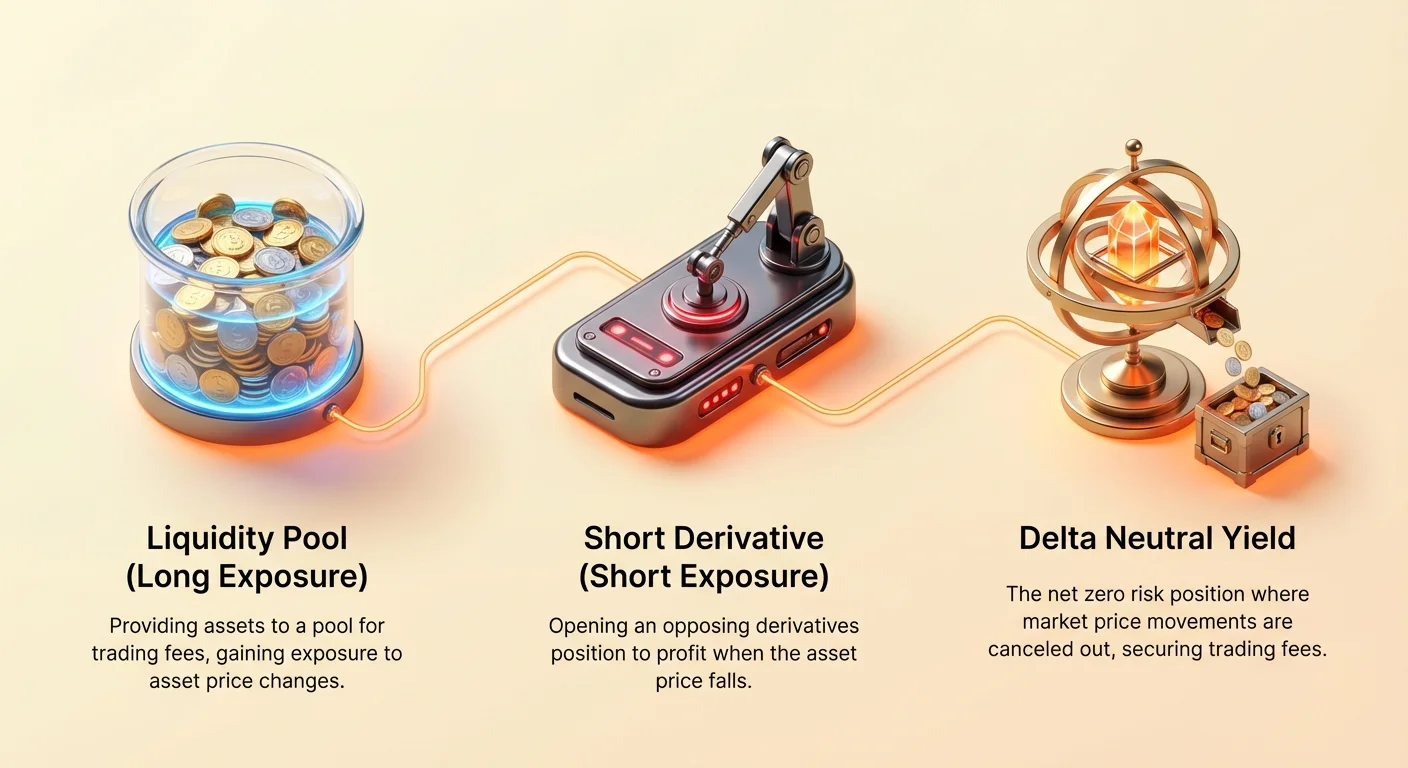
Even with the highest trading fees, IL often cancels out or overwhelms the yield generated by LP positions during periods of high volatility. For institutional capital or users prioritizing capital preservation, relying on trading fees alone is insufficient. The only way to guarantee the fee-based yield (the true engine of the farm) is to completely strip away the risk associated with asset price fluctuation—a process known as Delta Neutrality.
Ievads Delta neitrālā fermingā
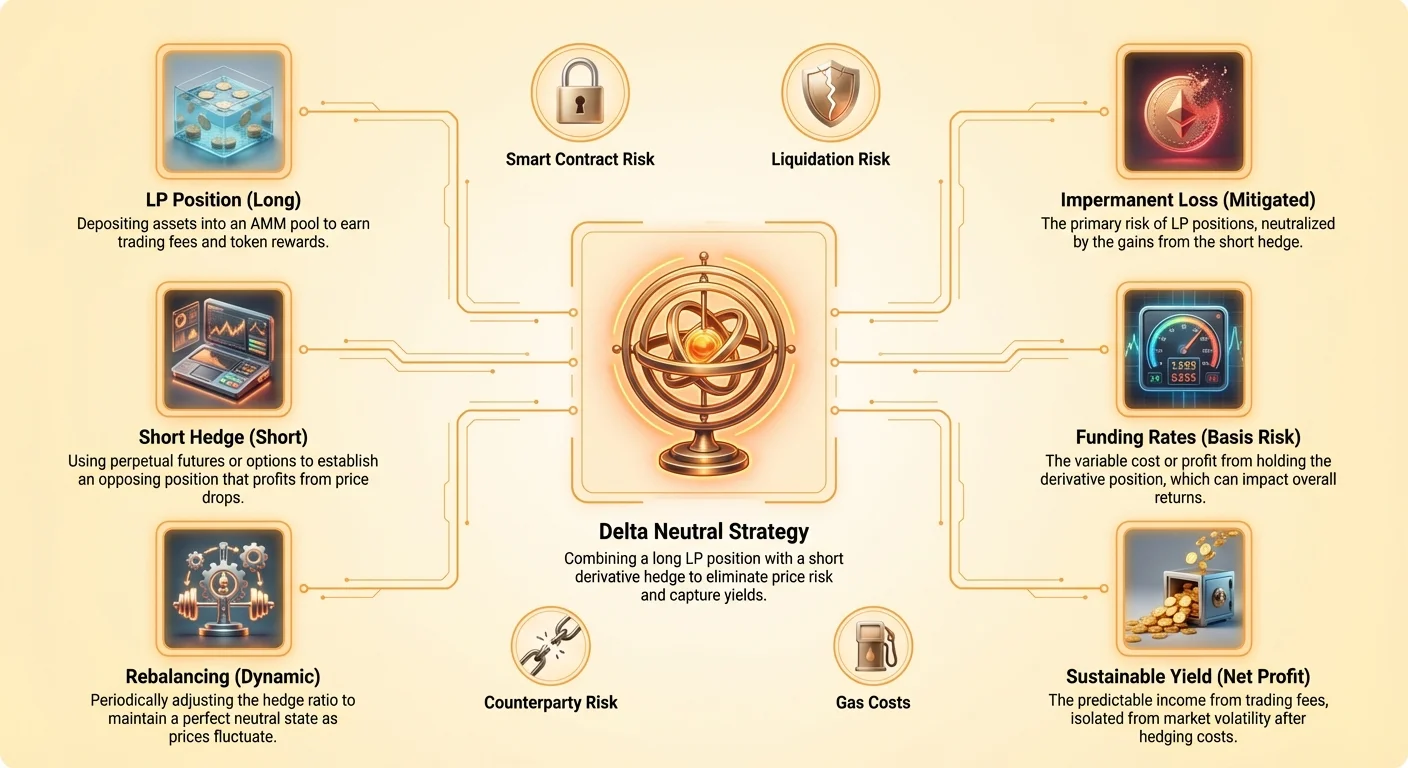
Delta neitrāls fermings ir uzlabota DeFi stratēģija, kas ietver vienlaicīgu LP pozīcijas turēšanu, vienlaikus izveidojot perfekti līdzsvarotu pretēju pozīciju derivātu tirgū (parasti mūžīgos fjūčeros).
„Delta neitrālitātes” definīcija
Finansēs Delta mēra aktīva cenas jutību pret pamata tirgus cenas izmaiņām.
- Ja jūs pērkat 1 ETH, jūsu delta ir +1 (jūs gūstat 1 USD par katru 1 USD ETH pieaugumu). Tas ir Long Delta pozīcija.
- Ja jūs pārdodat 1 ETH short, jūsu delta ir -1 (jūs gūstat 1 USD par katru 1 USD ETH samazinājumu). Tas ir Short Delta pozīcija.
Kad jūs noguldāt 50/50 ETH/USDC likviditātes baseinā, jūs efektīvi ieņemat long pozīciju ETH (jūsu delta ir pozitīva, lai gan mazāka par +1).
Delta neitrāla pozīcija mērķē uz nulles neto Delta. Apvienojot long ekspozīciju no LP pozīcijas ar vienādu un pretēju short ekspozīciju, visa pozīcija kļūst imūna pret virziena cenas kustībām. Vienīgais atlikušais peļņas avots ir tirdzniecības komisijas, ko ģenerē LP baseins.
Kodola mehānisms: LP pozīcija + Short hedžings
Delta neitrālas stratēģijas izpildei nepieciešama piekļuve decentralizētai vai centralizētai derivātu biržai kopā ar izvēlētu likviditātes baseinu.
1. solis: Izveidojiet long pozīciju (LP)
Pieņemsim, ka ETH pašreizējā cena ir 2000 USD.
- Jūs piešķirat 4000 USD kopējo kapitālu.
- Jūs noguldāt 1 ETH un 2000 USDC 50/50 AMM baseinā.
- Rezultāts: Jums tagad ir pozitīva delta ekspozīcija (jūs gūstat peļņu, ja ETH pieaug, bet riskējat IL).
2. solis: Izveidojiet short pozīciju (hedžingu)
- Vienlaicīgi jūs atverat short pozīciju 1 ETH uz mūžīgo fjūčeru platformas.
- Mūžīgie fjūčeri seko pamata aktīva cenai, bet ļauj short bez derīguma termiņa.
- Tā kā LP pozīcija ir ekvivalentna 1 ETH long pozīcijai, jūs short 1 ETH, lai atceltu ekspozīciju.
- Rezultāts: Jūsu neto delta tagad ir nulle (1 ETH long - 1 ETH short = 0).
Stratēģijas rezultātu analīze
Ja ETH cena pieaug līdz 3000 USD:
- LP zaudējumi (IL): LP pozīcija cieš IL, jo baseins pārdod daļu jūsu ETH.
- Hedžinga peļņa: Jūsu short fjūčeru pozīcija zaudē 1000 USD vērtībā, bet jūs gūstat kapitālu LP pusē. Izšķiroši, ja hedžings ir perfekti līdzsvarots, short pozīcijas zaudējumi ir vienādi ar IL, ko cietusi LP.
- Neto peļņa: Nulle (izņemot tirdzniecības komisijas).
Ja ETH cena samazinās līdz 1000 USD:
- LP peļņa (pret turēšanu): LP pozīcijas vērtība ir zemāka.
- Hedžinga peļņa: Jūsu short fjūčeru pozīcija gūst 1000 USD.
- Neto peļņa: Nulle (izņemot tirdzniecības komisijas).
Abos scenārijos tirdzniecības komisijas, ko ģenerē LP baseins, kļūst par garantēto peļņu, izolētu no tirgus svārstībām.
Praktiskā izpilde: Hedža veidošana un uzturēšana
Lai gan delta neitralitātes teorija ir vienkārša, tās izpilde ietver sarežģītu mainīgo navigāciju, galvenokārt finansēšanas likmes un pastāvīgas pārbalansēšanas nepieciešamību. Tieši šeit kļūst acīmredzama atšķirība starp augsta līmeņa spekulantu un profesionālu kapitāla pārvaldnieku.
Finansēšanas likmju pārvaldība (bāzes risks)
Pastāvīgie futūru līgumi ir paredzēti, lai cieši sekotu pamata aktīva cenai. To panāk ar mehānismu, ko sauc par finansēšanas likmi.
- Ja futūru līguma cena tiek tirgota augstāka nekā spot cena (t.i., cilvēki ir ļoti optimistiski un cenu kāpj nākotnē), ilgstošo pozīciju turētāji maksā nodevu (finansēšanas likmi) īssto pozīciju turētājiem.
- Ja futūru līguma cena tiek tirgota zemāka nekā spot cena, īssto pozīciju turētāji maksā ilgstošo pozīciju turētājiem.
Delta neitrālā stratēģijā jūs maksājat vai saņemat šo finansēšanas likmi savā īsajā hedžā.
Galvenais atklājums: Ja jūs varat izpildīt delta neitrālu stratēģiju, kurā jūs saņemat finansēšanas likmi (t.i., īssto turētāji saņem maksājumus no ilgstošajiem turētājiem), jūs efektīvi gūstat trīs slāņu ienesumu:
- LP tirdzniecības nodevas
- LP žetona emisijas atlīdzības (ja piemērojams)
- Finansēšanas likmju maksājumi (īss hedžs kļūst par pozitīvu ienākumu plūsmu)
Šī finansēšanas likmju mainīgums ir pazīstams kā bāzes risks. Profesionālam fermeris jāaprēķina pastāvīgi, vai paredzētās tirdzniecības nodevas pārsniedz īsā hedža finansēšanas likmes izmaksas.
Hedža attiecības aprēķināšana un koriģēšana
Tradicionālās 50/50 baseinos (piemēram, Uniswap V2) ekspozīcijas attiecība ir efektīvi 1:1, kas nozīmē, ka 100% no svārstīgā aktīva jāhedžē. Tomēr koncentrētajās likviditātes baseinos (piemēram, Uniswap V3) aprēķins kļūst sarežģītāks.
Koncentrētās likviditātes baseini: Šie baseini nodrošina likviditāti tikai noteiktā cenu diapazonā. Ja cena iziet ārpus jūsu diapazona, visi jūsu aktīvi pārvēršas mazāk vērtīgajā aktīvā, un jūsu pozīcija vairs nav aktīva nodevu ģenerēšanā. Tas padara delta aprēķinu dinamisku.
Praktisks padoms: Uzlabotās stratēģijas bieži prasa dinamiskus hedžēšanas rīkus vai seifus, kas automātiski koriģē īsās pozīcijas sviru, balstoties uz pašreizējo cenu attiecībā pret LP diapazonu. Ja cena ir tuvu diapazona malai, delta ekspozīcija var būt tuvu 1:1. Ja cena ir tieši diapazona vidū, delta ekspozīcija var būt tuvāka 0.5:1.
Automātiskā balansēšana un slīdes izmaksas
Delta neitrālā pozīcija nav “uzstādi un aizmirst”. Kad svārstīgā aktīva cena mainās, svari LP pozīcijā mainās.
- Ja ETH cena pieaug, LP pozīcija pārdod ETH, kas nozīmē, ka jūsu efektīvā ilgstošā ekspozīcija samazinās.
- Lai uzturētu neitralitāti, jums arī jāsamazina jūsu īsā pozīcija.
Šīs korekcijas nozīmē periodisku īsās pozīcijas daļēju atpircīšu (vai vairāk pārdod īsā) un transakciju gāzes nodevu un slīdes maksāšanu. Šīs ir operacionālās izmaksas hedža uzturēšanai.
Labākā prakse: Kopējais ienesums no LP nodevām un finansēšanas likmēm jāpārsniedz apvienotās finansēšanas likmes maksājuma (ja maksājat) un gāzes/slīdes izmaksas pārbalansēšanai, pretējā gadījumā stratēģija ir nerentabla. Kapitāla pārvaldniekiem bieži visrentablākais risinājums ir šīs pārbalansēšanas automatizēšana ar viedu līgumu seifiem.
Yield Maximization Techniques: Stablecoin Leverage
Once the primary risk of volatility (IL) has been neutralized using derivatives, the next step is maximizing the yield generation through prudent application of leverage, particularly within low-risk stablecoin environments.
The Strategy: Borrowing to Boost Stablecoin Yields
Stablecoin farming (e.g., earning 4-6% APY on a USDC/DAI pool) is low-risk but offers modest returns. To increase capital efficiency, users employ lending protocols (like Aave or Compound) to loop stablecoin positions.
The Loop Mechanism:
- Deposit $10,000 USDC as collateral into a lending protocol.
- Borrow $7,000 DAI against the USDC collateral (maintaining a safe Loan-to-Value, or LTV, ratio).
- Use the $7,000 DAI to provide liquidity in a high-yield DAI/USDC pool, earning trading fees and staking rewards.
- Optionally, the yield earned in Step 3 can be converted back to USDC and deposited as additional collateral, increasing the borrowing base for the next loop.
This strategy uses leverage to magnify the base yield of the low-risk asset. If the base yield is 5% and you maintain a 50% LTV, you can effectively boost your annualized return significantly, minus the cost of borrowing.
Managing Liquidation Risk in Stablecoin Loops
While the difference between USDC and DAI is usually negligible, this strategy introduces a new type of risk: De-pegging Liquidation Risk.
The major risk event is if the collateral stablecoin (e.g., USDC) suddenly loses its peg relative to the borrowed asset (e.g., DAI). If USDC drops to $0.90 while DAI holds $1.00, your collateral value has fallen by 10%, potentially pushing your LTV above the liquidation threshold.
Mitigation:
- Low LTV: Always maintain a conservative LTV ratio (e.g., 60-70%) well below the platform’s liquidation threshold (often 85%).
- Asset Quality: Only use high-quality, battle-tested stablecoins (USDC, DAI, USDT).
- Monitoring: Implement monitoring tools that alert you immediately if your LTV approaches a danger zone.
Advanced Option Strategies for Secondary Yield
For highly experienced users, a delta neutral LP position provides the perfect foundation for structured products, adding a secondary layer of premium yield.
The core idea is to use the perfectly hedged asset as collateral for selling options, generating income from market participants willing to pay a premium for insurance or leverage.
Example: Selling Covered Calls
- You have 1 ETH fully hedged in a delta neutral position.
- You sell a Covered Call option, giving the buyer the right (but not the obligation) to buy your 1 ETH at a strike price higher than the current market price.
- You collect the premium (the option price) immediately.
- If the price stays below the strike price, the option expires worthless, and you keep the premium and your delta neutral fees.
- If the price rises above the strike price, the option is exercised. Your 1 ETH is sold, but your derivative hedge simultaneously captures the price move, neutralizing the loss of the asset.
This provides an additional, predictable premium layer on top of your existing delta neutral yield, although it adds significant complexity and counterparty risk depending on the options platform used.
Assessing True Risk: Deconstructing the "Degen Score"
In the DeFi space, high APYs are often misleading. A professional approach requires a rigorous deconstruction of the advertised yield to determine the true, risk-adjusted return, often informally referred to as calculating the "Degen Score." A low Degen Score indicates a safe, sustainable yield.
Deconstructing the Annual Percentage Yield (APY)
APYs are often inflated by two factors:
- Sustainable Yield (Trading Fees): This is the predictable income generated by users swapping assets within your LP. This yield is generally sustainable and directly correlated to network activity.
- Inflationary Yield (Token Emissions): This is the high-percentage reward paid out in the farm’s native governance token (e.g., FARM, GOV). This token often experiences severe price depreciation as the high emission rate floods the market.
Professional Filtration: A savvy investor discounts or entirely ignores the token emission yield when calculating the viability of a long-term position. The focus must be on whether the sustainable trading fee yield, minus hedging costs (funding rates), provides an acceptable risk-adjusted return. If the strategy relies solely on token emissions, it is inherently unsustainable.
Analyzing Basis Risk and Counterparty Risk
The main risks in advanced farming are often not related to the underlying assets themselves, but the platforms used to execute the strategy.
1. Basis Risk (The Cost of the Hedge)
As discussed, Basis Risk is the risk that the funding rate paid on your short hedge may be volatile or persistently negative, effectively eating away at your LP fees.
Mitigation: Choose platforms (CEX or DEX) with deep liquidity in their derivatives markets, which typically stabilizes the funding rate. Track historical funding rates to model your worst-case hedging cost.
2. Counterparty and Smart Contract Risk
When engaging in multi-layer strategies, you exponentially increase your exposure to failures in smart contract code or centralization risk.
- Smart Contract Risk: The potential for a bug or exploit in the LP protocol, the lending protocol, or the derivatives protocol.
- Custody Risk: If you use a Centralized Exchange (CEX) for your derivatives hedge, you are exposed to that exchange's solvency risk.
Best Practice: Prioritize audited protocols and consider using decentralized perpetual futures platforms (DEX derivatives) to reduce the counterparty risk associated with holding collateral on a CEX.
Best Practices for Capital Preservation
Maintaining profitability in advanced DeFi requires discipline and constant monitoring:
| Best Practice | Rationale |
|---|---|
| Use Self-Custodial Wallets | Retain direct control over your assets and keys. Use robust smart contract wallets if relying on automated strategies. |
| Verify Audits | Only deploy capital into protocols that have successfully completed multiple, reputable third-party security audits. |
| Decentralize the Hedge | Whenever possible, execute your derivatives hedge on a robust Decentralized Exchange (DEX) to eliminate exchange insolvency risk (CEX Counterparty Risk). |
| Monitor Funding Rates Daily | Immediately adjust or close positions if the cost of the hedge (the funding rate) is consistently higher than the LP yield. |
| Stress Test LTV | If using stablecoin leverage, calculate the precise de-peg percentage required to trigger liquidation and maintain a buffer 15-20% above that threshold. |
Secinājumi
Uzlabotas DeFi fermingu stratēģijas ir tilts starp spekulativām kriptovalūtu investīcijām un profesionālu kapitāla pārvaldību. Ieviešot delta neitrālas tehnikas, lietotāji pāriet no cenas virziena spekulēšanas uz tīkla aktivitātes ģenerētā ilgtspējīgā ienesīguma izolēšanu un iegūšanu.
Lai gan stratēģijas, kas ietver pastāvīgos fjučerus, opcijas un stablecoin sviru, ievieš sarežģījumus, piemēram, Basis Risk un LTV uzraudzību, tās piedāvā augstākos riskam pielāgotos ienesumus, kas pieejami decentralizētajās finansēs. Mērķis vairs nav dzenāties aiz augstākā reklamētā APY, bet gan sasniegt zemu Degen Score — augstu ienesumu ar minimālu inherentu risku —, padarot kriptovalūtu tirgus volatilitāti nerelevantu jūsu pastāvīgajai ienākumu plūsmai. Šo rīku apgūšana ir atslēga pašsuverenitātes veidošanai jaunajā digitālajā ekonomikā.