
Kad vairums cilvēku ienāk kripto telpā, viņu galvenais mērķis ir drošība — aizsargāt savus aktīvus no hakeriem un zādzībām. Tas noved pie "aukstās uzglabāšanas" pieņemšanas, jeb makiem, kas paredzēti ilgtermiņa turēšanai (HODLing). Tomēr aktīva tirgotāja vai arbitrāžista vajadzības ir būtiski atšķirīgas. Šīm personām mikrosekundes ir svarīgas, un spējas izpildīt darījumus uzreiz bieži vien pārsvarā tradicionālo maksimālās ilgtermiņa drošības prioritāti.
Tirdzniecības un arbitrāžas maks nav seifs; tas ir ātrgaitas operacionālais konts. Tam nepieciešamas konfigurācijas, kas prioritizē sinhronizācijas ātrumu, zemu latentumu un drošu integrāciju ar tirdzniecības platformām vai automatizētiem botiem caur Lietotņu programmēšanas saskarnēm (API). Tas prasa stratēģisku līdzsvaru: pietiekami daudz kapitāla turēt šķidru un pieejamu, lai izmantotu īslaicīgas tirgus iespējas, vienlaikus stingri minimizējot pretpusē risku, kas saistīts ar centralizētām biržām, un drošības riskus, kas saistīti ar automatizētiem tirdzniecības rīkiem.
Šis ceļvedis sniedz profesionālu ietvaru jūsu operacionālo kripto maku konfigurēšanai. Mēs pāriesim pāri vienkāršiem karstās uzglabāšanas jēdzieniem, lai izpētītu drošības protokolus, konfigurācijas iestatījumus un pamatstratēģijas, kas nepieciešamas, lai maksimizētu ātrumu un efektivitāti, neapdraudot visu jūsu portfeli tirgus vai tehnoloģiskajiem riskiem.
The Core Conflict: Speed vs. Security in Active Trading
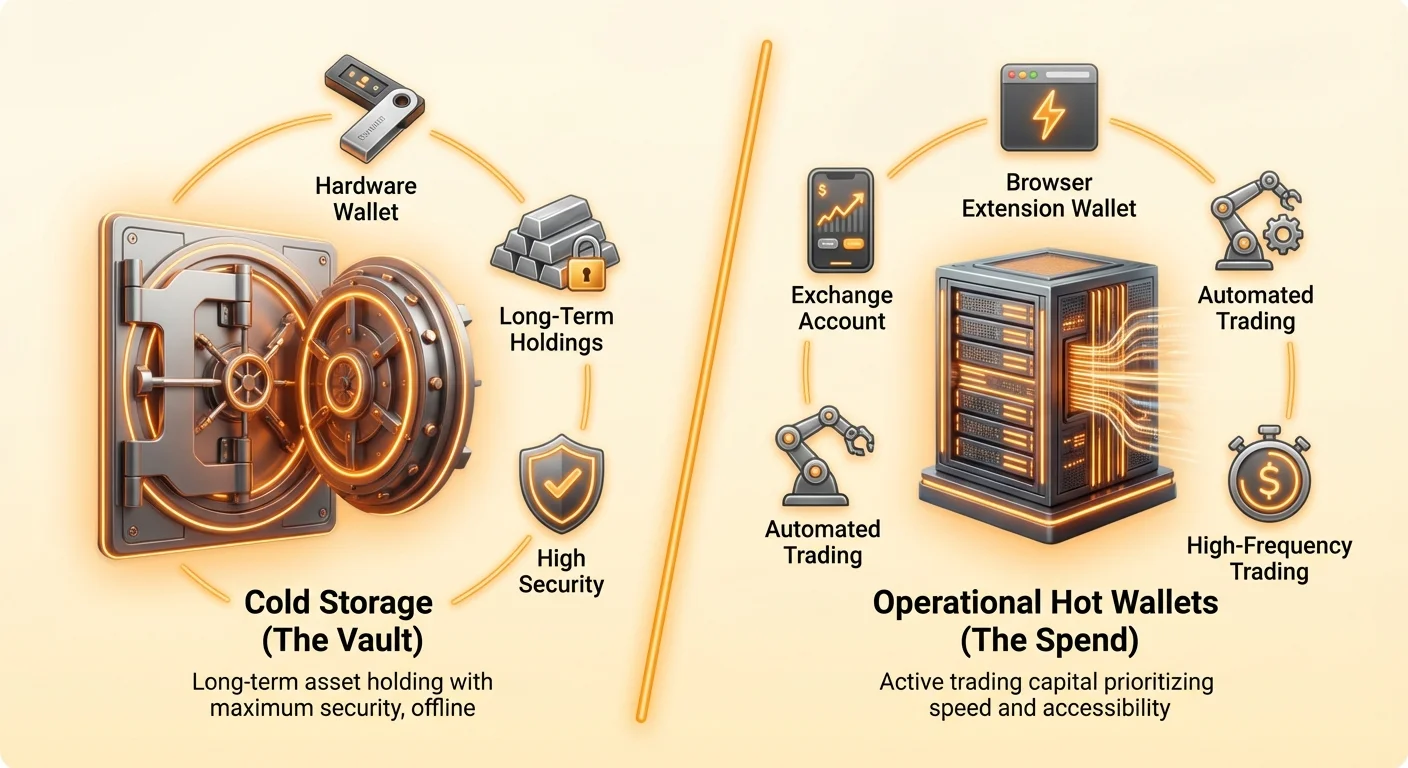
In the world of crypto custody, we typically divide wallets into two major categories: cold (offline) and hot (online). A HODLer will always choose cold storage. An active trader, however, must use some form of hot storage, as being offline means being slow, and slowness means missing opportunities.
Understanding Latency and Synchronization
Latency refers to the delay between initiating an action (like placing a trade order) and the execution of that action. For high-frequency trading (HFT) or arbitrage, latency must be near zero. This demand for speed forces traders to rely on systems that are constantly synchronized with the blockchain or, more commonly, centralized exchanges (CEXs).
A self-custody wallet (like a dedicated desktop application) must periodically synchronize its view of the blockchain by downloading transaction data. While fast broadband has made this much quicker, it is still orders of magnitude slower than placing a trade directly on an exchange’s matching engine. Arbitrageurs, who try to profit from small price differences across different platforms, often must have funds already deposited on multiple centralized exchanges to achieve the necessary speed.
Defining Operational vs. Storage Capital
The single most important rule in professional crypto management is the strict separation of capital based on its intended use. Your trading wallet should never hold more funds than are required for immediate market operations.
Storage Capital (The Vault): This is the bulk of your assets, intended for long-term holding. It belongs in cold storage (hardware wallets) and should only be accessed for deposits or major rebalancing. This capital is entirely shielded from exchange hacks, API exploits, or trading losses.
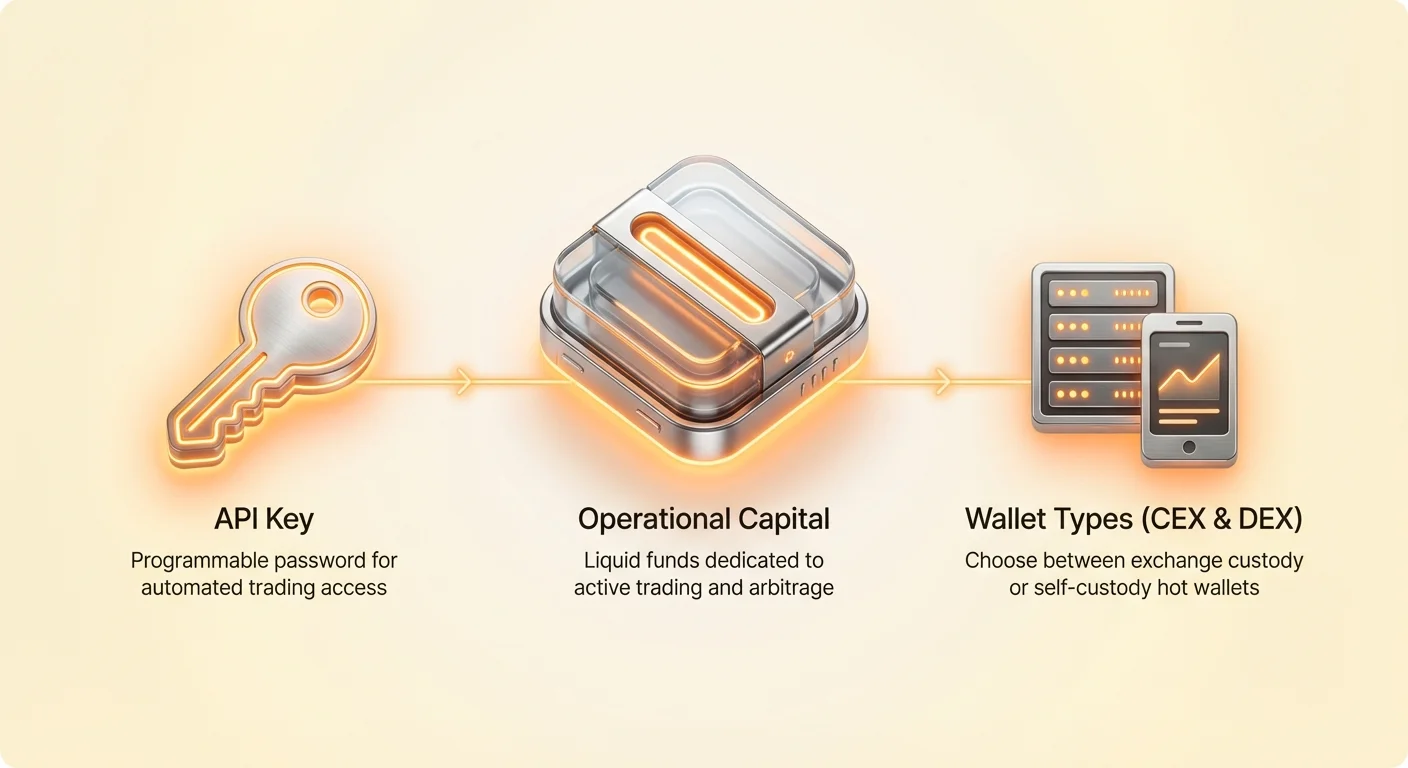
Operational Capital (The Spend): This is the smaller, highly liquid portion of funds dedicated specifically to trading, market making, or capturing arbitrage opportunities. This capital is housed in hot wallets or exchange accounts, prioritizing accessibility and speed over ultimate long-term security. Active traders must accept that this portion of their capital carries a higher risk profile.
Wallet Configuration for Active Trading
When selecting a wallet for active trading, the primary factor is the ecosystem in which you trade. Centralized exchange trading demands different tools than decentralized finance (DeFi) trading.
Centralized Exchange (CEX) Wallets
For the vast majority of high-volume trading and arbitrage, the wallet solution is the exchange’s internal custody system. While these are technically not "your" wallets (you don't hold the private keys), they offer instant, zero-latency transfers between trading pairs and immediate liquidity access.
The Speed Advantage: Because funds never leave the exchange environment, trades execute instantly on the exchange's internal ledger. This is the fastest possible configuration for active trading.
The Risk: Counterparty risk. If the exchange is hacked, becomes insolvent, or freezes withdrawals, your operational capital is at risk. For this reason, the funds held in CEX wallets must be minimized according to the "Operational Capital" rule.
Utilizing Dedicated Software (Hot) Wallets
For trading on Decentralized Exchanges (DEXs), accessing new DeFi protocols, or performing cross-chain arbitrage, you must use a self-custody hot wallet (mobile, desktop, or browser extension). These wallets provide the necessary interface to interact with smart contracts.
- Browser Extensions (e.g., MetaMask, Phantom): These are essential for connecting to web applications (DApps) and executing trades on DEXs like Uniswap or Orca. They offer speed and connectivity but must be kept extremely lightweight. Only a bare minimum of ETH, SOL, or other native tokens needed for gas fees should reside here, along with the operational tokens you intend to trade.
- Dedicated Desktop Wallets (e.g., Exodus, Electrum): These can be used for manual, larger trades where a direct PC interface is preferred. Because they run locally on your machine, they can offer slightly enhanced security over a browser extension, provided the PC is hardened against malware.
Crucial Best Practice: Never connect your primary, long-term self-custody wallet (the one holding your cold storage private keys) to a DeFi application. Use a completely separate, dedicated "burner" or operational hot wallet for all trading interactions.
The Strategy of Fund Separation: Implementing the Vault and Spend
A robust trading strategy requires a corresponding custodial strategy that shields the majority of assets from the volatility and risks inherent in active trading environments.
The 90/10 Rule and Scheduled Withdrawals
A common guideline adopted by professional traders is the 90/10 Rule: No more than 10% of your total crypto portfolio should ever be held in a hot wallet or on a centralized exchange at any given time.
When profits accrue in the operational hot wallet or CEX account, they must be systematically moved to cold storage.
- Establish Profit Thresholds: Set a dollar value threshold (e.g., $5,000). Once your operational funds exceed this limit due to successful trades, immediately initiate a withdrawal of the excess amount back to your hardware wallet.
- Automated Off-Ramping: If using trading bots, program the bot not just for profit-taking, but also for automated withdrawal to a predefined cold storage address once certain profit metrics are hit. This reduces manual intervention and ensures profits are secured instantly.
Dedicated Wallets for Specialized Trading
For advanced traders operating across multiple chains or asset classes (e.g., NFTs, tokens, leveraged positions), isolating funds further minimizes contagion risk.
| Trading Activity | Recommended Wallet Configuration | Primary Risk Mitigation |
|---|---|---|
| CEX HFT/Arbitrage | Exchange Sub-Accounts (API access only) | Limit API permissions to trading, disable withdrawal rights. |
| DeFi Spot Trading | Dedicated Browser Extension Wallet | If the DApp is exploited, only the operational funds are at risk. |
| Long-Term Staking/Yield | Separate Hardware Wallet (or dedicated hot wallet) | Isolate staking keys from trading keys to prevent malicious contract approval. |
Latences minimizēšana: sinhronizācija, ātrums un maksas
Tirdzniecības ātrums nenozīmē tikai ātru izpildi biržā; tas ietver arī efektīvu līdzekļu pārvietošanos uz biržu vai no tās un ātru darījumu apstrādi uz ķēdes.
Uz ķēdes darījumu ātruma optimizēšana (Gāzes kari)
Arbitrāžas iespējām, kas prasa kustību uz ķēdes (piem., tokenu pārskaitīšana uz DEX, lai izmantotu cenu starpību), darījuma ātrumu nosaka gāzes maksa, kuru jūs iestatāt, un tīkla sastrēgums.
- Mempool prioritātes izpratne: Pirms darījums ir apstiprināts, tas gaida mempool (atmiņas baseins). Kalnrači vai validatori prioritizē darījumus ar augstākām gāzes maksām. Arbitrāžas tirgotājiem jāuzrauga gāzes tirgus (izmantojot rīkus kā Etherscan's Gas Tracker) un jābūt gataviem maksāt prēmiju, lai nodrošinātu, ka viņu darījums tiek iekļauts tieši nākamajā blokā.
- L2 un ātrāku ķēžu izmantošana: Augstas frekvences tirdzniecība uz ķēdes kļūst arvien grūtāka un dārgāka bāzes slāņos kā Ethereum. Profesionālie tirgotāji prioritizē 2. līmeņa risinājumus (L2) kā Arbitrum, Optimism vai ātrākas L1 ķēdes kā Solana vai Avalanche, kas piedāvā gandrīz tūlītēju norēķinu un ievērojami zemākas darījumu izmaksas.
- Maciņa mezgla savienojums: Pašpārvaldības maciņiem savienojamība ir svarīga. Pārliecinieties, ka jūsu maciņa programmatūra ir konfigurēta, lai izmantotu uzticamu, ātru RPC (Attālinātā procedūras izsaukums) galapunktu. Lai gan paša pilnvērtīgā mezgla palaišana piedāvā augstāko drošību, tā ievieš aizkavi. Tirdzniecībai parasti nepieciešams uzticams trešās puses RPC nodrošinātājs ātrumam.
Maciņa sinhronizācijas ātruma testi
Lai gan CEX maciņi vienmēr ir ātri, pašpārvaldības programmatūra prasa ātru sinhronizāciju. Pirms ieguldīt nopietnus līdzekļus, pārbaudiet jūsu izvēlētās maciņa konfigurāciju ātrumam:
- Testa iemaksa/izņemšanas laiks: Izmēriet, cik ilgs laiks paiet, lai pārvietotu nelielu kripto daudzumu no aukstās uzglabāšanas uz jūsu operatīvo karsto maciņu un tad uz jūsu izvēlēto biržu.
- Savienojamības pārbaude: Pārliecinieties, ka jūsu darbvirsmas vai mobilais maciņš uzreiz atjaunina atlikumus. Ja rodas aizkaves ilgāk par dažām sekundēm, pārslēdzieties uz atsaucīgāku maciņa lietojumprogrammu vai atjauniniet savu ierīci/savienojumu.
Mastering API Key Security for Automated Trading
The biggest security risk unique to automated traders and arbitrageurs is the API key. An API key is essentially a programmable password that allows external software (your bot or trading script) to execute commands on your exchange account without needing your username and password.
If an attacker gains access to your API key, they can potentially drain funds, execute malicious trades, or sabotage your strategy, depending on the key’s permissions.
Why API Keys are More Dangerous than Passwords
Unlike a password, which typically requires a second factor (2FA) for login, an active API key often grants immediate, automated access. If your bot’s server is compromised, the attacker has instant programmatic access to your funds.
API Key Security Best Practices (The Triad of Protection)
Professionalizing API key management requires three layers of protection: Minimization, Isolation, and Vaulting.
1. Minimizing Key Permissions (Principle of Least Privilege)
Always generate API keys with the absolute minimum required permissions:
- NEVER Enable Withdrawal Rights: If your bot or script is only meant to trade (buy/sell), do not grant it the permission to withdraw funds from the exchange. This is the single most important firewall. If the API key is stolen, the attacker can only move funds around internally, not steal them.
- Limit Read Access: If possible, only allow access to the specific accounts or trading pairs the bot uses.
- Avoid Main Account Keys: If the exchange allows, create dedicated sub-accounts solely for trading bots. Generate the API key from this sub-account.
2. Isolation through IP Whitelisting
IP whitelisting restricts which computers or servers can use the API key. This is a mandatory step for any secure automated trading operation.
- Definition: You tell the exchange, "Only allow API calls originating from this specific set of IP addresses."
- Implementation: If your bot runs on a dedicated Virtual Private Server (VPS) or cloud instance (like AWS or Digital Ocean), you must provide the exchange with the static IP address of that server. If an attacker steals the key but tries to use it from their home computer, the exchange will automatically reject the call.
- Local Use: If you run the bot locally, be sure your home internet provider gives you a static IP, or be prepared to update the whitelist frequently if your IP changes.
3. Secure Storage and Vaulting
API keys should be treated with the same reverence as private keys—they must be encrypted and stored securely.
- Avoid Plain Text: Never save API keys in simple text files or include them directly in the source code of your trading bot.
- Use Secret Managers/Vaults: Use professional security solutions like HashiCorp Vault, cloud-based secret managers (e.g., AWS Secrets Manager), or simple encrypted environment variables. These tools securely store the key and inject it into the bot’s memory only at runtime, ensuring the key is never sitting on the disk unencrypted.
- Key Rotation: Regularly delete old API keys and generate new ones (Key Rotation). This limits the window of opportunity for any key that might have been quietly compromised.
Stratēģija: Maku tipa saskaņošana ar tirdzniecības stilu
Pēdējais solis jūsu iestatījuma profesionālizēšanā ir maku arhitektūras saskaņošana ar jūsu specifiskajiem tirdzniecības mērķiem.
Lielapjoma tirgus veidošana un CEX arbitrāža
Šī stratēģija prasa augstāko ātrumu un zemākās maksas, prioritizējot biržas savienojamību.
- Galvenais rīks: Centralizēto biržu maki/Apakškonti.
- Drošības protokols: Stingrs API IP baltais saraksts un nulle izņemšanas atļaujas.
- Līdzekļu plūsma: Automātiski noguldījumi (no aukstās uzglabāšanas uz CEX) tikai tad, kad operacionālais kapitāls nokrītas zem minimālā sliekšņa, un automātiska peļņas izņemšana (no CEX uz auksto uzglabāšanu), kad sasniegts augšējais slieksnis.
Decentralizēto biržu (DEX) un DeFi mijiedarbība
Šī stratēģija prasa pašglabāšanu un spēju tieši mijiedarboties ar viediem līgumiem, prioritizējot izolāciju un precīzu darījumu pārvaldību.
- Galvenais rīks: Veltīts pārlūkprogrammas paplašinājuma karstais maks.
- Drošības protokols: Izolējiet šo maku no visiem citiem ieguldījumiem. Neglabājiet šeit lielus kapitāla daudzumus. Izmantojiet darījumu parakstīšanas lietotni (kā pavadoni mobilajā lietotnē vai lētu aparatūras ierīci), lai parakstītu nozīmīgus apmaiņas darījumus, pat ja privātā atslēga paliek karsta.
- Līdzekļu plūsma: Pārskaitiet aktīvus no aukstās uzglabāšanas tieši uz karsto maku tikai tieši pirms paredzētās apmaiņas vai fermas noguldījuma.
Ārkārtas piekļuve un dublējums
Pat ātruma optimizētā vidē jums nepieciešami spēcīgi ārkārtas plāni.
- Dublējumi: Pārliecinieties, ka katra karstā maka sēklas frāze ir droši uzglabāta atsevišķi no jūsu aukstās uzglabāšanas dublējumiem. Ja jūsu tirdzniecības klēpjdators sabojājas, jums nepieciešama ātra piekļuve jūsu operacionālajiem līdzekļiem.
- Biržas 2FA: Izmantojiet aparatūras balstītu divfaktoru autentifikāciju (kā YubiKey) pieteikumam centralizētās biržās, bet nekad neconnectējiet 2FA ierīci ar mašīnu, kas palaiž tirdzniecības botu. Šī nodalīšana nodrošina, ka pat ja bots ir kompromitēts, fiziska piekļuve joprojām nepieciešama pieteikumam un iestatījumu vai atļauju maiņai.
Secinājums
Pāreja no HODLer uz aktīvu tirgotāju prasa pilnīgu jūsu glabāšanas stratēģijas pārstrukturēšanu. Fokuss pāriet no maksimālās ilgtermiņa drošības uz ātruma un pieejamības maksimizēšanu noteiktai, ierobežotai jūsu kapitāla daļai.
Stingri nodalot jūsu uzglabāšanas kapitālu (Seifs) no operacionālā kapitāla (Iztēri), ieviešot stingru API atslēgas drošību — tostarp IP balto sarakstu un izņemšanas tiesību atcelšanu — un izvēloties pareizo formu (CEX maks, veltīts programmatūras maks) pēc jūsu tirdzniecības vietas, jūs varat izveidot profesionālu, efektīvu un drošu arhitektūru augstas frekvences kripto pārvaldībai. Aktīvās tirdzniecības atslēga ir ātrums, bet ilgtermiņa panākumu atslēga ir saistīto drošības risku pārvaldība ar disciplīnu un stratēģisku izolāciju.