
Bitcoin bieži tiek aprakstīts kā digitālā nauda, ko vada kods. Tas ir taisnība, bet tas izlaiž būtisku elementu: kas kontrolē kodu? Atšķirībā no tradicionāla uzņēmuma, kas darbojas hierarhiskās vadības ietvaros, vai valdības, kas balstās uz parlamentāro balsošanu, Bitcoin protokola izmaiņas pārvalda unikāls, nekārtīgs un augsti decentralizēts politisks process. Šī sistēma ir izstrādāta tieši tā, lai lielas izmaiņas padarītu grūtas, nodrošinot valūtas stabilitāti un paredzamību ilgtermiņā.
Bitcoin pārvaldības izpratne ir būtiska, lai saprastu tā patieso izturību. Tas izskaidro, kāpēc radikālas izmaiņas, pat potenciāli izdevīgās, tiek ieviestas gadiem ilgi, prasot debates, kas sniedzas pāri izstrādātāju pasta sarakstiem, kalnrūpniecības baseiniem un individuālo lietotāju mājām, kuri vada validācijas mezglus. Šī augstā berzes politiskā ekonomika darbojas kā konstitucionāls aizsargs, aizsargājot tīklu no sasteigtiem lēmumiem un ļaunprātīgiem dalībniekiem.
Šī analīze iedziļinās protokola izmaiņu mehānismos, izpētot idejas dzīves ciklu — no tās sākotnējā priekšlikuma kā Bitcoin uzlabošanas priekšlikums (BIP) līdz tās galīgai pieņemšanai, izmantojot konsensa mehānismus, piemēram, mīkstās dakšas. Mēs izpētām smalko varas līdzsvaru starp izstrādātājiem, kalnrūpniekiem un lietotājiem, kuri vada pilnos mezglus, galu galā atklājot, kāpēc Bitcoin pretestība izmaiņām ir tā spēcīgākā iezīme.
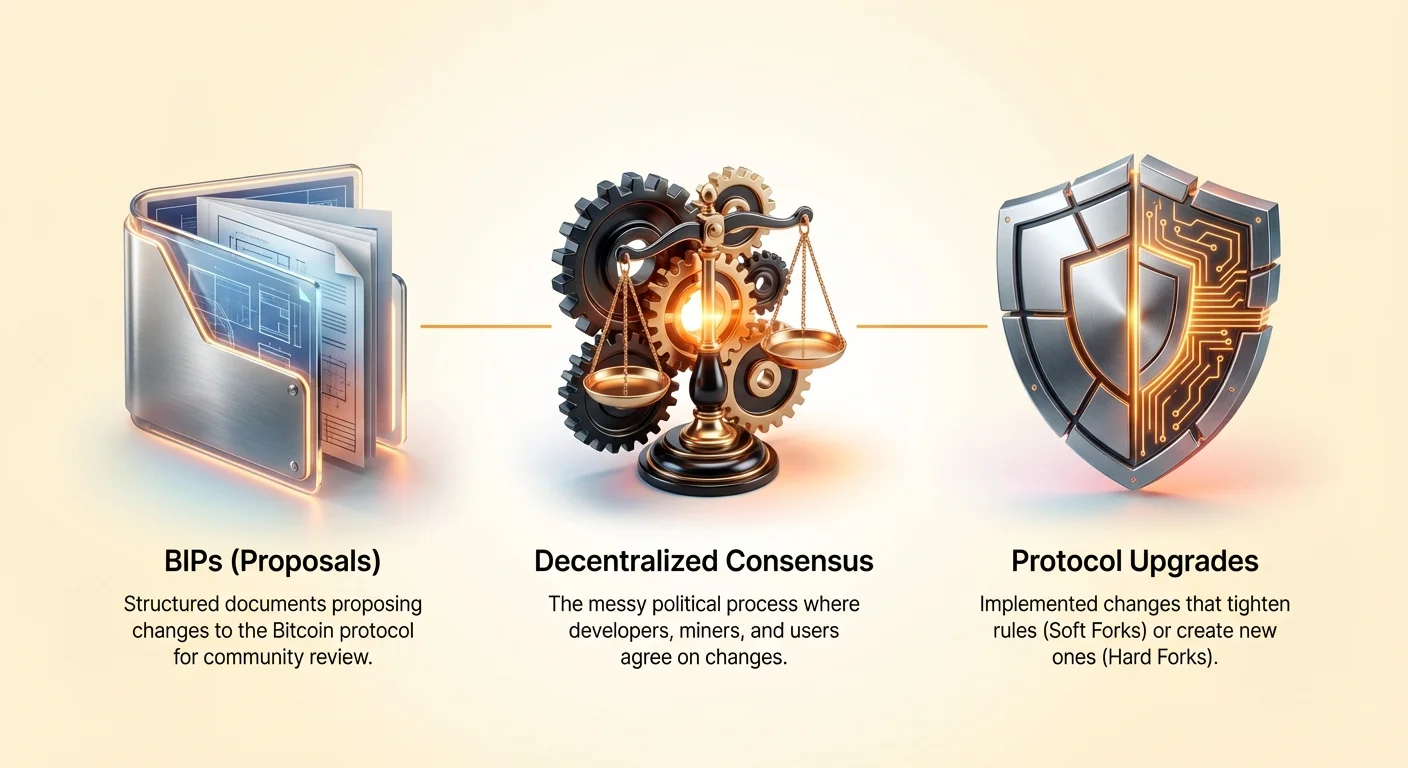
The Foundation of Change: The Bitcoin Improvement Proposal (BIP) System
Since Bitcoin has no centralized authority, it needed a formal, public process for proposing, discussing, and documenting changes to the protocol. This mechanism is known as the Bitcoin Improvement Proposal, or BIP. The BIP system provides the necessary structure to manage technical consensus, turning abstract ideas into formal proposals ready for community scrutiny.
Think of the BIP system as the constitutional drafting room for Bitcoin. It is a mandatory starting point for any significant non-trivial change, from slight adjustments to fee calculations to sweeping changes in how transactions are validated.
Anatomy of a BIP
A BIP is a structured document that describes a specific change, feature, or design improvement for Bitcoin. Each BIP is assigned a sequential number (e.g., BIP 1, BIP 341) and must meet strict requirements to be considered valid. These requirements ensure clarity, technical soundness, and thorough consideration of side effects.
There are generally three types of BIPs, though the most relevant for governance are the "Standards Track" BIPs, which propose changes affecting the protocol itself (like transaction format or consensus rules). A successful BIP must clearly define:
- Motivation: Why is this change necessary? What problem does it solve?
- Specification: The technical details of how the change will be implemented in the code. This must be precise enough for developers globally to code against it.
- Backwards Compatibility: Will this change break compatibility with older versions of the software? (This determines whether the change requires a Soft Fork or a Hard Fork.)
The existence of the BIP process enforces transparency. It ensures that every critical technical adjustment is subjected to open-source scrutiny, often by hundreds of independent cryptographers and developers who analyze the code for flaws, economic side effects, and security vulnerabilities. This public review phase is the essential friction that protects the system.
The Role of Core Developers and Maintainers
While anyone can propose a BIP, its development, refinement, and eventual merge into the reference implementation (Bitcoin Core) are overseen by a small, dedicated group known as Bitcoin Core developers and maintainers. These individuals are not an official ruling body; rather, they are trusted volunteers whose primary function is code review, maintenance, and risk assessment.
Bitcoin Core is the foundational software that most nodes and infrastructure services run, making its codebase highly influential. The maintainers are responsible for assessing whether a BIP is technically ready and whether it has garnered sufficient social consensus within the development community.
Crucially, developers cannot force adoption. They write the software, but the miners and, more importantly, the users must voluntarily download and run the updated software. If the developers were to implement a change the community hated, users would simply reject the code and find alternative software, effectively stripping the developers of their influence. Their power rests solely on trust, expertise, and technical neutrality.
Why the BIP Process is Necessary Friction
In fast-moving centralized technology companies, agility is paramount. Changes are pushed quickly. For Bitcoin, the opposite is true. The BIP process is intentionally slow and argumentative because the network's primary value is its immutability and predictability.
If Bitcoin were easy to change, it would lose its credibility as an immutable store of value. The slow, multi-year discussion inherent in the BIP process acts as a political filter:
- Vetting Economic Impact: Slow rollout allows economists and analysts to study potential impacts, such as changes to transaction fees or the incentives for mining.
- Preventing Centralization: By requiring broad agreement across different political, economic, and geographic interests, the process prevents any single powerful entity (like a massive mining pool or a centralized exchange) from unilaterally dictating policy.
- Ensuring Quality: Time allows code to be reviewed, stress-tested, and audited repeatedly, reducing the risk of catastrophic bugs entering the core protocol.
The difficulty of passing a BIP is a feature, not a bug, ensuring that only changes with overwhelming technical and social support ever move forward.
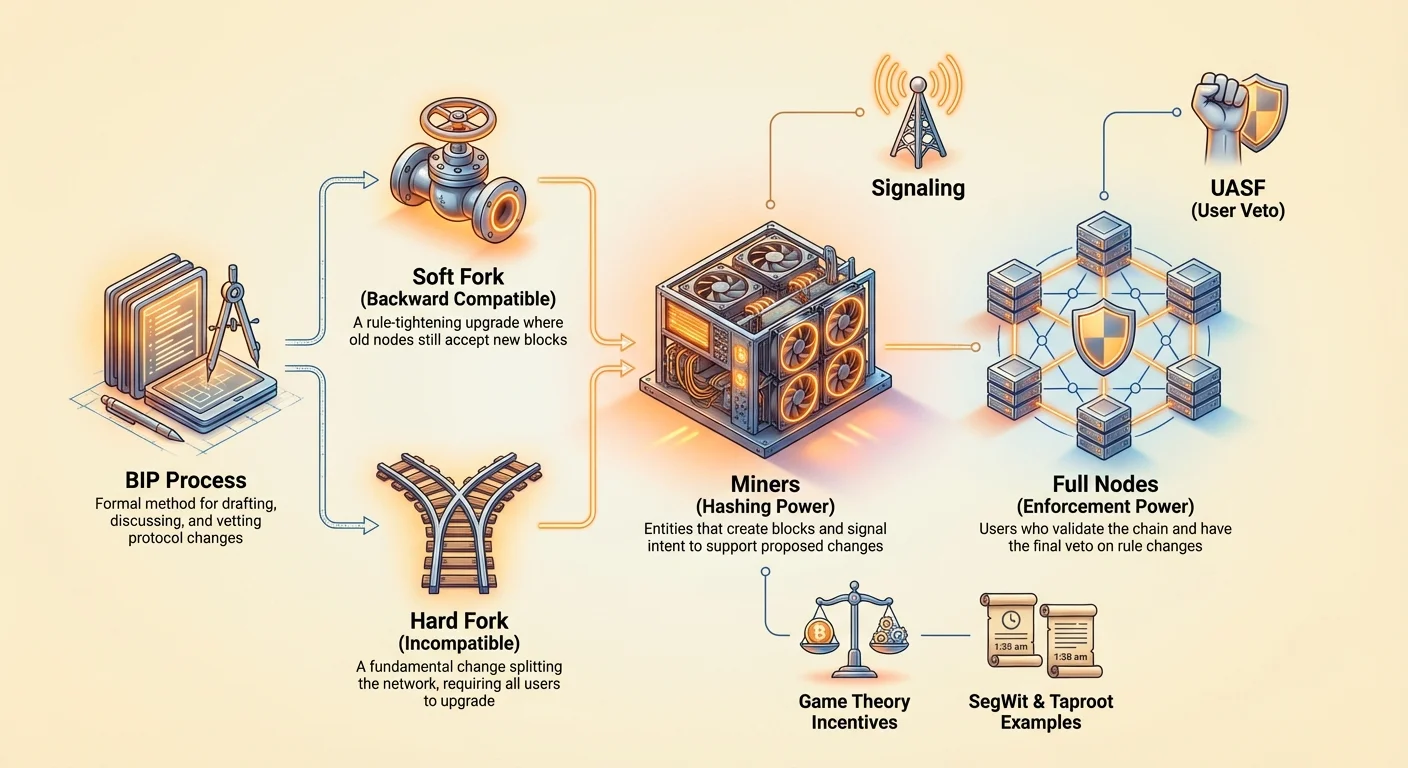
The Two Paths of Protocol Change: Soft Forks vs. Hard Forks
Once a BIP has been drafted and discussed, developers must decide how to implement it. This implementation strategy defines the level of network coordination required and, critically, the potential risk of splitting the community. This choice boils down to two main types of protocol upgrades: Soft Forks and Hard Forks.
These forks are not merely software updates; they represent fundamentally different approaches to achieving consensus and maintaining backward compatibility.
Soft Forks: The Backward-Compatible Upgrade
A Soft Fork is a change to the Bitcoin protocol that tightens the rules, meaning the new rules are compatible with the old rules.
Imagine upgrading a software application so that the new version can read all the old files, but the old version cannot necessarily read all the new files. In the context of Bitcoin:
- New Rules: Nodes running the upgraded software (the Soft Fork) enforce the new, stricter set of rules.
- Old Rules: Nodes running the old software (pre-upgrade) still accept the transactions validated by the upgraded nodes, because the upgraded nodes are following a subset of the original rules.
For example, if a Soft Fork states that all blocks must now be slightly smaller than they were before (tightening the rule), the older nodes will still consider these smaller blocks valid, as they still adhere to the original, maximum size limit.
Soft Forks are the preferred method of upgrading Bitcoin because they require only a majority of the network (typically miners representing 95% of hashing power or a majority of nodes) to adopt the change. The remaining minority of older nodes can continue to operate without breaking the chain, though they may not be able to fully validate or use the new features. This inherent backward compatibility greatly reduces the risk of a messy chain split.
Hard Forks: The Nuclear Option
A Hard Fork is a fundamental change to the protocol that makes the new rules incompatible with the old rules. It requires every single participant—miners, nodes, and wallets—to upgrade their software to follow the new consensus.
If a Hard Fork is activated, the network literally splits into two separate chains:
- The New Chain: Follows the new set of rules (e.g., significantly larger block sizes).
- The Old Chain: Continues following the original rules.
Nodes that have not upgraded will reject any blocks created under the new rules, believing them to be invalid. If a significant group continues to mine and validate the old chain, two separate versions of Bitcoin will exist simultaneously.
Hard Forks are highly disruptive and carry immense economic risk. Because the split is permanent unless one chain is completely abandoned, the community must be near-unanimous before a Hard Fork is attempted. If successful, users on the old chain suddenly find themselves holding a potentially worthless asset, while the new chain becomes the dominant version of Bitcoin. The threat of an economic split means Hard Forks are reserved only for critical fixes or changes where backward compatibility is impossible.
The Governance Test: Why Hard Forks are Feared
The primary function of a Hard Fork in Bitcoin governance is to serve as a massive deterrent against conflict. The potential for a split forces competing interests—such as miners who want higher fees versus users who prioritize decentralization—to compromise.
The classic example illustrating this fear occurred during the 2017 scaling debates. A group attempted to force a Hard Fork (known as SegWit2x) to increase the block size limit significantly. The proposal ultimately failed because the user community and core developers rejected the risk of fracturing the brand and liquidity of Bitcoin. The market made clear that preserving Bitcoin’s unified identity was more valuable than accommodating a technical change that lacked overwhelming consensus.
This dynamic demonstrates that the economic value of the network—the combined trust and liquidity—acts as the ultimate constraint on governance. Any group pushing a Hard Fork risks losing all economic support if the broader community decides to stick with the established, proven chain.
Achieving Consensus: Signaling, Auditing, and Enforcement
While developers draft the code and choose the fork type, the political act of adoption requires a complex three-stage process involving miners, full nodes, and time-based mechanisms. This interplay of signaling (voting intention), auditing (checking the code), and enforcement (rejecting invalid blocks) is the heart of decentralized governance.
The key insight here is that power is distributed: miners propose, but users dispose.
Miners vs. Nodes: The Two Forms of Validation Power
In Bitcoin governance, it is critical to distinguish between two types of power holders:
1. Miners (Hashing Power)
Miners, who execute the Proof-of-Work (PoW) algorithm, have the power to create blocks. When a Soft Fork is proposed, developers define a mechanism for miners to signal their support. This signaling is typically done by embedding a specific piece of data (a "flag") into the block header they produce.
If 95% of all mined blocks within a defined period signal support for the Soft Fork, the change is considered ready for activation. Miners' signaling is important because they are the ones enforcing the new rules when creating blocks. However, miner signaling is merely an intent to comply, not the final authority. Miners can be pressured by economic incentives to signal support, even if they dislike the change.
2. Full Nodes (Enforcement Power)
Full nodes are computers running the entire Bitcoin software, downloading and validating every single transaction and block since the network’s inception. Nodes are primarily run by users, exchanges, businesses, and wallets. Nodes do not signal support like miners; they enforce the rules.
If miners were to activate a change that the majority of nodes found unacceptable, the nodes would simply reject any blocks created under the new, unwanted rules. By rejecting those blocks, the nodes effectively remove the miners’ reward, as the block is orphaned and the transaction fees are lost.
In essence, miners must follow the rules set by the nodes, because if the nodes reject their blocks, their mining effort is economically wasted. The full nodes act as the ultimate auditors and gatekeepers of the monetary policy.
Activation Mechanism: The Role of Signaling
To manage the chaotic process of decentralized activation, Soft Forks utilize time-locked activation mechanisms designed to ensure adequate network preparedness.
A common approach involves a multi-period signaling phase, often called "Flag Day" signaling:
- Start of Signaling: The new code is released, and miners begin signaling their readiness via block headers.
- Threshold Period: The network watches a fixed number of blocks (e.g., 2,016 blocks, or roughly two weeks).
- Activation: If the required threshold (e.g., 95%) of those blocks signal readiness, the clock starts ticking for the actual lock-in. A few thousand blocks later (providing a grace period), the new rule permanently activates.
This mechanism ensures that the change is deployed predictably and only after a clear, measured demonstration of support from the economically powerful mining sector. This process formalizes the political compromise: developers write the code, miners vote for its activation, and users prepare their nodes to enforce it.
User Activated Soft Forks (UASFs): When Users Take the Wheel
The balance of power was famously tested during the debates surrounding Segregated Witness (SegWit), a Soft Fork designed to improve transaction efficiency. When miners resisted signaling for SegWit’s activation, citing economic concerns, the community had to prove that the full nodes held the ultimate power.
This led to the concept of a User Activated Soft Fork (UASF).
A UASF is a Soft Fork where the activation trigger is based on time, not miner signaling. In a UASF, nodes (the users) unilaterally decide on a future date to begin enforcing the new rule, regardless of what the miners signal.
The most famous example is BIP 148, which proposed activating SegWit by a specific date. The nodes running BIP 148 stated: "After Date X, we will only accept blocks that are signaling SegWit readiness."
The game theory here is critical. If 51% of the hashing power refused to signal, but a large portion of the economically relevant nodes (exchanges, payment processors, major wallets) were running the UASF software, the miners would face a tough choice:
- Continue mining non-signaling blocks: These blocks would be rejected by the UASF nodes, leading to financial loss.
- Start signaling and adopt the rule: Preserve their mining income and align with user consensus.
The UASF threat successfully forced the mining pools to adopt the change, demonstrating that in Bitcoin’s decentralized political economy, user preference and node enforcement trump miner signaling when push comes to shove. The UASF solidified the principle that running a full node is the final veto power in the Bitcoin ecosystem.
Pētījumi Bitcoin pārvaldībā: gūtās mācības
Veiksmīgu un nemierīgu pārvaldības notikumu izpēte sniedz būtisku kontekstu protokola izmaiņu augstā berzes vidē izpratnei. Šie notikumi ir ekonomiskas cīņas, kas vestas caur kodu, pierādot, ka konsenss ir dārgs un prasa nozīmīgas politiskas pūles.
SegWit (BIP 141): berzes un kompromisa pētījums
Segregated Witness jeb SegWit, iespējams, bija visvairāk strīdus pilnā mīkstā dakša Bitcoin vēsturē. Ierosināta 2015. gadā un galu galā aktivizēta 2017. gadā, divu gadu debates izceļ netrivialu izmaiņu veikšanas grūtības.
Konflikts: SegWit tika izstrādāta, lai novērstu transakciju maināmību un netieši palielinātu transakciju kapacitāti. Tomēr daudzi lieli kalnrūpniecības intereses tai pretojās, dodot priekšroku tiešai ciētās dakšas bloku izmēra palielināšanai (SegWit2x priekšlikums). Konflikts bija fundamentāli politisks: centralizētas kalnrūpniecības intereses pret decentralizētām izstrādātāju un lietotāju interesēm.
Risinājums: Risinājums ietvēra trīs paralēlas pārvaldības stratēģijas:
- Izstrādātāju konsenss (mīkstās dakšas izvēle): Izstrādātāji uzstāja uz mīksto dakšu (BIP 141), lai izvairītos no ķēdes sadalīšanās riska.
- Ekonomsikais konsenss (Ņujorkas vienošanās): Kompromiss, galvenokārt ar centralizētiem uzņēmumiem, tika mēģināts (SegWit2x), bet galu galā neizdevās, jo trūka lietotāju pieņemšanas.
- Lietotāju vara (UASF/BIP 148): UASF drauds bija izšķirošais faktors. Signalizējot gatavību noraidīt neatbilstošus blokus, lietotāji demonstrēja, ka viņi tur galīgo varu pār tīkla noteikumiem.
SegWit panākumi pierādīja, ka, lai gan kalnrūpnieki var palēnināt aktivizāciju, viņi nevar vienpusēji bloķēt izmaiņu ar pārņemamu tehnisko un lietotāju atbalstu, īpaši, kad kritiskā infrastruktūra ir atkarīga no atjauninājuma.
Taproot (BIP 340, 341, 342): klusā ātrās prāves panākuma
Salīdziniet nemierīgo SegWit aktivizāciju ar Taproot, nozīmīgu uzlabojumu, kas aktivizēts 2021. gadā. Taproot nodrošināja ievērojamus uzlabojumus privātumam, efektivitātei un viedu līgumu iespējām. SegWit mācību dēļ Taproot pārvaldības process tika vienkāršots, izmantojot jaunu aktivizācijas metodi: Speedy Trial.
Speedy Trial mehānisms: Tā vietā, lai izmantotu tipisko fiksētā laika bloķēšanu, Speedy Trial noteica 90% signalizēšanas slieksni divu nedēļu periodā, bet ietvēra arī beigu datumu.
- Ja 90% kalnrūpnieku signalizēja atbalstu logā, izmaiņa ātri bloķētos (Speedy Trial panākums).
- Ja slieksnis netiktu sasniegts, process neizdotos, piespiežot kopienu atgriezties pie zīmēšanas dēļa — potenciāli apsvērt pretrunīgu UASF pieeju vēlāk.
Šī strukturētā, laika ierobežotā pieeja radīja spiedienu uz kalnrūpniekiem ātri sasniegt konsensu, zinot, ka signalizēšanas neizdošanās piespiestu atgriezties pie sarežģītām pārvaldības sarunām. Taproot relatīvi ātri sasniedza 90% signalizēšanas slieksni, demonstrējot, ka, kad izmaiņa ir tehniski pamatota, nepretrunīga un labi atbalstīta izstrādātāju, tīkls var uzlaboties efektīvi.
Taproot pierādīja, ka Bitcoin pārvaldība attīstās. Lai gan joprojām nekārtīga, kopiena iemācījās strukturēt politiskos stimulus, lai veicinātu savlaicīgu aktivizāciju, vienlaikus saglabājot augsta sliekšņa konsensa prasību.
De centralizācijas kodols: Kāpēc pārvaldībai jābūt nekārtīgai
Mēs esam noskaidrojuši, ka Bitcoin pārvaldība nav gluda vai efektīva. Tā bieži ir lēna, mokoša un ļoti strīdīga. Šī neefektivitāte, paradoksāli, ir tās spēka un pievilcības kā cietās naudas aktīva avots. Pretestība izmaiņām nodrošina kodola vērtības piedāvājuma integritāti: uzticamu, paredzamu un ierobežotu izdošanu.
Augstas berzes pārvaldības modelis nodrošina, ka Bitcoin paliek politiski decentralizēts, nespējīgs tikt vadīts ar vienas spēcīgas korporatīvās struktūras vai valdības palīdzību.
Izmaiņu izmaksas pret paredzamības vērtību
Finanšu pasaulē neparedzamība ir vienāda ar risku. Bitcoin vērtības piedāvājums balstās uz tā stingri kodēto monetāro politiku — piegādes ierobežojumu 21 miljons monētu. Ja protokola noteikumi būtu viegli maināmi, šī fiksētā ierobežojuma solījums tiktu apšaubīts.
Pārvaldības process prasa, lai potenciālās izmaiņas pārvarētu milzīgu sociālo, tehnisko un ekonomisko pārbaudes šķērsli. Šīs «izmaiņu izmaksas» garantē:
- Monetārās politikas integritāte: Gandrīz neiespējami mainīt 21 miljona piegādes ierobežojumu vai izdošanas grafiku bez katastrofālas ķēdes sadalīšanās, kas iznīcinātu monētas ekonomisko vērtību.
- Paredzamība: Uzņēmumi, biržas un institucionālie investori var ieguldīt kapitālu Bitcoin ekosistēmā, zinot, ka pamatnoteikumi nemainīsies negaidīti.
- Bezuzticamība: Lietotājiem nav jāuzticas ĶĪO vai direktoru padomei noteikumu uzturēšanā; viņi uzticas politiskajai inercejai un ekonomiskajiem atturēšanas mehānismiem, kas iestrādāti pārvaldības modelī.
Pārvaldības neefektivitāte ir cena, ko maksā par monetārās galīgības un decentralizētas uzticības sasniegšanu.
Protokola ievērošanas spēļu teorija
Bitcoin pārvaldības drošība galu galā balstās uz spēļu teoriju — stratēģiskās lēmumu pieņemšanas pētījumu starp konkurējošām vienībām.
Katram dalībniekam Bitcoin tīklā (rūpniekiem, izstrādātājiem un lietotājiem) ir atšķirīgs stimulējošs faktors:
- Izstrādātāji: Stimulēti ierosināt augstas kvalitātes, drošu kodu, kas saglabā tīkla reputāciju.
- Rūtnieki: Stimulēti maksimizēt peļņu, kas nozīmē, ka viņiem jāizvēlas tā ķēde, ko akceptēs lietotāju (mezglu) vairākums, nodrošinot, ka viņu izraktie bloki saņem atlīdzību.
- Lietotāji (mezgli): Stimulēti uzturēt tos noteikumus, uz kuriem viņi sākotnēji pieteicās, saglabājot ieguldījuma integritāti.
Tas rada Neša līdzsvaru, kurā katras puses optimāla stratēģija ir ievērot pilno mezglu uzspiestos noteikumus. Ja kāda spēcīga vienība mēģina pārkāpt konsensu (piemēram, raktuves baseins, kas cenšas ieviest pretrunīgu Hard Fork), ekonomiskais sods (ķēdes dakšošana un likviditātes iznīcināšana) ir tik smags, ka tas pārsniedz jebkuru potenciālo īstermiņa tehnisko ieguvumu.
Tāpēc Bitcoin pārvaldības nekārtīgais process, ko raksturo BIPs, pretrunīgas debates un pastāvīgā Lietotāju aktivizēto Soft Forks draudi, nav dizaina kļūda. Tas ir veiksmīga kriptoekonomiskās drošības īstenošana, nodrošinot, ka politiskā decentralizācija tiek uzturēta blakus tehniskajai decentralizācijai. Kods vada naudu, bet konsenss vada kodu.