
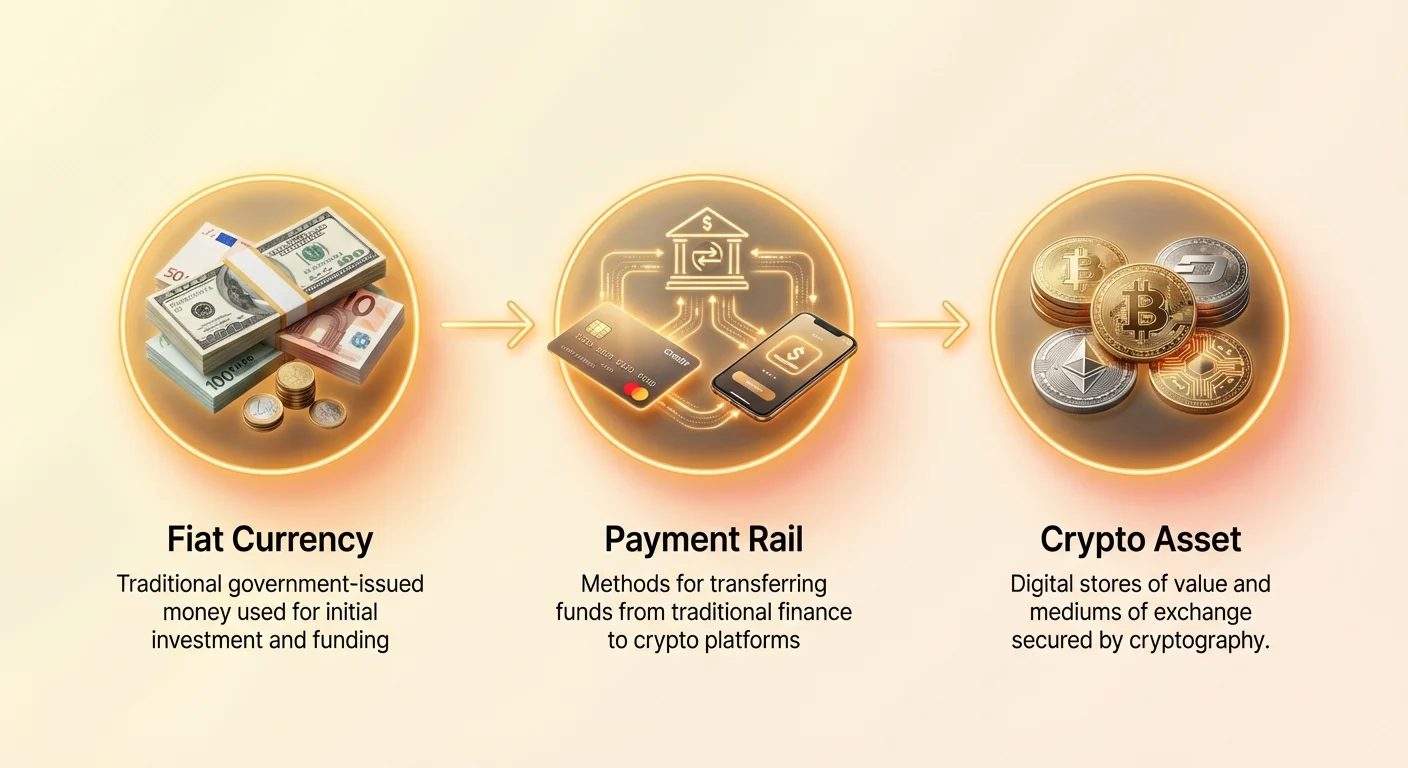
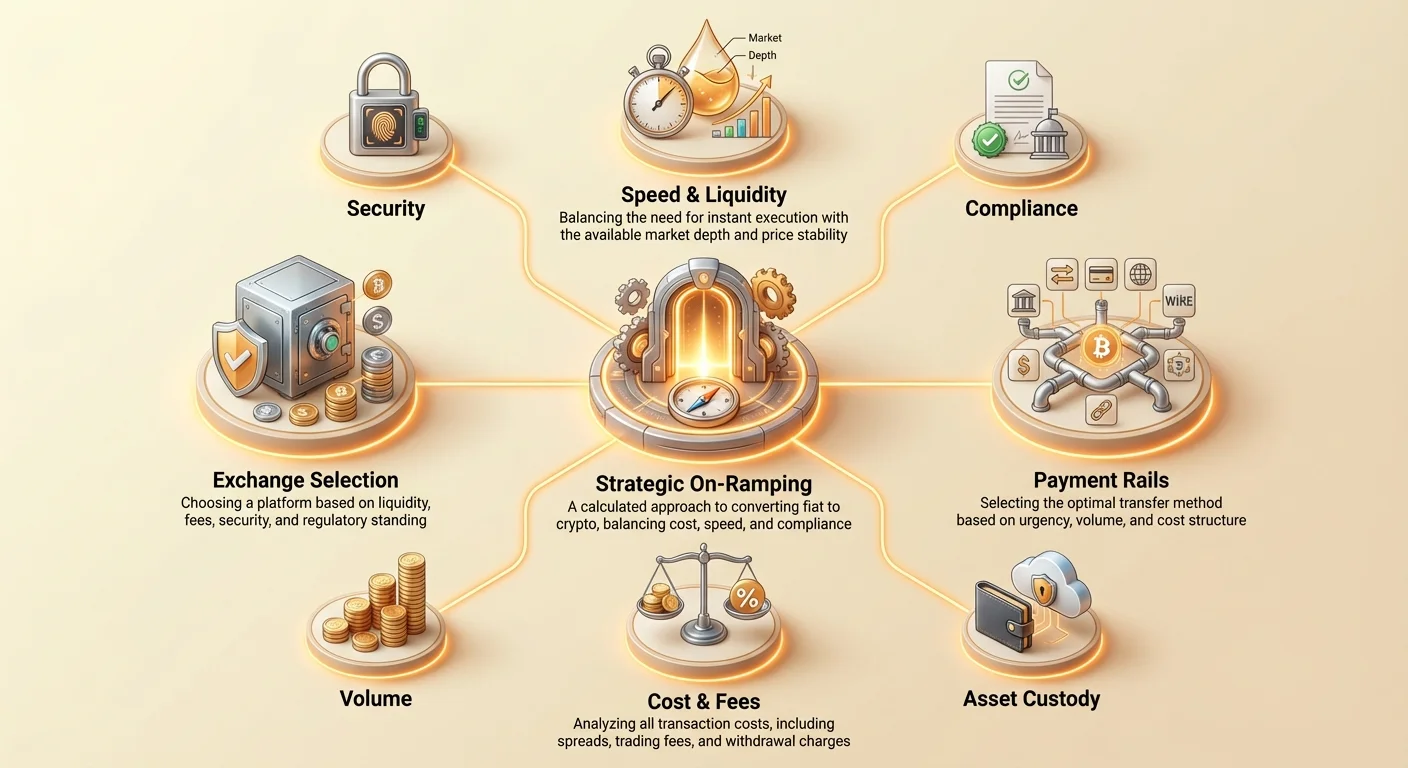
Ceļš uz digitālo aktīvu ekonomiku sākas ar kritisku procesu, kas pazīstams kā on-ramping — drošu un efektīvu tradicionālās fiat valūtas (piemēram, USD, EUR vai GBP) konvertēšanu kriptovalūtā. Jaunpienācējiem parasti tūlītējs mērķis ir tikai iegādāties aktīvu. Tomēr tiem, kas vēlas veidot ilgstošu pašsuverenitāti un stratēģiski pārvaldīt savu digitālo bagātību, fokuss jāpārvieto no vienkāršas izpildes uz pilnīgu optimizāciju.
Katrs dolārs, kas iztērēts komisijām, sprediem un slēptajām darījumu izmaksām, ir dolārs, kas nestrādā jūsu portfelī jūsu labā. Šie mazie procenti, ko bieži noraida kā «izmaksas darījumu veikšanai», uzkrājas ātri, ievērojami samazinot kapitālu, īpaši biežu darījumu vai lielu apjomu gadījumā. Ieiešanas procesa apgūšana tāpēc ir pirmais izšķirošais solis stratēģiskā aktīvu pārvaldībā.
Šis ceļvedis piedāvā vidēja līmeņa praktizētāja ceļa karti centralizēto biržu ainavas navigācijai, dažādu maksājumu relšu (ACH, wire, card) efektivitātes analīzei un izmaksu minimizētas stratēģijas izveidei, kas optimizē ātrumu, atbilstību un galu galā jūsu portfeļa sākotnējo vērtību.
1. The Foundation: Centralized Exchange (CEX) Selection
Your choice of Centralized Exchange (CEX) is the primary determinant of your fees, speed, and overall asset security. While many beginners gravitate toward the platform with the cleanest mobile app, strategic users prioritize liquidity, regulatory compliance, and most importantly, the fee schedule.
Key Factors Beyond User Interface
While ease of use is important, high-volume traders and long-term investors must evaluate a CEX based on its structural advantages, not just its aesthetics.
Liquidity and Spreads: Liquidity refers to how easily an asset can be bought or sold without significantly affecting its price. High-liquidity exchanges allow for tighter spreads—the difference between the highest buy order and the lowest sell order. When you buy crypto using a simple "instant purchase" button, you are often paying the spread, which acts as an invisible, untracked fee. Exchanges with deep order books and high trading volumes inherently offer better pricing and tighter spreads, making them generally more cost-efficient for large transactions.
Regulatory Status and Jurisdiction: The CEX must operate under a stable and recognized regulatory framework in your jurisdiction (e.g., FinCEN registration in the US or similar licensing in Europe). A regulated exchange offers better security guarantees, consumer protection, and ensures smoother banking integrations. Attempting to use an unregulated international platform might offer lower trading fees, but it introduces significant jurisdictional risk, potential banking difficulties, and complex tax compliance issues down the line.
Security and Insurance: Prioritize exchanges with robust security protocols (two-factor authentication, cold storage reserves for a majority of assets) and consider those that offer FDIC or private insurance for fiat balances held on the platform.
Understanding Tiered Fee Structures (Maker vs. Taker)
Most advanced CEXs use a tiered fee structure designed to reward high-volume traders and those who provide liquidity to the market. Understanding this system is crucial for cost minimization:
- Taker Fees: These are paid when you take liquidity off the order book. This happens when you place a market order—an order that executes immediately at the best available price. Since you are removing an existing order, you are deemed a Taker. Taker fees are generally higher.
- Maker Fees: These are paid when you make liquidity. This happens when you place a limit order—an order set to execute at a specific price not currently available. Your order sits on the order book, providing liquidity for future Takers. If your order executes, you are deemed a Maker, and you pay a significantly lower fee, or sometimes even receive a rebate (negative fee).
Optimization Tip: Always use limit orders when on-ramping, even if the price is only slightly below the current market rate. This forces you into the lower Maker fee category, minimizing your transactional cost dramatically, especially when buying frequently.
The Role of KYC and Jurisdictional Compliance
Know-Your-Customer (KYC) requirements are mandatory for almost all regulated centralized exchanges. While often seen as a bureaucratic hurdle, KYC is the necessary link that allows the CEX to connect with the traditional banking system.
Impact on Banking Access: Completing KYC (providing government ID and proof of address) is essential for linking bank accounts, which in turn unlocks the most cost-efficient payment rails (ACH and Wire transfers). Exchanges cannot accept fiat funds from unverified sources due to anti-money laundering regulations. Skipping KYC confines you to higher-fee options like anonymous P2P services or card purchases with restrictive limits.
Impact on Volume: KYC verification often occurs in tiers. A basic tier might allow $5,000 in monthly purchases, while a fully verified professional account might allow unlimited or six-figure daily deposits. If your strategy involves large or infrequent purchases, ensure your CEX verification level supports your target volume.
2. Fiat maksājumu relsēs atšifrēšana: ātrums pret izmaksām
Izvēlētā metode naudas pārskaitīšanai no jūsu bankas uz CEX maku — maksājumu relse — ir lielākais mainīgais faktors ātruma un tiešo izmaksu noteikšanā. Katra relse pārstāv pamatotu kompromisu starp tūlītēju piekļuvi un darījuma izdevumiem.
| Maksājumu relse | Ātrums | Izmaksu struktūra | Labākais izmantošanas gadījums |
|---|---|---|---|
| ACH pārskaitījums | 3–5 darba dienas | Zema/Nulle maksa | DCA, regulāri ietaupījumi, lieli ietaupījumu pirkumi |
| Vadu pārskaitījums | Tajā pašā dienā/1 darba diena | Fiksēta maksa (augsta) | Liela apjoma, laika jutīgi pirkumi ($50k+) |
| Debets/kredītkarte | Tūlītējs | Augsta procentuālā maksa (3%–5%) | Steidzami pirkumi, ļoti svārstīga tirdzniecība |
Automatizēto norēķinu nams (ACH): zemu izmaksu standarts
ACH tīkls ir standarta mehānisms ikdienas elektroniskajiem pārskaitījumiem ASV banku sistēmā (līdzīgas zemu izmaksu sistēmas pastāv globāli, piemēram, SEPA Eiropā).
Izmaksas un ātrums: CEX parasti piedāvā ACH pārskaitījumus bez maksas, jo pamatizmaksas iestādei ir minimālas. Tomēr tie ir būtiski lēni, bieži aizņemot 3 līdz 5 darba dienas pilnīgai apstrādei.
Pašreizējā kredītēšana un riski: Lai nodrošinātu labu lietotāja pieredzi, daudzas lielas biržas pašreizējā kredītē jūsu kontu, ļaujot iegādāties kripto tūlīt pēc ACH pārskaitījuma uzsākšanas, pat ja fiat līdzekļi vēl nav oficiāli norēķināti. Tas ir biržas īslaicīga aizdevuma forma. Ja pamata ACH pārskaitījums neizdodas (piemēram, nepietiekami līdzekļi), birža likvidēs iegādāto kripto, bieži izraisot sodus vai konta iesaldēšanu.
Optimização: ACH ir ideāls Dollar-Cost Averaging (DCA) un ikdienas, nestezīgai aktīvu uzkrāšanai, kur ātrums ir sekundārs izmaksu minimizācijai. Vienmēr nodrošiniet pietiekamu fiat atlikumu, lai izvairītos no riskiem, kas saistīti ar pašreizējā kredītētiem līdzekļiem.
Vadu pārskaitījumi: ātruma un apjoma efektivitāte
Vadu pārskaitījumi ir tieši, reāllaika, neatgriezeniski pārskaitījumi starp finanšu iestādēm. Tie ir nepieciešami profesionāliem vai turīgiem investoriem, kas veic ievērojamus pirkumus.
Izmaksas un ātrums: Bankas iekasē augstu fiksētu maksu par vadu pārskaitījumiem (bieži $25–$50). Tomēr, tā kā pārskaitījums ir tiešs un ātri norēķināts (bieži tajā pašā dienā, ja uzsākts pirms izslēgšanas laika), CEX uzskata šos līdzekļus par pilnībā norēķinātiem tūlīt. Tas izvairās no aizkavēšanās un riskiem, kas saistīti ar ACH pašreizējā kredītēšanu.
Apjoma optimizācija: Lai gan $30 vadu maksa ir dārga $100 pirkumam (30% izmaksas), tā kļūst niecīga $100 000 pirkumam (0,03% izmaksas). Fiksētās maksas struktūra padara vadu pārskaitījumus par efektīvāko relsi lielapjoma on-rampingam neatkarīgi no steidzamības.
Debets/kredītkartes pirkumi: tūlītējības cena
Kartes izmantošana ir ātrākais veids, kā iegūt kripto, bet tas ir universāli dārgākā metode.
Izmaksu struktūra: Kartes procesori klasificē kripto pirkumus kā augsta riska, izraisot apstrādes maksas no 3% līdz 5% no darījuma vērtības. Šīs maksas parasti tiek nodotas tieši lietotājam biržas. Turklāt, ja izmantojat kredītkarti, izdevējs var klasificēt darījumu kā “skaidras naudas avansu”, izraisot tūlītējas augstas procentu likmes un papildu maksas no pašas kartes kompānijas.
Izmantošanas ierobežojumi: Kartes pirkumi ir stingri ierobežoti pēc apjoma un galvenokārt paredzēti tūlītējiem, maziem vai steidzamiem pirkumiem — piemēram, ja notiek pēkšņs tirgus kritums un jums jāizmanto līdzekļi ātrāk, nekā ļauj ACH vai vads. Stratēģiskie investori jāminimē karšu izmantošana augsto izmaksu dēļ.
3. The Total Cost of Acquisition (TCA) Model
Optimized on-ramping requires evaluating the Total Cost of Acquisition (TCA). TCA is not just the fiat deposit fee; it encompasses every cost incurred from the moment you decide to purchase to the moment the asset is secured in your self-custody wallet. Ignoring components of the TCA leads to significant capital leakage.
Trading Fees vs. Withdrawal Fees (The Hidden Costs)
Many users focus solely on the low trading fee (the Maker/Taker fee) without considering the cost of moving the asset off the exchange.
Withdrawal Fee Analysis: When you purchase crypto, the goal is often to move it off the CEX and into a self-custody wallet for security. This final step incurs a network fee, often subsidized or standardized by the exchange.
- Fixed Fees: Some exchanges charge a fixed withdrawal fee in the cryptocurrency itself (e.g., 0.0005 BTC). If you are making frequent, small purchases, these fixed fees can quickly consume a large percentage of the acquired asset.
- Dynamic Fees: High-efficiency exchanges often use dynamic fees that adjust based on current network congestion, ensuring your withdrawal executes quickly.
Optimization Strategy: If you plan to move funds into self-custody regularly, select an exchange with competitively low, or highly efficient, fixed withdrawal fees for your target asset. Alternatively, aggregate smaller purchases over several weeks or months before making a single, cost-effective withdrawal.
Spreads and Liquidity: The Invisible Tax
As mentioned, the spread is the cost you pay for immediate execution, often disguised within the "instant purchase" price.
Example Scenario:
- Exchange A (High Liquidity): BTC is trading at $60,000. The spread is $50. You buy at $60,025.
- Exchange B (Low Liquidity/Broker Model): BTC is trading at $60,000. The spread is $300. You buy at $60,150.
Even if Exchange A charges a higher transactional fee (e.g., 0.25%) than Exchange B (e.g., 0.10%), the cost incurred through the wide spread on Exchange B might make it significantly more expensive in real terms.
Actionable Tip: Always compare the purchase price offered on the simple "Buy" screen versus the price available on the advanced "Trade" screen (which shows the order book). This difference is the spread you are paying for convenience. Strategic investors avoid instant purchase buttons.
Volume Optimization: Scaling Your Purchases
The relationship between trading volume and fees is crucial for intermediate practitioners planning large investments or regular high-frequency trading.
- Tiered Fee Reduction: CEX fee schedules are generally structured around a 30-day rolling trading volume. As your volume increases, your Maker/Taker fees drop dramatically. For example, a beginner might pay 0.60% in Taker fees, while a trader doing $1 million in volume might pay 0.08%.
- Strategic Phasing: If you are planning a very large capital allocation (e.g., $250,000), consider breaking it into smaller, timed purchases over a short period. The first few purchases will incur higher fees, but they will rapidly push you into a lower fee tier for the majority of the capital deployment, leading to significant net savings.
- Flat Fees vs. Percentage Fees: Always favor flat-fee mechanisms (like wire transfers) over percentage-based mechanisms (like credit cards) when scaling up capital. A 3% card fee on a $50,000 purchase is $1,500—an unacceptable loss of capital.
4. Strategic On-Ramping for Specific Goals
The optimized payment rail choice depends entirely on your investment objective and time horizon.
Strategy 1: Small, Frequent Purchases (Dollar-Cost Averaging - DCA)
DCA involves consistently purchasing a fixed dollar amount of crypto regardless of price fluctuations. This is the most common approach for beginners and long-term accumulators.
Optimized Rail: ACH transfers are overwhelmingly the best choice. Since DCA prioritizes consistency and low maintenance over speed, the 3–5 day settlement time is irrelevant. The zero-cost deposit fee ensures the maximum amount of fiat is converted into crypto, keeping the TCA extremely low.
Best Practice: Set up recurring ACH transfers directly to your CEX account, and then use the advanced trading platform (not the instant buy feature) to execute limit orders as the funds arrive.
Strategy 2: Large, Infrequent Purchases (Capital Deployment)
This strategy applies when deploying a significant lump sum of capital, perhaps from liquidated traditional assets or savings. Speed and certainty are high priorities.
Optimized Rail: Wire transfers. The goal is to maximize the final crypto acquisition value. While the $25 flat wire fee seems high, its percentage impact on a large sum is negligible. Furthermore, wire funds settle quickly and are instantly usable, reducing market exposure risk inherent in waiting 3–5 days for an ACH transfer to clear.
Best Practice: Confirm the CEX's wire instructions (including unique reference codes) before initiating the transfer. Once the fiat lands, utilize limit orders to execute the large trade immediately, moving into the lower Maker fee tier.
Strategy 3: Urgent or Volatility-Sensitive Purchases
This involves executing a trade based on immediate market conditions, such as buying a sudden, deep dip, or reacting to breaking news. Time is the absolute priority.
Optimized Rail: Debit card or, if necessary, utilizing pre-funded fiat balances on the CEX. Since card fees are high, this option should only be used when the potential market gain from immediate execution dramatically outweighs the 3-5% transaction cost.
Best Practice: Maintain a small buffer of fiat currency already deposited and settled on your CEX (using ACH or Wire) for instantaneous deployment during unexpected events. This eliminates the high card fee while retaining the speed of instant execution.
5. Alternatīvas on-ramping metodes (Apvedot tradicionālās CEX)
Lai gan centralizētās biržas piedāvā labāko likviditāti un regulatīvo drošību lielākajai daļai lietotāju, progresīvi praktizētāji var meklēt alternatīvas metodes privātumam, ātrākai reģionālai piekļuvei vai lokālo banku ierobežojumu apvadīšanai.
Peer-to-Peer (P2P) tirgi: Privātums un elastība
P2P biržas savieno pircējus un pārdevējus tieši. Tā vietā, lai darītu ar biržas orderu grāmatu, jūs vienojaties par nosacījumiem ar individuālo pretējo pusi.
Mehānisms un izmaksas: P2P platformas bieži atvieglo darījumu, turot kripto escrows līdz fiat maksājuma (caur bankas pārskaitījumu, PayPal, skaidru naudu utt.) apstiprināšanai. Izmaksas ir ļoti mainīgas; pārdevējs bieži iekasē prēmiju (paaugstinātu cenu) virs tirgus spot cenas, lai kompensētu pretpuses risku un maksājumu apstrādes maksas.
Stratēģiskā priekšrocība: P2P ir pārāks lietotājiem jurisdikcijās ar ierobežojošu banku politiku vai tiem, kas meklē maksimālu privātumu (bieži piedāvājot No-KYC opcijas). Tas arī ļauj augsti elastīgām maksājumu metodēm, ko neatbalsta CEX.
Komplektācijas: Riski ir augstāki. Jūs paļaujaties uz individuālā pārdevēja uzticamību un uzticamību, potenciāli radot aizkaves vai strīdus.
Kripto brokeražage un agregatori
Kripto brokeraže ir platforma, kas pērk un pārdod kripto jūsu vārdā, bieži piedāvājot augsti vienkāršotu saskarni (kā tūlītēja pirkuma funkcija CEX). Agregators meklē vairākās CEX un decentralizētajās biržās (DEX), lai atrastu labāko cenu.
Brokera modelis: Brokeražas parasti neizmanto Maker/Taker maksas. Tā vietā tās apvieno visas izmaksas (spreds, maksa, apstrāde) galīgajā pirkuma cenā, padarot savus pakalpojumus par "maksas brīviem". Tas nozīmē, ka galīgā cena bieži ir augstāka nekā, ja paši izpildītu limitēto orderi lielā CEX.
Agregatora modelis: Agregatori ir spēcīgi rīki ātrumam. Meklējot vairākās vietās, tie nodrošina, ka saņemat lētāko pašreizējo cenu, minimizējot spredi. Tomēr agregatora iekasētā servisa maksa jāizvērtē pret sasniegtajiem ietaupījumiem.
Optimizācija: Izmantojiet brokeražas tikai galīgai ērtībai, kad izmaksas ir sekundāras. Izmantojiet agregatorus, ja vajadzīgs ātrums apvienojumā ar robustu cenu salīdzinājumu vairākās augstas likviditātes vietās.
6. Compliance and Record Keeping for Optimized Tracking
Optimization extends beyond transactional cost into managing the regulatory burden, which affects long-term cost efficiency (e.g., tax preparation time and professional fees).
Establishing a Compliance Baseline (Tax Implications)
In most major jurisdictions, every crypto-to-crypto, crypto-to-fiat, or crypto-to-good transaction triggers a taxable event. Accurate record-keeping is vital for calculating capital gains and losses correctly.
Actionable Tip: Immediately upon starting your on-ramping process, commit to a robust record-keeping or crypto tax solution. These platforms integrate directly with your CEX (via APIs or CSV exports) to automatically track transactions, apply appropriate cost basis methods (like FIFO or LIFO), and generate necessary tax forms. Trying to manually reconcile thousands of transactions later is a costly and time-consuming endeavor that negates any optimization gained on the front end.
Segregating Funds and Wallets
For security and compliance purposes, maintain clear segregation between your funds:
- CEX Wallet (Hot Wallet): Used only for immediate trading, on-ramping, and off-ramping. Keep balances low.
- Self-Custody Wallet (Cold Storage): Used for long-term savings and holdings. This is the final destination for assets you have optimized for acquisition.
By treating the CEX as a temporary transaction hub and moving optimized assets swiftly to self-custody, you reduce exposure to exchange-specific risks while maintaining clear records of capital deployed.
Secinājums
Optimizēts on-ramping ir vārti uz atbildīgu un stratēģisku kripto aktīvu pārvaldību. Tas prasa pāriet pāri "tūlītēja pirkuma" mentalitātei un ārstēt fiat-uz-kripto konversiju kā daudzmainīgu vienādojumu, kur ātrums, atbilstība, likviditāte un izmaksas jābalansē.
Izvēloties augstas likviditātes centralizētās biržas, izmantojot limitētos orderus, lai sasniegtu Maker maksas statusu, un stingri piemērojot atbilstošo maksājumu relsi (ACH rutīnai DCA, Wire liela apjoma izvietošanai) pēc jūsu specifiskajiem mērķiem, jūs nodrošināt, ka maksimālā jūsu fiat kapitāla daļa tiek konvertēta darbināmos digitālos aktīvos. Sāciet izsekot savu Kopējo iegūšanas izmaksu jau šodien; berzes maksu minimizēšana ir pirmais, svarīgākais solis izturīga digitālā portfeļa veidošanā.