
Pirmo desmitgadi savas pastāvēšanas laikā Bitkoins galvenokārt bija mazumtirdzniecības aktīvs — aizrautīgu agrīno adopteru, tehnologu un individuālo investoru domēns, kuri meklēja alternatīvu tradicionālajai banku sistēmai. Tā cenas svārstības bieži noteica vīrusveida ziņas, foruma aktivitāte un jaunos, uzlecošajos tirgos raksturīgā svārstīgums.
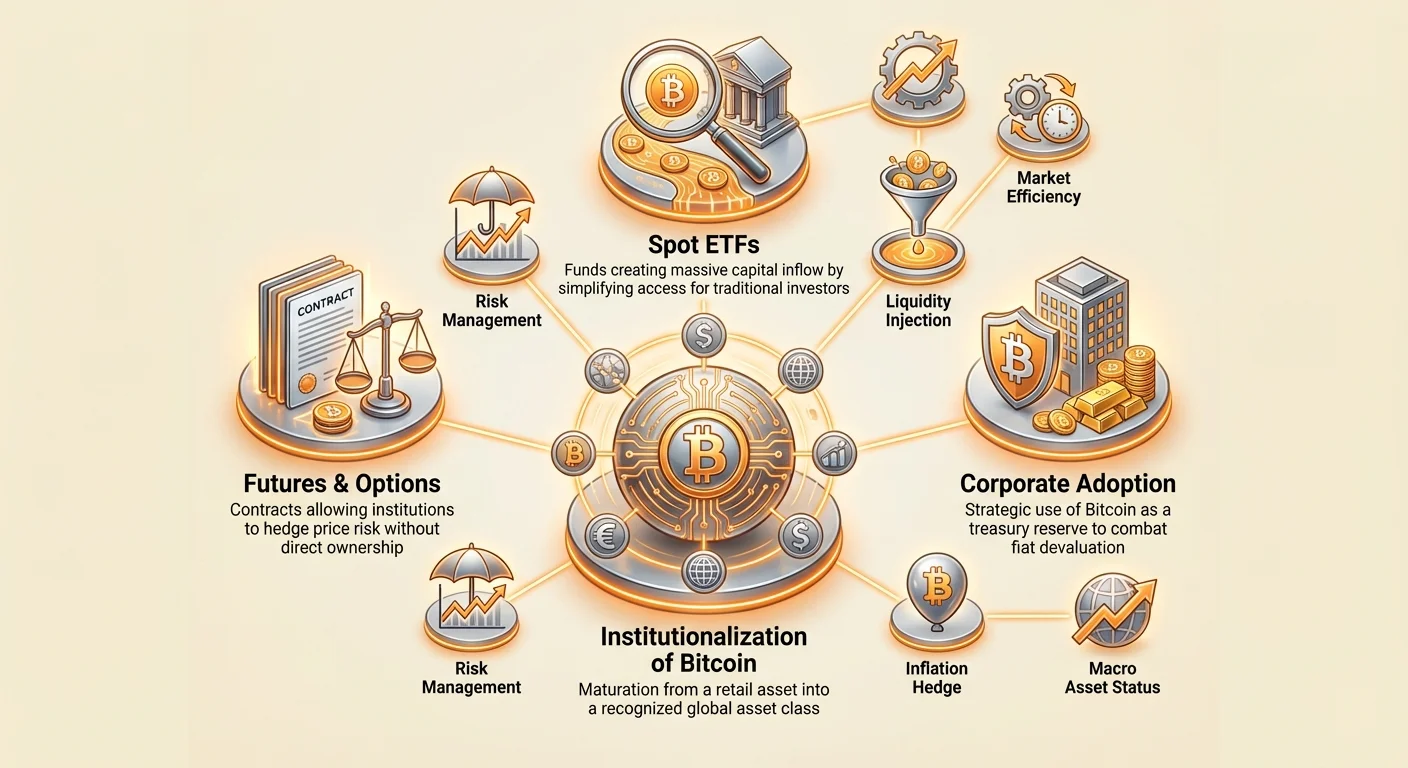
Tomēr pēdējos gados ir notikusi dziļa pārmaiņu. Lielas finanšu iestādes, publiskas korporācijas un regulētas biržas ir sākušas integrēt Bitkoina tradicionālajā finanšu (TradFi) struktūrā. Šis process, ko dēvē par institucionalizāciju, signalizē Bitkoina nobriešanu no nišas tehnoloģijas uz atzītu, regulētu un nozīmīgu globālu aktīvu klasi.
Šī dziļā analīze izskata trīs galvenos Bitkoina institucionālās integrācijas pīlārus: regulēto finanšu produktu (Fjūčeru un Opciju) ieviešanu, spot Biržas tirdzniecības fondu (ETF) ienākšanu un Bitkoina stratēģisko adopciju kā korporatīvo kases rezerves aktīvu. Šo pīlāru izpratne ir būtiska jebkuram investoram vai analītiķim, kurš vēlas prognozēt Bitkoina ilgtermiņa tirgus dinamiku un tā lomu plašākā makroekonomiskajā vidē.
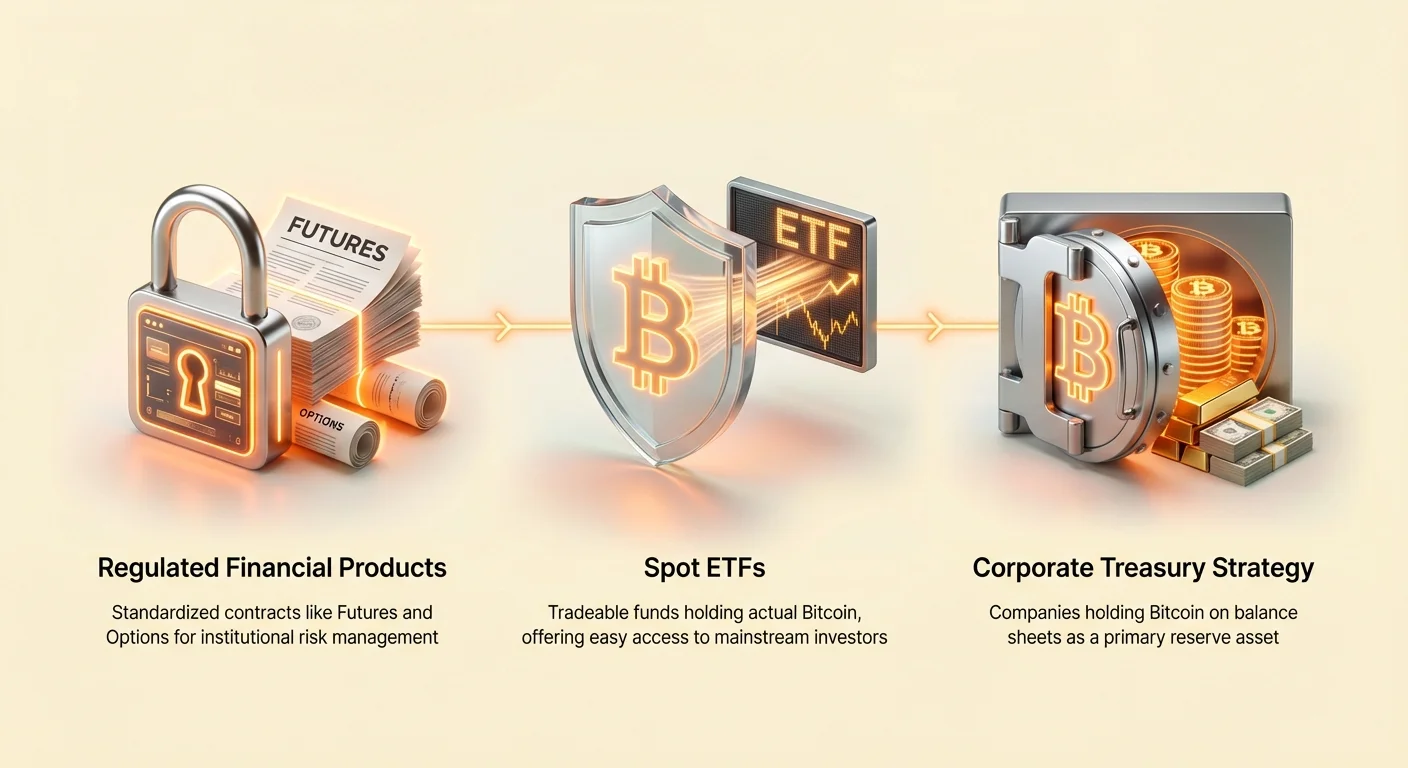
Phase One: The Gateway Drug—Regulated Financial Products
The initial steps toward institutional acceptance were cautious, focusing on derivatives markets. Institutions required regulated, standardized products that allowed them to participate in Bitcoin’s price movements without directly handling the complexities of cryptocurrency exchanges, private keys, or wallet security. This necessity gave rise to Bitcoin Futures and Options trading, predominantly through established exchanges like the CME (Chicago Mercantile Exchange).
Understanding Bitcoin Futures Contracts
A Bitcoin futures contract is a derivative agreement where two parties agree to buy or sell a specific quantity of Bitcoin at a predetermined price on a set future date.
Crucially, cash-settled futures (like those offered by the CME) do not require the physical delivery of Bitcoin. Instead, when the contract expires, the difference between the agreed-upon price and the current market price is settled in fiat currency (USD).
Why this matters for institutions:
- Risk Management: Futures allow institutions to hedge against potential price declines if they already hold Bitcoin, or to lock in future purchase prices.
- Regulatory Clarity: Trading futures on regulated exchanges places the activity squarely within existing financial oversight, satisfying compliance departments and risk officers.
- Leverage: Institutions can gain significant exposure to Bitcoin’s price movements by posting only a fraction of the contract value as margin.
Analyzing the Futures Market Premium: Contango and Backwardation
One of the most valuable indicators derived from the institutional futures market is the relationship between the Spot Price (the current market price) and the Futures Price (the price of a contract set to expire months from now). This relationship reveals institutional expectations and the cost of capital in the crypto space.
Contango (The Standard State)
When the Futures Price is higher than the Spot Price, the market is said to be in Contango. This is the standard state for most commodities and assets, reflecting the cost of carrying the asset (storage costs, insurance, and interest rates).
- Interpretation: In Bitcoin, contango usually implies that institutions are willing to pay a premium to acquire exposure later. It often reflects general bullish sentiment or the cost incurred by arbitrage traders (those who buy spot and sell futures to lock in a profit).
Backwardation (The Stress State)
When the Futures Price is lower than the Spot Price, the market is in Backwardation. This is a rare and often significant market signal.
- Interpretation: Backwardation suggests extreme demand for Bitcoin in the near term, or intense selling pressure on long-dated contracts. Historically, this state can indicate that short-term players are aggressively buying spot Bitcoin (creating high demand) while professional traders anticipate a future price drop, or that institutions are heavily hedging their long-term positions. It can be a sign of market stress or heavy shorting.
By observing the futures curve (the prices of futures contracts across different expiry dates), analysts gain insight into institutional sentiment and market health, providing a level of transparency that was previously absent in purely retail-driven crypto markets.
The Role of Options Markets in Hedging
Complementing futures are Bitcoin options contracts. An option gives the holder the right, but not the obligation, to buy (a call option) or sell (a put option) Bitcoin at a specified price before a specific expiration date.
Institutional investors use options extensively for complex risk management strategies:
- Insurance: Purchasing put options acts as insurance against a massive price drop.
- Income Generation: Selling covered call options can generate income on existing Bitcoin holdings.
The growth of regulated options trading adds crucial layers of maturity to the Bitcoin market, allowing professionals to execute detailed volatility and directional bets, leading to deeper overall market liquidity and better price discovery.
Spēles mainītājs: Spot Biržas tirdzniecības fondi (ETF)
Kamēr fjūčeri nodrošināja iestādēm aizsardzības rīku, tie nepiedāvāja vienkāršāko, tiešāko mehānismu galvenajam straumē esošajiem investoriem un pensiju fondiem, lai iegūtu ekspozīciju. Spot Bitkoina ETF — fonds, kas tur reālu Bitkoina un izdod akcijas, kas tirgotas tradicionālajās akciju biržās — pilnībā mainīja investīciju ainavu.
Pieejamība un pieprasījuma šoks
Pirms spot ETF tipisks finanšu konsultants, iesakot Bitkoina ekspozīciju klientam, saskārās ar nozīmīgiem šķēršļiem: kontu atvēršanu nezināmās kripto biržās, pašaprūpes vai augstu maksu uzticības produktos un sarežģītu nodokļu ziņošanas navigāciju.
Spot ETF novērš šos šķēršļus, nodrošinot vienkāršu akciju ticker:
- Bezšuvju integrācija: Investori var pirkt ETF akcijas tieši caur esošajiem brokera kontiem (Fidelity, Schwab uc.), pensiju kontiem (401k, IRA) un institucionālajām platformām.
- Dilevigenša pārbaude: Tā kā ETF jāapstiprina finanšu regulatori (piemēram, SEC ASV), tam ir implícēts valdības uzraudzības un leģitimitātes slānis, kas apmierina atbilstības un risku nodaļas lielās iestādēs.
- Masīva kapitāla plūsma: Šī pieejamība atbloķē milzīgus kapitāla baseinus — tostarp pensiju fondus, dotācijas un pārvaldītos bagātības fondus —, kas juridiski ierobežoti investēt neregulētos aktīvos, bet viegli var iegādāties regulēta ETF akcijas. Rezultāts ir būtisks strukturāls pieprasījuma šoks Bitkoina.
Ietekme uz likviditāti un cenas atklāšanu
Miljardu dolāru plūsma uz spot ETF ir fundamentāli mainījusi Bitkoina tirgus struktūru, galvenokārt centralizējot nozīmīgu uzglabāšanas atbildību un uzlabojot tirgus efektivitāti.
Likviditātes injekcija
Likviditāte attiecas uz to, cik viegli aktīvu var pirkt vai pārdot, neietekmējot tā cenu nozīmīgi. ETF prasa lieliem finanšu spēlētājiem (ko dēvē par Autorizētajiem Dalībniekiem vai AP) izveidot un atpēt akcijas.
- Izveide: Kad ETF akciju pieprasījums pārsniedz piedāvājumu, AP jāpērk fizisks Bitkoins no atklātā tirgus un jānodod ETF izdevējam apmaiņā pret jaunām akcijām. Šis process tieši injicē pieprasījumu pamata aktīva tirgū.
- Atpēšana: Kad ETF akcijas tiek pārdotas, AP atpēr akcijas no izdevēja par fizisku Bitkoina, ko tās pēc tam pārdod atklātajā tirgū.
Šis nepārtrauktais process, ko vada eksperti tirgus veidotāji, dramatiski palielina spot tirgus dziļumu un izturību, samazinot vienas lielas darījuma ietekmi un potenciāli mazinot ekstremālu svārstīgumu ilgtermiņā.
Uzlabota cenas atklāšana
Pirms institucionālās adopcijas Bitkoina cena galvenokārt tika noteikta ar tirdzniecību ofšora biržās ar dažāda līmeņa uzraudzību. Tagad, ar lieliem spēlētājiem kā BlackRock un Fidelity, vadot masīvus spot ETF, cenas atklāšanas process arvien vairāk tiek informēts ar pasaules izsmalcinātākajiem tirgus veidotājiem.
Šie tirgus veidotāji izmanto sarežģītus algoritmus un reāllaika datus, lai nodrošinātu, ka ETF cena precīzi atspoguļo pamata BTC cenu. Šis spiediens nodrošina, ka Bitkoina globālā cena tiek noteikta efektīvāk un caurspīdīgāk, tieši saistīta ar globālajiem finanšu indeksiem un platformām.
Uzglabāšana un drošība: Riska deleģēšana
Tradicionālajām finansēm digitālo aktīvu pārvaldība rada milzīgus operacionālos riskus. Centralizēta finanšu iestāde nevar atļauties privāto atslēgu zaudēšanas risku. Spot ETF atrisina šo operacionālo problēmu.
Kad investors pērk ETF akciju, viņš neuzņemas pašaprūpes slogu. Tā vietā ETF izdevējs nolīgst specializētus, stingri regulētus uzglabātājus (bieži institucionālas vienības kā Coinbase Custody vai Gemini Trust Company), lai droši uzglabātu milzīgās Bitkoina rezerves speciālos aukstās uzglabāšanas seifos.
Šī drošības un operacionālā riska deleģēšana ir būtiska institucionālajai pārliecībai. Tā ļauj pensiju fondiem un dotācijām piedalīties Bitkoina potenciālajā izaugsmē, neizbūvējot dārgu, specializētu kiberdrošības infrastruktūru iekšēji.
Phase Two: The Corporate Treasury Strategy
While Futures and ETFs addressed how external investors interact with Bitcoin, the second major wave of institutionalization involved corporations—specifically, the strategic decision to hold Bitcoin on their own balance sheets as a primary treasury reserve asset.
This movement represents a fundamental shift in how corporations view their cash reserves, moving away from traditional, low-yielding fiat assets toward a potentially higher-growth, inflation-resistant store of value.
Why Corporations Hold Bitcoin: The Inflation Hedge Thesis
Traditional corporate treasury management dictates that cash reserves—money the company doesn't need for immediate operations—should be held in extremely low-risk assets like short-term Treasury bills or bank deposits. The primary goal is preservation of capital.
However, in periods of high monetary expansion and sustained inflation, these fiat assets rapidly lose purchasing power. If inflation runs at 5% annually, a dollar held in cash is worth 5% less a year later.
Bitcoin, due to its verifiable scarcity—a fixed supply cap of 21 million coins—is viewed by some corporate treasurers as a superior hedge against fiat devaluation.
Key features supporting the treasury thesis:
- Absolute Scarcity: Unlike fiat currencies, which can be printed indefinitely, Bitcoin’s supply schedule is fixed and auditable.
- Immutability: Its rules cannot be changed by any single government or central bank, offering protection against geopolitical risk.
- Portability: Large values can be secured and transported globally with ease, making it a highly effective international reserve asset.
By converting portions of their treasury reserves into BTC, corporations aim to preserve, and potentially grow, the value of their shareholders' capital over the long run, positioning themselves to maintain purchasing power in a volatile macroeconomic climate.
Case Study: MicroStrategy (MSTR) and the Corporate Pioneer Model
The prime example of the corporate treasury strategy is MicroStrategy (MSTR), led by Chairman Michael Saylor. Starting in 2020, MSTR adopted a strategy to make Bitcoin its primary treasury reserve asset.
MicroStrategy's strategy is unique and highly aggressive:
- The Bitcoin Standard: They recognized the erosion of value in traditional cash holdings and publicly declared a shift to the Bitcoin standard.
- Debt and Equity Financing: MSTR aggressively raised capital—issuing senior convertible notes (debt) and selling stock (equity)—specifically to purchase more Bitcoin. This effectively leveraged their balance sheet to acquire the asset.
- A Proxy Investment: MSTR has functionally become a Bitcoin holding company that also runs a software business. Because their holdings are so large relative to their traditional business, MSTR shares now trade as a highly volatile proxy for Bitcoin itself.
The MSTR model demonstrates institutional confidence in Bitcoin's long-term trajectory. It argues that a corporation's primary duty is to maximize shareholder value, and in a climate of persistent fiat degradation, holding scarce digital assets is the most responsible treasury strategy.
Accounting Challenges and Shareholder Risk
While the rewards of corporate adoption can be significant, the strategy introduces notable complexity and risk:
Accounting Treatment
Under traditional accounting standards (like GAAP in the US), Bitcoin is treated as an "intangible asset with an indefinite life," not a financial asset like currency. This mandates that companies must record an impairment loss if Bitcoin's price drops below the initial purchase cost, but they cannot record gains until the asset is sold.
- The Problem: If a company buys BTC at $50,000 and the price drops to $30,000, they must record a $20,000 loss on their income statement (impairment), even if they haven't sold the asset. If the price then recovers to $60,000, they cannot record the $30,000 recovery or the $10,000 profit until the sale occurs. This creates misleading volatility on corporate earnings reports, often frustrating investors who do not understand the underlying accounting quirk.
Shareholder Volatility
For companies following the MSTR model, their share price becomes tightly correlated with Bitcoin’s price history. This drastically changes the risk profile of the stock. Investors purchasing MSTR are primarily betting on the future price of BTC, not necessarily the performance of the company's core software business. This adds considerable volatility and systemic risk to the traditional equity market.
Despite these challenges, the precedent set by corporate adoption signifies that Bitcoin has moved beyond mere speculation and has entered the realm of strategic, macroeconomic asset allocation.
Synthesizing the Institutional Impact on Market Structure
The unified force of institutional products (ETFs, Futures) and corporate balance sheets (Treasury Adoption) has profound implications for Bitcoin’s long-term market behavior and its relationship with the global economy.
From Retail Asset to Macro Asset
Institutionalization means Bitcoin is no longer solely driven by the retail cycle. Its price movements are increasingly influenced by the same macro factors that govern traditional assets:
- Interest Rate Policy: Like gold and other non-yield-bearing assets, Bitcoin tends to respond negatively to rising real interest rates and positively to quantitative easing or rate cuts.
- Dollar Strength (DXY): As a global risk-off/risk-on asset, Bitcoin often shows an inverse correlation with the US Dollar Index (DXY).
- Geopolitical Stability: In times of high geopolitical stress or banking crises, institutions view Bitcoin as an unregulated, seizure-resistant safe haven, driving demand.
The asset’s status has shifted from a fringe technology investment to a legitimate player in the global macro playbook, requiring analysts to apply traditional financial models (such as discounted cash flow models or scarcity analysis) rather than purely technological ones.
New Correlation Dynamics and Portfolio Theory
Initially, one of Bitcoin's most attractive qualities for traditional investors was its uncorrelation with traditional stocks and bonds. This meant adding a small allocation of Bitcoin to a portfolio could improve overall returns while lowering volatility (a cornerstone of the Modern Portfolio Thesis).
However, as institutional adoption accelerates, Bitcoin's correlation with certain high-beta (high-risk, high-growth) technology stocks and assets tends to increase, especially during "risk-on" environments.
When institutions buy Bitcoin through ETFs, they are often using the same capital allocation models and decision-making processes that they use for tech stocks. During market crashes (risk-off events), institutions tend to sell all their risk assets simultaneously, leading to higher correlation across the board.
Understanding this evolving correlation profile is critical for portfolio managers. While Bitcoin may maintain its utility as a long-term inflation hedge, its effectiveness as a short-term, uncorrelated diversification tool may diminish as institutional ownership deepens.
The Rise of Market Efficiencies
Ultimately, institutional integration drives efficiency. The involvement of professional market makers, high-frequency trading firms, and regulated platforms results in:
- Tighter Spreads: The difference between the highest buy price and the lowest sell price (the spread) narrows, making transactions cheaper.
- Lower Arbitrage Opportunities: Price discrepancies between different global exchanges are quickly closed, resulting in a single, more reliable global price for BTC.
- Reduced Manipulation Potential: While manipulation risks always exist, the sheer volume and deep pockets of institutional participants make it exponentially harder for small groups to significantly sway the market.
This enhanced efficiency solidifies Bitcoin’s position as a mature, globally traded asset suitable for large-scale capital deployment.
Secinājums
Bitkoina institucionalizācija nav tikai pārejoša tendence; tā ir neizbēgama strukturāla evolūcija, kas nepieciešama jebkuram aktīvam, lai pārietu no revolucionāras koncepcijas uz globāla rezerves kandidāta statusu.
Ceļu izlīdzēja vispirms sarežģīti derivāti (Fjūčeri un Opcijas), kas ļāva iestādēm pārvaldīt riskus un izteikt cenas viedokļus, kam sekoja Spot ETF caurstrēnojums, kas nodrošināja bezšuvju, regulētu piekļuvi triljoniem dolāru tradicionālajā kapitālā. Visbeidzot, korporatīvā kases kustība leģimizēja Bitkoina lomu kā inflācijas aizsargu un ilgtermiņa vērtības uzglabātāju publisko uzņēmumu bilancēs.
Šī apvienotā institucionālā fronte ir pārveidojusi Bitkoina no tīri mazumtirdzniecības, cikliska fenomena uz makro aktīvu, kas jutīgs pret globālo ekonomisko politiku. Lai gan tā ievieš jaunus sarežģītības, regulācijas un korelācijas līmeņus ar tradicionālajiem riska aktīviem, tā arī nodrošina pastāvību, dziļu likviditāti un uzticamu struktūru nākotnes kapitāla plūsmām. nopietnam investoram fjūčeru tirgus aktivitāšu, ETF plūsmu un turpinātās korporatīvās adopcijas tendenču uzraudzība nodrošina skaidrāko ceļa karti šīs digitālās aktīvu klases nākotnei.