
The journey into the digital asset economy begins with a critical process known as on-ramping—the secure and efficient conversion of traditional fiat currency (like USD, EUR, or GBP) into cryptocurrency. For newcomers, the immediate goal is usually just to acquire an asset. However, for those looking to build lasting self-sovereignty and manage their digital wealth strategically, the focus must shift from mere execution to pure optimization.
Every dollar spent on fees, spreads, and hidden transaction costs is a dollar that isn't working for you within your portfolio. These small percentages, often dismissed as the "cost of doing business," compound rapidly, significantly eroding capital, especially over frequent transactions or large volumes. Mastering the on-ramp is therefore the first crucial step in strategic asset management.
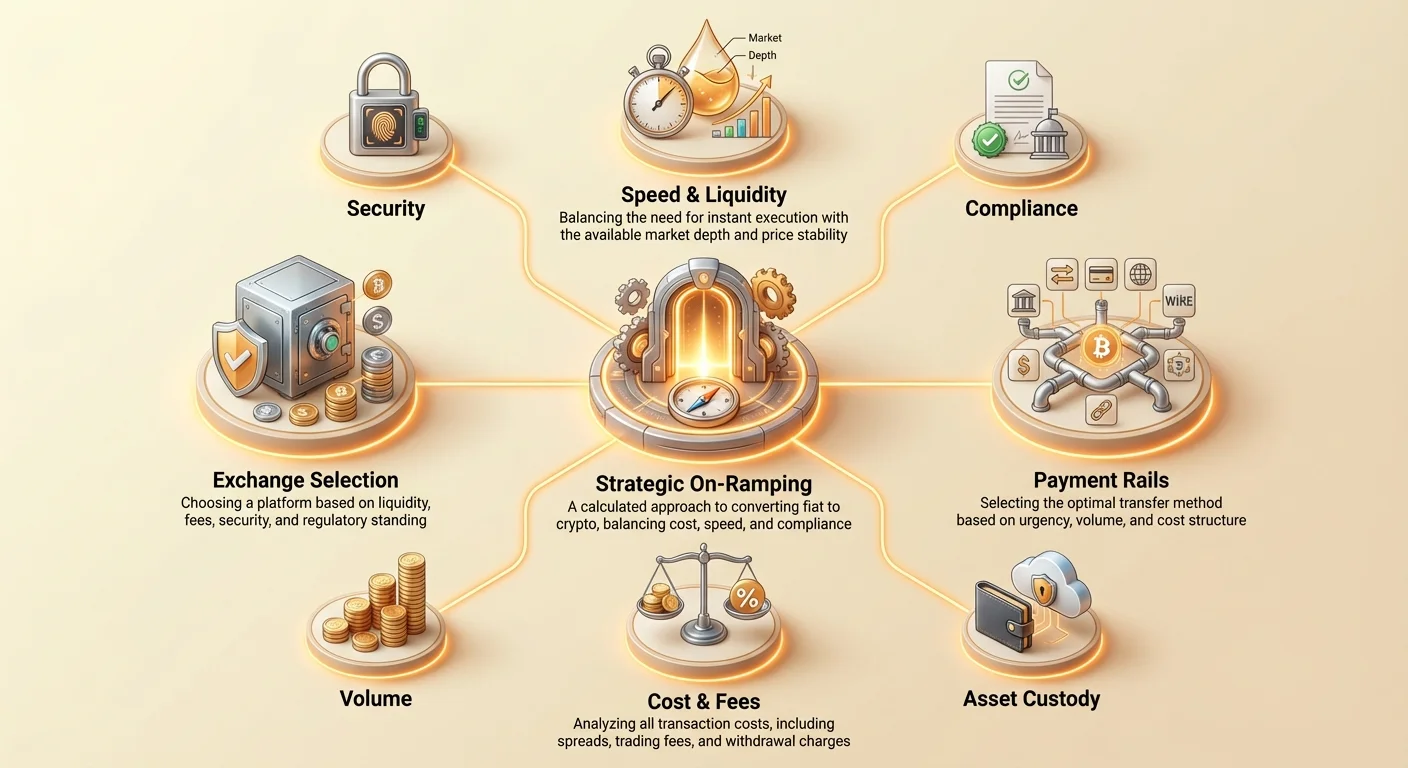
This guide provides an intermediate practitioner’s roadmap for navigating the centralized exchange landscape, analyzing the efficiency of different payment rails (ACH, wire, card), and building a cost-minimized strategy that optimizes speed, compliance, and ultimately, your portfolio’s starting value.
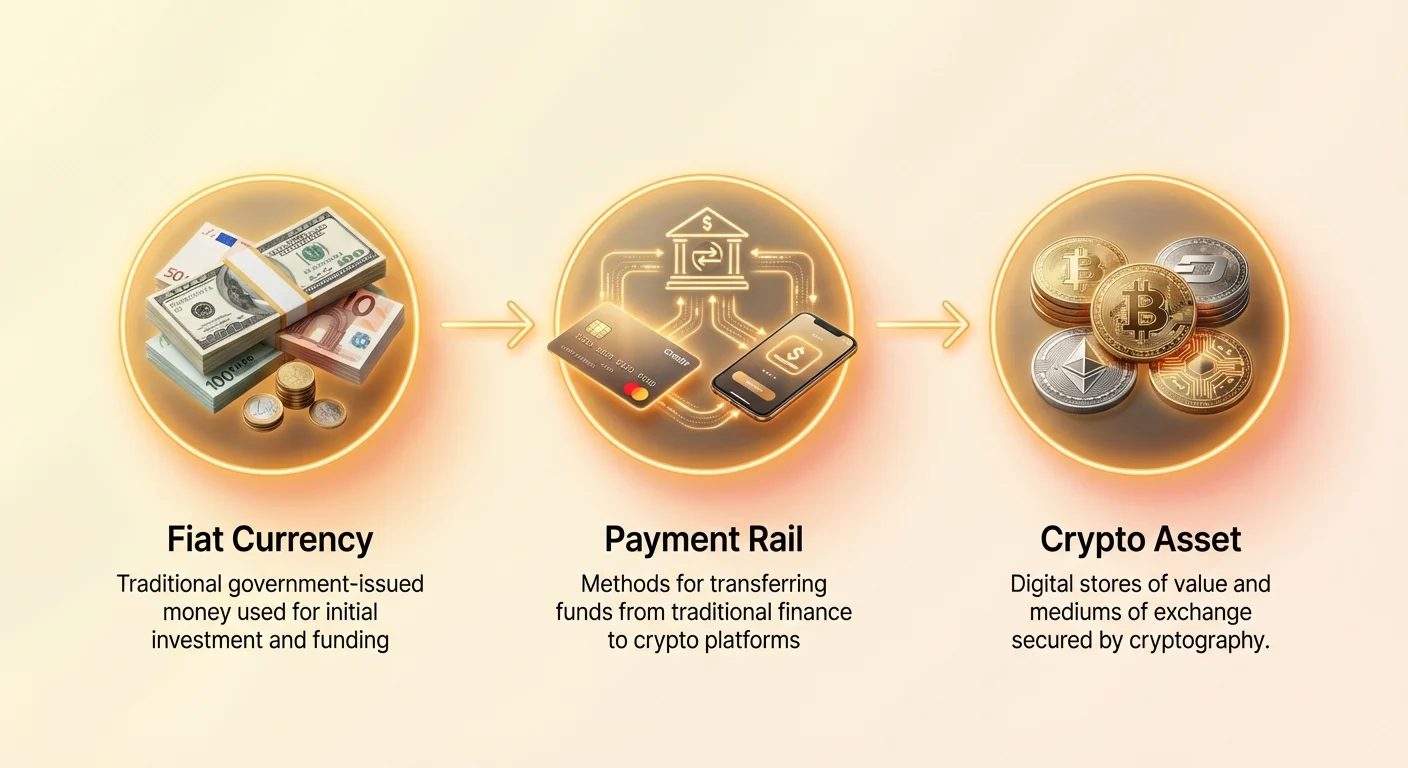
1. The Foundation: Centralized Exchange (CEX) Selection
Your choice of Centralized Exchange (CEX) is the primary determinant of your fees, speed, and overall asset security. While many beginners gravitate toward the platform with the cleanest mobile app, strategic users prioritize liquidity, regulatory compliance, and most importantly, the fee schedule.
Key Factors Beyond User Interface
While ease of use is important, high-volume traders and long-term investors must evaluate a CEX based on its structural advantages, not just its aesthetics.
Liquidity and Spreads: Liquidity refers to how easily an asset can be bought or sold without significantly affecting its price. High-liquidity exchanges allow for tighter spreads—the difference between the highest buy order and the lowest sell order. When you buy crypto using a simple "instant purchase" button, you are often paying the spread, which acts as an invisible, untracked fee. Exchanges with deep order books and high trading volumes inherently offer better pricing and tighter spreads, making them generally more cost-efficient for large transactions.
Regulatory Status and Jurisdiction: The CEX must operate under a stable and recognized regulatory framework in your jurisdiction (e.g., FinCEN registration in the US or similar licensing in Europe). A regulated exchange offers better security guarantees, consumer protection, and ensures smoother banking integrations. Attempting to use an unregulated international platform might offer lower trading fees, but it introduces significant jurisdictional risk, potential banking difficulties, and complex tax compliance issues down the line.
Security and Insurance: Prioritize exchanges with robust security protocols (two-factor authentication, cold storage reserves for a majority of assets) and consider those that offer FDIC or private insurance for fiat balances held on the platform.
Understanding Tiered Fee Structures (Maker vs. Taker)
Most advanced CEXs use a tiered fee structure designed to reward high-volume traders and those who provide liquidity to the market. Understanding this system is crucial for cost minimization:
- Taker Fees: These are paid when you take liquidity off the order book. This happens when you place a market order—an order that executes immediately at the best available price. Since you are removing an existing order, you are deemed a Taker. Taker fees are generally higher.
- Maker Fees: These are paid when you make liquidity. This happens when you place a limit order—an order set to execute at a specific price not currently available. Your order sits on the order book, providing liquidity for future Takers. If your order executes, you are deemed a Maker, and you pay a significantly lower fee, or sometimes even receive a rebate (negative fee).
Optimization Tip: Always use limit orders when on-ramping, even if the price is only slightly below the current market rate. This forces you into the lower Maker fee category, minimizing your transactional cost dramatically, especially when buying frequently.
The Role of KYC and Jurisdictional Compliance
Know-Your-Customer (KYC) requirements are mandatory for almost all regulated centralized exchanges. While often seen as a bureaucratic hurdle, KYC is the necessary link that allows the CEX to connect with the traditional banking system.
Impact on Banking Access: Completing KYC (providing government ID and proof of address) is essential for linking bank accounts, which in turn unlocks the most cost-efficient payment rails (ACH and Wire transfers). Exchanges cannot accept fiat funds from unverified sources due to anti-money laundering regulations. Skipping KYC confines you to higher-fee options like anonymous P2P services or card purchases with restrictive limits.
Impact on Volume: KYC verification often occurs in tiers. A basic tier might allow $5,000 in monthly purchases, while a fully verified professional account might allow unlimited or six-figure daily deposits. If your strategy involves large or infrequent purchases, ensure your CEX verification level supports your target volume.
2. Razčlenitev plačilnih tir za fiat: Hitrost proti stroškom
Metoda, ki jo izberete za prenos sredstev iz vaše banke v denarnico CEX – plačilna tira – je največja spremenljivka pri določanju hitrosti in neposrednih stroškov. Vsaka tira predstavlja temeljni kompromis med takojšnjim dostopom in transakcijskimi stroški.
| Plačilna tira | Hitrost | Struktura stroškov | Najboljši primer uporabe |
|---|---|---|---|
| Prenos ACH | 3–5 delovnih dni | Nizka/brezplačna provizija | DCA, redno varčevanje, veliki nakupli varčevanja |
| Žični prenos | Enak dan/1 delovni dan | Fiksna provizija (visoka) | Visokovolumen, časovno občutljivi nakupi (50.000 USD+) |
| Debítna/kreditna kartica | Takojšnje | Visoka odstotna provizija (3 %–5 %) | Nujni nakupi, zelo volatilno trgovanje |
Automatizirana obračunska hiša (ACH): Standard nizkih stroškov
Mreža ACH je standardni mehanizem za rutinske elektronske prenose znotraj ameriškega bančnega sistema (podobni sistemi nizkih stroškov obstajajo po svetu, kot je SEPA v Evropi).
Stroški in hitrost: CEX-ji običajno ponujajo prenose ACH brezplačno, saj je osnovni strošek za institucijo minimalen. Vendar so inherentno počasni, pogosto trajajo 3 do 5 delovnih dni za popolno poravnavo.
Predkreditiranje in tveganje: Za ohranjanje dobre uporabniške izkušnje mnoge velike menjalnice predkreditirajo vaš račun, kar vam omogoča nakup kripto takoj po začetku prenosa ACH, čeprav sredstva v fiatu še niso uradno poravnana. To je oblika začasnega posojila s strani menjalnice. Če osnovni prenos ACH spodleti (npr. zaradi pomanjkanja sredstev), bo menjalnica likvidirala kupljeno kripto, kar pogosto vodi do kazni ali zamrznitve računa.
Optimizacija: ACH je idealen za povprečanje stroškov v dolarjih (DCA) in rutinsko, ne-nujno kopičenje sredstev, kjer je hitrost manj pomembna od minimizacije stroškov. Vedno zagotovite zadostno stanje v fiatu, da se izognete tveganjem, povezanim s predkreditiranimi sredstvi.
Žični prenosi: Hitrost in učinkovitost po volumnu
Žični prenosi so neposredni, v realnem času, nepovratni prenosi med finančnimi institucijami. Nujni so za profesionalne ali premožne vlagatelje, ki opravljajo večje nakupe.
Stroški in hitrost: Banke zaračunavajo visoko fiksno provizijo za žični prenos (pogosto 25–50 USD). Vendar je prenos neposreden in hitro poravnan (pogosto isti dan, če je začet pred rokom), zato CEX-ji obravnavajo ta sredstva kot popolnoma poravnana takoj. To se izogne zamudam in tveganjem, povezanim s predkreditiranjem ACH.
Optimizacija po volumnu: Čeprav je 30 USD provizija za nakup 100 USD draga (30 % strošek), postane zanemarljiva za nakup 100.000 USD (0,03 % strošek). Fiksna struktura provizije naredi žični prenose najučinkovitejšo tiro za visokovolumen vstop z fiatom, ne glede na nujnost.
Nakupi z debítno/kreditno kartico: Cena takojšnjosti
Uporaba kartice je najhitrejši način za pridobitev kripto, vendar je univerzalno najdražja metoda.
Struktura stroškov: Obdelovalci kartic uvrščajo nakupe kripto med visoko tvegane, kar vodi do obdelovalnih provizij od 3 % do 5 % vrednosti transakcije. Te provizije običajno neposredno prenesejo na uporabnika menjalnice. Poleg tega, če uporabljate kreditno kartico, lahko izdajatelj transakcijo uvrsti kot »gotovinski avans«, kar sproži takojšnje visoke obrestne mere in dodatne provizije, ki jih naloži sama kartična družba.
Omejitve primera uporabe: Nakupi s kartico so močno omejeni po volumnu in so predvsem namenjeni takojšnjim, majhnim ali nujnim nakupom – na primer, če se zgodi nenaden padec trga in morate sredstva razporediti hitreje, kot dovoljuje ACH ali žični prenos. Strateški vlagatelji bi morali minimizirati uporabo kartic zaradi previsokih stroškov.
3. Model skupnega stroška pridobitve (TCA)
Optimizirano vstopanje zahteva ocenjevanje skupnega stroška pridobitve (TCA). TCA ni le pristojbina za depozit fiat; zajema vsak strošek od trenutka, ko se odločite za nakup, do trenutka, ko je sredstvo zavarovano v vaši denarnici s samo-hrambo. Prezrtje komponent TCA vodi do znatne izgube kapitala.
Trgovalne pristojbine proti pristojbinam za izplačilo (skriti stroški)
Mnogi uporabniki se osredotočajo le na nizko trgovalno pristojbino (pristojbina Maker/Taker), ne da bi upoštevali strošek premika sredstva z borze.
Analiza pristojbin za izplačilo: Ko kupite kripto, je cilj pogosto premakniti ga z CEX-a v denarnico s samo-hrambo za varnost. Ta zadnji korak prinese omrežno pristojbino, pogosto subvencionirano ali standardizirano s strani borze.
- Fiksne pristojbine: Nekatere borze zaračunavajo fiksno pristojbino za izplačilo v sami kriptovaluti (npr. 0,0005 BTC). Če izvajate pogoste, majhne nakupe, lahko te fiksne pristojbine hitro porabijo velik odstotek pridobljenega sredstva.
- Dinamične pristojbine: Visoko učinkovite borze pogosto uporabljajo dinamične pristojbine, ki se prilagodijo glede na trenutno obremenitev omrežja, kar zagotavlja hitro izvedbo vašega izplačila.
Strategija optimizacije: Če nameravate sredstva redno premikati v samo-hrambo, izberite borzo z konkurenčno nizkimi ali visoko učinkovitimi fiksnimi pristojbinami za izplačilo za vaše ciljno sredstvo. Alternativno združite manjše nakupe več tednov ali mesecev pred enim samim, stroškovno učinkovitim izplačilom.
Spreadi in likvidnost: Nevidni davek
Kot je omenjeno, je spread strošek, ki ga plačate za takojšnjo izvedbo, pogosto prikritega v ceni »takojšnjega nakupa«.
Primer scenarija:
- Borza A (visoka likvidnost): BTC se trguje po 60.000 USD. Spread je 50 USD. Kupite po 60.025 USD.
- Borza B (nizka likvidnost/broker model): BTC se trguje po 60.000 USD. Spread je 300 USD. Kupite po 60.150 USD.
Tudi če Borza A zaračuna višjo transakcijsko pristojbino (npr. 0,25 %) kot Borza B (npr. 0,10 %), lahko širok spread na Borzi B povzroči bistveno višje stroške v resnici.
Uporabni nasvet: Vedno primerjajte ceno nakupa, ponujeno na preprostem zaslonu »Kupi«, s ceno, na voljo na naprednem zaslonu »Trguj« (ki prikazuje knjigo naročil). Ta razlika je spread, ki ga plačujete za udobje. Strateški vlagatelji se izogibajo gumbom za takojšen nakup.
Optimizacija obsega: Razširjanje vaših nakupov
Povezava med trgovalnim obsegom in pristojbinami je ključna za srednje praktičarje, ki načrtujejo velike naložbe ali redno trgovanje z visoko frekvenco.
- Stopenjsko zmanjšanje pristojbin: Urniki pristojbin CEX so na splošno strukturirani okoli 30-dnevnega kotalnega trgovalnega obsega. Ko se vaš obseg poveča, se vaše pristojbine Maker/Taker dramatično znižajo. Na primer, začetnik lahko plača 0,60 % za Taker, medtem ko trgovec z 1 milijonom USD obsega plača 0,08 %.
- Strateško faziranje: Če načrtujete zelo velika dodelitev kapitala (npr. 250.000 USD), razmislite o razdelitvi na manjše, časovno razporejene nakupe v kratkem obdobju. Prvi nekaj nakupov bo imelo višje pristojbine, vendar bodo hitro potisnili v nižjo stopnjo za večino dodelitve kapitala, kar bo vodilo do znatnih neto prihrankov.
- Fiksne proti odstotnim pristojbinam: Vedno favorizirajte mehanizme s fiksnimi pristojbinami (kot žična nakazila) pred odstotnimi mehanizmi (kot kreditne kartice) pri razširjanju kapitala. 3 % pristojbina kartice za nakup 50.000 USD je 1500 USD—nesprejemljiva izguba kapitala.
4. Strategic On-Ramping for Specific Goals
The optimized payment rail choice depends entirely on your investment objective and time horizon.
Strategy 1: Small, Frequent Purchases (Dollar-Cost Averaging - DCA)
DCA involves consistently purchasing a fixed dollar amount of crypto regardless of price fluctuations. This is the most common approach for beginners and long-term accumulators.
Optimized Rail: ACH transfers are overwhelmingly the best choice. Since DCA prioritizes consistency and low maintenance over speed, the 3–5 day settlement time is irrelevant. The zero-cost deposit fee ensures the maximum amount of fiat is converted into crypto, keeping the TCA extremely low.
Best Practice: Set up recurring ACH transfers directly to your CEX account, and then use the advanced trading platform (not the instant buy feature) to execute limit orders as the funds arrive.
Strategy 2: Large, Infrequent Purchases (Capital Deployment)
This strategy applies when deploying a significant lump sum of capital, perhaps from liquidated traditional assets or savings. Speed and certainty are high priorities.
Optimized Rail: Wire transfers. The goal is to maximize the final crypto acquisition value. While the $25 flat wire fee seems high, its percentage impact on a large sum is negligible. Furthermore, wire funds settle quickly and are instantly usable, reducing market exposure risk inherent in waiting 3–5 days for an ACH transfer to clear.
Best Practice: Confirm the CEX's wire instructions (including unique reference codes) before initiating the transfer. Once the fiat lands, utilize limit orders to execute the large trade immediately, moving into the lower Maker fee tier.
Strategy 3: Urgent or Volatility-Sensitive Purchases
This involves executing a trade based on immediate market conditions, such as buying a sudden, deep dip, or reacting to breaking news. Time is the absolute priority.
Optimized Rail: Debit card or, if necessary, utilizing pre-funded fiat balances on the CEX. Since card fees are high, this option should only be used when the potential market gain from immediate execution dramatically outweighs the 3-5% transaction cost.
Best Practice: Maintain a small buffer of fiat currency already deposited and settled on your CEX (using ACH or Wire) for instantaneous deployment during unexpected events. This eliminates the high card fee while retaining the speed of instant execution.
5. Alternative On-Ramping Methods (Bypassing Traditional CEX)
While centralized exchanges offer the best liquidity and regulatory security for most users, advanced practitioners may look to alternative methods for increased privacy, faster regional access, or to circumvent local banking restrictions.
Peer-to-Peer (P2P) Markets: Privacy and Flexibility
P2P exchanges connect buyers and sellers directly. Instead of dealing with an exchange order book, you are agreeing to terms with an individual counterparty.
Mechanism and Cost: P2P platforms often facilitate the trade, holding the crypto in escrow until the fiat payment (via bank transfer, PayPal, cash, etc.) is confirmed. The cost is highly variable; the seller often charges a premium (an elevated price) above the market spot price to compensate for the counterparty risk and payment processing fees.
Strategic Advantage: P2P is superior for users in jurisdictions with restrictive banking policies or those seeking maximum privacy (often offering No-KYC options). It also allows for highly flexible payment methods not supported by CEXs.
Trade-Offs: The risks are higher. You rely on the trustworthiness and reliability of the individual seller, potentially incurring delays or disputes.
Crypto Brokerages and Aggregators
A crypto brokerage is a platform that buys and sells crypto on your behalf, often offering a highly simplified interface (like the instant buy feature on a CEX). An aggregator searches multiple CEXs and decentralized exchanges (DEXs) to find the best price.
Brokerage Model: Brokerages typically do not use Maker/Taker fees. Instead, they bundle all costs (spread, fee, processing) into the final purchase price, making their services appear "fee-free." This means the final price is often higher than if you executed a limit order yourself on a major CEX.
Aggregator Model: Aggregators are powerful tools for speed. By querying multiple venues, they ensure you are getting the cheapest current price, minimizing the spread. However, the service fee charged by the aggregator must be weighed against the savings achieved.
Optimization: Use brokerages only for ultimate convenience when costs are secondary. Use aggregators if you need speed combined with robust price comparison across multiple, high-liquidity venues.
6. Compliance and Record Keeping for Optimized Tracking
Optimization extends beyond transactional cost into managing the regulatory burden, which affects long-term cost efficiency (e.g., tax preparation time and professional fees).
Establishing a Compliance Baseline (Tax Implications)
In most major jurisdictions, every crypto-to-crypto, crypto-to-fiat, or crypto-to-good transaction triggers a taxable event. Accurate record-keeping is vital for calculating capital gains and losses correctly.
Actionable Tip: Immediately upon starting your on-ramping process, commit to a robust record-keeping or crypto tax solution. These platforms integrate directly with your CEX (via APIs or CSV exports) to automatically track transactions, apply appropriate cost basis methods (like FIFO or LIFO), and generate necessary tax forms. Trying to manually reconcile thousands of transactions later is a costly and time-consuming endeavor that negates any optimization gained on the front end.
Segregating Funds and Wallets
For security and compliance purposes, maintain clear segregation between your funds:
- CEX Wallet (Hot Wallet): Used only for immediate trading, on-ramping, and off-ramping. Keep balances low.
- Self-Custody Wallet (Cold Storage): Used for long-term savings and holdings. This is the final destination for assets you have optimized for acquisition.
By treating the CEX as a temporary transaction hub and moving optimized assets swiftly to self-custody, you reduce exposure to exchange-specific risks while maintaining clear records of capital deployed.
Zaključek
Optimizirano vstopanje je prehod v odgovorno in strateško upravljanje kripto sredstvi. Zahteva premik onkraj miselnosti »takojšen nakup« in obravnavo pretvorbe fiat-v-kripto kot enačbe z več spremenljivkami, kjer je treba uravnotežiti hitrost, skladnost, likvidnost in stroške.
Z izbiro visoko likvidnih centraliziranih borz, uporabo limitnih nalogov za dosego statusa Maker pristojbin in strogim uporabo ustrezne plačilne tirnice (ACH za rutinski DCA, žica za dodelitev z visokim obsegom) glede na vaše specifične cilje zagotovite, da se maksimalen znesek vašega fiat kapitala pretvori v delujoča digitalna sredstva. Začnite slediti svojemu skupnemu strošku pridobitve danes; minimizacija trenjnih pristojbin je prvi, najbolj pomemben korak k gradnji odpornega digitalnega portfelja.