
Automated trading systems offer the potential for efficiency and continuous market engagement, yet they introduce specific vulnerabilities that manual trading does not face. Relying on algorithms to execute financial decisions requires a robust understanding of security protocols and risk management strategies. The integration of software, capital, and external exchanges creates a complex environment where a single oversight can lead to significant financial loss.
The appeal of trading bots lies in their ability to operate without fatigue or emotional interference. They can execute strategies like arbitrage, grid trading, and trend following with precision that humans cannot match. However, this autonomy means that errors, whether in code or strategy, are executed with equal speed. Without proper safeguards, a bot can drain a portfolio in minutes during a flash crash or technical malfunction.
Security in this context is not just about preventing external hacks. It encompasses the internal logic of the bot, the reliability of the exchange connection, and the operational security of the trader's environment. Risk management extends beyond setting stop-losses to include API management, exchange selection, and hardware hygiene. Understanding these layers is essential for anyone seeking to automate their cryptocurrency trading activities safely.
Osnove varnosti API-ja
V jedru večine arhitektur trgovalnih botov je vmesnik za programiranje aplikacij ali API. To je most, ki vašemu programu omogoča komunikacijo z borzo kriptovalut. API ključ deluje kot uporabniško ime, API skrivnost pa kot geslo. Zaščita teh poverilnic je najpomembnejši vidik varnosti bota. Če zlobni akter pridobi dostop do teh ključev, lahko potencialno izvaja trgovanje ali dvige sredstev brez vaših neposrednih poverilnic za prijavo.
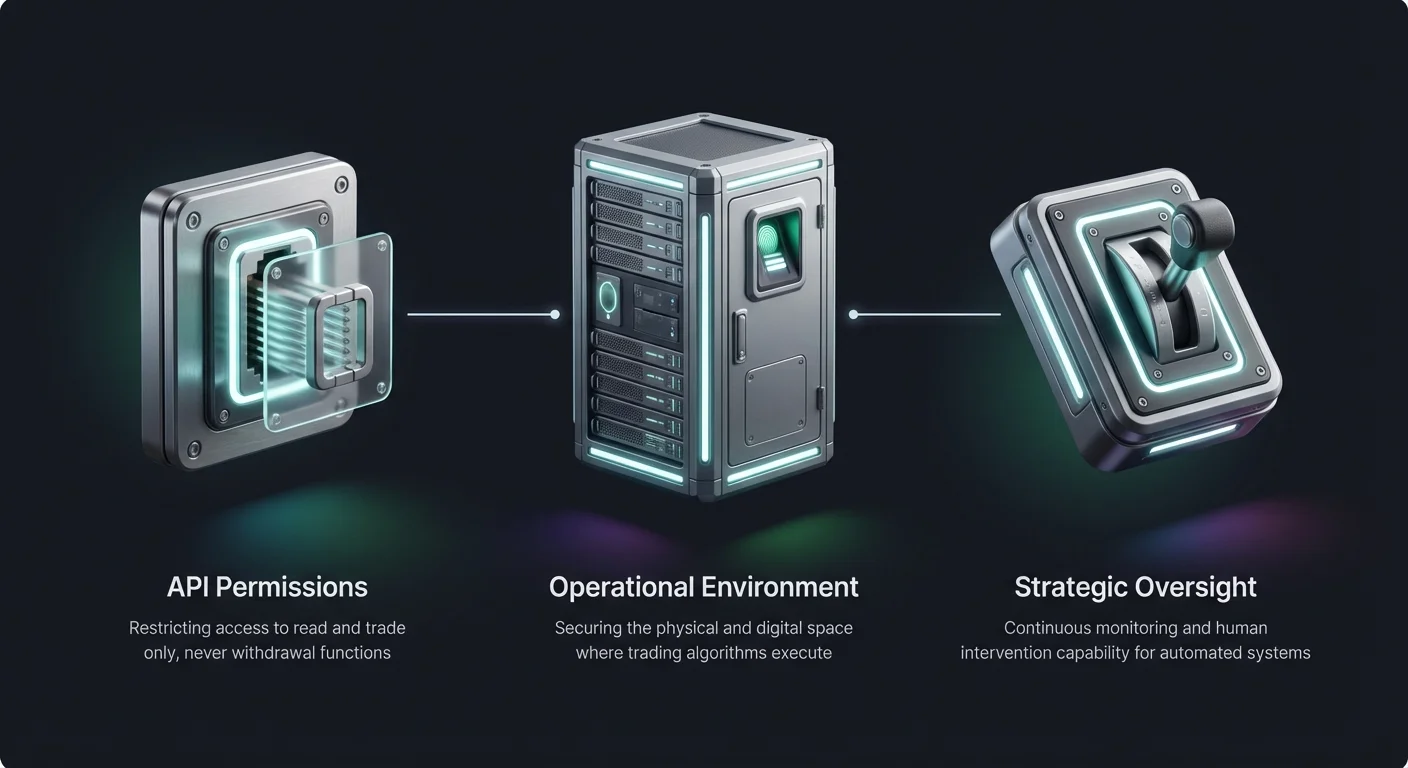
Prvo pravilo upravljanja API-ja je načelo najmanjših pooblastil. Pri generiranju ključev na borzi ste običajno deležni več možnosti dovoljenj. Te običajno vključujejo »Read«, »Trade« in »Withdraw«. Za delovanje trgovalnega bota potrebuje »Read« dostop za spremljanje tržnih podatkov in stanja računa. Prav tako potrebuje »Trade« dostop za oddajo nakupnih in prodajnih naročil. Redko, če sploh kdaj, potrebuje »Withdraw« dostop.
Nikoli ne omogočite dovoljenj za dvig za API trgovalnega bota. Skoraj ni scenarija, kjer bi avtomatiziran algoritem moral imeti pooblastilo za premikanje sredstev z borze. Z onemogočanjem tega dovoljenja zagotovite, da tudi če so ključi ogroženi, napadalec ne more prenesti vaših sredstev na svoj denarnico. Morda bo lahko izvedel moteča trgovanja, vendar kapital ostane znotraj ekosistema borze, kar vam daje čas za intervencijo.
Dovoljevanje IP-naslovov in omejitve ključev
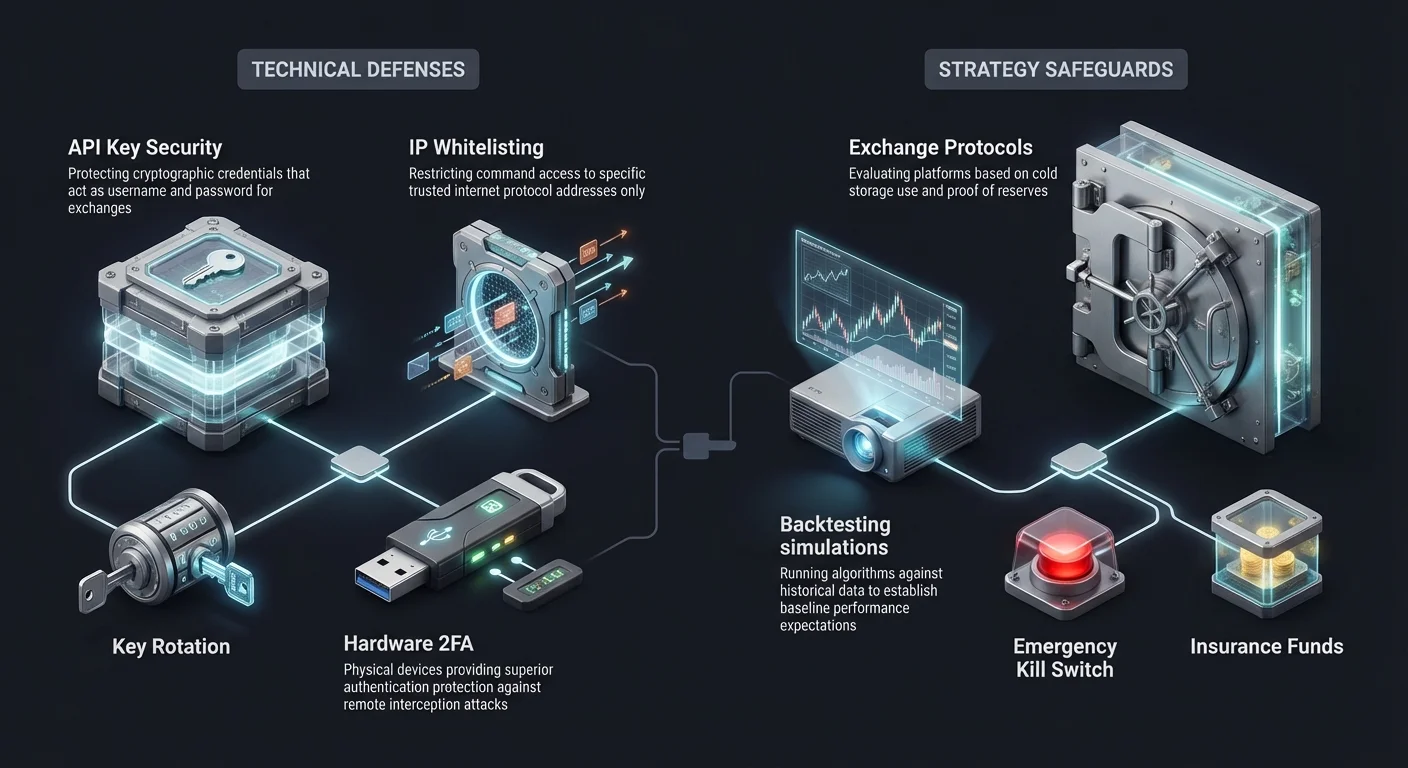
Omejevanje dostopa do vaših API ključev doda močno plast zaščite. Večina uglednih borz ponuja dovoljevanje IP-naslovov za API ključe. Ta funkcija zagotavlja, da borza sprejema ukaze samo z določenega naslova internetnega protokola (IP). Če zahteva z vašimi API ključi izvira iz neznanega IP-naslova, borza samodejno zavrne zahtevo. To ukradene ključe naredi neuporabne za hekerja, razen če ta nadzoruje tudi specifično napravo ali strežnik, ki gosti bota.
Za trgovce, ki poganjajo bote na domačem računalniku, je lahko dovoljevanje IP-naslovov zahtevno, če internetni ponudnik dodeljuje dinamične IP-naslove, ki se pogosto spreminjajo. V takih primerih uporaba virtualne zasebne mreže (VPN) s statičnim IP ali gostovanje bota na virtualnem zasebnem strežniku (VPS) zagotovi stabilen naslov za dovoljevanje. Ta nastavitev zagotavlja, da kanal povezave ostane ekskluziven in varen.
Rotacija ključev je še ena ključna praksa. Tako kot gesla periodično posodabljate, bi morali API ključe redno obnavljati. To omeji okno priložnosti za napadalca, če je bil ključ tiho ogrožen. Če platforma za bote ali vaš lasten strežnik doživi varnostno kršitev, bodo stari, že zamenjani ključi neveljavni, kar ščiti vaš račun pred nepooblaščenim dostopom.
| Varnostni ukrep | Funkcija | Raven pomembnosti |
|---|---|---|
| Onemogoči izplačila | Preprečuje odhod sredstev z borze | Kritično |
| Dovoljevanje IP-naslovov | Omejuje dostop na specifične lokacije | Visoko |
| Rotacija ključev | Periodično spreminja poverilnice | Srednje |
Operational Security for Bot Traders
While API security protects the connection, operational security (OpSec) protects the environment where the bot resides. Many traders run bots on personal computers, cloud servers, or third-party platforms. Each environment carries distinct risks. If you run a bot on a personal device, that machine becomes a high-value target for malware and keyloggers.
Securing a personal trading device requires rigorous hygiene. This includes keeping the operating system and antivirus software fully updated. It also involves avoiding risky behaviors such as downloading unverified software or clicking on suspicious links. A dedicated machine for trading, separate from the computer used for general browsing and gaming, significantly reduces the attack surface.
Cloud-based trading requires different considerations. When using a VPS or a third-party bot platform, you are trusting a remote server with your strategy and potentially your API secrets. It is crucial to enable Two-Factor Authentication (2FA) on any account associated with your trading infrastructure. This includes the login for the VPS provider, the bot platform, and the exchange itself.
Hardware keys (like YubiKeys) offer superior protection compared to SMS-based 2FA. SMS messages can be intercepted through SIM swapping attacks, where a hacker convinces a mobile carrier to transfer your phone number to their device. Authenticator apps or hardware keys generate codes locally or require physical presence, eliminating the risk of remote interception.
Ocena varnostnih ukrepov borze
Varnost trgovalnega bota je neločljivo povezana z varnostjo borze, na kateri trguje. Ne glede na to, kako varen je vaš bot, če je borza ogrožena, so vaša sredstva izpostavljena tveganju. Ocena varnostnih protokolov borze je obvezni korak pred povezavo katerega koli avtomatiziranega sistema. Centralizirane borze (CEX) upravljajo skrbništvo vaših sredstev, kar pomeni, da morate zaupati njihovim notranjim varnostnim praksam.
Iščite borze, ki večino svojih digitalnih sredstev shranjujejo v hladnem shranjevanju. Hladno shranjevanje pomeni hrambo zasebnih ključev izven omrežja, ločeno od interneta, kar jih naredi nedostopne za oddaljene hekerje. Najboljše borze običajno hrani 95 % ali več uporabniških sredstev v hladnem shranjevanju, le majhen delež pa v »vročih denarnicah« za zagotavljanje takojšnje likvidnosti za aktivno trgovanje.
Dokaz o rezervah (PoR) je postal standardno pričakovanje za pregledne borze. Ta kriptografska preverba omogoča uporabnikom potrditev, da borza dejansko drži sredstva, ki trdi, da jih ima. Čeprav ni neposredna varnostna funkcija proti vdorom, ščiti pred tveganjem insolventnosti in notranjim slabim upravljanjem. Solventna borza je manj verjetno, da bo ustavila dvige ali se zrušila med volatilnostjo trga.
Varovalni skladi so še ena ključna lastnost. Ugledne borze pogosto vzdržujejo namenski sklad za kritje izgub uporabnikov v primeru kršitve ali tehnične napake na njihovi strani. Čeprav to ne zagotavlja popolne povrnitve v katastrofalnem dogodku, zagotavlja plast finančnega blažila. Pregled zgodovine borze glede vdorov in njihovega odziva na varnostne incidente daje vpogled v njihovo zanesljivost.
Tveganja decentraliziranih borz
Decentralizirane borze (DEX) ponujajo alternativo skrbniškemu modelu CEX-ov. V okolju DEX trgujejo uporabniki neposredno iz svojih denarnic prek pametnih pogodb. To odpravlja tveganje, da upravitelj borze ukrade sredstva ali jih izgubi zaradi vdora v centralno denarnico. Vendar trgovanje na DEX uvaja tveganje pametnih pogodb.
Boti, ki delujejo na DEX-ih, neposredno komunicirajo s kodo na blockchainu. Če pametna pogodba, ki upravlja likvidnostni bazen ali mehanizem zamenjave, vsebuje ranljivost/bugo, jo lahko izkoristijo. V takih primerih lahko sredstva, odobrena za trgovanje s to pogodbo, izčrpajo. To je drugače od tveganj CEX, kjer je grožnja običajno prevzem računa ali kršitev platforme.
Pri uporabi botov na DEX morajo uporabniki podeliti »odobritev žetona« pametni pogodbi. To dovoljenje omogoča pogodbi porabo žetonov v imenu uporabnika. Pogosta napaka pri upravljanju tveganj je podelitev »neskončne odobritve«, ki pogodbi omogoča porabo neomejene količine žetonov. Če je pogodba zlonamerna ali izkoriščena, se lahko denarnica popolnoma izprazni. Razveljavitev ali omejitev odobritev žetonov je nujna vzdrževalna naloga za trgovce z boti na DEX.
Tveganje strategije in volatilnost trga
Onkraj tehnične varnosti sama trgovalna strategija deluje kot vir tveganja. Bot je preprosto niz navodil. Če so ta navodila napacna, bo bot učinkovito izvedel izgubljeno strategijo. Volatilnost trga je tukaj glavni nasprotnik. Trgi kriptovalut so znani po hitrih nihanjih cen, ki lahko sprožijo nepričakovano vedenje v avtomatiziranih sistemih.
Bliskoviti padci cen, kjer cena sredstva znatno pade in se v minutah pobere, lahko uničijo določene strategije. Na primer bot, programiran za prodajo ob padcu cene za 5 % (stop-loss), bi lahko zapustil položaj na dnu bliskovitega padca, zaklenil izgubo tik pred povračilom trga. Nasprotno bi bot brez stop-lossa lahko držal padajoče sredstvo do ničle.
Preoblikovanje (overfitting) je pogosta past pri razvoju strategij. To se zgodi, ko trgovec nastavi bota popolnoma na podlagi zgodovinskih tržnih podatkov. Čeprav bot v backtestih deluje brezhibno, lahko v živem trgovanju odpove, ker se tržne razmere nenehno spreminjajo. Strategija, ki je delovala med bikovskim tekom leta 2021, je lahko katastrofalna v stranskem trgu leta 2025.
Grid Trading Risks
Grid trading is a popular strategy that profits from the fluctuation of price within a specific range. The bot places a web of buy and sell orders at set intervals. As the price moves up and down, the bot captures small profits. This strategy excels in sideways or "ranging" markets where the price oscillates without a strong trend. However, it carries specific risks that must be managed.
The primary risk in grid trading is a breakout from the grid range. If the price drops below the lowest buy order, the bot ceases to function and leaves the trader holding a bag of deprecating assets. This is similar to "impermanent loss" in liquidity provision. The trader accumulates the asset as its value falls, potentially resulting in a total value lower than if they had simply held stablecoins.
Conversely, if the price rises above the highest sell order, the bot will have sold all its positions. While this results in profit, the trader misses out on the continued upside potential. The risk here is "opportunity cost." To manage grid risks, traders use "stop-loss" orders below the grid to prevent deep losses during a market crash and "take-profit" levels to secure gains before a trend reversal.
Arbitrage Bot Vulnerabilities
Arbitrage involves buying an asset on one exchange where the price is low and selling it on another where the price is high. It is often perceived as a low-risk strategy because it capitalizes on price inefficiencies rather than market direction. However, execution risk in arbitrage is significant. The window of opportunity for these trades is often measured in seconds or milliseconds.
Latency is the enemy of arbitrage. If the bot receives price data with a slight delay, or if the trade execution lags, the price gap may close before the transaction is complete. This can result in "slippage," where the final execution price is worse than expected, turning a profitable trade into a loss. Network connectivity and exchange API speeds are critical variables.
Transfer times between exchanges also pose a risk for cross-exchange arbitrage. If a strategy requires moving funds from Exchange A to Exchange B to rebalance, a delay in the blockchain network or the exchange's processing can leave capital stuck in transit. during this time, market prices may shift drastically, negating the arbitrage opportunity and exposing the funds to volatility.
Fee structures must be meticulously calculated. Arbitrage relies on thin margins. Trading fees, withdrawal fees, and network gas fees can easily consume the entire profit of a trade. A bot that does not accurately account for dynamic fee structures may execute thousands of trades that bleed capital rather than accumulate it.
Copy Trading Risks and Dependency
Copy trading allows users to automate their portfolio by mirroring the moves of experienced traders. While this removes the need to develop a personal strategy, it introduces dependency risk. The follower relies entirely on the competence and emotional stability of the signal provider. If the lead trader tilts or makes a catastrophic error, the follower's bot instantly replicates that mistake.
Latency issues can also affect copy trading. By the time the leader's trade is broadcast, processed by the platform, and executed in the follower's account, the price may have moved. This is particularly damaging in fast-moving markets or with scalping strategies where entry price is everything. The follower often gets a worse entry price than the leader, leading to lower returns or losses over time.
Risk mismatch is another danger. A lead trader with a large portfolio might take risks that are mathematically sound for their capital size but ruinous for a smaller account. For instance, a leader might endure a 20% drawdown because they have reserves to cover it. A follower with a smaller margin balance might face liquidation at that same level. Followers must adjust position sizing and leverage to match their own risk tolerance, not just the leader's.
Backtesting and Paper Trading
Before deploying real capital, rigorously testing a bot is a fundamental risk management step. Backtesting involves running the bot's algorithm against historical market data to see how it would have performed. This provides a baseline for expected returns and drawdowns. However, historical performance is never a guarantee of future results.
Paper trading, or forward testing, offers a more realistic simulation. In this mode, the bot runs on live market data but uses virtual funds. This allows the trader to observe how the bot handles real-time latency, order book depth, and fee calculations without financial risk. It helps identify technical bugs or logic errors that backtesting might miss due to idealized data.
Traders should allocate a significant period to paper trading—often weeks or months—to ensure the bot performs consistently across different market conditions (e.g., weekends vs. weekdays, high volatility vs. low volatility). Jumping straight into live trading with a new script is a violation of basic risk management principles.
Monitoring and Human Oversight
Automation does not imply abandonment. "Set it and forget it" is a dangerous mindset in crypto trading. Continuous monitoring is required to ensure the bot is operating correctly and that the underlying strategy remains valid. Technical failures, such as API disconnections or server crashes, require immediate human intervention to resolve.
Traders should establish a routine for checking bot performance. This might involve daily reviews of trade logs, profit/loss statements, and error reports. Many modern bot platforms offer mobile notifications or email alerts for significant events, such as a filled order or a steep drawdown. Enabling these alerts allows for faster reaction times.
An "emergency kill switch" is a vital component of any automated setup. This is a mechanism to instantly stop all bot activity and cancel open orders. In the event of a flash crash, a hack, or a malfunction where the bot starts spamming orders, the trader must be able to pull the plug immediately. Knowing exactly how to shut down the system under pressure is a key part of operational readiness.
Diversifikacija v avtomatiziranem trgovanju
Diversifikacija je temelj investicijske teorije in velja enako za trgovanje z boti. Zanašanje na enega samega bota, ki izvaja eno strategijo na enem paru, ustvarja eno točko odpovedi. Če se ta specifični trg obrne neugodno ali strategija odpove, trpi celoten portfelj. Razporeditev tveganja čez različne vektorje stabilizira dolgoročno uspešnost.
Diversifikacija strategij pomeni sočasen zagon različnih vrst botov. Na primer trgovec lahko poganja grid bota na stabilnem paru, kot je BTC/USDT, za pobiranje volatilnosti, medtem ko poganja trend-sledenje bota na ETH/USDT za zajemanje rasti. Če trg močno trendi, grid bot morda začasno ustavi ali izgubi učinkovitost, vendar trend bot kompenzira. Če trg nihajo, grid bot generira dobiček, medtem ko trend bot ostane neaktiven.
Diversifikacija sredstev zmanjša izpostavljenost idiopatskemu tveganju specifičnih kovancev. Zagon botov na košarico vrhunskih sredstev (kot Bitcoin, Ethereum in glavni Layer 1 žetoni) ščiti pred odpovedjo katerega koli posameznega projekta. Vendar morajo trgovci paziti na korelacijo. Ker se kripto trg pogosto giblje sinhrono, diversifikacija čez močno korelirana sredstva zagotavlja manj zaščite kot diversifikacija čez različne strategije.
Regulatory and Compliance Risks
The regulatory landscape for cryptocurrency is evolving efficiently. Changes in laws can impact the viability of certain trading bots. For instance, if a jurisdiction bans the trading of privacy coins or restricts leverage, a bot programmed to trade those assets may face legal hurdles or exchange-enforced blocks.
Compliance also extends to tax reporting. High-frequency trading bots can generate tens of thousands of transactions in a single year. Calculating the capital gains and losses for each trade manually is impossible. Traders must ensure they have robust tax software capable of ingesting the massive data logs generated by their bots. Failure to accurately report automated trading activity can lead to significant fines and legal trouble.
Know Your Customer (KYC) requirements on exchanges can also pose a risk if an account is suddenly flagged for re-verification. If an exchange freezes an account for a compliance check while a bot is active, the trader may be unable to close losing positions. Ensuring all KYC documentation is up to date and using reputable exchanges with clear compliance policies mitigates this operational risk.
Conclusion
Security and risk management for crypto trading bots is a multi-faceted discipline that merges cybersecurity with financial prudence. It begins with the secure handling of API keys, ensuring permissions are restricted and access is whitelisted. It extends to the choice of exchange, prioritizing platforms with proven track records, cold storage protocols, and insurance funds. Operational security protects the physical and digital environment where the trading algorithms live.
Beyond technical defenses, managing the inherent risks of automated strategies is crucial. Whether using grid, arbitrage, or copy trading bots, understanding the specific vulnerabilities of each method allows traders to set appropriate safeguards. Regular monitoring, rigorous backtesting, and the ability to intervene manually prevent minor errors from becoming major catastrophes. Automation is a tool for execution, not a replacement for strategic oversight.
Effective bot trading requires treating security not as a feature, but as the foundation of every strategy.