
Optimizing trading costs is a fundamental aspect of a successful cryptocurrency strategy. While market movements and asset selection often dominate the conversation, the friction caused by fees can silently erode profitability over time. Every transaction, deposit, withdrawal, and conversion incurs a cost. For high-frequency traders, these costs can amount to a significant percentage of total capital. For long-term holders, high entry and exit fees increase the break-even price required to see a return on investment.
Understanding the fee landscape requires a deep dive into how different platforms operate. Centralized exchanges, decentralized protocols, and brokerage services all utilize distinct revenue models. Some prioritize convenience at a premium, while others reward liquidity provision with fee rebates. Navigating this complex ecosystem involves recognizing the difference between makers and takers, understanding volume-based tiering, and identifying hidden costs like spreads and network gas fees.
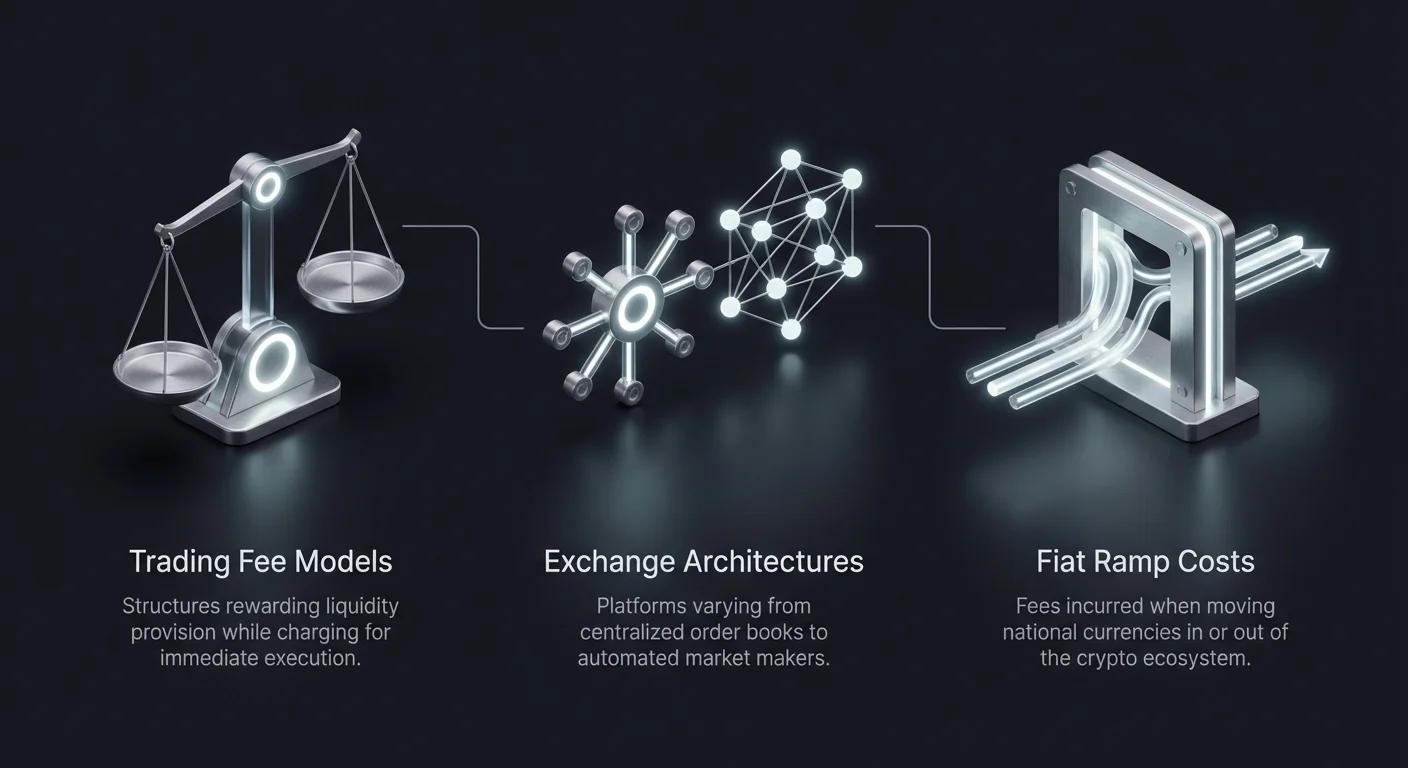
The Mechanics of Exchange Fee Structures
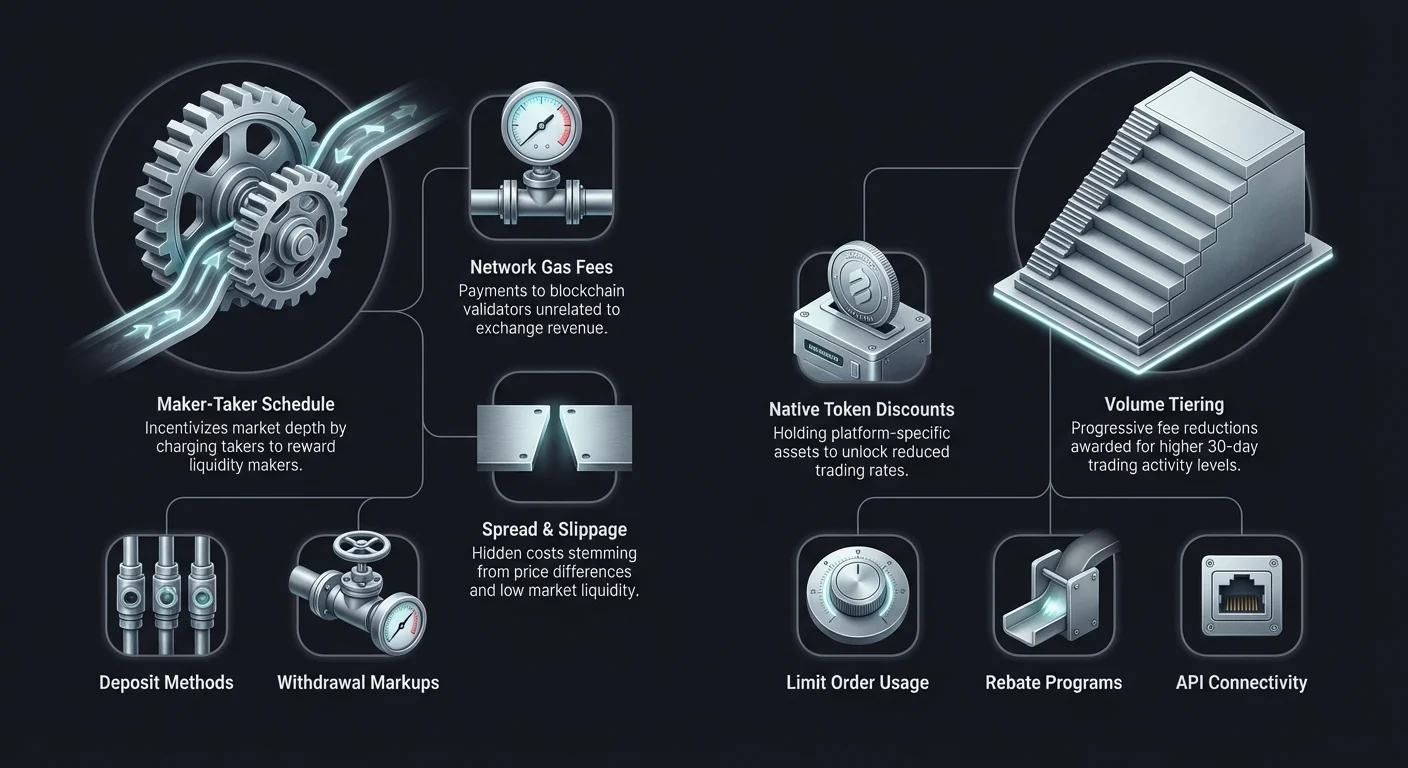
To minimize costs effectively, a trader must first understand how exchanges generate revenue. The most common model employed by centralized platforms is the maker-taker fee schedule. This system is designed to incentivize liquidity, which is the lifeblood of any trading venue. Without sufficient liquidity, large orders would cause drastic price slippage, making the exchange unattractive to institutional and retail investors alike.
Understanding Maker and Taker Roles
In the context of an order book, a "maker" is a trader who places an order that does not execute immediately. These orders are added to the order book and "make" the market by providing liquidity for others. For example, placing a limit order to buy Bitcoin at a price lower than the current market price makes you a maker. You are effectively stocking the shelves of the exchange with inventory.
Because makers help stabilize the market and ensure depth, exchanges typically reward them with lower fees. In some advanced trading scenarios or high-volume tiers, makers may pay zero fees or even receive a rebate. This means the exchange pays the trader to post orders. This dynamic is crucial for day traders and algorithmic bots that execute thousands of trades, where even a fraction of a percent in fees can destroy a strategy's edge.
A "taker" is a trader who places an order that executes immediately against an existing order on the book. Market orders are the most common example of taker activity. By buying or selling instantly at the current price, the taker removes liquidity from the order book. Takers prioritize speed and execution certainty over price precision. Consequently, exchanges charge takers higher fees to compensate for the removal of liquidity.
Volume-Based Fee Tiers
Most centralized exchanges employ a tiered fee structure based on a user's 30-day trading volume. This system rewards active participants with progressively lower rates. For entry-level users, fees might start around 0.10% to 0.50% per transaction. However, as trading volume increases, these percentages drop significantly.
For institutional investors or high-frequency traders moving millions of dollars monthly, fees can drop to near zero. It is important to monitor your trading volume relative to these tiers. Sometimes, executing a few additional trades to reach the next tier can result in substantial savings on future transactions. This structure aligns the interests of the exchange with the user: the platform gains volume, and the user gains cost efficiency.
Native Token Discounts
Many prominent centralized exchanges have issued their own utility tokens. These assets often serve multiple functions within the exchange's ecosystem, but their primary utility for traders is fee reduction. By holding a specific amount of the native token or using it to pay for transaction fees, users can receive discounts ranging from 10% to 25% or more.
This mechanism effectively locks users into the ecosystem but provides a tangible financial benefit. For traders committed to a specific platform, acquiring a balance of the native token is a simple strategy to immediately lower overhead costs. However, traders must also consider the volatility of the token itself. If the token's value depreciates significantly, it may offset the savings gained on trading fees.
Cost Analysis of Decentralized Exchanges (DEXs)
Decentralized exchanges operate on fundamentally different principles than their centralized counterparts. Instead of an order book managed by a central entity, DEXs often use Automated Market Makers (AMMs). In this model, liquidity is provided by users who deposit assets into liquidity pools. Trading costs on DEXs are composed of two primary elements: the protocol fee and the network fee.
Protocol Fees and Liquidity Provider Rewards
When a user executes a swap on an AMM, they pay a trading fee, typically ranging from 0.01% to 0.30%, depending on the specific pool and protocol. Unlike centralized exchanges where fees go to the corporation, DEX fees are largely distributed to the liquidity providers (LPs). This incentivizes users to deposit their assets into the pools, ensuring the DEX has enough liquidity to facilitate trades.
In this environment, the distinction between maker and taker is less defined than in order book models. Generally, any user interacting with the smart contract to swap tokens is paying the fee. However, some newer DEXs are implementing hybrid models with order books, reintroducing maker-taker dynamics to the decentralized space. Traders must check the specific fee structure of the protocol, as some pools for stablecoins (like USDT/USDC) may have significantly lower fees than volatile pairs.
The Impact of Network Gas Fees
The most significant variable in DEX trading costs is often the network fee, also known as gas. This fee is paid to the blockchain validators or miners to process the transaction, not to the exchange itself. On congested networks like Ethereum during bull markets, gas fees can skyrocket, sometimes costing more than the trade value itself for small transactions.
This reality has driven cost-conscious traders toward Layer 2 solutions and alternative blockchains. Networks such as Solana, Polygon, or Layer 2 rollups offer transaction costs that are a fraction of a cent. For traders operating with smaller capital or executing frequent swaps, choosing a cost-efficient blockchain is as important as choosing the right exchange. A DEX with low protocol fees is irrelevant if the underlying blockchain charges exorbitant gas fees for every interaction.
Slippage and Price Impact
While not a direct fee, slippage is a critical cost factor on decentralized exchanges. Slippage occurs when the size of a trade is large enough relative to the liquidity pool to shift the price during execution. The final execution price ends up being worse than the quoted price.
High slippage effectively acts as a hidden fee. Centralized exchanges with deep liquidity books can often absorb large orders with minimal price movement. In contrast, a DEX with low liquidity will punish large orders with high slippage. Traders must pay attention to "price impact" warnings on DEX interfaces. Setting a lower slippage tolerance can prevent bad execution, but it also risks the transaction failing if the market is volatile, which still incurs a gas fee cost.
Brokerage Platforms vs. Dedicated Exchanges
Newcomers to the cryptocurrency space often start with brokerage platforms due to their simplicity. Brokerages streamline the purchasing process, often allowing users to buy crypto directly with fiat currency via an easy-to-use app. However, this convenience usually comes at a premium. Understanding the cost difference between a broker and a dedicated exchange is vital for fee minimization.
The Hidden Cost of Spreads
Brokerage platforms often advertise "zero fee" trading. While they may not charge a separate commission line item, they monetize trades through the spread. The spread is the difference between the market buy price and the market sell price. A broker might quote a purchase price for Bitcoin that is $100 higher than the actual market rate and a sell price that is $100 lower.
This price differential is revenue for the broker. For the user, it represents an immediate loss of value upon purchase. In many cases, the cost of the spread on a brokerage platform exceeds the combined maker/taker fees on a professional exchange. Traders who value cost optimization over simplified interfaces should generally migrate toward exchanges that offer transparent order books and explicit fee schedules.
Convenience Fees and Payment Methods
Brokers often integrate convenient payment rails, such as credit cards or digital wallets like PayPal. While these methods allow for instant purchases, they frequently carry high processing fees. Credit card processors can charge anywhere from 3% to 5% of the transaction amount. These third-party processing fees are often passed directly to the user, in addition to the broker's spread.
Dedicated exchanges also offer these payment methods, but they typically encourage bank transfers or wire deposits, which are slower but significantly cheaper. For a trader looking to maximize their entry position, waiting a day for a bank transfer to clear is often superior to paying a 4% fee for an instant credit card buy. Minimizing entry costs ensures that the investment starts on a stronger footing.
Ekonomija trgovanja vrstnik-do-vrstnika (P2P)
Izmenjave vrstnik-do-vrstnika omogočajo neposredne trgovine med posamezniki brez posrednika, ki drži sredstva med pogajanjem. Te platforme ponujajo posebne prednosti glede zasebnosti in fleksibilnosti plačil, vendar imajo edinstveno strukturo provizij. Razumevanje stroškov P2P zahteva pogled onkraj preprostih odstotkov transakcij.
Provizije za oglase in escrow
Na tržnici P2P lahko uporabniki objavijo oglase za nakup ali prodajo kriptovalut po določenih cenah. Platforma običajno zaračuna provizijo uporabniku, ki ustvari oglas (maker). Ta provizija je običajno nizka, od 0 % do 1 %. Uporabnik, ki odgovori na oglas (taker), pogosto ne plača nobenih provizij platformi.
Vendar platforma zagotavlja escrow storitev za zagotavljanje varnosti. Kriptovaluta je shranjena v escrow, dokler ni potrjeno plačilo v fiat valuti. Ta storitev je financirana s provizijami oglasov. Čeprav so eksplicitne provizije platforme nizke, je pravi strošek v P2P trgovanju pogosto v tečajih izmenjave, ki jih določijo prodajalci.
Premije cen in metode plačil
Prodajalci na P2P platformah določajo svoje lastne cene. Da bi upoštevali tveganje vračil plačil, nihanja trga ali težave pri pridobivanju določenih metod plačil, prodajalci pogosto zvišajo ceno Bitcoina ali stabilnih valut nad globalno spot ceno. Ta premija je dejansko provizija, ki jo plača kupec.
Na primer, nakup Bitcoina z reverzibilno metodo plačila, kot je PayPal, lahko zahteva 5 % do 10 % premijo nad tržno ceno, saj prodajalec prevzema tveganje prevare. Nasprotno pa nepovratne metode plačil, kot so gotovinski depoziti ali bančna nakazila, običajno imajo nižje premije. Stroškovno optimizirano P2P trgovanje zahteva iskanje prodajalcev z dobro zgodovino, ki ponujajo konkurenčne tečaje za nizkotvegane metode plačil.
The Impact of Deposit and Withdrawal Fees
Trading fees are only one part of the equation. The costs associated with moving money onto and off of a platform can significantly impact overall profitability. These "on-ramp" and "off-ramp" fees vary wildly depending on the exchange, the currency, and the banking infrastructure involved.
Fiat On-Ramp Costs
Getting fiat currency (USD, EUR, etc.) into the crypto ecosystem is often the first hurdle. Bank transfers (ACH, SEPA, Wire) are generally the most cost-effective methods. Many exchanges offer free ACH deposits or low-cost SEPA transfers for European users. However, these methods can be slow, taking 1 to 3 business days to settle.
In contrast, instant buy options using debit or credit cards incur high processing fees from card networks. These are often combined with "convenience fees" from the exchange. A user depositing $1,000 via credit card might only receive $950 worth of value after all fees are deducted. For cost minimization, patience is a financial asset; planning deposits via bank transfer avoids these high friction costs.
Cryptocurrency Withdrawal Fees
Moving digital assets off an exchange to a personal wallet or another platform incurs a withdrawal fee. This fee usually consists of two parts: a portion to cover the blockchain network cost and a markup by the exchange. Some exchanges charge a dynamic fee that adjusts with network congestion, while others charge a flat fee.
Flat fees can be disproportionately expensive for small withdrawals. If an exchange charges a flat 0.0005 BTC withdrawal fee, that might be negligible for a transfer of 1 BTC, but it is a massive percentage cost for a transfer of 0.005 BTC. Traders should check the fee schedule for each asset. Sometimes, converting a balance to a low-fee cryptocurrency (like Litecoin or XRP) before withdrawing can save significant amounts, provided the destination wallet supports that asset.
| Fee Type | Cost Level | Speed | Best For |
|---|---|---|---|
| Bank Transfer (ACH/SEPA) | Low / Free | Slow (1-3 days) | Large deposits, cost saving |
| Wire Transfer | Moderate | Medium (1 day) | High value, institutional |
| Credit/Debit Card | High (3-5%) | Instant | Emergencies, beginners |
Hibridne borze: Most čez prepad
Hibridne borze poskušajo združiti visoko likvidnost in hitrost centraliziranih platform z varnostjo in samo-hrambo decentraliziranih borz. Z vidika stroškov ponujajo edinstveno srednjo pot. Običajno uporabljajo ujemanje naročil zunaj verige za zmanjšanje omrežnih provizij, medtem ko poravnavajo trgovanje na verigi.
Strukture provizij v hibridnih modelih
Hibridne platforme pogosto stremijo k konkurenčnosti s provizijami centraliziranih borz, da privabijo uporabnike. Ponujajo lahko modele maker-taker, podobne CEX-om. Prednost je v zmanjšanju plinskih provizij v primerjavi s čistimi DEX-i. Z ujemanjem naročil zunaj verige uporabniki ne plačujejo plina za vsako prilagoditev ali preklic naročila, kar je pogosta izguba sredstev v popolnoma on-chain knjigah naročil.
Vendar proces poravnave še vedno zahteva interakcijo z verigo blokov. Uporabniki morajo biti pozorni, kako pogosto se izvajajo poravnave in kdo nosi strošek. Nekateri hibridi združujejo transakcije za minimiziranje teh provizij. Za trgovce, ki želijo samo-hrambo brez stalnih plinskih stroškov DEX-a ali tveganj hrambenosti CEX-a, lahko hibridi ponudijo stroškovno učinkovit kompromis, če je na voljo zadostna likvidnost za izogibanje zdrsu.
Strategies for Minimizing Trading Fees
Minimizing fees is not just about choosing the cheapest exchange; it is about adopting trading behaviors that align with fee efficiencies. Active management of order types and strategic timing can reduce overhead significantly.
Utilizing Limit Orders
The most effective strategy for fee reduction on order book exchanges is the consistent use of limit orders. By setting a specific price at which you are willing to buy or sell, you become a market maker. This qualifies you for the lower maker fee tier.
While limit orders do not guarantee execution (since the market price must reach your limit), they prevent you from paying the spread and the higher taker fee. For non-urgent trades, patience allows a trader to capture the spread rather than pay it. Over hundreds of trades, the difference between paying 0.5% as a taker and 0.1% as a maker compounds into substantial savings.
Optimizing for Fee Tiers
Traders near the threshold of a volume tier should consider their activity levels. If a trader is close to unlocking a lower fee bracket, it may be mathematically beneficial to execute a few low-risk, break-even trades to boost volume. However, this must be done carefully to avoid "wash trading" violations or incurring costs that exceed the potential savings.
Furthermore, consolidating trading activity onto a single platform can help reach these tiers faster. Instead of spreading volume across five different exchanges and paying the highest base rate on all of them, concentrating volume on one primary exchange allows the trader to climb the fee ladder more quickly.
Rebates and Referral Programs
Many exchanges offer referral programs where users receive a percentage of trading fees paid by people they invite. Some programs also offer kickbacks to the invitee, effectively permanently lowering their fee rate. Signing up through a rebate link or using a referral code is a simple, one-time action that can result in lifetime fee discounts.
Additionally, high-volume traders should look for exchanges with negative maker fees. In these setups, the exchange pays a rebate to the maker for every executed order. This turns the cost of trading into a revenue stream, although it typically requires sophisticated algorithmic strategies to manage the inventory risk associated with market making.
Varnost proti stroškom: Najdite ravnotežje
Pogosta past v prizadevanju za nizke provizije je zanemarjanje varnosti. Najcenejša borza ni vedno najboljša izbira, če ima zgodovino varnostnih kršitev ali insolventnih praks. Prihranek 0,1 % pri trgovalnih provizijah je brezsmiseln, če se celotni glavnica izgubi v vdoru.
Strošek infrastrukture
Robustni varnostni ukrepi, kot so globoka hladna shramba, večpodpisne denarnice in regulativna skladnost, stanejo denar. Ugledne borze močno vlagajo v to infrastrukturo. Posledično so njihove provizije morda nekoliko višje kot pri neznanih, nereguliranih platformah, ki skrajšajo vogale.
Trgovci bi morali višje provizije na vrhunskih borzah videti kot premijo za zavarovanje. Platforme, ki so javno kotirane ali regulirane s strani strogih finančnih organov (kot NYDFS), ponujajo raven varnosti, ki upraviči marginalno povečanje transakcijskih stroškov.
Varovalni skladi in Safu
Nekatere borze vzdržujejo nujne varovalne sklade za odškodnino uporabnikov v primeru kršitve. Ti skladi se pogosto kopičijo iz dela trgovalnih provizij. Čeprav to morda prepreči, da bi se provizije znižale na dno, doda plast zaščite. Pri ocenjevanju stroškov upoštevajte, ali platforma ponuja kakšne takšne garancije. Nekoliko višja provizija, ki prispeva k varnostni mreži, je pogosto pametna alokacija kapitala.
Regulatory Compliance and Cost Implications
The regulatory landscape has a direct impact on exchange fee structures. Compliance with Know Your Customer (KYC) and Anti-Money Laundering (AML) laws requires administrative overhead. Exchanges must employ compliance teams and verification software.
KYC and Fee Structures
Regulated exchanges with mandatory KYC often have stable banking partnerships. This allows them to offer cheaper fiat on-ramps, such as free bank transfers. In contrast, "anonymous" exchanges that bypass KYC often lack access to traditional banking rails. They may rely on third-party payment processors that charge high fees or require users to onboard crypto elsewhere and transfer it in.
Therefore, while anonymous exchanges offer privacy, they may inadvertently increase the total cost of operation due to friction in moving fiat currency. Traders must weigh the value of privacy against the tangible costs of deposit and withdrawal restrictions.
Skrite provizije v drobnem tisku
Onkraj oglaševanih trgovalnih stopenj lahko borze imajo pomožne provizije, ki lahko presenetijo neprevidne uporabnike. Celovita strategija optimizacije stroškov zahteva branje drobnoglasnega tiska za identifikacijo teh potencialnih puščanj.
Provizije za neaktivnost in račune
Nekatere platforme zaračunavajo provizije za neaktivnost, če račun ostane neaktiven za določen čas. To je pogostejše pri posredniško-stilnih računih kot pri namenskih kripto borzah, vendar je tveganje za dolgoročne imetnike, ki »nastavijo in pozabijo«. Uporabniki bi morali zagotoviti, da preprosto zadrževanje sredstev ne prinaša mesečnega stroška vzdrževanja.
Provizije za pretvorbo in FX
Pri trgovalnih parih, ki vključujejo različne fiat valute (npr. trgovanje USD para z EUR bančnim računom), veljajo provizije za menjavo tujih valut (FX). Te so pogosto skrite v tečaju menjalnice, ki ga zagotovi banka ali platforma. Uporaba večvalutnega bančnega računa ali trgovanje v domači valuti bančne metode se izogne tem nepotrebnim stroškom.
Podobno funkcije »pretvorbe« na mnogih borzah – preprosti vmesniki za menjavo enega kovanca v drugega – pogosto delujejo kot tržna naročila z širokimi razponi. Uporaba vmesnika »Pro« ali »Napredno« trgovanje za izvedbo iste menjave prek limitnega naročila se izogne razponu pretvorbe.
Zaključek
Stroškovno optimizirano trgovanje je disciplina, ki sega onkraj preproste iskanje borze z najnižjo glavno stopnjo. Vključuje celostni pristop k upravljanju celotnega življenjskega cikla trgovanja. Od trenutka vnosa fiat valute do končnega iznosa digitalnih sredstev provizije stalno pritiskajo na neto donose. Z razumevanjem mehanike modelov maker-taker se lahko trgovci postavijo v položaj zagotavljanja likvidnosti in zmanjšanja stroškov izvedbe.
Izbira prave platforme zahteva uravnoteženje urnikov provizij z varnostjo, likvidnostjo in funkcionalnimi potrebami. Trgovci z visokim obsegom najbolj koristijo od stopenjskih centraliziranih borz ali programov povračil, medtem ko osebe, osredotočene na zasebnost, krmarijo premije P2P trgov. Decentralizirane borze ponujajo samo-hrambo, vendar zahtevajo budnost glede plinskih provizij in zdrsa. Na koncu je cilj ohraniti največjo količino vrednosti z minimiziranjem trenj na vsakem koraku.
Najdonosnejši trgovec ni le tisti, ki najbolje napove trg, temveč tisti, ki obdrži največ tega, kar zasluži.