
Active traders and professional market participants operate under a different set of requirements than the average retail investor. For a casual buyer, a user-friendly interface and simple onboarding might be the primary selling points. However, high-volume traders prioritize metrics that directly impact their bottom line and operational efficiency. These include depth of liquidity, execution speed, API connectivity, and fee structures.
When moving large amounts of capital, a fraction of a percentage in slippage can equate to significant financial loss. Therefore, the selection of a Centralized Exchange (CEX) becomes a strategic business decision rather than a simple preference. This tier list approach categorizes platforms based on their utility for active market participants who require institutional-grade reliability and performance.
The landscape of centralized exchanges has bifurcated into distinct tiers. At the top are platforms that focus on regulatory compliance and deep liquidity pools suitable for institutional flows. Below that are platforms optimizing for retail volume, high leverage, and gamified features. For the professional, distinguishing between these tiers is essential for risk management and strategy execution.
This guide evaluates the market leaders based on the criteria that matter most to active traders. We examine liquidity mechanics, the robustness of security protocols like cold storage and SOC certifications, and the intricacies of fee schedules. We also explore the availability of advanced order types and the reliability of data feeds necessary for algorithmic trading.
Defining the Professional Standard
To establish a tier list for high-volume trading, one must first define the metrics of success. The most critical factor is liquidity. This does not simply refer to the daily volume reported by the exchange, which can be inflated. It refers to the depth of the order book.
A deep order book allows a trader to execute large buy or sell orders without causing a drastic shift in the asset's price. This stability is vital for professionals who need predictable entry and exit points. Slippage, the difference between the expected price of a trade and the executed price, is the enemy of high-volume strategies.
The second pillar of the professional standard is the fee structure. Active traders execute hundreds or thousands of trades per month. A flat fee model is rarely sustainable for this demographic. Instead, professionals look for maker-taker models where providing liquidity (making orders) is incentivized with lower fees or rebates.
Taking liquidity (filling existing orders) usually incurs a cost, but this must be competitive. Tiered fee schedules that reduce costs as 30-day trading volumes increase are a non-negotiable requirement for this sector.
The Importance of API Connectivity
For many professional traders, the user interface is secondary to the Application Programming Interface (API). Algorithmic trading and high-frequency trading (HFT) strategies rely on direct communication with the exchange's matching engine.
A top-tier CEX must offer robust REST and WebSocket APIs. These connections allow traders to automate their strategies, pulling real-time market data and executing orders faster than a human could manually.
Reliability is key here. An API that disconnects during periods of high volatility can be disastrous. Rate limits, which determine how many requests a user can make per second, must be high enough to support active strategies without throttling.
Documentation is also a factor. Clear, comprehensive documentation allows developers to build stable trading bots and integration tools. The best exchanges provide sandbox environments. These are test networks where traders can deploy and debug their algorithms using play money before risking real capital in the live market.
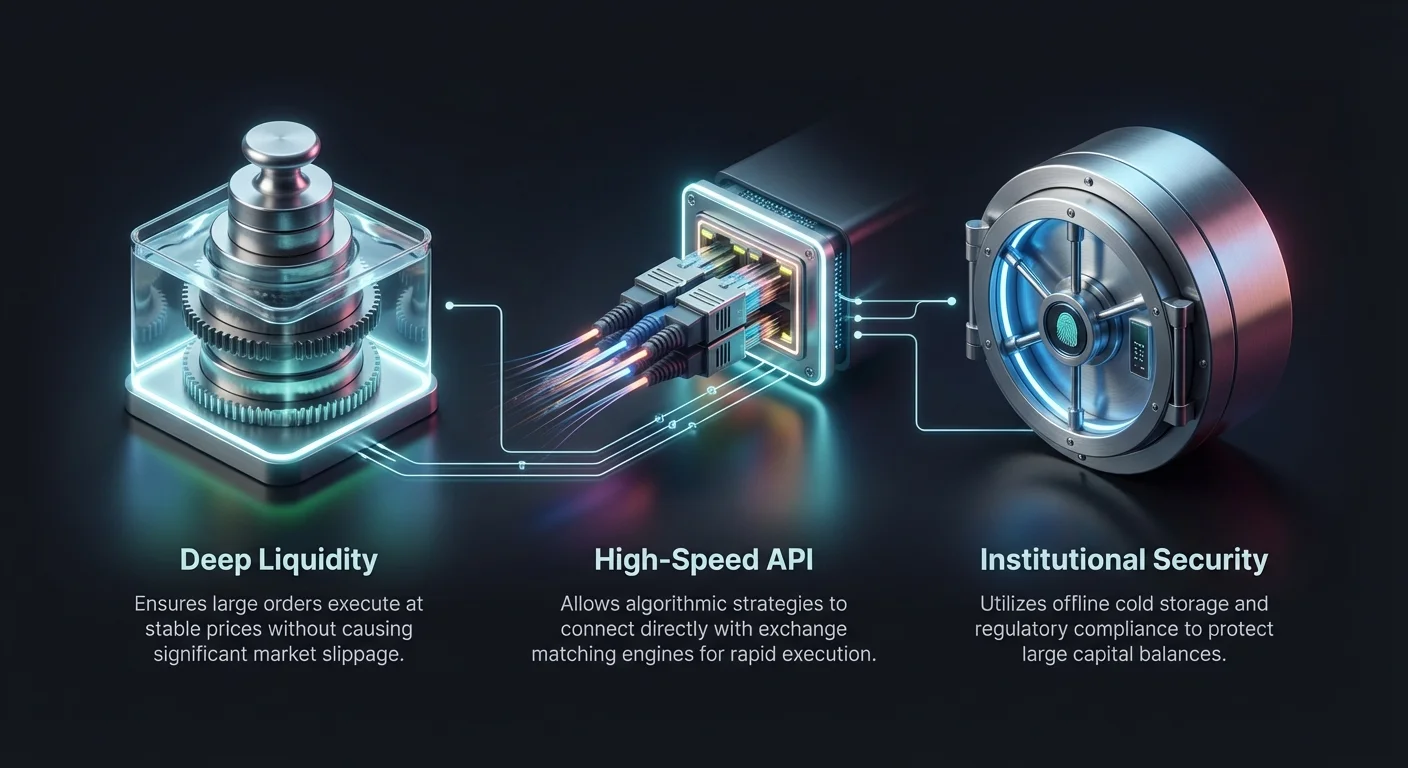
Tier S: The Institutional Grade Platforms
The highest tier of centralized exchanges is characterized by stringent regulatory compliance, massive liquidity, and audited security measures. These platforms are designed to bridge the gap between traditional finance and the cryptocurrency ecosystem. They are the preferred venues for hedge funds, family offices, and high-net-worth individuals who prioritize the safety of principal over high leverage or exotic altcoins.
Platforms in this tier often hold licenses from major financial regulators. For example, they may be regulated by the New York Department of Financial Services (NYDFS) or hold specific licenses in Europe and Asia. This compliance ensures that they adhere to strict capital reserve requirements and anti-money laundering (AML) standards.
Security in Tier S is not just about passwords. It involves institutional-grade custody solutions. This typically means that the vast majority of client assets are held in cold storage, offline and air-gapped from the internet to prevent hacking.
Coinbase: The Benchmark for Compliance
Coinbase represents the archetype of a Tier S exchange. Established in 2012, it has evolved into a publicly traded company, a status that mandates a level of financial transparency rare in the crypto sector. For the professional trader, this transparency reduces counterparty risk.
The platform separates its retail offering from its advanced trading tools. The advanced interface provides the charting capabilities, order books, and trade history data required for technical analysis. However, the real value for high-volume traders lies in the liquidity of major pairs like BTC/USD and ETH/USD.
Security is a primary selling point. Coinbase utilizes extensive cold storage protocols. This involves distributing private keys geographically and requiring physical consensus to access funds. This architecture protects against single points of failure.
Furthermore, the platform offers insurance coverage for digital assets held in hot wallets. While this does not cover unauthorized access to a user's personal account, it provides a safety net against a breach of the exchange's physical or digital infrastructure.
Gemini: Security and Certification
Gemini, founded in 2014, positions itself as a security-first platform. It is a fiduciary and a qualified custodian, chartered in New York. This legal standing imposes strict fiduciary duties regarding the protection of client assets.
For the professional, Gemini’s adherence to SOC 1 Type 2 and SOC 2 Type 2 examinations is significant. These are third-party audits that verify the design and operating effectiveness of the exchange's security and compliance controls. It provides assurance that the platform operates as claimed.
Gemini’s "ActiveTrader" interface is built for speed and complexity. It supports multiple order types that go beyond simple market buys. Traders can execute block trades, which are large transactions settled off the open order book to prevent market disruption.
The exchange also operates a fully reserved model. This means client assets are backed one-to-one and are not lent out or used for the exchange's own operational purposes. This full-reserve status is verifiable, offering peace of mind during periods of market contagion where other platforms might face liquidity crises.
Kraken: The Veteran’s Choice
Kraken is one of the longest-running exchanges in the industry. It has survived multiple market cycles and has built a reputation for reliability. It offers a comprehensive suite of services that appeals to diverse professional strategies, including spot trading, margin trading, and futures.
Liquidity on Kraken is consistently high, particularly for Euro pairs, making it a dominant player in the European market. The platform provides proof of reserves audits, allowing users to cryptographically verify that their balances are held by the exchange.
Kraken’s fee structure is highly competitive for volume traders. It employs a maker-taker model that rewards liquidity provision. As a trader’s volume increases, their fees decrease, potentially reaching near-zero levels for the highest volume tiers.
The platform also supports advanced funding options. High-volume traders can utilize specialized banking rails for faster fiat deposits and withdrawals. This speed is essential for arbitrage strategies that require moving capital between exchanges to exploit price inefficiencies.
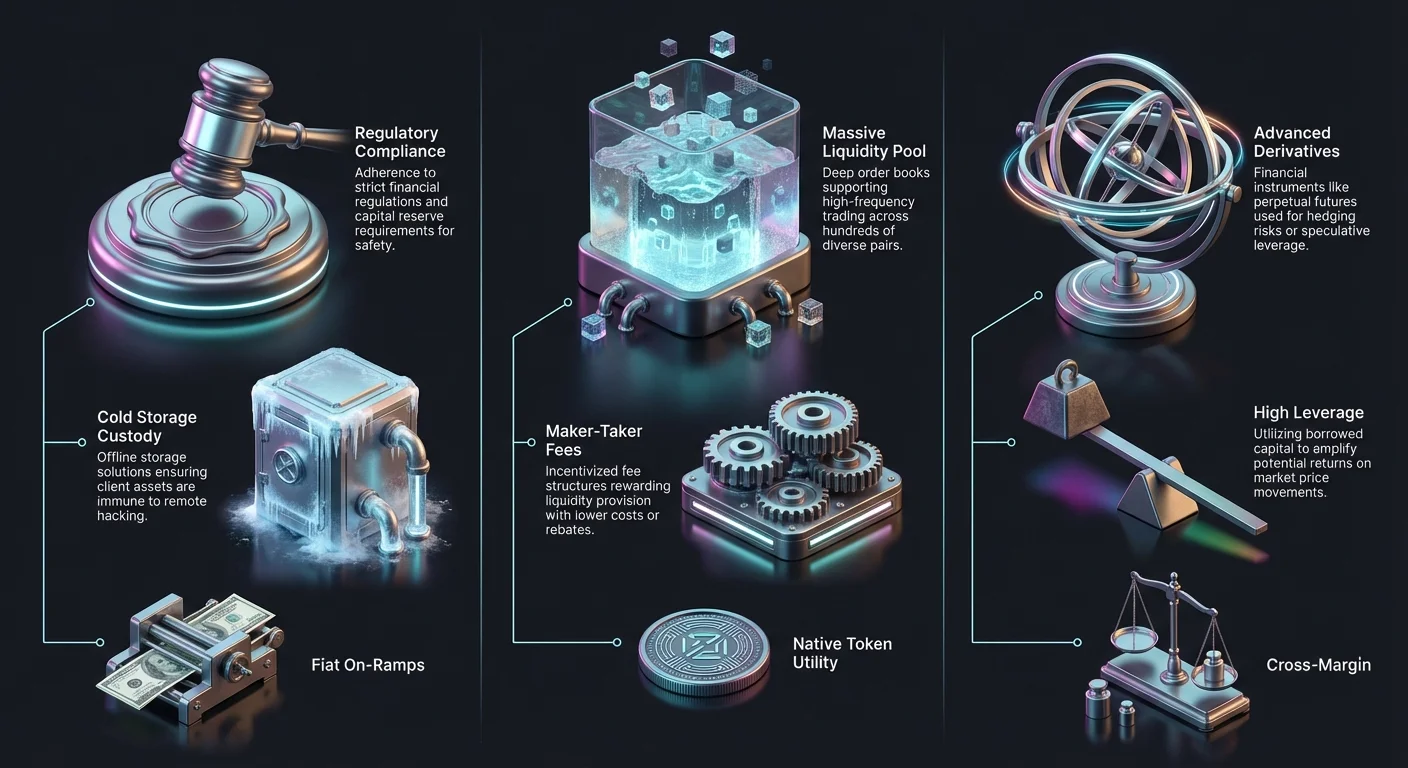
Tier A: The Volume and Variety Leaders
Tier A exchanges are defined by their sheer dominance in global trading volume and the breadth of their asset listings. While they may face more complex regulatory landscapes than Tier S platforms, they offer unparalleled market depth and variety. These are the engines of the retail and pro-retail market, providing the liquidity necessary for high-frequency trading across hundreds of trading pairs.
These platforms often innovate faster than their regulated counterparts. They are typically the first to list new assets, launch new derivative products, or introduce novel trading features like copy trading or social sentiment indicators. For a trader looking for volatility and opportunity across a wide spectrum of assets, Tier A is the destination.
The technology stack powering these exchanges is built for extreme throughput. Their matching engines can handle millions of orders per second, minimizing latency. This technical capability is critical during market crashes or parabolic rallies when traffic spikes can crash lesser platforms.
Binance: The Global Liquidity King
Binance is frequently cited as the largest cryptocurrency exchange by trading volume. This volume creates a virtuous cycle: high liquidity attracts more traders, which in turn creates deeper liquidity. For a professional entering a large position, this depth ensures tight spreads and minimal slippage.
The platform offers an ecosystem that extends far beyond spot trading. It includes a massive derivatives market for futures and options. Traders can hedge their spot positions or speculate on price movements with leverage.
Binance also utilizes its native token, BNB, to offer fee discounts. Traders who hold BNB in their accounts or use it to pay for transaction fees receive a discount on standard rates. This feature is particularly attractive for high-frequency traders where fees constitute a major operational cost.
The sheer number of trading pairs on Binance is a distinct advantage. It allows for complex pair trading strategies and arbitrage opportunities that are not possible on more conservative exchanges with limited listings.
Bitget: Innovation in Social and Derivatives
Bitget has carved out a significant niche in the derivatives market. While it offers robust spot trading, its primary draw for active traders is its futures platform and copy trading functionality.
Copy trading allows users to automatically mirror the positions of experienced traders. For professionals, this can be a way to diversify strategies or earn income by allowing others to copy their trades (often for a profit share).
Bitget emphasizes security through multi-signature wallets and cold storage. It also maintains a protection fund designed to cover user losses in extreme security incidents. This adds a layer of reassurance for traders keeping capital on the platform.
The interface is designed to be intuitive but powerful, offering the technical indicators and charting tools necessary for derivative trading. The integration of features like one-click copy trading streamlines the user experience without sacrificing the depth required for analysis.
Tier B: Specialized Derivatives and Brokerage
This tier includes platforms that may not have the universal name recognition of the giants but offer specialized tools that are indispensable for certain professional strategies. These often include high-leverage environments, hybrid brokerage models, or specific focuses on commodities and forex alongside crypto.
Tier B platforms are often the choice for traders who view cryptocurrency as just one asset class among many. They allow for cross-margining, where a single pool of collateral can be used to trade Bitcoin futures, gold contracts, and foreign currency pairs simultaneously.
The distinction between an exchange and a broker becomes relevant here. While an exchange matches buy and sell orders between users, a broker often acts as the counterparty or routes orders to liquidity providers. This model can offer different advantages, such as guaranteed fills or simplified fee structures.
PrimeXBT: The Multi-Asset Approach
PrimeXBT exemplifies the multi-asset brokerage model. It does not limit users to cryptocurrency. Instead, it provides a single platform to trade crypto futures, forex pairs, commodities like oil and gold, and stock indices.
This consolidation is highly efficient for macro traders. Instead of maintaining separate accounts at a forex broker and a crypto exchange, a trader can manage a holistic portfolio from one dashboard. This simplifies capital efficiency and risk management.
The platform is known for offering high leverage. While leverage increases risk, it is a powerful tool for professionals who know how to size positions correctly. PrimeXBT allows traders to gain exposure to large positions with relatively small initial capital.
Because it operates more like a CFD (Contract for Difference) provider in many aspects, users are speculating on price movements rather than taking delivery of the underlying asset. This removes the complexities of wallet management for the assets being traded.
BTCC: The Futures Specialist
BTCC focuses heavily on futures trading. As one of the older platforms in the space, it has refined its offering to cater to traders looking for reliable execution in the derivatives market.
The platform offers a variety of futures contracts, including daily, weekly, and perpetual futures. This flexibility allows traders to tailor their expiration dates to their specific market outlooks.
One of BTCC’s notable features is its specialized focus on keeping fees low and transparent for futures traders. It avoids the complex tiered structures of some competitors in favor of clarity.
BTCC also integrates a demo trading environment. This is crucial for professionals testing new strategies. Being able to trade with virtual margin in real market conditions allows for risk-free optimization of trading systems before live deployment.
The Mechanics of Fees in High-Volume Trading
Understanding fee structures is arguably the most important non-technical skill for a high-volume trader. Fees are the friction of the market; they resist forward motion and eat into profits. In a high-frequency environment, fees can easily exceed the actual trading profits if not managed correctly.
Most CEXs utilize a Maker-Taker fee model. This model distinguishes between orders that provide liquidity and orders that take liquidity. "Makers" place limit orders that sit on the order book, waiting to be filled. "Takers" place market orders (or limit orders that cross the spread) that fill immediately against existing orders.
Exchanges want deep order books, so they incentivize Makers. Maker fees are almost always lower than Taker fees. On some platforms, Makers pay zero fees or even receive a rebate, meaning the exchange pays them to trade.
Volume-Based Discounts
Tiered fee schedules are standard across professional exchanges. These schedules are based on a trailing 30-day trading volume. As a trader accumulates volume, they move up in tiers, and their fee percentage drops.
For a professional, reaching the higher VIP tiers is a priority. Moving from a standard 0.1% fee to a 0.02% fee represents an 80% reduction in operational costs. This difference changes the mathematical expectancy of many trading strategies, turning losing systems into profitable ones.
Some exchanges calculate this volume in USD, while others use BTC terms. It is important to monitor your volume relative to the tiers. Sometimes, executing a few extra trades to push into the next tier can save significant money in the long run.
Native Token Economics
Many Tier A and Tier B exchanges have issued their own utility tokens. Holding these tokens or using them to pay for trading fees often unlocks additional discounts.
For example, a trader might receive a 25% discount on fees if they elect to pay in the exchange's native token rather than the quote currency of the trade. This requires the trader to maintain a balance of the native asset.
Professionals must weigh the cost of exposure to the native token against the savings in fees. If the token's price is volatile, the loss in token value could theoretically outweigh the fee savings. Hedging this exposure is a common strategy for those holding large amounts of exchange tokens for VIP status.
Liquidity and Market Impact
Liquidity is a multi-dimensional concept. It involves the bid-ask spread, the depth of the book, and the resiliency of the market. For a high-volume trader, the bid-ask spread is the immediate cost of entering a trade. A tight spread means the buy price and sell price are very close, minimizing the loss incurred the moment the trade is opened.
Market depth refers to the quantity of orders waiting at prices above and below the current market price. A thin order book might have a tight spread for small amounts, but a large order will sweep through multiple price levels. This phenomenon is known as walking the book.
Resiliency is how fast the order book replenishes after a large trade. In a highly liquid exchange, arbitrage bots and market makers will quickly fill the gaps left by a large order, restoring the price and depth. In a low-liquidity environment, a large trade can permanently alter the price level for a significant period.
Slippage Mitigation
Professionals use specific techniques to mitigate slippage on centralized exchanges. The most common is breaking up large orders. Instead of buying 100 BTC in one click, an algorithm might buy 0.5 BTC every few seconds or minutes.
This is known as TWAP (Time-Weighted Average Price) or VWAP (Volume-Weighted Average Price) execution. Advanced exchanges offer these algorithmic order types natively. The trader sets the parameters, and the exchange's engine handles the execution over time.
Another method is using "Iceberg" orders. An Iceberg order displays only a small portion of the total order size to the public order book. As the visible portion is filled, a new portion is revealed. This prevents other traders from front-running the large order or panicking due to the visible sell pressure.
Over-the-Counter (OTC) Trading
When the volume is too high even for the standard order books of Tier S and Tier A exchanges, professionals turn to Over-the-Counter (OTC) desks. OTC trading involves a private transaction between two parties, facilitated by the exchange or a desk.
OTC trades do not appear on the public order book. This is their primary advantage. A massive sell order on the public book would signal bearish sentiment and drive the price down before the seller could finish unloading their position.
By trading OTC, a whale or institution can lock in a price for a massive block of assets without moving the public market. The price is typically negotiated based on the current spot price plus a small premium or discount depending on market conditions.
Gemini eOTC and Institutional Desks
Services like Gemini eOTC are designed specifically for this purpose. They offer electronic execution for large block trades. This provides the discretion of traditional voice-brokered OTC with the speed of electronic trading.
These desks often require minimum trade sizes, such as $100,000 or more. They leverage deep liquidity networks that may include other exchanges, miners, and large holders to fill these orders.
Settlement in OTC is also streamlined. Since the exchange often acts as the custodian for both parties or facilitates the escrow, the swap of fiat for crypto happens instantly and securely once the price is agreed upon.
Security Architecture for Large Balances
The security needs of a trader with $10,000 on an exchange are different from one with $10 million. For high-volume traders, the exchange's internal security architecture is a critical due diligence item.
The gold standard is cold storage. This means the exchange keeps the private keys to the majority of customer funds on devices that are never connected to the internet. This makes them immune to remote hacking attempts.
Exchanges like Coinbase and Kraken utilize geographically distributed cold storage. Keys are split into shards, and multiple shards from different locations are required to reconstruct the key and sign a transaction.
Managing Counterparty Risk
Despite cold storage, leaving funds on an exchange always entails counterparty risk. The exchange could become insolvent, face regulatory seizure, or suffer internal fraud.
Professionals mitigate this by keeping only the necessary working capital on the exchange. Profits are regularly swept to self-custody solutions, such as hardware wallets or institutional custody providers.
Whitelisting is another essential security feature. Traders should configure their accounts to only allow withdrawals to specific, pre-approved blockchain addresses. This prevents an attacker who gains access to the account from draining funds to their own wallet.
Account-Level Protections
At the user level, 2FA (Two-Factor Authentication) is mandatory. However, SMS-based 2FA is considered insecure due to SIM swapping attacks. Professionals use hardware security keys, such as YubiKeys, or app-based authenticators like Google Authenticator.
Some exchanges offer a "Vault" feature. This adds a time delay to withdrawals, such as 48 hours. During this window, the withdrawal can be canceled. This provides a buffer to react if an account is compromised.
API Integration and Algorithmic Strategies
For active traders, the interface is code. The robustness of an exchange's API documentation and the stability of its endpoints are major factors in the tier ranking.
REST APIs are used for non-time-sensitive actions, such as checking account balances, reviewing trade history, or placing withdrawal requests. They work on a request-response basis.
WebSocket APIs are used for real-time data. They maintain an open connection between the trader's server and the exchange. This allows the exchange to push market data (price updates, order book changes) to the trader instantly without the trader needing to ask for it repeatedly.
Rate Limits and Colocation
High-volume traders must understand an exchange's rate limits. If a strategy involves placing and canceling orders rapidly (market making), a low rate limit will cause the exchange to block the trader's connection. Tier 1 exchanges generally offer higher rate limits to verified institutional accounts.
Colocation is a service offered by some advanced exchanges where the trader can place their trading server in the same physical data center as the exchange's matching engine. This reduces network latency to the absolute minimum, measured in microseconds. While extreme, this is a standard requirement for HFT firms.
Derivatives: Futures and Options Architecture
The architecture of the derivatives engine is a distinct component of Tier B and Tier A exchanges. Derivatives allow traders to speculate on price without holding the asset, and more importantly, to hedge risks.
Perpetual futures are the most common crypto derivative. Unlike traditional futures, they do not have an expiration date. They use a mechanism called the "Funding Rate" to keep the contract price tethered to the spot price of the asset.
Understanding the funding rate is crucial for professionals. If the market is bullish, longs typically pay shorts. If a trader holds a large long position for a long time, these funding fees can erode profits. Conversely, a "Cash and Carry" trade involves going long on spot and short on futures to collect the funding rate, a popular strategy among high-net-worth traders.
Cross-Margin vs. Isolated Margin
Professional platforms offer flexible margin modes. Isolated margin assigns a specific amount of collateral to a single trade. If the trade fails, only that specific collateral is lost.
Cross-margin allows a trader to use their entire account balance as collateral for all open positions. This is useful for hedging. Profits in one position can offset losses in another, preventing liquidation. However, it also puts the entire account balance at risk if the overall portfolio moves unfavorably.
Liquidation Engines
Every exchange has a liquidation engine that automatically closes positions when the maintenance margin requirement is not met. The logic of this engine varies. Some exchanges liquidate the entire position immediately. Others use partial liquidation, closing only enough of the position to bring the margin back to acceptable levels.
For high-volume traders, partial liquidation is far superior. It preserves the core position and prevents a total wipeout during a momentary "wick" or flash crash. Tier A and B exchanges typically offer tiered liquidation protocols to protect larger positions.
Hibridni model: Most med CEX in DEX
Čeprav se ta seznam ravni osredotoča na centralizirane borze, se meja briše. Nekatere CEX integrirajo Web3 denarnice in decentralizirane trgovalne značilnosti neposredno v svoj vmesnik. To uporabnikom omogoča dostop do likvidnosti CEX, hkrati pa dostop do DeFi (decentraliziranih finančnih) protokolov za kmetovanje donosov ali menjavo nišnih žetonov.
Ta hibridni pristop postaja vse bolj relevanten. Ponuja udobje in fiat tire CEX z raznolikostjo sredstev DEX. Vendar morajo profesionalni trgovci ostati pozorni, da interakcija z DeFi protokoli prek vmesnika CEX še vedno nosi tveganja pametnih pogodb, povezana z osnovnimi protokoli.
Fiat Gateways and Banking Rails
The ability to move fiat currency in and out of the crypto ecosystem is the final logistical hurdle for high-volume trading. Tier C exchanges often specialize in this, or it is a feature integrated into Tier S platforms.
Payment networks like SWIFT, SEPA (in Europe), and ACH (in the US) are the standard rails. However, they are slow. Tier S exchanges often partner with crypto-friendly banks to offering proprietary networks (like the Silvergate Exchange Network in the past, or similar current iterations) that allow for 24/7 instant fiat transfers.
For a professional trader, capital efficiency is key. Waiting three days for a wire transfer to clear is unacceptable when an arbitrage opportunity exists today. Therefore, the quality of an exchange's banking partnerships is a major factor in its ranking.
PayPal and Alternative Rails
Integrations with processors like PayPal offer speed and convenience but usually come with higher fees and lower limits. While useful for smaller, rapid deposits, they are rarely the primary rail for high-volume institutional capital due to the cost inefficiency.
However, having PayPal as a backup option can be strategic. In moments of banking system maintenance or outages, alternative rails ensure that a trader is never completely cut off from funding their account.
| Feature | Tier S (Institutional) | Tier A (Volume Leaders) | Tier B (Derivatives) |
|---|---|---|---|
| Primary Focus | Compliance & Security | Liquidity & Variety | Leverage & Products |
| Best For | Large Cap Spot Trading | Altcoins & Active Trading | Hedging & Speculation |
| Security | Cold Storage, Audits | High, Insurance Funds | Standard Industry |
| KYC Level | Strict/Mandatory | Varied/Tiered | Varied |
| Liquidity | Deepest for Majors | Deep across all pairs | Specialized |
| Examples | Coinbase, Kraken | Binance, Bitget | PrimeXBT, BTCC |
Diverzifikacija tveganj čez borze
Nobena borza, ne glede na svojo raven, ne sme držati 100 % delovnega kapitala profesionalnega trgovca. Diverzifikacija borz je temeljna strategija upravljanja tveganj.
Z razporeditvijo kapitala čez borzo stopnje S za skrbništvo/fiat, borzo stopnje A za likvidnost altcoinov in platformo stopnje B za zavarovanje trgovec izolira tveganja. Če ena platforma izpade ali doživi hek, celotna operacija ni ustavljena.
Ta strategija trgovcem omogoča tudi zajem najboljših cen. Arbitraža – nakup sredstva na eni borzi, kjer je cena nižja, in prodaja na drugi, kjer je višja – zahteva financirane račune na več platformah.
Conclusion
Selecting a high-volume exchange is a process of aligning platform capabilities with specific trading objectives. There is no single "best" exchange for every scenario. A high-frequency algo trader needs the API stability of a tech-focused platform, while a corporate treasurer buying Bitcoin for a balance sheet needs the regulatory shelter of a compliance-first custodian.
The tiers outlined here—Institutional, Volume Leaders, and Specialized Derivatives—provide a framework for making that decision. The Institutional tier offers safety and fiat integration. The Volume tier offers the raw market depth required to enter and exit active positions without slippage. The Specialized tier provides the financial instruments necessary for leverage and hedging.
Ultimately, the professional approach involves utilizing a stack of these platforms. By leveraging the strengths of each tier, active traders can build an infrastructure that is secure, cost-efficient, and capable of executing complex strategies in any market condition.
Successful high-volume trading requires treating exchanges not as wallets, but as specialized tools in a diversified operational infrastructure.