
The allure of trading cryptocurrency without paying visible commissions has become a dominant marketing strategy in the digital asset ecosystem. As the industry matures, platforms increasingly compete for user attention by slashing upfront costs, offering what appears to be a free service for executing trades. However, the economic reality of financial markets dictates that services are rarely truly free. When explicit transaction fees disappear, costs often migrate to less visible areas of the trade execution process.
Understanding the mechanics behind these zero-fee models requires a deep dive into market structure, liquidity provision, and order routing. Traders who believe they are bypassing costs may actually be paying them through wider spreads, data utilization, or inferior execution prices. The shift from commission-based models to spread-based or rebate-based models fundamentally changes how an exchange operates and generates revenue.
For the average investor, these distinctions might seem academic, but they have a direct impact on profitability. A lack of transparency in how orders are handled can erode gains over time, particularly for active traders. By analyzing the infrastructure of zero-fee environments, including over-the-counter (OTC) desks and swap platforms, users can better navigate the trade-offs between convenience and cost efficiency.
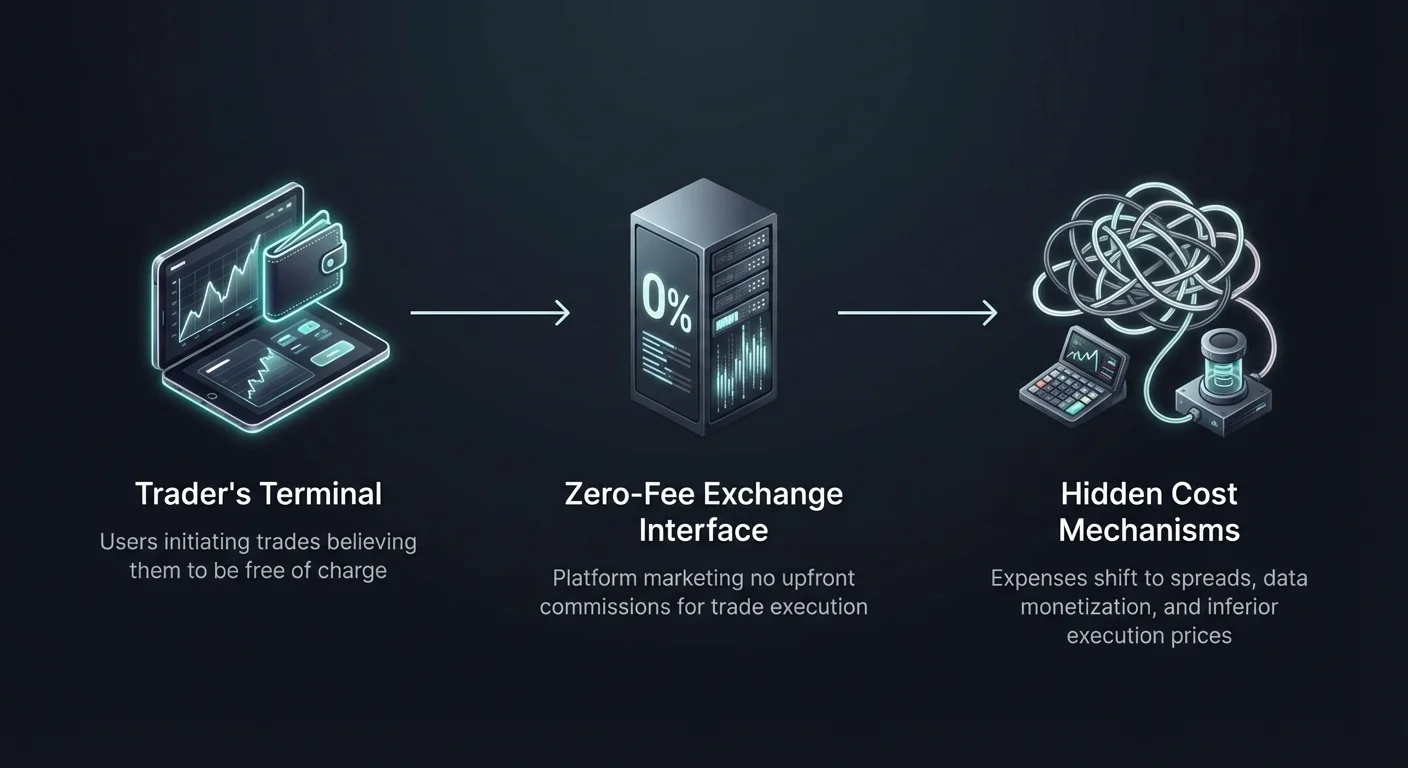
The Mechanics of Zero-Fee Incentives
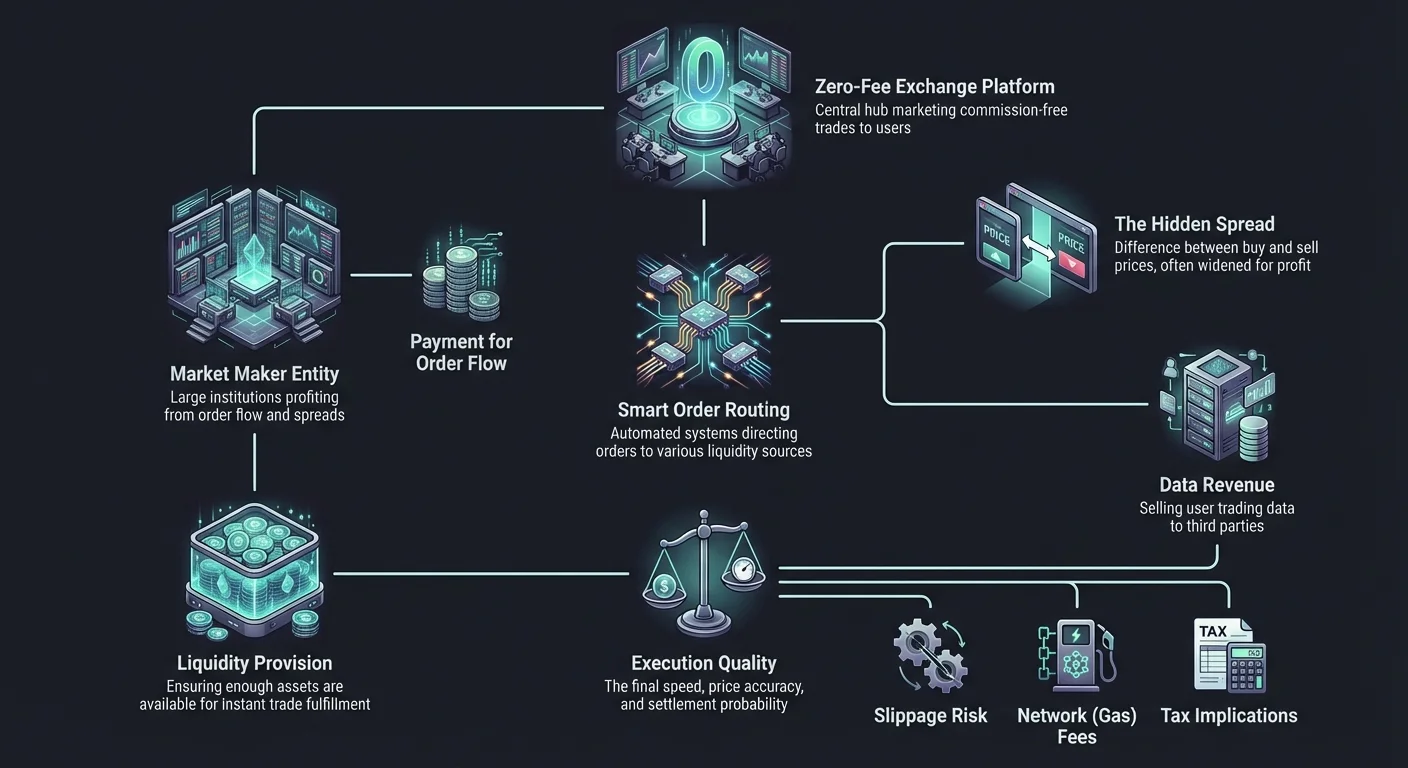
The concept of zero-fee trading relies heavily on alternative revenue streams that replace traditional commissions. In many cases, exchanges cultivate relationships with market makers and liquidity providers to facilitate this model. Rather than charging the user a fee per trade, the platform may generate revenue through rebates or incentives provided by these third parties. Market makers benefit from the order flow generated by the exchange’s user base, allowing them to profit from the difference between buying and selling prices.
This dynamic creates an ecosystem where the volume of trades becomes the primary commodity. Exchanges are incentivized to route orders to specific liquidity providers who offer rebates, a practice that can sometimes conflict with finding the absolute best price for the trader. While the user sees a transaction cost of zero on their screen, the execution price they receive may be slightly less favorable than the broader market rate.
Market Maker Incentives and Liquidity
Liquidity is the lifeblood of any zero-fee trading system. Exchanges must ensure there are enough assets available to fulfill buy and sell orders instantly. To achieve this, they offer incentives to market makers—large institutions or entities that hold significant amounts of crypto. These incentives often take the form of reduced fees or direct payments for providing liquidity to the order book.
In a zero-fee environment, the market maker effectively subsidizes the retail trader's cost. In exchange, they gain access to a steady stream of orders against which they can trade. This arrangement allows market makers to capture the spread on thousands of transactions. For the exchange, maintaining high liquidity is essential to prevent slippage, where a lack of available assets causes the price to shift unfavorably during the trade.
Skriti strošek spreadov
Najpomembnejši skriti strošek v okolju brez provizij ali z nizkimi provizijami je spread. Spread predstavlja razliko med najvišjo ceno, ki jo kupec želi plačati (bid), in najnižjo ceno, ki jo prodajalec želi sprejeti (ask). V preglednem trgu na osnovi provizij so spreadi običajno ožji, ker borza služi denar iz provizije, ne iz neskladnosti cen.
V modelih brez provizij borza ali market maker pogosto razširi ta spread. Na primer, če Bitcoin trguje po tržni stopnji 50.000 $, lahko platforma brez provizij navede kupno ceno 50.100 $ in prodajno ceno 49.900 $. Razlika 200 $ je dejansko skrita provizija, vgrajena v samo ceno sredstva. Uporabniki v bistvu plačajo premijo za udobnost, da ne izračunavajo ločene provizije.
Fiksne proti plavajočim stopnjam
Platforme za zamenjavo kriptovalut pogosto uporabljajo različne mehanizme stopenj, ki lahko zakrijejo te stroške. Nekatere storitve ponujajo fiksne stopnje, ki zagotavljajo specifično ceno za določeno obdobje, običajno za zaščito uporabnika pred volatilnostjo med transakcijo. Čeprav to zagotavlja gotovost, je spread na fiksnih stopnjah običajno veliko širši, da zaščiti platformo pred nenadnimi tržnimi gibi.
Plavajoče stopnje se nasprotno nihajo s trgom do trenutka izvedbe. Čeprav običajno ponujajo ožji spread, izpostavljajo trgovca slippageu, če se trg agresivno premakne med obdelavo transakcije. Razumevanje, ali platforma uporablja fiksne ali plavajoče stopnje, je ključno za izračun resničnega stroška zamenjave digitalnega sredstva, saj je »provizija« v celoti internalizirana v tečaju menjalnice.
OTC Trading and Market Impact
Over-the-counter (OTC) trading represents a different segment of the market where hidden costs manifest differently. OTC desks facilitate large-volume transactions directly between parties, bypassing public order books. This method is preferred by institutional investors and high-net-worth individuals to avoid "market impact," which occurs when a large order moves the market price significantly on a public exchange.
By moving these trades off-chain or off-book, OTC platforms provide privacy and stability. However, the personalized nature of this service means the pricing is opaque. The "fee" for an OTC trade is almost exclusively found in the spread offered by the desk. Institutional clients often negotiate these rates, but the baseline cost includes a premium for the liquidity and discretion provided.
The Role of Smart Order Routing
To manage the costs associated with large trades, institutional platforms employ smart order routers. These automated systems scan multiple global liquidity pools and exchanges simultaneously to find the best available prices. By breaking a large order into smaller chunks and executing them across different venues, the router minimizes the price disruption that would occur if the entire order were dumped on a single exchange.
This technology is essential for maintaining competitive execution prices in the OTC space. Without smart routing, a massive buy order could exhaust the liquidity at a specific price point, forcing the buyer to purchase subsequent coins at progressively higher prices. The efficiency of the router directly correlates to the cost savings for the trader, masking the complexity of the underlying market mechanics.
Privacy and Discretionary Costs
Confidentiality is a primary selling point for OTC services, but it acts as a value-add service that contributes to the overall cost structure. In a public exchange environment, transparency is high, but privacy is low; everyone can see the buy and sell walls. OTC desks offer a "discreet" environment where trade intentions are not broadcast to the market.
This privacy prevents other traders from front-running a large order—placing their own trades ahead of a known massive transaction to profit from the expected price movement. The cost of this protection is embedded in the execution price. Traders essentially pay a premium to keep their strategic moves hidden from the public eye, ensuring that their own trading activity does not turn the market against them before they can finish their position.
Analiza likvidnosti in slippagea
Likvidnost se nanaša na lahkotnost, s katero se sredstvo lahko pretvori v gotovino ali drugo kovanec brez vpliva na njegovo ceno. V kontekstu trgovanja brez provizij je likvidnost primarni determinant kakovosti izvedbe. Platforma z nizko likvidnostjo bo neizogibno trpela zaradi visokega slippagea, ne glede na strukturo provizij. Slippage se zgodi, ko se končna izvedena cena posla razlikuje od pričakovane cene ob oddaji naloga.
Na platformah, ki trdijo, da so brez provizij, lahko nizka likvidnost povzroči dejanske stroške, ki močno presegajo standardno provizijo. Če trgovec poskuša prodati volatilen altcoin na nelikvidni borzi brez provizij, lahko ugotovi, da je realizirana cena za 1 % ali 2 % nižja od tržne stopnje. Ta izguba je neposreden finančni udarec, funkcionalno enak proviziji, vendar pogosto ostane neopažena pri neizkušenih uporabnikih, ki se osredotočajo samo na transparent »0 % provizije«.
| Dejavnik | Vpliv visoke likvidnosti | Vpliv nizke likvidnosti |
|---|---|---|
| Hitrost izvedbe | Takojšnja izpolnitev | Možne zamude |
| Stabilnost cen | Minimalen slippage | Visoko tveganje slippagea |
| Širina spreada | Ožji spreadi | Širši spreadi |
Swap Platforms and Network Fees
Crypto swap platforms simplify the trading process by allowing users to exchange one digital asset for another directly, often without an intermediate fiat step. While these platforms offer immense convenience and often boast "no hidden fees," they are subject to the underlying costs of the blockchain networks they utilize. These network fees, or gas fees, are paid to miners or validators to process the transaction and are entirely separate from the platform's revenue.
In times of high network congestion, such as during a bull market run or a popular NFT mint, network fees can skyrocket. A swap platform might not charge a service fee, but the user effectively pays for the transaction through the blockchain cost. Additionally, cross-chain swaps—moving assets from Ethereum to Solana, for example—involve complex bridging protocols that may incur multiple network fees, compounding the total cost of the trade.
Efficiency of the Swap
The efficiency of a swap is measured by how closely the final amount received matches the estimated return. Top-tier platforms boast high "triumph rates," meaning the vast majority of trades are executed at or better than the quoted price. However, deviations occur. If a platform has a slow response time or poor connectivity to liquidity pools, the price can drift between the moment the user clicks "swap" and the moment the transaction is confirmed.
Real-time tracking systems attempt to mitigate this by keeping users informed, but they cannot control blockchain volatility. Users must be vigilant about the estimated network fees displayed before confirmation. On some non-custodial platforms, users have the ability to adjust their "slippage tolerance," setting a maximum percentage they are willing to lose on price movement to ensure the transaction goes through.
The Risk of Counterparty and Custody
While not a direct monetary fee, counterparty risk represents a potential cost in terms of security and asset recovery. Centralized zero-fee exchanges often act as custodians of user funds. When a trader deposits capital, they are trusting the exchange's security protocols, cold storage practices, and solvency. If the exchange fails or is compromised, the "cost" of trading there becomes the total loss of assets.
Non-custodial swap platforms mitigate this specific risk by allowing users to trade directly from their private wallets. The platform never holds the funds; it merely facilitates the exchange via smart contracts. This setup grants users full control but transfers the responsibility of security entirely to the individual. Losing a private key or interacting with a malicious contract results in a total loss, highlighting that the removal of platform fees often shifts the burden of security and risk management to the user.
Comparative Analysis of Exchange Types
To fully understand the landscape of trading costs, one must distinguish between the different types of exchange architectures. Each type offers a unique value proposition that alters where and how costs are incurred.
Centralized Exchanges (CEXs)
Centralized exchanges function similarly to traditional stock markets. They maintain an order book and match buyers with sellers. In zero-fee CEX models, the costs are usually hidden in data relationships with market makers or withdrawal fees. They offer high speed and user-friendly interfaces but require users to trust the central authority. The liquidity is generally aggregated in one place, which helps stabilize prices, but the reliance on a central entity introduces a single point of failure.
Decentralized Exchanges (DEXs)
DEXs operate without a central intermediary, using automated market maker (AMM) protocols. Here, the trading fees are explicit and paid directly to liquidity providers, but there is no corporate entity taking a cut for profit. However, DEXs are notorious for high network fees on chains like Ethereum. The cost of a trade on a DEX is highly variable and dependent on blockchain traffic. While they eliminate the "middleman" markup, they introduce the raw cost of block space demand.
Hybrid Exchanges
Hybrid platforms attempt to merge the low latency of centralized systems with the security of decentralized custody. They might use a centralized order book for matching trades (speed) while settling transactions on the blockchain (security). The cost structure here is a blend; users might pay a small fee for the matching service and a separate network fee for settlement. These platforms aim to minimize the hidden costs of spreads found in CEXs while avoiding the massive gas spikes of DEXs, though they often struggle with liquidity compared to their purely centralized counterparts.
| Exchange Type | Primary Cost Driver | Privacy Level |
|---|---|---|
| Centralized (CEX) | Spreads & Withdrawals | Low (KYC required) |
| Decentralized (DEX) | Network/Gas Fees | High (No KYC) |
| Hybrid | Mixed Fees | Moderate |
Analiza kakovosti izvedbe poslov
Resnični strošek posla ni samo plačana provizija, ampak kakovost izvedbe. Ta koncept zajema hitrost, natančnost cen in verjetnost uspešne poravnave. V modelih brez provizij lahko kakovost izvedbe trpi, ker je pretok naročil komoditiziran. Če se nalog usmeri k specifičnemu market makerju, da borza zasluži povračilo, lahko ta market maker zadrži nalog za del sekunde, da ga oceni, kar potencialno vodi do zamude ali slabše cene izpolnitve.
Izkušeni trgovci analizirajo »stopnje izpolnitve« in »zakasnitev«, da ugotovijo, ali je platforma brez provizij dejansko stroškovno učinkovita. Če platforma dosledno izpolnjuje naročila na dnu dovoljenega obsega slippagea, trgovec krvavi kapital pri vsakem poslu. Poročila o preglednosti in neodvisni reviziji lahko včasih osvetlita te prakse, vendar mora uporabnik pogosto sklepati iz trgovalnih rezultatov skozi čas.
Regulatorni in skladnostni dejavniki
Regulatorno okolje prav tako vpliva na skrite stroške trgovanja. Platforme, ki so popolnoma skladne s finančnimi regulacijami, kot tiste z specializiranimi licencami ali certifikati (npr. SOC 1/2, regulacija NYDFS), pogosto imajo višje operativne stroške. Ti stroški se prenesejo na uporabnika, včasih prek provizij, pogosto pa prek nekoliko manj konkurenčnih spreadov.
Vendar strošek uporabe neregulirane, neskladne platforme nosi tveganje pravne intervencije. Če borzo zaprejo ali omejijo oblasti, lahko uporabniki naletijo na znatne ovire pri obnovi sredstev. Zato se »premiya«, plačana na regulirani platformi brez provizij, lahko obravnava kot zavarovalni strošek proti regulatorni zaplembi. Uporabniki morajo tehtati takojšnje prihranke pri uporabi cenejše, offshore platforme proti dolgoročni varnosti skladne domače lokacije.
Davčne posledice zamenjav
Pogosto spregledan »strošek« v ekosistemu zamenjav in trgovanja je davčna obveznost, ki jo ustvarjajo pogoste transakcije. V mnogih jurisdikcijah se zamenjava ene kriptovalute za drugo šteje za obdavčljiv dogodek, ne glede na to, ali uporabnik izplača v fiat valuto. Vsakič, ko se zgodi zamenjava, sproži izračun kapitalskih dobičkov na osnovi vrednosti sredstva ob času posla v primerjavi z osnovnico stroškov.
Platforme brez provizij, ki spodbujajo visokofrekvenčno trgovanje ali enostavne zamenjave, lahko nenamerno uporabnike vodijo v kompleksno davčno situacijo. Uporabnik lahko izvede stotine zamenjav za lov na majhne dobičke, le da ugotovi, da administrativni strošek sledenja teh dogodkov in potencialni davčni račun presegata trgovalne dobičke. Podrobno vodenje evidenc je bistveno. Čeprav ni provizija, ki jo zaračuna platforma, je davčno breme nedvomna finančna posledica uporabe orodij za visokohitrostno trgovanje.
Vloga izobraževanja in virov
Nazadnje izobraževalna vrzel predstavlja znatno oviro stroškov. Začetni trgovci pogosto izgubljajo denar ne prek provizij, ampak prek slabega odločanja, ki ga olajšajo kompleksni vmesniki ali nerazumeti finančni produkti. Platforme, ki vlagajo v izobraževalne vire, pomagajo omiliti ta indirektni strošek. Z zagotavljanjem vadnic, analize trga in jasnih razlag vrst naročil (limit proti tržnim) lahko borze pomagajo uporabnikom izogniti se dragim napakam, kot so napake pri vnosu ali nerazumevanje vzvoda.
Dostop do podpore strankam je enako vitalen. Ko nastane tehnična težava – kot zataknjena transakcija ali zamuda pri depozitu – je čas, porabljen za reševanje, strošek. Platforme z 24/7 podporo in odzivnimi ekipami zmanjšajo »priložnostni strošek« nezmožnosti trgovanja. Ocena borze mora vedno vključevati oceno njihove podporne infrastrukture, saj nezmožnost trgovanja med kritičnim tržnim gibanjem lahko predstavlja najdražji strošek vseh.
Zaključek
Pokrajina trgovanja s kriptovalutami se je razvila v ponudbo raznovrstnih struktur pristojbin, od tradicionalnih modelov provizij do inovativnih sistemov brez pristojbin in na zamenjavah temelječih sistemov. Čeprav je obljuba trgovanja brez začetnih stroškov zelo privlačna, je za vlagatelje nujno, da pogledajo onkraj marketinških sloganov. Odsotnost vidne transakcijske pristojbine redko pomeni odsotnost stroškov. Namesto tega se stroški prenesejo na razpone, porabo podatkov, morebitne zdrske in omrežne pristojbine.
Nezavsett, ali uporabljate ogromno centralizirano borzo, zasebno OTC mizo za institucionalne obsege ali necustodialno platformo za zamenjave, ekonomika izvedbe trgovanja ostaja nespremenjena: ponudniki likvidnosti in platforme morajo ustvarjati prihodke. Za uporabnika je cilj ugotoviti, kje ti stroški ležijo – bodisi v širini razpona kupi-proda, variabilnih stopnjah fiksnih proti plavajočim zamenjavam ali inherentnih tveganjih nihanja nelikvidnih trgov. Z razumevanjem mehanizmov usmerjanja naročil in spodbud tržnih tvorcev lahko trgovci sprejemajo informirane odločitve, ki dajejo prednost resnični vrednosti pred površinskimi prihranki.
Prava stroškovna učinkovitost v kripto prostoru ni v odsotnosti pristojbin, temveč v preglednosti izvedbe.