
Cels kriptovalūtu pasaulē bieži sākas ar vienkāršu darbību: Bitcoin vai Ethereum iegāde un turēšana. Lai gan «HODL» stratēģija ir efektīva ilgtermiņa spekulācijām, īsta finanšu izsmalcinātība prasa pāriet no pasīvas uzkrāšanas uz aktīvu, stratēģisku aktīvu pārvaldību. Tradicionālajās finansēs panākumi nosakāmi ne tikai ar ko jūs pērkat, bet kā jūs pārvaldāt piešķīrumus, risku ekspozīcijas un kapitāla efektivitāti jūsu turējumos.
Ātri mainīgajā digitālo aktīvu pasaulē stratēģiska pārvaldība ir vēl svarīgāka. Tirgus svārstības var ātri izkropļot jūsu sākotnējos ieguldījumu mērķus, pārvēršot rūpīgi plānotu 60/40 portfeļu nejaušā 90/10 piešķīrumā vienas nakts laikā. Turklāt kripto inherentā programmējamība ļauj aktīviem ģenerēt atdevi caur ienesīguma mehānismiem, piemēram, staking un aizdevumiem — jaudīgs optimizācijas rīks, ja izmanto pareizi, un nozīmīgs risks, ja pārvalda sliktāk.
Šis ceļvedis kalpo kā vidēji advancēta praktizētāja ceļakarte pārejai no pamata kripto īpašumtiesībām uz optimizētu aktīvu kontroli. Mēs izpētīsim metodes optimālo portfeļa proporciju definēšanai un uzturēšanai, uzticama ienesīguma ģenerēšanas integrēšanai un sarežģīto nodokļu un drošības risku navigēšanai, kas saistīti ar advancētu aktīvu izvietošanu.
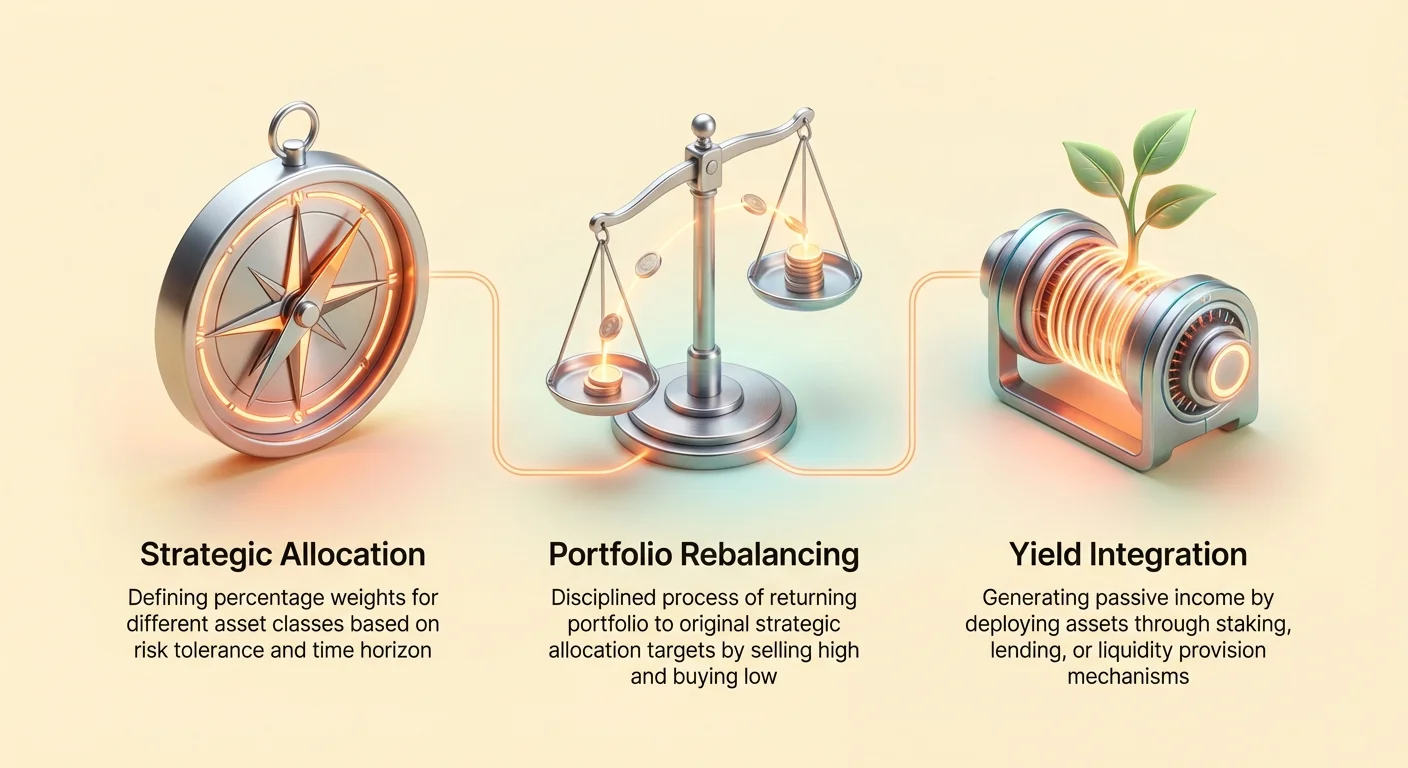
The Foundation of Strategic Allocation
Strategic asset management begins not with predicting market movements, but with defining clear, structural rules for your portfolio. These rules dictate the percentage weight given to different asset classes (e.g., Bitcoin, stablecoins, DeFi tokens, NFTs) and create the framework for all future buying, selling, and yield integration decisions.
Defining Risk Tolerance and Time Horizon
Before setting any specific token targets, an investor must objectively assess their fundamental investment parameters. These parameters govern how aggressive or conservative the portfolio should be.
Risk Tolerance Mapping
Risk tolerance refers to an investor’s emotional and financial ability to withstand losses. In crypto, where 50% drawdowns are common, understanding this threshold is vital. A high-risk investor might allocate heavily to volatile mid-cap tokens, while a low-risk investor might stick exclusively to Bitcoin and regulated stablecoins.
We can map risk tolerance across three key dimensions:
- Capacity for Loss: How much money can you afford to lose without impacting your lifestyle?
- Psychological Comfort: How likely are you to panic sell during a significant market crash?
- Liquidity Needs: Do you need access to this capital in the short term (under 2 years)?
If liquidity needs are high or psychological comfort is low, the portfolio must be skewed heavily towards low-volatility assets like stablecoins or highly established assets like Bitcoin (BTC).
The Influence of Time Horizon
Your time horizon—how long you intend to hold the assets—dictates the necessity of immediate yield or capital preservation. Younger investors with decades until retirement can afford to hold highly volatile, non-yielding assets for maximum capital appreciation. Investors nearing retirement, however, should prioritize capital preservation and reliable yield (e.g., through low-risk staking or lending) to supplement income.
Establishing Target Ratios: Core vs. Satellite
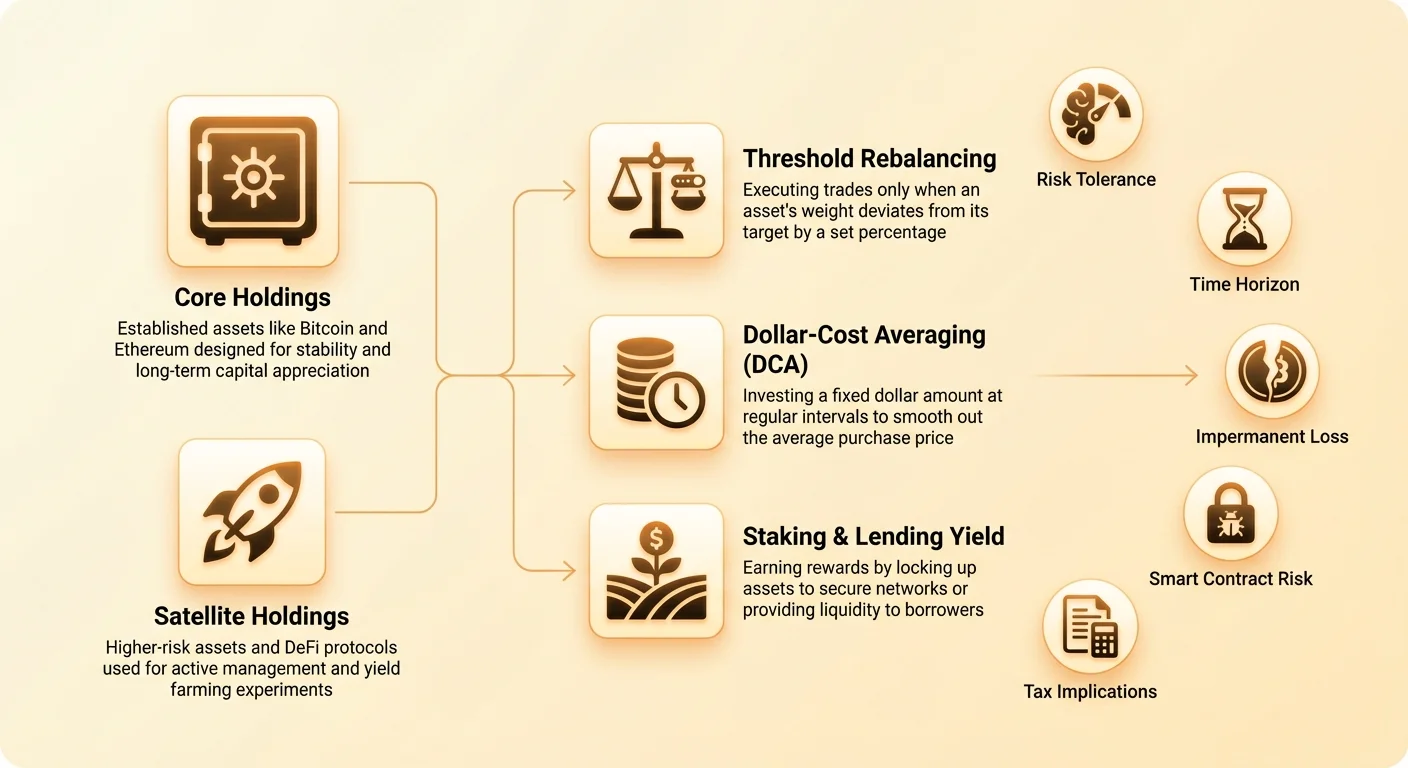
A common method for building a resilient portfolio is the Core-Satellite approach. This framework divides your total investment into two distinct parts, each with a different risk mandate.
The Core Holdings
The Core is the largest component of your portfolio (often 60–80%). It is designed for stability and long-term capital appreciation, holding the most established assets with the highest adoption and security. The goal of the Core is preservation and steady growth, minimizing the impact of speculation.
- Typical Core Assets: Bitcoin (BTC), Ethereum (ETH), and potentially highly regulated, fully collateralized stablecoins (e.g., USDC).
The Satellite Holdings
The Satellite portion (20–40%) is dedicated to higher-risk, higher-reward opportunities. These assets often include emerging DeFi protocols, specific sector tokens (e.g., Layer 2 solutions, RWA tokens), or small-cap cryptocurrencies. The Satellite portion is where active management and yield farming experiments often occur, but its failure should never jeopardize the Core.
A common beginner allocation might look like this:
- Core (75%): 50% BTC, 25% ETH
- Satellite (25%): 10% Blue Chip DeFi (e.g., protocol tokens), 10% Emerging L2s, 5% Stablecoin Yield.
Portfeļa pārbalansēšanas stratēģiju īstenošana
Kad mērķa proporcijas noteiktas, portfelis nekavējoties sāk novirzīties. Ja Ethereum ceturkšņa laikā uzrāda izcilus rezultātus, tā procentuālais svars var pieaugt no 25% līdz 40% no kopējās portfeļa vērtības. Šī izaugsme ir lieliska, bet tā fundamentāli maina riska profilu, padarot investori pārāk pakļautu Ethereum specifiskajiem tirgus riskiem.
Portfeļa pārbalansēšana ir disciplīnēta darbība, atgriežot portfeļu pie sākotnējiem stratēģiskajiem piešķīruma mērķiem, pārdodot augsti uzstājošos aktīvus un pērkot zema snieguma aktīvus. Šis process nodrošina risku pārvaldību un pamatprincīpu «pārdot dārgi un pirkt lēti».
Manuāla pārbalansēšana: Trigeru punkti un izpilde
Manuāla pārbalansēšana prasa no investora aktīvi uzraudzīt portfeļu un izpildīt darījumus. Šī metode piedāvā augstāko kontroles un nodokļu efektivitātes līmeni, bet prasa nepārtrauktu modrību un stingru emocionālo disciplīnu.
Laika balstīta pārbalansēšana
Vienkāršākā pieeja ir fiksēta pārskatīšanas grafika noteikšana neatkarīgi no tirgus apstākļiem. Izplatīti grafiki ietver ceturkšņa vai pusgada intervālus. Pārskatīšanas datumā investors analizē pašreizējos piešķīrumus pret mērķiem un izpilda nepieciešamos darījumus.
- Piemērs: 1. janvārī 100 000 USD portfelis ir 50% BTC (50 tūkst.) un 50% ETH (50 tūkst.). Līdz 1. aprīlim BTC atpalika, bet ETH pieauga, padarot portfeļu 120 000 USD, ar 40 000 USD BTC (33%) un 80 000 USD ETH (67%).
- Darbība: Investoram jāpārdod 10 000 USD vērtē ETH un jāizmanto šie līdzekļi, lai nopirktu 10 000 USD vērtē BTC, atjaunojot mērķa 50/50 piešķīrumu (50 tūkst./50 tūkst.).
Sliekšņa balstīta pārbalansēšana
Dinamiskāka un efektīvāka metode ir sliekšņa pārbalansēšana, kur darījumi izpildīti tikai tad, ja aktīvs novirzās no mērķa svara par specifisku procentu (piem., 5% vai 10%).
- Padoms iesācējiem: Sāciet ar platākiem sliekšņiem (piem., 10%), jo bieži darījumi svārstīgā tirgū rada pārmērīgas darījumu maksas un sarežģītus nodokļu notikumus. Piemēram, ja jūsu BTC mērķis ir 50%, pārbalansējat tikai tad, ja BTC krīt zem 45% vai pieaug virs 55%.
Automātiskie pārbalansēšanas rīki un protokoli
Investoriem, kas dod priekšroku «iestati un aizmirsti» pieejai vai kuriem trūkst disciplīnas manuālai tirdzniecībai, automatizēti rīki un decentralizētās finanses (DeFi) protokoli piedāvā pārliecinošus risinājumus.
Centrālizēto biržu (CEX) rīki
Dažas izsmalcinātas centrālizētās biržas (CEX) tagad piedāvā funkcijas, kas automātiski izpilda atkārtojošus pirkumus vai sistēmisku pārbalansēšanu pēc iepriekš noteiktām proporcijām. Šie rīki uzrauga portfeļu un izpilda darījumus, kad notiek novirze, bieži optimizējot zemākās iespējamas tirdzniecības maksas savā ekosistēmā.
Priekšrocības: Lietotājam draudzīga saskarne, dziļa likviditāte un integrācija ar fiat ieejas/izejas punktiem. Trūkumi: Prasa uzticēt fondu glabāšanu CEX (glabātāja risks).
DeFi indeksu un grozu žetoni
DeFi pārbalansēšanas mehānisms bieži iebūvēts smart līgumos, parasti caur indeksu fondiem vai automatizētiem seifiem. Šie produkti ļauj lietotājiem noguldīt aktīvus tokenizētā grozā (piem., indekss, kas seko top 10 DeFi pārvaldības žetoniem).
Protokola smart līgums atbild par svaru uzturēšanu, sistemātiski pērkot un pārdodot pamata aktīvus, kad mainās cenas. Lietotājs vienkārši tur vienu groza žetonu.
- Mehānisms: Ja grozā Aktīvs A strauji pieaug, līgums izpilda apmaiņu, samazinot piešķīrumu Aktīvam A un sadalot ienākumus zemākusniegošajos aktīvos. Tas parasti ietver nelielu maksu, kas sedz gāzes izmaksas un motivāciju pārbalansēšanas aģentam.
- Drošības piezīme: Lai gan bez glabātāja (jūs kontrolējat atslēgas), šie risinājumi ievieš smart līguma risku. Nepieciešams pārbaudīt protokola audita vēsturi.
Uzkrāšanas metodes: DCA un Reverse DCA
Pārbalansēšana pārvalda esošo kapitāla kopu, bet stratēģiska aktīvu pārvaldība prasa rūpīgu plānošanu jauna kapitāla izvietošanai un galīgajai peļņas izņemšanai. Dollar-Cost Averaging (DCA) un tā inversā forma Reverse Dollar-Cost Averaging (RDCA) ir galvenās stratēģijas kapitāla plūsmas pārvaldībai laika gaitā.
Dollar-Cost Averaging (DCA) ieiešanai
DCA ir stratēģija, kurā noteiktā dolāru summa tiek ieguldīta konkrētā aktīvā regulāros intervālos neatkarīgi no aktīva pašreizējās cenas. Tas novērš emocionālo spiedienu par «tirgus laika noteikšanu».
Volatilitātes riska mazināšana
DCA galvenā priekšrocība ir tā, ka tā izlīdzina vidējo pirkšanas cenu. Kad cenas ir augstas, jūsu fiksētā dolāru summa nopērk mazāk vienību; kad cenas ir zemas (krituma laikā), tā nopērk ievērojami vairāk. Ilgtermiņa horizontā DCA konsekventi pārspēj mēģinājumus pirkt tikai uztveramajā tirgus dibenā.
- Praktiska izmantošana: DCA ir vislabāk piemērota stabilai, nepārtrauktai Kodola pozīciju (BTC/ETH) uzkrāšanai, izmantojot rīcībā esošos ikmēneša ienākumus. Biržās vai maciņos pieejamās automatizētās tirdzniecības funkcijas to atvieglo, iestatot atkārtojusies pirkumus.
Reverse Dollar-Cost Averaging (RDCA) iziešanai/peļņas izņemšanai
RDCA (dažreiz saukta par izplatīšanas stratēģiju) ir DCA spogulattēls. Tā vietā, lai mēģinātu izvēlēties ideālo laiku visu pārdošanai virsotnē, RDCA paredz sistemātisku fiksētas dolāru summas (vai fiksēta procenta no pozīcijām) pārdošanu regulāros intervālos vai kad tiek sasniegti noteikti cenu mērķi.
Discplinēta peļņas realizācija
RDCA nodrošina, ka investori fiksē peļņu vērša tirgus dzīves cikla gaitā, novēršot psiholoģisko slazdu, kad papīra peļņa iztvaiko straujas tirgus korekcijas laikā.
- Scenārijs: Investors nolemj, ka, tiklīdz viņa BTC pozīcijas pārsniegs 100 000 USD, viņš katru mēnesi nākamajos sešos mēnešos pārdos 5000 USD vērtību. Ja cena turpina kāpt, viņš iegūst vairāk peļņas; ja cena krīt, viņš jau ir nostiprinājis daļu ieguvumu.
RDCA integrēšana ar pārbalansēšanu ir spēcīga:
- Cenu lēcieni: Aktīvs pārsniedz pārbalansēšanas slieksni (piem., BTC no 50 % mērķa līdz 60 %).
- Stratēģiska rīcība: Tā vietā, lai vienkārši pārdotu BTC un pirktu ETH (pārbalansēšana), investors var izlemt pārdot pārmērīgo BTC (10 % nobīdi) tieši uz stabilcoinu vai fiat (RDCA). Tas nostiprina peļņu un samazina kopējo portfeļa risku, pirms tiek atjaunota mērķa alokācija.
Integrating Yield: Safely Generating Passive Income
Once capital is strategically allocated and maintained, the next step in advanced asset management is ensuring that assets are not idle. Yield integration is the process of putting assets to work through staking, lending, or liquidity provision to generate ongoing returns.
Understanding Core Yield Mechanisms
The three primary methods for generating yield in the crypto space are conceptually simple, though technically distinct.
1. Staking (Proof-of-Stake Rewards)
Staking involves locking up assets to support the security and operations of a Proof-of-Stake (PoS) blockchain (e.g., Ethereum, Solana, Cardano). In return for validating transactions and securing the network, stakers receive rewards in the form of newly minted tokens and transaction fees.
- Risk Profile: Generally considered lower risk than lending or farming, provided the chosen network is secure. The primary risk is slashing (losing staked funds due to validator misconduct, though this is often protected against by staking providers) and liquidity risk (funds may be locked for a specific period).
2. Lending (Centralized and Decentralized)
Lending involves depositing assets into a protocol or platform, making them available for borrowers.
- Centralized Lending (CeFi): Funds are lent to an intermediary (a centralized exchange or lending platform) who manages the risk and provides fixed interest rates. This introduces counterparty risk—if the platform mismanages funds or goes bankrupt, the user’s assets are at risk (as seen in major events in 2022).
- Decentralized Lending (DeFi): Funds are deposited into non-custodial smart contract protocols (e.g., Aave, Compound) where interest rates float dynamically based on supply and demand. Risk is centered on smart contract security and liquidation failure, not counterparty default.
3. Liquidity Provision (Yield Farming)
Yield farming or liquidity provision (LP) involves depositing two assets (often a token pair like ETH/USDC) into a Decentralized Exchange (DEX) liquidity pool. This allows other users to trade between the two assets. LPs earn trading fees and often receive additional tokens (LP rewards or governance tokens) as an incentive.
- Risk Profile: Highest risk. Exposure to Impermanent Loss (IL), smart contract failure, and potential exploit of the incentivized reward tokens. IL is the potential divergence in value between holding the assets in the pool versus holding them outside the pool.
Centralized vs. Decentralized Yield: A Security Perspective
The strategic choice between CEX (Centralized) and DeFi (Decentralized) yield dictates the type of risk you assume.
| Feature | Centralized Yield (CeFi) | Decentralized Yield (DeFi) |
|---|---|---|
| Custody | Custodial (Exchange holds private keys) | Non-Custodial (User holds private keys) |
| Primary Risk | Counterparty risk, Platform insolvency, Regulatory risk | Smart Contract risk, Impermanent Loss, Governance exploits |
| Interest Rate | Usually fixed or predictable | Variable, often high but volatile |
| Accessibility | Very beginner-friendly, high liquidity | Requires self-custody setup (wallet), complex UI |
Strategic Alignment: For Core holdings (capital preservation focused), CeFi staking or low-risk DeFi lending on audited stablecoin pools might be appropriate. For Satellite holdings, higher-risk, higher-reward strategies like yield farming on newer protocols might be used, reflecting the increased risk tolerance for that segment of the portfolio.
Assessing and Mitigating Yield Aggregator Risk
For the intermediate practitioner, actively generating yield often involves using yield aggregators or vaults. These tools automatically move capital between various lending protocols, liquidity pools, and staking opportunities to capture the highest possible return (APY), often compounding rewards automatically. While highly efficient, they dramatically increase the surface area for risk.
Technical Risks: Smart Contract Audits and Exploits
Yield aggregators rely on layers of interlocking smart contracts. A single vulnerability in any contract along the chain—the underlying DEX, the lending protocol, or the aggregator vault itself—can lead to total loss of funds.
Due Diligence Checklist for Vaults
- Independent Audits: Always verify that the protocol has undergone multiple, public audits by reputable security firms (e.g., CertiK, Trail of Bits). The audits should be recent, and the team should have addressed all critical findings.
- Time in Market: Newer protocols (those less than 6 months old) carry inherently higher, unknown risk. Deploy significant capital only into battle-tested protocols that have operated successfully through multiple market cycles.
- Code Transparency (Open Source): Ensure the contract code is publicly available. Proprietary, closed-source contracts should be avoided entirely, as they prevent independent community vetting.
Economic Risks: Impermanent Loss and Protocol Failure
Economic risks relate to the financial viability and stability of the assets and incentives within the yield strategy.
Impermanent Loss (IL) Mitigation
Impermanent Loss occurs when assets are deposited into a liquidity pool and the price ratio of the paired assets changes dramatically. While LPs earn trading fees, a large price divergence can make the total dollar value of the LPs share less than if they had simply held the two tokens separately (HODLed).
- Mitigation Strategy: Focus on stablecoin pairings (e.g., USDC/DAI). Since the price ratio is designed to remain 1:1, IL is minimized, allowing the LP to capture trading fees and incentives with minimal price divergence risk. Alternatively, pair assets expected to move similarly (e.g., ETH/Lido staked ETH).
Oracle and Governance Risks
Many yield strategies rely on price feeds (oracles) or governance proposals to execute operations (e.g., liquidations, rate adjustments). If an oracle is manipulated (a "flash loan attack") or if governance voting is centralized (a "rug pull"), the vault can be drained. Investors must verify that the protocol uses robust, decentralized oracles (like Chainlink) and has a distributed governance structure.
Custodial Risks and Counterparty Exposure
While DeFi is non-custodial in the traditional sense, using a yield aggregator means giving a smart contract permission to manage and move your funds.
Understanding Protocol Withdrawal Mechanisms
A robust protocol will always allow users to withdraw their original capital and earned yield at any time. Protocols that impose excessive lock-up periods or withdrawal limits should be treated with extreme caution, as these mechanisms can prevent access to funds during a crisis.
Safety Net: Insurance Protocols
Advanced practitioners often utilize DeFi insurance protocols (like Nexus Mutual) to hedge against specific smart contract risks. These protocols allow users to pay a premium to insure their deposited capital against losses resulting from specific smart contract exploits, adding a layer of risk mitigation to the yield strategy.
The Complexities of Yield and Rebalancing Taxes
Strategic asset management is incomplete without understanding the tax implications of active trading and yield generation. In most major jurisdictions (US, EU, Canada), every transaction that moves crypto between different types of assets (a swap or a trade) or generates new tokens (yield) is a taxable event.
Tax Implications of Yield Generation (Income vs. Capital Gain)
Yield generated from crypto assets is typically treated as ordinary income upon receipt, much like interest earned in a savings account or a dividend.
When is Yield Taxable?
- Staking Rewards: Rewards received for validating transactions are generally taxed as ordinary income at the asset’s fair market value (FMV) on the day they are received.
- Lending Interest: Interest earned from CeFi or DeFi lending is taxed as ordinary income upon receipt.
- Liquidity Mining/Airdrops: New governance tokens received as incentive rewards (e.g., from yield farming) are also taxed as ordinary income at their FMV when received.
Crucially, the investor’s tax basis (cost) for that newly received yield asset is set at its FMV on the receipt date. If the investor later sells that earned asset for a higher or lower price, the difference is taxed as a capital gain or loss.
- Action Tip: Utilizing specialized crypto tax software (as mentioned in the source material inspiration) is essential for automatically calculating the FMV and creating the income record for thousands of small yield transactions. Manual tracking is nearly impossible for active yield farmers.
Tracking Rebalancing Transactions and Tax Lot Identification
Rebalancing involves frequent selling and swapping, which generates numerous capital gains or losses. The specific tax method used to calculate the cost basis of the assets being sold has massive implications for tax efficiency.
FIFO, LIFO, and Specific Identification
When you sell assets, tax authorities require you to identify which "lot" (i.e., which specific purchase) the assets came from.
- First-In, First-Out (FIFO): Assumes the first coins purchased are the first ones sold. This is the default method in many jurisdictions and often leads to higher capital gains if the investor has been holding appreciating assets long-term.
- Last-In, First-Out (LIFO): Assumes the last coins purchased are the first ones sold. This can be useful for reducing current gains during a market surge.
- Specific Identification (Specific ID): Allows the investor to choose the specific, highest-cost basis lot to sell first. This is the most tax-efficient method, as it maximizes tax losses and minimizes immediate gains.
Strategic Rebalancing for Tax Efficiency
During rebalancing, the goal is often Tax Loss Harvesting—the intentional sale of an asset at a loss to offset capital gains realized elsewhere in the portfolio.
- Example: If you need to sell some of your excess ETH to buy BTC (rebalance), look for the specific ETH purchase lot that is currently trading below its cost basis. By selling this specific loss-making lot, you execute the rebalance and generate a capital loss that can offset gains from other parts of the portfolio or from realized yield income.
(Note: This concept links directly to the deeper discussion in the related guide: Advanced Tax Optimization Strategies: FIFO/LIFO/Specific ID and Loss Harvesting)
Labākās prakses advancētai kripto aktīvu pārvaldībai
Stratēģiska piešķīruma, pārbalansēšanas un ienesīguma ģenerēšanas veiksmīga īstenošana prasa disciplīnu un drošības apņemšanos.
1. Atsevišķas kapitāla kopas un maki
Nekad neizmantojiet to pašu maku augsta riska yield farming (Satelīts) kā ilgtermiņa Kodola turējumiem.
- Kodola aktīvi: Galvenokārt jāglabā aparatūras makā (aukstā glabāšana) un jāpieslēdz tikai visauditorētākajām, zema riska platformām (kā centrālais staking vai izveidoti L1 tīklu staking).
- Satelīta aktīvi: Jāglabā karstā makā, kas veltīts mijiedarbībai ar jauniem DeFi protokoliem. Ja karstais maks kompromitēts, lielākā daļa portfeļa (Kodols) paliek drošs.
2. Noteikt reālistiskus ienesīguma mērķus
Kripto telpa bieži reklamē neilgtspējīgus trīsciparu APY. Stratēģiski pārvaldnieki saprot, ka neticami augsts ienesīgums parasti norāda proporcionālu risku.
- Labākā prakse: Mērķējiet uz ilgtspējīgu, mērenu ienesīgumu (piem., 5-15% uz stable aktīviem), nevis dzenoties pēdējo 500% farmu. Integrējiet ienesīgumu, kas saskan ar aktīva galveno riska mandātu. 6% atdeve no BTC staking ir vērtīga; 100% atdeve no jauna, neauditēta žetonu pāra nes smagu zaudējumu risku.
3. Uzturēt aktīvu ārkārtas fondu
Turiet pietiekami stablecoins šķidrus un viegli pieejamus uzticamā biržā vai aizdevumu protokolā. Šis buferis kalpo diviem mērķiem:
- Gāzes/darījumu maksas: Nodrošina, ka vienmēr ir fondi tīkla maksām, vitāli svarīgi aktīvu pārvietošanai vai ātrai pārbalansēšanai tirgus svārstību laikā.
- Kolaterealizācija: Kalpo kā drošības tīkls, ja izmantojat jebkādu maržu vai kolateralizētus aizdevumus, nodrošinot tūlītēju maržas prasību izpildi.
4. Sistēmātiski dokumentēt visu darbību
Vai nu nodokļu atbilstībai vai drošības auditam, katrs stratēģisks solis — katra pārbalansēšana, katrs ienesīguma noguldījums, katra izņemšana — jāreģistrē.
- Rīki: Izmantojiet integrētus kripto portfeļa izsekošanas rīkus, kas savienojas ar jūsu maciem un biržām, lai sniegtu vienotu skatu uz neto vērtību, piešķīrumu un darījumu vēsturi. Laba reģistrācijas prakse ir svarīgākais ieradums efektīvai kripto nodokļu un risku pārvaldībai.
Secinājumi
Stratēģiska aktīvu pārvaldība kriptovalūtās ir pagrieziena punkts, kur pasīva turēšana pārvēršas aktīvā, risku kontrolētā ieguldīšanā. Izveidojot skaidrus piešķīruma mērķus (Kodols/Satelīts), nodrošinot disciplīnātu pārbalansēšanu un selektīvi integrējot drošus ienesīguma mehānismus, investori var maksimizēt kapitāla efektivitāti, minimizējot nevajadzīgu tehnisko un ekonomisko risku ekspozīciju.
Pārejot uz vidēji advancētu kripto prakses posmu, jāpieņem sarežģītība: sistēmas savstarpēji saistītas, riski daudzslāņaini, un atbilstības prasības prasīgas. Tomēr šo procesu apgūšana — no automatizētas pārbalansēšanas līdz advancētas ienesīguma risku novērtēšanai — ir būtiska īstai pašsuverenitātei un optimizētiem ilgtermiņa rezultātiem decentralizētajā finanšu ainavā.