
Kad jūs pirmo reizi ienirstat kriptovalūtas pasaulē un nodrošināt savas privātās atslēgas, izmantojot pašpārvaldības maku, jūs ātri sastopaties ar jēdzienu, kas šķiet vienkāršs, bet nes nozīmīgu svaru: publisko adresi. Šī adrese, bieži gara rakstzīmju virkne, darbojas kā jūsu digitālā pastkaste, ļaujot citiem nosūtīt jums līdzekļus.
Tomēr ne visas adreses ir vienlīdzīgas. Tāpat kā jūsu tālruņa pamatā esošā tehnoloģija ir attīstījusies no apgrūtinošiem 1980. gadu ierīcēm līdz moderniem viedtālruņiem, Bitcoin adrešu pamatstruktūra ir piedzīvojusi vairākas lielas uzlabojumus. Šīs evolūcijas izmaiņas tika virzītas ar vajadzību paplašināt tīklu, samazināt darījumu izmaksas un uzlabot lietotāju privātumu.
Šo dažādo adrešu veidu izpratne — no pamata Legacy formātiem līdz moderniem, efektīviem SegWit un Taproot standartiem — ir kritiska ikvienam, kas meklē patiesu finanšu suverenitāti. Pareizā adrešu veida izvēle ir tieša darbība, kas var samazināt jūsu darījumu maksas, palielināt apstiprināšanas ātrumu un uzlabot jūsu kopējo privātumu blokķēdē. Šis ceļvedis sadala vēsturi, mehānismus un praktiskās priekšrocības katram galvenajam Bitcoin adrešu formātam.
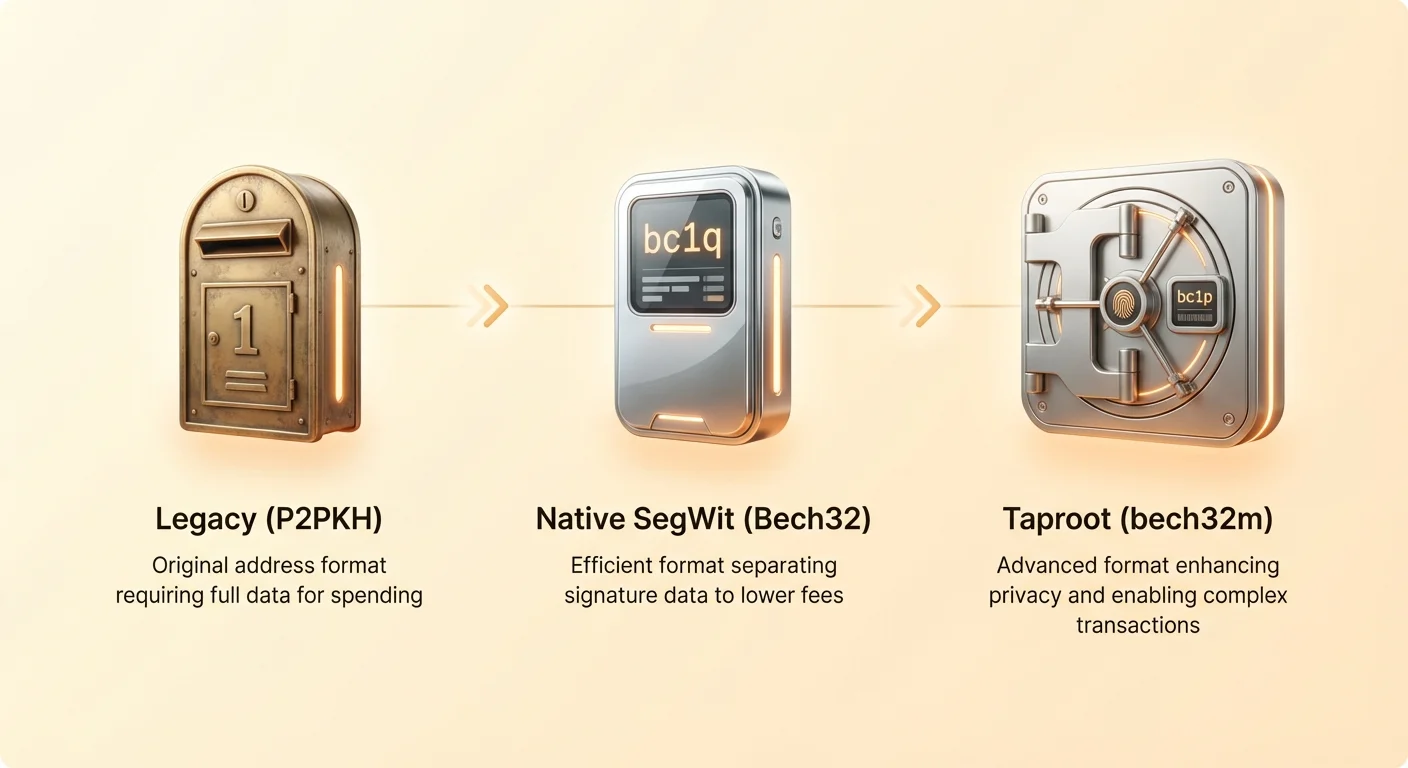
Phase 1: The Foundations of Digital Mailboxes (P2PKH)
The history of Bitcoin addresses begins with the original, foundational format, which established the rules for how funds are received and spent. This first standard, known as P2PKH, still exists today, but its limitations paved the way for future upgrades.
P2PKH: The Original Legacy Format
The first Bitcoin address format is called Pay to Public Key Hash (P2PKH). If you see a Bitcoin address beginning with the number 1, you are looking at a Legacy P2PKH address.
This format requires the entire public key and signature to be included directly within the transaction data when the funds are spent. Think of it like a traditional paper receipt: every single detail, including the store name, item lists, and total tax, must be explicitly written down every time a transaction occurs.
Key Characteristics:
- Prefix: Starts with the number
1. - Case Sensitivity: Uses both uppercase and lowercase letters.
- Security: Cryptographically secure, but less efficient than newer formats.
Identifying Legacy Limitations
While P2PKH was revolutionary for its time, two major issues arose as Bitcoin’s adoption grew:
1. Transaction Size and High Fees
Because P2PKH requires including all spending information (signatures and public keys) in the main body of the transaction, the overall data size is relatively large. In the competitive environment of the Bitcoin network—where miners prioritize transactions based on the fee-to-size ratio—larger transactions inevitably cost more to confirm. Using Legacy addresses means paying a premium compared to more compact formats.
2. Transaction Malleability
The other significant limitation was "transaction malleability." This was a flaw where certain non-essential details in the transaction (specifically, the digital signature) could be slightly modified by a third party before the transaction was confirmed, without invalidating the signature itself. While the core transaction (who paid whom) remained unchanged, the unique transaction ID (TXID) changed. This made tracking unconfirmed transactions difficult and posed problems for advanced applications built on top of Bitcoin, like the Lightning Network.
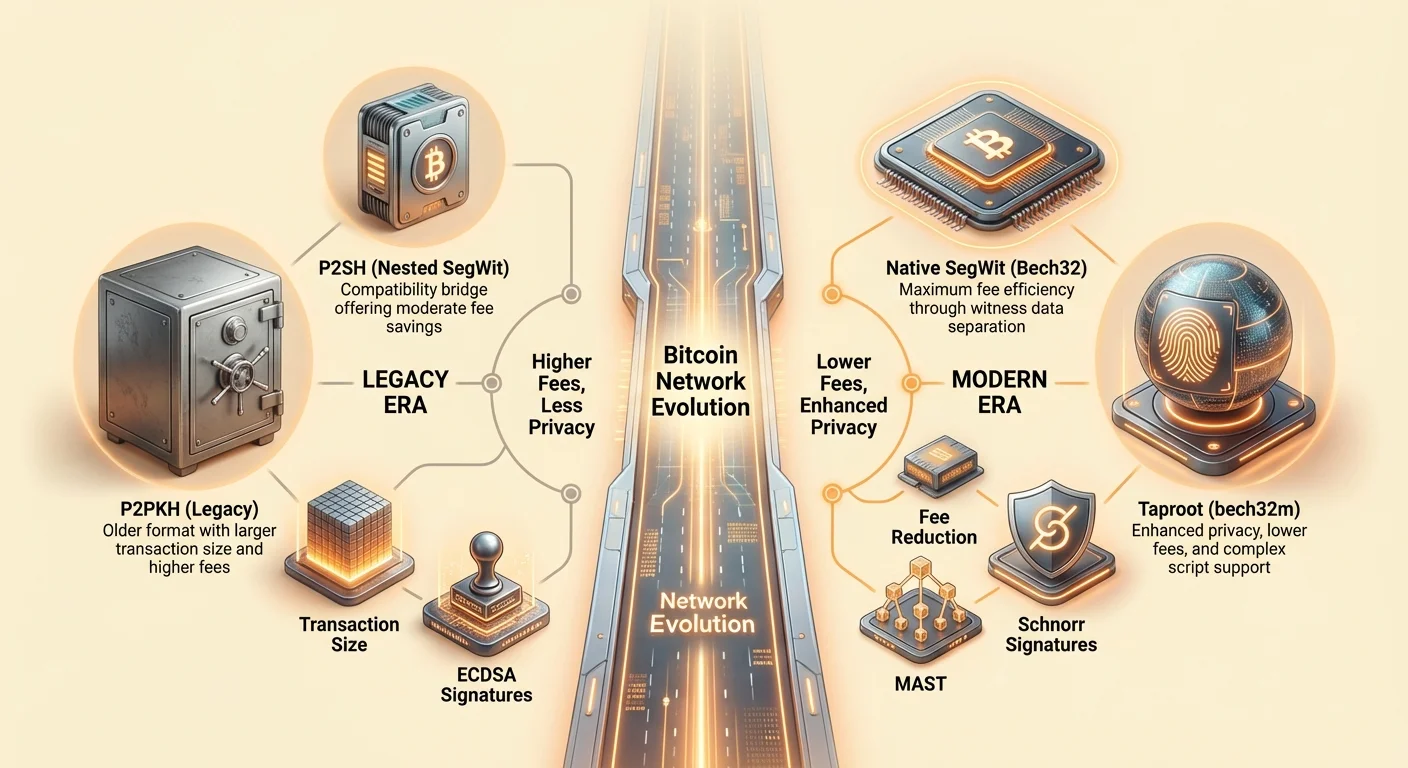
Phase 2: The SegWit Upgrade (Scaling and Efficiency)
To address the limitations of P2PKH—specifically high fees and transaction malleability—the Bitcoin community implemented a major protocol change known as Segregated Witness (SegWit) in 2017. This was the first major step toward efficient scaling.
SegWit's Core Innovation: Witness Separation
The term "Segregated Witness" means separating the digital signature (the "witness") from the core transaction data.
In crypto, when you spend funds, you must provide a signature to prove ownership. This signature is often the largest component of the transaction data. SegWit works by moving this signature data to a separate, discounted section of the transaction block.
This doesn’t actually make the transaction physically smaller, but it changes how the network measures the transaction size for fee calculation. The traditional data portion is weighted 4x higher than the segregated witness data. This system of weighting is tracked using a metric called "block weight." By paying less for the largest part of the data (the signature), users dramatically reduce their overall transaction costs.
Compatibility First: Nested SegWit (P2SH)
The transition to a new address format requires smooth adoption. If SegWit had forced everyone to upgrade immediately, it would have fragmented the network. To ease this transition, an intermediate compatibility format was created.
Nested SegWit addresses are known as Pay to Script Hash (P2SH) addresses that wrap the new SegWit spending logic.
- Prefix: Starts with the number
3. - User Benefit: Allows Legacy wallets (which only understood P2PKH and P2SH) to safely send Bitcoin to a SegWit address, even if they didn't understand the underlying SegWit mechanics.
- Efficiency: This format provides fee savings compared to Legacy (P2PKH), but because it is "nested" within the P2SH framework, it is slightly less efficient than the fully native SegWit format. Nested SegWit addresses served as a crucial bridge during the transition period.
Maximum Efficiency: Native SegWit (Bech32)
The most efficient address format available before Taproot was Native SegWit, which uses the Bech32 encoding standard. This is the optimal format for both low fees and robust error checking.
- Prefix: Starts with
bc1q. - Case Insensitivity: Bech32 uses only lowercase letters and numbers, eliminating the confusion and potential errors that can arise when mixing uppercase and lowercase characters.
- Built-in Error Checking: Bech32 includes a powerful checksum capability. This means if a user mistypes or misreads even a single character in the address, the wallet will almost certainly catch the error before sending the transaction, protecting funds from being sent to a non-existent or unintended address.
If your wallet defaults to a bc1q address, you are utilizing Native SegWit and benefiting from the maximum fee reduction available from the 2017 SegWit upgrade.
3. posms: Taproot revolūcija (privātums un sarežģīti skripti)
Kamēr SegWit koncentrējās uz vienkāršu darījumu izmēra mērogošanu, nākamais lielais uzlabojums, Taproot (aktivizēts 2021. gada beigās), koncentrējās uz privātuma uzlabošanu un sarežģītu darījumu padarīšanu neizšķiramiem no vienkāršiem.
Taproot adreses izmanto specializētu kodēšanu, ko sauc par bech32m.
Sarežģītu darījumu privātuma vajadzība
Pirms Taproot, ja jūs izmantojat progresīvas funkcijas, piemēram, multi-signature darījumus (kas prasa 2 no 3 atslēgām, lai tērētu līdzekļus) vai Bitcoin balstītus viedos līgumus, darījuma struktūra atklāja šo sarežģītību blokķēdē.
- Piemērs: Standarta vienas īpašnieka darījums izskatās mazs un vienkāršs. Korporatīvs kases darījums, kas prasa trīs vadītāju apstiprinājumu (multi-sig), izskatās liels un sarežģīts. Jebkurš, kas analizē blokķēdi, var viegli atšķirt abus.
Šī fungibility trūkums (kur viena valūtas vienība ir pilnībā aizstājama ar citu) bija privātuma problēma. Taproot to atrisināja, ieviešot jaunas kriptogrāfiskas rīkus.
MAST un Schnorr parakstu burvība
Taproot balstās uz diviem galvenajiem tehnoloģiskajiem uzlabojumiem, lai sasniegtu savus mērķus:
1. Schnorr paraksti
P2PKH un SegWit balstījās uz ECDSA (Elliptic Curve Digital Signature Algorithm). Taproot ieviesa Schnorr Signatures. Schnorr parakstiem ir divas galvenās priekšrocības:
- Labāks privātums: Tie ļauj parakstu agregāciju. Kad vairāki dalībnieki paraksta darījumu (multi-sig), Schnorr var apvienot šos parakstus vienā vienkāršā parakstā, kas izskatās identisks vienas īpašnieka parakstam.
- Mazāks izmērs: Tie ir inherenti kompaktāki nekā ECDSA paraksti, vēl vairāk samazinot darījuma izmēru un maksas.
2. MAST (Merkelized Abstract Syntax Trees)
MAST ir atslēga sarežģītības slēpšanai. Iedomājieties līgumu ar vairākiem izdevumu nosacījumiem (piem., "Nosacījums A: Tērēt līdzekļus, ja paraksta Vadītājs 1; Nosacījums B: Tērēt līdzekļus automātiski pēc 1 gada").
Pirms Taproot visi šie nosacījumi tiktu atklāti blokķēdē pie izveides. Ar MAST visi iespējamie izdevumu nosacījumi tiek sapākoti "kokā", un atklājas tikai tas nosacījums, kas faktiski izpildīts, kad tiek tērēti līdzekļi. Tas saglabā neizmantotos nosacījumus privātus un ievērojami samazina datu saistību sarežģītiem skriptiem.
Taproot adrešu ieviešana (bech32m)
Taproot uzlabojuma rezultāts ir jauns adrešu veids, kas izmanto šīs tehnoloģijas, lai maksimizētu efektivitāti un privātumu.
- Prefikss: Sākas ar
bc1p. - Kodēšana: Izmanto
bech32m(Bech32 atjauninātu versiju). - Lietotāja priekšrocība: Kad jūs tērējat no Taproot adreses, rezultējošais darījums (neatkarīgi no tā, vai tas bija vienkāršs vienas atslēgas izdevums vai augsti sarežģīts multi-signature korporatīvs kases darījums) blokķēdē izskatās identisks. Tas uzlabo privātumu progresīvajiem lietotājiem un palielina Bitcoin kopējo fungibility.
Adrešu veidu salīdzinājums: Ko tas nozīmē jūsu maciņam
Pašpārvaldības piekritējiem šī dažādo adrešu formātu izpratne nav tikai akadēmiska; tā tieši ietekmē jūsu darbības izmaksas un privātuma profilu.
| Adrešu tips | Prefikss | Ieviešanas gads | Galvenā priekšrocība | Relatīvās maksas izmaksas (no augstas uz zemām) | Savietojamība |
|---|---|---|---|---|---|
| Legacy (P2PKH) | 1 |
2009 | Universāla savietojamība | Augstākā (100%) | Visi maciņi |
| Nested SegWit (P2SH) | 3 |
2017 | Pārejas savietojamība | Vidēji-augsta (70-80%) | Laba, atpazīta lielākajā daļā biržu |
| Native SegWit (Bech32) | bc1q |
2017 | Maksimāla maksas samazināšana | Zema (50-60%) | Modernie maciņi, lielākā daļa galveno biržu |
| Taproot (bech32m) | bc1p |
2021 | Zemākās maksas un privātums/skripta slēpšana | Zemākā (40-50%) | Augoša, atbalstīta ar modernākajiem maciņiem |
Darījuma maksas salīdzinājums: Legacy izmaksas
Galvenā praktiskā priekšrocība, izmantojot jaunākos adrešu formātus, ir ievērojama maksas samazināšana. Tas notiek tāpēc, ka jaunie formāti padara jūsu darījuma datus mazākus (vai mazāk svarīgus) kalnračiem.
Augstas tīkla sastrēguma laikā maksu starpība var būt dramatiska:
- Legacy (P2PKH): Maksā augstākās maksas lielā darījuma izmēra dēļ.
- Nested SegWit (P2SH): Piedāvā mērenus ietaupījumus, bieži 15-25% zemāk nekā Legacy.
- Native SegWit (Bech32): Piedāvā ievērojamus ietaupījumus, bieži 30-40% zemāk nekā Legacy.
- Taproot (bech32m): Piedāvā zemākās iespējamās maksas standarta darījumiem, bieži 40-50% zemāk nekā Legacy, un pat lielākus ietaupījumus sarežģītiem darījumiem.
Praktisks padoms: Ja jūs bieži pārvietojat Bitcoin, izvēloties bc1q vai bc1p adrešu tipu jūsu maciņa iestatījumos, tas laika gaitā var nozīmēt simtiem vai tūkstošiem dolāru ietaupījumu.
Drošības un savietojamības kompromisi
Svarīgi uzsvērt, ka visi četri adrešu tipi ir pamatīgi droši no kriptogrāfiskā skatpunkta. Tie visi ir saistīti ar privāto atslēgu, kuru kontrolējat tikai jūs. Atšķirības slēpjas kļūdu vadībā un efektivitātē:
- Legacy (P2PKH): Augstākā savietojamība, bet trūkst modernās kļūdu pārbaudes Bech32, padarot to nedaudz riskantāku manuālas pārrakstīšanas gadījumā. To vajadzētu izmantot tikai tad, kad absolūti nepieciešams (piem., sūtot uz ļoti vecu, neuzlabotu servisu).
- Bech32 un bech32m: Šie formāti piedāvā pārāku drošību pret cilvēciskajām kļūdām dēļ izturīgās kontrolsummas, kas novērš izplatītas drukas kļūdas, nepareizi novirzot līdzekļus. Tie ir ideālais standarts pašpārvaldībai.
Best Practices for Self-Custody Adopters
As someone prioritizing self-sovereignty and security, you should actively manage which address types you use. Your primary goal should be to default to the most modern and efficient standard your wallet and counterparty support.
1. Always Prioritize Native SegWit or Taproot
When setting up your wallet or generating a receiving address, check the settings. If your wallet supports all formats (as most modern wallets do), always choose:
- Native SegWit (
bc1q) if you need high compatibility with older major exchanges. - Taproot (
bc1p) if you are sending between modern wallets or using advanced applications (like the Lightning Network) where the enhanced privacy and extreme efficiency are valuable.
Actionable Step: Go into your wallet's settings immediately and verify what your default receiving address format is. If it starts with a 1 or a 3, consider moving funds to a native SegWit or Taproot address managed by the same wallet, and ensure future receiving addresses default to bc1q or bc1p.
2. Verify Counterparty Support
While modern self-custody wallets have adopted Taproot quickly, many centralized exchanges and older payment processors lag behind.
If you attempt to send Bitcoin from an exchange that doesn't recognize the bc1p (Taproot) format, the transaction will fail, or the exchange may warn you that the address is invalid.
- Best Practice: When sending to a new service, especially if using a Taproot address (
bc1p), always send a very small test transaction first to ensure compatibility before transferring a large sum. If Taproot fails, drop back to Native SegWit (bc1q).
3. Address Rotation and Enhanced Privacy
Remember that the blockchain is transparent. Every time someone sends funds to one of your addresses, that address is recorded permanently. Anyone analyzing the blockchain can track all transactions associated with that address.
Modern wallets enhance your privacy by automatically generating a new receiving address for every transaction. This is called address rotation.
- Impact: Even if you are using an older P2PKH address, rotating addresses prevents others from easily linking all your incoming funds to a single identity. When using the privacy-focused Taproot format combined with address rotation, your financial history becomes significantly harder to trace, fulfilling the promise of true financial sovereignty.
4. Understanding the Derivation Path
The address type used is determined by the specific derivation path your wallet follows. Derivation paths (defined by BIP standards like BIP-44, BIP-49, and BIP-84) tell the wallet software how to generate keys and addresses from your master seed phrase.
- BIP-44: Used for Legacy (P2PKH) addresses.
- BIP-49: Used for Nested SegWit (P2SH) addresses.
- BIP-84: Used for Native SegWit (Bech32) addresses.
- BIP-86: Used for Taproot (bech32m) addresses.
Understanding that your 12- or 24-word seed phrase can generate all these different formats is crucial. When you restore a wallet, you must tell the software which derivation path (and thus which address type) to look at to find your funds. This reinforces the idea that the seed phrase is the ultimate source of truth, and the address format is simply the presentation layer for greater efficiency.
Secinājums
Bitcoin adrešu evolūcija no novecojušā 1 prefiksa uz moderno bc1p Taproot standartu atspoguļo tīkla nepārtraukto apņemšanos skalēšanai, efektivitātei un uzlabotai lietderībai. Iesācējam šī evolūcija tieši pārtop taustāmās priekšrocībās: zemākas nodevas un lielāka aizsardzība pret cilvēciskajām kļūdām.
Pašglabāšanas lietotājam, atsakoties no Legacy un Iekļautā SegWit adresēm un dodot priekšroku Natīvā SegWit (bc1q) un Taproot (bc1p) izmantošanai, ir pamatprincips labākajai praksei. Izmantojot jaunākos standartus, jūs ne tikai ietaupāt naudu katrā darījumā, bet arī aktīvi atbalstāt decentralizētā tīkla ilgtermiņa veselību, privātumu un skalējamību, uz kuru paļaujaties pašsuverenitātei.