
Kad jūs nosūtāt naudu, izmantojot bankas pārskaitījumu vai kartes maksājumu, jūs pilnībā paļaujaties uz centralizētām iestādēm — bankām un maksājumu procesoriem —, lai verificētu darījumu un atjaunotu virsgrāmatu. Izšķiroši ir tas, ka šie darījumi bieži ir provizoriski; tos var apstrīdēt, atcelt vai iesaldēt starpnieks stundas vai pat dienas vēlāk. Šī sistēma nodrošina drošības tīklus, bet tā arī rada berzi, izmaksas un cenzūras iespēju.
Bitcoin, pasaules pirmā veiksmīgā digitālā skaidras naudas sistēma, darbojas pēc pilnīgi cita principa. Tā novērš vajadzību pēc uzticamiem trešām pusēm, panākot kaut ko, ko sauc par darījuma galīgumu. Galīgums nozīmē, ka, tiklīdz darījums ir apstrādāts un ierakstīts tīkla publiskajā virsgrāmatā, šis ieraksts ir pastāvīgs, nemaināms un neatgriezenisks. Tas ir noslēgts uz visiem laikiem.
Jaunpienācējiem šis jēdziens bieži ir grūti saprotams, jo mēs esam pieraduši domāt par digitālajiem maksājumiem kā par atgriezeniskiem. Izpratne, kā Bitcoin panāk šo neiznīcināmo galīgumu — un kāpēc tam bieži vajag 10 minūtes vai vairāk —, ir galvenā, lai atpazītu sistēmas unikālo vērtības piedāvājumu: pašsuverēnu, nekonfiscējamu un pret cenzūru izturīgu naudas radīšanu. Šis ceļvedis iedziļinās mehānismā, laikos un darījumu nemaināmības dziļajās implikācijās.
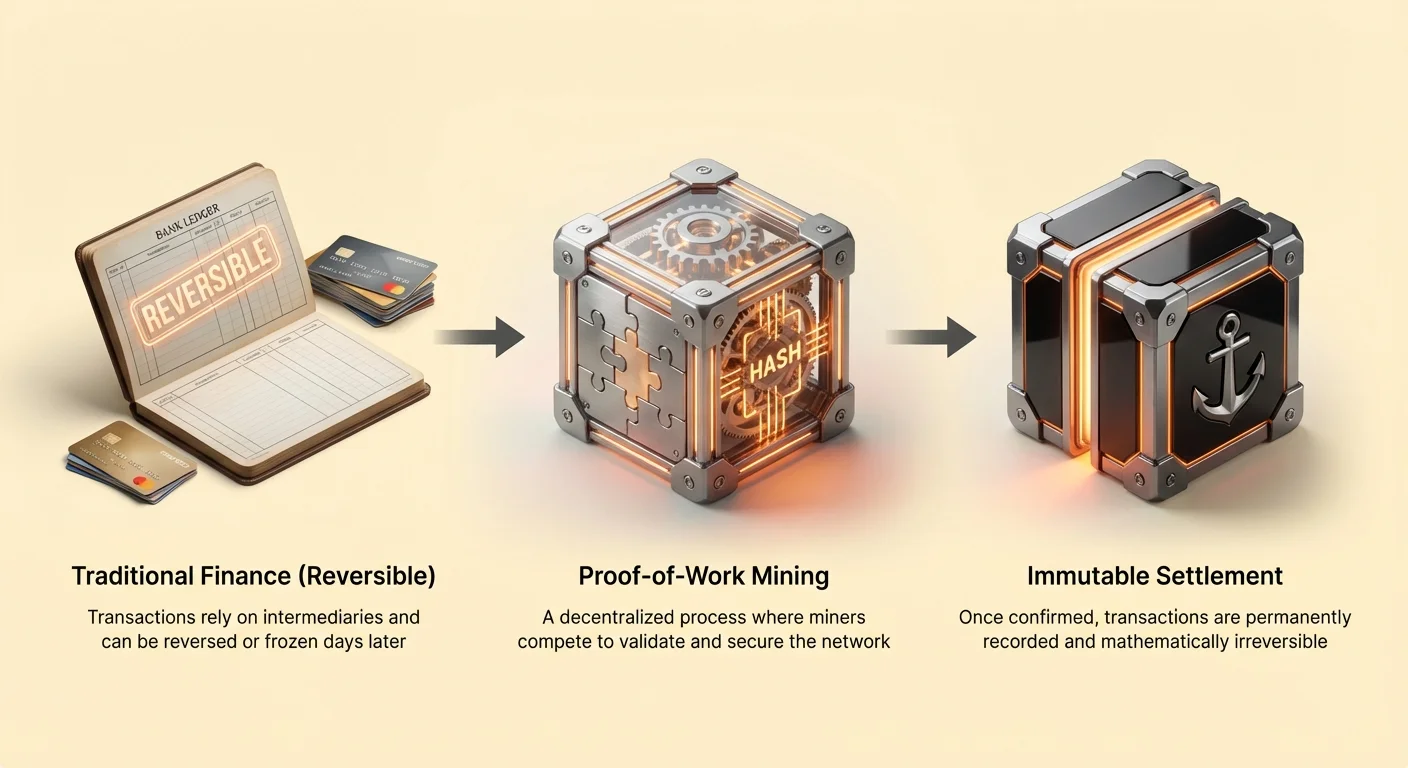
The Fundamental Problem Bitcoin Solved: Trust in Digital Payments
Before Bitcoin, digital money was plagued by the fundamental flaw of the "double-spend problem." Because digital information is inherently easy to copy, how could one ensure that a digital token was only used once without relying on a central authority to act as a watchdog?
The Double-Spend Conundrum
The double-spend problem is the technical hurdle that prevented successful digital currencies for decades. If you had a digital file representing $100, what would stop you from copying that file and simultaneously sending it to two different people, effectively spending the same $100 twice?
In traditional finance, the central bank or payment processor maintains a master ledger and checks every transaction against your balance. If you try to spend money you don't have, the central authority rejects the attempt. Satoshi Nakamoto’s breakthrough in creating Bitcoin was solving the double-spend problem without needing that central authority, replacing centralized trust with verifiable, decentralized cryptography.
Reversibility in Traditional Finance
To appreciate Bitcoin's finality, consider the typical reversibility built into existing systems:
- Credit Cards: Credit card transactions are notoriously non-final. A customer can initiate a chargeback weeks or months after a purchase. The merchant loses the revenue and may incur penalty fees. This forces businesses to integrate high-cost risk management systems.
- Bank Transfers (ACH): While faster than chargebacks, even bank transfers can sometimes be clawed back due to fraud or error, meaning the receiving party cannot treat the funds as 100% secure until a lengthy clearance period has passed.
- Central Authority Freezing: In any centralized system, an external entity (the government, the bank, or a court) can unilaterally freeze, seize, or reverse transactions and accounts if deemed necessary, violating the premise of finality.
Bitcoin was designed to eliminate the operational risk and third-party intervention inherent in these reversible systems.
Kas tieši ir transakcijas galīgums?
Transakcijas galīgums attiecas uz brīdi, kad vērtības pārskaitījums tiek uzskatīts par pilnībā pabeigtu un neatgriezenisku. Bitkoina kontekstā tas nozīmē, ka līdzekļi ir galīgi pārvietojušies no vienas adreses uz otru, un neviens, pat sūtītājs, nevar tos atgūt.
Neatgriezenisks norēķins
Bitkoins sasniedz neatgriezenisku norēķinu decentralizēta procesa — ieguves (Darba pierādījums) — palīdzību. Atšķirībā no kredītkartes transakcijas, kas pirkuma brīdī ir tikai „autorizēta” un norēķināta daudz vēlāk (ar atcelšanas risku), Bitkoina transakcija ir pastāvīgi ierakstīta publiskajā grāmatā (blokķēdē).
Kad transakcija ir validēta un iekļauta apstiprinātā blokā, tīkls ir vispārēji vienojies, ka naudas stāvoklis ir mainījies. Tas ir kriptogrāfiskais ekvivalents parakstītam neizmaināmam, globālam līgumam, uzreiz novēršot strīdu risināšanas mehānismu, piemēram, maksājumu atcelšanas, vajadzību.
Nemaināmība definēta
Nemaināmība vienkāršos vārdos nozīmē nespēju tikt mainītai. Bitkoina blokķēde ir nemaināma tās struktūras dēļ: transakciju bloki ir kriptogrāfiski saistīti hronoloģiskā ķēdē.
- Katrs jauns bloks satur kriptogrāfisku hēšu (unikālu digitālo pirkstu nospiedumu) no iepriekšējā bloka.
- Ja kāds mēģinātu iejaukties transakcijā dziļi ķēdē (piem., mainot 10 $ pārskaitījumu uz 1000 $ pārskaitījumu), tā bloka hēšs mainītos.
- Tā kā sekojošie bloki balstās uz oriģinālo hēšu, visa turpmāk uzbūvētā ķēde uzreiz kļūtu nederīga.
- Lai veiksmīgi mainītu vienu transakciju, ļaunprātīgais aktors būtu jāatkalieguve visi sekojošie bloki ātrāk nekā pārējais globālais tīkls — aprēķina ziņā neiespējams uzdevums tīkla aizsardzības milzīgā spēka dēļ.
Šī nemaināmība nodrošina, ka, tiklīdz jūs redzat savu transakciju apstiprinātu blokķēdē, jūs varat uzticēties, ka tā tur paliks mūžīgi.
The Mechanics of Finality: Confirmation and the Blockchain
Finality is not achieved instantly the moment you press "send." It is a gradual, verifiable process dependent on the decentralized creation of new blocks.
From Unconfirmed to Pending
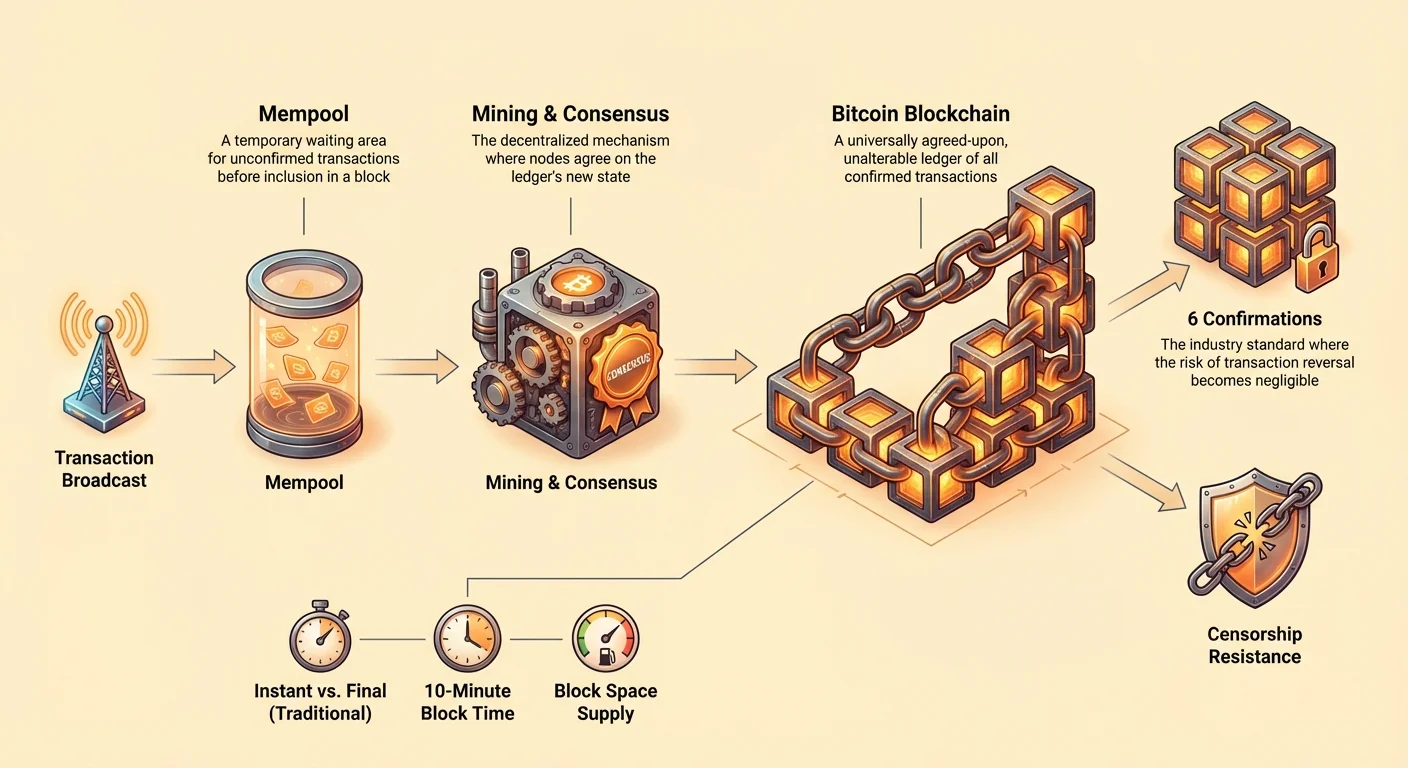
When you initiate a Bitcoin transaction, it is first broadcast to the global network of nodes (computers running the Bitcoin software).
- Broadcasting: Your transaction enters the mempool (memory pool), which is essentially a waiting room for all pending, unconfirmed transactions.
- Validation: Nodes check your transaction to ensure you have the funds and the signature is valid.
- Selection: Miners select transactions from the mempool to include in the next block they are attempting to solve. They prioritize transactions that include higher transaction fees because this acts as a payment for their work.
At this stage, the transaction is unconfirmed. While it is visible to the world, it is still vulnerable to being replaced or ignored if another valid transaction attempts to spend the same funds (though the network rules highly disincentivize this).
The Role of Mining and Proof-of-Work
The transition from pending to final occurs when a miner successfully solves the cryptographic puzzle and adds a new block to the chain. This is the heart of the Proof-of-Work (PoW) consensus mechanism.
The new block containing your transaction is broadcast to the network. Once nodes verify the block's validity, they accept it and begin working on the next block, linking it mathematically to the one that contains your transaction.
The first confirmation is powerful, as it proves your transaction is now officially part of the most recent, valid chain. However, true finality builds over time.
Confirmation Count: When is a Transaction "Final"?
While one confirmation means your transaction is highly likely to be permanent, the security risk (the chance of a reorganization where a competing chain invalidates the current block) decreases exponentially with each subsequent block confirmation.
The common industry standard for declaring a Bitcoin transaction truly immutable and fully settled is six confirmations.
- 1 Confirmation: The transaction is included in a block. For small payments (e.g., buying a coffee), many businesses might accept this risk, as the cost of a sophisticated attack is too high to warrant double-spending a small amount.
- 6 Confirmations: By the time six new blocks have been successfully mined and linked atop the block containing your transaction, the risk of that transaction being reversed or ignored falls to near zero. The computational power required to undo six blocks is practically unattainable for any single entity. This timeframe is typically around one hour (6 blocks x 10 minutes/block).
For large transfers, 6 confirmations provides the absolute assurance of finality that traditional banking systems cannot match.
Apstiprinājumu ātrums un tīkla mainīgie
Jaunpienācēju biežs neskaidrības avots ir atšķirība starp Bitcoin garantēto galīgumu un tūlītējo ātrumu, ko piedāvā servisi kā PayPal vai Visa. Bitcoin upurē tūlītēju ātrumu verificējamai, uzticēšanās bezpeļņas drošībai.
10 minūšu mērķa bloka laiks
Bitcoin protokols ir stingri kodēts, lai mērķotu uz vidēju bloka radīšanas laiku aptuveni 10 minūtēs. Šī 10 minūšu intervāls ir apzināta dizaina izvēle, kas līdzsvaro ātrumu ar drošību.
Ja bloki tiktu iegūti pārāk ātri, konfliktējošu ķēžu (vai "forku") risks palielinātos, potenciāli vājinot konsensa mehānismu un nemaināmības solījumu. Uzturot 10 minūšu ritmu, tīkls ļauj laiku jauniegūtajam blokam izplatīties globāli, nodrošinot, ka visi mezgli strādā pie vienas, vienojušās virsgrāmatas versijas.
Darījuma maksas un bloka vietas
"Cik ātri ir Bitcoin darījumi?" Atbilde lielā mērā atkarīga no maksas, ko jūs pievienojat darījumam.
Ātrums, kādā jūsu neapstiprinātais darījums pārvietojas no mempool uz apstiprinātu bloku, ir noteikts ar tirgus dinamiku: piegādes un pieprasījuma pēc bloka vietas.
- Bloka vietas piedāvājums: Bitcoin blokam ir ierobežots izmērs (pašlaik apmēram 1MB darījumu datu).
- Darījumu pieprasījums: Jebkurā brīdī mempool var gaidīt simtiem vai tūkstošiem darījumu.
- Ieguvēja stimul: Ieguvēji ir ekonomiski motivēti iekļaut darījumus ar augstākajām maksām, maksimizējot savus ieņēmumus.
Ja tīkls ir noslogots un jūs iesniedzat zemas maksas darījumu, tas var gaidīt mempool stundām vai pat dienām, kamēr pieprasījums nemazinās vai līdz nākamajam "maksas tirgus kritumam". Savukārt augstas maksas darījums var tikt paņemts gandrīz uzreiz un apstiprināts pašā nākamajā 10 minūšu blokā.
Atšķirība starp ātrumu un galīgumu
Ir kritiski atšķirt ātrumu no galīguma:
| Mērs | Tradicionālās finanses (piem., Wire) | Bitcoin tīkls |
|---|---|---|
| Ātrums (sākotnējais pārskaitījums) | Tūlītējs/Sekundes | Sekundes (lai nonāktu mempool) |
| Galīgums (norēķins) | Dienas (atgūšanas risks paliek) | ~60 minūtes (Pēc 6 apstiprinājumiem) |
| Atgriezeniskums | Jā, centrālās autoritātes | Nē, matemātiski neiespējams |
Kamēr tradicionāls pārskaitījums šķiet tūlītējs, pamata līdzekļi bieži nav norēķināti un garantēti dienām. Bitcoin var prasīt 10–60 minūtes galīgumam, bet, kad tas ir galīgs, tas ir garantēts ar matemātiku.
Why Immutability Is the Cornerstone of Self-Sovereignty
The technical reality of finality translates directly into profound philosophical and practical benefits for the user, particularly regarding autonomy and security.
Censorship Resistance
Because Bitcoin transactions are immutable and cannot be reversed by any single party—not a government, a bank, or a company—the system is inherently censorship-resistant.
If you send a valid transaction (signed with your private key and paying the necessary fee), the network's function is simply to process and record it. There is no authority to deem the transaction "illegal," "unauthorized," or "inappropriate."
This is crucial for individuals living under oppressive regimes, journalists, or anyone needing to move funds without fear of institutional interception or blocking.
Unseizability
Immutability ensures that once you secure your funds under your own cryptographic control (self-custody), they are unseizable.
If your funds are held by a bank, a court order can seize them, forcing the bank to alter their internal ledger. If your funds are held in a self-custody Bitcoin wallet, the private key is the only thing that dictates ownership. Since the transaction history recorded on the blockchain is immutable, the network will only recognize a valid transaction initiated by that private key. No external entity can unilaterally issue a command to change the ledger and transfer your money.
Global Access Without Intermediaries
The finality of Bitcoin allows two people, anywhere in the world, to settle a value transfer with the same level of trust as if they were exchanging physical cash—but across vast distances. This eliminates reliance on expensive and often geographically restricted banking intermediaries.
This capability is particularly transformative for cross-border commerce and remittances, where traditional systems impose high fees and lengthy delays precisely because they must involve multiple reversible clearinghouses and correspondent banks.
Practical Implications for Users and Businesses
Understanding transaction finality dictates how users interact with the network, particularly when it comes to security and risk management.
Managing Risk for Merchants
For businesses, especially those conducting international trade or selling high-value digital goods, Bitcoin’s finality eliminates the most destructive risk in e-commerce: chargebacks.
Once a merchant sees six confirmations, the funds are irrevocably theirs. This is often cited as one of the most compelling reasons for high-risk businesses or international sellers to adopt Bitcoin. They exchange the risk of a potential double-spend attack (which is negligible after six confirmations) for the certainty of guaranteed revenue, bypassing the 2-8% fees and legal liabilities associated with credit card processing.
Best Practices for Sending and Receiving
For users, transaction finality requires disciplined attention to confirmation counts and fee selection.
1. Selecting Appropriate Fees
If you need a transaction confirmed quickly (e.g., within the next 10-20 minutes), you must check the current fee market conditions to ensure your fee is competitive enough to be selected by a miner. If speed is irrelevant, you can set a lower fee and wait longer. Miscalculating the fee means your transaction could be stuck in the mempool until network traffic clears.
2. Monitoring Confirmation Counts
As a recipient, always verify the confirmation count based on the value being received:
- Small Value (e.g., under $100): 1-3 confirmations is generally acceptable.
- Medium Value (e.g., $100 to $10,000): Wait for 6 confirmations to achieve full finality assurance.
- High Value (e.g., over $100,000): Some institutions may recommend 10, 20, or even more confirmations as an ultra-conservative measure, although 6 remains the global standard for theoretical impossibility of reversal.
3. Handling Zero-Confirmation Transactions
A zero-confirmation transaction (one that is broadcast but not yet in a block) is not final. While it is acceptable for micropayments where the risk is trivial, merchants should never ship high-value goods or dispense large amounts of digital value based only on a zero-confirmation transaction, as the sender still technically has the opportunity to double-spend before a miner includes it in a block.
Secinājums
Darījuma galīgums ir vairāk nekā tikai tehniska funkcija; tas ir kodolīgais kriptogrāfiskais solījums, kas pamato Bitcoin vērtības piedāvājumu. Tas ir nodrošinājums, ka, kad nauda pārvietojas, tā paliek pārvietota, pastāvīgi ierakstīta nemaināmā virsgrāmatā, ko var verificēt visa pasaule.
Pieņemot nedaudz lēnāku norēķinu laiku (10 minūšu bloka vidēji) apmaiņā pret decentralizētu, matemātisku verificēšanu, Bitcoin atrisina gadu veco uzticēšanās problēmu digitālajos darījumos. Šī nemaināmība ir dzinējs, kas nodrošina izturību pret cenzūru un sniedz unikālo spēju indivīdiem sasniegt īstu pašsuverenitāti pār savu bagātību, garantējot, ka, tiklīdz darījums ir apstiprināts, tas ir noslēgts uz visiem laikiem.