Laipni lūdzam viskritiskākajā solī jūsu ceļā uz finanšu pašsuverenitāti: izvēloties un nodrošinot jūsu pirmo kriptovalūtas maku.
Kad iesācēji dzird terminu «crypto wallet», viņi bieži iedomājas digitālu ādas maciņu, kurā glabājas faktiskas digitālas monētas. Šis prāta tēls ir maldinošs, un realitātes izpratne ir izšķiroša drošībai. Kriptovalūtas maka neglabā valūtu; tā glabā kriptogrāfiskās atslēgas, kas nepieciešamas, lai piekļūtu un tērētu jūsu līdzekļus blokķēdē. Iedomājieties blokķēdi kā publisko grāmatvedības reģistru, bet jūsu maku kā atslēgu uz jūsu specifisko ierakstu tajā.
Galvenā izvēle, ar ko jūs saskaraties, nav tā, kuru maks zīmolu izmantot, bet gan: Kam pieder atslēgas? Vai jūs uzticat trešajai pusei (piemēram, biržai) atslēgu glabāšanu jūsu vietā (uzticības), vai arī uzņematies pilnu atbildību par to aizsardzību pats (pašpārvaldības)? Šis viens lēmums nosaka jūsu drošību, pieejamību un galīgo kontroli pār jūsu aktīviem. Šis ceļvedis piedāvā visaptverošu ietvaru, lai palīdzētu jums navigēt šajā izvēlē, nodrošinot jūsu ceļa sākumu ar maksimālu drošību un pārliecību.
The Foundation: Understanding the Private Key
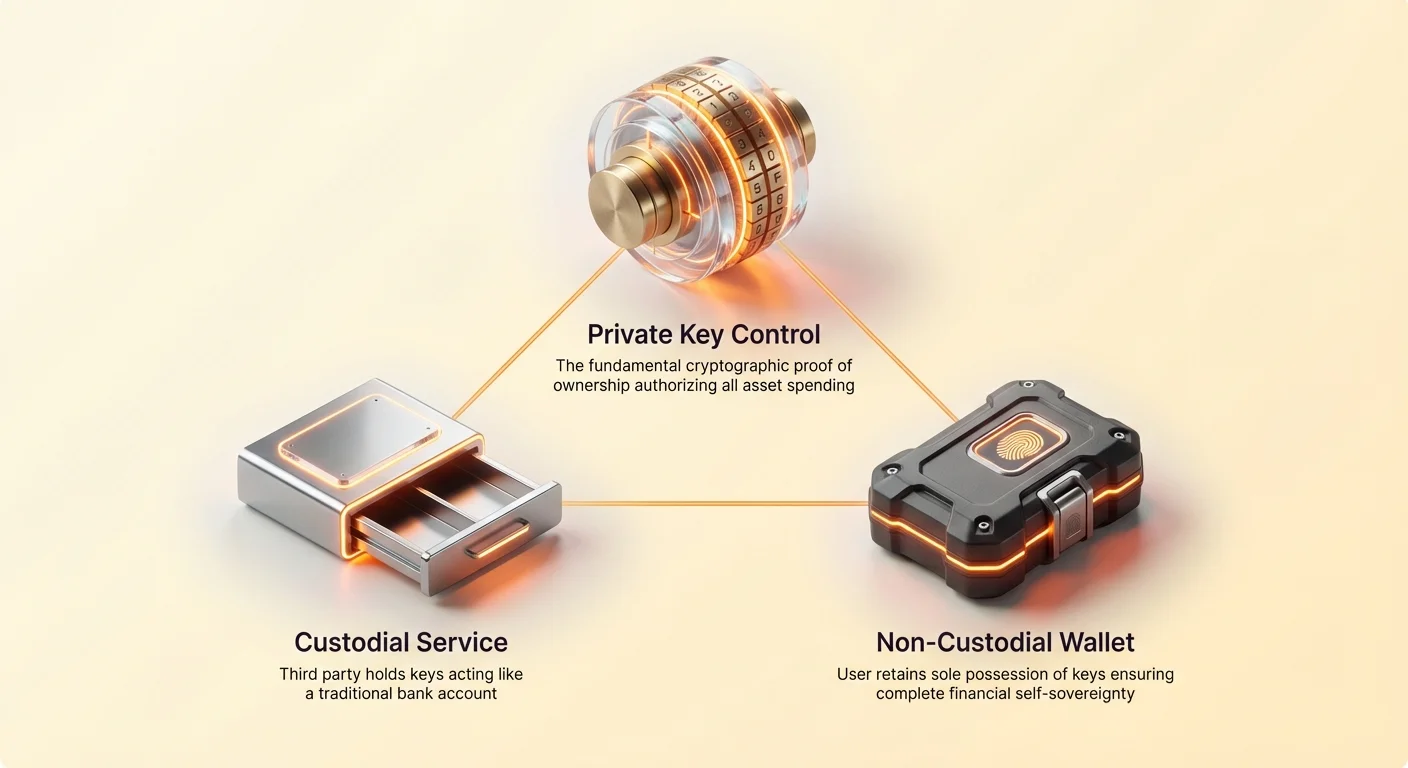
Before diving into wallet types, we must solidify the foundational concept: the private key. If Bitcoin is digital gold, the private key is the unique combination to the vault that contains your gold.
Analogy: The Wallet is the Key Ring, the Key is the Access Code
In the physical world, if you lose your house key, you call a locksmith or use a spare hidden under a mat. If you lose your crypto private key, there is no master key, no customer service line, and no recovery option. The funds associated with that key are permanently lost and inaccessible.
A crypto wallet is essentially a software application designed to generate, manage, and utilize these private keys securely.
- Public Key (The Address): This is your receiving address—like your bank account number or email address. You can share this freely with anyone who wants to send you funds. It is derived mathematically from your private key.
- Private Key (The Password): This is the secret, alphanumeric code that proves ownership and authorizes spending. If someone obtains your private key, they can spend your funds instantly and irreversibly.
The core principle of self-sovereignty in crypto is simple: He who controls the private key controls the money.
The Danger of Loss and Irreversible Transactions
Because decentralized networks like Bitcoin operate without intermediaries, every transaction is final. There are no chargebacks, no "forgot password" buttons, and no mechanisms to reverse funds sent to the wrong address. This lack of intervention is a feature, not a bug, but it places the full burden of security onto the user.
If you lose control of your private key (due to a hacking attempt, device failure, or simply forgetting it), your Bitcoin is locked forever. Conversely, if you are the only person who knows the key, your funds are secured against censorship, government seizures, or bank failures. Understanding this trade-off—complete control versus complete responsibility—is the first step in wallet selection.
The Core Decision: Custodial vs. Non-Custodial Wallets
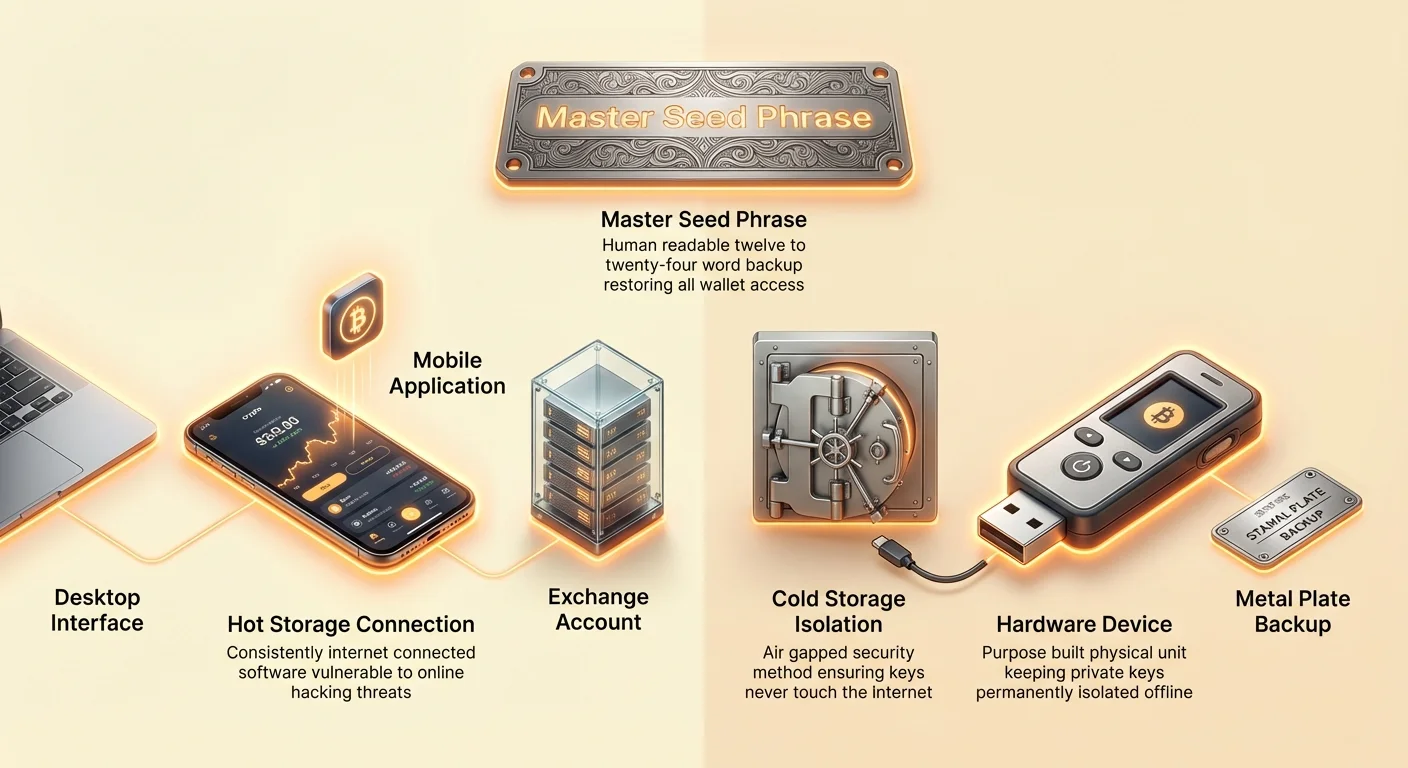
The choice between custodial and non-custodial wallets is the most important fork in the crypto roadmap. It defines whether you are outsourcing your security or taking on the burden yourself.
Custodial Wallets: Trusting a Third Party (The Exchange Model)
A custodial wallet is one where a third party—typically a centralized cryptocurrency exchange (CEX) or a specialized custodian service—holds and manages your private keys on your behalf.
How it Works: When you buy crypto on an exchange like Coinbase, Binance, or Kraken and leave the assets in their default account, you are using a custodial wallet. The exchange holds the massive master private key for all customer funds. You access your funds using a traditional username and password, just like a bank account.
| Pros of Custodial Wallets | Cons of Custodial Wallets |
|---|---|
| Convenience: Easy setup; quick access for trading. | Counterparty Risk: If the custodian is hacked, goes bankrupt (like FTX), or commits fraud, your funds are at risk. |
| Recovery: If you forget your password, the custodian can recover your account for you, much like a bank. | Censorship Risk: The custodian can freeze or block your account if mandated by a government or internal policy. |
| Beginner Friendly: Requires no technical knowledge of key management or seed phrases. | "Not Your Keys, Not Your Coin": You do not truly own the assets; you own an IOU from the platform. |
Use Case: Custodial wallets are best suited for small amounts of funds designated for immediate trading, or for absolute beginners who are still learning the basics of the ecosystem and prioritizing ease of use over ultimate security.
Non-Custodial Wallets: Self-Sovereignty (The Personal Vault Model)
A non-custodial wallet (also called self-custody or sovereign wallet) is one where you and only you have control of the private keys. The wallet software merely helps you store and manage these keys.
How it Works: When you set up a non-custodial wallet (like Trust Wallet, Exodus, or a dedicated hardware wallet), the software generates a unique set of private keys and presents you with a Seed Phrase (or Mnemonic Phrase)—a sequence of 12 to 24 simple words. This seed phrase is the human-readable master backup of all your private keys. You are solely responsible for protecting this phrase.
| Pros of Non-Custodial Wallets | Cons of Non-Custodial Wallets |
|---|---|
| Absolute Control: No third party can freeze, seize, or block your assets. | Zero Recovery Options: If you lose your seed phrase, the crypto is permanently gone. |
| Security: Funds are generally safer from exchange hacks, political instability, and censorship. | Irreversible Mistakes: Sending funds to the wrong address or falling for a phishing scam is your sole responsibility. |
| Access to DeFi: Necessary to interact with decentralized applications, lending, staking, and Web3 services. | Requires Diligence: Demands rigorous security practices (proper seed phrase storage, device hygiene). |
Use Case: Non-custodial wallets are mandatory for long-term savings, significant investments, and anyone seeking true financial autonomy. This is the goal for anyone serious about the philosophy of cryptocurrency.
Decision Framework: Who Should Use Which?
The decision boils down to balancing security needs with your technical confidence:
| User Profile | Recommended Custody Type | Why? |
|---|---|---|
| The Trader (High frequency, small amounts) | Primarily Custodial | Speed, ease of moving assets, leveraging exchange tools. |
| The Long-Term HODLer (Savings, investments) | Strictly Non-Custodial | Maximum protection against systemic risk and exchange collapse. |
| The New Beginner (First few hundred dollars) | Start Custodial, Transition Quickly | Easiest learning curve; buy on the exchange, but practice moving small amounts to a non-custodial mobile wallet immediately. |
| The Experienced User (Large portfolios) | Non-Custodial with Cold Storage | Complete self-sovereignty and air-gapped security for the majority of funds. |
Security Framework 1: Hot vs. Cold Storage
Once you have decided on self-custody (non-custodial), the next layer of security is determined by how often your private keys are exposed to the internet. This introduces the concepts of "Hot" and "Cold" storage.
Hot Wallets (Always Connected)
A hot wallet is any wallet where the private keys are stored on a device that is consistently connected to the internet. This includes applications running on your smartphone, computer, or even web browser extensions.
Characteristics:
- Convenience: Perfect for daily transactions, quick payments, and interacting with Web3 applications (Decentralized Finance or NFTs).
- Vulnerability: Because the keys are online, they are theoretically vulnerable to malware, viruses, phishing attacks, and remote hacking attempts if your device security is compromised.
Examples of Hot Wallets:
- Mobile Wallets (e.g., Trust Wallet, Exodus Mobile): Excellent for portability and small, spending amounts.
- Desktop Wallets (e.g., Electrum, Exodus Desktop): Offers a full feature set but relies entirely on the security of the host computer.
- Web/Browser Extension Wallets (e.g., MetaMask): Crucial for interacting with specific blockchains and decentralized applications, but requires extreme caution regarding permissions.
Rule of Thumb: Never store more funds in a hot wallet than you would keep in your physical wallet when walking down the street.
Cold Wallets (Air-Gapped Protection)
A cold wallet is a device or method that stores private keys entirely offline, meaning they are "air-gapped"—physically separated from any internet-connected system. This provides the highest level of security available.
Characteristics:
- Security: Immune to all online threats (viruses, malware, remote hacks, etc.). The keys never touch an internet connection.
- Inconvenience: Transactions require a physical step (plugging in the device, entering a PIN), making them unsuitable for frequent spending.
The Cold Standard: Hardware Wallets
The most popular and recommended form of cold storage is a hardware wallet (e.g., Ledger, Trezor, Coldcard). These are purpose-built, highly secure physical devices that do one job: generating and storing your private keys offline.
When you want to send a transaction:
- You create the transaction on your computer or phone (a hot device).
- The transaction data is sent to the hardware wallet via USB or Bluetooth.
- The hardware wallet signs the transaction internally using the offline private key.
- The signed, completed transaction is sent back to the hot device for broadcasting to the network.
The key never leaves the secure chip inside the hardware device, guaranteeing that your keys remain protected even if the computer you are using is riddled with malware.
When to Use a Hardware Wallet: As soon as your crypto holdings exceed an amount you would be genuinely upset to lose (e.g., more than a few thousand dollars), it is time to invest in a hardware wallet. It is the cheapest and most effective insurance policy you can buy in the crypto world.
Drošības ietvars 2: dziļā iegremdēšanās pašpārvaldības opcijās
Tiem, kas izvēlas pašglabāšanas ceļu, pareizā maks veida izvēle ir atkarīga no lietošanas modeļiem un nepieciešamā drošības līmeņa.
1. Mobilās maks: ērtums un mazas summas
Mobilās maks ir programmatūras lietojumprogrammas, kas instalētas jūsu viedtālrunī (Android vai iOS). Tās ir karstās maks ar lielisku pieejamību.
- Priekšrocības: Augsta pārnēsājamība, viegli ģenerēt jaunas adreses un ideālas QR kodu skenēšanai maksājumiem.
- Trūkumi: Viedtālruņi ir inherenti mazāk droši nekā veltītas aparatūras ierīces. Tie ir pakļauti fiziskai zādzībai, ekrāna skrāpēšanas kaitējprogrammatūrai un «sim swap» uzbrukumiem (kad uzbrucējs novirza jūsu tālruņa numuru uz savu ierīci, lai apietu 2FA).
- Labākā prakse: Iespējojiet biometrisku drošību (pirkstu nospiedumu/Face ID) pašā lietojumprogrammā un izvairieties instalēt maku uz telefona, ko izmanto riskantām darbībām (piem., nezināmu lietojumprogrammu lejupielāde, jailbreaking).
2. Datoru maks: jauda un funkcijas
Datoru maks ir programmatūras programmas, kas instalētas tieši jūsu personālajā datorā (PC vai Mac).
- Priekšrocības: Bieži piedāvā progresīvākas funkcijas, lielāku vizuālo skaidrību un saderību ar veltītiem tirdzniecības rīkiem vai pilna mezgla darbību.
- Trūkumi: Ja jūsu dators ir kompromitēts (piem., caur ļaunu e-pasta pielikumu vai inficētu programmatūru), jūsu datoru maka viegli tiek kompromitēta.
- Drošības padoms: Ja izmantojat datoru maku nozīmīgiem līdzekļiem, veltiet tīru, atsevišķu datoru, ko izmanto tikai kripto pārvaldībai, vai vēl labāk, savienojiet datoru programmatūru ar aparatūras maku darījumu parakstīšanai.
3. Zelta standarts: aparatūras maks
Aparatūras maks jāuztver ne tikai kā izvēli, bet kā galīgo prasību jebkuram nopietnam kriptovalūtas investoram.
- Darījuma paraksta process: Aparatūras maks kritiskā funkcija ir privātās atslēgas fiziska izolēšana. Kad apstiprināt darījumu, jums jāpārbauda saņemšanas adrese un summa uz ierīces mazā ekrāna, pirms nospiedat pogu, lai parakstītu darījumu. Šī «uzticamā displeja» funkcija novērš hakeru iespēju manipulēt darījuma detaļām uz jūsu kompromitētā datora bez jūsu zināšanām.
- Pirkuma brīdinājums: Vienmēr pērciet aparatūras maks tieši no ražotāja. Nekad nepērciet lietotu vai lietotu no otrām rokām ierīci vai no neautorizēta pārdevēja, piemēram, Amazon vai eBay, jo tās var būt manipulētas, lai nozagt jūsu atslēgas inicializācijas laikā.
The Single Most Important Concept: Mastering Your Seed Phrase
The seed phrase (or mnemonic phrase) is the human-readable backup of your non-custodial wallet. It is typically a list of 12, 18, or 24 words, generated sequentially according to industry standards (BIP39).
What is a Seed Phrase? (The Master Backup Key)
When you initialize a non-custodial wallet (software or hardware), the device generates a master private key and converts it into the seed phrase.
Importance:
- Recovery: If your physical hardware wallet breaks, your phone is lost, or your computer crashes, you can enter this 12- or 24-word phrase into any compatible wallet software or hardware device. It will mathematically regenerate all of your private keys, restoring access to your funds.
- Master Key: The seed phrase is the single, absolute key to all crypto assets associated with that wallet.
A Fundamental Rule: Treat your seed phrase with the same sanctity and security you would treat a physical safe containing millions of dollars.
Best Practices for Seed Phrase Storage
The entire point of non-custodial crypto is to remove the trust required for traditional banks. Therefore, your seed phrase must be secured offline and away from digital systems.
1. Physical and Durable Storage
- Never Digitize: Do not take a photo of your seed phrase, store it in a note-taking app, email it to yourself, or keep it in a cloud storage service (like Dropbox or Google Drive). If any of these digital accounts are hacked, your funds are gone.
- Use Permanent Materials: Paper is vulnerable to fire, flood, and simple aging. The gold standard involves stamping or etching the words onto durable metal (e.g., stainless steel plates). Metal backups are fireproof, waterproof, and far more robust than laminated paper.
2. Redundancy and Separation
- Multiple Copies: Create at least two, preferably three, copies of your seed phrase using durable methods.
- Geographic Separation: Store these copies in separate, secure physical locations (e.g., home safe, bank safe deposit box, relative's home). If disaster strikes one location (fire, flood), you still have a recovery option. Do not store the seed phrase and the hardware wallet in the same location.
3. Protection Against Local Threats (The 25th Word)
For extremely high-value holdings, consider adding a passphrase (sometimes called a 25th word) to your seed phrase.
- How it Works: This is an extra word or phrase that you choose and memorize. If someone discovers your 24-word seed phrase, they still cannot access your funds without this 25th word.
- Security Benefit: This creates a layer of "plausible deniability." If you are physically threatened or forced to reveal your 24-word phrase, you can reveal the 24 words, but keep the 25th word secret, protecting the bulk of your savings. (Warning: If you forget the 25th word, your funds are lost, even if you have the 24-word phrase.)
Brīdinājums: Sēklas frāzes digitalizēšanas briesmas
Šo punktu nevar pārspīlēt, jo tas ir visizplatītākā un vispostošākā kļūda, ko pieņem iesācēji. Jebkura metode, kas savieno jūsu privātās atslēgas (vai jūsu sēklas frāzi) ar internetam savienotu ierīci, atceļ pašpārvaldības drošības priekšrocību.
- Mākoņkrātuve: Hakeri regulāri uzbrūk mākoņa dublējumiem, jo tie piedāvā centralizētu savākšanas punktu parolēm, dokumentiem un, diemžēl, sēklas frāzēm.
- Ekrānuzņēmumi/Fotogrāfijas: Jūsu telefons automātiski sinhronizē fotogrāfijas mākonī. Ekrānuzņēmums ir tieša ieeja uzbrucējiem.
- Kaitprogrammatūras taustiņu reģistratori: Ja ievadāt savu sēklas frāzi datora tastatūrā (piemēram, lai to izdrukātu), sarežģīts taustiņu reģistrators tajā ierīcē var ierakstīt visu secību, nekavējoties pakļaujot jūsu dzīves ietaupījumus briesmām. Vienmēr ievadiet sēklas frāzes tikai tad, kad tas ir absolūti nepieciešams, un tikai uz droša aparatūras maciņa fiziskā ekrāna, ja iestatīšanas laikā tiek prasīts.
Zelta noteikums: Ja neesat pārliecināts, vai ierīce vai metode ir droša, pieņemiet, ka tā nav. Papīrs, metāls un atmiņa ir jūsu draugi; digitālie faili ir jūsu ienaidnieki.
Rīcībspējīgs maks izvēles ceļvedis (pa solim)
Jūsu pirmās maks izvēle jāveic apdomīgi, pa solim, balstoties uz jūsu pašreizējo finanšu situāciju un apņemšanos pašglabāšanai.
1. solis: novērtējiet savu riska tolerances un investīciju lielumu
Kategorizējiet savus turējumus «Tēriņu nauda» un «Ietaupījumi.»
- Tēriņu nauda (Ikdienas lietošana): Līdzekļi, ko varētu izmantot nedēļā pirkumiem, maziem pārskaitījumiem vai gāzes maksām. Tos var droši glabāt ērtā, karstā makā.
- Ietaupījumi (Ilgtermiņa HODL): Jebkuri nozīmīgi bagātība, ko plānojat turēt mēnešiem vai gadiem. Tos jāglabā bezsaistē.
| Investīciju lielums | Ieteicamā rīcība |
|---|---|
| Mazāk nekā $1,000 | Uzticības biržas konts (Sākotnējs pirkums) + pašpārvaldības mobilā maka (Pašglabāšanas prakse). |
| $1,000 līdz $10,000 | Obligāti jāizmanto kvalitatīva aparatūras maka. Nekavējoties pārvietojiet visus līdzekļus prom no biržas. |
| Vairāk nekā $10,000 | Aparatūras maka + veltītas, drošas aukstās glabāšanas prakses (metāla dublējums, ģeogrāfiska separācija, opcionāla parole). |
2. solis: izvēlieties savu atslēgu pārvaldnieku (uzticības pret pašpārvaldības)
Ja jūsu mērķis ir finanšu suverenitāte, galīgais mērķis ir pašpārvaldības.
- Ja izvēlaties uzticības: Izvēlieties uzticamu, regulētu biržu ar spēcīgu drošību un iespējojiet augstāko 2FA līmeni (aparatūras atslēgas 2FA ir labākais).
- Ja izvēlaties pašpārvaldības (ieteicams): Turpiniet uz 3. soli. Izvēlieties labi pārskatītu maku ar ilgu drošības atjauninājumu vēsturi.
3. solis: izvēlieties glabāšanas temperatūru (karstā pret aukstā)
Pašpārvaldības lietotājiem labākā stratēģija ir vairāku makām pieeja, separējot līdzekļus pēc temperatūras.
- Nopērciet aparatūras maku: Tas ir jūsu drošais seifs. Iestatiet to pēc ražotāja instrukcijām, pierakstiet sēklas frāzi un droši glabājiet fiziskos dublējumus (ieteicams metāls). Pārvietojiet šeit lielāko daļu savu aktīvu (aukstā glabāšana).
- Instalējiet mobilo maku: Izmantojiet to tikai mazām tēriņu naudas summām, saistītu ar jūsu aparatūras maku (ja lietojumprogramma atbalsta savienošanu) vai iestatiet atsevišķi. Tas ir jūsu «digitālā kabatas nauda» (karstā glabāšana).
- Pārskaitījums: Practizējiet sūtīšanu mazam «testa darījumam» no biržas uz jūsu mobilo maku un tad no mobilās maks uz jūsu aparatūras maks adresi. Kad apstiprināts, pārvietojiet ietaupījumu galveno daļu uz aparatūras maks adresi.
Risku nodalot starp karsto un auksto glabāšanu, jūs samazināt uzbrukuma virsmu, vienlaikus saglabājot ērtumu ikdienas lietošanai.
Secinājums
Jūsu pirmās maks izvēle ir vairāk nekā programmatūras lēmums; tas ir ideoloģisks apņemšanās. Izvēloties pašpārvaldības kontroli, jūs pieņemat pilnu atbildību par to, lai kļūtu par savu pašu banku, aizsargājot savus aktīvus bez paļaušanās uz trešās puses starpnieku.
Drošākā maka ir tā, kuras privātās atslēgas jūs kontrolējat un kuras sēklas frāze ir droši glabāta bezsaistē. Nebaidieties no tehniskajām prasībām; mācīšanās līkne ir stāva, bet patiesas finanšu pašsuverenitātes atlīdzība ir neizmērojama. Sāciet mazi, praktizējiet atslēgu pārvaldību rūpīgi un prioritizējiet ietaupījumu pārvietošanu uz auksto glabāšanu pēc iespējas ātrāk. Jūsu drošība šodien nosaka jūsu finanšu brīvību rīt.