
The shift to digital assets offers unprecedented opportunities for financial autonomy and control. However, this freedom comes with a crucial caveat: the blockchain is transparent. While cryptocurrencies like Bitcoin are often described as anonymous, they are more accurately pseudonymous. Every transaction is permanently recorded on a public ledger, visible to anyone.
When you link your real-world identity—perhaps by logging into an exchange, using a centralized wallet, or accessing a crypto service via your home internet connection—you are effectively tying that long string of public transactions back to your name and location. This erosion of privacy exposes you to various risks, from targeted advertising and financial surveillance to potential security breaches.
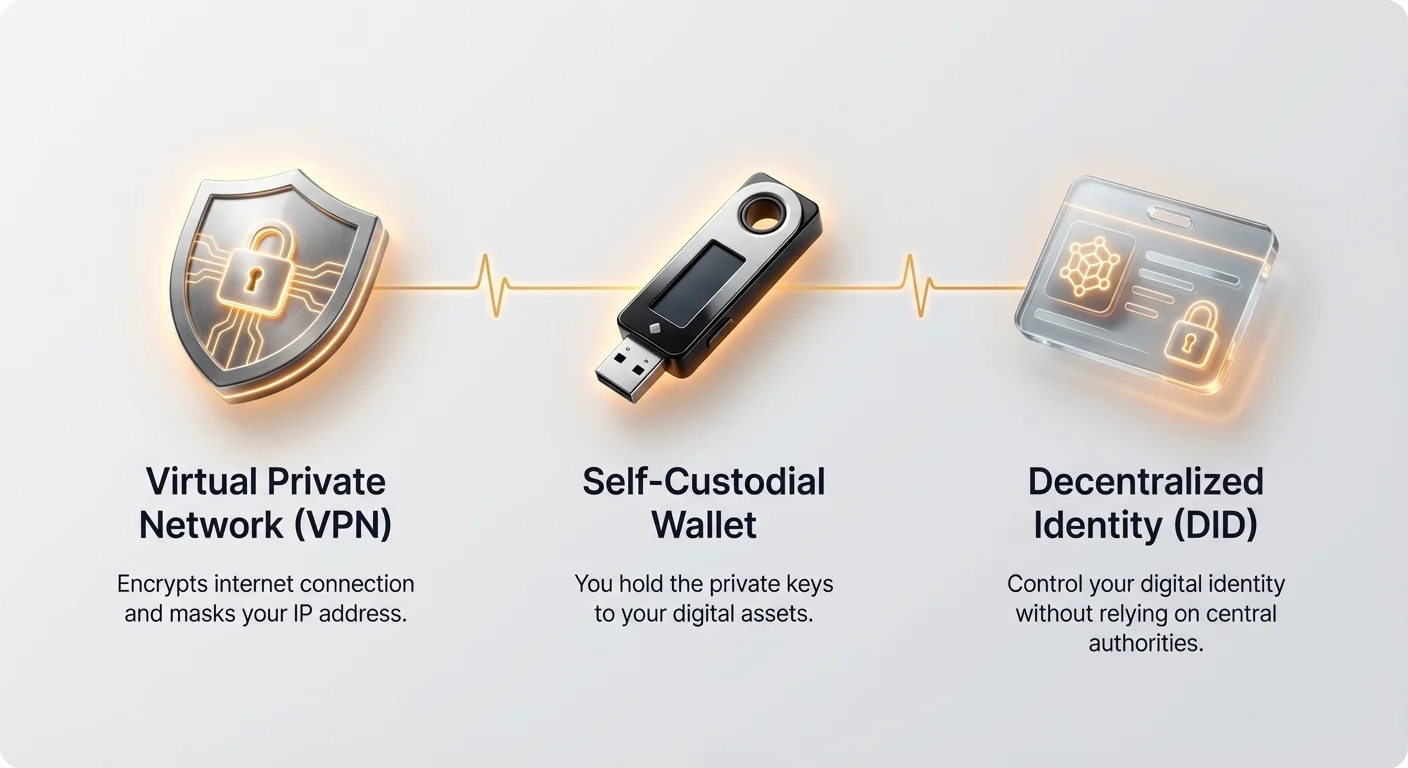
This guide provides a comprehensive introduction to the essential tools and practices that form a robust Decentralized Privacy Toolkit. We move beyond simple asset storage and delve into optimizing your operational security, emphasizing the critical role of Virtual Private Networks (VPNs) that accept crypto and adhere to strict zero-log policies. By mastering these fundamentals, you can ensure your journey into digital finance is both secure and private.
The Imperative of Privacy for Crypto Users
When you engage with the cryptocurrency ecosystem, you are generating two primary forms of data: transactional data (what you buy/sell, recorded on the blockchain) and metadata (where you access the network from, what device you use, and when). While the blockchain handles the first, your everyday internet habits manage the second.
For those serious about financial self-sovereignty, protecting both data streams is non-negotiable.
Threats to Financial Anonymity
The biggest misconception beginners face is believing their Bitcoin holdings are inherently untraceable. While a random address (e.g., 1A1zP1eP5...) doesn't scream your name, advanced data analysis techniques can quickly pierce the veil of pseudonmity:
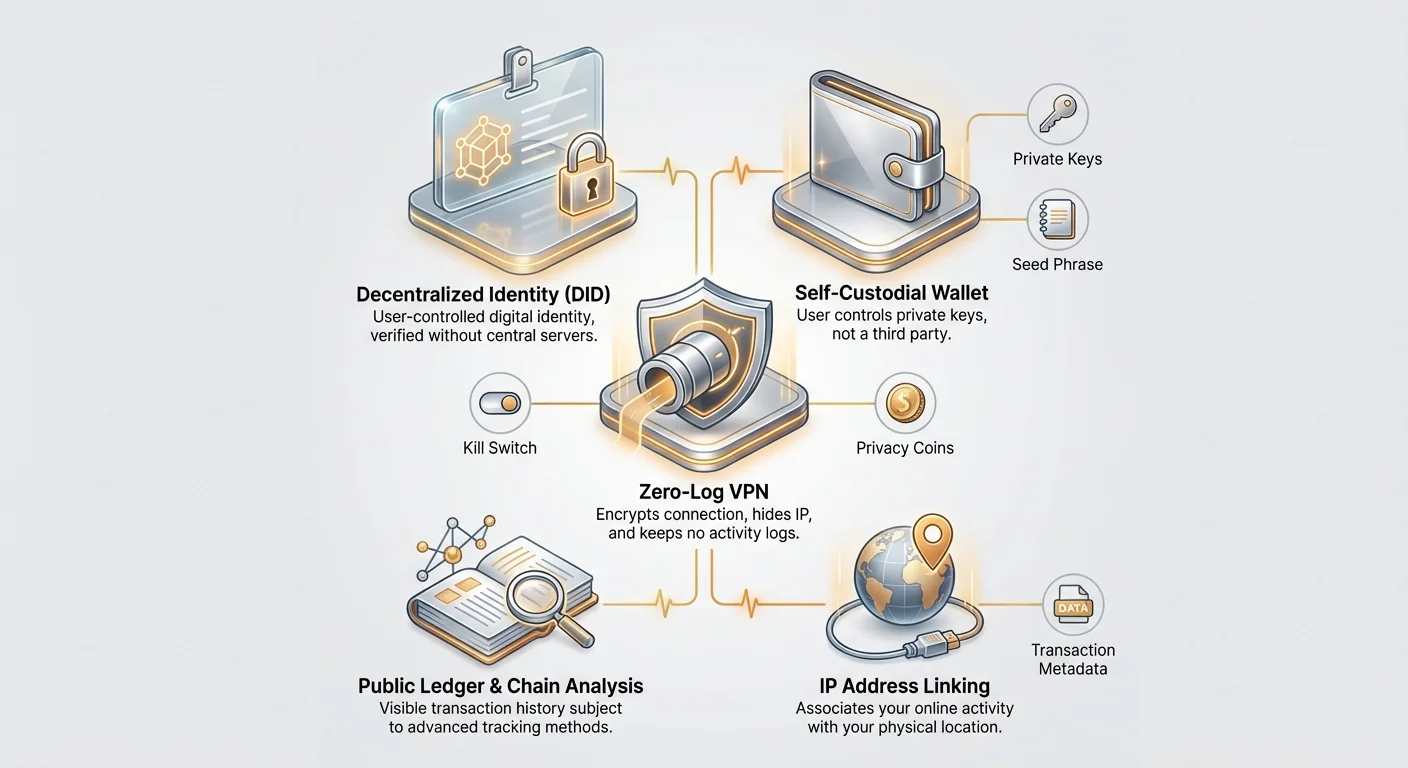
- IP Address Linking: The moment you log into a service (like an exchange or a web-based wallet) using your standard internet connection, your IP address is recorded. This IP address reveals your general geographic location and identifies your internet service provider (ISP). If that service is later compromised or compelled to share data, your crypto activity is irrevocably linked to your physical location.
- Chain Analysis: Specialized firms use sophisticated software to track the flow of funds across the blockchain. They identify patterns, cluster addresses that likely belong to the same person or entity, and match them with known entities (like centralized exchanges). If you start with a KYC-verified exchange and move funds to a decentralized protocol, analysts can still trace the origin point back to your verified identity.
- Data Leaks and Centralized Honeypots: Every centralized entity—whether it's an exchange, a social media platform, or a crypto news site—is a potential target for hackers. If you use the same email or password combination across services, or if a centralized service that stores your IP history is breached, your financial details become public knowledge.
The Problem of Transaction Metadata
Metadata is the "data about the data." In the context of crypto, this includes the IP address you used, the time you executed the transaction, the browser you were running, and the operating system of your device.
If you purchase $1,000 worth of crypto on a public Wi-Fi network and then immediately send those funds to a separate self-custodial wallet, most people assume the trail ends there. However, if that public Wi-Fi network or the service you used logs IP addresses, anyone examining those records can establish a clear connection: Person X, using IP address Y at time Z, moved funds to crypto address A.
Protecting this metadata is the primary function of a decentralized privacy toolkit, starting with the internet connection itself.
Shielding Your Connection: Virtual Private Networks (VPNs)
A Virtual Private Network (VPN) is the fundamental cornerstone of operational security for any crypto user. A VPN works by encrypting all the data traveling between your device and the internet, routing it through a secure, intermediary server. This process achieves two critical privacy goals:
- IP Address Hiding: It replaces your real IP address with the IP address of the VPN server, making it appear as though you are browsing from a different location (potentially a different country).
- Data Encryption: It makes the data stream unreadable to anyone intercepting it, including your ISP, government agencies, or hackers on a public Wi-Fi network.
Why a VPN is Essential for Crypto Transactions
Using a high-quality VPN when accessing your crypto accounts is not optional—it is required practice for maintaining privacy and security.
- Securing Hot Wallets and Exchanges: Whenever you access a hot wallet (a software wallet connected to the internet) or log into a centralized exchange, you are transmitting sensitive login and transaction information. A VPN ensures that even if you are on an unsecured network (like a cafe or airport Wi-Fi), your connection is encrypted, preventing man-in-the-middle attacks where hackers try to steal your login credentials.
- Preventing IP Linking: By consistently using a VPN for all crypto-related activities, you create a dedicated privacy layer. If you always use a VPN server based in Switzerland, for example, any transactional metadata associated with that IP address points to Switzerland, not your home address. This drastically complicates efforts by data aggregators to link your public crypto addresses to your real identity.
- Bypassing Geo-Restrictions: Certain exchanges or decentralized applications (DApps) may restrict access based on your location. A VPN allows users to appear as if they are browsing from an eligible jurisdiction, enabling access to a wider range of financial services (though users must always comply with local regulations and terms of service).
The Zero-Log Policy: The Gold Standard for Anonymity
Not all VPNs are created equal, especially when financial privacy is at stake. Many free or low-quality VPNs log (record) user data, including connection times, bandwidth usage, and, crucially, original IP addresses. If these logs exist, the VPN provider itself becomes a centralized point of failure.
The gold standard for crypto users is a verified Zero-Log or No-Log Policy.
A zero-log VPN pledges not to record any activity data that could identify you or link your connection back to your original IP address.
Key Verification Steps:
- Independent Audits: Look for VPN providers who submit their zero-log claims to regular, independent third-party audits. A provider’s public claim means little without external verification.
- Jurisdiction: The country where the VPN is legally based matters immensely. Opt for providers located in privacy-friendly jurisdictions (e.g., Panama, Switzerland, or the British Virgin Islands) that lack mandatory data retention laws or are outside the jurisdiction of major surveillance alliances (like the "Five Eyes"). If a government demands user data, a company located in a strong privacy jurisdiction with a verifiable zero-log policy will legally have nothing to hand over.
- Kill Switch: Ensure the VPN includes a Kill Switch feature. This crucial safety mechanism automatically disconnects your device from the internet if the VPN connection drops unexpectedly, preventing your real IP address from being briefly exposed and logging your traffic.
Choosing the Best VPN with Crypto Payment
For the ultimate privacy stack, your payment method for the VPN subscription itself should adhere to decentralized principles. Paying with a credit card or PayPal defeats the purpose of strong anonymity, as those payment processors track your identity.
When seeking the best VPN crypto payment option, focus on providers that accept payments directly via cryptocurrencies.
Why Pay with Crypto?
Paying for a service with fiat currency (like USD via a bank transfer) creates a direct link between your official financial identity and the privacy tool you are trying to use. Paying with crypto severs this link, especially if you use a privacy-focused coin and a self-custodial wallet.
Ideal Crypto Payment Practices:
- Accepted Coins: Look for providers that accept major cryptocurrencies like Bitcoin (BTC) or Ethereum (ETH). Even better are those that accept privacy coins like Monero (XMR) or Zcash (ZEC), which offer significantly enhanced transactional anonymity.
- Pay-as-You-Go Simplicity: Some advanced platforms offer flexible, pay-as-you-go models, which allow you to deposit a small amount of crypto ($0.10-$1.00) and simply use the service without a lengthy subscription commitment, aligning with the ethos of quick, anonymous interactions.
- Dedicated Wallet Use: When paying for your VPN, use a dedicated crypto wallet (ideally a temporary hot wallet or a hardware wallet address) that is not directly linked to any KYC-verified exchange transactions. This ensures the payment history itself remains isolated.
The Foundation of Security: Mastering Crypto Wallets
While a VPN shields the network layer, your wallet manages the financial layer. Understanding wallet types and security protocols is essential, as the most sophisticated privacy tools are useless if your private keys are compromised.
Custodial vs. Self-Custodial Wallets
The primary distinction in the crypto world revolves around who holds the "keys" to your assets:
| Feature | Custodial Wallet (e.g., Exchange Account) | Self-Custodial Wallet (e.g., MetaMask, Ledger) |
|---|---|---|
| Key Control | Third-party (the exchange/platform) holds the private keys. | You hold the private keys (via a seed phrase). |
| Privacy | Low. Requires KYC verification; activity is logged centrally. | High. No centralized authority; activity is only visible on the public ledger. |
| Security Risk | High. Vulnerable to platform hacks or internal misconduct. | High. Vulnerable to user error (losing the seed phrase or phishing). |
| Accessibility | High. Easy access; password reset available. | Low. If the seed phrase is lost, funds are permanently inaccessible. |
For maximum privacy and control, self-custodial wallets are mandatory. They embody the principle of "not your keys, not your crypto," ensuring that no third party can freeze, confiscate, or monitor your funds beyond what is visible on the public blockchain.
Best Practices for Wallet Security
Security and privacy are two sides of the same coin; poor security leads to involuntary loss of privacy.
- Hardware Wallets are King: For any significant amount of crypto, use a hardware wallet (like Ledger or Trezor). These devices store your private keys offline, making them immune to software hacks, malware, and viruses. Transactions must be physically verified on the device, providing an air gap between your keys and the internet.
- Protect Your Seed Phrase (Recovery Words): This 12-to-24-word phrase is the master key to your funds. Never store it digitally (on a computer, cloud storage, or even an encrypted file). Write it down on paper or engrave it on metal and store it in multiple secure, physical locations (e.g., a safe deposit box). If your VPN connection fails or your identity is exposed, your funds remain secure as long as your private keys are offline.
- Dedicated Crypto Devices: Whenever possible, use a separate, freshly wiped device (or a dedicated operating system like Tails OS) solely for interacting with your hardware wallet or signing high-value transactions. This prevents exposure to the common malware and trackers accumulated on your daily-use devices.
Protecting Your Transaction Metadata
Even when using a self-custodial wallet, the act of broadcasting a transaction to the network generates metadata.
Actionable Tip: Always connect your self-custodial wallet through your VPN. When you sign a transaction, the node receiving the broadcast will log the VPN’s IP address, not your personal one. This small step ensures that the transactional metadata remains shielded behind your robust zero-log provider.
Beyond Anonymity: Introducing Decentralized Identity (DID)
While VPNs secure the connection and wallets secure the assets, the concept of Decentralized Identity (DID) is the emerging solution for securing your digital self. Decentralized identity solutions fundamentally change how you interact with the digital world, moving control of your identity data from corporations to the individual.
What is Decentralized Identity (DID)?
Decentralized Identity refers to standards and protocols that allow individuals to create and control their own unique, verifiable digital identifiers (DIDs) without relying on a central authority (like a bank, government, or social media company).
Think of your current digital life: your email address, social media logins, and banking details are all managed and controlled by centralized service providers. If Facebook decides to ban your account, or Google loses your data, you lose control.
With DID, you own your identity. This digital identity is anchored to a blockchain or decentralized ledger, proving its authenticity, but the actual data points remain stored securely on your own device.
Practical Use Cases for DIDs in Crypto
The integration of decentralized identity solutions is vital for the future of crypto adoption, especially as regulatory pressures increase. DIDs solve a massive paradox: how can we satisfy regulatory requirements (like verifying age or country of residence) without sacrificing the user’s core privacy?
- Selective Disclosure (Zero-Knowledge Proofs): This is the core magic of DIDs. Instead of handing over your passport to prove you are over 18, a DID system allows you to generate a verifiable credential that only states: "This user has been verified to be over 18." The underlying personal data (name, date of birth, document number) is never revealed.
- KYC Compliance without Data Honeypots: Decentralized identity allows crypto services to comply with Know Your Customer (KYC) laws by verifying a user’s identity credential without needing to store that user’s personal documents (passports, driver's licenses) on their servers. The data stays with the user, drastically reducing the risk of massive data breaches.
- Reputation and Access Control: DIDs can be used to build a decentralized reputation score. For example, proving you hold a degree or are eligible to vote in a DAO (Decentralized Autonomous Organization) without revealing the university you attended or your street address.
How DIDs Work with Blockchain Technology
DIDs operate on the principle of Self-Sovereign Identity (SSI). Here’s a simplified breakdown:
- Identifier Creation: You use a specialized DID application to create a unique decentralized identifier. This ID is recorded on a public ledger.
- Issuance of Credentials: A trusted issuer (like a government or an exchange) issues you a verifiable credential—a digitally signed confirmation of a claim (e.g., "This person owns address X").
- Private Storage: These verifiable credentials are encrypted and stored on your personal device, completely under your control.
- Presentation: When a service requires proof (e.g., proof of age), you use your device to generate a cryptographic proof derived from your credential. You present the proof, the service verifies it against the public ledger, and access is granted—all without sharing the underlying personal details.
This system replaces the current model where central companies own and monetize your identity with a system where you maintain ownership and grant access only on a need-to-know basis.
Building Your Comprehensive Privacy Stack
Successfully navigating the decentralized world requires merging the three pillars we’ve discussed—secure connection (VPN), controlled assets (Wallet), and private identity (DID)—into a coherent privacy stack. This synthesis represents the pinnacle of crypto privacy tools for the empowered user.
Step-by-Step: Setting Up Your Privacy Ecosystem
Following these steps ensures that you separate your personal life from your financial activities and minimize exposure points.
Step 1: Establish Your Dedicated Privacy Channel (VPN)
- Select a Zero-Log Provider: Choose a VPN known for its audited zero-log policy and privacy-friendly jurisdiction.
- Pay Anonymously: Fund the VPN using a cryptocurrency like Bitcoin or Monero from a non-KYC-linked wallet.
- Configure the Kill Switch: Activate the automatic Kill Switch feature immediately upon installation.
- Dedicated Server Use: Select a non-local server (e.g., if you are in the US, use a Canadian or European server) and commit to using this specific server/location solely for crypto activity.
Step 2: Segregate Your Financial Devices
- Hardware Wallet Setup: Purchase a hardware wallet for cold storage of long-term holdings.
- Hot Wallet Discipline: Only keep small amounts (spending money) in hot wallets (like browser extensions). Access these hot wallets only when the VPN is active.
- Dedicated Browser: Use a separate browser (e.g., Brave or Firefox with enhanced privacy settings, or even the Tor browser for maximum anonymity) exclusively for interacting with decentralized exchanges (DEXs), DeFi protocols, and Web3 services. Never use this browser for email, social media, or other services linked to your real identity.
Step 3: Transactional Security and Privacy Coins
- Mix Your Funds (If Necessary): If your funds originated from a KYC exchange, consider running them through a privacy-enhancing tumbler or mixer (where legally permitted) before sending them to your long-term self-custodial wallet, effectively breaking the traceable link.
- Embrace Privacy Coins: When possible, use privacy coins (Monero, Zcash) for payment or storage. These coins implement cryptographic techniques (like ring signatures or zero-knowledge proofs) that obscure the transaction amount, sender, and receiver directly on the blockchain, providing a superior level of transactional privacy compared to Bitcoin.
Avoiding Common Privacy Pitfalls
Operational security relies on consistency. A single mistake can unravel months of careful privacy work.
| Pitfall | Description | Mitigation Strategy |
|---|---|---|
| VPN Leaks | The VPN connection drops, briefly exposing your real IP address during a sensitive transaction. | Always use a VPN with a reliable Kill Switch. If the Kill Switch engages, immediately stop all crypto activity until the connection is restored. |
| Email Contamination | Using a personal email address (linked to your name, phone, and past history) to sign up for any crypto-related service, even a decentralized one. | Create a dedicated, encrypted, anonymous email address (e.g., using ProtonMail or Tutanota) solely for crypto communication. |
| Wallet Linking | Sending funds directly from a KYC-verified exchange wallet to a self-custodial wallet you intend to use for decentralized activities. | Always use an intermediary wallet (a "burner" address) to break the direct link, or utilize privacy tools before moving to your main self-custodial address. |
| Browser Fingerprinting | Using the same browser configuration (installed extensions, screen size, time zone) for anonymous crypto activity and your general browsing. | Use dedicated privacy browsers (Tor, hardened Firefox) and change your VPN server location occasionally to disrupt tracking attempts. |
| Over-Reliance on Exchange Privacy | Trusting that a centralized exchange guarantees your privacy, simply because it’s a “secure platform.” | Exchanges are businesses bound by regulatory law. Assume any information you give them (KYC data, IP addresses) will be shared if legally compelled. Minimize the assets held there. |
Conclusion
The decentralized ecosystem offers unparalleled freedom, but that freedom is inextricably linked to your ability to maintain privacy. For the beginner crypto user, building a robust Decentralized Privacy Toolkit is the critical first step toward becoming a truly autonomous digital participant.
By understanding the difference between pseudonymity and true anonymity, and by consistently implementing tools like zero-log VPNs paid for with crypto, coupled with rigorous self-custodial wallet management and the adoption of emerging decentralized identity solutions, you shift the power dynamic. You move from being a data point collected by corporations to a sovereign user in charge of your own digital footprint.
Embrace the toolkit, practice stringent operational security, and ensure that your financial future is not only secure but truly private.