
Ulaženje u svet institucionalnih kripto investicija znači prelazak izvan kupovine Bitcoina na berzi. To uključuje sofisticirano finansijsko inženjerstvo, precizno pravno planiranje i duboku regulatornu usklađenost. Za pojedince koji žele da pokrenu sopstveni investicioni instrument—bilo da upravljaju kapitalom za klijente sa visokim neto imovinom ili institucionalne limitirane partnere (LP-ove)—razumevanje pravilne strukture fonda je prvi i najkritičniji korak.
Dobro strukturiran kripto fond pruža pravnu jasnoću, optimizuje poresku efikasnost i uspostavlja poverenje sa investitorima. Loše strukturiran fond, naprotiv, može dovesti do košmara sa usklađenošću, dvostrukog oporezivanja i trenutnog odbijanja potencijalnih kapitalnih obaveza. Ovaj vodič je namenjen aspirantnim Generalnim partnerima (GP-ovima), administratorima fondova i ozbiljnim investitorima koji treba da razumeju arhitektonske planove iza profesionalnih investicionih instrumenata digitalnih sredstava.
Razbićemo složene pravne entitete, objasniti zašto određene jurisdikcije dominiraju tržištem i detaljno opisati uloge i ekonomiku koja definiše partnerstvo između onih koji upravljaju novcem i onih koji ga obezbeđuju.
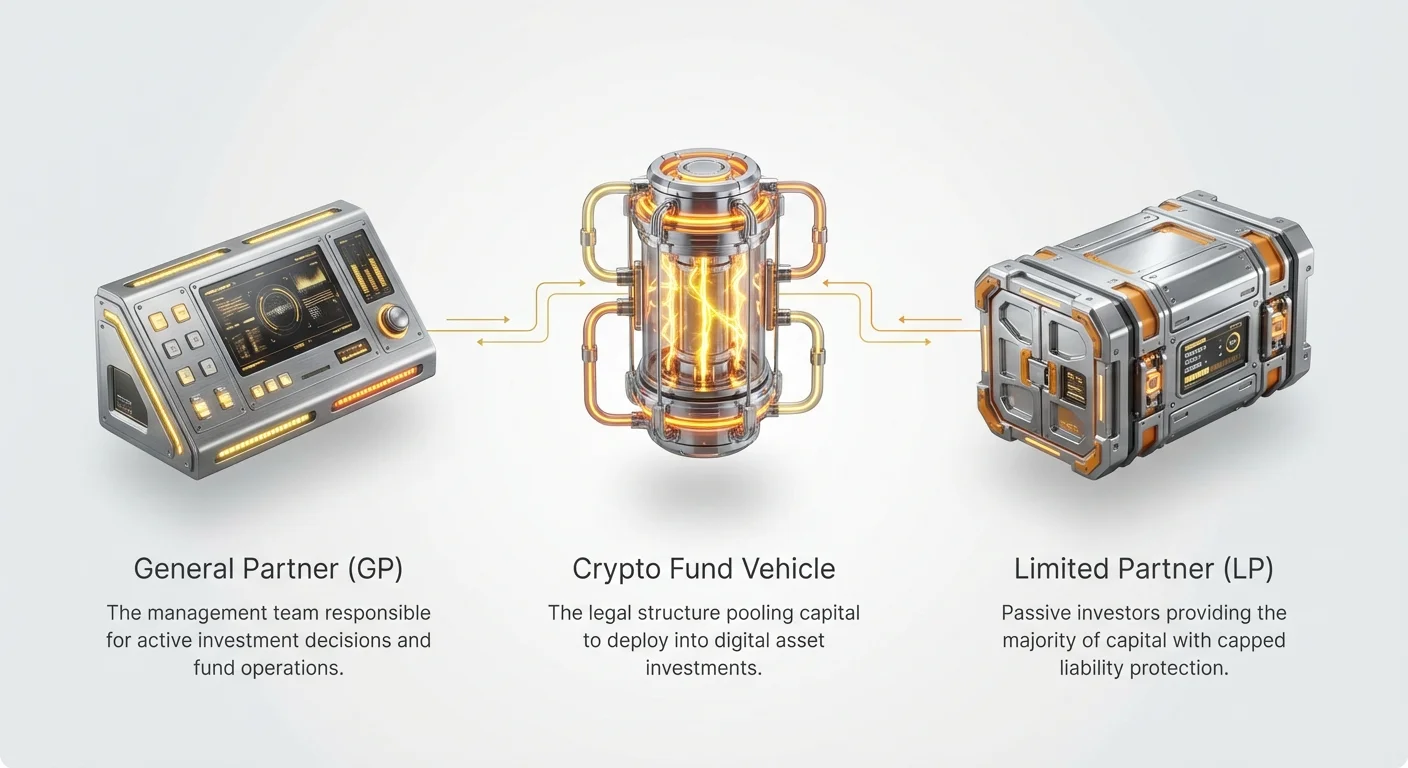
Foundational Concepts: What is a Crypto Venture Fund?
A crypto venture fund is a pooled investment vehicle specifically designed to deploy capital into digital assets, blockchain companies, and Web3 protocols. Unlike a hedge fund, which typically focuses on publicly traded assets and high-frequency trading, a VC fund primarily seeks long-term, illiquid investments in early-stage projects.
These funds act as the financial engine of the decentralized economy, providing the necessary fuel for developers and founders to build the next generation of technology.
The Role of Venture Capital (VC) in Crypto
Venture Capital provides "risk capital" to startups and early-stage companies that traditional banks or lenders would deem too volatile. In the crypto sector, VC funds participate in several unique ways:
- Equity Investment: Buying shares in a company that is building blockchain software or infrastructure (e.g., investing in a crypto exchange startup).
- Token Investment: Purchasing native tokens directly from a protocol before they are launched to the public market (often via a Simple Agreement for Future Tokens, or SAFT). This gives the fund exposure to the network's potential growth.
- Ecosystem Participation: Providing governance or operational support to the projects they invest in, often by participating in decentralized autonomous organizations (DAOs).
The long-term nature of these investments means the fund structure must be robust enough to operate effectively over 7 to 10 years, which is the typical lifespan of a VC fund.
Key Players: The General Partner (GP) and Limited Partner (LP)
The relationship between the GP and LP is the cornerstone of virtually every professional investment fund structure. This relationship defines who manages the money and who is owed the returns.
- The General Partner (GP): The GP is the management team responsible for finding, evaluating, and executing investments. They actively manage the fund’s assets, handle operations, and make strategic decisions. GPs typically commit a small percentage of their own capital to the fund, ensuring their interests are aligned with the LPs. Crucially, the GP assumes unlimited liability for the fund’s debts (though this liability is almost always mitigated by structuring the GP entity as an LLC).
- The Limited Partner (LP): The LP is the passive investor. They provide the vast majority of the capital commitment (usually 99%) and have limited involvement in the fund's day-to-day operations. Their liability is legally capped at the amount of capital they commit, meaning their personal assets are protected even if the fund faces bankruptcy or large losses. LPs are typically institutional investors (pension funds, endowments), large family offices, or high-net-worth individuals.
Defining Fund Terms: Capital Commitment, Drawdowns, and Management Fees
Before a fund begins investing, the GP and LPs agree on the basic economic terms, formalized in a Private Placement Memorandum (PPM) and the Limited Partnership Agreement (LPA).
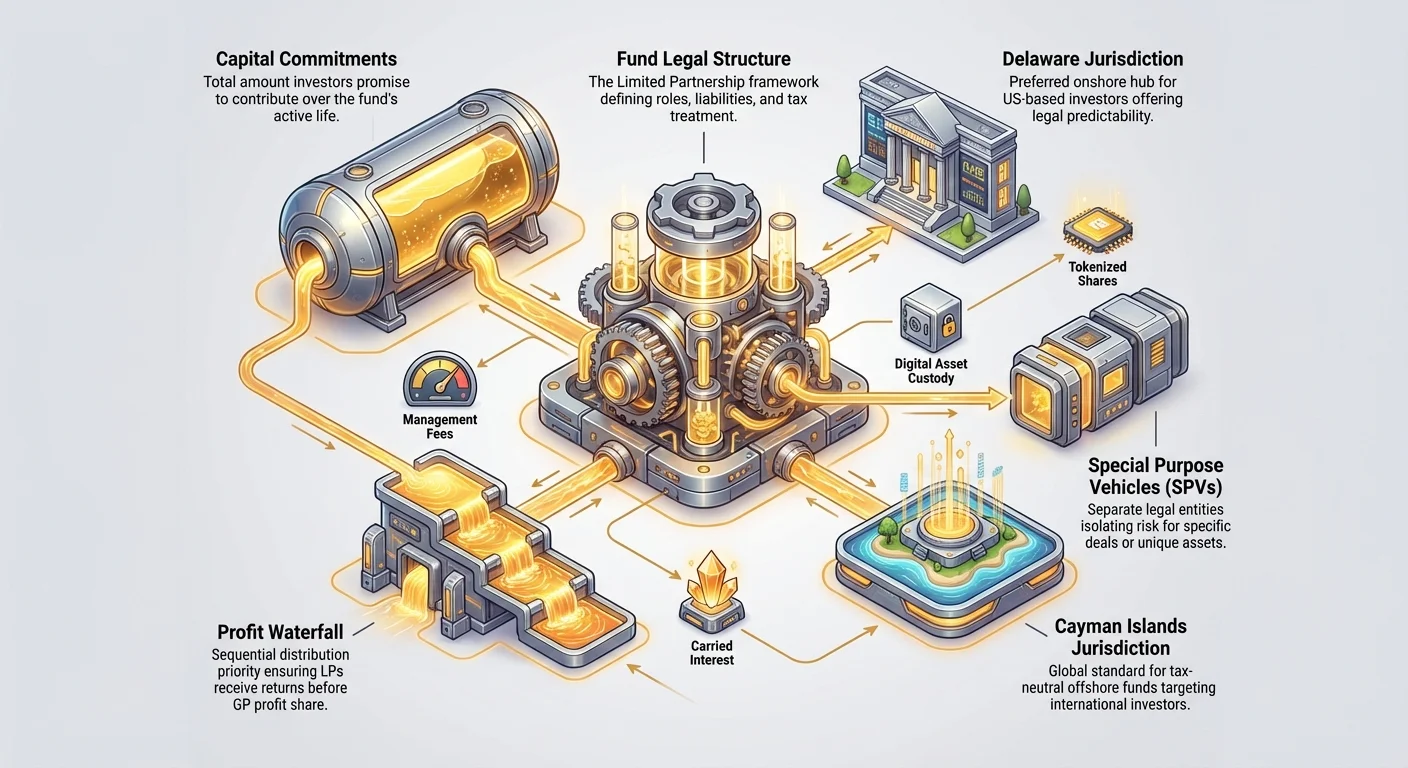
- Capital Commitment: This is the total amount of money the LP promises to invest over the life of the fund. For example, an LP might commit $10 million to a fund.
- Drawdowns (or Capital Calls): Unlike a mutual fund where all money is invested upfront, a VC fund calls for capital as needed. When the GP identifies a new investment opportunity, they issue a "capital call," or "drawdown," and the LP is legally obligated to send the requested funds (e.g., 5% of their $10 million commitment) within a specific timeframe.
- Management Fees: These are annual fees paid by the LPs to the GP to cover operational costs, salaries, research, and administrative expenses. Standard VC funds often charge 2.0% to 2.5% of the committed capital per year.
The Core Structure: GP/LP Model Explained
The Limited Partnership (LP) structure is overwhelmingly favored for venture capital because it offers LPs protection from liability and allows all profits and losses to "pass through" directly to the investors without being taxed at the fund level. This avoids the problem of double taxation.
The GP: The Brains and the Manager
The GP typically structures itself as a Limited Liability Company (LLC) or a corporation. This organizational choice is critical because while the fund itself is a Limited Partnership, the managing entity needs its own legal shield.
The GP performs several operational functions:
- Investment Sourcing: Finding prospective portfolio projects (e.g., researching emerging Layer 1 protocols or Web3 gaming studios).
- Due Diligence: Vetting the technical, legal, and financial viability of the target investment.
- Portfolio Support: Helping portfolio companies grow, which might include offering strategic advice, making key introductions, or even helping with token economic design.
Because the GP takes on this intense operational responsibility, they are entitled to two streams of compensation: the management fees and the profit share.
The LP: The Capital Provider and Passive Investor
LPs are fundamentally focused on return on investment (ROI) and minimizing risk exposure. Their passivity is protected by law. If an LP becomes too active in the management decisions of the fund, they risk losing their limited liability status, potentially exposing them to the fund's debts.
Key considerations for LPs when choosing a fund include:
- Track Record (or "Thesis"): Does the GP have a proven history of selecting successful crypto assets or early-stage companies?
- Liquidity Horizon: How long will the capital be locked up? Crypto VC funds typically have a decade-long lock-up, though some may use vesting schedules or secondary markets to provide earlier liquidity.
- Co-investment Rights: Do LPs get the option to invest additional capital directly into specific portfolio companies alongside the fund?
Economic Alignment: Understanding Carried Interest (Carry)
Carried Interest, or "Carry," is the mechanism used to align the financial interests of the GP with the LPs. It represents the GP’s share of the fund’s profits.
The industry standard for carry is 20%, meaning that after the LPs get their initial committed capital back, the GP takes 20% of the remaining profit, and the LPs receive the remaining 80%.
However, carry only kicks in after the LPs meet a certain threshold return, known as the Hurdle Rate (or Preferred Return).
The Profit Distribution "Waterfall"
The distribution of profits follows a strict order, often called the "waterfall." This process ensures LPs are paid first:
- Return of Capital: All capital called by the GP is first returned to the LPs.
- Preferred Return: LPs receive returns equal to the hurdle rate (typically 6-8% annual compounded return on their invested capital).
- Catch-up: Once the hurdle rate is met, the GP receives 100% of subsequent profits until they "catch up" to their 20% share of all realized profits (including the preferred return profits).
- Split: After the catch-up, all remaining profits are split according to the agreed-upon carry structure (e.g., 80% to LPs, 20% to GP).
In crypto funds, where profits can be volatile, the waterfall structure provides robust protection for the LPs while highly incentivizing the GP to seek massive returns.
Biranje pravnog entiteta: Zašto struktura ima značaja
Biranje ispravne pravne strukture i jurisdikcije je argumenatno najvažnija odluka koju će novi menadžer fonda doneti. Ovaj izbor diktira poresko tretman fonda, regulatorni nadzor i administrativne troškove.
Limitirana partnerstva (LP) i Limited Liability Companies (LLC)
Dok su Limitirana partnerstva (LP) dominantna pravna struktura za sam fond, druge vrste entiteta se koriste za specifične komponente:
| Tip entiteta | Funkcija u strukturi fonda | Ključna prednost |
|---|---|---|
| Limited Partnership (LP) | Glavni investicioni instrument fonda | Pass-through oporezivanje; ograničava odgovornost za pasivne investitore (LP-ove). |
| Limited Liability Company (LLC) | Entitet Generalnog partnera (GP) | Štiti pojedinačne menadžere od neograničene odgovornosti fonda; jednostavnost u američkom oporezivanju. |
| Corporation (C-Corp/S-Corp) | Administrator/Advisor fonda ili držaoc equity-ja | Koristi se kada fond treba da prikupi novac od određenih ne-američkih investitora ili entiteta oslobođenih poreza. |
Preovlađujući izbor za investicioni instrument fonda je LP jer omogućava da poreski teret prođe direktno kroz LP investitore. Ovo znači da fond sam ne plaća korporativni porez na dobit; LP-ovi plaćaju poreze na osnovu svoje lične ili institucionalne poreske jurisdikcije. Ovo izbegava scenario gde se profiti oporezuju jednom na nivou fonda i ponovo kada se dele investitorima.
Kritična uloga Side Letters-a i upravljačkih dokumenata
Operacije fonda reguliše Limited Partnership Agreement (LPA), koji opisuje GP/LP odnos, strukturu naknada, investicioni mandat i waterfall. Međutim, veliki institucionalni LP-ovi često zahtevaju specifične, pregovorene uslove koji se razlikuju od standardnog LPA. Ovi uslovi se formalizuju u Side Letters.
U kriptu, side letters su esencijalni za rešavanje jedinstvenih operativnih zabrinutosti, kao što su:
- Zahtevi za čuvanje: Institucionalni LP može zahtevati da njihov deo imovine fonda bude čuvan od strane specifičnog regulisanog, trećeg kvalifikovanog kustodijana, umesto multisig novčanika kontrolisanog isključivo od strane GP-a.
- Transparentnost: Zahtevi za tromesečnim ažuriranjima koja detaljno opisuju vesting rasporede tokena ili prinose od staking-a izvan standardnih finansijskih izveštaja.
- Regulatorna izloženost: Klauzule koje ograničavaju sposobnost fonda da ulaže u imovine koje se smatraju visokorizičnim ili zabranjenim prema internim pravilima usklađenosti LP-a.
Special Purpose Vehicles (SPV) u kripto investiranju
Special Purpose Vehicle (SPV) je zaseban pravni entitet kreiran za jednu, specifičnu svrhu. U VC-u, SPV-ovi se tipično koriste za držanje investicija u jednoj portfolijskoj kompaniji ili imovini, izolujući tu investiciju od glavnog fonda.
U kripto prostoru, SPV-ovi služe nekoliko kritičnih funkcija:
- Izolacija rizika specifičnog za deal: Ako fond uloži ogromnu sumu u visoko eksperimentalni protokol, mogu koristiti SPV da zaštite glavnu imovinu fonda od bilo kakvog pravnog ili regulatornog rizika povezanog sa tim jednim tokenom ili projektom.
- Upravljanje jedinstvenim imovinama: Kriptovalute predstavljaju imovine koje nisu lako standardizovane. Ako fond stekne veliku kolekciju non-fungible tokena (NFT-ova) ili visoko nelikvidnih imovina koje zahtevaju jedinstvene vesting ili mehanizme prenosa, SPV pruža pravni okvir potreban za upravljanje i konačnu distribuciju tih imovina efikasno.
- Prilagođavanje ko-investitorima: SPV-ovi su vitalni kada fond želi da dozvoli specifičnoj grupi LP-ova ili eksternim investitorima da učestvuju samo u jednom posebno obećavajućem deal-u bez obaveze kapitala za ceo fond.
Primer upotrebe: Veliki kripto fond, Fund I, prikuplja 500 miliona dolara. Jedna od njihovih portfolijskih kompanija, Alpha Labs, sprovodi uspešan lansiranje tokena. Fond želi da dozvoli LP-ovima koji su propustili inicijalnu obavezu da ulože specifično u Alpha Labs public round. GP kreira SPV: Alpha Labs Co-Invest da olakša ovaj deal, održavajući finansije i regulatorno izveštavanje odvojeno od Fund I.
Dubinska analiza jurisdikcija: Kajman vs. Delaware
Izbor jurisdikcije za kripto fond često se svodi na dva dominantna igrača: Delaware u Sjedinjenim Američkim Državama (Onshore) i Kajmanska Ostrva (Offshore). Ova odluka zavisi od poreske efikasnosti, regulatorne predvidivosti i poznavanja investitora.
Onshore čvorište: Delaware (fokus na SAD)
Delaware je preferirana jurisdikcija za fondove sa sedištem u SAD i one koji prvenstveno prikupljaju kapital od američkih oporezivanih investitora (kao porodične kancelarije sa sedištem u SAD).
Prednosti:
- Poznatost i presedan: Delaware zakon je visoko specijalizovan i zreo u pogledu korporativnog i partnerskog prava. Investitori i advokati veruju njegovom pravnom okviru.
- Predvidivost: Pravni proces je predvidiv, a sporovi se efikasno rešavaju u Delaware Court of Chancery, koji se specijalizuje za korporativne stvari.
- Poreska efikasnost (Pass-Through): Delaware LP-ovi nude „pass-through“ poreski status, izbegavajući porez na nivou korporacije, što je idealno za američke investitore.
Nedostaci:
- Regulatorni teret: Fondovi sa sedištem u SAD podležu američkim regulacijama hartija od vrednosti (SEC, CFTC), koje mogu biti složene, posebno kada se bave nejasnim klasifikacijama digitalnih imovina.
- Porezi za strane investitore: Ako Delaware fond ulaže u američke biznise (što mnogi kripto startupovi jesu), ne-američki LP-ovi se suočavaju sa značajnim zadržanim porezima i zamornim IRS podnesima (često povezano sa 'Effectively Connected Income,' ili ECI).
Offshore standard: Kajmanska Ostrva
Kajmanska Ostrva, posebno njena struktura koja koristi Exempted Limited Partnership (ELP), je globalni zlatni standard za fondove koji prikupljaju kapital globalno, posebno od ne-američkih investitora i institucionalnih LP-ova.
Prednosti:
- Poreska neutralnost: Kajman ne nameće korporativne, poreske na dobit, kapitalne dobitke ili zadržane poreze na sam fond. Ova struktura ga čini idealnim za pool-ovanje kapitala od investitora iz različitih poreskih jurisdikcija.
- Regulatorna fleksibilnost: Režim je strukturisan da privuče globalne fondove. Iako i dalje zahteva registraciju, regulatorno okruženje je streamlined i visoko efikasno za investicione instrumente.
- Rešavanje poreskih zabrinutosti SAD: Kajmanska struktura se često može kombinovati sa Delaware GP-om da efektivno odvoji operacije investiranja fonda od poreskih obaveza njegove globalne LP baze.
„Master-Feeder“ struktura: Većina velikih kripto fondova koristi master-feeder setup koji uključuje obe jurisdikcije da zadovolji raznovrsne potrebe investitora:
- Master Fond (Kajman): Ovo je glavni investicioni instrument koji drži sve imovine i izvršava sve trgovine.
- US Feeder Fond (Delaware): Koristi se za američke oporezivane investitore. Pool-uje američki kapital i usmerava ga u Master Fond.
- Offshore Feeder Fond (Kajman): Koristi se za ne-američke investitore i američke investitore oslobođene poreza (kao penzioni fondovi). Takođe usmerava kapital u Master Fond.
Ovaj aranžman osigurava da svi investitori, bez obzira na lokaciju, postignu optimalni poreski tretman za svoje specifično regulatorno okruženje, dok Master Fond koristi pojednostavljeno izvršavanje trgovanja.
Navigacija kroz regulatornu nejasnoću i poresku usklađenost
Kripto fondovi se suočavaju sa jedinstvenim poreskim preprekama jer digitalne imovine generišu oporezive događaje na načine koje tradicionalni equity ne (npr. nagrade od staking-a, airdropovi, prinosi iz DeFi-ja).
Izazov usklađenosti je dvosmeran:
- Jurisdikcionalni rizik: Regulatori širom sveta (SEC u SAD, ESMA u Evropi) još uvek određuju da li su specifične kripto imovine hartije od vrednosti, robe ili valute. Struktura fonda mora biti dovoljno fleksibilna da navigira naglim promenama klasifikacije.
- Poreska složenost: Svaka transakcija—od prodaje tokena za fiat do razmene jednog tokena za drugi (token-to-token swap)—je oporezivi događaj. Fondovi moraju koristiti specijalizovani softver za kripto računovodstvo i poreze koji se integriše sa blockchain podacima da precizno prate osnovicu troškova, realizovane dobitke/gubitke i pravila wash sale-a preko više jurisdikcija.
Najbolja praksa: Uspešni GP-ovi angažuju specijalizovane administratore fondova i eksternu pravnu pomoć od samog početka koji su fluentni u tradicionalnom VC pravu i oporezivanju digitalnih imovina da održe usklađenost.
Operationalizing the Crypto Fund: Portfolio Management and Accounting
Once the fund structure is legally established, the ongoing challenge is managing the unique characteristics of digital assets, which differ significantly from traditional stocks and bonds.
Dealing with Digital Assets: Custody and Security
Unlike holding shares of stock, where the brokerage handles custody, a crypto fund is directly responsible for securing its private keys. Custody is a primary concern for institutional LPs.
Fund managers have three main custody options:
- Self-Custody (Multi-signature Wallets): The fund retains control of the keys, often using a multi-signature arrangement requiring 3 out of 5 key holders (GPs, legal counsel) to approve any transaction. This offers maximum control but demands rigorous internal security protocols.
- Third-Party Custodians: Using regulated, institutional-grade custodians (like Coinbase Custody or Anchorage) that offer high levels of insurance, cold storage, and comprehensive security audits. This is often mandated by institutional LPs.
- Hybrid Solutions: Splitting assets between self-custody (for active, high-frequency trades) and institutional custodians (for long-term, cold-storage assets).
For a fund to demonstrate professionalism, it must adopt a rigorous internal control framework, including detailed key management policies and procedures for handling operational risk like smart contract failure or human error.
Valuation Challenges: Tokens, Equity, and SAFTs
One of the most difficult aspects of running a crypto fund is accurately valuing portfolio assets for quarterly LP reports. Unlike public companies, which have daily market prices, early-stage crypto investments are often illiquid.
- Equity Investments: Valued using standard VC metrics (e.g., comparable company analysis, discounted cash flow).
- Vested Tokens: Tokens received through SAFTs (Simple Agreements for Future Tokens) or other private agreements often have lock-up periods and vesting schedules. These assets must be valued at a discount reflecting their lack of immediate liquidity. Valuation is typically based on the last funding round price, adjusted for public market fluctuations, or highly discounted if the token is not yet liquid.
- Staking and Yield: Income generated from staking or DeFi yield protocols must be tracked as income and requires careful accounting to differentiate between capital appreciation and operational income.
To ensure fairness, funds typically adhere to the International Private Equity and Venture Capital (IPEV) Valuation Guidelines, adapting them for the unique volatility and illiquidity of the crypto market.
Compliance and Tax Reporting
The volume of transactions in a crypto fund (e.g., claiming airdrops, executing token swaps, paying gas fees) creates an exponential administrative burden compared to traditional VC.
Key tax considerations specific to crypto funds include:
- Wash Sale Rules: The US IRS has rules preventing investors from claiming a loss on a security if they buy a substantially identical security shortly after. While cryptocurrency is currently often treated as property, not security, the rules around wash sales are complex and subject to change. Funds must operate conservatively.
- Airdrops and Forks: Receiving airdropped tokens or new coins from a hard fork is generally considered a taxable income event based on the asset’s fair market value at the time of receipt.
- Entity-Level Tax (for non-pass-through structures): If a fund is structured as a corporation, or if a specific investment generates income that is deemed "Effectively Connected Income" (ECI) to a US trade or business, it can trigger corporate-level taxation, severely impacting LP returns.
Fund managers must rely on integrated, automated crypto tax platforms that can synchronize data from on-chain wallets, multiple exchanges, and DeFi protocols to produce accurate tax reports (such as K-1s for US LPs).
The Future of Fund Structuring: Tokenization and Decentralization
As blockchain technology matures, it is fundamentally changing the way funds are organized, managed, and offered to investors. The next evolution of fund structuring centers on increasing liquidity and transparency through tokenization.
Tokenized Fund Shares: Increasing Liquidity for LPs
Tokenization refers to issuing a digital token that legally represents ownership of a traditional asset, in this case, a share or interest in the Limited Partnership.
How it Works:
- The crypto fund (the LP) is established under a traditional legal structure (e.g., Cayman ELP).
- The GP works with a regulated securities token platform to issue tokens (Security Tokens) representing LP interests in the fund.
- These tokens are distributed to LPs and are often subject to regulatory transfer restrictions (e.g., only accredited investors can hold them).
Benefits:
- Liquidity: Traditionally, an LP is locked in for 10 years. Tokenization allows the LP to sell their fund shares to other eligible investors on a regulated secondary market before the fund liquidates, dramatically increasing liquidity.
- Fractionalization: Tokens can represent fractions of a fund share, potentially opening up access to smaller accredited investors who couldn't meet the high minimum commitment of a traditional VC fund.
- Automated Compliance: Smart contracts embedded in the token can automate compliance tasks, such as enforcing lock-up periods, ensuring only whitelisted investors hold the asset, and automating the distribution of carried interest.
Decentralized Autonomous Organizations (DAOs) as Investment Structures
A DAO is an organization governed by code and smart contracts, not traditional hierarchical management. While most professional VC funds still require a centralized legal entity (the GP) to satisfy regulators, some experimental structures are using DAOs as hybrid investment vehicles.
In a hybrid model:
- The Investment Club: A DAO might function as an unincorporated investment club, pooling capital from members (token holders) and voting on investment decisions.
- The Legal Wrapper: A traditional legal entity (LLC or Foundation) is still required to handle regulatory compliance, sign contracts (like SAFTs), and pay taxes.
The DAO handles governance—deciding what to invest in and when—while the centralized legal entity handles execution and compliance. This model offers increased transparency and distributed decision-making power, although regulatory clarity for purely decentralized funds remains elusive.
Regulatory Hurdles for Tokenized Funds
The primary challenge facing the tokenization of fund shares is securities regulation. When a fund issues a token representing an LP interest, that token is legally defined as a security in most jurisdictions.
Key hurdles include:
- Registration: The token issuance and any secondary trading platform must comply with complex securities registration or exemption requirements (like Regulation D and Regulation S in the US).
- KYC/AML: The platform must enforce strict Know Your Customer (KYC) and Anti-Money Laundering (AML) checks on every potential buyer of the tokenized share, both at issuance and upon secondary transfer.
- Enforcement: Because the underlying asset is regulated by traditional financial law (e.g., a partnership interest), the smart contract must be capable of responding to legal enforcement, such as freezing or seizing tokens if mandated by a court order.
Zaključak
Strukturiranje uspešnog kripto fonda zahteva više od identifikacije obećavajućih digitalnih imovina; zahteva spajanje napredne finansijske strategije sa preciznim pravnim inženjeringom. Izbor između Delaware ili Kajman strukture, pažljivo pregovaranje Limited Partnership Agreement-a i kreiranje profit waterfall-a su kritični temelji na kojima se gradi fond od nekoliko miliona ili milijardi dolara.
Za aspirantne Generalne partnere, razumevanje nijansi GP/LP odnosa, efikasna upotreba SPV-ova i integracija specijalizovanih sistema usklađenosti za kripto nisu opciono—oni su preduslovi za privlačenje institucionalnog kapitala. Dok buduća inovacija u tokenizaciji i DAO-ima obećava veću likvidnost i transparentnost, trenutni pejzaž se i dalje snažno oslanja na proverene strukture kao Limitirano partnerstvo. Ovladavanjem ovim temeljima, menadžeri fondova mogu usmeriti svoju energiju na jezgro misije: vožnju inovacija i maksimiziranje prinosa u brzo evoluirajućem ekosistemu digitalnih imovina.