
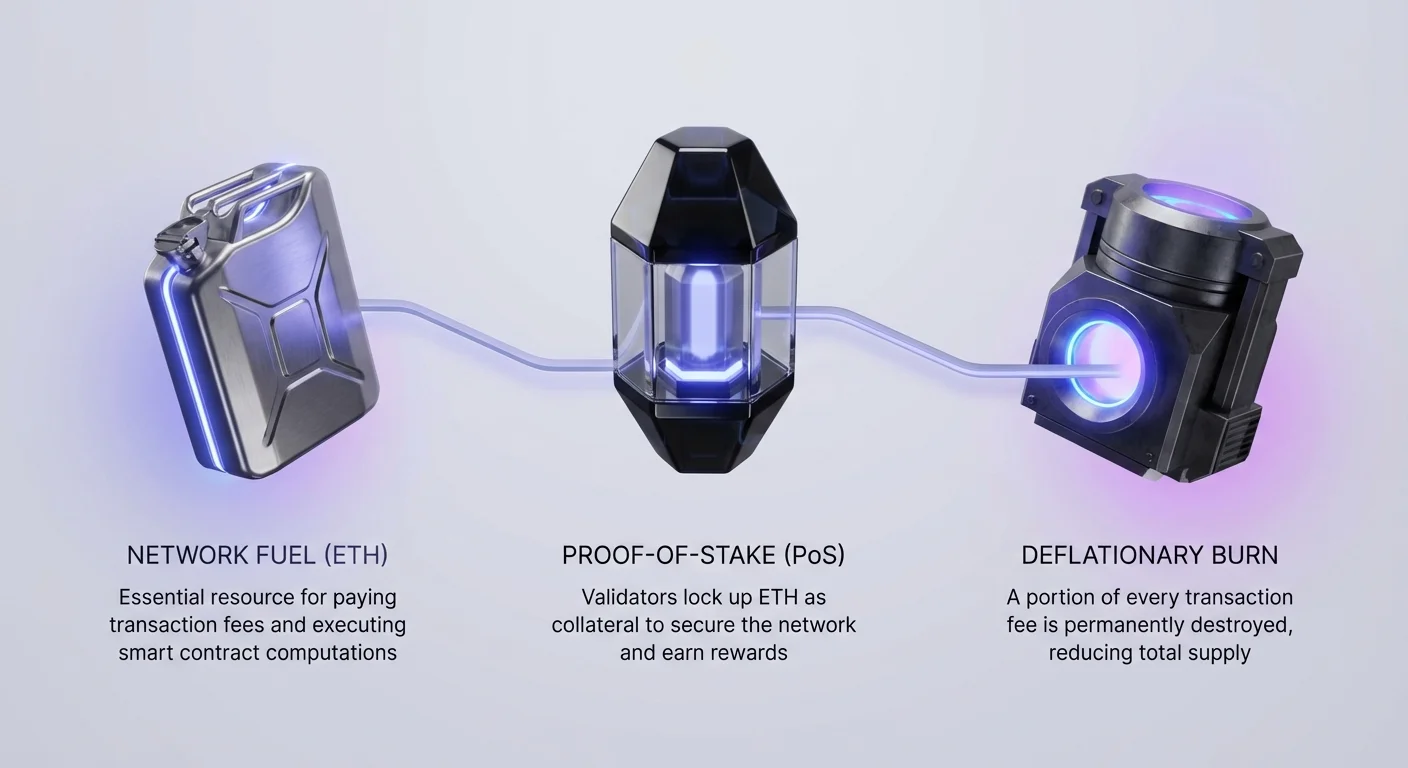
Ethereum tīkls darbojas kā decentralizēts, koplietots globāls dators, kam nepieciešams specifisks kurināmais, lai darbotos. Šis kurināmais ir Ether (ETH). Atšķirībā no tradicionālajām valūtām vai pat Bitcoin, kas galvenokārt kalpo kā vērtības uzglabātājs vai apmaiņas līdzeklis, ETH tā ekosistēmā pilda dubultu lomu. Tas darbojas kā vienaudžu starpā digitāla valūta maksājumiem, vienlaikus kalpojot kā nepieciešamais resurss maksājumu veikšanai par skaitļošanu. Katra tīklā veiksmā darbība, sākot no vienkāršiem pārskaitījumiem līdz sarežģītām viedu līgumu mijiedarbībām, prasa nodevu, kas samaksāta ETH.
Šī izmantojamība vada platformas ekonomisko dzinēju. Kad lietotāji mijiedarbojas ar decentralizētām lietojumprogrammām (dApps) vai finanšu protokoliem, viņi ne tikai sūta vērtību; viņi pērk skaitļošanas telpu. Tas izveido tiešu saikni starp tīkla izmantošanu un aktīva pieprasījumu. Kad lietojumprogrammu ekosistēma aug, iekļaujot decentralizēto finansi (DeFi), spēles un digitālos kolekcionārus, ETH nepieciešamība attiecīgi pieaug.
Šī ekonomiskā modeļa dizains atšķir Ethereum no daudziem citiem blokķēdes tīkliem. Kamēr Bitcoin ir stingra, ierobežota piegādes grafika, kas iegravēta tā kodā no paša sākuma, Ethereum izmanto elastīgāku monetāro politiku. Šo politiku vada kopiena un tā pielāgojas laika gaitā, lai nodrošinātu tīkla drošību un ilgtspēju. Jaunu žetonu izdošana un esošo žetonu izņemšana no apgrozības ir dinamiski procesi. Šie mehānismi ir ievērojami attīstījušies kopš tīkla palaišanas, pārvēršot ETH par aktīvu ar unikālām ekonomiskām īpašībām salīdzinājumā ar konkurentiem.
The Evolution of Monetary Policy
From Genesis to The Merge
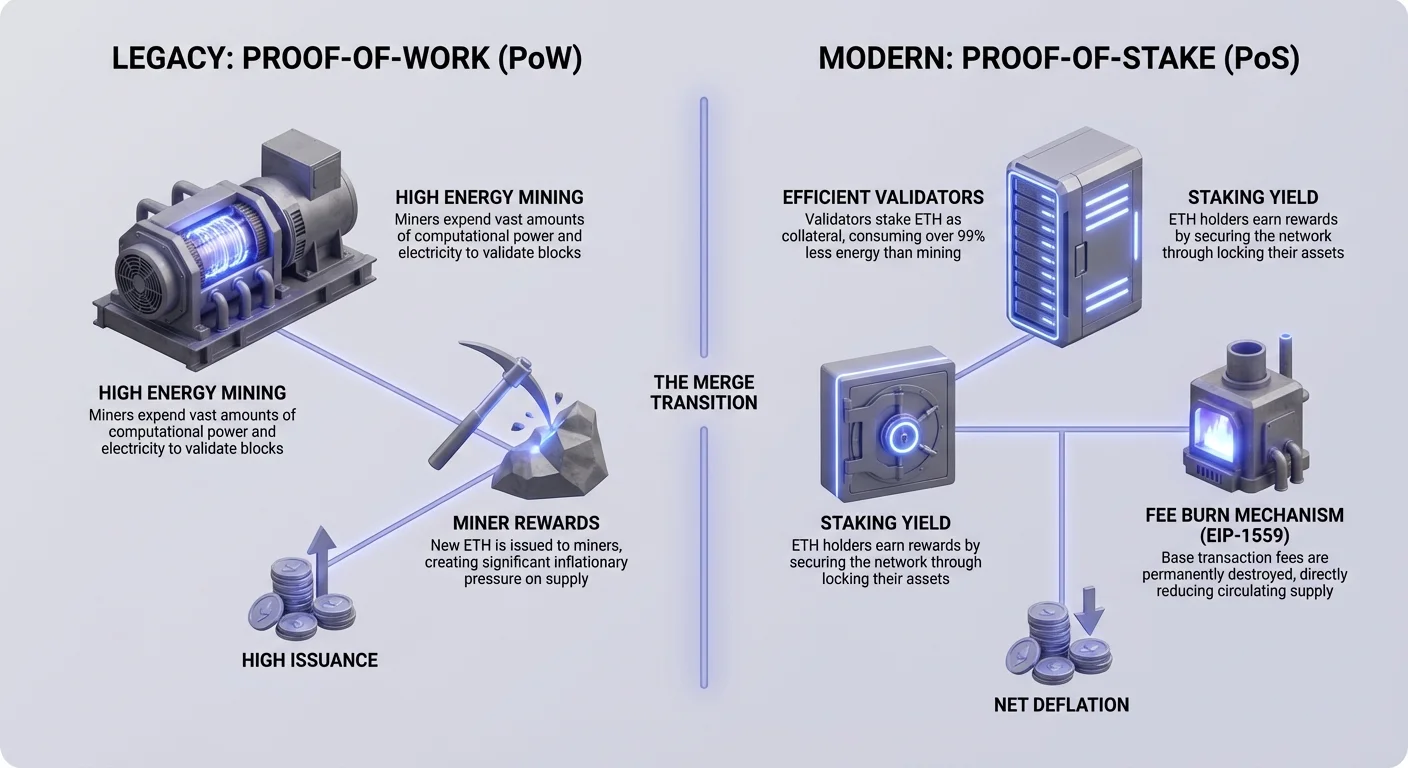
Ethereum's supply schedule was not fixed at its launch in 2015. While Bitcoin established a hard cap of 21 million coins, Ethereum was designed without a predetermined upper limit on the total supply. Instead, the rate at which new ETH is issued is subject to change through decentralized governance processes and upgrades. Initially, the network operated under a Proof-of-Work consensus mechanism similar to Bitcoin. During this early phase, the block reward was set at 5 ETH per block, which added a significant amount of new supply roughly every 15 seconds.
As the network matured, the community implemented upgrades to reduce this inflation rate. The "Byzantium" upgrade in 2017 reduced the block reward to 3 ETH. Later, the "Constantinople" upgrade in 2019 further lowered it to 2 ETH. These reductions demonstrated the network's ability to adapt its issuance based on security needs rather than adhering to a static schedule.
The most significant shift occurred in September 2022 with "The Merge." The network transitioned from Proof-of-Work to Proof-of-Stake, fundamentally altering the issuance model. Under the new system, the massive energy costs associated with mining were eliminated, allowing the network to reduce the issuance of new ETH by approximately 90%. This drastic reduction in the flow of new assets transformed the stock-to-flow ratio of Ethereum, making new supply significantly scarcer than in previous years.
The Deflationary Burn Mechanism
A critical component of Ethereum's modern economic structure is the "burn" mechanism introduced by Ethereum Improvement Proposal 1559 (EIP-1559). Before this upgrade, all transaction fees were paid to miners. EIP-1559 split the transaction fee into two parts: a base fee and a priority fee. The base fee is a mandatory charge required to include a transaction in a block, and crucially, this fee is destroyed (burned) rather than paid to validators.
This mechanism directly links network activity to the total supply of ETH. When the network is congested and demand for block space is high, the base fee increases. Consequently, more ETH is burned. During periods of intense activity, the amount of ETH destroyed can exceed the amount of new ETH created. This results in net deflation, where the total circulating supply of ETH actually decreases over time.
Comparatively, Bitcoin's inflation rate decreases roughly every four years through halving events but never turns negative. Ethereum's model allows for periods of supply contraction. Since the implementation of EIP-1559 in August 2021, millions of ETH have been permanently removed from circulation. This dynamic creates a unique economic pressure where increased utility and adoption directly reduce the available supply of the asset.
Governance and Adaptability
The governance of Ethereum's monetary policy differs significantly from the "code is law" immutability often associated with Bitcoin. While the lack of a hard cap might seem like a drawback to some, it provides the flexibility to ensure long-term network security. The issuance rate is minimal, just enough to incentivize validators to secure the blockchain.
Governance occurs through Ethereum Improvement Proposals (EIPs). These proposals are vetted, discussed, and approved by the community before implementation. This process allows the network to respond to technological advancements or economic necessities. For instance, if security needs change, the community can adjust staking rewards.
This adaptability ensures that the monetary policy serves the health of the network above all else. The shift to Proof-of-Stake and the introduction of fee burning were both results of this governance process. These changes have positioned ETH not just as a currency, but as a productive asset that yields rewards for staking and benefits from the systematic reduction of supply through network usage.
Darījuma maksas dinamika un gāze
Gāzes un skaitļošanas pūļu izpratne
Lai apstrādātu darījumus, Ethereum tīkls izmanto mērīšanas vienību, ko sauc par „gāzi“. Gāze atspoguļo skaitļošanas pūles, kas nepieciešamas, lai izpildītu noteiktu operāciju. Vienkārši pārskaitījumi prasa mazāk gāzes, savukārt sarežģītas viedās līguma mijiedarbības patērē vairāk. Šī sistēma nodrošina efektīvu resursu sadali un novērš spama izplatīšanos tīklā.
Lietotājiem jāapmaksā šī gāze, izmantojot ETH. Kopējā darījuma maksa tiek aprēķināta, reizinot izmantotās gāzes vienības ar gāzes cenas vienības vērtību. Gāzes cena tiek denominēta „gwei“, kas ir ETH daļējā vienība (0,000000001 ETH).
| Komponentes | Definīcija | Funkcija |
|---|---|---|
| Gāzes vienība | Skaitļošanas mērs | Noteic uzdevuma sarežģītību |
| Bāzes maksa | obligātā tīkla maksa | Tiek sadedzināta (izņemta no piedāvājuma) |
| Prioritātes maksa | Padoms validátoram | Motivē ātrāku iekļaušanu |
Šī struktūra izveido tirgu blokblakas vietai. Katram blokam ir limits gāzes daudzumam, ko tas var saturēt (mērķis — 12,5 miljoni vienību). Kad daudzi lietotāji vēlas veikt darījumus vienlaikus, viņiem jāapmaksā augstāka cena par gāzes vienību, lai pārspētu citus. Šī dinamiskā cenas noteikšana nodrošina, ka visurgenti darījumi tiek apstrādāti pirmie, taču tas var izraisīt augstus izdevumus maksimālās slodzes laikā.
Maksas pielāgošana un lietotāju pieredze
Modernās maciņi ļauj lietotājiem pielāgot maksas, ko viņi maksā, ņemot vērā savu steidzamību. Lietotāji parasti var izvēlēties starp opcijām, piemēram, „Eco“, „Ātri“ vai „Ātrākais“. „Eco“ iestatījums nosaka zemāku prioritātes maksu, kas nozīmē, ka darījums var gaidīt atmiņas baseinā, līdz pieprasījums samazināsies. „Ātrākais“ iestatījums maksā lielāku padomu validatoriem, lai nodrošinātu tūlītēju iekļaušanu nākamajā blokā.
EIP-1559 ieviešana uzlaboja šo maksu paredzamību. Iepriekš lietotājiem bija jāmin pareizā cena „pirmās cenas izsolē“, bieži vien pārmaksājot, lai nodrošinātu panākumus. Tagad bāzes maksa tiek algoritmiski noteikta, balstoties uz iepriekšējā bloka izmantošanu. Ja bloks ir pilnāks par 50 %, bāzes maksa palielinās; ja tas ir mazāks par 50 % pilns, tā samazinās.
Šī paredzamība gūst labumu lietotājiem, samazinot iestrigusių darījumu vai pārmērīgu pārmaksu iespējamību. Tomēr kopējās izmaksas joprojām ir pakļautas globālajam pieprasījumam. Kad tīkls tiek intensīvi izmantots NFT kalšanai vai augstas frekvences DeFi tirdzniecībai, bāzes maksa var strauji pieaugt. Šis mērogojamības ierobežojums ir veicinājis alternatīvu risinājumu un konkurentu attīstību.
EVM savietojamība un konkurentu salīdzinājumi
Maksas struktūra un „gāzes“ koncepts, ko ieviesa Ethereum, ir kļuvis par standartu daudziem konkurējošiem tīkliem. Blokķēdes, piemēram, Avalanche, Polygon un BNB Smart Chain, izmanto Ethereum virtuālo mašīnu (EVM). Tas nozīmē, ka tās atbalsta tos pašus viedos līgumus un rīkus kā Ethereum, bieži iekļaujot tādu pašu maksas loģiku.
Taču šie konkurenti bieži optimizē augstākai caurlaidspējai un zemākām maksām. Apstrādājot vairāk darījumu sekundē, tie uztur zemāku konkurenci par blokblakas vietu, kas rezultējas lētākām gāzes cenām. Piemēram, darījums, kas Ethereum galvenajā tīklā var maksāt vairākus dolārus, EVM savietojamā ķēdē, piemēram, Polygon, var maksāt centus.
Neskatoties uz izmaksu atšķirībām, Ethereum paliek izvēles norēķinu slānis augstas vērtības darījumiem, pateicoties tā drošībai un decentralizācijai. Konkurenti bieži upurē šos aspektus, lai sasniegtu ātrumu. Kopīgais EVM standarts ļauj lietotājiem pārvaldīt aktīvus starp šīm dažādajām ķēdēm, izmantojot tos pašus maciņu lietojumprogrammas, izveidojot daudzķēžu ekosistēmu, kur lietotāji var izvēlēties starp Ethereum drošību vai tā konkurentu ātrumu.
Token Standards and Asset Interoperability
The ERC-20 Standard
A major driver of Ethereum's value is its ability to issue other digital assets. The ERC-20 standard defines a common set of rules for fungible tokens. Fungible means each token is identical to another, similar to how one dollar bill equals another. This standardization allowed for the explosion of the token economy, including stablecoins like USDC and USDT.
Before ERC-20, every token might require custom code to be stored or traded. The standard ensures that any ERC-20 token can interact seamlessly with any smart contract, decentralized exchange (DEX), or wallet that supports the Ethereum network. This interoperability is the foundation of the decentralized finance (DeFi) ecosystem.
The ease of deploying these tokens has led to thousands of unique assets living on Ethereum. From governance tokens that grant voting rights to utility tokens for specific applications, they all rely on the underlying network. Importantly, moving or trading any of these ERC-20 tokens requires paying fees in ETH. This ensures that the success of the token ecosystem directly accrues value to the native asset, ETH.
Wrapped Ether (WETH)
An interesting technical nuance exists regarding ETH itself. Because ETH was created before the ERC-20 standard was finalized, the native currency does not inherently follow ERC-20 rules. This creates a compatibility issue when trying to use ETH in decentralized applications designed solely for ERC-20 tokens.
To solve this, developers created Wrapped Ether (WETH). WETH is an ERC-20 token that represents ETH at a 1:1 ratio. Users can deposit ETH into a smart contract, which then mints an equivalent amount of WETH. The process is reversible: users can burn WETH to redeem their original ETH.
WETH acts as a bridge, allowing the native currency to function like any other token in the DeFi ecosystem. It enables ETH to be traded on decentralized exchanges and used in complex financial protocols without requiring custom code for the native asset. This workaround highlights the flexibility of smart contracts to solve infrastructure challenges.
Adoption Across the Ecosystem
The ERC-20 standard has been so successful that it has been adopted by almost all EVM-compatible networks. Chains like BNB Smart Chain and Avalanche use standards that mirror ERC-20, allowing developers to easily port applications between networks. This creates a competitive but interconnected landscape.
While other chains offer lower fees for transferring these tokens, Ethereum retains the largest liquidity and the most robust ecosystem of assets. The dominance of the ERC-20 standard reinforces Ethereum's position as the primary layer for digital asset issuance. Even when tokens are bridged to other networks, their primary value and settlement often remain anchored to Ethereum.
Stablecoins represent a massive portion of this utility. Tokens like USDT exist on Ethereum as ERC-20s, allowing users to hold US dollar value on the blockchain. While USDT also exists on other chains to reduce transfer costs, the immense volume of stablecoins on Ethereum drives significant demand for block space and gas fees.
Staking and Network Security
The Proof-of-Stake Model
The transition to Ethereum 2.0 marked a fundamental shift in how the network is secured. In the previous Proof-of-Work system, security was provided by miners expending energy. In the current Proof-of-Stake (PoS) model, security is provided by validators who lock up (stake) ETH.
Validators propose and validate blocks of transactions. To participate, a user must stake ETH as collateral. If a validator acts maliciously or fails to maintain uptime, a portion of their stake can be penalized or "slashed." This economic disincentive ensures that validators act in the best interest of the network.
Staking fundamentally changes the nature of ETH as an asset. Holders can now earn a yield on their holdings by contributing to network security. This reward comes from two sources: the issuance of new ETH and the priority fees (tips) paid by users. This yield-bearing property makes ETH attractive to investors looking for passive income.
Comparison with Other Consensus Models
Many competitors in the Layer 1 space also utilize Proof-of-Stake or variations of it, such as Delegated Proof-of-Stake (DPoS). In these systems, the core economic loop is similar: stake the native asset to secure the network and earn rewards. However, Ethereum's ecosystem is distinct due to the volume of fees generated.
Because Ethereum processes high-value transactions and hosts a vast DeFi economy, the priority fees paid to validators can be substantial. On networks with negligible fees, staking rewards rely almost entirely on the inflation of the native token supply. Ethereum's ability to generate real yield from user fees reduces the reliance on inflation to pay for security.
Furthermore, the sheer value of ETH staked provides a massive economic wall against attacks. To compromise the network, an attacker would need to acquire a majority of the staked ETH, a feat that becomes increasingly expensive as the value of the asset and the participation rate grow. This high level of economic security appeals to institutional investors and high-value applications.
Mērogošanas risinājumi un nākotnes ekonomika
Layer 2 Rollups
Kad pieprasījums pēc Ethereum pieauga, gas nodevas kļuva aizliegami dārgas vidējiem lietotājiem. Tas noveda pie Layer 2 mērogošanas risinājumu attīstības. Šīs tehnoloģijas, piemēram, rollups, apstrādā darījumus ārpus galvenās Ethereum ķēdes (Layer 1), mantodamas tās drošību.
Layer 2 apvieno simtiem darījumu kopā un iesniedz tikai datu kopsavilkumu galvenajā Ethereum blokķēdē. Tas ievērojami samazina izmaksas par darījumu. Lietotāji var mijiedarboties ar dApps, tirgoties un sūtīt maksājumus Layer 2 tīklos par daļu no galvenā tīkla izmaksām.
Izšķiroši svarīgi, Layer 2 joprojām balstās uz ETH. Tie maksā gas nodevas galvenajam tīklam, lai norēķinātos par savu darījumu partijām. Papildus tam darījumi Layer 2 vidē parasti izmanto ETH savām iekšējām nodevām. Šī struktūra nodrošina, ka pat kad aktivitāte pāriet uz lētākām kārtām, ekonomiskā saikne ar galveno ķēdi paliek neskarta.
Caurlaidspēja un efektivitāte
Ethereum ceļakarte galvenokārt koncentrējas uz šоu mērogošanas risinājumu atbalstu. Nākotnes uzlabojumi mērķē ieviest mehānismus kā "sharding" vai specifiskus datu pieejamības uzlabojumus, lai samazinātu datu uzglabāšanas izmaksas rollups. Tas efektīvi palielinātu visas ekosistēmas darījumu caurlaidspēju.
Konkurenti bieži sasniedz augstu caurlaidspēju, izmantojot lielākus blokus vai centralizētākus validētāju kopumus bāzes slānī. Ethereum pieeja prioritizē bāzes slāņa decentralizācijas un drošības saglabāšanu, vienlaikus pārdodot augstas apjoma aktivitāti uz Layer 2. Šī modulārā pieeja mēģina atrisināt "blockchain trilemma" drošības, decentralizācijas un mērogojamības sasniegšanu vienlaikus.
Kad šie risinājumi nobriest, monetārā politika turpinās tikt ietekmēta no tīkla efektivitātes. Zemākas nodevas Layer 2 var veicināt masveida adopciju, novedot pie lielāka kopējo darījumu apjoma. Pat ja individuālās nodevas ir zemas, kopējais apjoms, kas norēķināts galvenajā ķēdē, veicina dedzināšanas mehānismu, uzturot deflācijas spiedienu uz aktīvu.
Secinājums
Ethereum ir izveidojis sarežģītu un robustu ekonomisko modeli, kas to atšķir no Bitcoin un vispārpieejamiem viedu līgumu konkurentiem. Pārejot uz Proof-of-Stake un īstenojot EIP-1559 nodevu dedzināšanas mehānismu, tīkls ir saistījis savu drošību un aktīva retumu tieši ar pieprasījumu pēc tā izmantojamības. Kad lietotāji mijiedarbojas ar dApps, tirgo NFT vai izmanto DeFi protokolus, viņi patērē tīkla kurināmo, samazinot pieejamo piegādi un izveidojot deflācijas spiedienu.
Ethereum pārvaldības elastība ļauj tai pielāgoties mainīgajām tehnoloģiskajām ainavām, nodrošinot ilgtermiņa ilgtspēju. Kamēr konkurenti var piedāvāt zemākas nodevas caur dažādiem centralizācijas vai caurlaidspējas kompromisiem, Ethereum slāņainā pieeja saglabā bāzes slāņa drošību, vienlaikus ļaujot mērogojamību caur Layer 2 risinājumiem. Šī arhitektūra pozicionē ETH ne tikai kā valūtu, bet kā pamata nodrošinājumu un ienesuma ģenerējošu aktīvu decentralizētajam tīmeklim.
Staking atlīdzību un nodevu dedzināšanas kombinācija pārvērš tīkla izmantošanu vērtībā visiem turētājiem.