
Blockchain tehnoloģijas parādīšanās radīja atšķirību digitālajās inovācijās. Vienā pusē stāv Bitcoin — decentralizētas valūtas pionieris, kas galvenokārt paredzēts kā vērtības uzglabātājs un apmaiņas līdzeklis. Otrā pusē stāv Ethereum — protokols, kas paņēma blokķēdes pamattehnoloģiju un paplašināja to līdz programmējamai ekosistēmai. Kamēr Bitcoin darbojas kā decentralizēts maksājumu izsekošanas reģistrs, Ethereum darbojas kā decentralizēts pasaules dators. Šī atšķirība nav tikai semantiska; tā atspoguļo būtisku arhitektūras, mērķa un iespēju atšķirību.
Lai saprastu, kāpēc Ethereum bieži dēvē par pasaules datoru, jāraugās tālāk par digitālās naudas konceptu. Platforma tika izstrādāta, lai atvieglotu vienaudžu savstarpējos līgumus un lietojumprogrammas, kas darbojas bez kontroles, atļaujas vai trešo pušu iejaukšanās. Atšķirībā no tradicionāla koplietošanas superskaitļotāja, ko varētu izmantot sarežģītu zinātnisku datu apstrādei, piemēram, nakts debess attēla, Ethereum nav paredzēts izejmateriālu ātrumam vai augstas veiktspējas skaitļošanai. Tā vietā tā ir kopīga verificēšanas platforma.
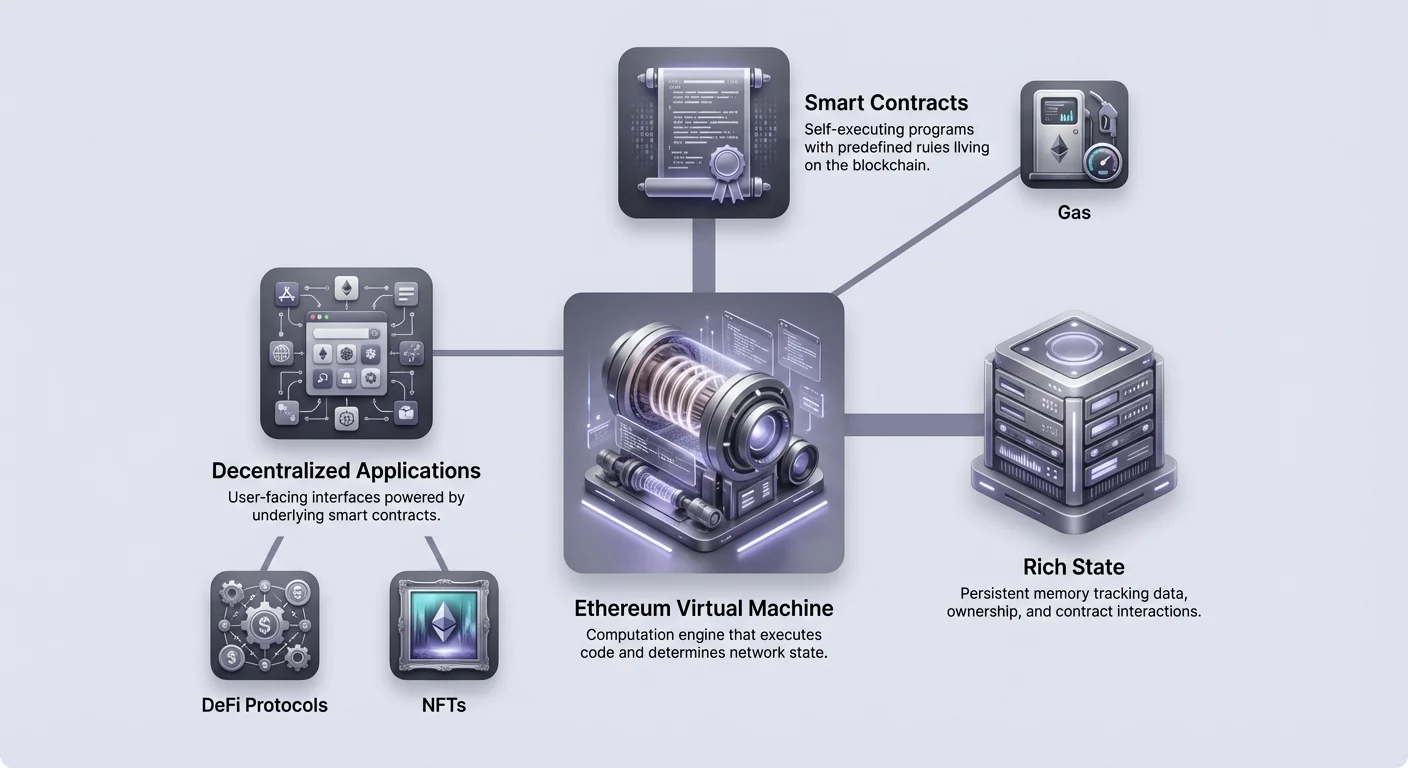
Šī platforma balstās uz globālu mezglu tīklu, lai panāktu konsensu par sistēmas stāvokli. "Stāvoklis" attiecas uz pašreizējo datorā uzglabāto informāciju jebkurā brīdī. Vienkāršai valūtai stāvoklis ir tikai bilances saraksts. Pasaules datoram stāvoklis ietver kodu, lietojumprogrammu datus, īpašumtiesību ierakstus un sarežģītas līgumu mijiedarbības. Lai pārvaldītu šo sarežģītību, Ethereum prasa divas kritiskas sastāvdaļas, kuras Bitcoin neizmanto tādā pašā veidā: robustu stāvokļa konceptu un Ethereum Virtual Machine.
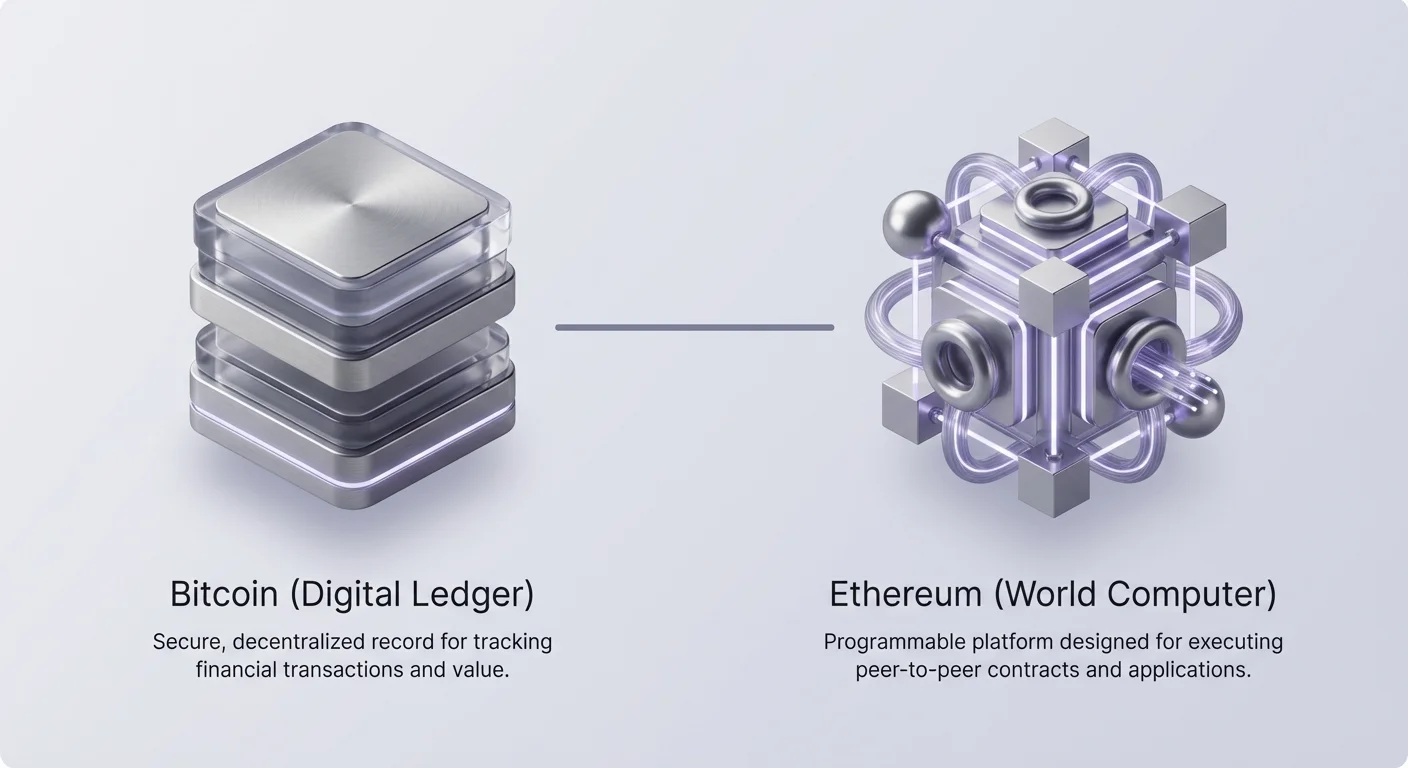
The Functional Divide: Ledger vs. Platform
Bitcoin was launched in 2009 by Satoshi Nakamoto to solve a specific problem: the need for a decentralized, censorship-resistant digital currency. Its architecture is intentionally rigid to maximize security for financial transactions. It uses a script language that is not Turing-complete, meaning it has limited programming capabilities. This design choice prevents infinite loops and complex logic errors, making the network incredibly secure for moving value but limited for building applications.
Ethereum, proposed by Vitalik Buterin in 2013 and launched in 2015, sought to remove these limitations. The goal was to create a Turing-complete blockchain. This is a system capable of running any type of application or algorithm, provided there are enough resources to compute it. While Bitcoin is often compared to digital gold due to its scarcity and store-of-value properties, Ethereum is better likened to a global operating system or a digital oil that powers a vast engine of applications.
The difference in purpose leads to a difference in mechanics. Bitcoin verifies that user A sent money to user B. Ethereum verifies that a piece of code executed correctly according to its pre-defined rules and updated the network's memory accordingly. This capability allows developers to use the blockchain's infrastructure to build their own projects, known as decentralized applications (dApps), which creates a diverse ecosystem beyond simple currency transfers.
Comparing Core Metrics
The technical specifications of these two giants reflect their differing goals. Bitcoin uses a Proof-of-Work consensus mechanism that prioritizes extreme security over throughput, historically handling around 7 transactions per second. Its supply is hard-capped at 21 million coins, reinforcing its deflationary nature.
Ethereum, originally built on Proof-of-Work, transitioned to Proof-of-Stake to improve energy efficiency and scalability. It aims for higher transaction throughput, historically around 30 per second, though this is being improved through upgrades like sharding and Layer-2 solutions. Its supply is not hard-capped, allowing the monetary policy to adapt to the needs of the network security, often resulting in low or negative inflation rates based on network usage.
| Feature | Bitcoin | Ethereum |
|---|---|---|
| Primary Purpose | Digital Money / Store of Value | Decentralized App Platform |
| Internal Logic | Limited Script (Non-Turing) | Turing-Complete (EVM) |
| Consensus Model | Proof-of-Work | Proof-of-Stake |
Stāvokļa nepieciešamība skaitļošanā
Skaitļošanas terminiem "stāvoklis" ir sistēmas atmiņa. Tas ir saglabātā informācija, kas ļauj programmai atcerēties, kas notika pagātnē, un izmantot šo informāciju, lai noteiktu, kas notiks tālāk. Vienkāršs kalkulators ir bezstāvoklīgs; jūs ievadāt aprēķinu, saņemat rezultātu, un kad to notīrāt, atmiņa ir pazudusi. Datora cietais disks vai datubāze ir ar stāvokli; tā atceras jūsu failus, pieteikšanās iestatījumus un lietojumprogrammu vēsturi.
Bitcoin pārvalda stāvokli ļoti specifiskā, vienkāršotā veidā, ko sauc par Unspent Transaction Outputs (UTXO). Tas izseko, kuras monētas vēl nav iztērētas. Kad monēta ir iztērēta, tā tiek patērēta, un tiek izveidoti jauni neiztērēti izvades. Tas būtībā nerūp par "kontiem" vai "lietotāju datiem" tradicionālajā nozīmē. Tas rūp tikai par vērtības pārvietošanos. Tas ir ļoti efektīvi valūtai, bet nepietiekami sarežģītām lietojumprogrammām.
Lai pasaules dators darbotos, tam nepieciešams "bagāts stāvoklis". Tam jāizseko ne tikai bilances, bet arī datu mainīgie, līgumu īpašumtiesības, reputācijas rādītāji un notiekošo vienošanās loģika. Ethereum izmanto kontu balstītu modeli, kas līdzīgs bankas kontam vai e-pasta adresei. Katrai Ethereum adresei ir saistīts stāvoklis. Tas ļauj viedajiem līgumiem uzturēt pastāvīgu uzglabāšanu.
Bez šī pastāvīgā stāvokļa decentralizētās finanses (DeFi) būtu neiespējamas. Aizdevumu protokolam jā"atceras", ka jūs noguldījāt nodrošinājumu pirms trim mēnešiem. Tam jāizseko uzkrājamās procenti bloks pēc bloka. Tam jāzina precīzs likvidācijas slieksnis. Visam tam nepieciešama blokķēde, kas spēj uzturēt un atjaunināt sarežģītu, mainīgu stāvokli laika gaitā, nevis tikai verificēt vienkāršus monētu pārskaitījumus.
The Ethereum Virtual Machine (EVM)
The heart of Ethereum's ability to process this state is the Ethereum Virtual Machine (EVM). The EVM is the engine that drives the entire network. It is a computation engine that acts like a virtual computer running inside every node on the Ethereum network. When a transaction involves a smart contract, the EVM is responsible for executing the code and determining the new state of the network.
Understanding the Sandbox Environment
The EVM operates as a "sandboxed" environment. This is a crucial security feature. It means that the code running inside the EVM is completely isolated from the rest of the network and the host machine's file system. A malicious smart contract cannot access the personal files of the node operator running the software, nor can it easily crash the underlying protocol.
This isolation ensures that while the network is open and permissionless—meaning anyone can upload any code they want—the network remains resilient. Even if a developer deploys a contract with fatal errors or malicious intent, the damage is generally contained within that specific contract's interaction context. The EVM processes the instructions, realizes the error or the valid output, and updates the blockchain state accordingly without compromising the integrity of the consensus rules.
From Solidity to Bytecode
Developers do not write code directly for the EVM. They use high-level programming languages, most notably Solidity, which looks somewhat like JavaScript or C++. However, the EVM cannot understand Solidity directly. The code must be "compiled" into low-level instructions called bytecode.
Bytecode is a series of opcodes (operation codes) that the machine can interpret efficiently. When a smart contract is deployed to the Ethereum network, this bytecode is what actually gets stored on the blockchain. When a user interacts with a dApp, they are essentially sending a message to the EVM telling it to locate specific bytecode at a specific address and execute a specific function within it.
This process is deterministic. This means that if everyone runs the same code with the same inputs, they will get the exact same result. This is vital for a decentralized network. Every node around the world must agree on the outcome of the computation. If the EVM behaved differently on different computers, the consensus would break, and the single "world state" would fracture into different versions of reality.
The Role of Gas in Computation
Because the EVM is Turing-complete, it allows for loops and complex recursive logic. In computer science, this introduces a risk known as the "halting problem," where a program might run forever, consuming infinite resources. To prevent someone from accidentally or maliciously clogging the world computer with an infinite loop, Ethereum introduced the concept of "Gas."
Gas is the unit of measurement for the computational work required to execute operations in the EVM. Every instruction in the bytecode—adding numbers, storing data, sending tokens—costs a specific amount of gas. Users must pay for this gas using Ether (ETH).
If a computation takes too long or is too complex, the transaction runs out of the gas provided by the user, and the EVM halts the operation. The changes are reverted, but the fee is still paid to the validators for their work. This economic mechanism ensures that the network cannot be spammed with infinite loops and that resources are allocated efficiently to those willing to pay for them.
Viedie līgumi: Nākotnes programmatūra
Kods, ko izpilda EVM, ir iepakots "viedos līgumos". Viedais līgums ir datorprogramma, kas dzīvo blokķēdē. Tajā ietilpst gan kods (funkcijas), gan dati (stāvoklis), kas specifiski tai lietojumprogrammai. Kad tas ir izvietots, viedais līgums ir nemainīgs; tā loģiku nevar mainīt (ja vien nav kodēta specifiska uzlabošanas iespēja no sākuma), un tas darbojas autonomi.
Šie līgumi ļauj "bezuzticības" mijiedarbības. Tradicionālajā biznesā, ja vēlaties izveidot uzticības fondu, kas atbrīvo naudu jūsu bērnam, sasniedzot 18 gadu vecumu, jums vajag juristu un banku. Jums jāuzticas viņiem, ka viņi ievēros noteikumus un nenodzīvos līdzekļus. Ar viedu līgumu jūs uzticaties kodam. Jūs varat pats verificēt loģiku. Ja nosacījums (18 gadu vecums) ir izpildīts, darbība (līdzekļu atbrīvošana) notiek automātiski.
Viedie līgumi ir decentralizēto lietojumprogrammu būvbloki. Tie var apstrādāt vienkāršu loģiku, piemēram, 1 ETH nosūtīšanu draugam, vai sarežģītu loģiku, piemēram, decentralizētas biržas pārvaldību, kur tūkstošiem lietotāju vienlaicīgi tirgo aktīvus. EVM nodrošina, ka šie līgumi izpildās tieši tā, kā rakstīts, nodrošinot caurspīdīgumu un drošību, ko tradicionālie centralizētie serveri nevar sasniegt.
Decentralizētas lietojumprogrammas (dApps)
Kad apvienojat viedos līgumus ar lietotāja saskarni (frontend), jūs iegūstat decentralizētu lietojumprogrammu jeb dApp. Galamlietotājam dApp var izskatīties kā standarta tīmekļa vietne vai mobilā lietotne. Tomēr aizmugursistēma ir būtiski atšķirīga. Tā vietā, lai savienotos ar centralizētu datubāzi, ko kontrolē uzņēmums kā Google vai Amazon, lietotne savienojas ar Ethereum blokķēdi.
dApps ir bez atļaujas. Jebkurš var tās izmantot bez piekļuves pieprasīšanas. Tās ir arī cenzūras izturīgas. Tā kā loģika dzīvo decentralizētā tūkstošiem mezglu tīklā, neviena vienīga entītija, valdība vai korporācija nevar izslēgt lietojumprogrammu vai dzēst datus.
dApp arhitektūra parasti ietver trīs galvenās sastāvdaļas. Pirmkārt, viedie līgumi, kas definē biznesa loģiku. Otrkārt, blokķēde, kas uzglabā stāvokli un vēsturi. Treškārt, tokeni, kas darbojas kā kurinātājs (gāze) vai valūta lietojumprogrammā. Šī struktūra nodod kontroli lietotājam. Web 2.0 lietojumprogrammā platforma pieder jūsu datiem. Web 3.0 dApp jūs piederat saviem datiem un aktīviem, mijiedarbojoties ar lietojumprogrammu caur savu privāto maku.
Use Cases Enabled by the EVM
The combination of a Turing-complete virtual machine and a rich state has given rise to sectors of the crypto economy that simply could not exist on Bitcoin's simpler architecture.
Decentralized Finance (DeFi)
DeFi is the most prominent example of Ethereum's utility. It aims to recreate the traditional financial system—banks, exchanges, lending desks, insurance—without intermediaries. Protocols like Aave or Uniswap are essentially sets of smart contracts.
In a DeFi lending protocol, the "bank" is a pool of funds locked in a smart contract. The "bank manager" is the EVM code that calculates interest rates based on supply and demand. The state capability of Ethereum tracks how much collateral a user has provided and automatically liquidates their position if the value drops too low. This happens transparently and mathematically, removing human bias and counterparty risk.
Non-Fungible Tokens (NFTs)
NFTs rely entirely on the ability to store unique state data. An ERC-721 token (the standard for NFTs) is a smart contract that tracks ownership of unique identifiers. When you buy a piece of digital art or a virtual real estate plot, the EVM updates the state of that contract to associate that specific item with your wallet address.
This technology extends beyond art into gaming and identity. In blockchain-based games, the sword or character you earn is an NFT. Because it lives on the public Ethereum state, you truly own it. You can sell it on a third-party marketplace, or potentially move it to a different game. This interoperability is only possible because of the shared, standardized environment of the EVM.
Decentralized Autonomous Organizations (DAOs)
DAOs represent a new way of organizing human coordination. They are organizations governed by code rather than corporate hierarchies. The rules of the organization are written into smart contracts. Members typically hold governance tokens that grant them voting rights.
When a decision needs to be made—such as how to spend the treasury funds—members vote on-chain. The EVM tallies the votes based on the token holdings recorded in the state. If the proposal passes, the smart contract can automatically execute the transaction, moving the funds to the designated project. This creates a transparent, democratic structure that enforces decisions without the need for a CEO or board of directors to manually authorize payments.
Mērogojamība un tīkla evolūcija
Šo lietojumprogrammu milzīgā popularitāte izcēla EVM apstrādes jaudas ierobežojumus. Tā kā katram mezglam jāapstrādā katrs darījums, lai uzturētu sinhronizētu stāvokli, tīkls var kļūt pārpildīts. Tas noved pie augstām gāzes maksām, jo lietotāji cēla cenu, lai savus darījumus apstrādātu pirmie.
Lai to atrisinātu, Ethereum kopiena ir veikusi agresīvas modernizācijas. Pāreja uz Proof-of-Stake (Ethereum 2.0) bija pamata solis, samazinot enerģijas patēriņu par vairāk nekā 99 % un sagatavojot augsni nākotnes mērogošanas uzlabojumiem, piemēram, sharding. Sharding mērķis ir sadalīt datubāzi horizontāli, izplatot slodzi, lai ne katram mezglam jāapstrādā katrs datu gabals.
Turklāt ir parādījušies Layer-2 mērogošanas risinājumi. Tehnoloģijas kā Optimistic Rollups (ko izmanto Arbitrum un Optimism) un Zero-Knowledge Rollups ļauj darījumus apstrādāt ārpus galvenās ķēdes. Šie slāņi veic smago skaitļošanu un pēc tam publicē saspiestu datu kopsavilkumu atpakaļ galvenajā Ethereum tīklā. Tas izmanto Ethereum galvenās tīkla drošību, vienlaikus piedāvājot daudz ātrākus un lētākus darījumus lietotājiem.
EVM saderība un standartizācija
Ethereum dizaina ietekme pārsniedz pašu tīklu. Ethereum Virtual Machine ir kļuvis par nozares standartu viedu līgumu izpildei. Robustu izstrādātāju rīku, dokumentācijas un lietotāju bāzes dēļ, kas saistīta ar Ethereum, daudzas citas blokķēdes ir izvēlējušās būt "EVM saderīgas".
Blokķēdes kā BNB Smart Chain (BSC), Avalanche un Polygon izmanto EVM arhitektūru. Tas nozīmē, ka izstrādātāji, kas raksta kodu Ethereum, var izvietot tieši tās pašas lietojumprogrammas uz šiem citiem tīkliem ar minimālām izmaiņām. Tas arī nozīmē, ka lietotāji var izmantot tos pašus maciņus, piemēram, Bitcoin.com Wallet vai MetaMask, lai mijiedarbotos ar šīm dažādajām ķēdēm.
Šī standartizācija ir radījusi masveida tīkla efektu. Uzlabojumi EVM gūst labumu ne tikai Ethereum, bet visai savstarpēji saistītu blokķēžu ekosistēmai. Tas ļauj daudzķēžu nākotni, kur dažādi tīkli sacenšas ātrumā, izmaksās vai drošībā, vienlaikus runājot tajā pašā fundamentālajā koda valodā.
Izcelsme un tokenu izplatība
Ceļš uz šo decentralizēto ekosistēmu sākās ar pūļa pārdošanu 2014. gadā. Atšķirībā no Bitcoin, kas tika izrakts pastāvēšanā agrīno pieņemēju, sākot no nulles, Ethereum tika palaists ar iepriekšēju pārdošanu attīstības finansēšanai. Dalībnieki sūtīja Bitcoin, lai saņemtu Ether. Šī sākotnējā izplatība rezultēja 60 miljonos ETH, kas piešķirti ieguldītājiem, un vēl 12 miljonos Ethereum Foundation un agrīnajiem ieguldītājiem.
Šī izplatības modelis ir bijis diskusiju objekts decentralizācijas ziņā. Agrīnajās dienās piedāvājums bija ļoti koncentrēts. Tomēr laika gaitā izplatība ir paplašinājusies, jo agrīnie pircēji pārdeva jaunpienācējiem un jauns piedāvājums tika izdots caur ieguvi (un tagad staking).
"Uzticamas neitrālības" koncepts paliek centrāls Ethereum etosam. Neskatoties uz sākotnējo koncentrāciju, tīkls ir attīstījies daudzveidīgā ekosistēmā, kur neviena vienīga entītija nekontrolē protokolu. Pāreja uz decentralizētas pārvaldības kultūru nodrošina, ka "operētājsistēma" attīstās, lai atbilstu lietotāju vajadzībām, nevis centralizēta korporācijas peļņai.
Secinājums
Atšķirība starp Bitcoin un Ethereum pārstāv blokķēdes tehnoloģijas evolūciju no specifiska finanšu rīka līdz vispārējas nozīmes lietderībai. Bitcoin pilnveidoja digitālo reģistru, izveidojot drošu, nemainīgu vērtības pārskaitījumu ierakstu. Ethereum paņēma šo pamatu un pievienoja kritiskos stāvokļa un skaitļošanas slāņus. Ar Ethereum Virtual Machine ieviešanu tā nodrošināja standartizētu dzinēju sarežģītas loģikas izpildei.
Uzturot bagātu, pastāvīgu stāvokli, Ethereum ļāva šai loģikai atcerēties pagātni un vadīt nākotni. Šī kombinācija pārvērta blokķēdi no pasīvā ierakstu uzturētāja aktīvā, programmējamā dalībniekā digitālajā ekonomikā. Tā ļāva izveidot pilnīgi jaunas aktīvu klases, finanšu sistēmas un organizācijas struktūras, kas darbojas autonomi.
Kamēr tīkls turpina mērogoties un attīstīties, EVM loma kā standarts decentralizētai skaitļošanai šķiet arvien drošāka. Vai nu caur galveno tīklu, vai caur neskaitāmajiem saderīgajiem slāņiem un ķēdēm, "pasaules dators" nodrošina infrastruktūru jaunai interneta iterācijai, kur lietotāji pieder saviem datiem un kods izpildās uzticami bez uzticamu starpnieku vajadzības.
Pasaules dators ļauj aizstāt uzticību institūcijām ar koda verificēšanu.