
Dezentrālās finanšu ekosistēma piedāvā sarežģītus finanšu instrumentus, kas lietotājiem nodrošina nepārspīrotu kontroli pār saviem aktīviem. Atšķirībā no tradicionālajām banku sistēmām, kur riski bieži ir necaurspīdīgi un tiek pārvaldīti centralizēti, DeFi riska pārvaldības atbildību tieši uzliek uz lietotāja pleciem. Šī maiņa prasa dziļu izpratni par mehānismiem, kas nosaka protokola maksātspēju un aktīvu drošību.
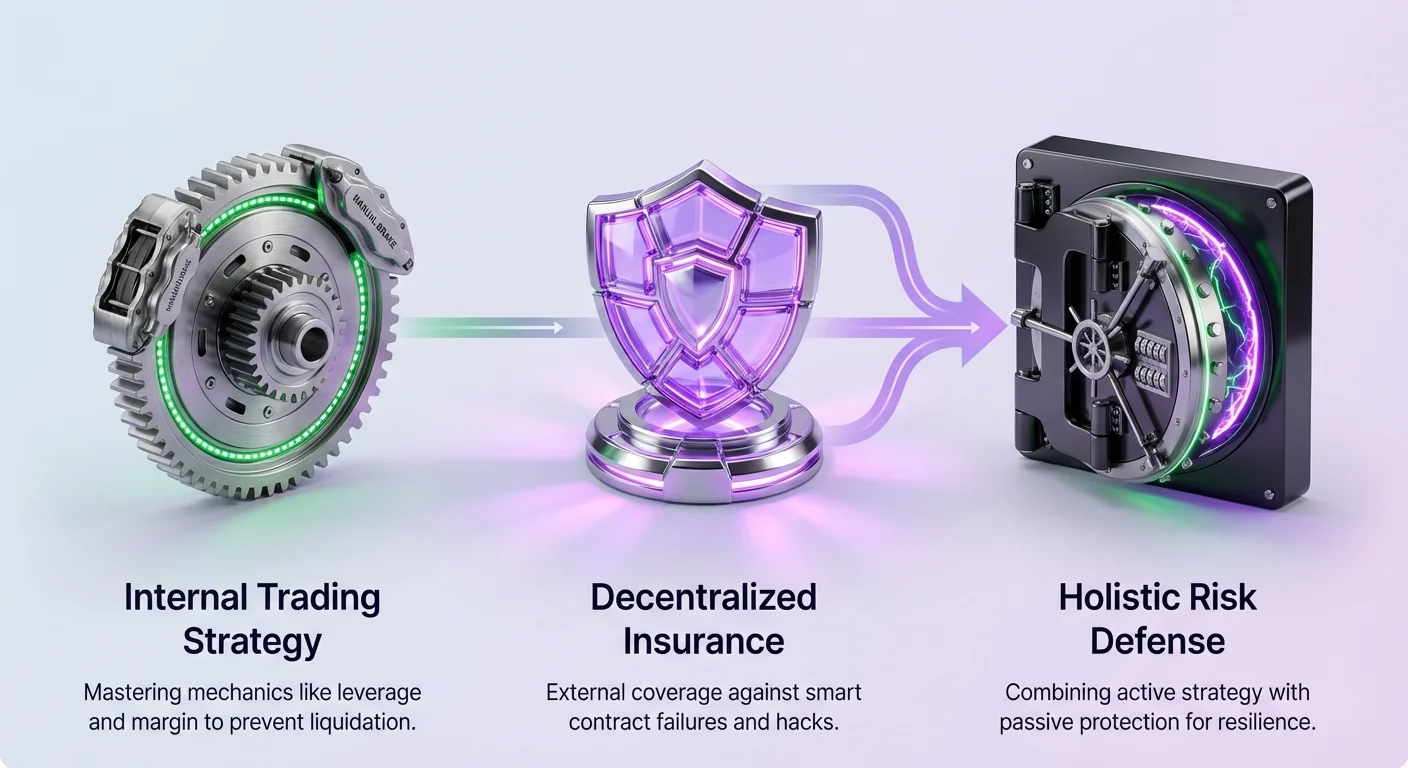
Šīs jomas dalībniekiem jāorientējas divās atšķirīgās riska mazināšanas kategorijās. Pirmā ietver izpratni par tirdzniecības protokolu iekšējiem mehānismiem, īpaši par to, kā darbojas sviras efekts, marža un likvidācijas dzinēji. Šie ir bez apdrošināšanas mazināšanas veidi, kur zināšanas un stratēģija novērš zaudējumus. Otrā ietver ārēju drošības tīklu izmantošanu, piemēram, dezentrālo apdrošināšanu, lai aizsargātu pret sistēmiskām kļavām, kuras nevar mazināt tikai ar tirdzniecības uzvedību.
Apgūstot gan derivātu tirdzniecības tehniskos parametrus, gan uz blokķēdes apdrošināšanas aizsargslāņus, lietotāji var izveidot spēcīgu aizsardzību pret tirgus svārstībām un viedu līgumu ievainojamībām. Šī visaptverošā pieeja nodrošina, ka iesaiste progresīvos finanšu instrumentos paliek ilgtspējīga un droša.
The Mechanics of Decentralized Derivatives
Derivatives in decentralized finance represent a fundamental shift in how value is exchanged and speculated upon. Unlike spot trading, where a user purchases and holds an asset directly, derivatives allow for the trading of financial contracts that derive their value from an underlying cryptocurrency. This distinction is critical for understanding the enhanced utility these instruments provide.
When buying an asset in the spot market, the investor expresses an implicit view that the asset's value will rise. However, this limits the strategies available to the user. Derivatives expand this capability by enabling participants to profit from both upward and downward market movements. They serve as flexible tools for expressing market sentiment regardless of direction.
The primary vehicle for this activity in DeFi is the perpetual futures contract. These contracts mimic the price action of the underlying asset but do not have an expiration date. This allows traders to hold positions for as long as they can maintain the necessary collateral requirements.
Directional Trading Strategies
In the context of perpetual derivatives, trading consists of taking either a long or a short position. These terms define the user's relationship to the market's future price action. Understanding the mechanics of these positions is the first step in non-insurance risk mitigation, as selecting the wrong direction without protection can lead to rapid capital erosion.
Going long signifies a belief that the underlying asset will appreciate in value. To execute this, a trader buys a perpetual contract. For example, if a user believes Bitcoin will rise from its current price, they purchase a BTC perpetual contract. If the price rises, the value of the contract increases, generating a profit that can be realized upon closing the position.
Conversely, going short allows a trader to express a bearish sentiment. This involves selling a perpetual contract with the expectation that the asset's value will decline. If the price of Ethereum falls, the short seller profits from the difference. This capability is essential for hedging portfolios against market downturns, a strategy unavailable in simple spot trading.
The Role of Leverage
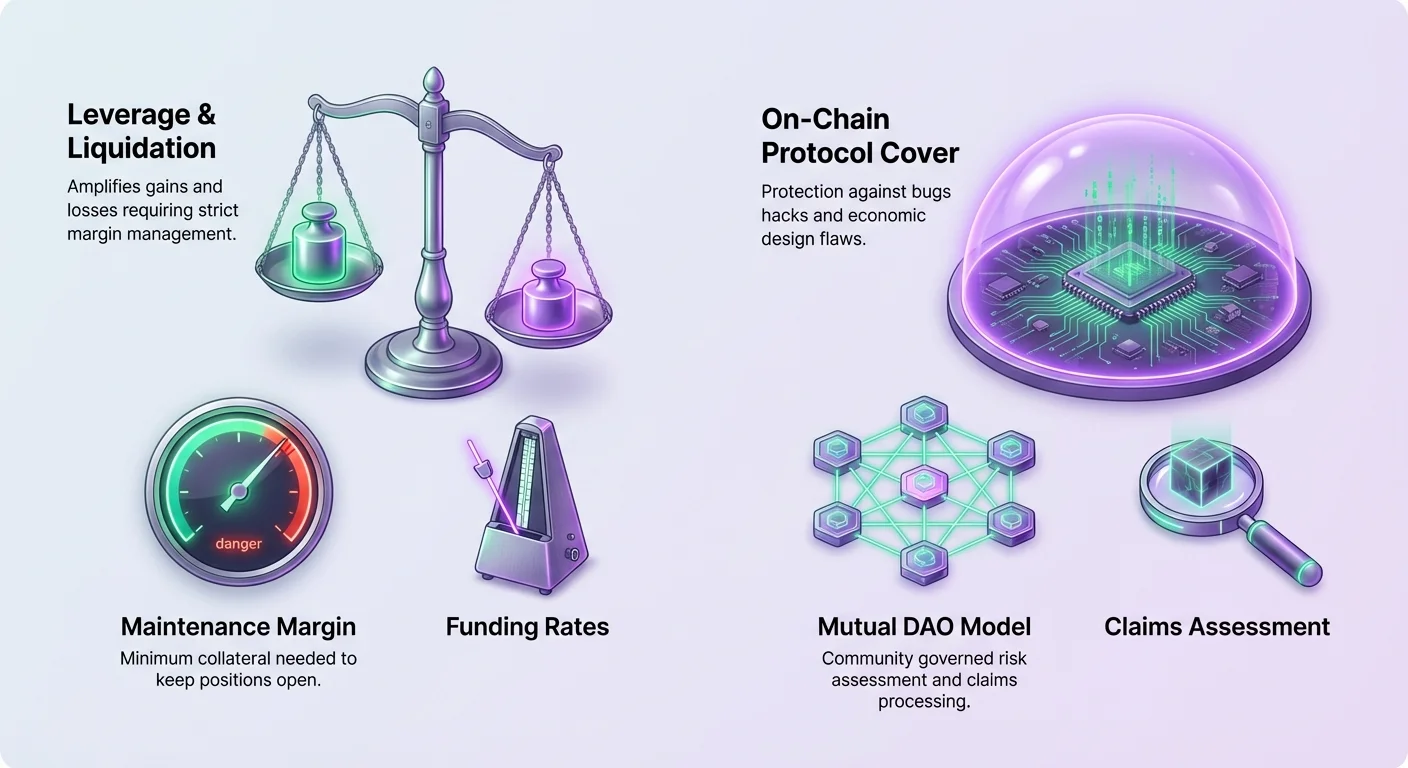
Leverage is a powerful feature inherent to derivatives that amplifies both potential returns and potential risks. It allows a trader to control a position size that exceeds their deposited collateral. For instance, a deposit of 100 USDC combined with 3x leverage enables the purchase of 300 USDC worth of contracts.
While leverage increases purchasing power, it also serves as a primary source of liquidation risk. As the leverage multiplier increases, the price movement required to wipe out the initial collateral decreases. A position with 20x leverage is far more sensitive to volatility than a position with 1x leverage.
New users are strongly encouraged to utilize lower leverage settings, typically 1x or less, to mitigate the risk of total loss. The maximum leverage available varies by market and asset volatility. For example, major assets like BTC might offer up to 20x leverage, while more volatile assets like AVAX might be capped at 10x.
Liquidation Risk and Automated Protection
The concept of liquidation is central to the health of any derivatives protocol. It is the automated mechanism used to ensure that a trader can always cover their losses. In decentralized systems, there is no central broker to issue a margin call via telephone; instead, smart contracts automatically close positions when collateral falls below a critical threshold.
Liquidation occurs when the value of the collateral is no longer sufficient to support the open position. This process protects the solvency of the entire protocol and the counterparties involved in the trade. When a position is liquidated, the protocol seizes the collateral and often charges a liquidation fee, resulting in a significant financial loss for the trader.
Understanding the mathematics of liquidation is the most effective form of non-insurance mitigation. By calculating the exact price at which a position will be closed, traders can adjust their strategies and collateral management to avoid this automated enforcement.
Initial versus Maintenance Margin
To effectively manage liquidation risk, one must distinguish between initial margin and maintenance margin. These two factors dictate the lifecycle of a trade and serve as the primary "health factors" for any open position.
Initial margin refers to the amount of collateral required to open a new position or increase the size of an existing one. It acts as the barrier to entry, ensuring the trader has "skin in the game" before entering the market.
Maintenance margin is the minimum amount of collateral that must remain in the account to keep the position open. This threshold is lower than the initial margin. If the value of the collateral drops below the maintenance margin due to adverse price movements, the liquidation engine triggers.
Calculating Liquidation Scenarios
The relationship between leverage and liquidation price is inverse and non-linear. Higher leverage brings the liquidation price closer to the entry price, leaving little room for market noise. Consider a scenario where a trader enters a long position on Bitcoin at a price of $20,000 with $100 of collateral.
At 1x leverage, the trader effectively buys $100 worth of Bitcoin. The liquidation price would be drastically low, around $600, making it extremely unlikely that the position would be liquidated under normal market conditions. This demonstrates how low leverage acts as a protective buffer.
However, increasing leverage to 10x changes the math significantly. With the same $100 collateral, the trader controls $1,000 worth of Bitcoin. In this scenario, the liquidation price rises to $18,600. A mere 7% drop in the asset's price would trigger a total loss of collateral.
| Leverage | Position Size (USD) | Liquidation Price (Approx) | Risk Level |
|---|---|---|---|
| 1x | 100 | $600 | Ultra Low |
| 2x | 200 | $10,600 | Low |
| 5x | 500 | $16,600 | Moderate |
| 10x | 1000 | $18,600 | High |
Short Position Risks
Shorting introduces a different risk profile. When going long, the maximum loss is capped at the value of the collateral, as the asset price cannot fall below zero. However, when shorting, the potential loss is theoretically infinite because an asset's price can rise indefinitely.
Using the same example of $100 collateral and a Bitcoin entry price of $20,000, a 1x short position would have a liquidation price of $39,400. If the price doubles, the collateral is exhausted.
At higher leverage, the window for error tightens rapidly. A 10x short position would face liquidation at $21,400. This means a price increase of just over 7% would result in the automated closure of the trade. This asymmetry necessitates vigilant monitoring of short positions.
Finansēšanas likmes un tirgus līdzsvars
Papildus likvidācijai tirgotājiem jācīnās ar finansēšanas likmēm, mehānismu, kas paredzēts, lai piesaistītu mūžīgā līguma cenu pamata aktīva spot cenai. Finansēšanas likmes darbojas kā periodiskas maksājumi, ko apmaina starp garo un īso tirgotāju.
Šis mehānisms nodrošina, ka derivātu tirgus neatkāpjies pārāk tālu no aktīva reālās tirgus vērtības. Tas darbojas kā automatizēta līdzsvarošanas spēks, motivējot tirgotājus ieņemt pretēju pusi izkropļotam tirgum.
Noskaņojums un maksājuma virziens
Finansēšanas maksājuma virziens ir atkarīgs no attiecībām starp mūžīgās cenas un pamata spot cenu. Kad mūžīgais līgums tirgojas augstāk par pamata aktīvu, tirgus noskaņojums tiek uzskatīts par lāču. Šajā stāvoklī ir vairāk garo pozīciju nekā īso.
Lai to izlabotu, sistēma prasa garo pozīciju turētājiem maksāt maksu īso pozīciju turētājiem. Šis maksājums attur no pārmērīgas garo pozīciju uzņemšanās un atlīdzina īso pārdošanu, palīdzot pazemināt cenu uz spot cenu.
Gluži pretēji, kad mūžīgā cena tirgojas zem pamata aktīva, noskaņojums ir lāču. Šajā scenārijā īsās pārdevēji maksā maksas garo pozīciju turētājiem. Šīs dinamikas izpratne ir izšķiroša, jo finansēšanas maksas laika gaitā var erodēt potenciālo peļņu, darbojoties kā "nodoklis" uz vairākuma konsensu.
Izpildes stratēģijas riska kontrolei
Riska mazināšana dezentrālajos derivātos ietver arī precīzu darījumu orderu izpildi. Metode, kā tirgotājs ieiet vai iziet no tirgus, var ievērojami ietekmēt viņa pakļaušanos slīpumam un negaidītām cenām.
Ir divas galvenās metodes pozīciju atvēršanai: tirgus orderi un limits orderi. Tirgus orderis izpildās nekavējoties par pašreizējo labāko pieejamo cenu orderu grāmatā. Lai gan tas garantē ieeju, tas pakļauj tirgotāju cenas svārstībām starp iesniegšanu un izpildi.
Limits orderis ļauj tirgotājam norādīt precīzu cenu, par kuru viņš ir gatavs pirkt vai pārdot. Orders izpildīsies tikai tad, ja tirgus sasniegs šo cenu vai labāku. Piemēram, pirkšanas limits orders par 21 500 $ izpildīsies stingri par 21 500 $ vai zemāku. Šī kontrole novērš pozīciju atvēršanu nelabvēlīgās vērtībās.
Pozīciju aizvēršana
Riska mazināšana nebeidzas ar ieeju. Zināt, kā efektīvi aizvērt pozīciju, ir vitāli svarīgi peļņas realizēšanai un zaudējumu novēršanai no reversa. Pozīcijas aizvēršana noslēdz līgumu, pārvēršot nereālizētos ieguvumus vai zaudējumus realizētos konta bilances izmaiņās.
Ja darījums ir peļņīgs, tā aizvēršana nostiprina ienākumus. Ja darījums ir zaudējumos, tā aizvēršana novērš turpmāku kapitāla samazināšanos. Protokoli piedāvā iespējas pilnībā vai daļēji aizvērt pozīcijas, ļaujot tirgotājiem pakāpeniski iziet no darījumiem, mainoties riska tolerancei.
Protokola un viedu līgumu riski
Lai gan tirgotāji var mazināt tirgus riskus ar sviras pārvaldību un rūpīgu izpildi, viņi saskaras ar citu riska kategoriju, kas piemīt pašai infrastruktūrai. Dezentrālā finansē paļaujas uz viediem līgumiem — kodu, kas uzglabāts blokķēdē un izpilda komandas automātiski.
Pat visizturīgākās tirdzniecības stratēģijas nevar aizsargāt pret kļūdām, hakeriem vai ekspluatācijām protokola kodā. Ja vieds līgums nedarbojas vai to manipulē ļaunprātīgs aktors, lietotāju līdzekļi var tikt izsaimniekoti neatkarīgi no viņu individuālo tirdzniecības pozīciju veselības.
Tas noved pie ārējas aizsardzības nepieciešamības. Kur iekšējās mazināšanas stratēģijas koncentrējas uz tirgus uzvedību, ārējās apdrošināšanas stratēģijas koncentrējas uz tehniskām un sistēmiskām kļavām. Tas rada holistisku drošības pieeju, kas ņem vērā gan cilvēciskas kļūdas, gan mašīnu kļavas.
The Architecture of Decentralized Insurance
Decentralized insurance platforms offer a solution to the unique risks of the crypto ecosystem. These platforms utilize blockchain technology to increase efficiency and transparency compared to traditional insurance models.
Traditional insurance often suffers from high overhead costs related to workforce, real estate, and bureaucratic processing. Decentralized applications (DApps) streamline this by using smart contracts to automate policy issuance and capital management. This efficiency reduces the cost burden on the provider and potentially lowers premiums for the user.
Furthermore, these platforms operate 24/7, reflecting the non-stop nature of the crypto markets. There are no banking hours or holidays in DeFi, and insurance protocols mirror this availability, ensuring coverage can be purchased or claimed at any time.
The Mutual Model
A prominent model in this sector is the mutual, exemplified by platforms like Nexus Mutual. In this structure, the platform is governed as a Decentralized Autonomous Organization (DAO) owned wholly by its members.
Capital is held in a shared risk pool used to pay out valid claims. Unlike traditional insurance companies where decisions are made by opaque internal boards, decentralized mutuals involve the community in the assessment of risk and the approval of claims.
This community-driven approach aligns incentives. Members hold the platform's token (such as NXM) to participate in governance, assess coverage proposals, and vote on the direction of the protocol. This creates a transparent ecosystem where risk assessment is crowdsourced rather than centralized.
Types of On-Chain Coverage
Decentralized insurance is not a one-size-fits-all product. Users must select specific types of cover that match their activities and risk exposure. The most common form is smart contract cover or protocol cover.
Protocol cover protects against financial losses resulting from unintended uses of smart contract code. This includes hacks, bugs, or economic design flaws that allow attackers to steal funds. For users depositing large amounts of collateral into derivatives exchanges or lending protocols, this cover is essential.
It is important to verify exactly what a policy covers. Some policies might cover a specific lending platform but not a yield aggregator built on top of it. Users must assess which DApps they are interacting with—whether lending on Aave, trading on dYdX, or providing liquidity on a DEX—and purchase corresponding protection.
Custody and De-Peg Risks
Beyond smart contract failure, risks exist regarding asset custody and stability. While self-custody in a web3 wallet is the gold standard for security, users often interact with centralized entities or stablecoins.
Custody cover can protect assets held on centralized exchanges against insolvency or hacks. Although the ethos of DeFi encourages self-custody, pragmatic users who must use centralized services can mitigate the associated counterparty risk through insurance.
Additionally, peg protection is available for stablecoins. If a stablecoin loses its 1:1 peg to the dollar (or other fiat currency), peg cover can reimburse the holder for the devaluation. This is crucial for traders who keep their "dry powder" in stablecoins to avoid volatility.
Aizsardzības iegādes process
Apdrošināšanas iegūšana DeFi ir bezatļauju process, ko atvieglo web3 maki. Šīs darbības priekšnoteikums ir pašpārvaldāms macenis, kas satur nepieciešamo kriptovalūtu prēmijām un darījuma komisijām.
Process sākas ar apdrošināšanas vajadzības identificēšanu. Lietotājam, kas veic augstas vērtības darījumus derivātu platformā, ir skaidrs lietošanas gadījums. Kad risks ir identificēts, lietotājs pieslēdz savu maku apdrošināšanas DApp.
Pēc tam lietotājs izvēlas specifisko protokolu, ko vēlas apdrošināt. Viņam jānorāda seguma summa — parasti denominēta ETH vai stabilā monētā, piemēram, DAI vai USDC — un polises termiņš. Platforma aprēķina prēmiju, balstoties uz šīm ievadēm un protokola uztveramo risku.
Pēc apstiprināšanas darījums tiek izpildīts uz ķēdes. Prēmija tiek samaksāta, un segums nekavējoties kļūst aktīvs. Šī bezšuvju integrācija ļauj lietotājiem uzklāt aizsardzību uz savām tirdzniecības darbībām dažu minūšu laikā.
Prasību novērtēšana un izmaksas
Patiesa jebkura apdrošināšanas produkta pārbaude ir prasību process. Decentralizētā apdrošināšanā šis process ievērojami atšķiras no tradicionālā modeļa. Prasības bieži novērtē kopiena vai automatizēti orākuli, nevis centralizēts prasību apstrādātājs.
Lai iesniegtu prasību, polises turētājs iesniedz pieprasījumu caur DApp, parasti norādot zaudējumu pierādījumus un incidenta detaļas. Ir kritiski svarīgi, lai incidents atbilstu iegādātās polises specifiskajam formulējumam.
Pēc iesniegšanas prasība iziet pārskatīšanas procesu. Savstarpējā modelī biedri var balsot par prasības derīgumu, balstoties uz sniegtajiem pierādījumiem. Ja kopienas vienprātība ir tāda, ka derīgs zaudējums ir noticis saskaņā ar polises nosacījumiem, izmaksas tiek apstiprinātas.
Tā kā līdzekļi tiek turēti viedajos līgumos, izmaksas var apstrādāt programmiski, tiklīdz tās ir apstiprinātas. Tas saīsina laiku līdzekļu saņemšanai salīdzinājumā ar tradicionālajām sistēmām, kur bieži ir birokrātiski aizkavējumi.
Integrating Mitigation Strategies
The most effective risk management strategy involves a synthesis of internal mitigation and external insurance. Non-insurance mitigation focuses on preventing loss through disciplined trading. This includes using low leverage, understanding liquidation thresholds, and monitoring health factors.
However, disciplined trading cannot stop a protocol hack. This is where insurance serves as the final backstop. By combining conservative leverage (active mitigation) with comprehensive protocol cover (passive protection), a user creates a defense-in-depth strategy.
For example, a trader might limit their leverage to 2x to ensure their liquidation price is far from the current market price. Simultaneously, they purchase cover for the exchange they are using. If the market crashes, their low leverage protects them. If the exchange is hacked, their insurance protects them.
Portfolio Health Maintenance
Maintaining the health of a DeFi portfolio requires constant vigilance. Margin requirements change as asset prices fluctuate. Funding rates can slowly bleed a position if left unchecked. Regular monitoring is required to ensure that maintenance margins are not breached.
Tools like risk calculators provided by platforms can help users model scenarios before entering trades. These simulators allow traders to see exactly how changes in collateral or position size affect their liquidation risk.
Integrating these tools into a daily routine transforms risk management from a passive hope into an active discipline. The goal is to never be surprised by a liquidation event or a protocol failure.
Secinājums
Navigācija dezentrālās finanšu ainavā prasa divpusēju drošības pieeju. Tirgotājiem vispirms jāapgūst savu pozīciju iekšējā mehānika, izmantojot zemu sviru un stingru maržas pārvaldību, lai mazinātu likvidācijas risku. Šī aktīvā pārvaldība kalpo kā pirmā aizsardzības līnija, nodrošinot, ka tirgus svārstības neizraisa automatizētus zaudējumus.
Tomēr pat visdisciplinētākā stratēģija paliek ievainojama pret sistēmiskiem riskiem, kas piemīt blokķēdes infrastruktūrai. Dezentrālā apdrošināšana nodrošina nepieciešamo dublēšanos, piedāvājot aizsardzību pret viedu līgumu kļavām un tehniskām ekspluatācijām. Apvienojot šīs bez apdrošināšanas mazināšanas tehnikas ar robustu uz blokķēdes apdrošināšanu, dalībnieki var iesaistīties atvērtajā finanšu sistēmā ar pārliecību un izturību.
Patiesa riska mazināšana tiek sasniegta nevis izvairoties no tirgus, bet apgūstot aizsardzības mehāniku.