
Digitālā ekonomika strauji pāriet no pasīvas aktīvu turēšanas uz aktīvu tīkla dalību. Tā kā kriptovalūtas attīstās, īpašumtiesības bieži nāk ar atbildību — un atlīdzību — par pamata blokķēdes nodrošināšanu. Šo atbildību galvenokārt pārvalda ar staking, kas ir Proof-of-Stake (PoS) tīklu pamatkomponente.
Tomēr dalība stakingā ir sarežģītāka nekā tikai monētu turēšana; tam nepieciešams īpašs maka tips, kas ne tikai aizsargā jūsu aktīvus, bet arī droši atvieglo deleģēšanu, pārvaldības balsošanu un atlīdzību saņemšanu — viss, vienlaikus nodrošinot, ka jūsu privātās atslēgas paliek pilnībā jūsu kontrolē.
Šis visaptverošais ceļvedis kalpo kā jūsu ietvars stakinga maku drošības un funkcionalitātes novērtēšanai. Mēs pāriesim tālāk par pamatideju par kripto uzglabāšanu, lai sniegtu detalizētu, praktisku plānu augsti droša, nekustodāla stakinga iestatīšanai, kas maksimizē gan jūsu ienesīgumu, gan pašsuverenitāti.
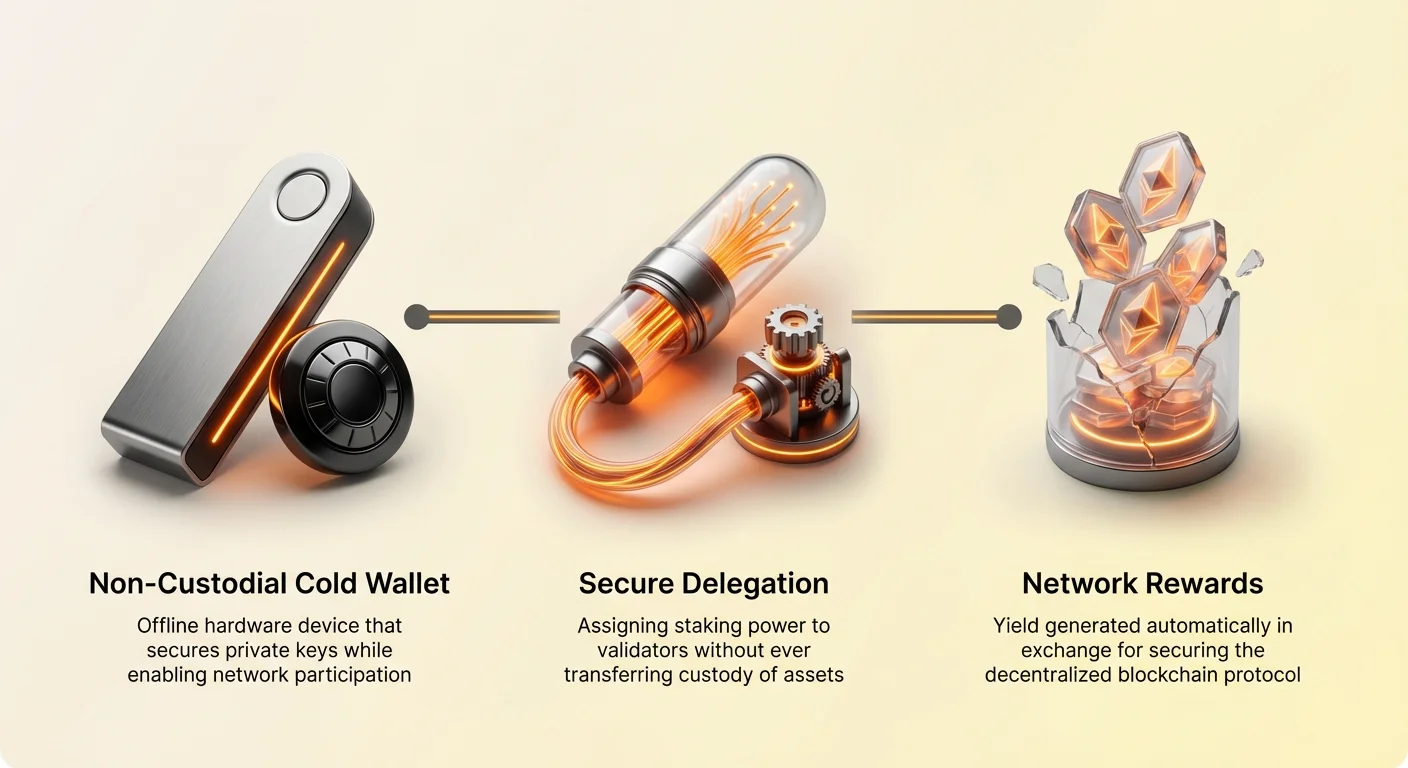
The Foundations of Staking and Delegation
Staking is the mechanism used by Proof-of-Stake (PoS) blockchains to secure the network, validate transactions, and create new blocks. In exchange for committing (locking up) your native currency, you earn rewards, similar to earning interest in a traditional bank account, but far more fundamental to the system's operation.
The wallet you choose acts as the gateway to this participatory ecosystem, defining how easily, securely, and effectively you can engage with the network’s staking mechanics.
What is Proof-of-Stake (PoS)?
Proof-of-Stake is an algorithm that determines how a decentralized network achieves consensus (agreement on the order of transactions). Unlike Bitcoin’s Proof-of-Work (PoW), which relies on energy-intensive mining hardware, PoS relies on economic incentive.
Validators (network participants who run specialized software) are selected to propose and attest to new blocks based on how much cryptocurrency they have staked. The more coins staked, the higher the chance they have of being selected, which prevents malicious actors because any attempt to cheat would result in their staked assets being penalized or “slashed.”
Staking vs. Delegation: Understanding the Roles
While the term "staking" is often used broadly, there are two distinct ways a typical user participates:
- Direct Staking (Running a Validator Node): This requires technical expertise, a dedicated server running 24/7, and significant capital (often requiring large minimum coin amounts, like 32 ETH for Ethereum). If the node goes offline or performs maliciously, the staked funds are penalized (slashed).
- Delegation (Indirect Staking): This is the method most common for individual users. You “delegate” your holding power to an existing, established validator node. Your coins remain in your wallet and under your control, but the validator uses your delegated stake to increase its probability of proposing blocks and earning rewards. You then receive a portion of those rewards, minus the validator's commission fee.
For the purpose of achieving maximum security and convenience for the average user, this guide focuses heavily on delegation facilitated by non-custodial wallets.
Why Wallet Choice Matters for Staking
A specialized staking wallet is not just a storage solution; it is an interface for network activity. The ideal staking wallet must provide three core functions:
- Security: It must protect your private keys, ensuring you alone control the funds (non-custodial).
- Functionality: It must enable the creation of delegation transactions, allow you to choose a validator, and claim rewards easily.
- Compatibility: It must seamlessly integrate with the specific blockchain’s staking protocol (e.g., Cosmos, Cardano, Solana). A wallet designed for simple Bitcoin storage won't have the features needed to interact with a PoS chain's delegation smart contracts.
Drošība pirmajā vietā: Karstais staking pret auksto stakingu
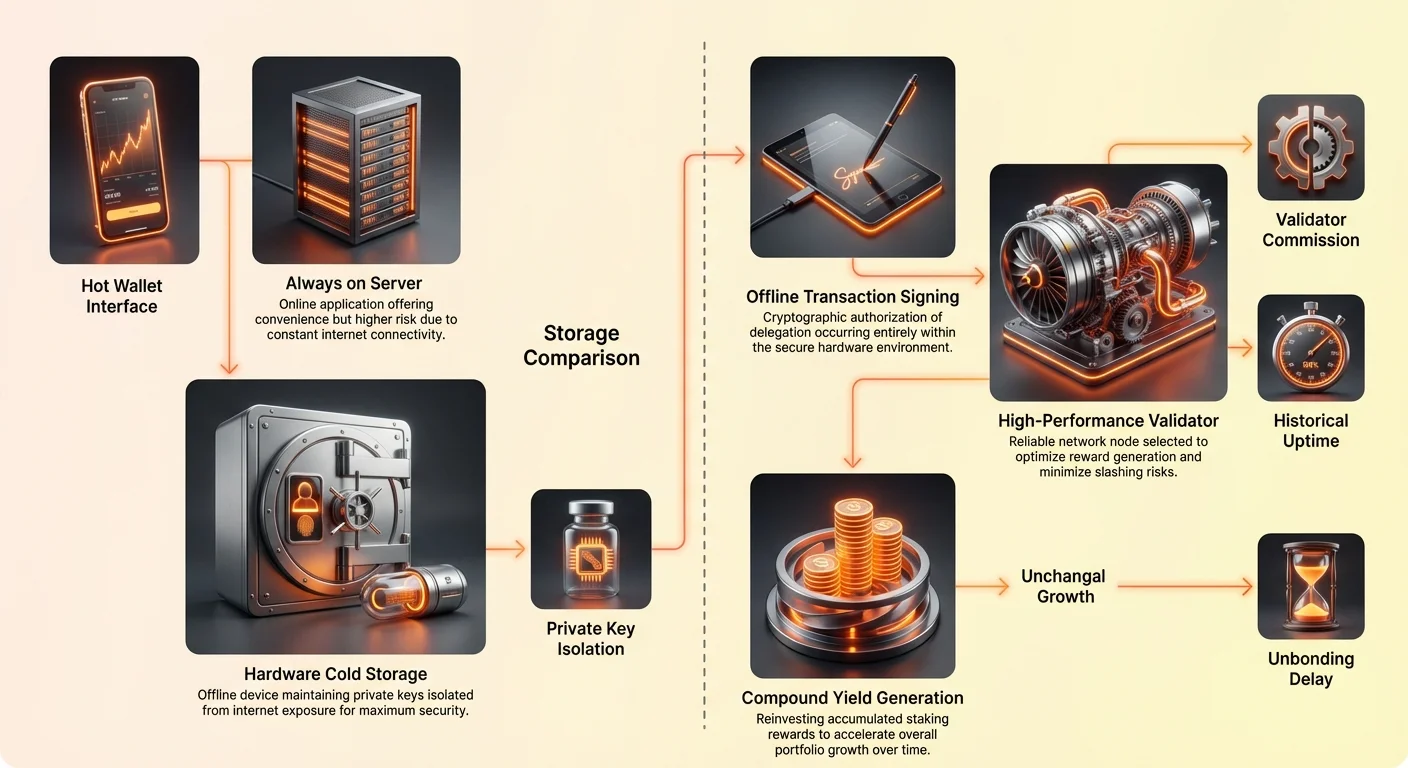
Izlemjot, kā piedalīties stakingā, galvenā lēmuma centrā ir drošības (privātās atslēgas aizsardzība) līdzsvars ar pieejamību (vieglumu mijiedarboties ar tīklu). Tas noved pie fundamentālas atšķirības starp karsto un auksto stakingu.
Karstā stakinga definīcija (ērtības/riska kompromiss)
Karstais staking notiek, kad kripto aktīvi, ko izmanto deleģēšanai, tiek turēti maciņā, kas regulāri ir savienots ar internetu. Tas ietver fondos, kas turēti biržās, mobilajās lietotnēs vai darbvirsmas maciņos, kas pastāvīgi aktīvi.
| Īpašība | Apraksts | Riska profils |
|---|---|---|
| Savienojamība | Vienmēr tiešsaistē. | Augsta pakļaušanās attālinātiem hakeru mēģinājumiem un kaitējumprogrammatūrai. |
| Ērtība | Tūlītēja piekļuve, viegli deleģēšanas un atlīdzību saņemšanas darījumi. | Ļoti augsta. Ja ierīce ir kompromitēta, privātās atslēgas ir ievainojamas. |
| Lietošanas gadījums | Mazi apjomi, augstas frekvences tirdzniecība vai ļoti aktīva DeFi dalība. | Nav ieteicams ilgtermiņa turētājiem vai ievērojamiem kapitāliem. |
Lai gan karstie stakinga maki piedāvā tūlītēju ērtību, risks, ko rada liela daudzuma nostakojamo aktīvu turēšana tiešsaistes vidē, pārkāpj pašpārvaldības pamatdrošības principu: pakļaušanās minimizēšanu.
Aukstā stakinga izpratne (drošības zelta standarts)
Aukstais staking attiecas uz praksi deleģēt vai bloķēt jūsu fondos stakingam, kamēr privātās atslēgas paliek uzglabātas bezsaistē, parasti uz aparatūras ierīces.
Galvenā inovācija šeit ir deleģēšanas darījuma (fondu apņemšanās) un turpmāko atlīdzību saņemšanas darījumu parakstīšanas spēja, nekad neizplatot privāto atslēgu internetam savienotam datoram.
Aukstā stakinga mehānisms:
- Aparatūras paraksts: Lietotājs izmanto aparatūras maku (piemēram, Trezor vai Ledger), lai ģenerētu deleģēšanas darījumu.
- Bezsaistes parakstīšana: Privātā atslēga, kas droši izolēta aparatūras ierīces drošajā mikroshēmā, paraksta darījumu.
- Izplatīšana: Parakstītais darījums (kas tikai instruē tīklu, nevis pārvieto pamata monētas) tiek izplatīts tīklā, izmantojot savienotu programmatūras saskarni (darbvirsmas vai mobilo lietotni).
- Nemaināmība: Kad deleģēts, fondi tiek bloķēti ar tīkla protokolu validatora, bet privātās atslēgas paliek bezsaistē un neskartas. Fondus nevar pārvietot bez aparatūras ierīces paraksta.
Šis iestatījums sasniedz kritisku mērķi: jūs piedalāties ienākumu ģenerēšanā un tīkla drošībā, vienlaikus uzturot augstāko kriptogrāfiskās drošības līmeni jūsu galvenajam ieguldījumam.
Labāko aukstā stakinga maka funkciju identificēšana
Ja jūs esat ilgtermiņa turētājs, aukstā stakinga iestatījuma izmantošana ir labākais aukstā stakinga makiņš stratēģija. Galvenā prasība ir tā, ka maks darbojas kā drošs parakstīšanas ierīce, nevis vienkārša uzglabāšanas lietotne.
Izvēloties aukstā stakinga maku, meklējiet šīs specifiskās funkcijas:
- Integrēta stakinga panelis: Atbalstošajai programmatūrai (piem., Trezor Suite vai Ledger Live) jābūt ar dzimto integrāciju ar stakinga protokolu (piem., Cosmos, Polkadot), ļaujot pārlūkot, izvēlēties un deleģēt validatora tieši drošajā saskarnē.
- Skaidra darījuma redzamība: Pirms parakstīšanas aparatūras maka ekrānam jāparāda skaidri darījuma detaļas, īpaši norādot, ka darījums ir deleģēšana vai atlīdzību saņemšana, nevis pārsūtīšana (izdevums).
- Nekustodāla dizaina: Risinājumam jābūt skaidri nekustodālam, tas nozīmē, ka aparatūras maks ir privāto atslēgu avots un sēklas frāze nekad neaizskar tiešsaistes vidi. (Sk.: Aukstā uzglabāšanas hierarhija: Aparatūra, gaisa sprauga un dziļi bezsaistes drošība par drošas uzglabāšanas detaļām.)
- Plašs protokolu atbalsts: Meklējiet aparatūras maciņus, kas nepārtraukti atjaunina firmwēri, lai atbalstītu jaunus PoS protokolus, piemēram, Solana, Polygon un jaunākos Ethereum stakinga modeļus.
Nekustodālā stakinga imperatīvs
Pašpārvaldības pamatprincips — ka jūs esat sava banka — tiek fundamentāli izaicināts, kad stakingam izmantojat centralizētu biržu. Lielākais risks kripto ir bieži pretpuses risks, un nekustodālais staking ir risinājums.
Kas ir nekustodālais staking?
Nekustodālais staking nozīmē, ka jūsu privātās atslēgas, kas kontrolē piekļuvi jūsu kriptovalūtai, paliek ekskluzīvi jūsu īpašumā, parasti uzglabātas un pārvaldītas pašpārvaldības makā (aparatūrā, darbvirsmā vai mobilajā).
Kad deleģējat nekustodāli:
- Jūs saglabājat īpašumtiesības: Jūs parakstāt darījumu, apņemoties fondos deleģēšanai, bet nekad neizsūtat monētas prom.
- Tīkls nodrošina bloķēšanu: Blokķēdes protokols, nevis trešā puse, bloķē žetonus.
- Tikai jūs varat atbloķēt/atteikties no deleģēšanas: Lai pārtrauktu stakingu un pārvietotu monētas, jums jāizmanto jūsu privātās atslēgas, lai parakstītu atteikšanās darījumu.
Šī pašsuverēnā pieeja ir droša nekustodālā stakinga ceļveža pamatakmens.
Kustodālā stakinga riski (biržas)
Kustodālais staking ir tad, kad jūs noguldāt monētas centralizētā biržā (CEX) un ļaujat biržai pārvaldīt stakinga procesu jūsu vietā. Lai gan ērti, tas ievieš vairākas kritiskas riskus:
1. Pretpuses risks (nav jūsu atslēgas)
Birža tur jūsu privātās atslēgas. Ja birža tiek uzlauzta, kļūst neizdevusies vai nolēdz iesaldēt jūsu kontu (kā redzēts slavenos sabrukumos), jūs zaudējat piekļuvi fondiem, neatkarīgi no tā, vai tie ir nostakingoti vai dīkstāvē.
2. Slēptas maksas un cenzūra
Biržas bieži ņem ievērojamu, necaurspīdīgu daļu no stakinga atlīdzībām. Turklāt, deleģējot milzīgus apjomus caur vienu subjektu, CEX īsteno nevajadzīgi lielu kontroli pār tīklu. Ja valdība vai regulators pavēl biržai atteikties apstrādāt noteiktus darījumus, tiem ir vara īstenot cenzūru ķēdē.
3. Izciršanas riska absorbcija (bez caurspīdīguma)
Lai gan biržas bieži sola segt zaudējumus no validaatora izciršanas, specifiskie validatori, ko tās izvēlas, ir necaurspīdīgi. Jūs pilnībā paļaujaties uz biržas iekšējām drošības praksēm, nevis izvēlaties neatkarīgi pārbaudāmu validatoru.
Kā maki atvieglo nekustodālo deleģēšanu
Specializēts nekustodāls maks nodrošina drošu ietvaru deleģēšanai, atvieglojot sarežģītas viedā līguma mijiedarbības.
Apsveriet sistēmu kā Cardano (ADA) vai Polkadot (DOT):
- Maka izvēle: Jūs atverat savu nekustodālo maka saskarni (savienotu ar jūsu aparatūras ierīci).
- Validatora pārlūks: Maks parāda aktīvo validētāju sarakstu tīklā kopā ar kritiskajiem rādītājiem (maksas, darbības laiks).
- Deleģēšanas darījums: Jūs izvēlaties validatoru un ievadat summu, ko vēlaties nostakot. Maks izveido darījumu, kas norāda jūsu aktīvus uz šī validaatora stakinga baseina adresi.
- Parakstīšana: Aparatūras ierīce paraksta darījumu, apstiprinot, ka jūs autorizējat deleģēšanas apņemšanos.
- Bez pārsūtīšanas: Izšķiroši, parakstītais darījums nepārvieto jūsu galvenos fondos validaatora uzraudzībā; tas tikai reģistrē jūsu stake ar tīkla protokolu. Monētas nekad neatstāj adresi, ko kontrolē jūsu bezsaistes privātā atslēga.
Izciršanas risku izpratne
Lai gan nekustodāla maka izmantošana aizsargā jūsu privāto atslēgu, pati deleģēšana nes risku, kas saistīts ar izvēlētā validaatora sniegumu: izciršana.
Izciršana ir sods, ko PoS tīkls uzliek, ja validators pārkāpj tīkla noteikumus (piem., dubultparakstīšana blokiem, izslēgšanās uz ilgu laiku). Kad notiek izciršana, daļa no validaatora nostakingotajiem fondiem — un deleģētajiem fondiem — tiek konfiskēti tīkla.
Veicot nekustodālo stakingu, jūs uzņematies atbildību par rūpīgu pārbaudi augsta snieguma validaatora izvēlē. Tas pārvieto risku no centralizētas biržas neveiksmes uz validaatora mezgla uzticamību, risku, ko var mazināt ar rūpīgu pētniecību, ko mēs apskatām nākamajā sadaļā.
The Art of Validator Selection
The profitability and security of your non-custodial staking portfolio hinges almost entirely on your ability to evaluate and select reliable validators. A poor choice can result in sub-optimal returns or even exposure to slashing events. This due diligence process is what distinguishes an informed staker from a passive participant.
Introduction to Validators and Network Role
Validators are the operational backbone of any Proof-of-Stake network. They are responsible for:
- Block Proposal: Creating new blocks of verified transactions.
- Attestation: Confirming the validity of other proposed blocks.
- Security: Locking up significant capital to demonstrate commitment and deter malicious behavior.
When you delegate, you are essentially lending your financial weight to increase the validator's chances of performing these tasks, thereby ensuring the health and decentralization of the network.
Critical Validator Selection Criteria
A successful staking validator selection process requires evaluating three key quantitative metrics provided within your staking wallet interface or a dedicated block explorer:
1. Commission Fee (The Cost of Service)
The commission is the percentage of the gross staking rewards that the validator keeps before distributing the remainder to their delegators.
- Low Commission (e.g., 0% to 5%): Attractive for maximizing short-term yield, but potentially risky. Validators need to charge a sustainable fee to cover operational costs (servers, bandwidth, maintenance). A 0% fee often indicates a temporary promotion, a validator using its own capital to subsidize operations, or a risk that they might suddenly raise fees dramatically.
- Stable, Medium Commission (e.g., 5% to 15%): Generally represents a healthier long-term choice. This fee range demonstrates a professional operation committed to sustainability and high uptime.
Actionable Tip: Prioritize validators with a stable, published fee structure that is above zero but reasonable for the chain’s standard. Avoid validators that have minimum commission settings (some chains enforce a minimum, like 5%).
2. Uptime and Performance (Minimizing Slashing Risk)
Uptime refers to the percentage of time the validator node has been online and performing its duties correctly. Low uptime directly translates to fewer rewards for delegators and a higher risk of being slashed for unresponsiveness.
- Look for: Near 100% uptime (e.g., 99.9% or higher) over a long history (at least six months).
- Warning Signs: Consistent dips in performance or public reports of network faults indicate poor maintenance or unreliable infrastructure. Use the staking wallet’s explorer to confirm the validator’s historical metrics.
3. Total Staked Value (TSV) and Saturation
TSV is the total amount of tokens delegated to a validator.
- Avoid Over-Concentration: While high TSV suggests popularity and trust, delegating to the single largest validator concentrates power, harming network decentralization. In some protocols (like Cardano), delegation to an "over-saturated" pool yields diminishing returns, incentivizing users to delegate to smaller pools.
- Optimal Strategy: Select mid-tier validators with strong, proven uptime and moderate TSV. This supports decentralization while still ensuring your stake is secure and productive.
Evaluating Decentralization and Community Trust
Beyond the numbers, assessing the validator’s background is crucial for the health of the broader ecosystem.
1. Validator Identity and Transparency
The best validators are transparent about who they are, where they operate, and the infrastructure they use.
- Do they have a public website?
- Do they actively participate in the community forums (e.g., Reddit, Discord)?
- Do they explicitly state their infrastructure (e.g., using geographically diverse servers, utilizing specific cloud providers)?
A reputable validator is often an established team, not an anonymous entity.
2. Geographical and Infrastructure Diversity
True network decentralization requires validators that are not all operating out of the same data center or country. By choosing validators with diverse infrastructure, you hedge against large-scale failures (e.g., a natural disaster taking out a major regional data center). While this data may require external research, some advanced staking wallets now integrate this information into their dashboards.
3. Commitment to Governance
Check if the validator actively participates in governance votes. A good validator views delegation as a holistic responsibility, not just a money-making exercise. They should vote on proposals that affect the network's future. Delegating to a validator that ignores governance means your delegated voting power is effectively wasted.
Mechanics of Earning: Rewards and Governance
Once you have securely delegated your stake using your non-custodial wallet, the final step is understanding how you earn, claim, and maximize those rewards, and how your stake contributes to the network's future direction.
Reward Claiming and Auto-Compounding Mechanics
Staking rewards are paid out periodically (e.g., every block, every epoch, or daily, depending on the protocol). Your wallet interface plays a vital role in managing this inflow.
1. Manual Claiming
In many chains (like Polkadot or Cosmos), rewards accumulate but must be manually claimed via a signed transaction.
- Gas Fee Consideration: Every claim transaction incurs a small network fee (gas). If you claim very small rewards frequently, the accumulation of gas fees can erode your profit.
- Wallet Role: Your wallet must facilitate this claim transaction securely, requiring a signature from your hardware device (in a cold staking setup).
2. Auto-Compounding (The Power of Reinvestment)
The fastest way to grow your staked holdings is through compounding—reinvesting your rewards to increase your total staked principal.
- Automatic Compounding Protocols: Some chains (like Solana) automatically add unclaimed rewards back into your staking pool, meaning you earn interest on your interest without paying extra transaction fees.
- Wallet Integration: The best cold staking wallet interfaces often offer a "Reinvest" or "Compound" button for chains that require manual action, streamlining the process of adding accumulated rewards back to your delegation pool. This is a critical feature for long-term passive growth.
Understanding Unbonding Periods and Liquidity
A necessary security feature of PoS systems is the unbonding period—the time required to wait after you initiate the process of withdrawing your stake before the tokens become spendable in your wallet.
The Purpose of Unbonding
This delay ensures that if a validator commits a slashable offense, the network has time to process the penalty before the delegated funds are removed. It is a fundamental mechanism that maintains the economic security of the chain.
| Protocol Example | Typical Unbonding Period | Implication for Liquidity |
|---|---|---|
| Cosmos (ATOM) | ~21 days | Medium liquidity constraint |
| Polkadot (DOT) | ~28 days | Significant liquidity constraint |
| Cardano (ADA) | Instant | High liquidity (funds are not locked, only the reward process is delayed) |
Wallet Management of Unbonding
A reliable staking wallet should clearly display:
- Time Remaining: The exact number of days or epochs until your staked funds are fully liquid and transferable.
- Unbonding Status: A simple, visual indicator differentiating between actively staked funds and funds currently in the unbonding process.
Actionable Tip: Never delegate funds that you anticipate needing immediate access to, as the unbonding period can lock your capital for weeks.
Participation in Governance (Voting Power)
A crucial, often overlooked, benefit of non-custodial staking is the ability to participate in network governance. When you delegate your tokens, you also delegate your voting power.
Direct vs. Inherited Governance
In most delegation models, the voting power defaults to the validator you choose. The validator then votes on proposals regarding network upgrades, treasury spending, and parameter changes.
However, advanced staking wallets for certain protocols (e.g., Tezos, Polkadot) allow you to override the validator’s vote and cast your own.
- Active Governance: Using your wallet to cast an independent vote (or changing your delegation to a validator that aligns with your view) is the ultimate expression of self-sovereignty in the digital economy.
- Wallet Features: Look for staking wallets that include a dedicated "Governance" or "Voting" tab, providing context on ongoing proposals and a simple interface for casting your vote, all secured by your private key. This feature elevates a simple storage solution to a full participatory hub.
Secinājums
Stakojamie maki ir būtiskais rīku komplekts aktīvai līdzdalībai Proof-of-Stake revolūcijā. Prioritizējot nekustodālu uzstādījumu, īpaši izmantojot aparatūras makus aukstajai stakošanai, jūs nodrošināt maksimālu aizsardzību savam pamatkapitālam, vienlaikus maksimizējot atlīdzības ģenerēšanu.
Pašsuverenitātes patiesā vērtība slēpjas ne tikai jūsu atslēgu glabāšanā, bet droši un stratēģiski izmantojot tās mijiedarbībai ar decentralizētajiem tīkliem un to drošināšanai, uz kuriem tiek būvēta nākamās digitālās ekonomikas nākotne. Ieviešot detalizētos validētāja atlases kritērijus — koncentrējoties uz darbības laiku, ilgtspējīgu komisiju un apņemšanos decentralizācijai —, jūs pārejat no pasīva monētu turētāja uz zinošu, augstas veiktspējas tīkla dalībnieku. Šī atbildīgā pieeja stakošanai ir nākamais kritiskais solis jūsu kripto ceļa kartē.