
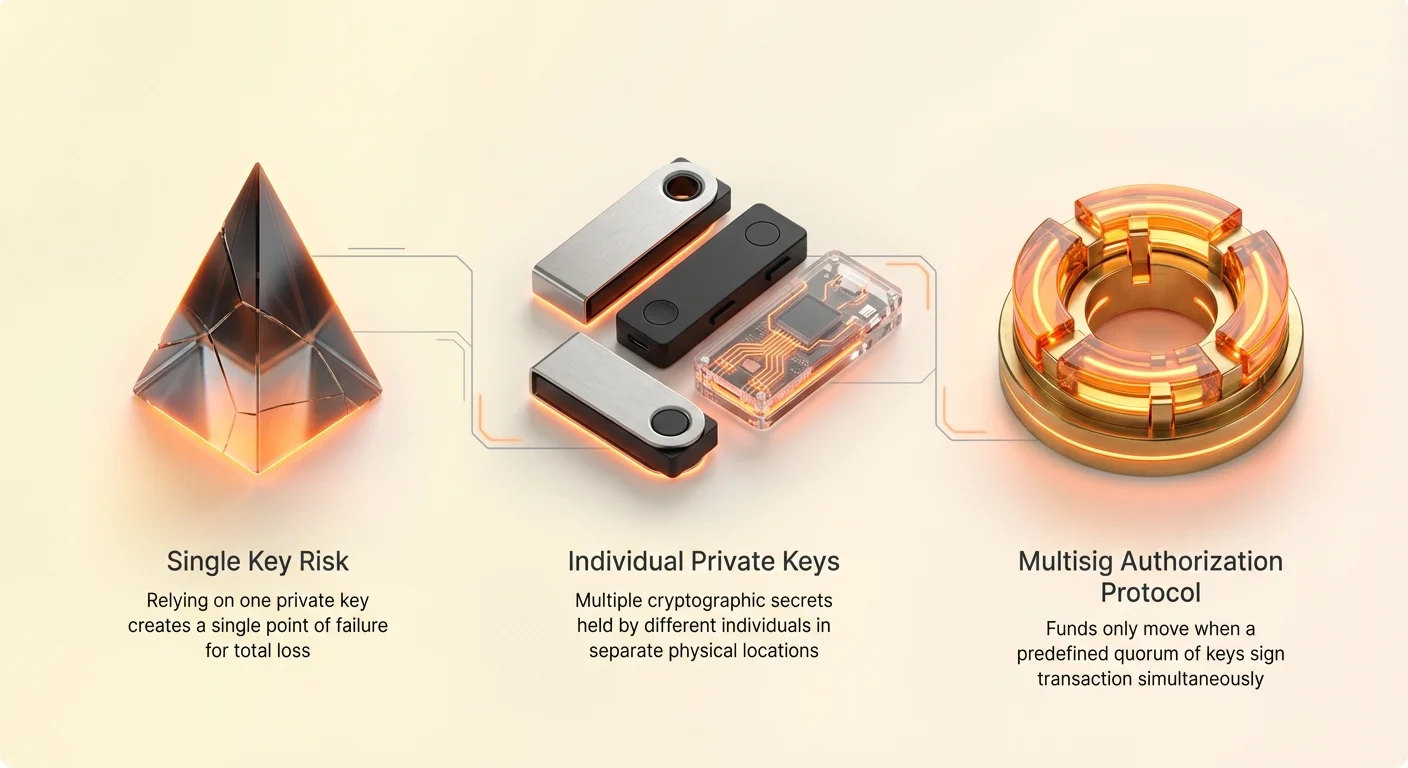
Kad jūs pirmo reizi ienākat kripto pasaulē, jūs ātri uzzināsiet svarīgāko noteikumu: "Nav tavu atslēgu, nav tavu kripto." Šis noteikums uzsver nepieciešamību piederēt un aizsargāt savas privātās atslēgas, kas ir kriptogrāfiskie noslēpumi, kas pierāda jūsu līdzekļu īpašumtiesības un autorizē darījumus.
Indivīdiem šīs vienas atslēgas aizsardzība bieži nozīmē aparatūras maciņa izmantošanu — ārkārtīgi efektīvu drošības pasākumu, kas pazīstams kā aukstā glabāšana. Tomēr uzņēmumiem, grupām, lielām kasei vai pat sarežģītiem indivīdiem, kas plāno nākotni, paļaušanās uz vienu atslēgu, kas uzglabāta vienā vietā, rada nepanesamu risku. Ja šī atslēga ir pazaudēta, nozagta vai kompromitēta, viss fonds uzreiz pazūd.
Tieši šeit parādās Daudzparakstu (Multisig) maciņa koncepts. Multisig ir progresīvs drošības mehānisms, kas izstrādāts, lai novērstu vienu kļūmes punktu, kas inherent standarta (vienas paraksta) maciņiem. Tas maina paradigmu no vienas atslēgas prasības, lai atbloķētu seifu, uz kombinācijas prasību no atslēgām, ko tur atsevišķi indivīdi, lai apstiprinātu jebkuru darbību. Šis ceļvedis sniedz izsmeļošu, visaptverošu pārskatu par multisig tehnoloģiju, aptverot tās tehnisko iestatīšanu, stratēģisko pielietojumu un izšķirošo lomu īstās pašsuverenitātes un koplietošanas kontroles pār digitālajiem aktīviem sasniegšanā.
The Basics of Multisignature Wallets
A multisignature wallet is simply a type of cryptocurrency address that requires multiple private keys to authorize a transaction, rather than just one. Think of it like a safety deposit box in a bank that requires two separate keys, held by two different people, to open.
Private Keys, Public Keys, and the Single Point of Failure
Before diving into multisig, it’s essential to review how standard wallets work:
- The Private Key: This is the ultimate secret. It is a long string of characters (often represented by a 12- or 24-word seed phrase) that gives you the mathematical power to spend your cryptocurrency. If anyone gets this key, they control your funds.
- The Public Key/Address: This is the receiving address everyone sees (like your account number). It is mathematically derived from your private key but cannot be used to spend funds.
In a standard setup, if a hacker gains access to your private key (the single signature), they can drain your entire wallet instantly. This is the single point of failure that multisig is designed to eliminate.
How Multisig Solves the Problem of Loss and Theft
Multisig fundamentally changes the spending requirement. Instead of one signature proving ownership, the blockchain is programmed to only accept transactions that contain, for example, two out of three authorized signatures.
Protection Against Theft (External Threat): If a malicious actor compromises one key holder's computer or hardware wallet, they still cannot move the funds because they lack the necessary second (or third) signature from another key holder.
Protection Against Loss (Internal Threat): If one key holder loses their hardware device or forgets their seed phrase, the group can still recover or move the funds using the remaining keys.
Multisig ensures no single person (or single compromised device) has unilateral control, demanding cooperation and distribution of trust.
Multisig vs. MPC (Multi-Party Computation)
As security solutions evolve, a related concept called Multi-Party Computation (MPC) often appears alongside multisig. While both aim for shared control, they achieve it differently:
| Feature | Multisig (M-of-N) | MPC (Threshold Signature) |
|---|---|---|
| Technology | On-chain protocol requiring separate, full signatures from key holders. | Off-chain cryptographic process that creates a single signature from shared "key shards." |
| Transparency | The wallet address is visibly multisig on the blockchain. | The resulting transaction looks like a standard single-signature transaction on the blockchain. |
| Key Status | Each key holder possesses a full, stand-alone private key. | Key holders possess fragments or "shards" of a key; no single party holds the full key. |
| Complexity | Generally simpler, more established, and widely supported. | More complex cryptographic implementation, often required for corporate custody solutions. |
While MPC is growing rapidly for institutional use, Multisig remains the gold standard for robust, transparent, and self-custodied group governance and treasury management due to its relative simplicity and long track record.
M no N drošības shēmu izpratne
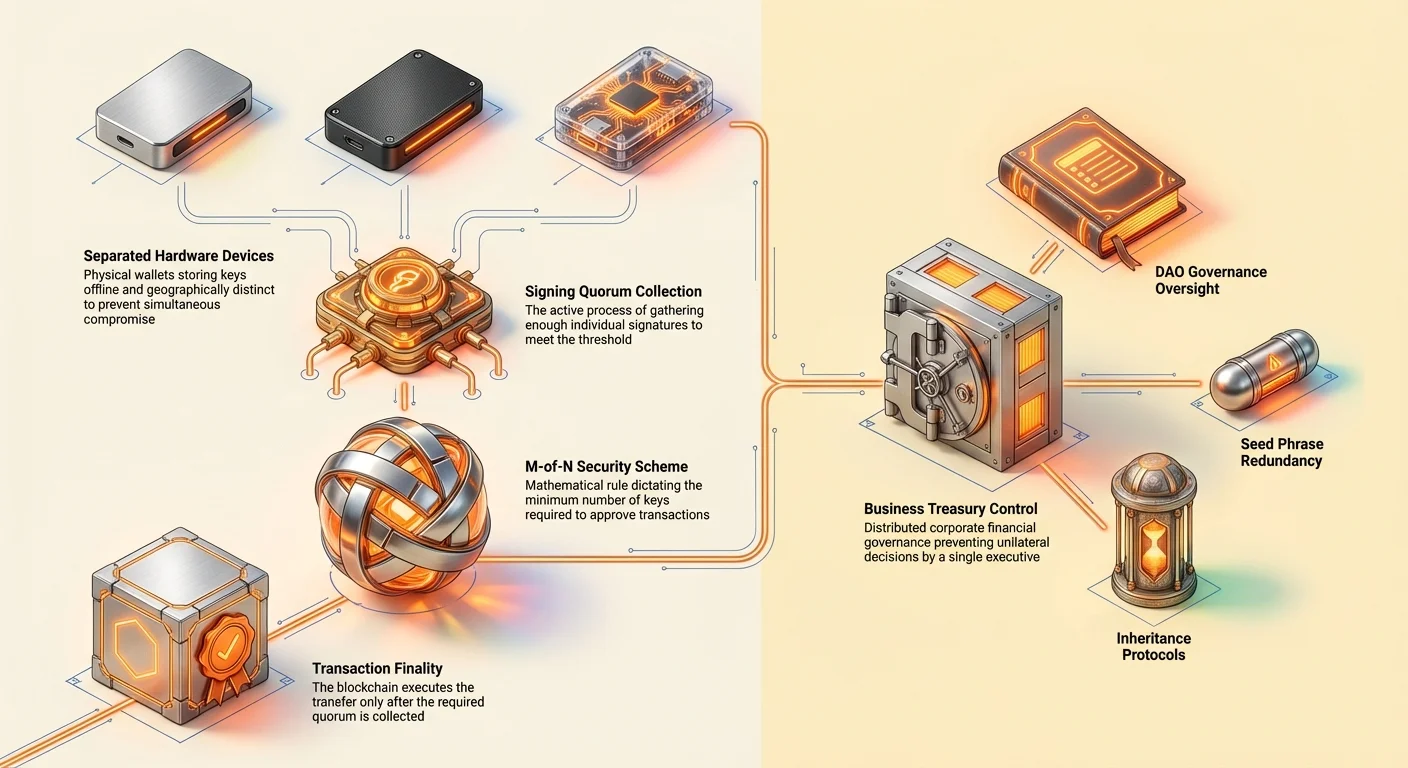
Jebkura multisig maka pamatmehānisms ir M no N shēma. Tā ir matemātiskā formula, kas nosaka, cik daudz atslēgu no kopējā izveidoto atslēgu skaita ir nepieciešamas darījuma apstiprināšanai.
M un N definēšana (Kvorums un Atslēgu turētāji)
- N (Kopējais atslēgu turētāju skaits): Tas ir kopējais privāto atslēgu skaits, kas saistīts ar multisig adresi. Tas nosaka maksimālo iespējamo drošības rezerves līmeni.
- M (Kvorums): Tas ir minimālais atslēgu skaits, kas nepieciešams darījuma parakstīšanai un izpildei. Tas ir darbības slieksnis.
Attiecības starp M un N ir izšķirošas, jo tās nosaka maka ievainojamības profilu un operacionālo efektivitāti. Nepieciešamie paraksti (M) jāapkopo, pirms darījums tiek izplatīts tīklā.
Biežākās konfigurācijas un to pielietojums
Pareizās M no N shēmas izvēle pilnībā atkarīga no mērķa, uzticības līmeņa starp dalībniekiem un operacionālās ātruma vajadzībām.
1. 2 no 3 konfigurācija (Augsta drošība, augsta uzticamība)
- Konfigurācija: Nepieciešami 2 paraksti no 3 kopējām atslēgām.
- Pielietojuma gadījumi: Mazo uzņēmumu kases, pāru kopīgo fondu pārvaldība vai pastiprināta personīga drošība.
- Kāpēc tas darbojas:
- Drošība: Viena atslēga (vai viens atslēgu turētājs) var tikt kompromitēta, nezaudējot līdzekļus.
- Uzticamība: Viena atslēga var tikt pazaudēta, nepadarot līdzekļus nepieejamus.
2 no 3 konfigurācijā mazam uzņēmumam Atslēga 1 var būt CEO rokās, Atslēga 2 — CFO rokās, bet Atslēga 3 — korporatīvā jurista rokās vai droši uzglabāta ārpus vietas kā rezerves atslēga («ārkārtas atslēga»). Jebkuras divas var autorizēt tēriņus.
2. 3 no 5 konfigurācija (Kopīga pārvaldība, izturīga rezerve)
- Konfigurācija: Nepieciešami 3 paraksti no 5 kopējām atslēgām.
- Pielietojuma gadījumi: Vidēji lieli vai lieli uzņēmumu kases, padomes pārvaldība vai decentralizētās autonomās organizācijas (DAO).
- Kāpēc tas darbojas: Šī konfigurācija piedāvā daudz lielāku izturību pret sazvērestībām. Ja 1 vai 2 atslēgas ir kompromitētas, līdzekļi ir drošībā. Ja 1 vai 2 atslēgu turētāji kļūst nepieejami (atvaļinājums, slimība, nāve), atlikušie 3 joprojām var darboties.
3. 1 no 2 konfigurācija (Bīstama, bet nepieciešama)
- Konfigurācija: Nepieciešams 1 paraksts no 2 kopējām atslēgām.
- Pielietojuma gadījumi: Vispārīgi neiesakāma drošības dēļ, bet dažreiz izmantota līgumos, kur divas puses strīdās par līdzekļiem (Escrow).
- Kāpēc tas darbojas (ierobežotos scenārijos): Tas nodrošina veidu, kā jebkurai pusei vienpusēji atbrīvot līdzekļus. Tā ir zema drošības, augstas elastības opcija, kas nav piemērota kases pārvaldībai.
4. N no N konfigurācija (Galīgais uzticības modelis)
- Konfigurācija: Nepieciešami VISI paraksti no kopējām atslēgām (piem., 3 no 3).
- Pielietojuma gadījumi: Ļoti specializēti, augstas uzticības scenāriji, kur katram dalībniekam jāapstiprina katrs darījums.
- Kāpēc tas darbojas: Nodrošina absolūtu drošību pret tēriņiem bez konsensa. Tomēr, ja jebkurs viens atslēgu turētājs ir nepieejams, līdzekļi ir bloķēti uz visiem laikiem — padarot šo shēmu ārkārtīgi grūti pārvaldāmu operacionāli.
Risku novērtējums un shēmas izvēle
Izlemjot par M un N, jāizbalansē divi konkurējoši riski:
| Risku profils | Apraksts | Ieteiktā M no N |
|---|---|---|
| Operacionālais risks (Bloķēšanas risks): | Risks, ka nevar savākt pietiekami daudz parakstu (M), jo atslēgas ir pazaudētas vai atslēgu turētāji ir nepieejami. | Izvēlieties zemāku M (piem., 2 no 5). |
| Sazvērestības risks (Zādzības risks): | Risks, ka minimālais atslēgu turētāju skaits (M) sazvērsies, lai nozagtų līdzekļus. | Izvēlieties augstāku M (piem., 4 no 5). |
Īpulaika likums: Vienmēr nodrošiniet, lai $M$ būtu pietiekami augsts, lai novērstu sazvērestību starp nelielu grupu, bet pietiekami zems, lai ļautu turpināt operācijas pat tad, ja viens vai divi atslēgu turētāji ir izsisti vai pazaudē savas atslēgas. Lielākajai daļai grupu 2 no 3 vai 3 no 5 shēma piedāvā optimālo līdzsvaru.
Step-by-Step Guide: Setting Up a Multisig Wallet
Setting up a multisig wallet requires careful planning, often involving multiple hardware devices and software interfaces. This process is complex by design, as its security relies on redundancy and separation of keys.
Prerequisites and Key Preparation
Before creating the multisig contract on the blockchain, you must generate the underlying keys.
1. Acquiring Hardware Wallets
Every key in the M-of-N scheme should be generated and stored on a separate, dedicated hardware wallet (e.g., Trezor, Ledger). This provides true cold storage security, meaning the private key never touches an internet-connected device.
- Action: Purchase $N$ separate hardware wallets (e.g., three wallets for a 2-of-3 setup).
2. Generating and Separating Seed Phrases
Each hardware wallet must be set up independently to generate its own unique seed phrase.
- Action: Write down each seed phrase meticulously. Crucially, these seed phrases must be stored in physically separate, geographically distinct locations. If two keys are required, ensure their recovery phrases are not kept in the same safe.
3. Assigning Key Responsibility
Formally assign each private key (and its corresponding hardware device) to a specific key holder. This assignment should be documented and agreed upon by the group.
Choosing and Interacting with a Software Interface
The multisig wallet itself is not a physical device; it is a smart contract address on the blockchain that understands the M-of-N rule. To interact with this contract, you need specialized software.
For Bitcoin, common desktop interfaces include Sparrow Wallet or Electrum. For Ethereum and related chains (which often manage business treasuries and DeFi), Gnosis Safe (now Safe) is the industry standard.
Setup Phase: Creating the Contract
- Input Public Keys: The designated setup interface (e.g., Gnosis Safe web app) will prompt the key holders to input the public key or address derived from their hardware wallet.
- Define M and N: The user specifies the total number of owners (N) and the required confirmations (M).
- Deploy the Contract: The software deploys the multisig smart contract to the blockchain. This contract now is your multisig wallet address.
Once deployed, the funds must be sent to this new, unique multisig address. Only when funds arrive at this address are they protected by the M-of-N rules.
The Signing and Execution Process
When the group decides to make a transaction (e.g., sending 5 BTC to a vendor), the process follows a strict flow:
1. Proposal and Initiation
One key holder initiates the transaction proposal using the software interface. The proposal specifies the amount, the recipient address, and the network fee. The transaction is generated but remains unsigned.
2. Review and Signing
The proposal is visible to all N key holders. Each key holder connects their hardware wallet to their interface (which is connected to the multisig software) and reviews the proposed transaction details.
- If the transaction is approved, the key holder uses their hardware wallet to generate their unique cryptographic signature for that specific transaction and broadcasts the signature to the multisig contract.
3. Quorum Reached (Execution)
The multisig contract monitors the incoming signatures. As soon as the number of signatures reaches M (the quorum), the contract automatically bundles those signatures together and broadcasts the finalized, authorized transaction to the blockchain for immediate execution.
4. Failure to Reach Quorum
If the transaction fails to reach M signatures within a set time, the proposal expires or remains pending indefinitely. The funds remain locked in the multisig address until the required number of signatures is collected.
Strategic Use Cases for Multisignature Technology
Multisig is not just a high-tech way to secure funds; it is a powerful tool for governance, risk mitigation, and systematic control. Its primary applications lie in managing large assets where distributed responsibility is mandatory.
1. Secure Business Treasury Management (The Primary Use Case)
For any company holding significant crypto reserves, security means removing unilateral control.
Centralized Control vs. Distributed Control
In a traditional company structure, the CEO or CFO might have access to the single wallet key. This creates "key-person risk"—the risk of the funds being lost due to one person’s error, malice, or unavailability.
A multisig wallet ensures that financial decisions are always collaborative:
- Expense Approval: For example, a 3-of-5 setup might involve the CEO, CFO, COO, Head of Legal, and an External Auditor. Any transaction requires consensus from three senior leaders, preventing any one person from making unauthorized transfers.
- Operational Continuity: If the CEO is traveling or incapacitated, the business can continue to pay bills and manage funds without interruption, provided the quorum (M) can still be met by the available signers.
Handling Employee Turnover and Separation
Multisig provides a clean framework for managing key access during personnel changes. When a key holder leaves the company, the remaining key holders can initiate a transaction to migrate all funds from the old M-of-N contract to a new M-of-N contract that excludes the departing employee’s public key. This procedure ensures a clean cut-off of access without relying on the integrity of the former employee.
2. Decentralized Autonomous Organizations (DAOs) and Governance
DAOs use smart contracts to automate governance, but large treasury movements often require human oversight. Multisig wallets, particularly those implemented via platforms like Gnosis Safe, are the foundational infrastructure for DAO treasury management.
- Community Oversight: While proposals might be voted on by thousands of token holders, the actual execution of spending funds (e.g., funding a new development team) is typically handled by a core group of elected multisig signers (often 5-of-7 or 7-of-9).
- Trustless Execution: This ensures that even if the DAO is attacked by a governance-manipulation scheme, the treasury funds cannot be moved without the explicit, secure, and physically separated signatures of the elected core team.
3. Advanced Personal Security and Inheritance Planning
For high-net-worth individuals, multisig is an unparalleled tool for managing personal security risks and ensuring smooth wealth transfer after death.
Reducing Personal Kidnapping Risk
In rare but serious situations, an attacker might attempt to coerce a single key holder into signing a large transaction. With multisig, this becomes impossible. The attacker would need to coerce multiple, geographically separated key holders simultaneously, dramatically increasing the operational difficulty and risk of the attack.
Secure Inheritance Planning (The "Dead Man's Switch")
One of the greatest challenges of self-custody is ensuring loved ones can access funds upon the owner's death without risking early access or theft. Multisig provides a structured solution:
The Setup (e.g., 2-of-3):
- Key 1: Held by the owner (kept in secure cold storage).
- Key 2: Held by a trusted third party, such as an estate lawyer or specialized fiduciary custodian.
- Key 3: Held by the primary heir (stored in a safe or separate location).
During Life: The owner and the lawyer/fiduciary (Keys 1 and 2) can easily transact 2-of-3, keeping the heir’s key dormant and safe.
After Death: Upon presentation of a death certificate, the lawyer/fiduciary (Key 2) and the heir (Key 3) can now coordinate the 2-of-3 signatures to unlock the funds and transfer them to the heir’s new address.
This setup prevents the heir from accessing the funds prematurely while the owner is alive, but guarantees access when the owner is deceased, fulfilling the inheritance plan without compromising the security of the funds during the owner's lifetime.
Drošības labākās prakses un pārvaldības padomi
Multisig ieviešana ir tikai pirmais solis. Pareiza pārvaldība, atslēgu higiēna un katastrofu atjaunošanas plānošana ir būtiska M no N shēmas integritātes uzturēšanai laika gaitā.
Ģeogrāfiskā atslēgu izplatīšana
Daudzparakstu fundamentālais mērķis ir atslēgu separācija. Šī separācija jābūt fiziskai un ģeogrāfiskai.
- Izvairīties no centralizācijas: Nekad neuzglabājiet vairākas atslēgas frāzes tajā pašā fiziskajā vietā (piem., divas atslēgas frāzes vienā seifā). Ja tā vieta ir kompromitēta (uguns, plūdi, zādzība), multisig drošības ieguvums uzreiz pazūd.
- Starptautiska izplatīšana: Ļoti lielām kasēm vai augsta līmeņa personīgiem aktiem apsveriet atslēgu izplatīšanu pa dažādām valstīm vai kontinentiem. Tas aizsargā pret lokāliem politiskiem riskiem vai fiziskām katastrofām.
Maciņa testēšana: "Ugunsdzēsības mācības"
Dažas organizācijas uzstāda sarežģītus daudzparakstu maciņus, bet nekad netestē atjaunošanas procedūras, līdz krīze iestājas. Tas ir nāvējoša kļūda. Jums periodiski jāpārbauda, ka visi atslēgas turētāji var veiksmīgi parakstīt un pārvietot līdzekļus.
- Gada tests: Vismaz reizi gadā iniciējiet mazu, simbolisku darījumu (piem., nosūtīt 10 USD vērtībā kripto uz norādītu testa adresi).
- Obligāta dalība: Prasiet visiem atslēgas turētājiem (M) piedalīties testa darījuma parakstīšanā. Tas pārbauda, ka viņu aparatūras maciņi, programmatūras iestatījumi un atslēgu piekļuves metodes joprojām darbojas.
- Pazaudētās atslēgas simulācija: Veiciet iekšēju scenāriju, kur pieņemat, ka viena atslēga ir pazaudēta. Vai atlikušie $N-1$ atslēgas turētāji joprojām var sasniegt M kvoru un izpildīt atjaunošanas darījumu uz jaunu adresi? Dokumentējiet nepieciešamos soļus.
Atslēgu rotācija un audits
Indivīdiem, kas iesaistīti atslēgu parakstīšanā, izmantotajām aparatūras ierīcēm un pamata programmatūras saskarnēm jāpakļaujas regulāram auditam.
- Parakstītāja audits: Veiciet periodiskas fona pārbaudes vai pārvērtējiet uzticības līmeņus visiem atslēgas turētājiem. Ja atslēgas turētāja loma vai apstākļi ievērojami mainās, apsveriet līdzekļu migrāciju uz jaunu daudzparakstu līgumu, izslēdzot šo indivīdu.
- Aparatūras audits: Ja aparatūras maciņa ierīce ir pakļauta fiziskam riskam (piem., vest uz lidmašīnu, konfiscēta vai apstrādāta ārpus grupas), tā jāuzskata par kompromitētu un tai saistīto publisko atslēgu jāaizstāj jaunā daudzparakstu līgumā.
- Regulāra atslēgas frāzes pārbaude: Lai gan atslēgas frāzei nekad nevajadzētu būt digitalizētai, fiziskā uzglabāšanas konteinera integritātei (ūdens bojājumi, drošības zīmogiem neskarti) jāveic rutīnas pārbaude.
"Dust uzbrukumu" un pikšķerēšanas novēršana
Tā kā katram atslēgas turētājam jāpārskata un jāparaksta darījums, pārskatīšanas process jābūt precīzam. Hakeri dažreiz izmanto "dust uzbrukumus" vai pikšķerēšanas mēģinājumus.
- Pārbaude ir obligāta: Pārskatot darījuma piedāvājumu, atslēgas turētājiem jāpārbauda katra detaļa: summa, tīkla maksa un, viskritiskāk, galamērķa adrese. Nekad nepieņemiet, ka saskarne ir precīza; vienmēr pārbaudiet galamērķa adresi caur sekundāru, uzticamu komunikācijas kanālu (piem., verbāli apstiprinot adresi ar saņēmēju).
- Izmantojiet baltos sarakstus: Daudzas daudzparakstu platformas ļauj iestatīt "baltos sarakstus" — iepriekš apstiprinātas adreses (kā zināmas biržas izņemšanas adreses vai piegādātāju adreses). Tas paātrina izplatītus darījumus un samazina nejaušas nepareizas tēriņu risku.
Choosing a Multisig Solution Provider
While the underlying cryptography of Bitcoin multisig (P2SH) is standardized, the user experience and feature set vary widely depending on the software platform or service you choose.
Platform Features Comparison
The choice of provider usually boils down to the blockchain being used (Bitcoin vs. EVM chains) and the level of operational control needed.
| Platform Type | Primary Blockchain(s) | Key Features | Best Suited For |
|---|---|---|---|
| Gnosis Safe (Safe) | Ethereum, Polygon, Avalanche, etc. (EVM chains) | Highly programmable, supports NFTs, DeFi interaction, customizable access controls. | DAOs, DeFi treasuries, Web3 businesses needing complex interactions. |
| Sparrow Wallet | Bitcoin | Desktop application, excellent integration with various hardware wallets (PSBT standard), highly transparent and focused purely on Bitcoin security. | Bitcoin maximalists, individual long-term Bitcoin storage, high-security Bitcoin businesses. |
| Electrum | Bitcoin | Lightweight, older standard for Bitcoin multisig, versatile and user-friendly desktop client. | Users seeking simplicity and a well-established history on Bitcoin. |
| Custodian Services | Multi-chain | Managed services, often including MPC, insurance, and regulatory compliance. | Financial institutions, regulated corporate entities, and firms requiring complex compliance. |
Open-Source vs. Proprietary Solutions
The crypto community generally favors open-source solutions for security infrastructure, and this is especially true for multisig.
Open-Source Advantages
Platforms like Gnosis Safe and Sparrow Wallet are open-source, meaning their code is publicly viewable and auditable.
- Trust Through Verification: Anyone can inspect the code to ensure there are no backdoors, hidden fees, or vulnerabilities. This transparency is crucial when entrusting large sums of money to a smart contract or software client.
- Community Support: Bugs and security issues are often found and patched quickly by a global community of developers.
Proprietary Considerations
While some corporate multisig and custody solutions are proprietary (closed source), they often offer features like corporate liability insurance, regulatory reporting, and seamless integration with legacy banking systems.
If choosing a proprietary solution, the organization must perform intense due diligence on the vendor’s security certifications, insurance policies, and third-party audit reports, as they cannot review the source code directly. For self-custody and maximum self-sovereignty, open-source is highly recommended.
Secinājums
Daudzparakstu tehnoloģija ir nozīmīgs solis uz priekšu digitālo aktīvu drošībā, pārveidojot riska profilu no viena, augsta līmeņa mērķa uz sadalītu pārvaldības sistēmu. Tā ir nepieciešamā tilts starp personisko pašglabāšanu un institucionālo atbildību.
Ieviešot labi izstrādātu M no N shēmu, nodrošinot atslēgas aukstā glabāšanā pa atsevišķām vietām un izveidojot skaidras operacionālās procedūras parakstīšanai un atjaunošanai, grupas var gandrīz pilnībā novērst katastrofālas zaudēšanas risku zādzības, atslēgas kompromitācijas vai atslēgas turētāja nepieejamības dēļ.
Uzņēmumiem un sarežģītiem lietotājiem, kas pārvalda augstas vērtības aktīvus, multisig vairs nav izvēles funkcija — tā ir fundamentāla prasība izturības un uzticības veidošanai decentralizētā ekonomikā. Multisig maciņu iestatīšanas un stratēģiskā izmantošanas apgūšana ir izšķirošs solis ceļā uz īsto digitālo pašsuverenitāti.