
Laipni lūdzam finanšu digitālajā pierobežā. Sākot ceļu uz pašsuverenitāti kripto telpā, saprotot, kur jūsu aktīvi ir ievainojami, ir pirmais solis uz drošību.
Karstais maka ir jebkura kriptovalūtas maka, kas ir savienota ar internetu. Tas ietver lietotni jūsu telefonā, programmatūru jūsu darbvirsmas datorā un, kas ir īpaši svarīgi, kontu, ko jūs turat centralizētā kripto biržā. To definējošā iezīme ir ērtums — tās ļauj veikt tūlītējas transakcijas jebkurā laikā un jebkur.
Šis ceļvedis piedāvā visaptverošu ietvaru — Karstā maka riska matricu —, lai palīdzētu jums sistemātiski novērtēt ar internetam savienotām makām saistītos raksturīgos drošības riskus. Mēs pārejam pāri vispārējiem brīdinājumiem, lai piedāvātu rīcībspējīgas mazināšanas taktikas. Saprotot specifiskos uzbrukuma vektorus, jūs varat ieviest progresīvas drošības prakses, lai aizsargātu savus līdzekļus, nodrošinot, ka jūsu ērtums nenāk par jūsu finanšu drošības cenu.
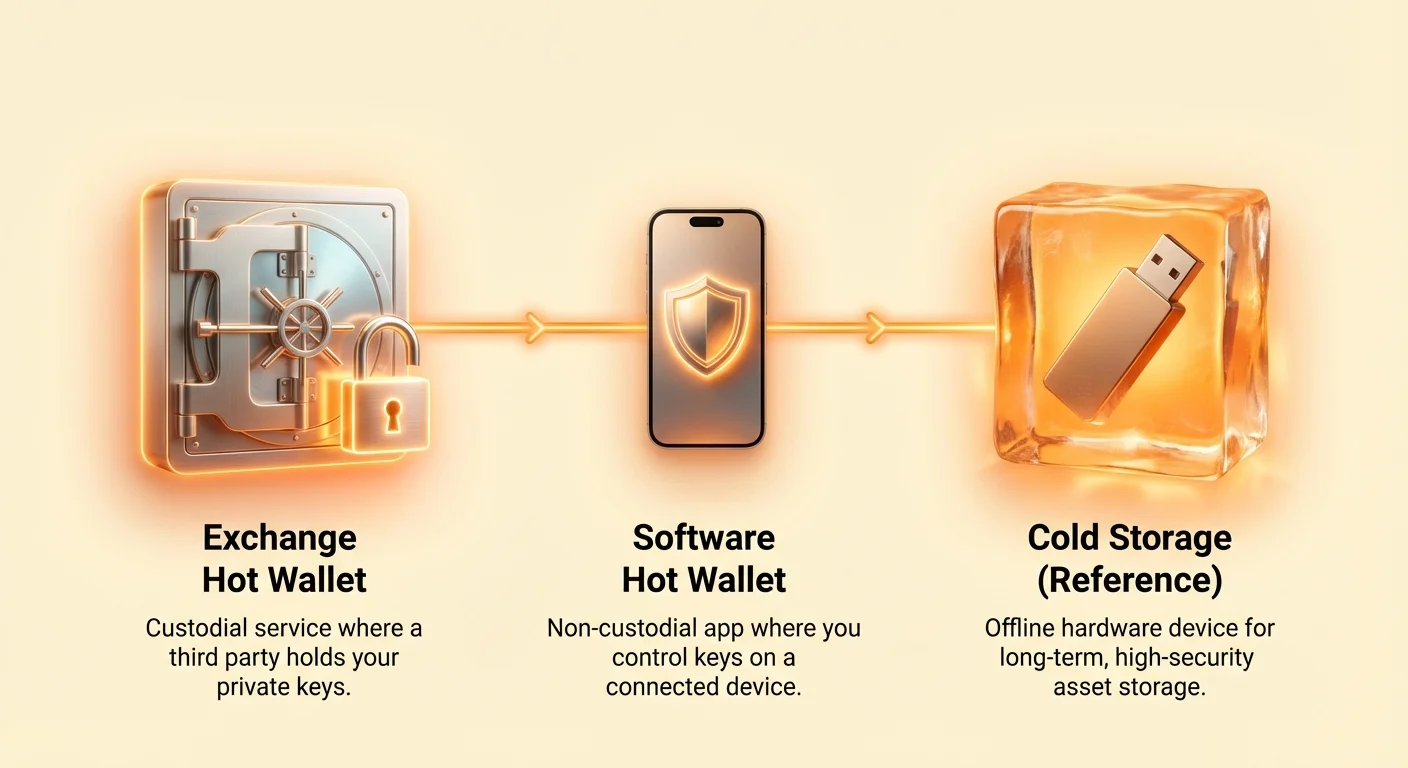
Saprotot karsto maku spektru
Karstie maciņi pastāv riska kontinuumā, ko galvenokārt nosaka, kas kontrolē privātās atslēgas — slepenos kriptogrāfiskos kodus, kas piešķir piekļuvi jūsu līdzekļiem. Karsto maku drošības pamatprincips ir vienkāršs: jo vairāk kontroles jums ir pār atslēgām, jo lielāka atbildība (un sarežģītība) gulstas uz jums, lai tās aizsargātu.
Biržas (Glabātāja) karstie maciņi: augstākais risks, augstākā ērtība
Kad jūs atstājat kriptovalūtu centralizētā biržā (piemēram, Coinbase vai Binance), jūs izmantojat biržas „hot wallet“. To sauc par custodial wallet, jo birža glabā privātās atslēgas jūsu vietā.
- Riska profils: Jūs esat aizsargāts pret individuāliem draudiem, piemēram, kaitējniekiem uz jūsu personīgās ierīces, bet jūs pārņemat visu biržas paša drošības risku. Ja birža tiek uzlauzta, cieš no iekšējas krāpšanās vai saskaras ar regulatīvu maksātnespēju, jūsu līdzekļi ir apdraudēti. To sauc par counterparty risk.
- Lietošanas gadījums: Ideāls tikai mazām summām, kas nepieciešamas tūlītējai tirdzniecībai vai konvertācijai. Nekad neuzglabājiet ilgtermiņa bagātību šeit.
Programmatūras (Ne-glabātāja) karstie maciņi: vidējs risks, pašsuverenitāte
Programmatūras maciņš, vai nu mobilais (piemēram, Bitcoin.com Wallet vai MetaMask) vai darbvirsmas, ir non-custodial wallet. Jūs lejupielādējat programmatūru un jūs, un tikai jūs, turat privātās atslēgas (parasti attēlotas ar 12- vai 24-vārdu sēklas frāzi).
- Riska profils: Lai gan jūs novēršat pretpuses risku, jūs tagad pilnībā atbildat par jūsu ierīces un darbības vides drošību. Jūsu līdzekļi ir tikpat droši kā ierīce, kuru jūs izmantojat. Draudi ietver datora kaitējniekus, taustiņu reģistratorus un lietotņu līmeņa pikšķerēšanas mēģinājumus.
- Lietošanas gadījums: Izcils aktīvai līdzdalībai decentralizētajās finansēs (DeFi), mijiedarbībai ar NFT vai ikdienas darījumiem, kur ātrums un savienojamība ir būtiski.
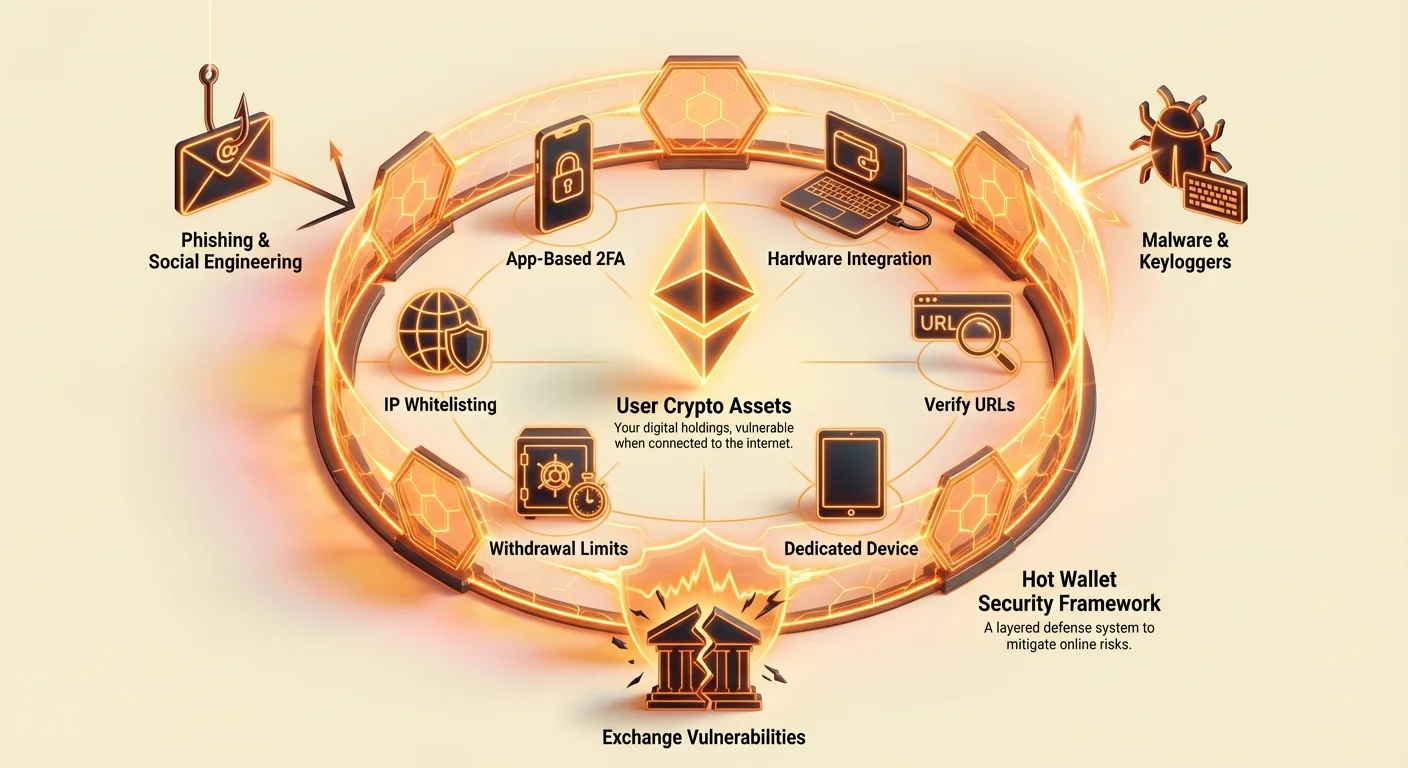
Defense Strategy 1: Mitigating Phishing and Social Engineering
The most common vector for losing funds via a hot wallet is not technical hacking, but human manipulation, or "social engineering." Phishing attacks are designed to trick you into revealing your private keys or approving a malicious transaction.
Identifying Imposter Sites and Apps (The "Verify Everything" Rule)
Scammers often create near-perfect clones of legitimate websites (exchanges, wallet providers, DeFi platforms) to capture your login credentials or seed phrase.
Actionable Mitigation:
- Manual URL Entry: Never click on links in emails, text messages, or unverified social media posts when accessing a crypto service. Always manually type the official, verified URL into your browser.
- Bookmark Critical Sites: Use your browser's bookmark function for every crypto platform you use. Only access the site via the bookmark.
- Check the Connection (SSL/TLS): Ensure the website address begins with
https://and look for the padlock icon. While this doesn't guarantee the site is legitimate, its absence is an immediate red flag. For critical sites, check the security certificate details to ensure the site owner matches the company name. - App Verification: When downloading mobile or desktop wallets, verify the developer name, look for millions of downloads, and cross-reference the app store link against the official website of the wallet provider.
Securing Communication Channels (Email, SMS, and Discord Scams)
Scammers frequently use email, text messages, and chat platforms like Telegram or Discord to create a sense of urgency, often claiming your account is compromised or that you are eligible for a free airdrop.
Actionable Mitigation:
- Assume Scrutiny: No legitimate crypto service will ever ask for your private key, seed phrase, or password via email or chat. Any message demanding this information is a scam.
- Dedicated Crypto Email: Use a unique, strong email address secured with 2FA solely for crypto-related services. This minimizes the risk of credentials being exposed in general data breaches.
- Disable Direct Messaging (DMs): On platforms like Discord, where community support is often sought, turn off Direct Messages from non-friends. Scammer accounts frequently masquerade as admins or support staff.
- Out-of-Band Verification: If you receive an urgent security alert via email, do not click the link. Close the email, open a new browser tab, and navigate to the service's official website manually to check your account status.
Implementing Two-Factor Authentication (2FA) Properly
2FA is critical, but not all methods are created equal. It ensures that even if an attacker steals your password, they cannot log in without the second factor.
Actionable Mitigation:
- Prioritize App-Based 2FA: Use hardware-based or authenticator applications (like Google Authenticator or Authy) over SMS 2FA. SMS messages can be intercepted through SIM-swapping attacks (where a scammer convinces your phone provider to transfer your phone number to their device).
- Secure Your Recovery Keys: When setting up a 2FA app, save the backup codes (usually a QR code or seed) offline. If you lose your phone, these codes are the only way to recover access. Treat these keys with the same care as your wallet seed phrase.
- Enable Withdrawal Whitelisting: On exchanges, enable features that require you to verify new withdrawal addresses via email or, ideally, require a time delay (e.g., 24 hours) after adding a new withdrawal address.
Defense Strategy 2: Blocking Malware and Keyloggers
Malware—malicious software—is designed to compromise your device and covertly steal information. For hot wallet users, the key risks come from software that records keystrokes (keyloggers) or modifies data on the fly.
Isolating Crypto Activity (The Dedicated Device Strategy)
The highest level of operational security for hot wallets involves using a dedicated device—a laptop or phone—that is solely used for crypto transactions and nothing else.
Actionable Mitigation:
- Air-Gapped Browsing: If you cannot afford a dedicated device, commit to using a specific browser profile (or even a completely separate operating system like Linux) just for crypto interactions.
- No Unverified Downloads: Never use your crypto device or profile to download or install games, torrents, email attachments, or cracked software. These are common sources of keyloggers and spyware.
- Regular Wipes and Updates: Ensure your operating system (Windows, macOS, iOS, Android) is always updated to patch known vulnerabilities. Regularly back up and clean your device to remove accumulated digital clutter that might harbor malware.
Protecting Your Seed Phrase During Setup
Your seed phrase is the master key to your non-custodial wallet. If a keylogger or screen-capture tool is running on your device, entering your seed phrase digitally is a massive risk.
Actionable Mitigation:
- Never Type, Always Write: When initializing a new non-custodial software wallet, never enter the seed phrase on a device that is, or has been, connected to the internet. If the wallet requires you to enter the seed for verification, write it down first, then use an on-screen keyboard (if available) or copy/paste characters one by one to avoid keystroke logging.
- Use Hardware Wallet Integration: The single best way to use a software wallet securely is to link it to a hardware wallet (cold storage). For example, you can use the MetaMask interface, but the actual private key remains locked on the hardware device, requiring a physical confirmation for every transaction. This effectively turns a hot wallet interface into a cold storage tool.
Understanding Clipboard Hijacking and Screen Capture Threats
Beyond keyloggers, two subtle malware risks target the efficiency of the modern user:
- Clipboard Hijacking: This sophisticated malware monitors your clipboard for cryptocurrency addresses. When you copy your recipient's address and paste it into the wallet's send field, the malware instantly swaps the legitimate address with the attacker's address.
- Mitigation: Always verify the first four and last four characters of the recipient address after pasting it.
- Screen Capture and Overlay Attacks: Some malware takes screenshots or creates invisible overlays over your wallet interface, capturing sensitive information or tricking you into clicking a malicious button.
- Mitigation: Use strong, verified anti-malware software. When conducting high-value transactions, consider restarting your device into "safe mode" or a verified fresh boot to ensure no background processes are running.
Specialized Risks: Exchange Hot Wallet Vulnerabilities
While software wallets carry device risk, exchange hot wallets carry custodial risk. Even with perfect personal security, you are exposed to the risks faced by the centralized entity holding your funds.
The Counterparty Risk of Centralized Exchanges (CZs)
When you use a CZ, you trust them with the integrity, solvency, and security of the funds. History is littered with examples of major exchanges collapsing due to poor internal controls, insolvency, or massive external hacks.
Actionable Mitigation:
- Set Withdrawal Limits: Configure your exchange account to impose maximum daily or weekly withdrawal limits. If an attacker gains access, this limits the damage they can do in a short time window.
- Research Security Track Records: Before depositing funds, research the exchange's history. Do they publish Proof-of-Reserves? Do they use external auditing firms? Do they offer an insurance fund for user assets?
- Don't Use Exchanges as Banks: The core principle of mitigating exchange risk is minimizing exposure. Only keep the amount of crypto on the exchange necessary for immediate trading activity. All long-term holdings should be transferred to a cold storage solution.
Protecting Your Account from Unauthorized Access
Even though the exchange handles the private keys, you still need robust protection for your login portal.
Actionable Mitigation:
- Enable IP Whitelisting: Many major exchanges allow you to whitelist specific IP addresses (your home or office network). If someone tries to access or withdraw funds from a foreign IP address, the attempt is automatically blocked or severely delayed.
- Strong, Unique Passwords: Use a password manager to generate an extremely complex, unique password for your exchange account—one that you do not use anywhere else.
- Watch for Fake Logins: Be hyper-vigilant about the legitimacy of the login page. Scammers often use typosquatted domains (e.g., binanace.com instead of binance.com) to steal credentials.
The Critical Rule: Minimize Funds on Exchanges
In the context of the Hot Wallet Risk Matrix, centralized exchange hot wallets represent the highest inherent risk category due to the lack of personal control over the keys.
If a fund is not actively needed for trading or immediate purchase, it must be withdrawn to a non-custodial wallet (preferably a hardware wallet). This removes the counterparty risk entirely. Think of the exchange like a bank lobby—you conduct your transactions there, but you don't sleep there.
Pastāvīga operacionālā drošība: Programmatūras un atjauninājumu verificēšana
Programmatūras makas, vai nu darbvirsmas, vai mobilās, prasa periodiskus atjauninājumus, lai labotu kļūdas, pievienotu funkcijas un aizlāpītu drošības trūkumus. Tomēr ļaunprātīgi atjauninājumi var būt arī uzbrucēju piegādes mehānisms.
Maku lejupielādejumu avota verificēšana (tikai oficiālie kanāli)
Nekad neuzticieties trešās puses avotam jūsu maka programmatūrai. Ja ļaunprātīgs aktieris kompromitē trešās puses lejupielādes vietni, viņi var piegādāt indīgu programmatūru, kas izskatās identiska īstajai makai.
Rīcībspējīga mazināšana:
- Vienmēr izmantojiet oficiālās vietnes: Lejupielādes saites jāpiekļūst tieši no maka sniedzēja oficiālās vietnes.
- GPG/Signature pārbaudes: Progresa darbvirsmas lietotājiem daudzas atvērtā koda makas piedāvā kriptogrāfiskas parakstus (GPG atslēgas), kas ļauj matemātiski verificēt, ka lejupielādētais fails nav modificēts kopš izstrādātāju izlaišanas. Izpētiet, kā verificēt šos parakstus pirms instalācijas.
- Pārbaudiet sociālos medijus un forumus: Kad tiek izlaists nozīmīgs maka atjauninājums, pārbaudiet kopienas forumus (piemēram, Reddit vai Twitter), lai saņemtu apstiprinājumu no citiem lietotājiem, pirms nekavējoties piemērojat atjauninājumu. Šī pūļa verificēšana palīdz agri atklāt potenciālus zero-day ekspluatācijas vai ļaunprātīgus izlaidumus.
Programmatūras uzpūšanās un pārmērīgu atļauju briesmas
Katrs lietojumprogramma, ko instalējat savā ierīcē, ievieš potenciālus uzbrukuma ieejas punktus. Programmatūras uzpūšanās — makas ar nevajadzīgām funkcijām — palielina uzbrukuma virsmu.
Rīcībspējīga mazināšana:
- Minimizējiet atļaujas: Instalējot mobilās makas, pārskatiet prasītās atļaujas. Vai vienkāršai Bitcoin makai tiešām vajadzīga piekļuve jūsu kamerai, mikrofonam vai pilnam kontaktpersonu sarakstam? Nolieciet visas atļaujas, kas nav stingri nepieciešamas maka pamatfunkcijai.
- Izvairieties no pārlūkprogrammu paplašinājumiem (kur iespējams): Pārlūkprogrammu paplašinājumi ir ļoti efektīvi pikšķerēšanas vektori. Ja paplašinājums nav absolūti nepieciešams (piemēram, MetaMask specifiskai DeFi mijiedarbībai), izvairieties instalēt maka programmatūru kā pārlūkprogrammas spraudni, jo tas dod lietojumprogrammai dziļu piekļuvi jūsu pārlūkošanas aktivitātei.
- Regulāras auditi: Regulāri pārskatiet instalētās lietotnes jūsu ierīcē. Dzēsiet jebkuru neizmantotu vai aizdomīgu programmatūru, īpaši tās, kas lejupielādētas pirms gadiem un nav atjauninātas.
Secinājums
Karstie maka ir būtiski rīki mijiedarbībai ar dinamisko kriptovalūtas pasauli. Tie nodrošina nepieciešamo ātrumu un ērtumu tirdzniecībai, viedu līgumu mijiedarbībai un ikdienas tēriņiem. Tomēr šis ērtums nāk ar pastiprinātu drošības slogu.
Karstā maka riska matrica prasa jums mainīt domāšanu no pasīvas drošības paļaušanās uz aktīvu, apzinātu aizsardzību. Saprotot vektorus — pikšķerēšanu, kaitņģprogrammatūru un biržas riskus — un piemērojot iepriekš aprakstītās rīcībspējīgās mazināšanas stratēģijas, jūs varat drastically samazināt zaudējumu iespējamību. Atcerieties kripto drošības zelta likumu: Turiet karstajā makā tikai to, kas nepieciešams ikdienas lietošanai, un nodrošiniet lielāko daļu savas bagātības aukstajā uzglabāšanā. Karsto makas drošības apgūšana ir būtisks tilts starp pamatu apguvi un īstas pašsuverenitātes sasniegšanu.