Laipni lūdzam gal ultimate vadlīnijās par kripto drošību. Kad jūs turat kriptovalūtu, jūs kļūstat par savu pašu banku, kas nozīmē, ka jūs esat pilnībā atbildīgs par savu aktīvu aizsardzību. Digitālajā ekonomikā lielākā draudi parasti nav blokķēdes kļūda, bet gan jūsu personiskās drošības kompromitēšana.
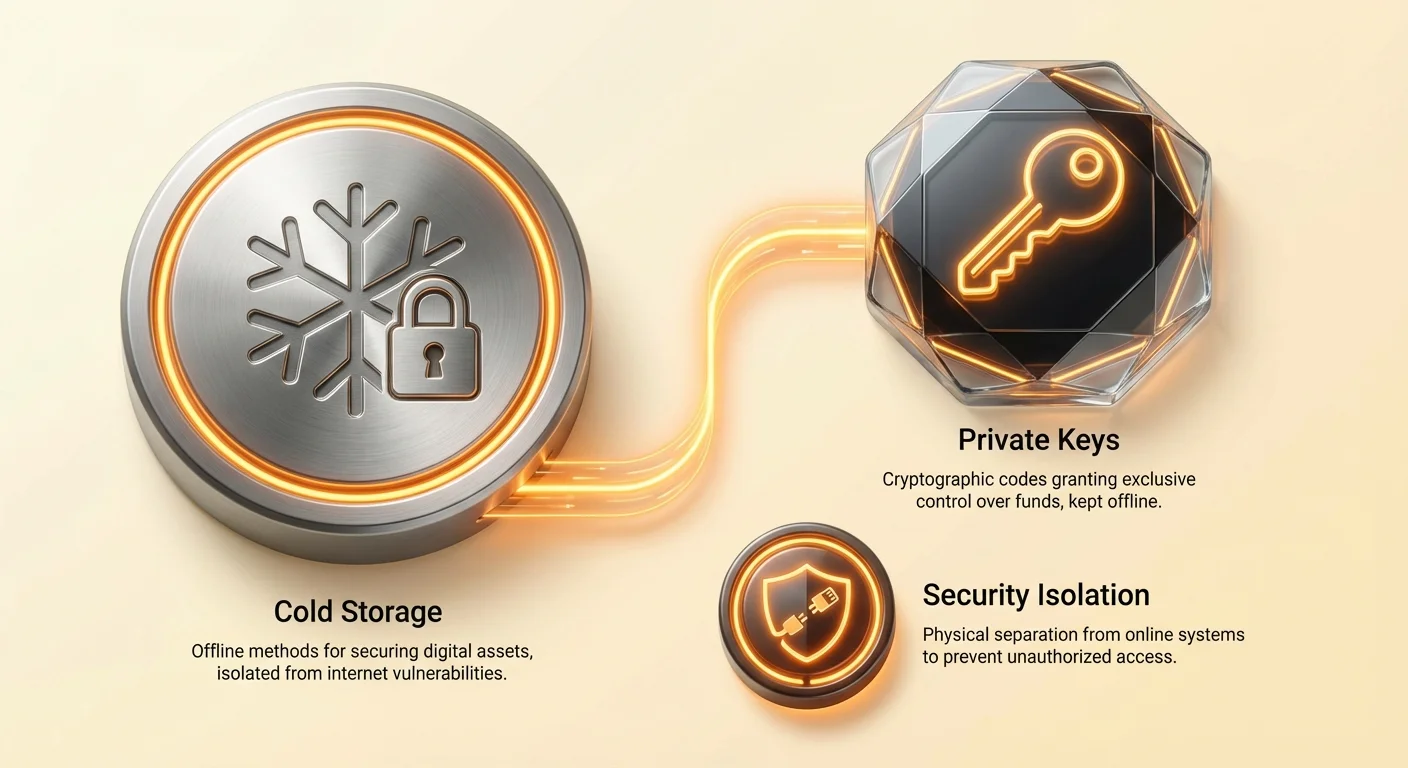
Jauniem lietotājiem nozīmīgākais solis uz pašsuverenitāti ir izprast atšķirību starp "karsto uzglabāšanu" (maciņi, kas savienoti ar internetu, piemēram, mobilās lietotnes vai biržas) un "auksto uzglabāšanu." Aukstā uzglabāšana attiecas uz jebkuru privāto atslēgu uzglabāšanas metodi pilnībā bezsaistē, izolējot tās no interneta ievainojamībām.
Šī vadlīnija pārsniedz vienkāršas definīcijas. Mēs izveidosim aukstās uzglabāšanas risinājumu hierarhiju, sākot ar plaši izmantoto aparatūras maciņu un pārejot uz ekstremāliem, uzlabotiem drošības iestatījumiem, piemēram, gaisa sprauga sistēmām. Izprotot šo drošības hierarhiju, jūs varat pielāgot piemērotu aizsardzības līmeni savas kopējās aktīvu vērtībai un personiskajai riska tolerancei.
Defining Cold Storage and the Necessity of Isolation
The core concept of cold storage is simple: keep the key to the vault (your private key or seed phrase) physically separated from potential thieves (hackers, malware, and online phishing scams).
In traditional banking, if a criminal accesses your bank’s server, they might see your account balance, but they cannot walk away with physical cash. In crypto, if a criminal accesses your private key, they can walk away with your money instantly. Therefore, physical isolation is the only reliable defense against sophisticated online attacks.
The Core Principle: Hardware Wallets as the Standard Bearer
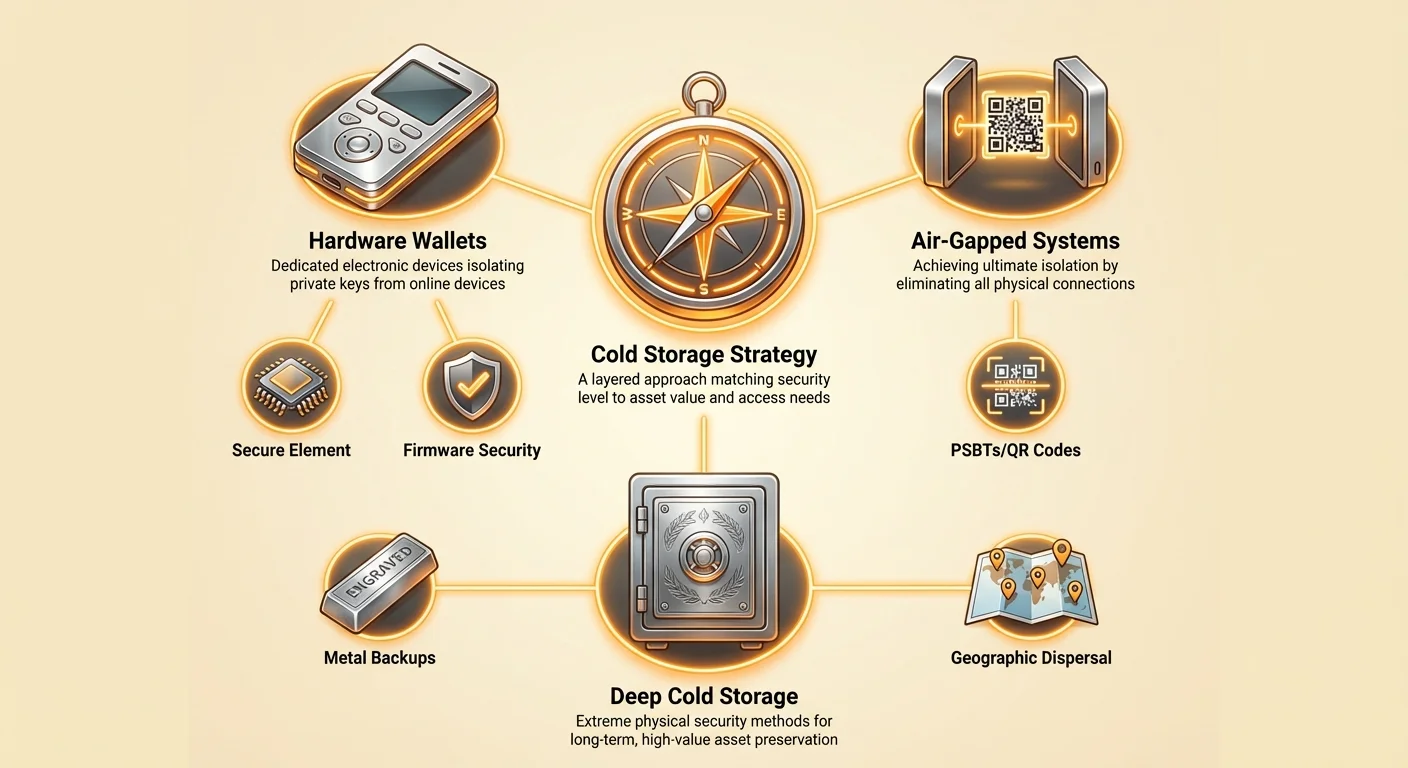
A hardware wallet is a dedicated electronic device, typically resembling a small USB drive, built for one purpose: protecting your private keys. It is the gold standard for cold storage because it isolates the critical security information from your internet-connected computer or smartphone.
How Hardware Wallets Isolate Your Private Keys
Imagine your hardware wallet as a locked safe deposit box. When you want to send crypto, you do not open the safe deposit box on the internet. Instead, you plug the safe into a computer (which is connected to the internet).
- Transaction Creation: Your computer creates a transaction request (e.g., "Send 1 BTC to Address X").
- Offline Signing: This request is sent to the hardware wallet via a USB or Bluetooth connection. The hardware wallet verifies the details on its internal screen. Crucially, the private key never leaves the device.
- Key Isolation: The transaction is signed using the private key stored securely inside the device’s chips.
- Broadcast: The signed transaction is sent back to the computer, which then broadcasts it to the blockchain.
Since the private key remains locked within the hardware wallet’s secure chips during the entire process, even if your computer is infected with sophisticated malware, the thief cannot steal the key necessary to authorize the transfer.
The Trade-off: Security vs. Convenience (Cold vs. Hot)
Choosing cold storage involves accepting a trade-off: security always comes at the expense of convenience.
| Feature | Hot Wallet (Mobile/Exchange) | Cold Wallet (Hardware/Air-Gapped) |
|---|---|---|
| Connectivity | Always online | Always offline (except when signing) |
| Vulnerability | Phishing, malware, exchange hacks | Physical loss, device failure, user error |
| Transaction Speed | Instant | Requires device connection and PIN entry |
| Ideal Use Case | Small spending amounts, trading | Long-term savings, large wealth storage |
For maximum security, 95% of your crypto holdings should reside in cold storage, leaving only small amounts in a hot wallet for daily spending or quick trades.
Analyzing Hardware Wallet Security Standards (The Technical Deep Dive)
Not all hardware wallets are created equal. As the value of the assets stored in these devices increases, so does the incentive for sophisticated attackers to try to compromise them. This led to the development of specific standards and technologies to increase the physical and digital resilience of hardware devices.
When selecting a hardware wallet, you should focus on three critical components: the Secure Element, the security certification level, and the firmware process.
The Role of the Secure Element (SE) Chip
The Secure Element (SE) is a specialized chip embedded within high-security hardware wallets. It is essentially a separate computer-within-a-computer, built specifically to resist physical tampering and digital extraction.
- What it is: The SE is a certified chip (similar to those used in passports or modern credit cards) designed to securely store and process confidential data.
- Why it matters: In devices without a Secure Element, the private key is often stored in the device's standard microcontroller (MCU). While safer than a regular PC, an MCU is still more vulnerable to side-channel attacks (monitoring the device's electrical signals or heat signatures) or invasive physical probing. The SE is designed with active countermeasures to detect and destroy data if physical intrusion is attempted.
If a wallet advertises "enterprise-grade security," it usually implies the use of a high-quality, dedicated Secure Element.
Understanding Security Certification Levels (EAL Ratings)
To provide objective proof of security, manufacturers often submit their Secure Elements and overall devices for evaluation by independent bodies. One of the most common certifications is the Evaluation Assurance Level (EAL).
EAL is a numerical rating (EAL1 through EAL7) given under the Common Criteria Recognition Arrangement (CCRA). It measures how rigorously a product has been tested and verified to meet security requirements.
| EAL Level | Description | Relevance to Crypto |
|---|---|---|
| EAL1–EAL3 | Functionally tested, basic development standards. | Low relevance; easily compromised by dedicated attackers. |
| EAL4 | Methodically designed, tested, and reviewed. Provides a good baseline security layer. | Used in many consumer electronics; acceptable for basic crypto use. |
| EAL5 | Semi-formally designed and tested. Requires clear architectural documentation and rigorous penetration testing. | The minimum recommended standard for high-value crypto storage. |
| EAL6–EAL7 | Formally verified design and tested for highly sensitive data (military/government). | Extremely high standard; rarely needed for consumer crypto wallets due to high cost and complexity. |
For long-term storage of significant wealth, seeking a wallet with an EAL5+ certified Secure Element provides a robust, third-party verified defense against both remote and physical attacks.
Firmware and Supply Chain Attack Mitigation
Firmware is the permanent software embedded in your hardware device that controls its core functions. Firmware security is vital because an attacker who can alter the firmware can potentially steal your keys when you try to sign a transaction.
Two major security concerns related to firmware are:
- Initial Compromise (Supply Chain Attack): An attacker intercepts the device between the factory and the customer and installs malicious firmware.
- Future Compromise (Remote Attack): An attacker forces a malicious firmware update after the user has received the device.
High-quality hardware wallets use security mechanisms to mitigate these risks:
- Attestation: When you first set up the wallet, it should perform an integrity check to verify that the original, trusted firmware is running. This process confirms the authenticity of the device and confirms it hasn't been tampered with in transit.
- Signed Updates: All firmware updates must be digitally signed by the wallet manufacturer. The hardware wallet checks this cryptographic signature before applying the update. If the signature doesn’t match (meaning the update is coming from a hacker), the wallet refuses to install it.
- Open Source Code: Many top-tier wallets make their firmware code publicly available (open source). This allows the global security community to audit the code constantly, identifying vulnerabilities much faster than a closed, proprietary system might.
Air-Gapping: Achieving Ultimate Transaction Isolation
While a standard hardware wallet provides excellent cold storage, it still requires a physical connection (USB or Bluetooth) to an internet-connected device (your PC or phone) to send transactions. For users managing extremely high value assets or those operating in high-risk geopolitical environments, this connection represents a potential, albeit small, attack vector.
Air-gapping eliminates this final physical connection entirely, achieving the absolute highest level of practical security available to non-institutional users.
What is an Air-Gapped Setup?
An air-gapped system is defined by its physical and logical isolation from all insecure networks, most importantly the internet.
In a crypto context, an air-gapped setup involves two separate devices:
- The Cold Device (Signer): A dedicated, non-networked device (often a specialized hardware wallet, an offline laptop, or a custom-built computer) that holds the private key and only performs the cryptographic signing. This device is never connected to the internet.
- The Hot Device (Broadcaster): An online computer or phone that prepares the transaction details and broadcasts the final signed transaction to the blockchain.
The physical gap (the "air gap") between these two devices means data must be transferred manually, usually via non-networked methods.
The Transaction Signing Process (PSBTs and QR Codes)
How do you communicate between the hot and cold devices without cables or Wi-Fi? This is achieved using standardized formats and visual communication.
The most common modern method uses Partially Signed Bitcoin Transactions (PSBTs), often transferred using QR codes or secured SD cards.
Here is the four-step process for an air-gapped transaction:
- Preparation (Hot Device): The user uses the online computer to create the basic transaction details (amount, recipient address). The computer then generates a Partially Signed Bitcoin Transaction (PSBT)—an unsigned digital file containing all the necessary data except the signature—and displays it as a QR code or saves it to an SD card.
- Transfer and Verification (Cold Device): The user scans the QR code using the cold device’s camera (or inserts the SD card). The cold device loads the transaction details, verifies them on its screen, and prompts the user for approval and PIN entry.
- Signing (Cold Device): The cold device signs the transaction using the offline private key. It then generates a new QR code containing the now-complete, signed transaction data.
- Broadcast (Hot Device): The user scans this signed QR code back onto the hot device. The hot device receives the fully authorized transaction and broadcasts it to the blockchain.
At no point does the sensitive private key information touch an online network.
Practical Use Cases for Air-Gapped Systems
Air-gapping is generally overkill for a user holding a few thousand dollars in crypto. It is an investment in complexity and time designed for maximum security.
Ideal Candidates for Air-Gapping:
- High-Net-Worth Individuals (HNWIs): For individuals storing assets valued above six or seven figures. The inconvenience is justified by the catastrophic risk of loss.
- Institutional Custody: Companies, funds, or organizations managing pooled client assets where fiduciary responsibility demands the highest security.
- Extreme Privacy Users: Individuals concerned about state-level actors or targeted surveillance, as the system provides resilience against sophisticated network penetration.
Dziļās aukstās uzglabāšanas vēsturiskais un ekstrēmākais galapunkts
Pirms sarežģītiem aparatūras maciņiem kļuva plaši pieejami un pat šodien dažās nišas situācijās lietotāji paļāvās uz analogām un fiziskām dziļās aukstās uzglabāšanas formām. Lai gan šīs metodes piedāvā ekstrēmu izolāciju, tās ievieš veselu jaunu risku klāstu, kas galvenokārt saistīts ar fizisko bojāšanos, katastrofām un atjaunošanu.
Papīra maciņi: Kāpēc fiziskā uzglabāšana ne vienmēr ir drošāka
Papīra maciņš ir vienkārši izdrukāts jūsu publiskās adreses un atbilstošās privātās atslēgas attēls (parasti kā QR kods un teksts).
Sākotnējā pievilcība: Papīra gabals nevar tikt uzlauzts. Tas ir pilnībā atdalīts no tīkla no izdrukāšanas brīža.
Galvenie trūkumi:
- Izveides risks: Papīra maciņa izveides process ir pilns ar riskiem. Ja dators, kas izmantots atslēgu ģenerēšanai vai papīra drukāšanai, ir inficēts ar kaitējprogrammatūru, atslēga tiek nozagtā pirms tā kļūst par "aukstu". Turklāt printeri uztur atmiņas kešus, potenciāli atstājot digitālu privātās atslēgas kopiju gaistošā ierīcē.
- Fiziskā bojāšanās: Papīru viegli var iznīcināt uguns, plūdi, kukaiņi vai vienkārša izbalēšana. Laminēšana var to saglabāt, bet neaizsargā pret katastrofālām nelaimēm.
- Iztērēšanas risks: Papīra maciņa iztērēšana ir sarežģīta un bīstama. Lai pārvietotu līdzekļus, lietotājam jāievada privātā atslēga tiešsaistes ierīcē, īslaicīgi padarot uzglabāšanas metodi "karstu" un pakļaujot atslēgu kaitējprogrammatūrai. Modernie aparatūras maciņi šo risku pilnībā novērš.
Secinājums par papīra maciņiem: Gandrīz visiem lietotājiem izveides un iztērēšanas augstie riski nozīmē, ka specializēti aparatūras maciņi ir pārliecinoši drošāki un praktiskāki nekā papīra maciņi.
Ekstrēmā alternatīva: Mentālie un sēklas uzglabāšanas paņēmieni
Absolūti dziļākā aukstās uzglabāšanas forma balstās uz cilvēka atmiņu: mentālais maciņš. Tas ietver 12 vai 24 vārdu sēklas frāzes iegaumēšanu vai primārās frāzes iegaumēšanu un izmantošanu uzlabotiem paņēmieniem, piemēram, Shamir’s Secret Sharing, lai sadalītu sēklu vairākās atmiņās vai vietās.
Pievilcība: Galīgais drošības līdzeklis pret fizisku sagrābšanu vai iznīcināšanu, jo atslēga pastāv tikai lietotāja prātā.
Galvenie trūkumi:
- Cilvēciska kļūda: Aizmirstot vienu vārdu, nepareizi uzrakstot vārdu vai nepareizi atceroties secību, līdzekļi tiek zudīti uz visiem laikiem.
- Fiziska trauma: Atmiņas zudums vecuma, savainojuma vai ekstremāla stresa dēļ var novest pie neatgūstamiem zaudējumiem.
- Mantojuma problēmas: Mentālo maciņu nodot mantiniekiem ir gandrīz neiespējami, neapdraudot drošību pirms nāves.
Mentālos maciņus parasti apsver tikai ekstrēmi pašsuverenitātes aizstāvji, kuri ir pilnveidojuši specializētus mnemoniskos paņēmienus. 99% iedzīvotāju gadījumā fiziska dokumentācija, ko aizsargā spēcīgi drošības pasākumi, ir drošāka nekā paļaušanās uz atmiņu.
Dziļās aukstās uzglabāšanas risku novērtējums (uguns, ūdens, bojāšanās)
Pārejot uz dziļo auksto uzglabāšanu, fokuss pilnībā pāriet no digitālās aizsardzības uz fizisko izturību un izdzīvojamību.
Labākās prakses fiziskajai izturībai:
- Materiāls: Nepaļaujieties uz papīru. Iegravējiet savu sēklas frāzi izturīgos materiālos, piemēram, titānā, tēraudā vai speciālos sakausējumos, kas iztur ekstremālu karstumu (uguni) un koroziju (ūdens bojājumus).
- Izplatīšana: Izmantojiet dublēšanu un ģeogrāfisko atdalīšanu. Nekad neglabājiet savu vienīgo kopiju vienā vietā. Labākās prakses ietver sēklas frāzes sadalīšanu vai Shamir’s Secret Sharing risinājumu izmantošanu un komponentu uzglabāšanu drošās, plaši atdalītās fiziskās vietās (piem., bankas seifā pilsētā A un seifā pilsētā B).
- Izturība un testēšana: Ieguldiet augstas kvalitātes uzglabāšanas risinājumos (piem., ugunsizturīgos seifos) un pārbaudiet gravēta materiāla izturību pret augstu karstumu, pirms uzglabājat kritisko informāciju.
Jūsu aukstās uzglabāšanas stratēģijas veidošana: Riska hierarhijas ietvars
Mērķis nav sasniegt tikai "visdrošāko" metodi, bet sasniegt pareizo drošības līmeni, kas proporcionāls jūsu bagātībai un nepieciešamajai piekļuves biežumam. Mēs varam kategorizēt drošības hierarhiju, balstoties uz izmaksām, sarežģītību un piekļuves ātrumu.
| Drošības līmenis | Primārā metode | Risku profils | Izmaksas & sarežģītība | Piekļuves ātrums |
|---|---|---|---|---|
| 1. līmenis (Augsts) | Standarta aparatūras maciņš (EAL4/5) | Lieliska aizsardzība pret attālinātiem hakeriem un izplatītu kaitējprogrammatūru. | Zemas līdz vidējas (vienreizēja ierīces pirkšana). | Ātrs (nepieciešama pieslēgšana). |
| 2. līmenis (Ekstrēms) | Gaisa sprauga aparatūras maciņš (PSBT/QR) | Gandrīz absolūta aizsardzība pret attālinātu un lokālu kaitējprogrammatūru. | Vidējas (nepieciešamas specializētas ierīces un stingra iestatīšana). | Lēns (nepieciešama fiziska skenēšana/pārsūtīšana). |
| 3. līmenis (Dziļi bezsaistes) | Metāla plāksnes uzglabāšana + Ģeogrāfiska izplatīšana | Absolūta aizsardzība pret digitāliem draudiem; izturība pret fiziskām katastrofām. | Zemas (materiāla izmaksas) līdz augstas (uzglabāšanas noma/ceļošana). | Ļoti lēns (nepieciešama fiziska izgūšana). |
| 4. līmenis (Mantojums/izvairīties) | Papīra maciņi | Augsts izveides kompromitēšanas un fiziskas bojāšanās risks. | Ļoti zemas. | Lēns un augsts risks tērēšanas brīdī. |
Drošības līmeņa pielāgošana aktīvu vērtībai un aktivitātei
Izmantojiet šo ietvaru, lai izlemtu, kur pieder jūsu aktīvi:
- Jūsu pensijas ietaupījumiem (90%+ no kopējās kripto): Izmantojiet 2. vai 3. līmeņa risinājumus. Aktīvi, kas uzglabāti šeit, ir tie, kurus neplānojat pieskarties gadiem. Ģeogrāfiska izplatīšana un aparatūras maciņš ar EAL5+ vērtējumu ir augsti ieteicams.
- Ārkārtas fondiem (5–10% no kopējās kripto): Izmantojiet 1. līmeni. Standarta, augstas kvalitātes aparatūras maciņš nodrošina spēcīgu drošību bez gaisa sprauga pārmērīgās berzes.
- Tirdzniecībai/ikdienas darījumiem (mazāk nekā 1% no kopējās kripto): Izmantojiet regulētu karsto maciņu vai uzticamu programmatūras maciņu. Ērtības risks tiek pārsniegts ar ātruma un likviditātes vajadzību.
Rīcības padoms: Regulāri auditējiet jūsu fiziskās uzglabāšanas vietas. Pārliecinieties, ka jūsu metāla dublēšanas plāksnes ir drošas, lasāmas un ka atjaunošanas process ir saprotams jums un, ja piemērots, jūsu uzticamajam juridiskajam izpildītājam.
Secinājums
Aukstās uzglabāšanas hierarhijas izpratne ir svarīgākā mācība kripto drošībā. Lai gan karstie maciņi piedāvā ātrumu un pieejamību, patiesa pašsuverenitāte ir balstīta uz fiziskas izolācijas pamatu.
Gandrīz visiem lietotājiem labi auditēts, EAL-sertificēts aparatūras maciņš (1. līmenis) nodrošina perfekto drošības un lietojamības līdzsvaru. Tomēr, kad jūsu kripto bagātība aug, gaisa sprauga sistēmu (2. līmenis) sarežģītība un stingrība un izplatīti, iegravēti dublējumi (3. līmenis) kļūst par nepieciešamiem soļiem, lai sasniegtu galīgo drošību un mieru digitālajā ekonomikā. Pārvietojot savas privātās atslēgas bezsaistē un ieviešot šīs uzlabotās tehnikas, jūs pilnībā pārņemat kontroli pār saviem aktīviem, aizsargājot tos pret gandrīz visiem modernajiem uzbrukuma vektoriem.