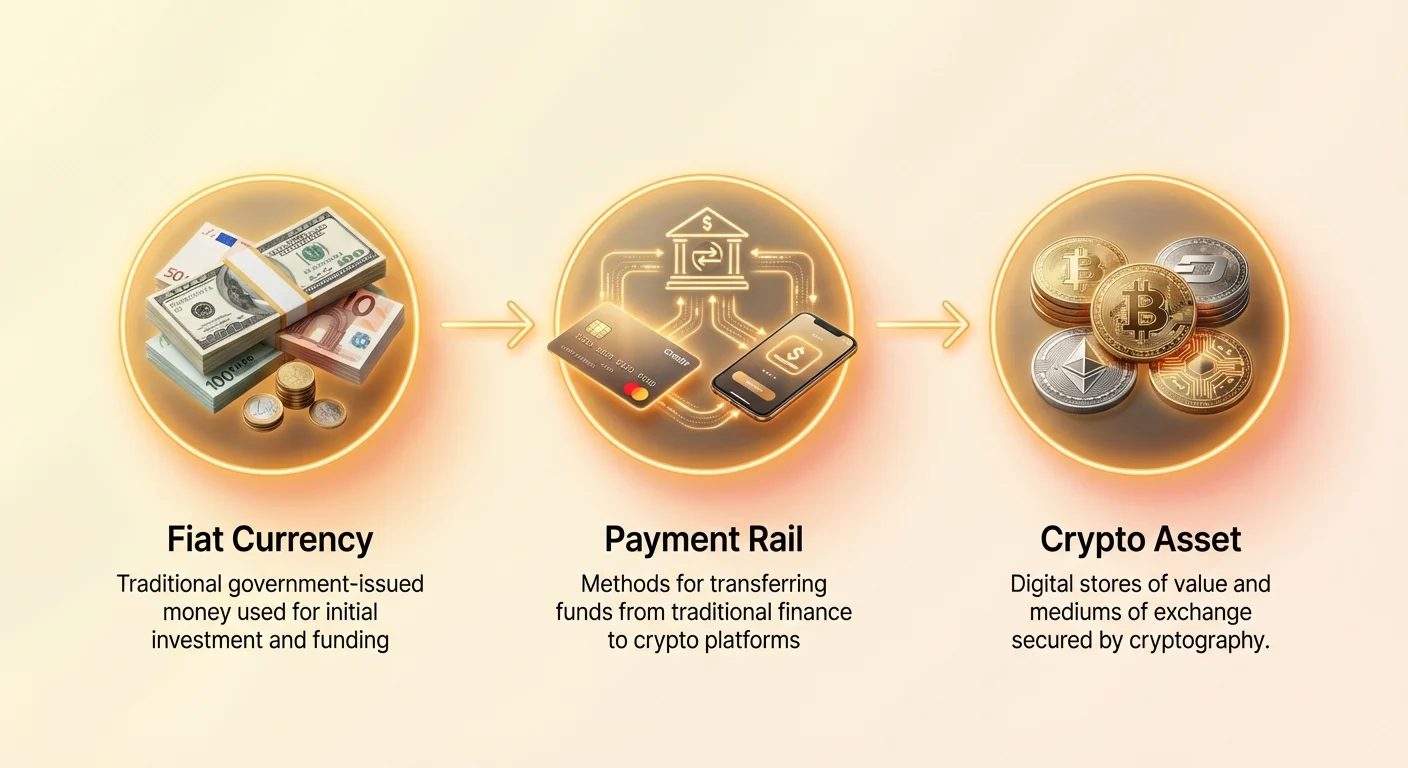
デジタル資産経済への旅は、オンランピングと呼ばれる重要なプロセスから始まります。これは、伝統的なフィアット通貨(USD、EUR、GBPなど)を暗号通貨に安全かつ効率的に変換するものです。新規参入者にとっては、通常、資産を取得することが即時の目標です。しかし、持続的な自己主権を築き、デジタル資産を戦略的に管理しようとする人々にとっては、単なる実行から純粋な最適化への焦点のシフトが必要です。
手数料、スプレッド、隠れた取引コストに費やされる1ドルは、ポートフォリオ内であなたのために働かない1ドルです。これらの小さなパーセンテージは、「ビジネスのコスト」としてしばしば無視されますが、急速に複合し、特に頻繁な取引や大規模な取引量で資本を大幅に削ります。オンランプの習得は、したがって戦略的資産管理の最初の重要なステップです。
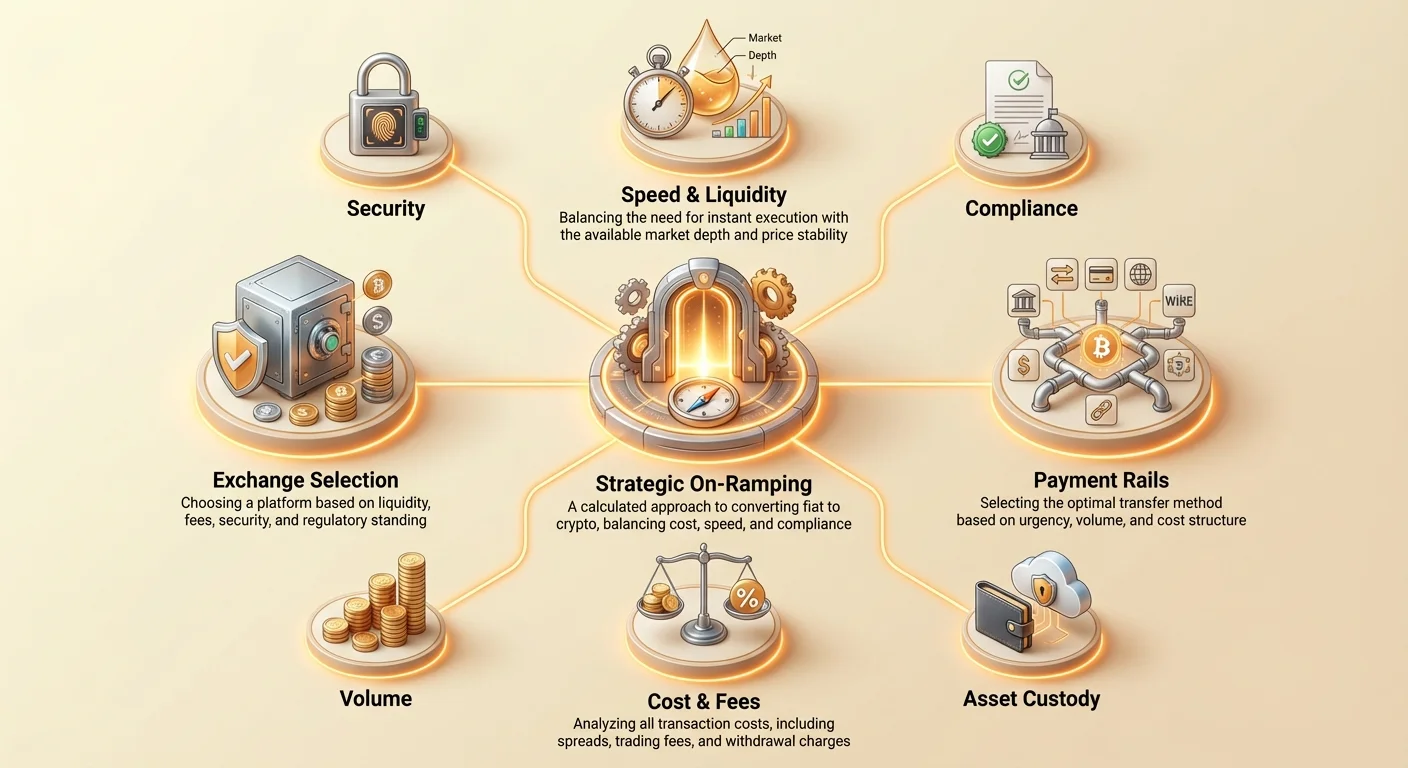
このガイドは、中級レベルの実務者向けのロードマップを提供します。中央集権型取引所の風景をナビゲートし、異なる決済レール(ACH、ワイヤー、カード)の効率を分析し、速度、コンプライアンス、そして最終的にポートフォリオの開始価値を最適化するコスト最小化戦略を構築するためのものです。
1. The Foundation: Centralized Exchange (CEX) Selection
Your choice of Centralized Exchange (CEX) is the primary determinant of your fees, speed, and overall asset security. While many beginners gravitate toward the platform with the cleanest mobile app, strategic users prioritize liquidity, regulatory compliance, and most importantly, the fee schedule.
Key Factors Beyond User Interface
While ease of use is important, high-volume traders and long-term investors must evaluate a CEX based on its structural advantages, not just its aesthetics.
Liquidity and Spreads: Liquidity refers to how easily an asset can be bought or sold without significantly affecting its price. High-liquidity exchanges allow for tighter spreads—the difference between the highest buy order and the lowest sell order. When you buy crypto using a simple "instant purchase" button, you are often paying the spread, which acts as an invisible, untracked fee. Exchanges with deep order books and high trading volumes inherently offer better pricing and tighter spreads, making them generally more cost-efficient for large transactions.
Regulatory Status and Jurisdiction: The CEX must operate under a stable and recognized regulatory framework in your jurisdiction (e.g., FinCEN registration in the US or similar licensing in Europe). A regulated exchange offers better security guarantees, consumer protection, and ensures smoother banking integrations. Attempting to use an unregulated international platform might offer lower trading fees, but it introduces significant jurisdictional risk, potential banking difficulties, and complex tax compliance issues down the line.
Security and Insurance: Prioritize exchanges with robust security protocols (two-factor authentication, cold storage reserves for a majority of assets) and consider those that offer FDIC or private insurance for fiat balances held on the platform.
Understanding Tiered Fee Structures (Maker vs. Taker)
Most advanced CEXs use a tiered fee structure designed to reward high-volume traders and those who provide liquidity to the market. Understanding this system is crucial for cost minimization:
- Taker Fees: These are paid when you take liquidity off the order book. This happens when you place a market order—an order that executes immediately at the best available price. Since you are removing an existing order, you are deemed a Taker. Taker fees are generally higher.
- Maker Fees: These are paid when you make liquidity. This happens when you place a limit order—an order set to execute at a specific price not currently available. Your order sits on the order book, providing liquidity for future Takers. If your order executes, you are deemed a Maker, and you pay a significantly lower fee, or sometimes even receive a rebate (negative fee).
Optimization Tip: Always use limit orders when on-ramping, even if the price is only slightly below the current market rate. This forces you into the lower Maker fee category, minimizing your transactional cost dramatically, especially when buying frequently.
The Role of KYC and Jurisdictional Compliance
Know-Your-Customer (KYC) requirements are mandatory for almost all regulated centralized exchanges. While often seen as a bureaucratic hurdle, KYC is the necessary link that allows the CEX to connect with the traditional banking system.
Impact on Banking Access: Completing KYC (providing government ID and proof of address) is essential for linking bank accounts, which in turn unlocks the most cost-efficient payment rails (ACH and Wire transfers). Exchanges cannot accept fiat funds from unverified sources due to anti-money laundering regulations. Skipping KYC confines you to higher-fee options like anonymous P2P services or card purchases with restrictive limits.
Impact on Volume: KYC verification often occurs in tiers. A basic tier might allow $5,000 in monthly purchases, while a fully verified professional account might allow unlimited or six-figure daily deposits. If your strategy involves large or infrequent purchases, ensure your CEX verification level supports your target volume.
2. フィアット送金レールの解読:速度 vs. コスト
銀行からCEXウォレットへの資金送金に選択する方法—つまり送金レール—は、速度と直接コストを決定する最大の変数です。各レールは、即時アクセスと取引費用との根本的なトレードオフを表しています。
| 送金レール | 速度 | コスト構造 | 最適なユースケース |
|---|---|---|---|
| ACH送金 | 3〜5営業日 | 低/ゼロ手数料 | DCA、定期貯蓄、大口貯蓄購入 |
| 電信送金 | 当日/1営業日 | 固定手数料(高額) | 高額取引、時間敏感な購入(5万ドル以上) |
| デビット/クレジットカード | 即時 | 高パーセンテージ手数料(3%〜5%) | 緊急購入、高ボラティリティ取引 |
自動清算所(ACH):低コストの標準
ACHネットワークは、米国銀行システム内の日常的な電子送金の標準的な仕組みです(欧州のSEPAのようなグローバルな低コストシステムも存在します)。
コストと速度: ACH送金はCEXによって通常無料で提供され、機関の基礎コストが最小限だからです。ただし、本質的に遅く、完全に清算されるまで通常3〜5営業日かかります。
仮入金とリスク: 優れたユーザーエクスペリエンスを維持するため、多くの大手取引所は仮入金を行い、ACH送金を開始した直後に暗号資産を購入できるようにしますが、フィアット資金が正式に決済されていない状態です。これは取引所による一時的な貸付の形態です。基礎となるACH送金が失敗した場合(例:資金不足)、取引所は購入した暗号資産を清算し、しばしばペナルティやアカウント凍結を引き起こします。
最適化: ACHはドルコスト平均法(DCA)や日常的で非緊急の資産蓄積に最適で、速度よりもコスト最小化を優先する場合です。仮入金資金に関連するリスクを避けるため、常に十分なフィアット残高を確保してください。
電信送金:速度とボリューム効率
電信送金は、金融機関間の直接的でリアルタイムかつ不可逆的な送金です。プロフェッショナルや富裕層投資家による大規模購入に必要です。
コストと速度: 銀行は電信送金に対して高額の固定手数料(通常25〜50ドル)を課します。ただし、送金が直接的で迅速に決済される(締切時間前に開始すれば当日決済)ため、CEXはこれらの資金を即座に完全に清算済みとして扱います。これにより、ACHの仮入金に伴う遅延とリスクを回避できます。
ボリューム最適化: 100ドルの購入に対して30ドルの電信手数料は高額(30%のコスト)ですが、10万ドルの購入では無視できるレベル(0.03%のコスト)になります。固定手数料構造により、緊急度に関わらず高ボリュームのオンチェーン流入に最も効率的なレールとなります。
デビット/クレジットカード購入:即時性の代償
カードを使用するのは暗号資産取得の最速の方法ですが、普遍的に最も高額な方法です。
コスト構造: カード処理業者は暗号資産購入を高リスクと分類し、取引額の3〜5%の処理手数料が発生します。これらの手数料は通常取引所によってユーザーに直接転嫁されます。さらに、クレジットカードを使用する場合、発行者は取引を「現金前払い」と分類し、即時高金利とカード会社自体が課す追加手数料が発生する可能性があります。
ユースケースの制限: カード購入はボリュームが厳しく制限されており、主に即時的で小額または緊急の購入に適しています—例えば、突然の市場下落が発生し、ACHや電信送金より速く資金を投入する必要がある場合です。戦略的投資家は高額なコストのため、カード使用を最小限に抑えるべきです。
3. 総取得コスト (TCA) モデル
最適化されたオンランピングには、総取得コスト (TCA) の評価が必要です。TCA は法定通貨入金手数料だけではありません。購入を決定した瞬間から資産が自己管理ウォレットに確保される瞬間までのすべてのコストを含みます。TCA の構成要素を無視すると、重大な資本流出を引き起こします。
取引手数料 vs 出金手数料 (隠れたコスト)
多くのユーザーは、取引手数料(メイカー/テイカー手数料)の低さにのみ注目し、資産を取引所から移動させるコストを考慮していません。
出金手数料分析: 暗号資産を購入する際の目標は、しばしばセキュリティのためにCEXから自己管理ウォレットへ移動させることです。この最終ステップにはネットワーク手数料がかかり、取引所によって補助されたり標準化されたりします。
- 固定手数料: 一部の取引所では、暗号資産自体で固定の出金手数料を課します(例: 0.0005 BTC)。頻繁に少額購入を行う場合、これらの固定手数料は取得資産の大きな割合を急速に消費します。
- 動的手数料: 高効率の取引所では、現在のネットワーク混雑度に基づいて調整される動的手数料を使用し、出金が迅速に実行されることを保証します。
最適化戦略: 定期的に資金を自己管理に移す予定がある場合、対象資産に対して競争力のある低額または高効率の固定出金手数料を提供する取引所を選択してください。あるいは、数週間または数ヶ月かけて小額購入をまとめ、一度のコスト効率の良い出金を行う方法もあります。
スプレッドと流動性: 見えない税金
前述の通り、スプレッドは即時実行のためのコストであり、しばしば「即時購入」価格に隠されています。
例のシナリオ:
- 取引所 A(高流動性): BTC は $60,000 で取引中。スプレッドは $50。$60,025 で購入。
- 取引所 B(低流動性/ブローカーモデル): BTC は $60,000 で取引中。スプレッドは $300。$60,150 で購入。
取引所 A が取引所 B(例: 0.10%)よりも高い取引手数料(例: 0.25%)を課していても、取引所 B の広いスプレッドによるコストが実質的に大幅に高くなる可能性があります。
実践的なヒント: シンプルな「購入」画面で提示される購入価格と、高度な「取引」画面(オーダーブックを表示)で利用可能な価格を常に比較してください。この差が利便性に対するスプレッドです。戦略的な投資家は即時購入ボタンを避けます。
取引量最適化: 購入のスケーリング
取引量と手数料の関係は、大規模投資や定期的な高頻度取引を計画する中級者にとって重要です。
- 段階的手数料削減: CEX の手数料スケジュールは、一般的に30日間のローリング取引量に基づいています。取引量が増えると、メイカー/テイカー手数料が劇的に低下します。例えば、初心者はテイカー手数料として0.60%を支払う可能性がありますが、$1百万の取引量のトレーダーは0.08%を支払うかもしれません。
- 戦略的段階的実行: 非常に大規模な資本配分(例: $250,000)を計画している場合、短期間に小さなタイミング付き購入に分割することを検討してください。最初の数回の購入は高い手数料がかかりますが、資本配分の大部分を低手数料ティアに迅速に押し上げ、大きな純粋な節約を実現します。
- 固定手数料 vs 割合手数料: 資本をスケールアップする際は、常に固定手数料メカニズム(ワイヤートランスファーなど)を割合ベースのメカニズム(クレジットカードなど)よりも優先してください。$50,000 の購入に対する3%のカード手数料は $1,500—受け入れがたい資本損失です。
4. 特定の目標のための戦略的オンランピング
最適化された送金経路の選択は、投資目標と時間軸に完全に依存します。
戦略1: 小規模で頻繁な購入(ドルコスト平均法 - DCA)
DCAは、価格変動に関係なく一定のドル額の暗号資産を継続的に購入する方法です。これは初心者や長期蓄積者にとって最も一般的なアプローチです。
最適化された経路: ACH送金が圧倒的に最適な選択です。DCAは速度よりも一貫性と低メンテナンスを優先するため、3〜5日間の決済時間は無関係です。ゼロコストの入金手数料により、最大額の法定通貨が暗号資産に変換され、TCAを極めて低く抑えられます。
ベストプラクティス: CEXアカウントへの定期ACH送金を設定し、資金到着時に先進取引プラットフォーム(インスタントバイ機能ではなく)を使用してリミットオーダーを実行します。
戦略2: 大規模で不定期な購入(資本展開)
この戦略は、伝統資産の清算や貯蓄からの大規模な一括資金を展開する場合に適用されます。速度と確実性が最優先です。
最適化された経路: 電信送金(ワイヤー送金)。目標は最終的な暗号資産取得額を最大化することです。25ドルの固定ワイヤー手数料は高く見えますが、大規模資金に対する割合影響は無視できます。さらに、ワイヤー資金は迅速に決済され即時利用可能で、ACH送金の3〜5日待機による市場露出リスクを低減します。
ベストプラクティス: 送金前にCEXのワイヤー指示(固有参照コードを含む)を確認します。法定通貨到着後、リミットオーダーを使用して大口取引を即時実行し、メイカー手数料の低いティアに移行します。
戦略3: 緊急またはボラティリティに敏感な購入
これは、即時市場状況に基づく取引実行、例えば突然の深いディップ買いや速報への反応を伴います。時間は絶対的な優先事項です。
最適化された経路: デビットカード、または必要に応じてCEXの事前資金法定通貨残高を使用。カード手数料が高いため、このオプションは即時実行による潜在市場利益が3-5%の取引コストを大幅に上回る場合にのみ使用します。
ベストプラクティス: 予期せぬイベント時に即時展開できるように、CEXに少額の法定通貨バッファを事前に入金・決済(ACHまたはワイヤー使用)しておきます。これにより高いカード手数料を回避しつつ、インスタント実行の速度を維持します。
5. Alternative On-Ramping Methods (Bypassing Traditional CEX)
While centralized exchanges offer the best liquidity and regulatory security for most users, advanced practitioners may look to alternative methods for increased privacy, faster regional access, or to circumvent local banking restrictions.
Peer-to-Peer (P2P) Markets: Privacy and Flexibility
P2P exchanges connect buyers and sellers directly. Instead of dealing with an exchange order book, you are agreeing to terms with an individual counterparty.
Mechanism and Cost: P2P platforms often facilitate the trade, holding the crypto in escrow until the fiat payment (via bank transfer, PayPal, cash, etc.) is confirmed. The cost is highly variable; the seller often charges a premium (an elevated price) above the market spot price to compensate for the counterparty risk and payment processing fees.
Strategic Advantage: P2P is superior for users in jurisdictions with restrictive banking policies or those seeking maximum privacy (often offering No-KYC options). It also allows for highly flexible payment methods not supported by CEXs.
Trade-Offs: The risks are higher. You rely on the trustworthiness and reliability of the individual seller, potentially incurring delays or disputes.
Crypto Brokerages and Aggregators
A crypto brokerage is a platform that buys and sells crypto on your behalf, often offering a highly simplified interface (like the instant buy feature on a CEX). An aggregator searches multiple CEXs and decentralized exchanges (DEXs) to find the best price.
Brokerage Model: Brokerages typically do not use Maker/Taker fees. Instead, they bundle all costs (spread, fee, processing) into the final purchase price, making their services appear "fee-free." This means the final price is often higher than if you executed a limit order yourself on a major CEX.
Aggregator Model: Aggregators are powerful tools for speed. By querying multiple venues, they ensure you are getting the cheapest current price, minimizing the spread. However, the service fee charged by the aggregator must be weighed against the savings achieved.
Optimization: Use brokerages only for ultimate convenience when costs are secondary. Use aggregators if you need speed combined with robust price comparison across multiple, high-liquidity venues.
6. Compliance and Record Keeping for Optimized Tracking
Optimization extends beyond transactional cost into managing the regulatory burden, which affects long-term cost efficiency (e.g., tax preparation time and professional fees).
Establishing a Compliance Baseline (Tax Implications)
In most major jurisdictions, every crypto-to-crypto, crypto-to-fiat, or crypto-to-good transaction triggers a taxable event. Accurate record-keeping is vital for calculating capital gains and losses correctly.
Actionable Tip: Immediately upon starting your on-ramping process, commit to a robust record-keeping or crypto tax solution. These platforms integrate directly with your CEX (via APIs or CSV exports) to automatically track transactions, apply appropriate cost basis methods (like FIFO or LIFO), and generate necessary tax forms. Trying to manually reconcile thousands of transactions later is a costly and time-consuming endeavor that negates any optimization gained on the front end.
Segregating Funds and Wallets
For security and compliance purposes, maintain clear segregation between your funds:
- CEX Wallet (Hot Wallet): Used only for immediate trading, on-ramping, and off-ramping. Keep balances low.
- Self-Custody Wallet (Cold Storage): Used for long-term savings and holdings. This is the final destination for assets you have optimized for acquisition.
By treating the CEX as a temporary transaction hub and moving optimized assets swiftly to self-custody, you reduce exposure to exchange-specific risks while maintaining clear records of capital deployed.
結論
最適化されたオンレンピングは、責任ある戦略的な暗号資産管理への玄関口です。即時購入の考え方を超え、法定通貨から暗号資産への変換を、速度、コンプライアンス、流動性、コストをバランスさせる多変数の方程式として扱うことを要求します。
高流動性の中央集権型取引所を選択し、リミットオーダーを活用してメイカー手数料ステータスを獲得し、特定の目標に基づいて適切な決済レール(日常的なDCAにはACH、大口展開にはWire)を厳格に適用することで、法定通貨資本の最大額が稼働中のデジタル資産に変換されることを保証します。今日から取得総コストの追跡を開始してください;摩擦的手数料の最小化は、強靭なデジタルポートフォリオを構築するための最初の、最も重要なステップです。