
Bitcoin acts as a decentralized ledger for transferring value without intermediaries. However, the base layer of the network was designed primarily for security and decentralization rather than raw transaction speed. Blocks are mined approximately every ten minutes, and the block size limit restricts the number of transactions that can be processed in that timeframe. During periods of high demand, this congestion leads to slower confirmation times and higher transaction fees. This dynamic makes the main blockchain less suitable for everyday microtransactions, such as buying coffee or tipping content creators.
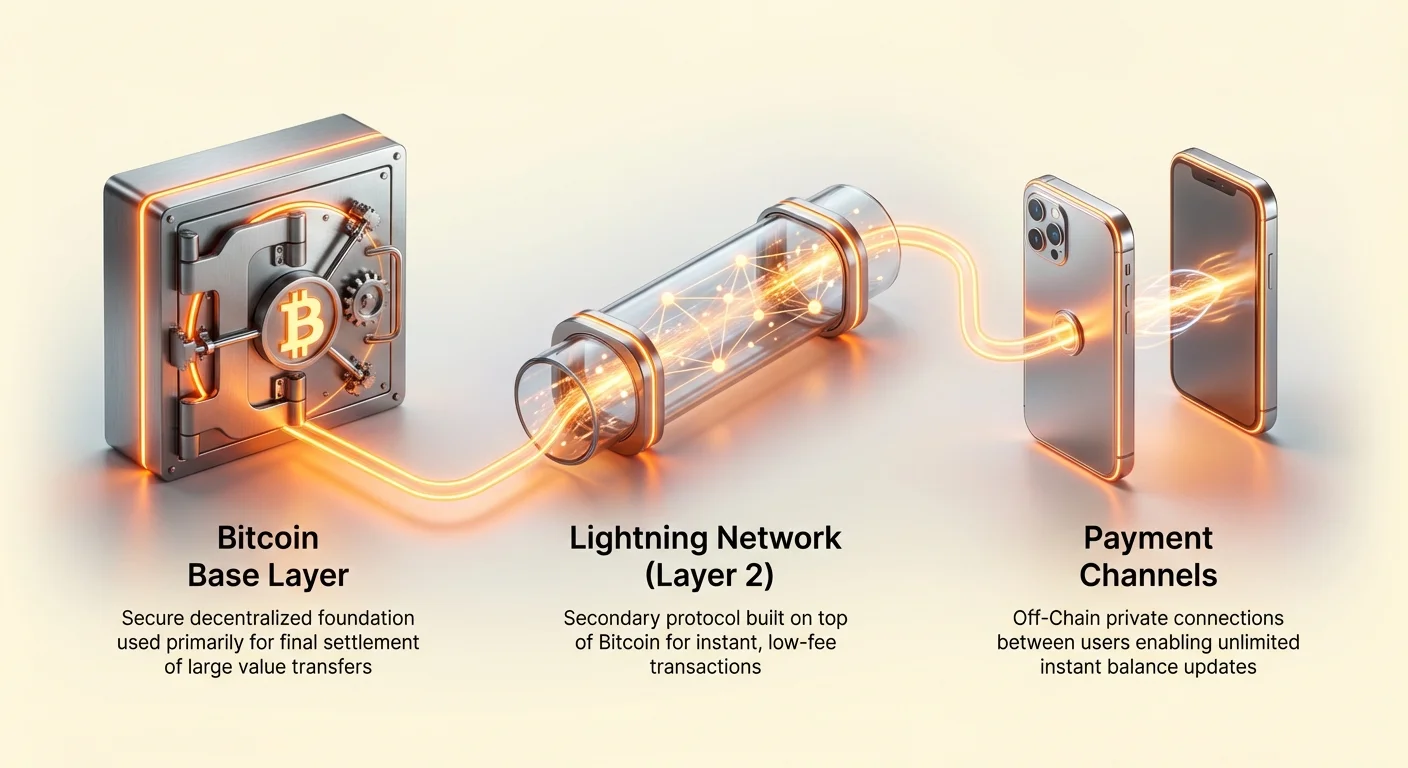
To address these scalability challenges without compromising the security of the main network, developers created the Lightning Network. This is a second-layer solution built on top of the Bitcoin blockchain. It allows users to transact instantly and with negligible fees by moving small, frequent transactions off the main chain. A Lightning wallet is the specialized software that connects users to this network. Unlike traditional Bitcoin wallets that broadcast every transaction to the global ledger, Lightning wallets manage private payment channels between users.
These wallets enable a high throughput of transactions by only recording the opening and closing balances on the main blockchain. Everything that happens in between remains off-chain. This architecture dramatically reduces the burden on the network and allows Bitcoin to scale to handle millions of transactions per second. For users, this means the ability to send fractions of a cent instantly, opening up new economic models that were previously impossible due to fee constraints.
The Mechanics of Off-Chain Transactions
Payment Channels Explained
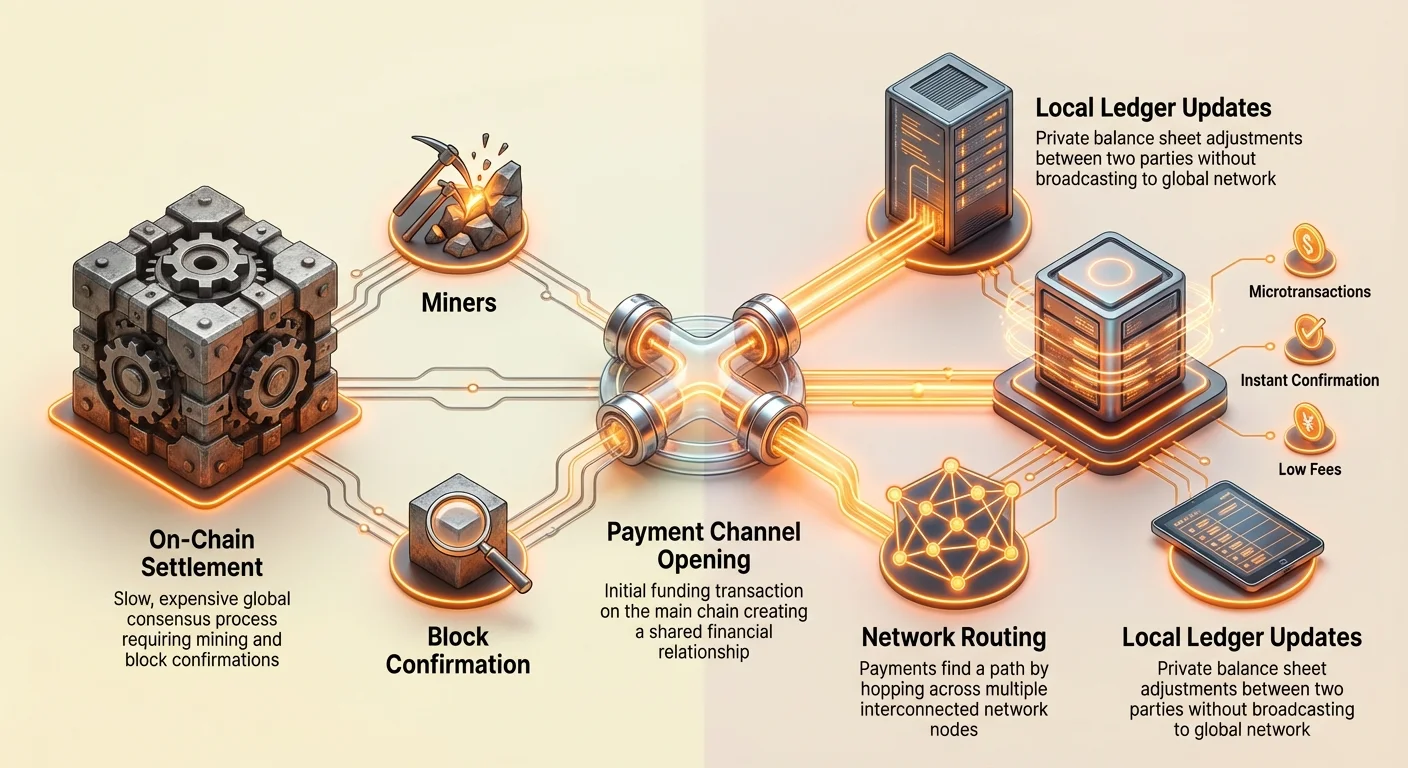
The fundamental building block of a Lightning wallet is the payment channel. A channel is essentially a shared financial relationship between two parties. To establish this connection, a user sends a funding transaction to the Bitcoin network. This transaction locks a specific amount of Bitcoin into a multi-signature address controlled by both the sender and the receiver. This initial setup is an on-chain transaction and requires standard mining confirmation. Once the channel is open, the funds are held in escrow, ready to be allocated back and forth.
Updating the Ledger Locally
Once the channel is established, the two parties can transact an unlimited number of times without touching the main blockchain. Each transaction is simply a cryptographic update to the balance sheet held locally by the two wallets. For example, if you have 0.5 BTC in the channel and send 0.1 BTC, the wallets update to reflect that you now own 0.4 BTC and your counterparty owns 0.1 BTC. These updates happen instantly because they do not require mining or global consensus. They rely on smart contracts to ensure that no one can cheat the system.
Network Routing and Connectivity
You do not need to open a direct channel with everyone you want to pay. Lightning wallets utilize a routing mechanism similar to how data packets move across the internet. If you want to pay a merchant but do not have a direct channel, your wallet finds a path through other nodes in the network to reach the destination. Your payment "hops" across these channels, with each node forwarding the funds securely. This interconnected web allows users to pay anyone on the network while only maintaining a few open channels.
Types of Lightning Implementation
Non-Custodial Implementations
Non-custodial Lightning wallets give users complete control over their funds and private keys. In this model, the wallet software runs a simplified Lightning node directly on your device. You are responsible for managing your payment channels, ensuring you have enough inbound liquidity to receive funds, and backing up your channel states. While this requires more technical awareness, it preserves the censorship resistance and sovereignty that define Bitcoin. Wallets like Phoenix or Breez automate much of this complexity in the background while keeping the user in control.
Custodial Solutions
For users seeking simplicity, custodial Lightning wallets offer a user experience similar to traditional banking apps. In this setup, a third-party service provider manages the Lightning node and payment channels on your behalf. You do not hold the private keys to the Bitcoin. Instead, the provider holds the funds and credits your account balance. This eliminates the need to manage channels or worry about liquidity, making it very beginner-friendly. However, it introduces trusted third parties, meaning you could lose access to your funds if the provider shuts down or halts withdrawals. Understanding the Spectrum of Custody Risks is crucial.
Hybrid Architecture
Some modern wallets attempt to bridge the gap between on-chain security and off-chain speed using hybrid models. These wallets often abstract the differences between the two layers. They might handle the complex channel management on their servers while still allowing the user to hold the keys for recovery purposes. This approach aims to provide the seamless experience of a custodial wallet with the security assurances of a non-custodial one. Users can make instant payments without needing to understand the intricacies of channel capacity or routing fees.
Comparing On-Chain and Lightning Wallets
Understanding the distinction between the two layers is vital for choosing the right tool for your transaction needs. The table below outlines the primary operational differences.
| Feature | On-Chain Wallet | Lightning Wallet |
|---|---|---|
| Speed | 10 to 60+ minutes for confirmation | Instant (milliseconds to seconds) |
| Cost | Variable fees (can be high) | Negligible fees (fraction of a penny) |
| Privacy | Transactions permanently public | Transactions private and off-chain |
| Capacity | Limited by block size | Unlimited transaction volume |
| Best Use | Large transfers, cold storage | Microtransactions, daily spending |
Key Operational Benefits
Enabling Microtransactions
The most significant advantage of Lightning wallets is the economic viability of microtransactions. On the main Bitcoin chain, sending a payment worth a few cents is impractical because the transaction fee would likely exceed the value of the payment itself. Lightning wallets reduce fees to near zero, often charging only a fraction of a satoshi per hop. This capability allows for new use cases like streaming payments, where a user pays for video or audio by the second, or tipping small amounts to content creators on social media platforms.
Enhanced Transaction Privacy
Privacy is another major benefit of using Lightning wallets. On the main blockchain, every transaction is recorded on a public ledger that anyone can analyze. While identities are pseudonymous, transaction patterns can often be traced. Lightning transactions occur off-chain and are not recorded on the public blockchain. Only the opening and closing of channels are visible. Furthermore, the routing uses an onion-style protocol, meaning intermediary nodes only know the immediate predecessor and successor in the route, not the original sender or final destination.
Scalability for Mass Adoption
Lightning wallets solve the scalability trilemma by moving high-frequency traffic off the main highway. By processing transactions locally between users, the network can handle a virtually unlimited number of payments simultaneously. This is essential for Bitcoin to function as a global medium of exchange. If millions of people used Bitcoin for daily coffee purchases on the main chain, the network would grind to a halt. Lightning wallets ensure that the main chain remains uncongested and available for high-value settlements.
Security Considerations and Risks
Online Connectivity Requirements
Unlike cold storage solutions or paper wallets that are designed to be kept offline for maximum security, Lightning wallets are inherently "hot." To route payments and update channel balances, the wallet must be connected to the internet and the Lightning Network. This online requirement exposes the wallet to potential malware or hacking attempts on the host device. Therefore, it is generally recommended to keep only "spending money" in a Lightning wallet, while substantial savings should remain in deep cold storage or hardware wallets.
Channel State Backups
Backing up a Lightning wallet is more complex than backing up a standard Bitcoin wallet. With a regular wallet, a 12 or 24-word seed phrase is sufficient to recover all funds. With Lightning, the wallet must also know the current state of every open payment channel. If you restore a wallet from an old backup state, the network might perceive it as an attempt to cheat, leading to a penalty transaction where you could lose funds. Modern wallets utilize mechanisms like Static Channel Backups (SCB) or cloud-based state backups to mitigate this risk.
Liquidity Management
A unique challenge with Lightning wallets is the concept of liquidity. To receive funds, you must have "inbound capacity" in your channel. This means there must be room in the channel for funds to move to your side. If you just opened a channel and all the funds are on your side, you cannot receive a payment until you spend some first or utilize a service to push liquidity to you. While many modern wallets automate this, it remains a technical constraint that users of non-custodial wallets must occasionally navigate, requiring specific liquidity management strategies.
Setting Up and Using a Lightning Wallet
Initialization and Funding
Getting started with a Lightning wallet typically involves downloading a mobile application or desktop client. Upon installation, the software generates a new seed phrase, which the user must write down and store securely offline. This seed is the master key for recovery. Once initialized, the wallet needs to be funded. Most Lightning wallets provide an on-chain Bitcoin address. Users send Bitcoin from an exchange or another wallet to this address. The wallet then automatically uses these funds to open payment channels or converts them via a built-in swap service.
Making Payments
Sending money via Lightning is different from using standard Bitcoin addresses. Instead of a static alphanumeric string, Lightning uses invoices. An invoice is a long string of text or a QR code that contains the payment request details, including the destination, the amount, and a unique cryptographic hash. The payer scans the QR code or pastes the invoice string into their wallet. The wallet calculates a route through the network and sends the payment. Because the invoice is specific to a single transaction, it prevents errors like sending funds to the wrong place or sending the wrong amount.
Receiving Funds
To receive a payment, the user must generate an invoice within their wallet app. They specify the amount they wish to receive, although some invoices can be zero-amount and allow the sender to choose the value. Once the invoice is created, it is shared with the payer. The payer completes the transaction, and the funds arrive instantly. Some modern implementations now support "Lightning Addresses," which look like email addresses, allowing users to receive funds without generating a new invoice for every single transaction, significantly improving usability.
Conclusion
Lightning wallets represent a critical evolution in cryptocurrency technology, transforming Bitcoin from a purely store-of-value asset into a functional medium of exchange. By leveraging payment channels and off-chain processing, these wallets eliminate the bottlenecks of high fees and slow confirmations associated with the base layer. They offer a diverse ecosystem ranging from user-friendly custodial apps to sovereign non-custodial nodes, catering to different technical comfort levels. While they introduce new complexities regarding liquidity and backups, the trade-off delivers the speed and scalability necessary for global adoption.
As the network matures, the line between on-chain and off-chain transactions continues to blur, with wallets increasingly automating the technical hurdles. For users looking to use Bitcoin for daily commerce, tipping, or instant peer-to-peer transfers, Lightning wallets are the essential tool. They preserve the decentralized ethos of Bitcoin while providing the modern convenience expected in digital finance.
Lightning wallets make Bitcoin practical for daily use by delivering instant, low-fee transactions through secure off-chain payment channels.