
The decentralized cryptocurrency ecosystem is a vast and complex network comprising more than a dozen active blockchains. Each of these networks operates with a unique set of rules, strengths, and inherent weaknesses. As users navigate this landscape, they often encounter challenges related to transaction costs, network speeds, and the management of digital assets across different environments. Understanding the fundamental mechanics of how these blockchains function is essential for anyone looking to transact efficiently. No single blockchain is perfect. Each network must make specific compromises between critical attributes such as speed, security, cost, and compatibility with other systems. The Core Tradeoffs of the Decentralization Trilemma is a foundational analysis for understanding this environment.
These trade-offs can have a profound impact on the user experience, particularly when it comes to gas fees and network congestion. When a blockchain prioritizes security and decentralization, it may suffer from slower transaction times and higher costs during periods of high demand. Conversely, networks designed for high speed might offer lower fees but present different security considerations. For the average user, these technical distinctions manifest directly in the wallet as fluctuating fees or transactions that seem to take forever to clear. Mastering the art of managing these variables is key to a smooth crypto experience.
By recognizing which blockchain environments act best for specific tasks, users can optimize their activities. You might prefer one network for long-term storage and another for frequent, low-value trading. Just as in the real world, where a consumer might choose a specific venue based on convenience or cost, crypto users must learn to select the right digital environment for their immediate needs. This guide explores the intricacies of managing network congestion, understanding gas fees, and troubleshooting the common issues that arise when moving assets between these digital economies.
The Dynamics of Blockchain Trade-offs
Speed Versus Cost in Network Design
Every active blockchain exists because it offers a specific solution to the "trilemma" of decentralization, security, and scalability. The most developed smart contract-enabled blockchains often host the most liquid decentralized markets. However, this popularity can be a double-edged sword. As more users flock to a single network to execute trades or interact with decentralized applications, the demand for block space increases. This congestion invariably leads to higher transaction fees and slower processing times.
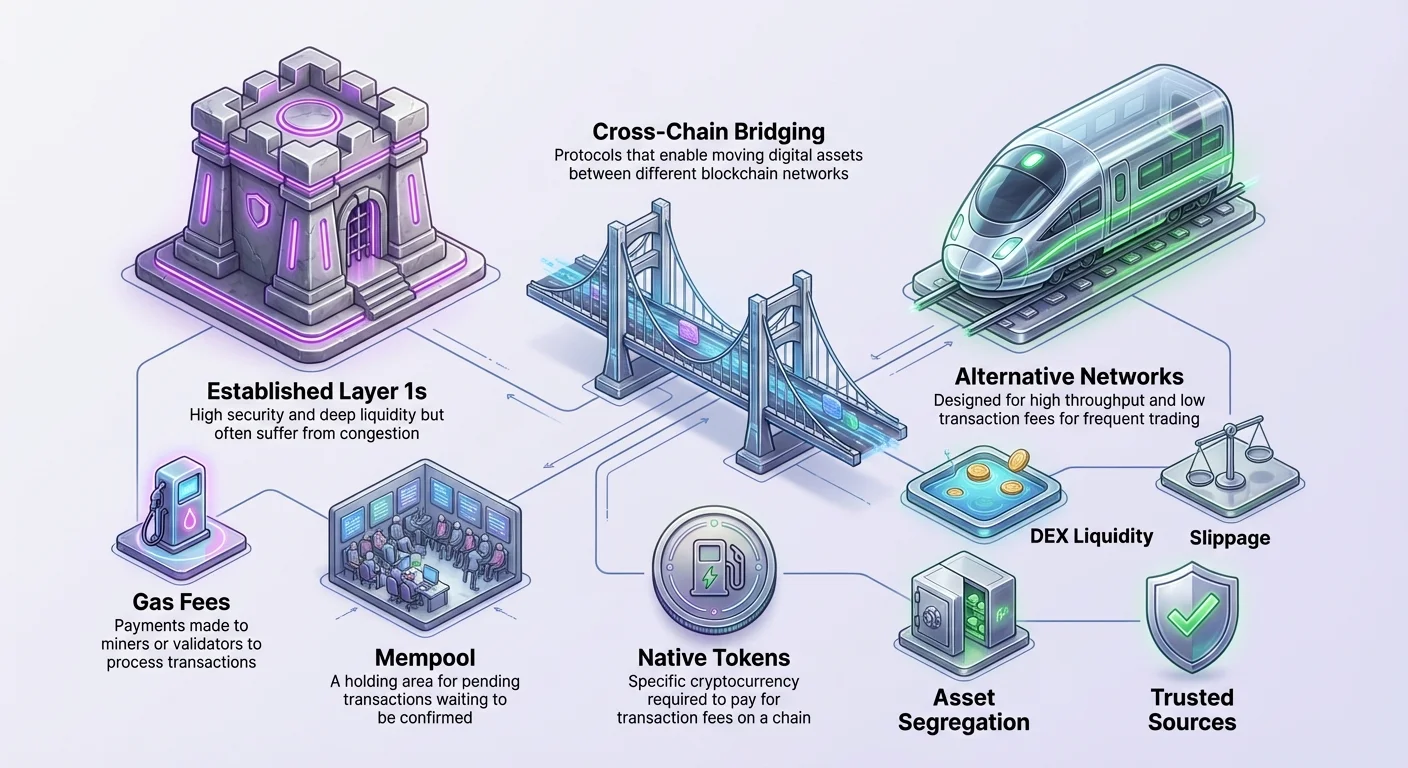
For example, established networks like Ethereum facilitate massive amounts of value transfer and host thousands of applications. While they offer deep liquidity for major trading pairs, the cost to execute a transaction can skyrocket when the network is busy. This makes them less ideal for users looking to execute many small trades daily. In contrast, newer blockchains have emerged with architectures specifically designed to handle higher throughput. Understanding L1 vs. L2 scalability helps explain why some networks can reportedly process significantly more transactions per second than their predecessors.
Users engaging in high-frequency trading or interacting with gaming applications often find these faster networks more suitable. The lower fees allow for experimentation and frequent interaction without the penalty of prohibitive costs. Understanding this dynamic is the first step in managing gas fees. If a transaction is not urgent or involves a smaller amount of value, moving that activity to a higher-capacity network can result in substantial savings.
The Impact of Supply and Demand
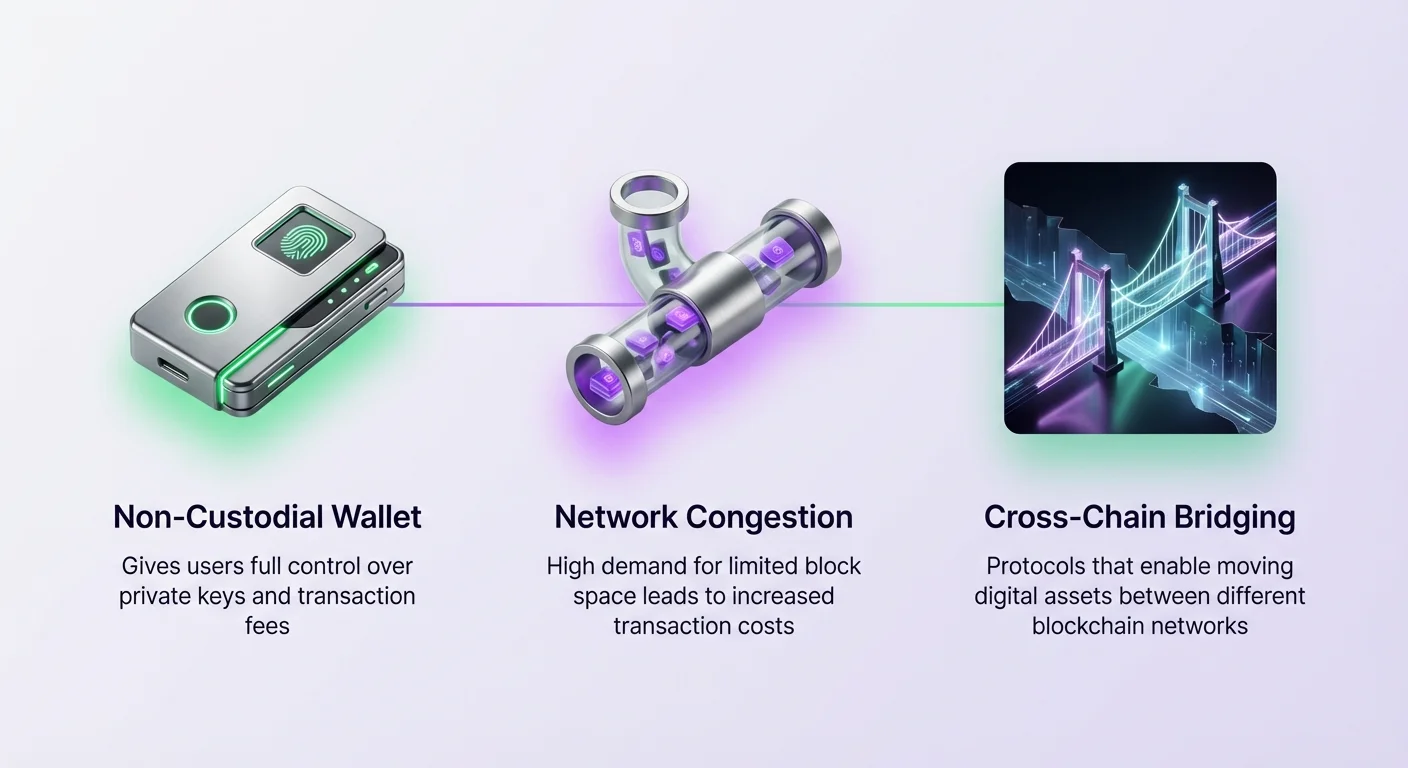
Congestion on a blockchain is fundamentally a supply and demand issue. Block space is a limited resource. When many people want to include their transactions in the next block simultaneously, they must compete against one another. This competition is typically resolved through an auction mechanism where the highest bidders—those willing to pay the highest fees—get priority. This is why gas fees fluctuate wildly throughout the day or during specific market events.
Real-world events often trigger these spikes in demand. For instance, if a popular artist drops a new collection of Non-Fungible Tokens (NFTs), thousands of users may attempt to mint them at the exact same second. This sudden influx creates a bottleneck. Similarly, specialized campaigns where blockchains reward users for utilizing specific decentralized applications can drive massive traffic to a network.
During these periods, a standard transaction fee might not be sufficient to get a transaction processed quickly. The transaction may sit in the "mempool" (memory pool) waiting for miners or validators to pick it up. If the network remains congested, the transaction can effectively become "stuck" until fees drop or the user takes action to replace it with a higher fee. Recognizing these patterns helps users avoid initiating transactions during peak hours, saving both money and frustration.
Navigating Decentralized Exchanges and Liquidity
Liquidity Across Different Networks
Decentralized exchanges (DEXs) are the lifeblood of the decentralized finance (DeFi) ecosystem. They allow for peer-to-peer transactions without the need for a trusted intermediary. However, the experience of using a DEX can vary significantly depending on the underlying blockchain. The oldest and most established chains tend to have the most liquid markets. Liquidity refers to the ease with which an asset can be converted into another asset without affecting its price. To understand this mechanism, it helps to review how AMMs power DEX trading.
On a highly liquid chain, a user can make large trades without suffering from significant "slippage," which is the difference between the expected price of a trade and the price at which it is executed. For institutional investors or those moving substantial sums, the higher gas fees of a major network are often a justifiable expense to ensure trade stability. The cost of the fee is negligible compared to the potential loss from price impact on a less liquid chain.
Conversely, for smaller traders, the fee structure of major chains can eat into profits entirely. This has led to the rise of alternative networks that prioritize low-cost transactions. These networks often attract different types of decentralized applications and trading behaviors. Users must weigh the benefit of deep liquidity against the operational cost of the network. Often, the best strategy involves using different networks for different purposes—holding high-value assets on a secure, liquid chain while performing daily activities on a faster, cheaper layer.
The Role of Specialized Chains
Beyond general-purpose blockchains, the ecosystem has seen the rise of application-specific chains. In some cases, a decentralized application is so complex or demands such high throughput that it requires its own dedicated blockchain to function feasibly. These are known as single dApp chains. Unlike general-purpose chains that host thousands of unrelated apps competing for space, a single dApp chain is optimized entirely for one specific function.
Entering a single dApp chain often provides a more curated user experience. Because the application controls the entire environment, the onboarding process can be streamlined. The bridge—the tool used to move assets onto the chain—is often integrated directly into the application interface. This reduces the friction typically associated with switching networks.
For traders interested in derivatives or complex financial instruments, these specialized chains offer a compelling alternative to centralized exchanges. Historically, derivatives were traded on centralized platforms due to speed and cost advantages. However, creating standalone blockchains for these specific financial products allows for a decentralized alternative that offers the necessary performance without the custodial risk of a centralized entity.
Strategies for Asset Security and Wallet Management
Custodial Versus Non-Custodial Solutions
At the core of managing crypto assets is the wallet. A cryptocurrency wallet is not just a storage device; it is a tool for interacting with the blockchain. The most critical distinction in the wallet space is between custodial and non-custodial solutions. A non-custodial wallet gives the user full control over their private keys. This means the user is the only person who can initiate transactions or access the funds.
Non-custodial wallets are essential for interacting with decentralized applications, paying gas fees directly, and managing congestion. When a user controls their keys, they can manually adjust gas fees to push a stuck transaction through or choose to cancel it. This level of control is vital during periods of high network activity, which is why setting up your secure wallet is a crucial first step.
Custodial solutions, often provided by centralized exchanges, manage the technicalities on behalf of the user. While convenient for beginners, they limit the user's ability to interact directly with the blockchain. If a centralized exchange sets a standard fee and the network becomes congested, the user may have no option but to wait. For effective troubleshooting of stuck transactions and fee management, self-custody is generally the superior approach.
Hardware Wallets and Offline Security
For users prioritizing security over immediate speed, hardware wallets offer the gold standard. These physical devices store private keys offline, isolating them from internet-connected devices that could be vulnerable to hacks. Hardware wallets are particularly important when holding significant amounts of value or when interacting with multiple different chains.
Modern hardware wallets support thousands of coins and tokens across major Layer 1 and Layer 2 networks. This broad support is crucial for users who navigate between congested networks and cheaper alternatives. By keeping the bulk of assets in cold storage (offline) and only moving what is necessary to a "hot" software wallet for daily trading, users can mitigate risk.
The integration of hardware wallets with software interfaces allows users to manage their portfolio visually while signing transactions physically on the device. This adds a layer of protection against phishing attacks and malware. Even if a computer is compromised, the private keys never leave the hardware device, ensuring that the user must physically confirm any transaction.
| Wallet Category | Key Characteristic | Best Use Case |
|---|---|---|
| Hardware Wallet | Offline Storage | Long-term security and large holdings |
| Software Wallet | Mobile/Desktop App | Daily transactions and dApp connection |
| Web Wallet | Browser Access | Quick access and ease of use |
Mastering the Bridging Process
Connecting Isolated Ecosystems
Since blockchains act as independent ledgers, they cannot natively communicate with one another. To move assets from a congested chain to a faster one, users must utilize "bridges." Bridges are protocols that accept assets on one chain and release an equivalent amount of a corresponding token on another chain. This infrastructure is critical for troubleshooting high fees; if one network becomes too expensive, a user can bridge their assets to a more affordable network to continue their activities. Consult a guide on How to use bridges safely before making a transfer.
The bridging process involves distinct stages. First, the user must locate a trusted bridge protocol. This is often part of a multichain dApp or a dedicated bridging platform. The user sends their tokens to a smart contract on the source chain. Once the transaction is confirmed, the bridge effectively locks those tokens and mints or releases the equivalent tokens on the destination chain.
This process is not instantaneous. Depending on the security parameters of the bridge and the congestion levels of the networks involved, bridging can take anywhere from ten minutes to several hours. Users must be patient and understand that "stuck" assets during a bridge transaction are often just waiting for necessary block confirmations. It is vital to check the estimated time before initiating a bridge transfer to avoid unnecessary panic.
The Necessity of Native Tokens
One of the most common reasons transactions get "stuck" or fail when entering a new chain is the lack of native tokens. Every blockchain requires its specific native cryptocurrency to pay for transaction fees. For example, transacting on the Ethereum network requires ETH, while the Avalanche network requires AVAX.
When a user bridges a token like a stablecoin (e.g., USDC) from one chain to another, they often arrive on the new chain with plenty of stablecoins but zero native tokens. Without the native token, they cannot execute any transactions, including swaps or transfers. They are effectively stranded with funds they cannot spend.
To prevent this, many modern bridges offer a "faucet" or a "gas on destination" feature, where they provide a tiny amount of the native token along with the bridged assets—just enough to perform one or two swaps. If this feature is not available, users must ensure they acquire the native token of the destination chain through a centralized exchange or a faucet before they bridge their main assets. This planning is essential for seamless network migration.
Entering New Chains Safely
Verifying Trusted Sources
When moving to a new chain to avoid congestion or access new applications, security must remain the top priority. The decentralized nature of crypto means there is no customer support to reverse a transaction sent to a malicious contract. Phishing attacks are prevalent, where scammers create websites that look nearly identical to legitimate projects to steal private keys or trick users into signing malicious transactions. Reviewing the ultimate DeFi security checklist can protect your assets.
Users should always start their journey from trusted sources. Market aggregators like CoinGecko or CoinMarketCap are excellent starting points. These platforms conduct minimal due diligence before listing projects and provide official links to websites and social media channels. Relying on links found in random Discord chats, direct messages, or unverified emails is a recipe for disaster.
Bookmarking legitimate sites is a simple but effective defense strategy. By saving the correct URL of frequently used bridges, exchanges, and dApps, users avoid the risk of typing a slightly incorrect address and landing on a copycat phishing site. This discipline is part of basic digital hygiene that protects assets across all networks.
Segregating Active and Inactive Assets
A prudent strategy for managing risk when exploring new chains is asset segregation. Just as one would not carry their entire life savings in cash in their wallet, crypto users should not keep all their digital assets in a single hot wallet connected to every dApp they visit.
Users should categorize their holdings into active and inactive assets. Inactive assets—those being held for long-term appreciation—should be secured in a hardware wallet or a dedicated address that rarely interacts with smart contracts. Active assets, used for trading, bridging, and exploring new ecosystems, should be kept in separate wallets.
If a user wants to try a new dApp on an unfamiliar chain, they can create a fresh wallet address specifically for that purpose. They can then transfer only the specific amount of funds needed for that activity. If the new dApp turns out to be malicious or suffers a smart contract exploit, the loss is limited only to the funds in that specific wallet, leaving the main portfolio untouched.
General Troubleshooting for Stuck Transactions
Understanding the Waiting Game
When a transaction appears stuck, it is usually because the gas fee provided was too low for the current market conditions. Miners and validators are financially incentivized to prioritize transactions with higher fees. During a sudden spike in network activity, a fee that was adequate a minute ago might now be below the threshold for inclusion in the next block.
In many cases, the simplest solution is patience. As network demand ebbs and flows, fees will eventually dip, and the transaction will likely be picked up by a miner. If the transaction is not urgent, waiting is often the most cost-effective strategy. Transactions can remain in the mempool for some time without being rejected.
However, if the transaction is time-sensitive, users with non-custodial wallets can often utilize a "speed up" feature. This effectively broadcasts the same transaction again but with a higher gas fee. This new transaction replaces the old one in the queue. This capability underscores the importance of using a wallet that offers granular control over transaction parameters, including manual priority fee management.
The Importance of Research and Community
Before entering a new ecosystem or using a new bridge, conducting research is vital. Each blockchain has its own community, often found on platforms like Twitter, Telegram, or Discord. These communities act as a hive mind of information regarding current network status, congestion issues, and reliable dApps.
If a transaction is stuck or a bridge seems to be taking longer than expected, checking the official social channels of the project can provide immediate answers. Often, a project will post updates about high traffic or maintenance windows. Engaging with the community can also provide tips on which time of day is cheapest to transact or which bridges are currently offering the best liquidity.
Furthermore, understanding the specific attributes of the chain is helpful. Knowing that a specific Layer 2 network has a withdrawal period of several days for bridging back to the mainnet, for example, can prevent unexpected lock-ups of funds. Knowledge is the best tool for avoiding the frustration of stuck assets.
Conclusion
The landscape of cryptocurrency is defined by choice and trade-offs. Navigating the complexities of gas fees and network congestion requires a shift in mindset from passive user to active participant. By understanding that blockchains are competitive markets for block space, users can better anticipate when fees will rise and when delays might occur. Choosing the right network for the task at hand—whether it is a high-security layer for storage or a high-speed layer for trading—is the most effective way to manage costs and efficiency.
Ultimately, the tools available to users, from non-custodial wallets to cross-chain bridges, provide the power to overcome these technical hurdles. Segregating assets, verifying sources, and maintaining a balance of native tokens for gas are practical habits that prevent common pitfalls. As the ecosystem continues to evolve, the ability to move fluidly between chains will become an increasingly valuable skill.
Effective crypto management lies in matching your transaction needs with the specific strengths of the blockchain network you choose to use.