The Ethereum network represents one of the most significant experiments in distributed computing history. Since its inception, it has aimed to serve as a world computer that is open to all. However, achieving this vision requires overcoming substantial technical hurdles. The roadmap for Ethereum is not a simple straight line but a series of interconnected upgrades designed to improve specific aspects of the system.
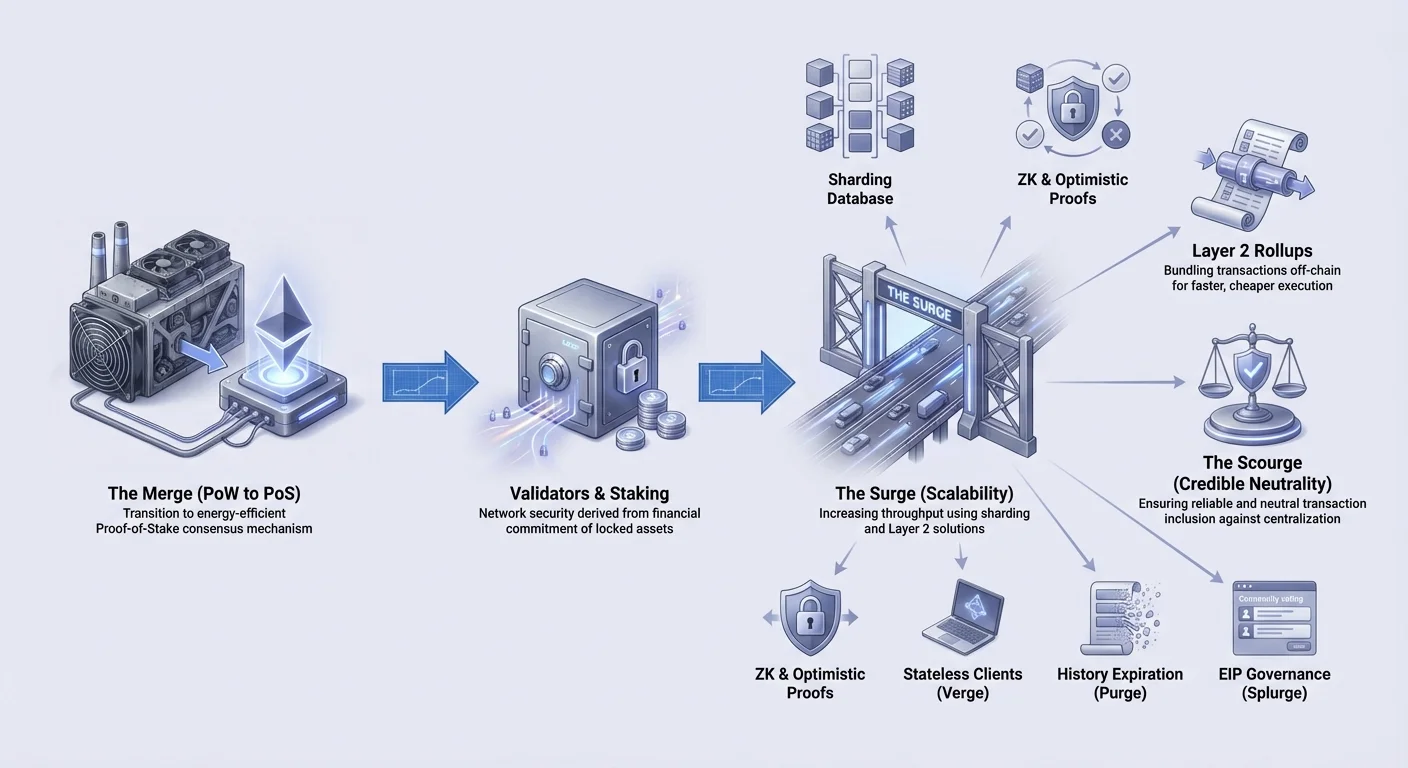
These upgrades are often categorized into distinct phases that rhyme: The Merge, The Surge, The Scourge, The Verge, The Purge, and The Splurge. Each phase addresses a critical component of the network's architecture. The goal is to solve the complex problems associated with decentralized networks while maintaining security.
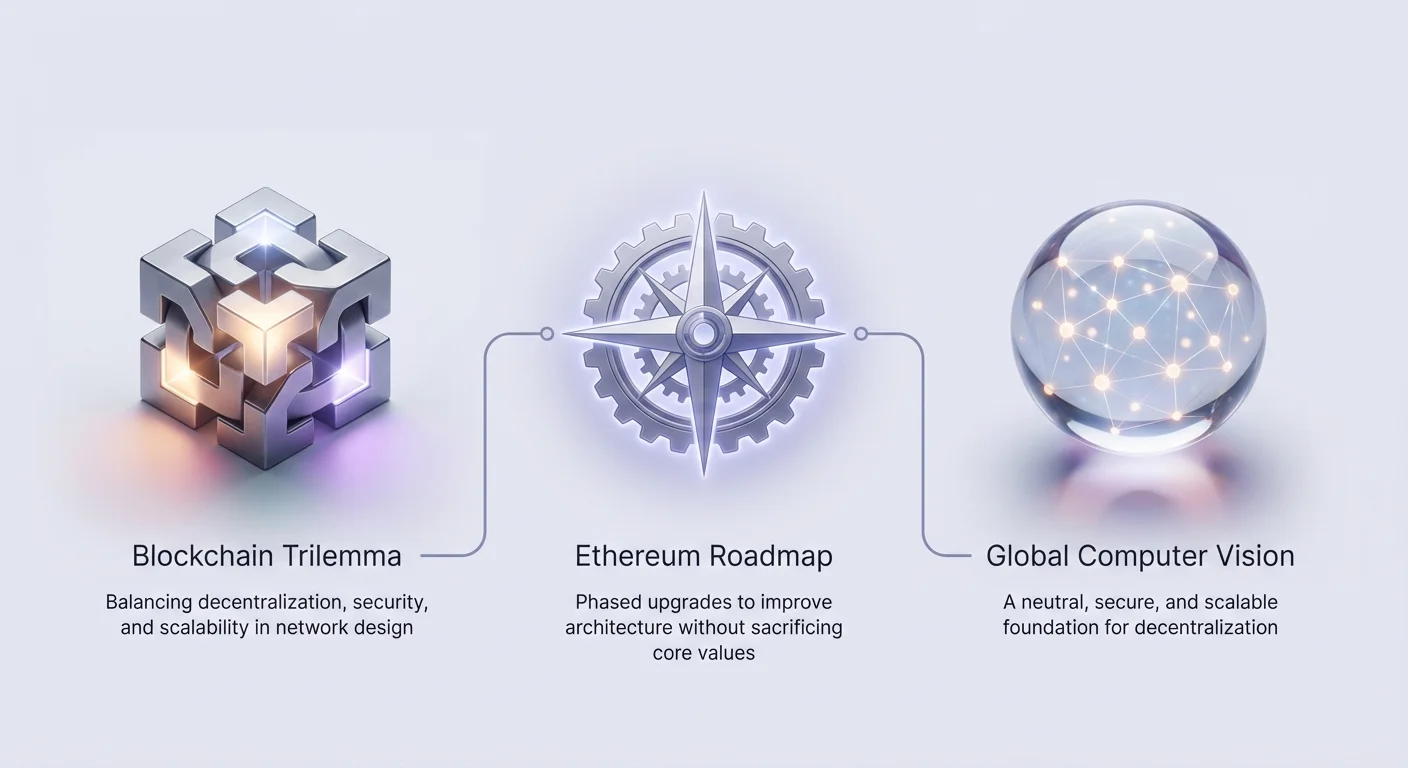
Central to this evolution is the concept of the "blockchain trilemma." This theory suggests that a decentralized network can only optimize for two of three primary features: decentralization, security, and scalability. Ethereum originally prioritized security and decentralization, which often resulted in network congestion and high fees during periods of high demand.
The roadmap is an attempt to solve this trilemma. By implementing these upgrades, the network aims to become scalable enough to handle global demand without sacrificing its core values. The transition involves fundamental changes to both the economic and technical structure of the blockchain.
Fondaments: Izpratne par Merge
Vissvarīgākais Ethereum vēsturē veiktais uzlabojums bija pazīstams kā The Merge. Tas tika pabeigts 2022. gada septembrī, un šis notikums atzīmēja pāreju no sākotnējā Darba pierādījuma (PoW) konsensa mehānisma uz Lieguma pierādījumu (PoS). Šī pāreja bija nepieciešama, lai samazinātu tīkla enerģijas patēriņu un izveidotu pamatu nākamajiem mērogojamības uzlabojumiem.
Pirms The Merge Ethereum paļāvās uz kalnračiem, lai nodrošinātu tīkla drošību. Šie dalībnieki darbināja energoietilpīgu aprīkojumu, lai atrisinātu sarežģītus matemātiskus uzdevumus. Šī sistēma, lai gan droša, patērēja milzīgu daudzumu elektrības. Pāreja uz Lieguma pierādījumu aizstāja kalnračus ar validátoriem, kuri nodrošina tīkla drošību, bloķējot kapitālu, nevis patērējot enerģiju.
Lieguma pierādījuma mehānika
Lieguma pierādījuma sistēmā tīkla drošība izriet no finansiālā apņemšanās, nevis skaitļošanas jaudas. Dalībnieki, kas pazīstami kā validatori, liek savu kriptovalūtu, nosūtot to uz noteiktu viedā līguma adresi. Šis ieliktais aktīvs darbojas kā nodrošinājums vai ķīla, kas garantē viņu godīgu uzvedību.
Protokols nejauši izvēlas validātorus, lai tie ierosinātu jaunus blokus. Kad validātors ierosina bloku, citi validatori pārbauda datus, lai pārliecinātos, ka tie atbilst tīkla noteikumiem. Ja bloks ir derīgs, tas tiek pievienots ķēdei, un validatori saņem atlīdzību jaunizdotā kriptovalūtā un darījumu komisijās. Šī sistēma saskaņo operatoru finansiālos stimulus ar tīkla veselību.
Priekšrocības un drošības uzlabojumi
Pārejas galvenā priekšrocība bija dramatisks enerģijas patēriņa samazinājums. Aprēķini liecina, ka pāreja uz Lieguma pierādījumu samazināja Ethereum enerģijas patēriņu par vairāk nekā 99 procentiem. Tas novērsa galveno šķērsli institucionālai pieņemšanai un vides ilgtspējībai.
Papildus energoefektivitātei jaunā sistēma ieviesa atšķirīgas drošības īpašības. Darba pierādījuma sistēmā tīkla uzlaušana prasa 51 procentu no hēšošanas jaudas. Lieguma pierādījumā uzbrucējam būtu jāiegūst vairākums no ieliktajiem aktīviem. Tas rada augstu ekonomisko barjeru ļaunprātīgai uzvedībai. Turklāt protokolā ir iekļauts mehānisms, ko sauc par slashing. Ja validātors rīkojas ļaunprātīgi vai pārkāpj protokola noteikumus, viņa ieliktais aktīvs var tikt konfiskēts pilnībā vai daļēji.
Vilnis: Masīvas mērogojamības sasniegšana
Ar atjaunināto konsensa mehānismu fokuss pāriet uz “Vilni”. Šī fāze mērķē uz mērogojamību. Mērķis ir palielināt tīkla darījumu caurlaidspēju, lai atbalstītu tūkstošiem darījumu sekundē. Galvenās tehnoloģijas, kas virza šo fāzi, ir šardings un 2. līmeņa mērogošanas risinājumi.
Mērogojamība ir kritiska, jo galvenais tīkls jeb 1. līmenis ir ar ierobežotu ietilpību. Tas parasti var apstrādāt tikai noteiktu darījumu skaitu dienā. Kad pieprasījums pārsniedz šo ietilpību, lietotāji sacenšas, lai viņu darījumi tiktu iekļauti nākamajā blokā. Šī sacensība paaugstina gāzes maksas, izslēdzot mazākus lietotājus un ierobežojot decentralizēto lietotņu izmantojamību.
Šardinga loma
Šardings ir tehnika, kas paredzēta, lai sadalītu tīkla datubāzi mazākās, vieglāk pārvaldāmos gabalos, ko sauc par šardiem. Tradicionālā blokķēdē katram mezglam jāapstrādā un jāglabā katrs darījums. Šī prasība nodrošina drošību, bet stingri ierobežo ātrumu. Šardings maina šo dinamiku, sadalot datu apstrādes atbildību.
Šardētajā sistēmā validatori tiek piešķirti konkrētiem šardiem. Katrs šards darbojas kā atsevišķa blokķēde ar savu stāvokli un darījumu vēsturi. Tomēr, atšķirībā no neatkarīgām blokķēdēm, šardi savstarpēji komunicē un koordinējas caur galveno ķēdi. Tas ļauj tīklam apstrādāt daudzus blokus vienlaikus, nevis secīgi. Šardinga sākotnējā ieviešana koncentrējas uz datu pieejamību, kas uzlabo 2. līmeņa rollupu efektivitāti.
2. līmeņa risinājumi un rollups
2. līmeņa risinājumi ir protokoli, kas būvēti uz Ethereum galvenā tīkla. Tie apstrādā darījumu izpildi ārpus ķēdes, paļaujoties uz galveno tīklu drošībai un galīgai norēķinu. Pārejot smago darbu prom no 1. līmeņa, šie risinājumi piedāvā ātrāku ātrumu un ievērojami zemākas izmaksas.
Rollups pašlaik ir perspektīvākā 2. līmeņa tehnoloģija. Tie darbojas, apvienojot simtiem darījumu vienā pakā. Šī pakā tiek apstrādāta otrajā līmenī, un tikai saspiestie dati tiek publicēti atpakaļ galvenajā Ethereum blokķēdē. Ir divi galvenie rollupu veidi: optimistiskie rollups un nulle-ziņas (ZK) rollups.
| Rollupa veids | Validācijas metode | Priekšrocības | Nedrīkstības |
|---|---|---|---|
| Optimistiskais | Pieņem derīgumu pēc noklusējuma | Saderīgs ar EVM, vieglāk būvēt | Ilgi izņemšanas laiki (7 dienas) |
| ZK Rollups | Matemātisks derīguma pierādījums | Tūlītēja galīgums, augsta drošība | Augstas skaitļošanas izmaksas, sarežģīts |
Optimistiskie pret nulle-ziņas
Optimistiskie rollups pieņem, ka darījumi ir derīgi pēc noklusējuma. Tie neveic skaitļošanu galvenajā ķēdē, ja vien kāds neapstrīd darījumu. Ja rodas apstrīdēšana, tīkls pārbauda datus. Šī metode ir saderīga ar esošajiem Ethereum viedajiem līgumiem, bet prasa izņemšanas aizkavi, lai ļautu laiku apstrīdējumiem.
Nulle-ziņas rollups izmanto citu pieeju. Tie ģenerē kriptogrāfisku pierādījumu, kas verificē darījumu pakas derīgumu. Šis pierādījums tiek iesniegts galvenajā ķēdē. Tā kā derīgums ir matemātiski pierādīts iepriekš, nav nepieciešams apstrīdēšanas periods. Tas ļauj ātrākas izņemšanas. Tomēr tehnoloģija ir sarežģītāka ieviešanai un prasa ievērojamus skaitļošanas resursus pierādījumu ģenerēšanai.
The Scourge: Ensuring Credible Neutrality
As the network scales, new risks emerge regarding centralization and censorship. "The Scourge" refers to the roadmap items dedicated to ensuring reliable and neutral transaction inclusion. This phase addresses the concern that sophisticated actors might gain too much control over the network.
A core principle of Ethereum governance is "credible neutrality." This means the mechanism should not discriminate for or against any specific people. The design must treat everyone fairly. However, economic forces in a Proof-of-Stake system can lead to centralization. Critics argue that because larger stakeholders earn more rewards, the "rich get richer." This concentration of wealth could theoretically lead to a concentration of power.
Addressing Validator Centralization
The barrier to entry for becoming a validator can influence the network's decentralization. If running a validator node requires expensive hardware or massive amounts of ETH, only wealthy entities can participate. This reduces the diversity of the network.
Furthermore, the rise of specialized services like liquid staking pools has led to large amounts of stake being controlled by a few entities. While these services make staking accessible to users with less capital, they introduce a potential point of failure. If a single entity controls a large percentage of the network's stake, they could potentially influence governance or transaction ordering.
To combat this, the roadmap includes upgrades to ensure that block production remains distributed. The goal is to separate the role of building blocks from the role of proposing them. This separation helps prevent any single validator from censoring transactions or extracting excessive value from users.
The Verge and The Purge: Managing Data and History
The long-term health of the blockchain depends on its ability to remain accessible to independent operators. "The Verge" and "The Purge" focus on efficiency, specifically regarding node operation and historical data management.
For a blockchain to be truly decentralized, individuals must be able to verify the ledger themselves. This is done by running a "node." A node is a computer that runs the Ethereum software and validates transactions. If the hardware requirements for running a node become too high, fewer people will do it. This leads to reliance on centralized service providers like Infura, which creates vulnerability.
The Verge: Reducing Verification Costs
The Verge aims to introduce "stateless clients" or Verkle trees. Currently, verifying a block requires access to a large portion of the blockchain's state. As the network grows, this state becomes larger, requiring more RAM and faster SSDs.
The upgrades in this phase will allow nodes to verify blocks without storing the entire state of the network on their hard drives. By reducing the data requirements, it becomes feasible for users to run nodes on consumer-grade hardware, such as mobile phones or basic laptops. This lowers the barrier to entry and increases the resilience of the network.
The Purge: Eliminating Historical Bloat
The Ethereum blockchain carries the weight of its entire history. The Purge involves cleaning up old network history to simplify the protocol. Currently, running a full archival node requires downloading terabytes of data. This history includes every transaction ever executed since the genesis block.
While maintaining a complete history is important for auditing, it is not strictly necessary for validating new transactions. The Purge seeks to implement mechanisms where nodes can expire old history. This means nodes would stop storing data that is older than a certain timeframe, such as one year.
This reduction in storage requirements prevents the network from becoming too heavy. It ensures that new nodes can sync with the network quickly. By managing the accumulation of technical debt, the protocol remains agile and easier to maintain for developers and users alike.
The Splurge: Governance and Future Polish
The final category, "The Splurge," acts as a catch-all for necessary but miscellaneous upgrades. These are the improvements that fix minor issues, improve the user experience, and refine the economic model. It also encompasses the ongoing evolution of Ethereum's governance.
Ethereum is not a static protocol. It requires constant changes to fix bugs and respond to market conditions. This evolution is managed through Ethereum Improvement Proposals (EIPs). Individuals or teams draft proposals, which are then debated by the community. This process relies on "rough consensus" among stakeholders, including miners, node operators, and developers.
Economic Improvements and EIP-1559
One major example of an economic upgrade that fits this category is EIP-1559. Implemented before The Merge, this upgrade overhauled the fee market. It introduced a base fee that is burned (destroyed) with every transaction. This change made transaction fees more predictable for users.
Upgrades like these are crucial for the long-term sustainability of the asset. By burning ETH, the protocol introduces a deflationary pressure that counters the issuance of new tokens to validators. Future "Splurge" upgrades may focus on Account Abstraction, which would make managing crypto wallets as easy as using a traditional banking app.
The Challenge of Decentralized Governance
Governance in a decentralized system is inherently political. Unlike a private company, there is no CEO to make unilateral decisions. Changes must be adopted voluntarily by the thousands of independent nodes running the software.
This process can be slow and contentious. For example, the community must balance progressivism (making rapid changes to improve the network) with conservatism (maintaining stability and minimizing risk). The Ethereum culture has generally favored a progressive approach to solve the trilemma. However, ensuring that these changes reflect the values of the broader community requires constant vigilance and active participation from all stakeholders.
Secinājums
Ceļakarte no The Merge līdz The Splurge ir visaptverošs plāns Ethereum tīkla nobriešanai. Pārejot uz Proof-of-Stake, protokols atrisināja enerģijas patēriņa problēmas. Caur sharding un Layer 2 rollups tas tiecas atrisināt mērogojamības krīzi, kas vēsturiski vajājusi blokķēdes ar augstu pieprasījumu.
Vienlaicīgi fokuss uz mezgla efektivitāti un vēsturisko datu pārvaldību nodrošina, ka tīkls paliek decentralizēts. Validētāju un mezglu operatoru aparatūras barjeru pazemināšana aizsargā sistēmu no centralizētas kontroles. Lai gan tehnoloģija ir sarežģīta, galīgais mērķis ir vienkāršs: izveidot neitrālu, drošu un mērogojamu pamatu digitālajai nākotnei.
Ethereum uzlabojumi tiecas izveidot ātru, drošu globālu datoru, ko ikviens var izmantot un efektīvi verificēt.