
As the original blockchain, Bitcoin (Layer 1, or L1) is unparalleled in its security and decentralization. However, its design prioritizes these traits, limiting its throughput and smart contract capabilities. This limitation has necessitated the creation of Layer 2 (L2) solutions, which include sidechains, built atop Bitcoin to handle complex tasks or high volumes of transactions.
Sidechains function as independent, parallel blockchains that are “pegged” to Bitcoin. They allow users to temporarily move their native Bitcoin onto the sidechain, utilize the sidechain's features (such as faster transactions or smart contracts), and then move the coins back to L1 when done. The critical question for any user is: how is the Bitcoin I locked away protected?
The answer lies in the specific sidechain’s security model. Scaling solutions invariably introduce trade-offs—you cannot achieve instant speed, full security, and complete decentralization simultaneously. This comprehensive guide dissects the two primary security models utilized by modern Bitcoin sidechains: the trust-based model of Custodial Federations and the hash-based security model of Merged Mining. Understanding these differences is not just a technical exercise; it is essential for assessing where your trust (and your funds) are ultimately placed in the expanding Bitcoin ecosystem.
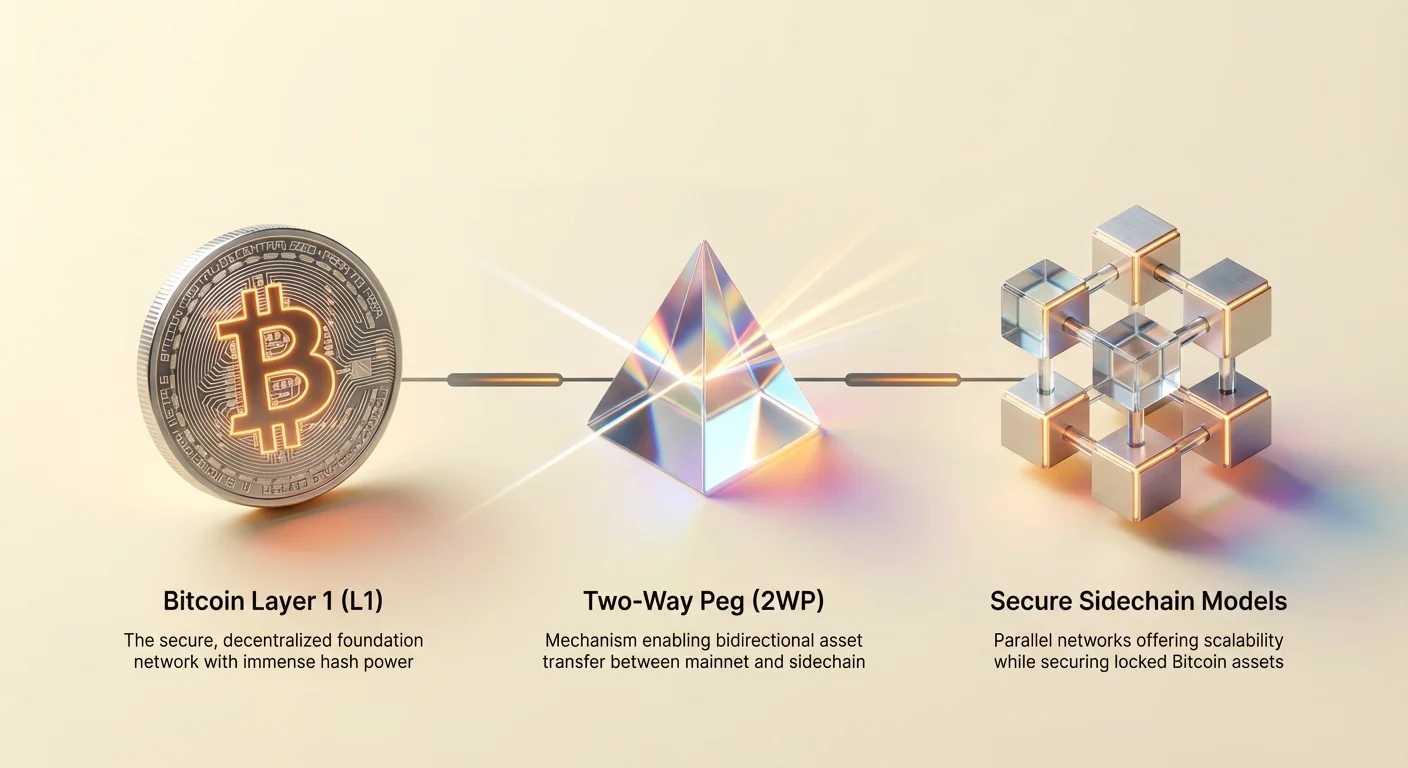
The Fundamental Challenge: Securing the Two-Way Peg
The entire point of a sidechain is its ability to interact seamlessly with the main Bitcoin chain. This interaction is facilitated by the "two-way peg" (2WP)—a system that manages the transfer of assets in both directions.
What Defines a Bitcoin Sidechain?
A sidechain is an external blockchain that operates independently but remains linked to Bitcoin L1. It has its own consensus mechanism (how transactions are validated) and its own rules, allowing it to implement features that Bitcoin L1 cannot or will not support (like complex Turing-complete smart contracts or very high transaction speeds).
For a user to utilize a sidechain, they must perform a process called “pegging in.” This involves sending BTC to a specific address on the L1 chain, which effectively locks the coins. Once locked, an equivalent token (like L-BTC on Liquid or sBTC on Stacks) is created and released on the sidechain. To “peg out,” the process reverses: the sidechain tokens are burned, and the original locked BTC is released from the L1 address.
The Importance of the Two-Way Peg (2WP)
The 2WP is the ultimate security hurdle. It is where the Bitcoin is stored while the user is active on the sidechain. If the pegging mechanism fails, the locked funds could be permanently lost, stuck on the sidechain, or stolen by malicious actors who control the custody mechanism.
Therefore, the core difference between sidechain models rests entirely on who controls the multisignature wallet or vault holding the locked BTC, and how they are incentivized to release it fairly. This mechanism determines the sidechain’s overall trust model and vulnerability profile.
The Inevitable Trade-Off: Trust vs. Decentralization
In the world of scaling, the architectural choices often boil down to a core dilemma:
- Trust-Minimized (Decentralized): Solutions like Bitcoin L1 offer the highest security because they require trust in math, code, and global economic incentives (mining hash power), rather than trusting specific people or organizations. They are slow and expensive, but highly resilient.
- Trust-Based (Centralized/Federated): Solutions that achieve high speed often do so by outsourcing the management of the 2WP to a small, known group. This is faster and cheaper but requires trusting the honesty and competence of that specific group.
Sidechains attempt to occupy the middle ground, but their security models fall clearly toward one end of this spectrum or the other.
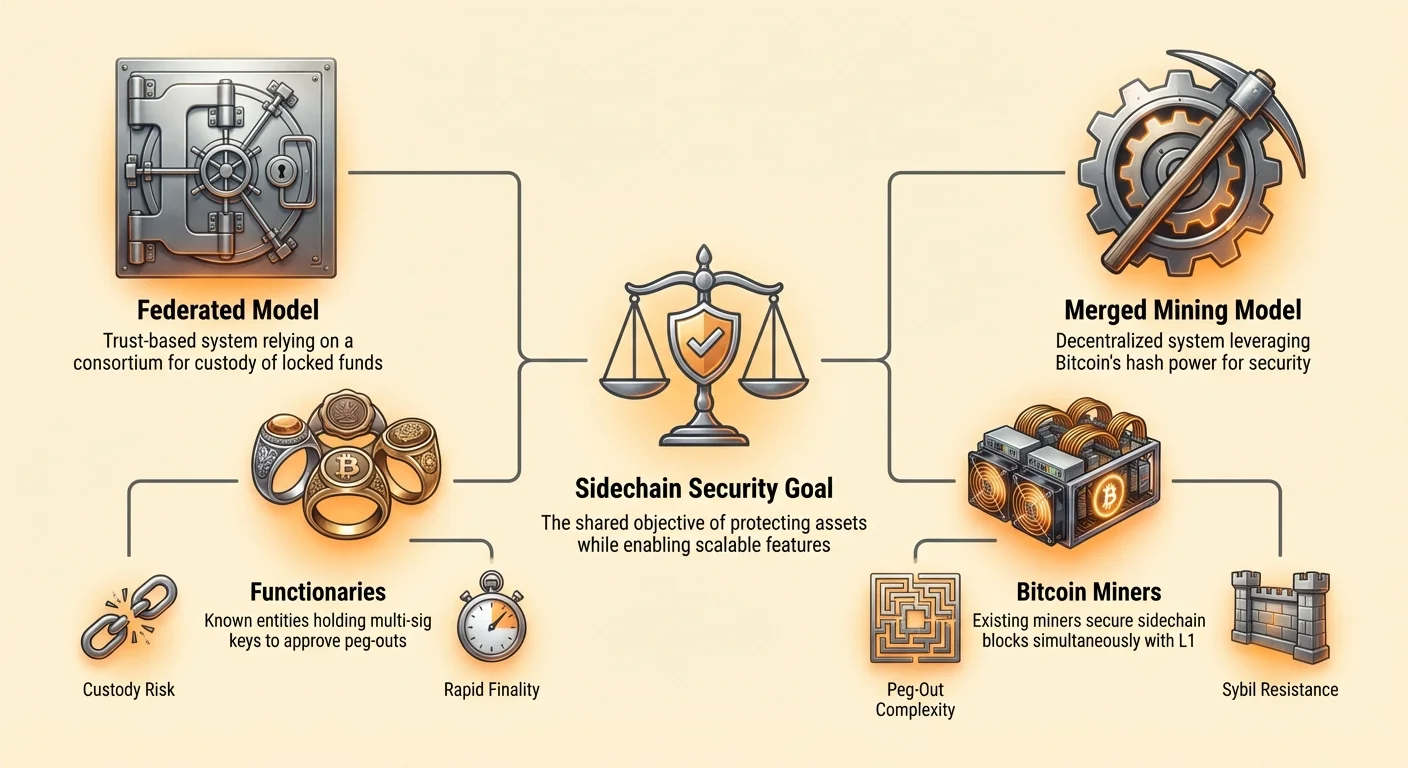
Modelis 1: Federētas (Aizbildniecības) blakusķēdes
Federētais modelis ir vienkāršākais un izplatītākais veids, kā sasniegt divvirzienu piesaisti. Tas apeikšņē sarežģītus uzķēdes verificēšanas mehānismus, uzticot aizslēgtā BTC uzglabāšanu konsorcijam jeb "federācijai", kas sastāv no zināmām organizācijām.
Kā darbojas Aizbildniecības federācija
Federētā blakusķēdē aizslēgtais Bitcoin tiek turēts multisignatūras adresē (multisig makā) uz Bitcoin L1 ķēdes. Kontrole pār šo adresi ir sadalīta starp iepriekš noteiktu nelielu institūciju grupu, ko sauc par Funkcionāriem.
- Uzglabāšana: Funkcionāri kolektīvi tur privātās atslēgas, kas nepieciešamas, lai apstiprinātu izdevumus no multisig adreses.
- Konsenss: Lai veiktu izpiesaistes darījumu (oriģinālā BTC atbrīvošanu), lielākā daļa Funkcionāru jāparaksta darījums. Piemēram, 15 locekļu federācijā var būt nepieciešamas 10 paraksti.
- Drošības pamats: Drošība pilnībā balstās uz pieņēmumu, ka Funkcionāri nekolaborēs, lai nozagtos līdzekļus, un uzturēs nevainojamas drošības prakses, lai novērstu viņu individuālo atslēgu kompromitāciju.
Drošības risks: Atkarība no Funkcionāriem
Galvenā ievainojamība federētajā modelī ir uzglabāšanas risks. Šīs blakusķēdes nav uzticības minimizētas; tās ir uzticības pārnestās. Lietotāji pārnēs uzticību prom no decentralizētā globālā ieguves tīkla uz Funkcionāru pārvaldību un ētiku.
- Kollaborācijas risks: Ja pietiekami daudz Funkcionāru (piemēram, 10 no 15) koordinē uzbrukumu, viņi var parakstīt darījumu, kas nosūta visus aizslēgtos BTC uz adresi, ko viņi kontrolē, efektīvi nozagt līdzekļus.
- Operacionālais risks: Pat ja Funkcionāri ir godīgi, viņu individuālās sistēmas ir mērķi. Veiksmīgs hakeris pret pietiekami daudz Funkcionāru atslēgu serveriem var novest pie līdzekļu zādzības bez iekšējas kolaborācijas.
- Cenzūras risks: Federācija kontrolē izpiesaistes mehānismu. Viņiem ir tehniska spēja bloķēt vai aizkavēt specifisku lietotāju BTC izpirkšanu, ieviešot centrālizētu cenzūras punktu.
Priekšrocības: Ātrums, Privātums un Kontrole
Neskatoties uz centrālizēto uzglabāšanas riskiem, federētās blakusķēdes piedāvā nozīmīgas priekšrocības, padarot tās populāras specifiskos lietošanas gadījumos, īpaši starp uzņēmumiem un tirdzniecības firmām:
- Ātra galīgums: Mazāka, zināmā validētāju grupa ļauj apstrādāt un finalizēt darījumus ārkārtīgi ātri, bieži mazāk nekā minūtē.
- Funkciju integrācija: Tā kā federācija kontrolē noteikumus, viņi var ātri integrēt sarežģītas funkcijas, piemēram, darījumu konfidencialitāti (darījumu summu maskēšana), ko Bitcoin L1 neatbalsta.
Reālās pasaules piemērs: Liquid tīkls
Liquid tīkls, ko izstrādājusi Blockstream, ir izcilākais federētas blakusķēdes piemērs. Tas galvenokārt paredzēts lielapjoma tirgotājiem un biržām.
- Dalībnieki: Funkcionārus pašlaik veido vairāk nekā 60 dalīborganizācijas (biržas, finanšu iestādes un maki).
- Lietošanas gadījums: Liquid bieži izmanto ātriem, konfidenciāliem kapitāla pārskaitījumiem starp biržām, ļaujot arbitražu un likviditātes pārvaldību bez gaidīšanas uz lēno Bitcoin L1 apstiprinājumu.
- Uzticības modeļa kopsavilkums: Lietotāji uzticas drošībai, integritātei un nekolaborācijai 60+ dalīborganizācijām, kas veido Funkcionāru grupu. Ja šīs kompānijas paliek solvētas un godīgas, piesaiste ir droša.
Model 2: Merged Mining Sidechains
Merged mining represents an attempt to secure a sidechain using the unparalleled security budget of the Bitcoin network itself, thereby minimizing reliance on a specific federation or set of intermediaries.
Merged Mining Mechanics Explained
Merged mining allows two different blockchains to be mined simultaneously by the same mining operation, using the same computational effort (hash power).
Here is how it works:
- A Bitcoin miner creates a block candidate for the Bitcoin L1 chain.
- The miner also creates a block candidate for the associated sidechain (e.g., Stacks).
- The sidechain block header is embedded into the Bitcoin L1 block (often in the coinbase transaction or an OP_RETURN data field).
- When the miner finds a valid hash for the Bitcoin block, that hash also validates and secures the sidechain block.
The key result is that the sidechain inherits the entire hash rate and resulting immutability of the Bitcoin network. To launch a 51% attack against the merged-mined sidechain, an attacker would first need to launch a successful and prohibitively expensive 51% attack against Bitcoin itself.
Security Implications: Sybil Resistance and Cost-of-Attack
The security advantage of merged mining is profound. It solves the "bootstrapping problem" for a new chain: how do you convince users that your chain is secure if you don't have billions of dollars in mining equipment?
- Borrowed Sybil Resistance: Sybil resistance is the ability of a network to defend against an attacker creating numerous fake identities (nodes) to overwhelm the network. In merged mining, the sidechain gains the Sybil resistance of Bitcoin. You can't fake Bitcoin hash power.
- Extremely High Cost-of-Attack: An attacker cannot simply attack the sidechain with a small amount of hash power. They must overcome the billions of dollars of hardware and electricity expenditure currently securing Bitcoin L1, making a double-spend or chain reorganization practically impossible.
- Decentralized Block Production: Unlike federated sidechains, which rely on a small, named group for consensus, merged mining allows anyone securing Bitcoin to also secure the sidechain, expanding the pool of block producers and increasing resistance to censorship.
The Catch: The Peg-Out Mechanism Remains Complex
While merged mining secures the production of blocks on the sidechain, it does not automatically secure the peg-out mechanism—the transfer back to Bitcoin L1. This is where different merged mining sidechains diverge and introduce new complexity:
1. The Full Node Problem (Data Availability)
In a pure merged mining setup (like the early proposals for Drivechains), the Bitcoin L1 chain does not actually validate the transactions happening on the sidechain. It only ensures that the sidechain block headers were recorded securely. This creates a data availability problem:
- No L1 Validation: If a sidechain validator (or a malicious miner) produces an invalid block, Bitcoin L1 miners may still accept the header because they only check that the block has the right proof-of-work (the difficulty target), not the internal validity of the transactions within the sidechain.
- Reliance on Sidechain Nodes: Users must still rely on running or trusting the full nodes of the sidechain to verify that no fraud occurred before they peg out.
2. The Miner Dilemma (Drivechains)
A major hurdle in fully decentralized merged mining implementations (like the proposed Drivechains) is how to incentivize miners to oversee the peg-out process honestly.
- In some designs, the miners themselves would vote on releasing the locked BTC, but this creates a massive economic conflict: miners are tasked with protecting the locked BTC, but they could also collude to steal it. Securing the peg-out under merged mining often requires a complex and lengthy waiting period (a "security grace period") during which the sidechain community must monitor for fraud.
Real-World Example: Stacks
Stacks (formerly Blockstack) is a prominent example utilizing merged mining, though it brands its specific consensus mechanism as Proof-of-Transfer (PoX). Stacks uses Bitcoin miners to secure the ordering of its transactions and the finality of its chain.
- How it Works: Stacks blocks are anchored to Bitcoin blocks via merged mining (PoX). This means that a reorganization on the Stacks chain would require a reorganization of the underlying Bitcoin chain.
- Smart Contracts: Stacks is designed specifically to bring complex smart contracts (using the Clarity language) to Bitcoin.
- Peg-Out Security: The mechanism for moving Bitcoin onto Stacks (sBTC) is decentralized and managed by smart contracts, leveraging the finality provided by PoX, aiming to avoid the centralized custody of a federation. This relies on the economic security and decentralization inherited from the merged mining technique.
Deep Dive Comparison: Security and Trust Models
The philosophical distinction between federated and merged mining sidechains rests on two variables: Trust Assumption (who you rely on) and Attack Surface (where the system is most vulnerable).
| Feature | Federated/Custodial (e.g., Liquid) | Merged Mining (e.g., Stacks/Drivechains) |
|---|---|---|
| Primary Custody Model | A multi-sig address controlled by a small, known group of institutions (Functionaries). | Assets secured by a decentralized consensus mechanism anchored to Bitcoin hash power (PoW). |
| Trust Assumption | Social trust, legal contracts, reputation, and operational security of the specific Functionaries. | Trust in Bitcoin's economic incentives, cryptographic proof, and the global hash rate. |
| Block Security | Secured by the sidechain's own small Proof-of-Authority (PoA) or similar mechanism. Weak compared to BTC. | Inherits the immense security budget of Bitcoin L1 miners. |
| Peg Security (The 2WP) | Centralized. Functionaries must approve all peg-outs. | Decentralized. Requires complex on-chain or off-chain verification by the community or miners (varies greatly by implementation). |
| Primary Attack Vector | Collusion or compromise of the Functionaries (theft/censorship). | Flaws in the peg-out code, difficulty in verifying sidechain transaction validity (fraud detection). |
| Transaction Speed | Very fast (seconds to minutes). | Fast, but often includes a delay (e.g., a "security window") to finalize peg-out for fraud proofing. |
Attack Vectors and Failure Modes
The type of security model dictates the specific threats a user faces:
1. Federated Model Failure (Theft & Censorship)
The failure mode here is a straightforward security breach or ethical lapse:
- Failure Mode: The locked BTC is stolen or permanently held hostage.
- Mechanism: A supermajority of Functionaries is coerced, hacked, or colludes to sign a transaction that steals the entire pool of assets. Alternatively, a Functionary may refuse to approve peg-out requests from specific users (censorship).
- Result: Catastrophic failure resulting in the loss of all pegged assets.
2. Merged Mining Model Failure (Fraud & Delays)
Since the BTC itself is not held by a few trusted parties, the threat is usually more subtle and relates to data integrity:
- Failure Mode: A transaction on the sidechain is incorrectly executed (fraud), or a malicious block is included.
- Mechanism: In theory, a small group of sidechain validators could produce an invalid sidechain block, and since Bitcoin L1 doesn't validate the content, the fraud is cemented into the BTC block history.
- Mitigation: The security mechanism (which varies greatly by chain) must allow sufficient time (e.g., a challenge period) for full nodes of the sidechain to detect the fraud and prove it to the system before the funds can be moved back to L1.
- Result: Loss of funds only if the sidechain community fails to detect and prove the fraud during the security window.
Trust Assumption Breakdown: Where is the Risk?
When choosing a sidechain, you are making a critical trust decision:
Trusting Reputation and Institutions (Federated)
If you use a federated sidechain, you are inherently relying on:
- Legal Guarantees: The Functionaries are often bound by legal agreements and their corporate reputations.
- Competence: You trust their internal operational security (OpSec) to prevent hackers from obtaining their private keys.
- Non-Collusion: You rely on the assumption that the economic and reputational costs of stealing the funds outweigh the potential profits for the Functionaries.
Risk takeaway: High confidence in the short term, but fundamental single points of failure exist.
Trusting Cryptography and Incentives (Merged Mining)
If you use a merged mining sidechain, you are inherently relying on:
- Economic Security: The cost to attack the underlying Bitcoin network remains prohibitively high.
- Decentralized Verification: You rely on the sidechain's open-source code being robust and the community of sidechain full nodes actively monitoring for fraud during the peg-out window.
- Finality: You trust the eventual irreversibility afforded by the deep anchoring into the Bitcoin chain.
Risk takeaway: Lower confidence in the short term (due to complex verification), but higher long-term resilience against custodian failure.
Economic Security vs. Decentralization
The security of a blockchain ultimately rests on its economic design.
Federated Sidechains trade high decentralization for high economic security—but only for the short term. The security is tied directly to the value of the Functionaries’ reputations and their legal liability. If the sidechain holds $1 billion in BTC, the Functionaries are responsible for $1 billion. This model is often chosen by companies who prefer clear legal recourse over anonymous decentralization.
Merged Mining Sidechains strive for high decentralization by avoiding a centralized custodian. Their economic security is tied to the miner's incentives and the cost of mounting a massive L1 attack. They argue that the security of Bitcoin itself should be the only collateral needed for any L2 solution. The trade-off is often a reduction in speed and complexity in the peg-out process, which must be perfectly designed to prevent fraud without requiring constant, centralized human intervention.
Practical Implications for Users and Developers
The choice between these security models profoundly impacts how users interact with the L2 environment and what developers can build.
When to Use Which Sidechain? (Use Case Analysis)
Users should align their security preference with their specific needs:
Choose Federated Sidechains If:
- Priority: You need extremely fast, high-volume transactions, often for trading or arbitrage.
- Trust Profile: You are comfortable trusting well-known financial institutions (Functionaries) and require legal/regulatory certainty over complete decentralization.
- Use Case: Large, inter-exchange transfers, rapid settlement for institutional clients, or using tokens with confidentiality features.
- Caveat: Do not store significant, long-term wealth here; view it as a high-speed operating wallet for short-term tasks.
Choose Merged Mining Sidechains If:
- Priority: You need to build or interact with complex, trust-minimized smart contracts where the risk of centralized seizure is unacceptable.
- Trust Profile: You prefer to trust code, mathematics, and the decentralized L1 miners over specific companies.
- Use Case: Decentralized Finance (DeFi), issuance of new tokens, gaming, or long-term decentralized application deployment.
- Caveat: You must be prepared for potentially slower peg-out times (due to security/challenge periods) and the need to monitor the sidechain’s health.
The Role of Decentralized Peg-Out (Drivechains)
The eventual goal for many Bitcoin developers is to implement a truly non-custodial 2WP, often through proposals like Drivechains (formally known as BIP-300 and BIP-301). These proposals aim to utilize merged mining for block security and rely on Bitcoin miners and a community-driven challenge period for peg-out security.
If implemented, a successful Drivechain would solve the inherent centralization issue of the federated model while eliminating the specific trust assumptions regarding the functionaries. Instead, users would rely purely on the economics of Bitcoin mining and the vigilance of the network’s full nodes to prevent fraudulent withdrawals. This represents the long-term, self-sovereign ideal for Bitcoin scaling.
Best Practices for Self-Custody on L2s
Regardless of the sidechain model you use, maintaining self-sovereignty requires vigilance:
- Understand the Peg: Before sending any BTC to a sidechain, research exactly how the locked funds are secured. Who holds the keys? What is the failure scenario?
- Monitor Functionaries (Federated): If using a federated chain, keep an eye on the stability, security track record, and regulatory status of the Functionaries. High turnover or security breaches among this group are major red flags.
- Use Reputable Wallets: Ensure the wallet interface you use is designed to interact safely with the L2’s specific peg-in/peg-out mechanisms, reducing the risk of user error.
- Avoid Permanent Storage: Sidechains introduce complexities and potential risk vectors that Bitcoin L1 does not have. The vast majority of your holdings should remain secured on Bitcoin L1. Sidechains are tools for usage, not storage.
Conclusion: Weighing Risk for Self-Sovereignty
Bitcoin sidechains are critical tools that allow the L1 network to scale its utility without compromising its core decentralization and security ethos. However, scaling requires trade-offs, and these trade-offs are most evident in the security models chosen for the two-way peg.
The choice between the Federated Model and the Merged Mining Model is ultimately a choice about where you are willing to place your trust.
- Federated Sidechains offer speed and confidentiality but rely on centralized, known entities to maintain the integrity of the locked funds. This trust is shiftable but not fully minimized.
- Merged Mining Sidechains strive for maximum trust minimization by anchoring their security directly to Bitcoin’s massive hash rate. They require complex technical solutions and vigilant community monitoring to secure the peg-out process, but they eliminate the custodial risk inherent in the federated approach.
As the Bitcoin ecosystem matures, the trend is moving toward more decentralized, trust-minimized solutions, favoring merged mining and similar architectures that leverage Bitcoin L1’s existing economic security. For users pursuing self-sovereignty, understanding these architectural differences is the necessary first step to making informed, risk-adjusted decisions about how and where to utilize their digital assets.