
Ethereum ir nostiprinājies kā decentralizētā tīmekļa mugurkauls, nodrošinot plašu decentralizēto finanšu lietotņu, neaizstājamo žetonu un viedu līgumu ekosistēmu. Tomēr šī masveida pieņemšana ir atklājusi kritisku vājību tīkla sākotnējā dizainā: tā ierobežoto kapacitāti apstrādāt darījumus. Kad arvien vairāk lietotāju plūst uz platformu, tīkls kļūst pārpildīts, izraisot lēnāku apstrādes laiku un svārstīgas darījumu maksas, kas var padarīt platformu pārāk dārgu ikdienas lietotājiem.
Šis fenomens nav tikai tehniska kļūda, bet fundamentāla strukturāla problēma, kas pazīstama kā „blokķēdes trilemma“. Šis jēdziens apgalvo, ka decentralizēts tīkls parasti var optimizēt tikai divus no trim galvenajiem atribūtiem jebkurā brīdī: decentralizāciju, drošību un mērogojamību. Sākotnējā Darba pierādījuma formā Ethereum prioritizēja decentralizāciju un drošību, neizbēgami upurējot mērogojamību. Lai saglabātu savu pozīciju kā pasaules vadošā viedu līgumu platforma, Ethereum ir nācies piedzīvot radikālu evolūciju, kas ietver sarežģītus uzlabojumus tā konsensa mehānismā un slāņotu mērogošanas risinājumu izstrādi.
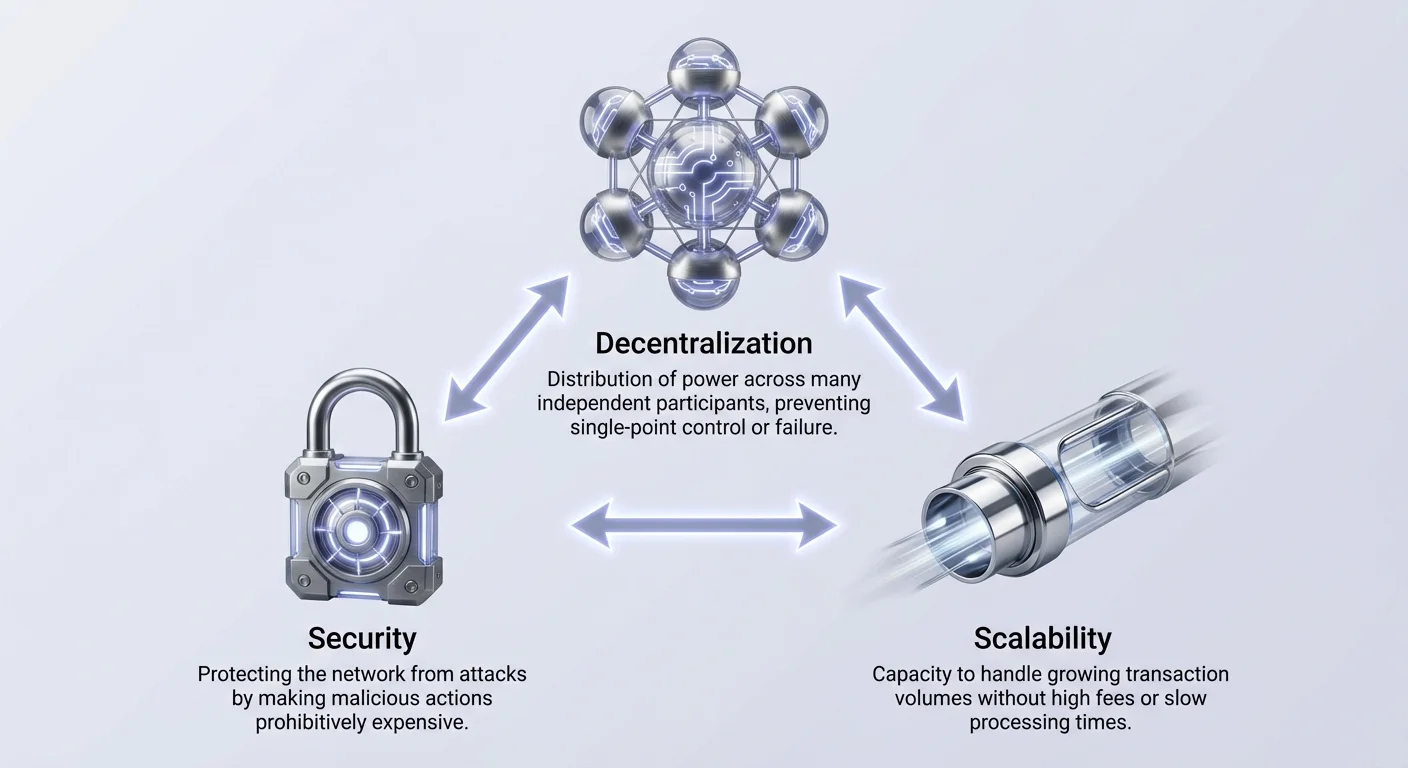
Understanding the Blockchain Trilemma
The blockchain trilemma helps explain why scaling a global, decentralized network is significantly harder than scaling a centralized database. In a centralized system, a single entity controls the servers, allowing them to upgrade hardware and process thousands of transactions per second with ease. However, this comes at the cost of trust and censorship resistance. Ethereum aims to avoid this compromise, but the trade-offs remain difficult to navigate.
The Three Pillars of Network Architecture
Decentralization refers to the distribution of power across a wide network of participants. In Ethereum, this means ensuring that no single entity controls the ledger. A highly decentralized network relies on thousands of independent nodes running the software from different locations. This redundancy makes the network resistant to censorship and government interference. If one node goes down or is compromised, the rest of the network continues to operate without interruption.
Security involves the network's ability to defend against attacks, particularly 51% attacks where a malicious actor gains control of the majority of the network's resources. In a decentralized system, security is achieved by making it prohibitively expensive for any single actor to attack the chain. This requires a massive amount of resources, whether in the form of computational power or financial capital locked in the system.
Scalability is the capacity of the system to handle a growing number of transactions without suffering from congestion or exorbitant fees. This is where the bottleneck occurs. To maintain decentralization, every node in the network must verify every transaction. This requirement inherently limits the speed of the network to the processing power of its individual nodes. If the requirements to run a node become too high in pursuit of speed, fewer people can participate, leading to centralization.
The Necessity of Evolution
Ethereum initially operated on a Proof-of-Work consensus mechanism, similar to Bitcoin. While this provided immense security and a fair distribution model, it was energy-intensive and limited the network to roughly 15 transactions per second. As demand for block space exceeded this limited supply, a bidding war for transaction inclusion ensued. This resulted in high gas fees, effectively making the network unusable for smaller transactions and limiting the potential for global adoption.
To solve this, the community recognized that the protocol could not remain static. Unlike Bitcoin, which often favors a conservative approach to preserve its function as a store of value, Ethereum adopted a progressive philosophy. The goal was to evolve the underlying technology to bypass the trilemma's limitations, aiming to increase throughput without sacrificing the core values of censorship resistance and security.
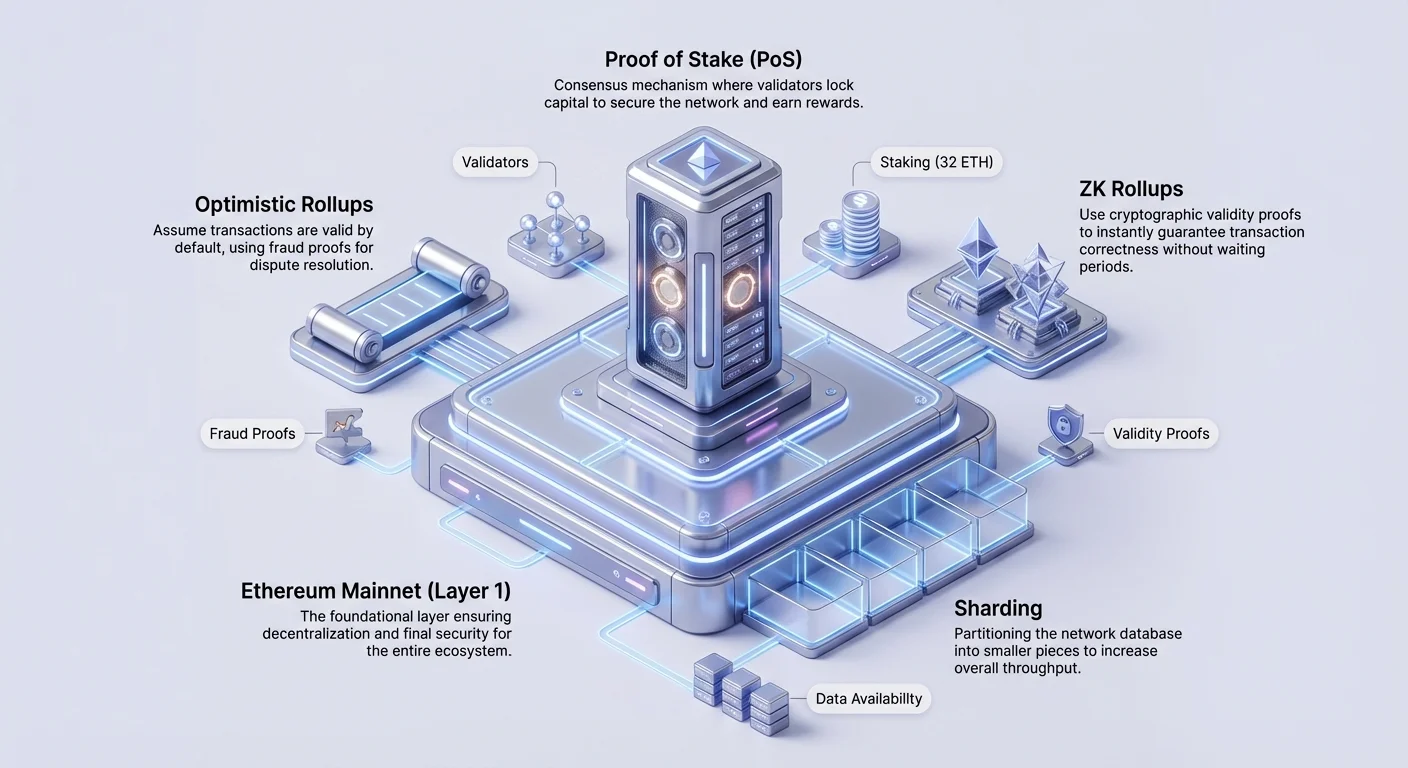
The Transition to Proof of Stake
A central pillar of Ethereum’s strategy to solve the trilemma was the transition from Proof-of-Work (PoW) to Proof-of-Stake (PoS). This massive upgrade, often referred to as "The Merge," fundamentally changed how the network achieves consensus. In the old PoW model, miners used vast amounts of electricity and hardware to solve complex puzzles. This energy expenditure secured the network but drew criticism for its environmental impact.
Mechanics of the New Consensus
In the Proof-of-Stake model, energy-intensive miners are replaced by validators. To become a validator, a participant must "stake" or lock up a specific amount of cryptocurrency—specifically 32 ETH—into a smart contract. This capital acts as a security deposit or a financial guarantee of good behavior. Instead of competing with hardware, validators are selected at random to propose new blocks and verify the work of others.
This system utilizes a "carrot and stick" approach to ensure honesty. Validators who perform their duties correctly, such as ordering transactions and proposing valid blocks, are rewarded with newly minted ETH and transaction fees. Conversely, validators who act maliciously or fail to stay online can face severe penalties known as "slashing." Slashing involves the forfeiture of a portion or even the entirety of their staked assets, making an attack on the network financially devastating for the attacker.
Security and Centralization Debates
The move to PoS offers significant advantages regarding the trilemma. First, it reduced Ethereum's energy consumption by more than 99%, making the network environmentally sustainable. Second, it changed the economics of attacking the network. In PoW, an attacker needs hardware; in PoS, they need to acquire a majority of the staked supply, which drives up the price of the asset they are trying to devalue.
However, this transition has not been without criticism. Opponents argue that PoS can lead to a "rich get richer" scenario. Since rewards are proportional to the amount staked, those with large capital reserves earn more, potentially concentrating influence over time. In contrast, Bitcoin mining is highly competitive with thin margins, forcing miners to sell coins to cover costs, which distributes supply. Despite these concerns, the Ethereum community largely views PoS as a necessary step to enable future scaling technologies like sharding.
2. līmeņa risinājumi: Skalējamības lietussargs
Lai gan galvenā tīkla (1. līmeņa) uzlabojumi ir kritiski, tūlītējs risinājums Ethereum pārpildei nācis no "2. līmeņa" risinājumiem. 2. līmenis ir vispārīgs termins tehnoloģijām, kas būvētas virs Ethereum galvenā tīkla, lai palielinātu transakciju kapacitāti. Šie protokoli apstrādā transakcijas ārpus ķēdes, veicot smagos aprēķinus prom no galvenā tīkla, un pēc tam noslēdz gala rezultātus atpakaļ Ethereum. Tas ļauj lietotājiem izmantot Ethereum drošību, baudot ātrāku ātrumu un zemākas izmaksas.
Kanalizācijas un sānu ķēdes
Viens no agrīnākajiem skalēšanas veidiem bija kanālu koncepts, līdzīgs Bitcoin Lightning Network. Kanāli ļauj divām pusēm veikt neierobežotu transakciju skaitu savā starpā, iesniedzot tikai pirmo un pēdējo transakciju blokķēdē. Tas ir neticami ātrs un lēts, bet prasa lietotājiem bloķēt līdzekļus un tiešu savienojumu ar pretējo pusi. Tas ir ierobežots apjomā un neatbalsta vispārīgus viedu līgumu aprēķinus.
Neatkarīgas sānu ķēdes piedāvā citu pieeju. Tās ir atsevišķas blokķēdes, kas darbojas paralēli Ethereum un savienojas caur divvirzienu tiltu. Piemēri ietver agrīno Polygon arhitektūru vai Ronin ķēdi, ko izmanto Axie Infinity. Sānu ķēdēm ir savi konsensa mehānismi un validētāji. Tas padara tās ļoti ātras un lētas, bet parasti mazāk drošas nekā Ethereum. Ja sānu ķēdes ierobežotais validētāju skaits sadarbojas, viņi teorētiski varētu nozagt līdzekļus, nozīmē, ka lietotāji uzticas sānu ķēdes drošībai, nevis Ethereum.
Rollupu revolūcija
Šobrīd perspektīvākā 2. līmeņa tehnoloģija ir "Rollup". Rollups izpilda transakcijas ārpus galvenās Ethereum ķēdes, bet publicē transakciju datus atpakaļ 1. līmenī. "Sarullējot" vai grupējot simtiem transakciju vienā datu gabalā, tie ievērojami samazina vietu galvenajā blokķēdē. Tas manto Ethereum drošību, jo dati ir pieejami pārbaudei, bet piedāvā sānu ķēdes ātrumu.
Ir divi galvenie rollupu veidi: Optimistic Rollups un Zero-Knowledge (ZK) Rollups. Optimistic Rollups pieņem, ka transakcijas ir derīgas pēc noklusējuma, lai paātrinātu apstrādi. Tie balstās uz "krāpšanas pierādījumu" sistēmu, kur tīkla dalībnieki var apstrīdēt transakciju, ja uzskata to par nederīgu. Tas prasa gaidīšanas periodu, bieži septiņas dienas, izņemšanai, lai nodrošinātu, ka nav noticis krāpšana.
ZK Rollups, savukārt, izmanto sarežģītu kriptogrāfiju, lai ģenerētu derīguma pierādījumu katram transakciju kopumam. Šis pierādījums tiek iesniegts Ethereum, matemātiski garantējot, ka transakcijas ir pareizas bez vajadzības pēc izaicinājumu gaidīšanas perioda. Lai gan ZK Rollups ir tehniski sarežģītāki un aprēķīniski smagāki ģenerēšanai, tie piedāvā tūlītēju galīgumu, tiklīdz pierādījums ir pieņemts 1. līmenī.
| Īpašība | Optimistic Rollups | Zero-Knowledge (ZK) Rollups |
|---|---|---|
| Validācijas loģika | Pieņem derīgumu, ja vien netiek apstrīdēts | Kriptogrāfisks derīguma pierādījums |
| Izņemšanas laiks | Lēns (~7 dienas krāpšanas logam) | Ātrs (atkarīgs no pierādījuma ģenerēšanas) |
| Sarežģītība | Zemāka, vieglāka ieviešanai | Augsta, prasa smagus aprēķinus |
Šardinga: Tīkla sadalīšana
Kamēr Ethereum turpina savu ceļa karti, "šardinga" pārstāv nākamo lielāko bāzes līmeņa skalēšanas posmu. Šardinga ir koncepts, aizņemts no tradicionālās datubāzes arhitektūras, kas paredzēts caurlaidības palielināšanai, sadalot darba slodzi. Pašlaik katrs Ethereum mezgls glabā visu tīkla vēsturi. Lai gan tas nodrošina drošību, tas rada masīvu veiktspējas pudeles kaklu.
Šardinga ietver tīkla visa stāvokļa sadalīšanu mazākos, pārvaldāmos gabalos, ko sauc par "šardiem". Katrs šards darbojas kā sava blokķēde, spējot apstrādāt transakcijas un viedus līgumus neatkarīgi. Tā vietā, lai katrs mezgls validētu katru transakciju, validētāji tiek nejauši piešķirti konkrētiem šardiem. Viņiem jāpārvalda tikai viņu piešķirto šardu dati, ievērojami samazinot aparatūras prasības dalībai.
Savstarpējā šardu mijiedarbība tiek koordinēta ar galveno ķēdi, ko bieži dēvē par Beacon Chain. Tas nodrošina datu konsekvenci visam tīklam. Šardinga sākotnējā ieviešana koncentrējas uz datu pieejamību — nodrošinot lielāku kapacitāti 2. līmeņa rollupiem datu glabāšanai —, nevis viedu līgumu izpildei tieši šardos. Šī sinerģiskā pieeja nozīmē, ka šardinga padarīs 2. līmeņa rollupus vēl lētākus un ātrākus, radot kumulatīvu efektu skalējamībai.
Governance: The Human Element of Evolution
Solving the trilemma is not just a technical challenge; it is a governance challenge. Ethereum is a decentralized protocol, meaning there is no CEO or board of directors to unilaterally dictate changes. Upgrades must be proposed, debated, and voluntarily adopted by the community of stakeholders. This includes core developers, node operators, miners (historically), validators, and application users.
The Improvement Proposal Process
The formal method for introducing changes is the Ethereum Improvement Proposal (EIP). Anyone can draft an EIP, but getting it implemented requires navigating a rigorous process of peer review and community consensus. Proposals are debated on forums and developer calls. Once a "rough consensus" is reached, the code is written, audited, and tested on testnets. Finally, node operators must choose to update their software to include the new rules.
This process is inherently political and relies on "credible neutrality." Credible neutrality is a guiding principle suggested by Vitalik Buterin, emphasizing that the mechanism for governance should not discriminate for or against any specific people. The protocol must treat everyone fairly. This is difficult to maintain as the network grows and different stakeholders develop competing interests. For example, increasing the block size might help users by lowering fees, but it hurts node operators by increasing storage costs, which creates a centralization risk.
Progressivism versus Conservatism
The governance culture of Ethereum differs significantly from Bitcoin. Bitcoin’s community generally adheres to a philosophy of conservatism: the protocol is viewed as sound money that should rarely change to avoid introducing bugs or undermining trust. This stability is a feature, not a bug, for a store of value. Ethereum, aiming to be a global computing platform, adopts a philosophy of progressivism.
Because the demand for smart contract execution is so high and the technology is still maturing, the Ethereum community accepts the risks associated with frequent hard forks and upgrades. This was most evident in the 2016 DAO hack, where the community chose to fork the chain to reverse a theft, leading to the split between Ethereum and Ethereum Classic. While this decision was controversial and criticized for violating the "code is law" ethos, it demonstrated the community's willingness to intervene and evolve the protocol to ensure its long-term survival and utility.
Sekas nākotnei
Ethereum nepārtrauktā evolūcija uzsver, ka blokķēdes trilemma nav siena, bet šķērslis, ko var pārvarēt ar inovācijām. Proof-of-Stake, 2. līmeņa rollupu un šardinga kombinācija liecina par nākotni, kur Ethereum var apstrādāt tūkstošiem transakciju sekundē, saglabājot decentralizāciju. Tomēr šī sarežģītība ievieš jaunus riskus. 2. līmeņa risinājumi fragmentē likviditāti, un sarežģītās kriptogrāfijas paļaušanās ZK rollupos pievieno potenciālus kļūdu vektorus.
Turklāt paļaušanās uz centralizētiem infrastruktūras sniedzējiem rada klusu draudu decentralizācijai. Servisi kā Infura nodrošina vieglu piekļuvi blokķēdes datiem, nozīmē, ka daudzi izstrādātāji nedarbina savus mezglus. Ja galvenais sniedzējs izslēdzas, kā tas ir noticis iepriekš, nozīmīgas ekosistēmas daļas var tikt traucētas. Zema barjera neatkarīgu validētāju iesaistei joprojām ir kritiskākā aizsardzība pret šo centralizāciju.
Secinājums
Ethereum ceļojums ir gadījumu izpēte konkurējošu tehnoloģisko prioritāšu līdzsvarošanā. Tīkls ir pārgājis no vienkāršas Proof-of-Work sistēmas uz modulāru, daudzslāņu ekosistēmu, kas paredzēta globālas finanšu infrastruktūras prasībām. Pārejot uz Proof-of-Stake un pieņemot rollup-centrisku ceļa karti, Ethereum mēģina atrisināt blokķēdes trilemmu, optimizējot dažādus steka slāņus dažādām funkcijām — drošību galvenajā tīklā un ātrumu 2. līmenī.
Šī nepārtrauktā evolūcijas stāvoklis ir nepieciešams, lai Ethereum īstenotu savu vīziju. Tam augot, aug arī tā pārvaldības sarežģītība un tehniskie izaicinājumi. Šo uzlabojumu panākums noteiks, vai decentralizēta blokķēde patiesi var skalēties, lai apkalpotu miljardus lietotāju, neupurējot drošības un cenzūras pretestības kodola vērtības, kas padarīja to vērtīgu no sākuma.
Skalējamība nav galamērķis, bet nepārtraukts tehnoloģisko inovāciju un kopienas koordinācijas process.