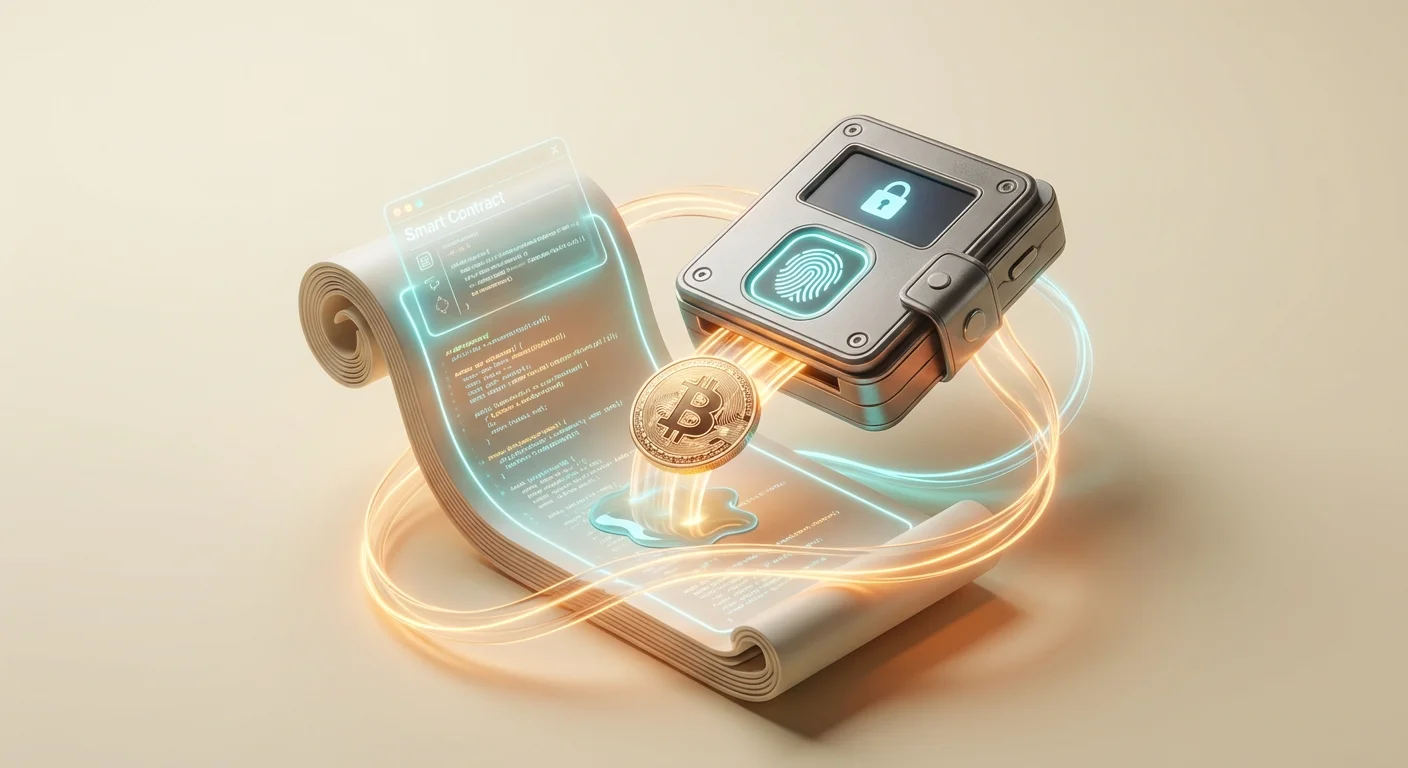
The landscape of digital asset trading has evolved significantly since the inception of Bitcoin. In the early days, trading was primarily conducted through centralized entities that mirrored traditional financial institutions. These platforms acted as custodians, holding user funds and facilitating trades through order books. However, the ethos of cryptocurrency has always been rooted in decentralization and removing intermediaries. This drive led to the creation of Decentralized Exchanges (DEXs), which allow users to trade directly with one another without trusting a third party with their assets.
A DEX operates fundamentally differently from a centralized counterpart. It utilizes smart contracts—self-executing code on a blockchain—to manage transactions. This innovation means that trading occurs peer-to-peer, often utilizing automated algorithms to determine prices rather than a traditional order book managed by a central authority. For traders, this offers distinct advantages regarding privacy, control, and access to a broader range of assets that may not yet be listed on major centralized platforms.
Understanding how these platforms function is essential for anyone looking to engage deeply with the crypto ecosystem. It requires a shift in mindset from trusting a company to trusting code. Users must also understand the mechanics of liquidity, the risks involved in providing that liquidity, and the potential rewards available through yield farming. By mastering these concepts, traders can navigate the decentralized markets more effectively and potentially maximize their returns while managing exposure to unique risks like impermanent loss.
Centralized vs. Decentralized Trading Models
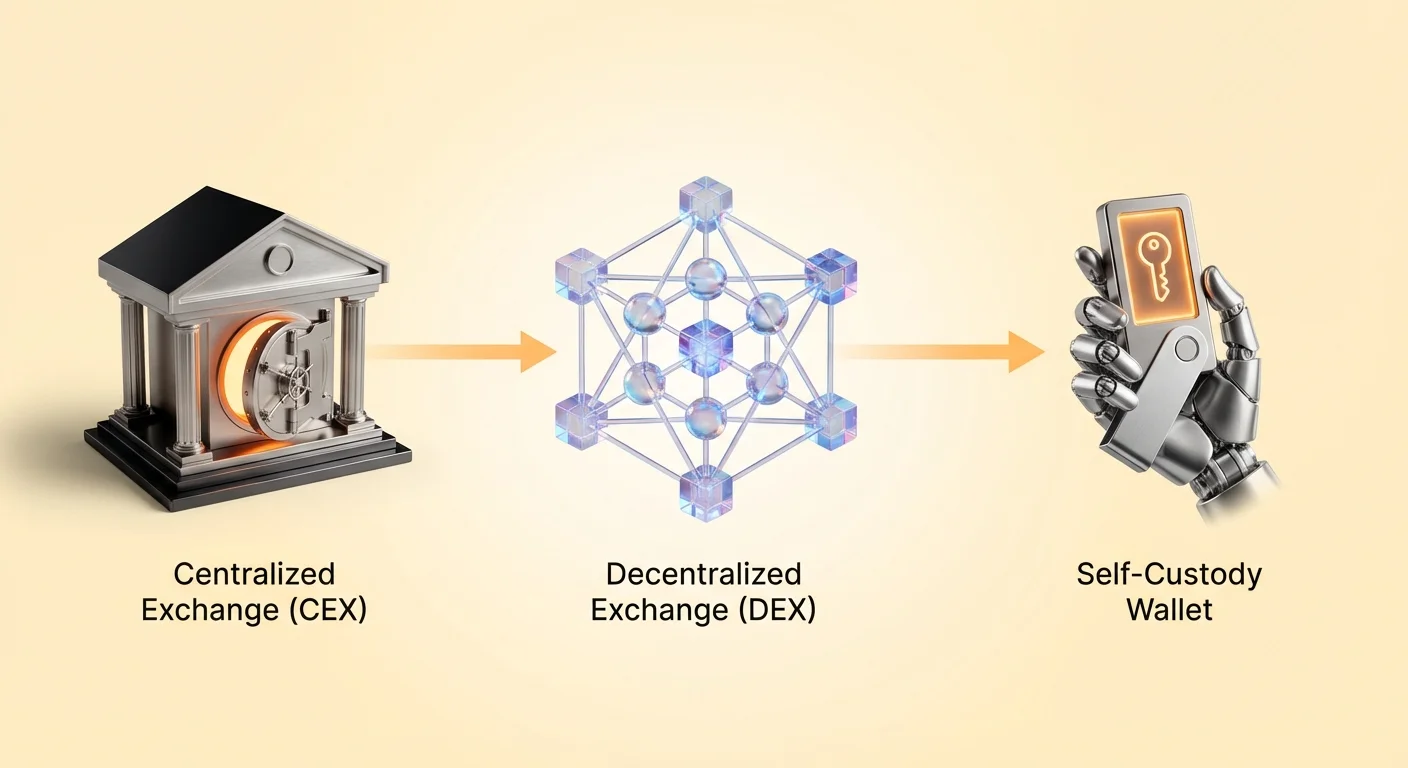
The primary distinction between centralized exchanges (CEXs) and decentralized exchanges (DEXs) lies in custody and execution. A CEX operates as a business that specializes in facilitating transactions between two parties. They are trusted middlemen, similar to banks or stock brokerages. When you use a CEX, you must sign up, often provide personal identification for regulatory compliance, and deposit your funds into a wallet controlled by the CEX vs. DEX exchange.
Custodial Implications
In a centralized model, the exchange holds the private keys to the wallet where your funds are stored. This arrangement is often summarized by the popular crypto adage: "Not your keys, not your coins." If the exchange suffers a security breach, goes bankrupt, or freezes your account due to regulatory pressure, you may lose access to your assets. Users rely entirely on the platform's security measures and solvency.
On a DEX, you maintain full control of your private keys at all times. You trade directly from your self-custodial wallet. The exchange never takes possession of your cryptocurrency. Instead, smart contracts execute the trade by swapping assets between your wallet and a liquidity pool or another user's wallet. This non-custodial nature significantly reduces counterparty risk, as there is no central entity holding user funds that can be hacked or mismanaged.
Order Books vs. Automated Market Makers
Centralized exchanges typically use an order book model. This system collects buy and sell orders from users and matches them. Market makers place limit orders to provide liquidity, while takers execute market orders that consume that liquidity. This requires a high number of active participants to ensure trades execute quickly at fair prices.
Most DEXs, particularly those on smart contract blockchains like Ethereum, utilize a different mechanism called an Automated Market Maker (AMM). Rather than matching a buyer with a seller, an AMM allows users to trade against a pool of tokens. A mathematical formula determines the price of the assets based on the ratio of tokens in the pool. This innovation solved early liquidity issues for DEXs, allowing them to function without professional market makers constantly updating order books.
The Mechanics of Liquidity
Liquidity is a critical concept in financial markets, referring to the ease with which an asset can be converted into cash or another asset without affecting its price. In the context of cryptocurrency, high liquidity means there are enough funds available to facilitate trades seamlessly. Bitcoin is generally the most liquid cryptocurrency due to its massive trading volume, whereas smaller altcoins may suffer from low liquidity, making it difficult to enter or exit positions without significant price slippage.
The Role of Liquidity Providers
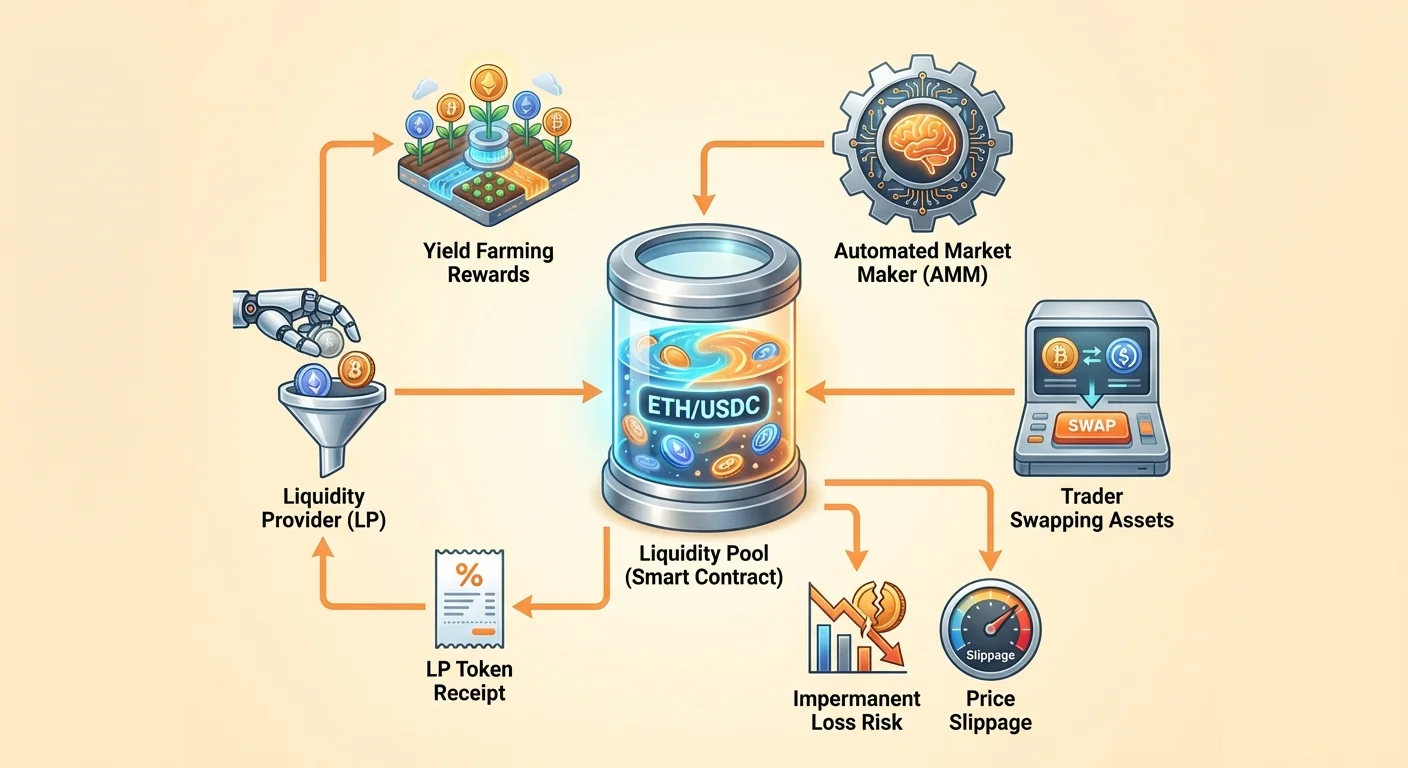
In the decentralized ecosystem, liquidity is crowdsourced. Anyone with a crypto wallet and assets can become a Liquidity Provider (LP). By depositing pairs of tokens into a liquidity pool, users enable others to trade. For example, if a trader wants to swap Ethereum (ETH) for a stablecoin like USDC, there must be a pool containing both ETH and USDC.
When a trade occurs, the trader pays a small fee. This fee is distributed among the liquidity providers proportional to their share of the pool. This incentivization structure is the backbone of the DeFi (Decentralized Finance) economy. It encourages users to lock up their assets to facilitate market activity, earning passive income in return. Without these providers, the AMM model would fail, as there would be no assets to trade against.
Understanding Slippage
Slippage occurs when the execution price of a trade differs from the expected price. This happens frequently in pools with low liquidity or during periods of high volatility. If a trader tries to buy a large amount of a token from a small pool, their purchase will significantly alter the ratio of assets in the pool, driving the price up for subsequent units in that same transaction.
DEX interfaces typically show an estimated slippage before a transaction is confirmed. Advanced users can adjust their "slippage tolerance," which acts as a limit. If the price shifts beyond this percentage during the transaction process, the trade will fail. This protects the trader from receiving significantly fewer tokens than anticipated due to sudden market movements or low liquidity depth.
| Feature | Centralized Exchange (CEX) | Decentralized Exchange (DEX) |
|---|---|---|
| Custody | Exchange holds funds | User holds funds (Self-custody) |
| Privacy | Requires KYC/ID verification | No KYC required (Anonymous) |
| Trading Mechanism | Order Book | Automated Market Maker (AMM) |
Deep Dive into Liquidity Pools
A liquidity pool is essentially a smart contract that contains funds. In a standard setup, these pools hold two tokens in equal value. For instance, if you want to contribute to an ETH/USDT pool, and ETH is trading at $2,000, you would need to deposit 1 ETH and 2,000 USDT. This ensures the pool remains balanced in terms of total value at the time of deposit.
Token Ratios and Pricing
The pricing algorithm used by many popular AMMs is based on the constant product formula, often expressed as $x * y = k$. Here, $x$ and $y$ represent the quantities of the two tokens in the pool, and $k$ is a constant value. The protocol aims to keep $k$ constant. When a trader buys one token from the pool, they increase the supply of the other token and decrease the supply of the one they bought.
To maintain the constant $k$, the price of the scarce token must rise. This automated pricing mechanism ensures that there is always liquidity available, no matter how volatile the market becomes, although the price becomes exponentially more expensive as the supply of a specific token in the pool nears zero. This system allows for continuous trading without the need for a centralized order matching engine.
LP Tokens
When you deposit assets into a liquidity pool, the smart contract issues you a receipt in the form of Liquidity Provider (LP) tokens. These tokens represent your share of the pool. If you contributed 10% of the total liquidity, you would receive LP tokens representing a 10% claim on the pool's assets and the accrued trading fees.
These LP tokens are themselves crypto assets. They can often be transferred, traded, or used in other DeFi protocols. To retrieve your original deposited funds and any fees you have earned, you must "burn" or redeem your LP tokens. The smart contract then calculates your current share of the pool and sends the appropriate amount of the two underlying tokens back to your wallet.
Yield Farming and Maximizing Returns
Simply providing liquidity earns trading fees, but the DeFi ecosystem has evolved to offer additional incentives known as yield farming. Yield farming involves moving capital around different protocols to maximize the return on those assets. Protocols often incentivize users to provide liquidity by rewarding them with their own governance tokens on top of the standard trading fees.
Staking LP Tokens
Once you have received LP tokens from a DEX, some platforms allow you to stake these tokens in a "farm." By doing so, you earn an additional yield paid in the platform's native token. For example, a DEX might want to attract more liquidity to a specific pair. To do this, they offer a high annual percentage yield (APY) paid in their governance token to anyone who stakes LP tokens for that specific pair.
This creates a dual layer of earnings. First, the liquidity provider earns a portion of the transaction fees from the trading activity in the pool. Second, they earn the farming rewards. This strategy can significantly boost the overall return on investment compared to simply holding the assets in a wallet. However, the rates can fluctuate wildly based on the price of the reward token and the number of participants in the farm.
APY vs. APR
It is crucial to understand the difference between Annual Percentage Rate (APR) and Annual Percentage Yield (APY) when evaluating farming opportunities. APR typically refers to the simple interest earned over a year, without accounting for compounding. If you earn rewards and do nothing with them, your return reflects the APR.
APY, on the other hand, accounts for the effect of compound interest. This assumes that you regularly claim your trading rewards and reinvest them into the pool to earn more rewards. In the fast-paced world of DeFi, where rewards can sometimes be claimed daily or even hourly, the difference between APR and APY can be substantial. High APY figures often rely on frequent compounding, which requires active management and incurs network gas fees.
The Risk of Impermanent Loss
While providing liquidity can be profitable, it comes with a unique risk known as impermanent loss. This occurs when the price of your deposited tokens changes compared to when you deposited them. The greater the divergence in price between the two tokens in the pool, the more impermanent loss you suffer. It is called "impermanent" because if the prices return to their original ratio, the loss disappears. However, if you withdraw your funds while the prices are divergent, the loss becomes permanent.
How It Happens
Consider a scenario where you deposit ETH and USDC into a pool. If the price of ETH doubles outside the pool, arbitrage traders will spot a discrepancy. They will buy the cheaper ETH from your liquidity pool until the pool price matches the external market price. As a result, the pool will end up with more USDC and less ETH than you originally deposited.
If you were to withdraw your liquidity at this point, the total dollar value of your holdings would be higher than when you started (because ETH went up), but it would be lower than if you had simply held the ETH and USDC in your wallet without providing liquidity. The difference between the value of your liquidity pool position and the value of simply holding the assets is the impermanent loss.
Mitigating the Risk
Traders can mitigate impermanent loss by choosing stable pairs. providing liquidity to a pool consisting of two stablecoins (like USDC/USDT) carries minimal impermanent loss risk because the prices of the two assets rarely diverge significantly. Similarly, providing liquidity for "wrapped" versions of the same asset (like BTC and Wrapped BTC) creates a low-risk environment.
However, these low-risk pools often offer lower returns because they are safer and thus more saturated with liquidity. High-volatility pairs offer higher trading fees and farming rewards to compensate for the increased risk of impermanent loss. LPs must calculate whether the expected fees and rewards will outweigh the potential devaluation caused by price divergence.
Additional Risks in the DEX Ecosystem
Beyond impermanent loss, decentralized exchanges carry technical and systemic risks that users must navigate. Because these platforms operate on code, they are only as secure as that code. Smart contract vulnerabilities are a primary concern. If a hacker discovers a bug in the DEX's smart contract, they could potentially drain the liquidity pools, leaving providers with nothing.
Rug Pulls and Scams
The open nature of DEXs means that anyone can list a token. This freedom leads to a prevalence of scams, particularly "rug pulls." In this scenario, a developer creates a new token, pairs it with a valuable asset like ETH in a liquidity pool, and hypes up the project to attract investors. Once the price rises and others add liquidity, the developer withdraws all the valuable ETH from the pool, driving the token price to zero and stealing investor funds.
Due diligence is mandatory. Unlike centralized exchanges that vet projects before listing, DEXs do not filter tokens. Users should verify contract addresses, check for audits from reputable security firms, and research the project team before buying a new token or providing liquidity to a new pool.
Slippage and Front-Running
Front-running is another issue prevalent on public blockchains. Because transactions are broadcast to a public memory pool (mempool) before being confirmed in a block, sophisticated bots can see pending trades. If a bot sees a large buy order that will drive up the price, it can pay a higher gas fee to execute its own buy order first.
This forces the original buyer to purchase at a higher price. The bot then immediately sells the tokens for a profit. This extraction of value is often referred to as Miner Extractable Value (MEV) or Maximal Extractable Value. While difficult for individual users to avoid completely, setting appropriate slippage tolerances can prevent trades from executing at manipulated prices.
Wallet Management and Network Fees
To interact with a DEX, you need a self-custodial wallet. These digital wallets allow you to store and manage your cryptocurrencies directly. Popular options include mobile apps and browser extensions. The wallet acts as your passport to the decentralized web, allowing you to connect to various applications without creating new accounts for each one.
Connecting to Applications
The connection process typically uses a protocol like WalletConnect. When you visit a DEX website, you select the "Connect Wallet" option. This prompts your wallet app to ask for approval. Once connected, the website can see your public address and balances, but it cannot move funds without your explicit authorization for each transaction.
Security is paramount here. You should never share your private keys or recovery phrase with any website or support agent. Legitimate DEXs will never ask for this information. Additionally, users should be wary of granting "unlimited token approvals" to smart contracts, as this can leave wallets vulnerable if the contract is later compromised.
Gas and Network Fees
Every action on a blockchain, whether it is a swap, a deposit, or a withdrawal, requires a network fee. On Ethereum, this is known as "gas" and is paid in ETH. On the Bitcoin network, fees are paid to miners. These fees are determined by the supply and demand for block space and the complexity of the transaction.
Simple transfers require less data and computation, resulting in lower fees. Complex interactions with smart contracts, such as entering a liquidity pool or staking tokens, require more computational resources and consequently higher fees. Users must ensure they always hold enough of the network's native coin (e.g., ETH, SOL, BNB) to pay for these transactions. Running out of the native coin can leave assets stuck in a wallet or protocol.
Choosing the Right Decentralized Exchange
Not all DEXs are created equal. When selecting a platform, volume and Total Value Locked (TVL) are key indicators of health. High TVL suggests that many users trust the protocol with their capital, which generally implies a higher level of security and stability. High trading volume usually ensures better price execution and lower slippage for traders.
Blockchain Compatibility
Different DEXs operate on different blockchains. Uniswap is dominant on Ethereum, while others may lead on chains like Solana or Binance Smart Chain. Some modern DEXs are "multichain" or "cross-chain," allowing users to swap assets across different networks. Users must ensure their wallet is compatible with the chain the DEX operates on.
User Experience and Aggregators
The user interface can vary significantly between platforms. Some are geared towards professionals with complex charts and data, while others offer simple "swap" interfaces. DEX aggregators have also become popular. These platforms scan multiple DEXs to find the best price for a specific trade, splitting the order across several pools if necessary to minimize slippage. Using an aggregator can often save traders money compared to using a single DEX directly.
Step-by-Step Guide to Swapping
Participating in a DEX swap is a straightforward process once you have set up your wallet. The first step is to ensure your wallet is funded with the assets you wish to trade and the native token required for gas fees. Navigate to the DEX website or use the swap feature within a trusted wallet app.
Executing the Trade
Select the token you wish to sell in the "From" field and the token you want to buy in the "To" field. Enter the amount. The interface will calculate the exchange rate and estimated gas fees. It is vital to review these details carefully. Check the price impact (slippage) and the network fee. If the network is congested, fees might be abnormally high.
Once you click "Swap," your wallet will prompt you to confirm the transaction. This is the final step where you authorize the smart contract to execute the trade. After confirming, the transaction is broadcast to the network. Depending on the blockchain speed, it may take a few seconds to a few minutes to confirm. Once confirmed, the new tokens will appear in your wallet balance.
Conclusion
Decentralized exchanges represent a fundamental shift in how financial markets operate, moving from trusted intermediaries to transparent code. By utilizing liquidity pools and automated market makers, these platforms offer users unprecedented control over their assets and open up new avenues for earning through yield farming. However, this freedom comes with the responsibility of self-custody and the need to understand complex risks like impermanent loss and smart contract vulnerabilities.
Success in the decentralized space requires continuous learning and vigilance. Users must balance the potential for high yields against the technical and market risks inherent in DeFi. By starting with small amounts, using reputable platforms, and thoroughly researching assets before trading or pooling, investors can harness the power of decentralized finance while protecting their capital.
The key to crypto success is understanding that you are your own bank, responsible for every security and investment decision.