
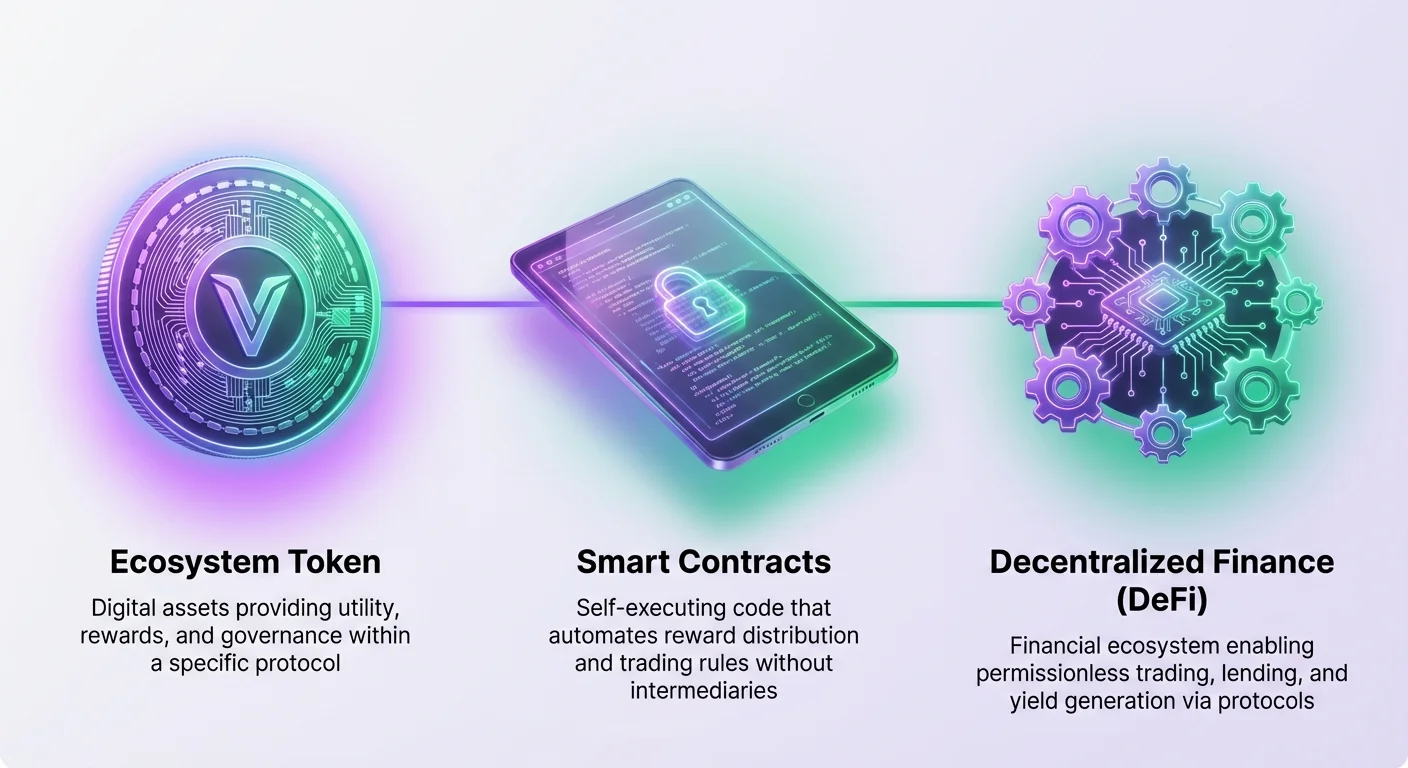
Ecosystem tokens represent a specific class of digital assets designed to provide utility, rewards, and governance rights within a defined protocol or platform. Unlike general-purpose cryptocurrencies that primarily serve as a medium of exchange or store of value, ecosystem tokens function as the fuel for a broader suite of decentralized applications. This case study focuses on the VERSE token to illustrate how modern crypto assets integrate with decentralized exchanges (DEXs), liquidity pools, and reward structures.
By analyzing the mechanics of VERSE, we can understand the broader operational principles of utility tokens built on the Ethereum network. These assets allow users to transition from passive holders to active participants in financial protocols. The utility extends beyond simple price speculation. It encompasses fee reduction, yield generation through liquidity provision, and access to exclusive platform features.
Understanding these mechanics requires a deep look at the underlying technology of Ethereum, the structure of Automated Market Makers (AMMs), and the economic incentives that drive decentralized finance (DeFi). This analysis breaks down how a token moves through this ecosystem and creates value for participants through programmatic rewards.
The Technical Foundation of Ecosystem Tokens
The ERC-20 Standard
Most utility tokens, including VERSE, operate on the Ethereum blockchain using the ERC-20 standard. This technical standard defines a common list of rules that Ethereum tokens must follow. These rules allow developers to predict how new tokens will function within the larger Ethereum ecosystem. Because they share this standard, these tokens are instantly compatible with existing infrastructure like decentralized exchanges and hardware wallets.
The ERC-20 standard ensures that a token can be sent, received, and tracked efficiently. It creates a level playing field where assets can interact with smart contracts without custom code for each new token. This interoperability is crucial for the utility of ecosystem tokens. It allows them to be seamlessly integrated into lending protocols, yield farms, and trading pairs across the entire DeFi landscape.
Smart contracts manage the total supply, transaction logic, and balance tracking of these tokens. When a user interacts with an ecosystem token, they are essentially interacting with a piece of code on the Ethereum blockchain. This code enforces the rules of the asset without the need for a central intermediary or bank to validate the transaction.
Smart Contracts and Automation
The utility of tokens like VERSE relies heavily on smart contracts. These are self-executing contracts where the terms of the agreement between buyer and seller are directly written into lines of code. In the context of ecosystem assets, smart contracts automate the distribution of rewards and the management of trading pools.
For example, when a user stakes their tokens or adds liquidity to a pool, a smart contract takes custody of those assets and issues a receipt token in return. The contract then calculates rewards based on the duration and amount staked. This automation eliminates human error and bias from the reward distribution process. It ensures that all participants are treated exactly according to the pre-defined rules of the protocol.
Decentralized Trading Mechanics
Automated Market Makers (AMMs)
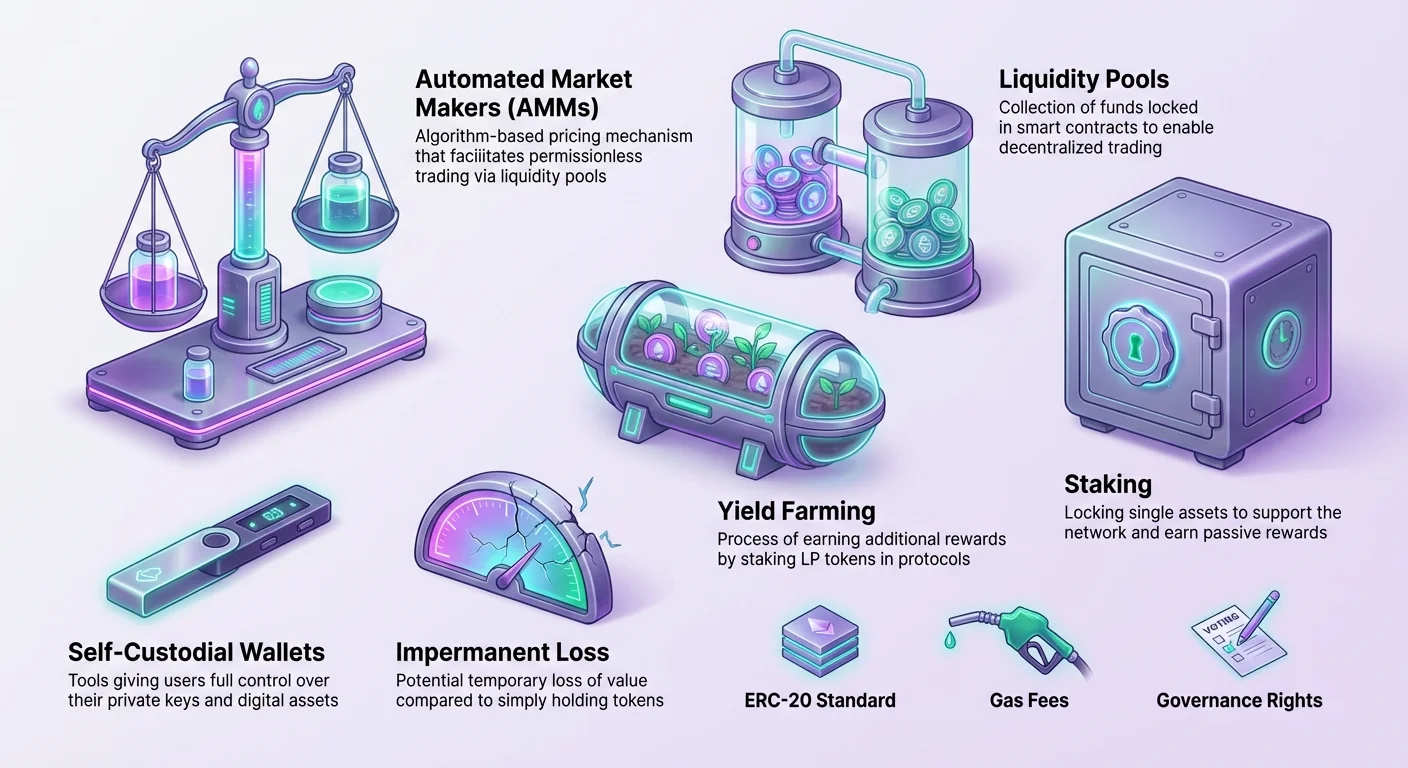
The primary venue for utilizing ecosystem tokens is often a Decentralized Exchange (DEX). Unlike centralized exchanges that use an order book to match buyers and sellers, a DEX like Verse DEX utilizes a protocol known as an Automated Market Maker (AMM). AMMs are a fundamental innovation in DeFi that allow digital assets to be traded without permission and automatically by using liquidity pools.
In an AMM model, pricing is determined by a mathematical formula rather than the highest bid and lowest ask. Traders do not trade against other individuals directly. Instead, they trade against a pool of tokens locked in a smart contract. When a user wants to buy VERSE, they send another asset, such as ETH, into the pool and remove the equivalent value of VERSE.
This mechanism ensures that there is always liquidity available for trading, provided the pool is sufficiently funded. As the ratio of tokens in the pool changes, the price adjusts automatically to reflect the new supply and demand dynamics. This continuous liquidity is vital for ecosystem tokens, as it ensures users can enter or exit positions at any time without relying on a counterparty to take the other side of the trade.
Peer-to-Peer Swapping
Trading on a DEX represents a peer-to-contract interaction that facilitates peer-to-peer value transfer. When a user initiates a swap, they are interacting directly with the blockchain. This process is non-custodial, meaning the user retains control of their private keys and funds throughout the entire transaction. The exchange never holds the user's assets.
This trading method reduces the risk of platform hacks or insolvency associated with centralized entities. However, it requires the user to manage their own security and understand the mechanics of gas fees. Every interaction with the DEX, such as approving a token for spending or executing a swap, requires a transaction fee paid in the network's native currency, which is ETH in the case of Ethereum-based tokens.
| Feature | Centralized Exchange (CEX) | Decentralized Exchange (DEX) |
|---|---|---|
| Custody | Exchange holds funds | User holds funds (Self-custody) |
| Pricing | Order Book (Bid/Ask) | AMM Formula |
| Access | often requires KYC | Permissionless (No KYC) |
Liquidity Provision and Yield Farming
Understanding Liquidity Pools
A liquidity pool is a collection of funds locked in a smart contract to facilitate trading. For an ecosystem token to be tradable on a DEX, there must be liquidity providers (LPs) willing to deposit their assets into these pools. Typically, a pool consists of two assets of equal value, such as a pair comprising VERSE and Ethereum (ETH).
Users who deposit their assets into these pools perform a critical service for the ecosystem. They provide the capital that allows other users to trade. In return for this service, LPs earn a portion of the trading fees generated by the pool. This fee is distributed pro-rata to all liquidity providers based on their share of the total pool.
The concept of "Total Value Locked" (TVL) is often used to measure the health of these pools. Higher TVL generally results in more stable prices and lower slippage for traders. Slippage refers to the difference between the expected price of a trade and the price at which the trade is executed. Deep liquidity pools minimize this discrepancy, making the ecosystem token more efficient to trade.
Incentivizing Liquidity via Yield
To attract liquidity, protocols often employ yield farming incentives. This involves distributing additional rewards to LPs on top of the standard trading fees. In the context of the Verse ecosystem, users who provide liquidity to specific pools may stake their liquidity provider tokens (LP tokens) to earn extra VERSE tokens.
Yield farming transforms passive assets into productive capital. Instead of holding a token and hoping for price appreciation, a user can deploy that asset to earn a passive income stream. The Annual Percentage Yield (APY) represents the annualized rate of return, taking compound interest into account. These rewards serve as a powerful mechanism to align the interests of the users with the health of the platform.
However, yield farming introduces complexities. The rewards are often paid in the ecosystem's native token, which means the value of the yield is tied to the market performance of that asset. Users must calculate whether the rewards offered outweigh the potential risks associated with providing liquidity, such as impermanent loss.
Impermanent Loss Risks
Impermanent loss is a specific risk unique to AMMs. It occurs when the price of the deposited tokens changes compared to when they were deposited. Because the AMM constantly rebalances the ratio of assets in the pool to maintain equal value, an LP might end up with less of the appreciating asset and more of the depreciating asset compared to simply holding them in a wallet.
The loss is considered "impermanent" because it is only realized if the user withdraws their liquidity while the prices are divergent. If the prices return to their original ratio, the loss disappears. However, in volatile crypto markets, price divergence is common. Rewards from yield farming and trading fees are designed to offset this risk, making liquidity provision a calculation of risk versus reward.
Staking and Ecosystem Rewards
The Mechanics of Staking
Staking offers a different utility pathway compared to liquidity provision. While liquidity provision involves depositing pairs of assets to facilitate trading, staking typically involves locking a single asset into a smart contract to support the network or protocol. In exchange for locking their tokens, users receive rewards over time.
For ecosystem tokens like VERSE, staking serves to reduce the circulating supply, effectively removing tokens from the open market for a period. This mechanism creates scarcity and signals long-term commitment from the community. Staking contracts usually offer a predictable reward rate, although this can vary based on the total amount of tokens staked in the system.
Staking is generally considered lower risk than liquidity provision because it does not involve impermanent loss. Users withdraw exactly the number of tokens they deposited, plus the rewards they earned. The primary risk in staking is the potential fluctuation in the market value of the token during the lock-up period.
Tiers and Utility Access
Beyond simple yield generation, staking often unlocks tiered benefits within an ecosystem. Projects may design their systems so that holding or staking a certain amount of tokens grants access to advanced features. These can include reduced trading fees on the DEX, access to exclusive product launches, or enhanced cashback rates on crypto payment cards.
This tiered structure encourages users to accumulate and hold the token, deepening their integration with the platform. It transforms the token from a speculative asset into a membership key that unlocks tangible value. This utility-driven demand provides a fundamental baseline for the token's economy, distinct from external market speculation.
Managing Assets: Wallets and Security
Self-Custodial Wallets
To interact with ecosystem tokens, VERSE, and decentralized applications, users require a self-custodial wallet. Unlike accounts on centralized exchanges where a third party manages security, self-custodial wallets give the user total control over their private keys. This control is essential for interacting with smart contracts, staking, and yield farming.
Ethereum wallets serve as the interface for these interactions. They store the digital keys necessary to sign transactions. When a user wants to stake tokens or add liquidity, they initiate the request through their wallet. The wallet then broadcasts this signed transaction to the network.
Security is paramount in this environment. Because there is no central authority to reverse transactions or recover lost passwords, users must safeguard their recovery phrases. The use of hardware wallets—physical devices that store keys offline—is highly recommended for securing significant amounts of ecosystem assets.
Interacting with DApps
Decentralized Applications (DApps) are the user interfaces that allow people to interact with blockchain protocols. The Verse DEX is a prime example of a DApp. Users connect their wallet to the DApp website, which then acts as a bridge to the underlying smart contracts.
When connecting a wallet to a DApp, users must grant permissions. These permissions often include allowing the DApp to view token balances and requesting approval to move funds. It is critical for users to verify they are interacting with the legitimate DApp to avoid phishing attacks.
Smart contract interactions require "gas," which is the fee paid to network validators. On Ethereum, gas fees can fluctuate based on network congestion. Users utilizing ecosystem tokens for rewards must factor in these transaction costs when calculating their potential returns from staking or yield farming.
The Future of Token Utility
Cross-Chain Functionality
The crypto landscape is evolving beyond single-chain silos. While VERSE and similar tokens may launch on Ethereum, the industry is moving toward multichain compatibility. Bridging technology allows assets to move between different blockchains, such as moving from Ethereum to low-cost networks like Polygon or Avalanche.
This mobility increases the utility of ecosystem tokens by making them accessible to users who may be priced out by Ethereum's layer-1 gas fees. Cross-chain functionality ensures that the asset can be used in a wider variety of DeFi environments, expanding the reach of the ecosystem.
Governance and Decentralization
A maturing aspect of token utility is governance. Many ecosystem tokens evolve to include voting rights. This allows token holders to participate in the decision-making process for the protocol. Proposals might include changes to fee structures, the introduction of new liquidity pools, or the allocation of treasury funds.
Governance transforms users from customers into stakeholders. It aligns the direction of the project with the desires of the community. While not all ecosystem tokens launch with governance features immediately, it is a common trajectory for decentralized projects aiming for long-term sustainability and community ownership.
Conclusion
The VERSE token serves as a comprehensive case study for the utility of modern ecosystem assets. It demonstrates that cryptocurrencies have evolved far beyond simple peer-to-peer payment methods. Through the integration of ERC-20 standards, smart contracts, and Automated Market Makers, these tokens create a dynamic economy where users are rewarded for active participation.
The ability to provide liquidity, farm yield, and stake assets allows individuals to perform financial functions previously reserved for banks and market makers. While these opportunities come with specific risks like impermanent loss and smart contract vulnerabilities, they offer a level of financial sovereignty and potential return that defines the decentralized finance movement.
As ecosystems continue to mature, the utility of their native tokens will likely expand further into governance and cross-chain applications. For the user, success involves understanding the mechanics of these tools, managing security via self-custody, and navigating the balance between risk and reward.
True utility in crypto comes from active participation in decentralized protocols rather than passive speculation.