
Cryptocurrency ownership is defined fundamentally by the possession and control of cryptographic keys. When an individual acquires digital assets, they are faced with a primary decision regarding how those assets are stored and who holds the ultimate authority over them. This choice lies between custodial wallets, where a third party manages the security, and non-custodial solutions, where the user acts as their own bank. Understanding the mechanics, risks, and benefits of these distinct approaches is essential for anyone navigating the digital asset ecosystem.
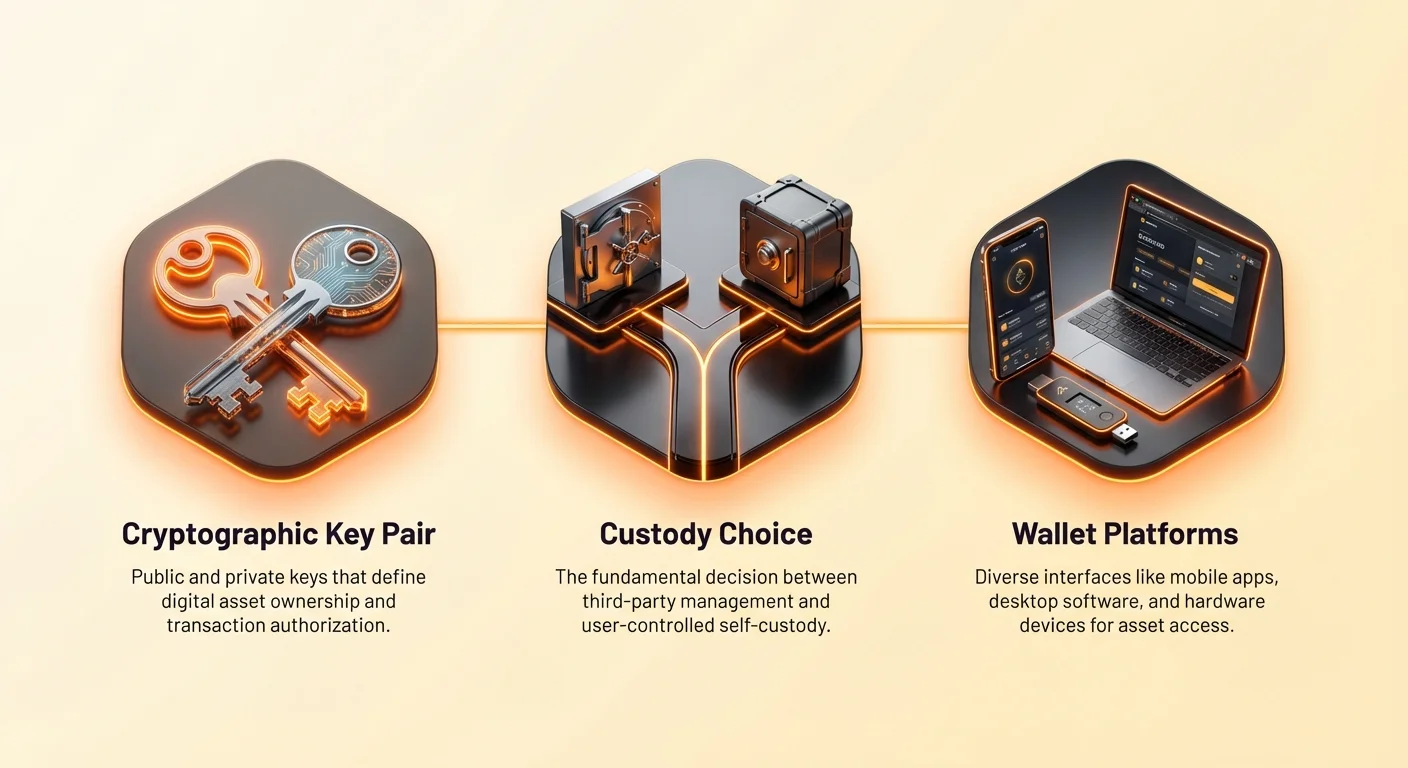
A wallet in the context of cryptocurrency is not a physical container for coins but a digital tool that interacts with a blockchain network. Its primary function is to manage public and private key pairs. The public key acts as an address for receiving funds, similar to an email address or bank account number. The private key, however, functions as the password or digital signature required to authorize transactions and move funds. The entity that holds this private key effectively owns the asset.
The Mechanics of Digital Custody
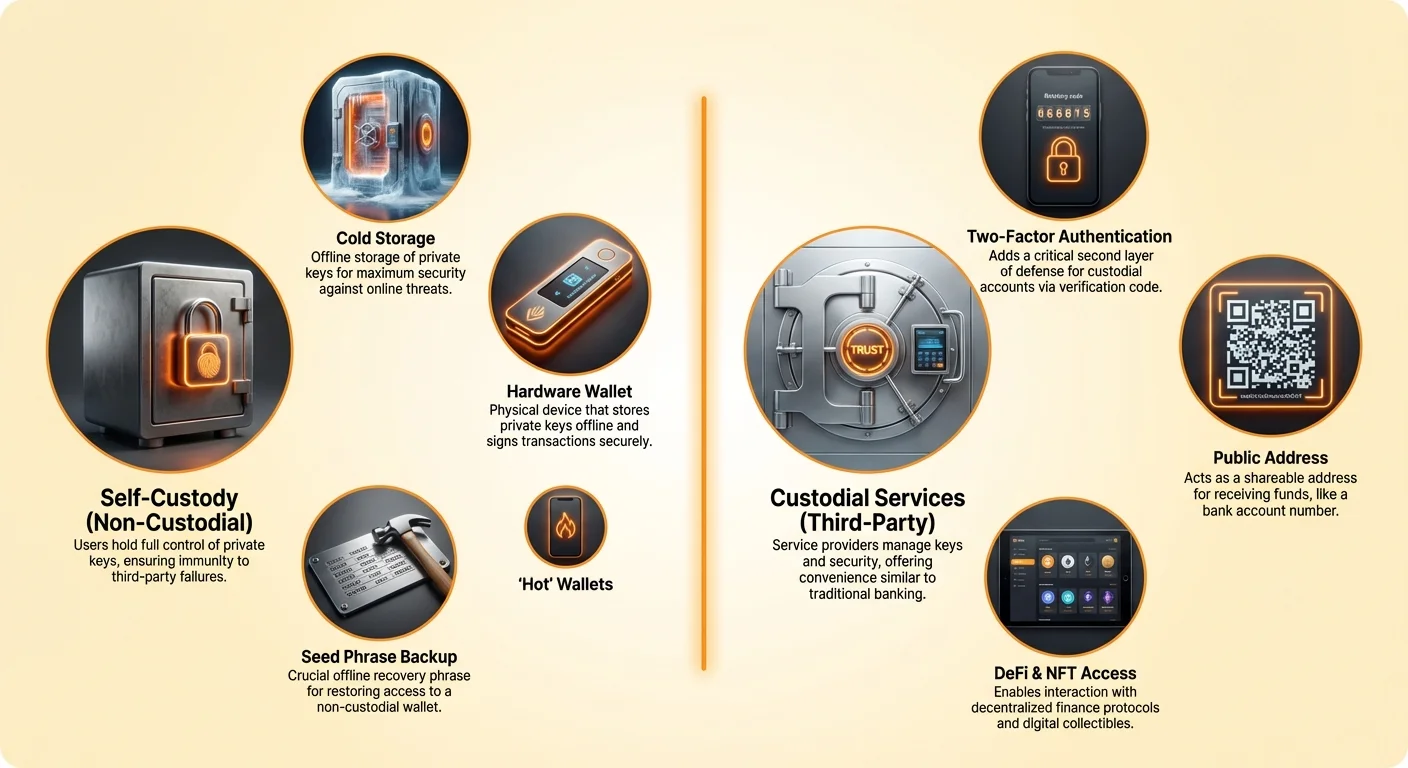
The distinction between custodial and non-custodial services hinges entirely on the management of the private key. In a custodial arrangement, a third-party service provider, such as a centralized exchange, creates and manages the wallet addresses on behalf of the user. The user does not have direct access to the private keys. Instead, they access their funds through a standard login interface provided by the service.
Reliance on Third-Party Infrastructure
When utilizing a custodial wallet, the user enters into a trust-based relationship with the provider. The service provider guarantees the security of the assets and promises to honor withdrawal requests. This model mirrors traditional banking, where a customer trusts a financial institution to safeguard their money. The primary advantage here is convenience. Users do not need to worry about complex backups or the technical nuances of cryptography.
If a user loses their login credentials, custodial services typically offer recovery methods involving identity verification or email restoration. This safety net is appealing to beginners who may fear losing access to their funds due to human error. However, this convenience comes with a trade-off. The user is exposed to counterparty risk. If the service provider suffers a security breach, becomes insolvent, or faces regulatory action, the user's access to their funds could be restricted or lost entirely.
The Self-Custody Alternative
In contrast, self-custodial or non-custodial wallets place full control in the hands of the user. The software or hardware device generates the private keys locally, often providing the user with a "seed phrase" or backup code. This phrase acts as the master key for the wallet. Because the private keys never leave the user's possession, the assets are immune to third-party failures or account freezes.
However, with this control comes total responsibility. If a user loses their seed phrase or their device is destroyed without a backup, the funds are irretrievable. There is no customer support line that can reset a private key. This model appeals to those who prioritize financial sovereignty and privacy over convenience. It requires a higher level of technical awareness and discipline regarding security practices.
Diverse Wallet Platforms and Interfaces
Digital wallets are available in various formats, each designed to balance security, accessibility, and functionality. These platforms cater to different usage patterns, from frequent trading to long-term storage. Understanding the specific attributes of mobile, desktop, and browser-based solutions helps users select the right tool for their needs.
Mobile Wallet Accessibility
Mobile wallets are applications designed for smartphones that allow users to send, receive, and store cryptocurrency on the go. They are particularly effective for daily transactions and payments. Modern mobile wallets often leverage the biometric security features of the device, such as fingerprint scanners or facial recognition, to add a layer of protection. They prioritize user experience, often integrating features to buy or swap assets directly within the app.
While convenient, mobile wallets are generally considered "hot wallets" because they remain connected to the internet. This connectivity makes them more susceptible to online threats compared to offline methods. However, for managing smaller amounts of cryptocurrency or for users who need instant access to their funds, they offer an optimal balance of utility and security.
Desktop and Browser Solutions
Desktop wallets are software programs installed directly on a computer. They offer a robust environment for managing assets and often provide more advanced features than their mobile counterparts. Desktop solutions can give users greater control over transaction fees and may support running a full node, which verifies transactions on the blockchain network independently. They are favored by power users who require detailed portfolio management tools.
Browser extension wallets represent a bridge between standard web browsing and the decentralized web. These lightweight wallets integrate directly into browsers like Chrome or Firefox. They allow users to interact seamlessly with decentralized applications (dApps), decentralized finance (DeFi) platforms, and NFT marketplaces. While extremely useful for Web3 interactions, they share the security vulnerabilities of the browser environment and should be used cautiously with large amounts of capital.
Security Guarantees and Risk Factors
Evaluating the security of a wallet requires looking beyond the interface and understanding the underlying guarantees. For custodial wallets, the security guarantee is institutional. It relies on the provider's ability to maintain cold storage reserves, implement multi-signature authorization, and defend against hacking attempts. Users must research the reputation and regulatory compliance of the provider.
| Feature | Custodial Wallet | Non-Custodial Wallet |
|---|---|---|
| Key Control | Third-party holds keys | User holds keys |
| Recovery | "Forgot Password" options | Seed phrase backup only |
| Transaction Type | Internal database update | Direct blockchain interaction |
Encryption and Authentication
Regardless of the wallet type, encryption plays a vital role. Custodial services usually employ two-factor authentication (2FA) to protect user accounts. This adds a critical layer of defense, requiring a second form of verification, such as a code from an authenticator app, before allowing access. Non-custodial wallets use encryption to protect the private keys stored on the device, requiring a PIN or password to decrypt and sign transactions.
The Role of Cold Storage
The gold standard for security in the cryptocurrency space is cold storage. This refers to keeping private keys completely offline, physically isolated from the internet. Custodial exchanges typically keep the vast majority of user funds in institutional-grade cold storage vaults to mitigate the risk of online theft. Only a small percentage of funds remain in "hot" wallets to facilitate immediate withdrawals.
For individuals, hardware wallets and paper wallets serve as personal cold storage solutions. A hardware wallet is a physical device that stores private keys on a secure chip. When a user wants to make a transaction, the device signs it internally and sends the signed data to the computer. The private key never touches the internet-connected device, rendering it immune to malware or keyloggers that might be present on the computer.
Specialized Storage Methods
Beyond standard software applications, specialized methods of storage exist for those prioritizing maximum security or specific transaction types. These methods often strip away convenience in favor of enhanced safety or speed, catering to specific niches within the crypto ecosystem.
Paper Wallets and Offline Generation
A paper wallet is one of the most traditional forms of cold storage. It involves printing the public and private keys onto a piece of paper. This method effectively removes digital attack vectors, as the keys exist only in physical form. Creating a secure paper wallet requires strict adherence to safety protocols. The keys should be generated on a device that is not connected to the internet to ensure they are not intercepted during creation.
To set up a paper wallet, a user typically downloads a wallet generator tool and runs it on an offline computer. Once the keys are generated, they are printed or written down. The user then sends cryptocurrency to the public address displayed on the paper. To spend the funds later, the private key must be imported into a software wallet. Because paper degrades, it is crucial to store these wallets in fireproof and waterproof locations, often with multiple copies in different secure places.
Lightning Network Integration
While cold storage focuses on security, other wallet technologies focus on scalability and speed. Lightning wallets utilize a second-layer protocol built on top of the Bitcoin network. They enable instant, low-cost transactions by creating payment channels between users. These transactions occur off-chain and are later settled on the main blockchain.
Lightning wallets are essential for making Bitcoin viable for microtransactions, such as tipping content creators or paying for small retail items. They solve the issues of network congestion and high fees associated with on-chain transactions. However, they introduce different security dynamics, often requiring the user to manage channel liquidity. Some lightning wallets are custodial, managing channels for the user, while others offer non-custodial control over the payment channels.
Advanced Wallet Features and Web3
As the cryptocurrency landscape evolves, wallets have transformed from simple storage tools into gateways for the broader digital economy. Modern wallets now support a vast array of digital assets beyond simple currency, including non-fungible tokens (NFTs) and governance tokens for decentralized organizations.
Interacting with DeFi and NFTs
DeFi wallets are specifically designed to interact with smart contracts. They allow users to lend, borrow, and trade assets directly on the blockchain without intermediaries. These wallets must be capable of connecting to various decentralized exchanges and liquidity pools. Security in this context involves not just key management, but also the approval of smart contract interactions. Users must be vigilant about which contracts they authorize to access their funds.
NFT support has also become a standard feature for many mobile and browser extension wallets. These wallets allow users to view their digital collectibles directly within the interface. They facilitate the buying and selling of NFTs on marketplaces by handling the transaction signing process. Since NFTs can hold significant value, the security of the wallet used to store them is just as critical as it is for fungible cryptocurrencies.
Privacy and Anonymity
Privacy-focused wallets offer features designed to obscure transaction history and protect user identity. While the Bitcoin blockchain is public, certain wallets integrate tools like CoinJoin or support privacy-centric coins to enhance anonymity. These wallets may route traffic through the Tor network or use stealth addresses to decouple the sender and receiver identities.
For users concerned with surveillance or data harvesting, these features provide a necessary layer of defense. However, they often require a deeper understanding of blockchain mechanics to use effectively. Custodial wallets generally cannot offer this level of privacy due to Know Your Customer (KYC) regulations that require them to verify the identity of their users.
Establishing a Security Protocol
Regardless of whether a user chooses a custodial or non-custodial solution, establishing a robust security protocol is mandatory. The digital nature of these assets means that once they are lost or stolen, recovery is rarely possible. Security is not a product but a process that involves consistent habits and safeguards.
Backup and Recovery Strategies
For non-custodial wallets, the seed phrase is the single point of failure. This sequence of 12 to 24 words must be recorded offline and stored securely. It should never be saved in a digital file, cloud storage, or took as a screenshot, as these methods leave the key vulnerable to hackers. Steel backup plates are often used to protect seed phrases from fire and water damage.
For custodial accounts, security relies on strong, unique passwords and multi-factor authentication. Users should avoid using SMS-based 2FA, which is vulnerable to SIM-swapping attacks, and instead opt for app-based authenticators or hardware security keys. regularly reviewing account activity and whitelisting withdrawal addresses can further harden the security of a custodial account.
Software Hygiene and Updates
Keeping wallet software up to date is critical for patching security vulnerabilities. Developers regularly release updates to fix bugs and improve encryption standards. Running outdated software can leave funds exposed to known exploits. Additionally, users must be wary of phishing attacks, where malicious actors create fake wallet websites or support channels to steal credentials.
Verifying the authenticity of wallet software before downloading is a necessary step. Users should only download apps from official sources or developer websites. Checking digital signatures or checksums can confirm that the software has not been tampered with. In the realm of browser extensions, verifying that the extension is the official version and not a copycat is essential to preventing credential theft.
Conclusion
The ecosystem of cryptocurrency wallets offers a spectrum of options ranging from high-convenience custodial services to high-security cold storage solutions. Custodial wallets provide a familiar, user-friendly experience where a third party guarantees the safety of funds, effectively acting as a digital bank. This model suits newcomers and those prioritizing ease of access, but it necessitates trust in the provider's infrastructure and solvency.
Conversely, non-custodial wallets empower users with absolute ownership through the control of private keys. From mobile apps for daily spending to air-gapped paper wallets for long-term savings, these tools eliminate counterparty risk but demand personal responsibility. The choice between these models is not mutually exclusive; many users employ a hybrid approach, keeping spending money in mobile or custodial wallets while securing significant wealth in cold storage.
True security relies on understanding that you are the final guardian of your digital assets.