
The Shift to an Opt-In Financial System
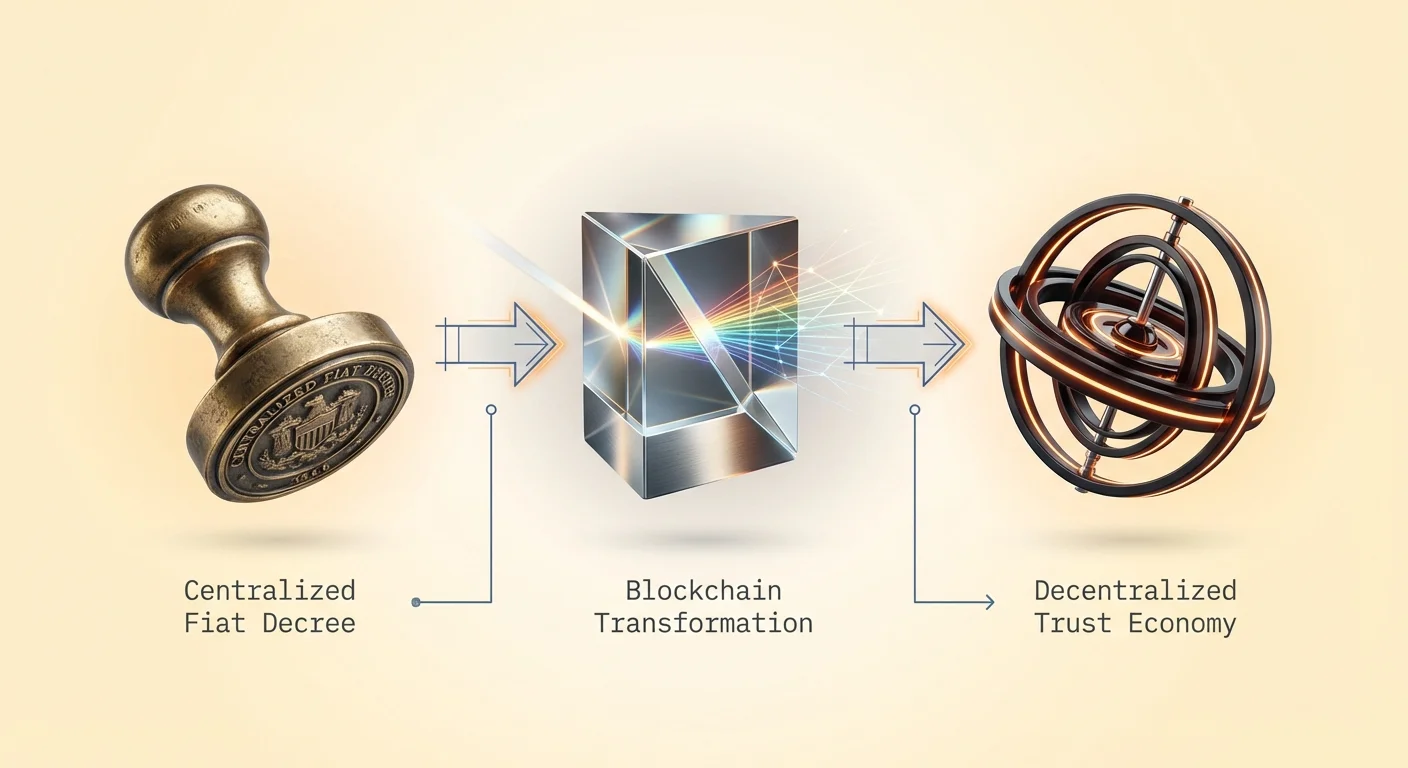
The modern financial landscape is undergoing a radical transformation driven by a fundamental shift in how value is stored and exchanged. Traditional currency, known as fiat money, operates on a model of decree. Central banks issue currency, and citizens are effectively required to use the money of their nation. This system relies heavily on intermediaries like banks and payment gateways to facilitate transactions. While this model has functioned for decades, it places immense power in the hands of centralized institutions.
Cryptocurrency represents a departure from this forced participation. It introduces an opt-in model where users voluntarily agree to the rules of a protocol. This structure allows individuals to store value and transact without asking for permission from a government or financial institution. The system is headless and distributed globally, making it resistant to the types of corruption or mismanagement that can plague centralized entities.
Redefining Trust Through Code
In the traditional economy, trust is placed in people and institutions. We trust banks to hold our money, governments to manage inflation, and regulators to prevent fraud. However, history has shown that this trust can be misplaced. Banks can fail, governments can print excessive money, and regulators can be prone to political pressure. The "Trust Economy" of decentralized finance replaces human intermediaries with code and consensus.
Bitcoin and other cryptoassets are controlled by the collective will of their users. There is no central authority to cut off access or manipulate the supply capriciously. Instead, a growing network of participants agrees to a set of rules enforced by software. This decentralized infrastructure ensures that transactions occur on a peer-or-peer basis. It eliminates the need for a middleman to verify that a transfer of value has occurred.
The result is a system that is durable and resistant to failure. Unlike a bank that can close its doors, a decentralized network operates as long as there are computers running the software. This shift from institutional trust to cryptographic proof is the cornerstone of why decentralized finance was built. It offers a transparent alternative where the rules are known to everyone and cannot be changed by a select few behind closed doors.
The Evolution of Value and Exchange
To understand the necessity of this new economy, we must look at the history of money itself. Money is a tool that has evolved dramatically to solve specific problems in trade. Early societies relied on barter, the direct exchange of goods. This system was inefficient because of the "double coincidence of wants." Both parties had to desire exactly what the other offered at the same time.
This limitation led to commodity money. Societies settled on valuable goods like shells or precious metals to act as a medium of exchange. Gold emerged as the enduring standard because of its specific properties. It was rare, durable, and divisible. However, carrying physical gold was impractical for daily commerce. This inconvenience spurred the creation of representative money, such as paper certificates backed by gold in a vault.
The Flaws of Fiat Currency
Modern economies moved away from representative money to fiat currency. Fiat money is not backed by a physical commodity. Its value is derived entirely from government decree and public trust. While this allows for flexible monetary policy, it introduces significant risks. The most pressing issue is inflation. Because central banks can increase the money supply at will, fiat currency is vulnerable to a decrease in purchasing power over time. Bitcoin vs. The Money Printer
When a government prints more money, the value of existing currency effectively diminishes. Citizens have no direct control over this process. They are subject to the monetary policy decisions of their leaders, which may not always align with the long-term financial health of the individual saver. This lack of control and the inevitability of inflation are key drivers behind the adoption of cryptocurrencies.
Bitcoin as Digital Gold
Bitcoin was designed to address the shortcomings of fiat currency while retaining the benefits of gold. It is often compared to gold because it shares the characteristics of rarity and durability. There will only ever be 21 million bitcoins. This limited supply is hard-coded into the protocol. It acts as a hedge against the inflation that plagues fiat currencies. Bitcoin’s digital scarcity
Unlike gold, however, Bitcoin is easily portable and divisible. It can be divided into 100 million smaller units, allowing for precise transactions. Furthermore, sending bitcoin is as easy as sending an email. It combines the monetary soundness of a scarce commodity with the speed and convenience of the digital age. This unique combination provides a store of value that is independent of any sovereign nation's monetary policy.
The Technological Backbone: Blockchain
The innovation that makes this trustless economy possible is blockchain technology. At its core, a blockchain is a digital record of transactions. Unlike a traditional database stored on a central server, this record is copied and shared across a vast network of computers. New transactions are grouped into "blocks" and added to the chain in a linear, chronological order.
This decentralized structure makes the network incredibly resilient. There is no single point of failure. If one computer goes offline, the network continues to function without interruption. This is a stark contrast to centralized banking systems, which can be disrupted by server outages or targeted attacks. The distributed nature of the blockchain ensures that the ledger remains accessible and accurate at all times.
Securing the Network
Security on a blockchain is maintained through cryptography and consensus mechanisms. When a transaction is broadcast to the network, it must be verified by computers known as nodes. Once verified, special nodes called miners or validators work to add the transaction to a block. In a Proof-of-Work system like Bitcoin, miners solve complex mathematical problems to secure the block.
This process requires significant computational power, which makes it prohibitively expensive for any malicious actor to attack the network. Once a block is added, it is cryptographically linked to the previous block. This creates an immutable chain of history. Altering a past transaction would require re-doing the work for that block and every subsequent block, which is effectively impossible. economic solution to the Byzantine Generals Problem
Layered Architecture
Blockchain technology is structured in layers to handle different functions efficiently. Understanding these layers helps clarify how the ecosystem scales and operates.
| Layer | Name | Function |
|---|---|---|
| Layer 0 | Network Layer | Facilitates communication between different blockchains. |
| Layer 1 | Base Protocol | Ensures security and consensus (e.g., Bitcoin, Ethereum). |
| Layer 2 | Scaling Layer | Handles faster, cheaper transactions (e.g., Lightning Network). |
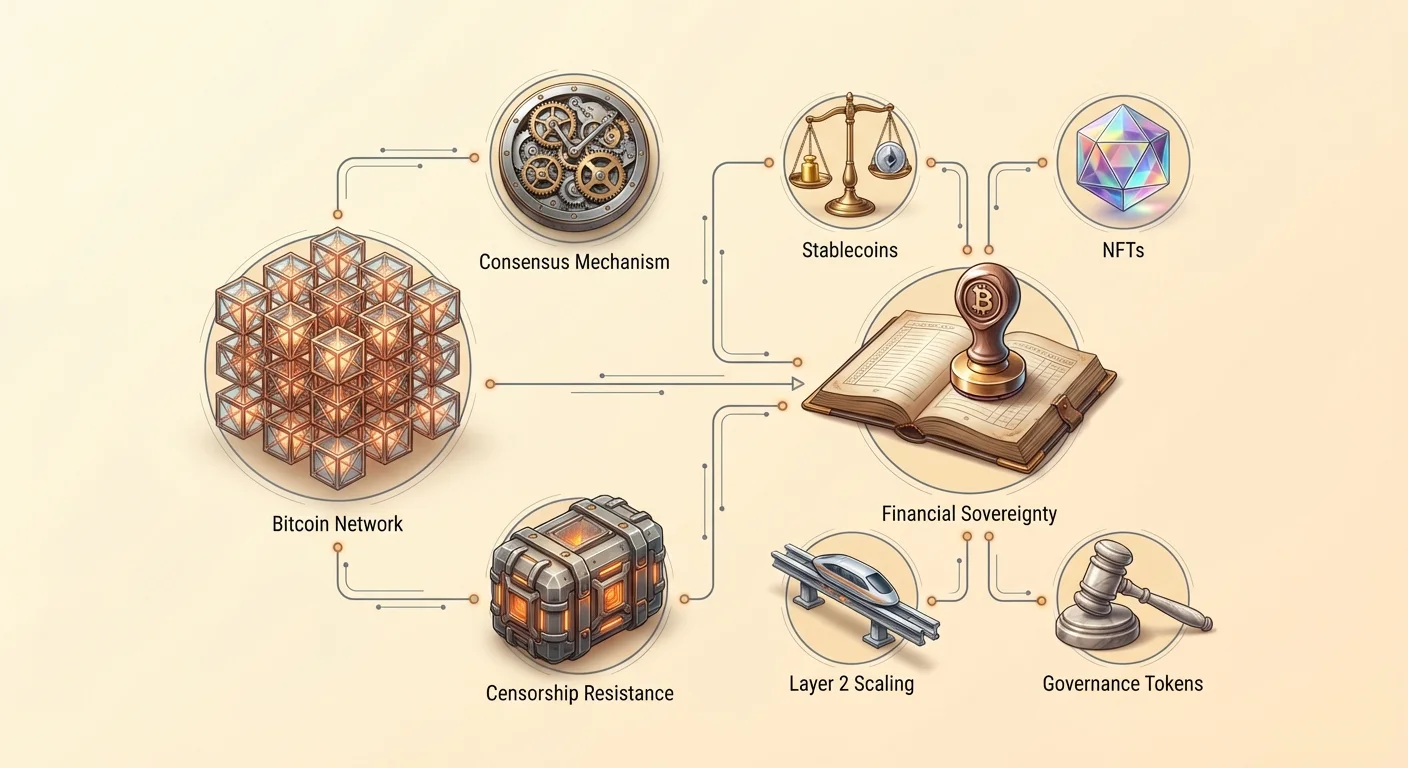
Layer 1 is the foundation. It provides the ultimate security and settlement for the network. However, processing every transaction on the main chain can be slow and expensive. Layer 2 Scaling Solutions sit on top of the base protocol to improve scalability. They process transactions off the main chain and then settle the final result on Layer 1. This allows the network to handle high volumes of activity without compromising the security of the underlying blockchain.
Decentralization and Censorship Resistance
One of the most critical value propositions of the crypto economy is censorship resistance. In a financial context, censorship refers to the suppression of economic activity. This can take many forms, from freezing bank accounts to blocking specific transactions. In the traditional system, financial intermediaries act as gatekeepers. They have the power to deny service to individuals or organizations based on internal policies or government pressure.
Censorship resistance is the ability to carry out financial actions despite the wishes of a third party. It relies on three main pillars. First is the freedom to transact. No one should be able to prevent a user from sending or receiving assets. Second is freedom from confiscation. Third parties should not be able to seize or freeze funds. Third is the immutability of transactions. Once a payment is made, it cannot be reversed by an authority.
The Spectrum of Resistance
Not all digital assets offer the same level of protection. Censorship resistance exists on a spectrum. Bitcoin is widely considered to be the most censorship-resistant asset. Its network is vast and uses a Proof-of-Work mechanism that makes it extremely difficult for any entity to control. On the other end of the spectrum are centralized blockchains or digital currencies where a small group of validators or a central company retains control.
Most traditional banking assets have very low censorship resistance. Bank accounts can be frozen with a simple court order or even an internal bank decision. Operation Choke Point in the US and the freezing of protester accounts in Canada are examples of how financial access can be weaponized. Cryptocurrencies offer a way to bypass these choke points, ensuring that individuals retain control over their wealth regardless of their political standing or location.
The Importance of Self-Custody
The effectiveness of censorship resistance depends heavily on how assets are stored. If a user keeps their cryptocurrency on a centralized exchange, they are essentially using a crypto bank. The exchange holds the keys and can freeze the account just like a traditional bank. To fully benefit from censorship resistance, users must practice self-custody.
Self-custody involves using a wallet where the user controls the private keys. In this model, there is no counterparty risk. The user is the bank. As long as the user maintains security best practices, no one can take their money or stop them from transacting. This capability is vital for people living under authoritarian regimes or in regions with unstable banking infrastructures. understanding your private keys
Expanding Utility with Tokens and Altcoins
While Bitcoin focuses on being a store of value and medium of exchange, the broader crypto ecosystem has expanded to include a diverse array of assets known as tokens and altcoins. The term "altcoin" generally refers to any cryptocurrency other than Bitcoin. These projects often aim to address perceived limitations of Bitcoin or to introduce entirely new functionalities.
Some altcoins focus on improving transaction speeds or reducing energy consumption. Others, like Ethereum, serve as decentralized platforms for building applications. This innovation has given rise to the concept of the token. While coins like Bitcoin serve primarily as money, tokens can represent a much wider range of utility and ownership within a decentralized system.
Classes of Crypto Assets
Tokens utilize smart contracts to automate interactions and enforce rules. They can be classified into several categories based on their use case.
- Utility Tokens: These provide access to a specific product or service. A user might need a utility token to pay for cloud storage on a decentralized network or to access premium features of a finance application.
- Governance Tokens: These grant holders the right to vote on decisions regarding a protocol. This effectively decentralizes the management of the project, allowing the community to propose and vote on upgrades or fee structures.
- Security Tokens: These represent ownership in an underlying asset, such as real estate or company shares. They bridge the gap between traditional finance and blockchain by providing legal rights to profit-sharing or dividends.
Non-Fungible Tokens (NFTs)
A significant evolution in the token space is the Non-Fungible Token (NFT). Unlike standard cryptocurrencies where every unit is identical, NFTs are unique. Each token represents a one-of-a-kind digital or physical asset. This technology is widely used for digital art, collectibles, and gaming items.
NFTs solve the problem of digital scarcity. Before blockchain, digital files could be copied infinitely, making it impossible to prove ownership or rarity. NFTs provide a cryptographic certificate of authenticity. They allow creators to monetize their work directly and permit collectors to buy, sell, and trade digital items with confidence in their provenance.
Bridging the Gap with Stablecoins
One of the primary criticisms of cryptocurrencies is their volatility. Assets like Bitcoin and Ethereum can experience significant price swings in short periods. While this volatility can offer investment growth, it makes these assets less ideal for day-to-day payments or short-term savings. Stablecoins were created to solve this problem.
Stablecoins are cryptocurrencies pegged to a stable asset, most commonly the US dollar. They exist on public blockchains, offering the speed and efficiency of crypto without the price volatility. Traders originally used them to "lock in" profits without moving back into the traditional banking system. Today, they are used globally for remittances, international settlement, and as a safe haven in countries with failing local currencies. Mechanics and Risks of Stable Assets
Types of Stablecoins
There are two main categories of stablecoins: centralized and decentralized. Centralized stablecoins, like USDT and USDC, use a collateral-backed model. For every token issued, the company holds an equivalent amount of fiat currency or assets in a bank reserve. This model is efficient and has maintained the peg successfully over time. However, it requires users to trust the issuing company and exposes them to regulatory risks.
Decentralized stablecoins, such as DAI, operate without a central authority. They use smart contracts and crypto-collateral to maintain their value. Users lock up crypto assets in a contract to mint new stablecoins. If the value of the collateral drops, the system has mechanisms to liquidate assets to ensure the stablecoin remains backed.
Risks and Mechanisms
Decentralized stablecoins aim to remove the need for trust, but they come with their own risks. Algorithmic stablecoins, for example, attempt to maintain a peg through complex incentives involving minting and burning tokens. The failure of UST (TerraUSD) demonstrated the dangers of this model. When confidence was lost, the "death spiral" mechanism caused the value to collapse to near zero.
Despite these risks, stablecoins remain a vital part of the trust economy. They allow for "yield farming," where users earn interest on their holdings often at rates much higher than traditional banks. They also facilitate the movement of value across borders in minutes, bypassing the slow and expensive swift system used by legacy banks.
Identity, Privacy, and Regulation
The intersection of decentralized finance and global regulation creates a complex tension, particularly regarding identity. In the traditional financial world, regulations known as Know Your Customer (KYC) are mandatory. Financial institutions must verify the identity of their clients to prevent money laundering, terrorist financing, and fraud. This involves collecting sensitive data like passports and proof of address.
While KYC enhances security for institutions, it raises concerns about privacy for individuals. In a decentralized system, the ethos is often one of anonymity or pseudonymity. Users interact with protocols using wallet addresses rather than names. This protects financial privacy and prevents discrimination. However, as crypto moves into the mainstream, the pressure to implement KYC measures increases.
The Trade-Offs of Compliance
There is a fundamental trade-off between compliance and the principles of decentralization. Centralized exchanges (CEXs) generally require full KYC. This makes them compliant with local laws and allows them to offer easy connections to bank accounts. However, it also creates a central repository of user data that can be hacked or leaked.
Decentralized exchanges (DEXs) typically do not require users to provide personal identity. They operate purely through smart contracts. This preserves privacy and aligns with the censorship-resistant nature of the technology. However, this lack of oversight is a point of contention for regulators who argue it creates a haven for illicit activity.
Synergistic Security Approaches
To address these challenges, the industry uses a combination of strategies. Beyond KYC, there is Anti-Money Laundering (AML) and Know Your Transaction (KYT). KYT focuses on analyzing transaction patterns on the blockchain rather than the identity of the person. Because the blockchain is a public ledger, it is actually easier to trace illicit funds in crypto than in cash.
This transparency allows for a new type of compliance. Suspicious addresses can be flagged and monitored without necessarily stripping every user of their privacy. The future of regulation in this space will likely involve finding a middle ground where financial crimes are prevented without sacrificing the core values of an open, permissionless financial system.
The Future of Money
The evolution of money is far from over. We are currently witnessing a competition between different visions of the future. On one side, we have decentralized cryptocurrencies like Bitcoin and DeFi protocols. These aim to build an open financial system accessible to anyone with an internet connection. They promise to lower costs, increase speed, and protect individual sovereignty.
On the other side, central banks are exploring Central Bank Digital Currencies (CBDCs). These are digital versions of national currencies. While they may offer efficiency gains over current banking systems, they represent the ultimate form of centralization. A CBDC could theoretically give a government complete visibility and control over every transaction a citizen makes.
The Role of DeFi
Decentralized Finance (DeFi) is pushing the boundaries of what is possible without intermediaries. Platforms now exist for lending, borrowing, insurance, and trading that operate entirely on code. These services are available 24/7 and do not discriminate based on geography or credit score.
As blockchain technology scales, these decentralized applications will become more user-friendly. The complexity of wallet management and security is being abstracted away. This will likely lead to broader adoption, where users benefit from the "trust economy" without needing to understand the intricate technical details behind it.
Conclusion
The rise of the trust economy is a direct response to the limitations and failures of the traditional financial system. By shifting reliance from fallible human intermediaries to immutable code, decentralized finance offers a more robust and transparent alternative. From the scarcity of Bitcoin to the utility of smart contracts, these tools empower individuals to take control of their wealth.
This transformation is not without challenges. The tension between privacy and regulation, and the technical hurdles of scalability, remain significant. However, the fundamental innovation of a permissionless, censorship-resistant value transfer system is here to stay. It provides a necessary check on centralized power and opens up global economic participation to millions who were previously excluded.
True financial freedom begins when you control your own assets.