The Ethereum network represents one of the most significant experiments in distributed computing history. Since its inception, it has aimed to serve as a world computer that is open to all. However, achieving this vision requires overcoming substantial technical hurdles. The roadmap for Ethereum is not a simple straight line but a series of interconnected upgrades designed to improve specific aspects of the system.
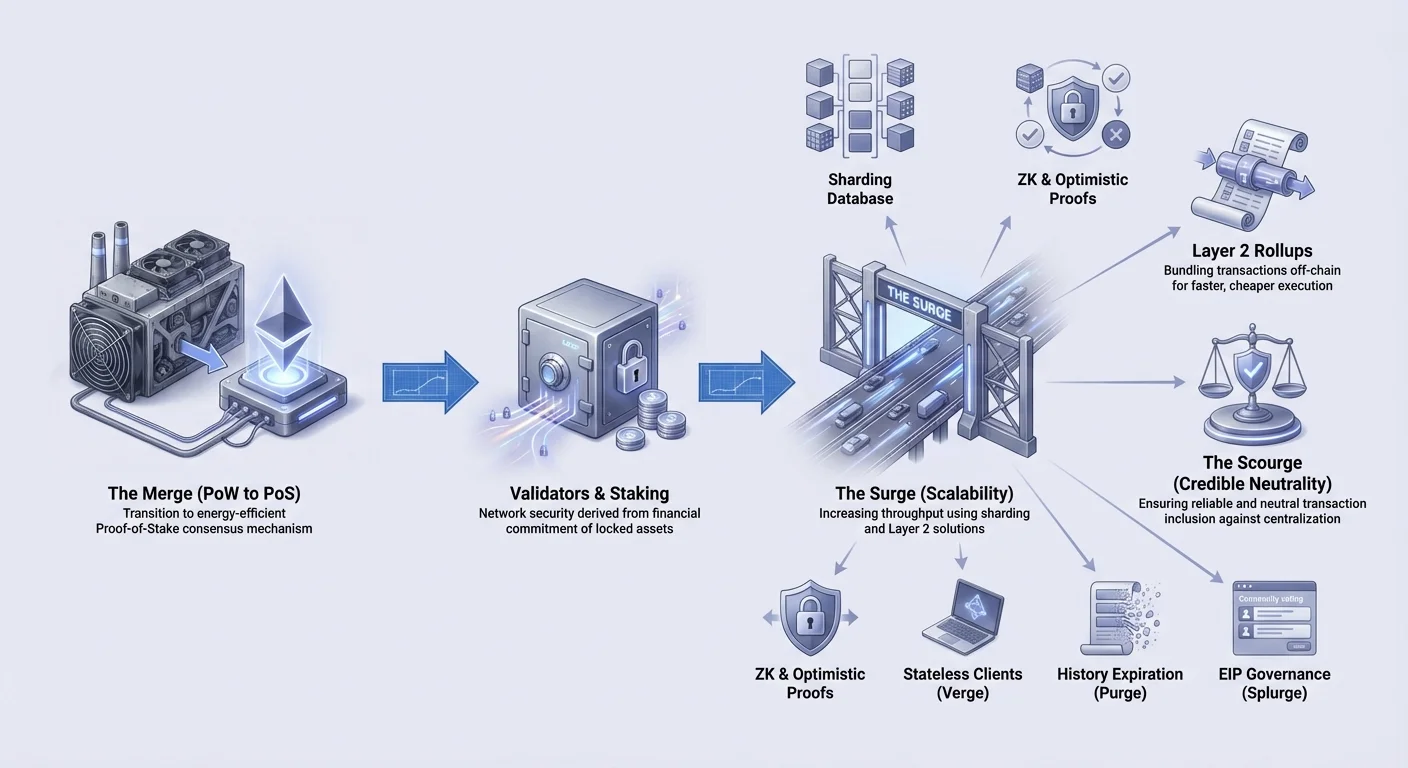
These upgrades are often categorized into distinct phases that rhyme: The Merge, The Surge, The Scourge, The Verge, The Purge, and The Splurge. Each phase addresses a critical component of the network's architecture. The goal is to solve the complex problems associated with decentralized networks while maintaining security.
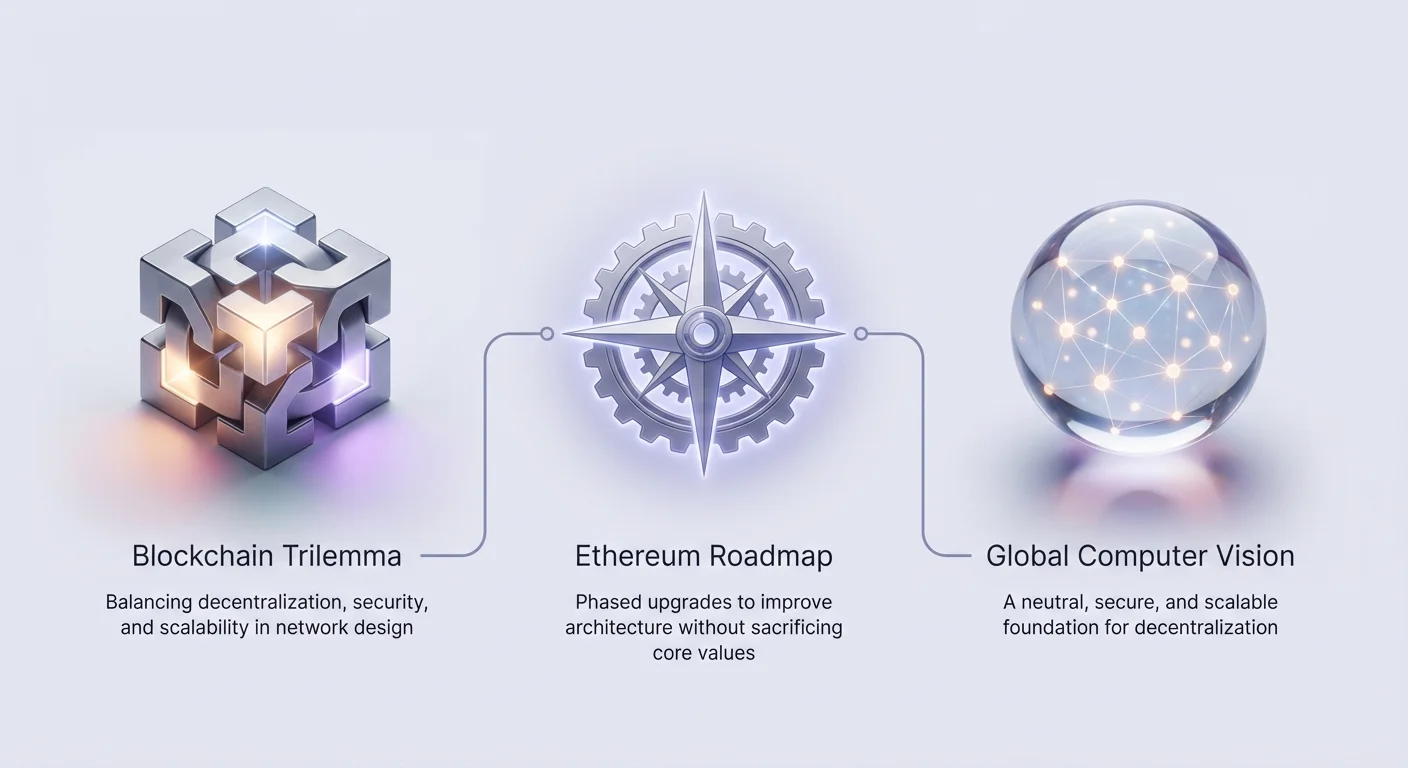
Central to this evolution is the concept of the "blockchain trilemma." This theory suggests that a decentralized network can only optimize for two of three primary features: decentralization, security, and scalability. Ethereum originally prioritized security and decentralization, which often resulted in network congestion and high fees during periods of high demand.
The roadmap is an attempt to solve this trilemma. By implementing these upgrades, the network aims to become scalable enough to handle global demand without sacrificing its core values. The transition involves fundamental changes to both the economic and technical structure of the blockchain.
The Foundation: Understanding The Merge
The most significant upgrade in Ethereum's history was known as The Merge. Completed in September 2022, this event marked the transition from the original Proof-of-Work (PoW) consensus mechanism to Proof-of-Stake (PoS). This shift was necessary to reduce the network's energy consumption and lay the groundwork for future scalability upgrades.
Before The Merge, Ethereum relied on miners to secure the network. These participants operated energy-intensive hardware to solve complex mathematical puzzles. This system, while secure, consumed vast amounts of electricity. The transition to Proof-of-Stake replaced miners with validators, who secure the network by locking up capital rather than burning energy.
Mechanics of Proof-of-Stake
In the Proof-of-Stake system, network security is derived from financial commitment rather than computational power. Participants, known as validators, stake their cryptocurrency by sending it to a specific smart contract. This staked asset acts as a security deposit or collateral that guarantees their honest behavior.
The protocol selects validators at random to propose new blocks. Once a validator proposes a block, other validators verify the data to ensure it adheres to the network rules. If the block is valid, it is added to the chain, and the validators are rewarded with newly minted cryptocurrency and transaction fees. This system aligns the financial incentives of the operators with the health of the network.
Benefits and Security Improvements
The primary advantage of this transition was the dramatic reduction in energy usage. Estimates suggest that the switch to Proof-of-Stake reduced Ethereum's energy consumption by over 99 percent. This removed a major barrier to institutional adoption and environmental sustainability.
Beyond energy efficiency, the new system introduced distinct security properties. In a Proof-of-Work system, attacking the network requires 51 percent of the hashing power. In Proof-of-Stake, an attacker would need to acquire a majority of the staked assets. This creates a high economic barrier to malicious behavior. Additionally, the protocol includes a mechanism called slashing. If a validator acts maliciously or violates protocol rules, their staked assets can be forfeited entirely or in part.
The Surge: บรรลุความสามารถในการปรับขนาดมหาศาล
เมื่อกลไกฉันทามติได้รับการอัปเดต ความสนใจจะเปลี่ยนไปยัง "The Surge" เฟสนี้มุ่งเน้นไปที่ความสามารถในการปรับขนาด วัตถุประสงค์คือเพิ่ม throughput ของธุรกรรมในเครือข่ายเพื่อรองรับธุรกรรมนับพันต่อวินาที เทคโนโลยีหลักที่ขับเคลื่อนเฟสนี้คือ sharding และโซลูชันการปรับขนาด Layer 2
ความสามารถในการปรับขนาดมีความสำคัญเพราะเครือข่ายหลัก หรือ Layer 1 มีความจุจำกัด มันสามารถประมวลผลธุรกรรมได้เพียงจำนวนเฉพาะต่อวัน เมื่อความต้องการเกินความจุนี้ ผู้ใช้จะแข่งขันเพื่อให้ธุรกรรมของพวกเขาถูกเพิ่มในบล็อกถัดไป การแข่งขันนี้ทำให้ค่าธรรมเนียม gas สูงขึ้น ส่งผลให้ผู้ใช้รายย่อยถูกตัดออกและจำกัดประโยชน์ของแอปพลิเคชันแบบกระจาย
บทบาทของ Sharding
Sharding เป็นเทคนิคที่ออกแบบมาเพื่อแบ่งฐานข้อมูลของเครือข่ายออกเป็นชิ้นส่วนที่เล็กลงและจัดการได้ง่ายกว่าที่เรียกว่า shards ในบล็อกเชนแบบดั้งเดิม ทุกโหนดต้องประมวลผลและเก็บธุรกรรมทุกธุรกรรม ความต้องการนี้รับประกันความปลอดภัยแต่จำกัดความเร็วอย่างมาก Sharding เปลี่ยนไดนามิกนี้โดยกระจายความรับผิดชอบการประมวลผลข้อมูล
ในระบบ sharded ผู้ตรวจสอบความถูกต้องจะถูกกำหนดให้กับ shards เฉพาะ แต่ละ shard ทำงานเหมือนบล็อกเชนแยกต่างหากที่มีสถานะและประวัติธุรกรรมของตัวเอง อย่างไรก็ตาม แตกต่างจากบล็อกเชนอิสระ shards สื่อสารและประสานงานผ่านเชนหลัก สิ่งนี้ช่วยให้เครือข่ายสามารถประมวลผลบล็อกหลายบล็อกพร้อมกันแทนการต่อเนื่องกัน การนำ sharding ครั้งแรกมุ่งเน้นไปที่ data availability ซึ่งเพิ่มประสิทธิภาพของ Layer 2 rollups
โซลูชัน Layer 2 และ Rollups
โซลูชัน Layer 2 คือโปรโตคอลที่สร้างบน Ethereum mainnet พวกเขาจัดการการดำเนินการธุรกรรม off-chain ในขณะที่พึ่งพาเครือข่ายหลักสำหรับความปลอดภัยและการชำระบัญชีขั้นสุดท้าย โดยการย้ายงานหนักออกจาก Layer 1 โซลูชันเหล่านี้เสนอความเร็วที่เร็วกว่าและต้นทุนที่ต่ำกว่าอย่างมีนัยสำคัญ
Rollups เป็นเทคโนโลยี Layer 2 ที่มีแนวโน้มมากที่สุดในปัจจุบัน พวกเขาทำงานโดยการรวมธุรกรรมหลายร้อยธุรกรรมเข้าเป็นชุดเดียว ชุดนี้ถูกประมวลผลบนชั้นที่สอง และเฉพาะข้อมูลที่บีบอัดเท่านั้นที่โพสต์กลับไปยังบล็อกเชน Ethereum หลัก มีสองประเภทหลักของ rollups: Optimistic rollups และ Zero-Knowledge (ZK) rollups
| ประเภท Rollup | วิธีการตรวจสอบความถูกต้อง | ข้อดี | ข้อเสีย |
|---|---|---|---|
| Optimistic | สมมติความถูกต้องโดยค่าเริ่มต้น | เข้ากันได้กับ EVM สร้างง่ายกว่า | เวลาถอนยาว (7 วัน) |
| ZK Rollup | หลักฐานความถูกต้องทางคณิตศาสตร์ | finality ทันที ความปลอดภัยสูง | ต้นทุนการคำนวณสูง ซับซ้อน |
Optimistic เทียบกับ Zero-Knowledge
Optimistic rollups สมมติว่าธุรกรรมถูกต้องโดยค่าเริ่มต้น พวกเขาไม่ทำการคำนวณบนเชนหลักเว้นแต่จะมีคนท้าทายธุรกรรม หากเกิดการท้าทาย เครือข่ายจะตรวจสอบข้อมูล วิธีนี้เข้ากันได้กับ smart contract Ethereum ที่มีอยู่ แต่ต้องมีการหน่วงเวลาถอนเพื่อให้เวลาสำหรับการท้าทาย
Zero-Knowledge rollups ใช้วิธีที่แตกต่าง พวกเขาสร้างหลักฐานทาง cryptography ที่ตรวจสอบความถูกต้องของชุดธุรกรรม หลักฐานนี้ถูกส่งไปยังเชนหลัก เนื่องจากความถูกต้องได้รับการพิสูจน์ทางคณิตศาสตร์ล่วงหน้า จึงไม่จำเป็นต้องมีช่วงท้าทาย สิ่งนี้ช่วยให้ถอนได้เร็วขึ้น อย่างไรก็ตาม เทคโนโลยีนี้ซับซ้อนกว่าในการนำไปใช้และต้องใช้ทรัพยากรการคำนวณจำนวนมากในการสร้างหลักฐาน
The Scourge: รับประกัน Credible Neutrality
เมื่อเครือข่ายปรับขนาด ความเสี่ยงใหม่เกิดขึ้นเกี่ยวกับการรวมศูนย์และการเซ็นเซอร์ "The Scourge" หมายถึงรายการแผนที่ถนนที่ทุ่มเทเพื่อรับประกันการรวมธุรกรรมที่เชื่อถือได้และเป็นกลาง เฟสนี้จัดการกับความกังวลว่าผู้กระทำการที่ซับซ้อนอาจได้ควบคุมเครือข่ายมากเกินไป
หลักการหลักของการกำกับดูแล Ethereum คือ "credible neutrality" ซึ่งหมายความว่ากลไกไม่ควรเลือกปฏิบัติต่อหรือต่อต้านบุคคลใดบุคคลหนึ่ง การออกแบบต้องปฏิบัติต่อทุกคนอย่างยุติธรรม อย่างไรก็ตาม แรงทางเศรษฐกิจในระบบ Proof-of-Stake สามารถนำไปสู่การรวมศูนย์ นักวิจารณ์โต้แย้งว่าเพราะผู้ถือหุ้นรายใหญ่ได้รับรางวัลมากกว่า "คนรวยยิ่งรวย" การรวมตัวของความมั่งคั่งนี้อาจนำไปสู่การรวมอำนาจในทางทฤษฎี
จัดการกับการรวมศูนย์ของผู้ตรวจสอบความถูกต้อง
อุปสรรคในการเข้าสู่การเป็นผู้ตรวจสอบความถูกต้องสามารถมีอิทธิพลต่อการกระจายอำนาจของเครือข่าย หากการรันโหนดผู้ตรวจสอบความถูกต้องต้องใช้ฮาร์ดแวร์ราคาแพงหรือ ETH จำนวนมหาศาล เฉพาะหน่วยงานที่ร่ำรวยเท่านั้นที่สามารถเข้าร่วมได้ สิ่งนี้ลดความหลากหลายของเครือข่าย
นอกจากนี้ การเกิดขึ้นของบริการเฉพาะทางเช่น liquid staking pools ทำให้มี stake จำนวนมากถูกควบคุมโดยหน่วยงานไม่กี่แห่ง แม้ว่าบริการเหล่านี้จะทำให้การ stake เข้าถึงได้สำหรับผู้ใช้ที่มีทุนน้อย แต่พวกเขานำจุดล้มเหลวที่อาจเกิดขึ้น หากหน่วยงานเดียวควบคุม stake เปอร์เซ็นต์ใหญ่ของเครือข่าย พวกเขาอาจมีอิทธิพลต่อการกำกับดูแลหรือการเรียงลำดับธุรกรรม
เพื่อต่อสู้กับสิ่งนี้ แผนที่ถนนรวมการอัปเกรดเพื่อรับประกันว่าการผลิตบล็อกยังคงกระจาย เป้าหมายคือแยกบทบาทการสร้างบล็อกจากการเสนอ สิ่งแยกนี้ช่วยป้องกันไม่ให้ผู้ตรวจสอบความถูกต้องคนเดียวเซ็นเซอร์ธุรกรรมหรือดึงมูลค่ามากเกินไปจากผู้ใช้
The Verge and The Purge: Managing Data and History
The long-term health of the blockchain depends on its ability to remain accessible to independent operators. "The Verge" and "The Purge" focus on efficiency, specifically regarding node operation and historical data management.
For a blockchain to be truly decentralized, individuals must be able to verify the ledger themselves. This is done by running a "node." A node is a computer that runs the Ethereum software and validates transactions. If the hardware requirements for running a node become too high, fewer people will do it. This leads to reliance on centralized service providers like Infura, which creates vulnerability.
The Verge: Reducing Verification Costs
The Verge aims to introduce "stateless clients" or Verkle trees. Currently, verifying a block requires access to a large portion of the blockchain's state. As the network grows, this state becomes larger, requiring more RAM and faster SSDs.
The upgrades in this phase will allow nodes to verify blocks without storing the entire state of the network on their hard drives. By reducing the data requirements, it becomes feasible for users to run nodes on consumer-grade hardware, such as mobile phones or basic laptops. This lowers the barrier to entry and increases the resilience of the network.
The Purge: Eliminating Historical Bloat
The Ethereum blockchain carries the weight of its entire history. The Purge involves cleaning up old network history to simplify the protocol. Currently, running a full archival node requires downloading terabytes of data. This history includes every transaction ever executed since the genesis block.
While maintaining a complete history is important for auditing, it is not strictly necessary for validating new transactions. The Purge seeks to implement mechanisms where nodes can expire old history. This means nodes would stop storing data that is older than a certain timeframe, such as one year.
This reduction in storage requirements prevents the network from becoming too heavy. It ensures that new nodes can sync with the network quickly. By managing the accumulation of technical debt, the protocol remains agile and easier to maintain for developers and users alike.
The Splurge: การกำกับดูแลและการขัดเกลาในอนาคต
หมวดหมู่สุดท้าย "The Splurge" ทำหน้าที่เป็นที่รวบรวมสำหรับการอัปเกรดที่จำเป็นแต่หลากหลายเหล่านี้คือการปรับปรุงที่แก้ไขปัญหาเล็กน้อย ปรับปรุงประสบการณ์ผู้ใช้ และปรับปรุงโมเดลทางเศรษฐกิจ มันยังครอบคลุมวิวัฒนาการการกำกับดูแลของ Ethereum ที่กำลังดำเนินอยู่
Ethereum ไม่ใช่โปรโตคอลคงที่ มันต้องมีการเปลี่ยนแปลงอย่างต่อเนื่องเพื่อแก้บั๊กและตอบสนองต่อสภาวะตลาด วิวัฒนาการนี้ถูกจัดการผ่าน Ethereum Improvement Proposals (EIPs) บุคคลหรือทีมร่างข้อเสนอ ซึ่งจะถูกถกเถียงโดยชุมชน กระบวนการนี้พึ่งพา "rough consensus" จากผู้มีส่วนได้ส่วนเสีย รวมถึงเหmineอร์ ผู้ปฏิบัติการโหนด และนักพัฒนา
การปรับปรุงทางเศรษฐกิจและ EIP-1559
ตัวอย่างสำคัญของการอัปเกรดทางเศรษฐกิจที่เหมาะกับหมวดหมู่นี้คือ EIP-1559 ซึ่งนำไปใช้ก่อน The Merge การอัปเกรดนี้ปฏิรูประบบค่าธรรมเนียม มันแนะนำ base fee ที่ถูกเผา (ทำลาย) กับทุกธุรกรรม การเปลี่ยนแปลงนี้ทำให้ค่าธรรมเนียมธุรกรรมคาดเดาได้มากขึ้นสำหรับผู้ใช้
การอัปเกรดเช่นนี้มีความสำคัญต่อความยั่งยืนระยะยาวของสินทรัพย์ โดยการเผา ETH โปรโตคอลแนะนำแรงกดดัน deflationary ที่ต่อต้านการออกโทเค็นใหม่ให้ผู้ตรวจสอบความถูกต้อง การอัปเกรด "Splurge" ในอนาคตอาจมุ่งเน้นไปที่ Account Abstraction ซึ่งจะทำให้การจัดการกระเป๋า crypto ง่ายเหมือนการใช้แอปธนาคารแบบดั้งเดิม
ความท้าทายของการกำกับดูแลแบบกระจาย
การกำกับดูแลในระบบแบบกระจายเป็นเรื่องการเมืองโดยธรรมชาติ แตกต่างจากบริษัทเอกชน ไม่มี CEO ที่ตัดสินใจฝ่ายเดียว การเปลี่ยนแปลงต้องถูกนำไปใช้โดยสมัครใจโดยโหนดอิสระนับพันที่รันซอฟต์แวร์
กระบวนการนี้อาจช้าและขัดแย้งกัน เช่น ชุมชนต้องสมดุลระหว่าง progressivism (การเปลี่ยนแปลงรวดเร็วเพื่อปรับปรุงเครือข่าย) กับ conservatism (รักษาความเสถียรและลดความเสี่ยง) วัฒนธรรม Ethereum มักชื่นชอบแนวทาง progressive เพื่อแก้สามปัญหา อย่างไรก็ตาม การรับประกันว่าการเปลี่ยนแปลงเหล่านี้สะท้อนค่านิยมของชุมชนที่กว้างขวางต้องมีการเฝ้าระวังอย่างต่อเนื่องและการมีส่วนร่วมที่กระตือรือร้นจากผู้มีส่วนได้ส่วนเสียทั้งหมด
สรุป
แผนที่ถนนจาก The Merge ไปยัง The Splurge แสดงถึงแผนที่ครอบคลุมเพื่อทำให้เครือข่าย Ethereum สมบูรณ์ยิ่งขึ้น โดยการเปลี่ยนไปยัง Proof-of-Stake โปรโตคอลแก้ปัญหาการใช้พลังงาน ผ่าน sharding และ Layer 2 rollups มันมีเป้าหมายเพื่อแก้ไขวิกฤตความสามารถในการปรับขนาดที่เคยรบกวนบล็อกเชนที่มีความต้องการสูง
พร้อมกันนั้น การมุ่งเน้นไปที่ประสิทธิภาพโหนดและการจัดการข้อมูลประวัติศาสตร์รับประกันว่าเครือข่ายยังคงกระจายอำนาจ การลดอุปสรรคฮาร์ดแวร์สำหรับผู้ตรวจสอบความถูกต้องและผู้ปฏิบัติการโหนดป้องกันระบบจากการควบคุมรวมศูนย์ แม้ว่าเทคโนโลยีจะซับซ้อน แต่เป้าหมายสูงสุดเรียบง่าย: สร้างรากฐานที่เป็นกลาง ปลอดภัย และปรับขนาดได้สำหรับอนาคตดิจิทัล
การอัปเกรดของ Ethereum มีเป้าหมายเพื่อสร้างคอมพิวเตอร์โลกที่เร็ว ปลอดภัย ซึ่งทุกคนสามารถใช้และตรวจสอบได้อย่างมีประสิทธิภาพ