
เครือข่าย Ethereum ทำงานเหมือนคอมพิวเตอร์ทั่วโลกที่กระจายอำนาจและแบ่งปันซึ่งต้องการเชื้อเพลิงเฉพาะเพื่อให้ทำงานได้ เชื้อเพลิงนี้คือ Ether (ETH) แตกต่างจากสกุลเงินดั้งเดิมหรือแม้แต่ Bitcoin ซึ่งทำหน้าที่หลักเป็นที่เก็บมูลค่า หรือสื่อกลางในการแลกเปลี่ยน ETH มีบทบาทคู่ในระบบนิเวศของมัน มันทำหน้าที่เป็นสกุลเงินดิจิทัลแบบ peer-to-peer สำหรับการชำระเงิน ในขณะเดียวกันก็เป็นทรัพยากรที่จำเป็นสำหรับการชำระค่าคำนวณ ทุกการกระทำบนเครือข่าย ตั้งแต่การโอนเงินง่ายๆ ไปจนถึงการโต้ตอบกับ smart contract ที่ซับซ้อน ต้องเสียค่าธรรมเนียมที่ชำระด้วย ETH.
ประโยชน์นี้ขับเคลื่อนเครื่องยนต์ทางเศรษฐกิจของแพลตฟอร์ม เมื่อผู้ใช้โต้ตอบกับ decentralized applications (dApps) หรือโปรโตคอลทางการเงิน พวกเขาไม่ได้เพียงส่งมูลค่า แต่กำลังซื้อพื้นที่คำนวณ สิ่งนี้สร้างความเชื่อมโยงโดยตรงระหว่างการใช้งานเครือข่ายและความต้องการสินทรัพย์ เมื่อระบบนิเวศของแอปพลิเคชันขยายตัวไปรวมถึง decentralized finance (DeFi) เกม และ digital collectibles ความจำเป็นสำหรับ ETH ก็เพิ่มขึ้นตามไปด้วย.
การออกแบบโมเดลทางเศรษฐกิจนี้ทำให้ Ethereum แตกต่างจากเครือข่าย blockchain อื่นๆ มากมาย ในขณะที่ Bitcoin มีกำหนดการอุปทานที่จำกัดอย่างเข้มงวดที่ถูกฝังในโค้ดตั้งแต่เริ่มต้น Ethereum ใช้นโยบายการเงินที่ยืดหยุ่นมากกว่านี้ นโยบายนี้ถูกกำกับโดยชุมชนและปรับตัวตามเวลาเพื่อให้มั่นใจในความปลอดภัยและความยั่งยืนของเครือข่าย การออกโทเค็นใหม่และการนำโทเค็นที่มีอยู่ ออกจากการหมุนเวียน เป็นกระบวนการแบบไดนามิก กลไกเหล่านี้ได้พัฒนาไปอย่างมากตั้งแต่เครือข่ายเปิดตัว ทำให้ ETH กลายเป็นสินทรัพย์ที่มีคุณสมบัติทางเศรษฐกิจที่เป็นเอกลักษณ์เมื่อเทียบกับคู่แข่ง.
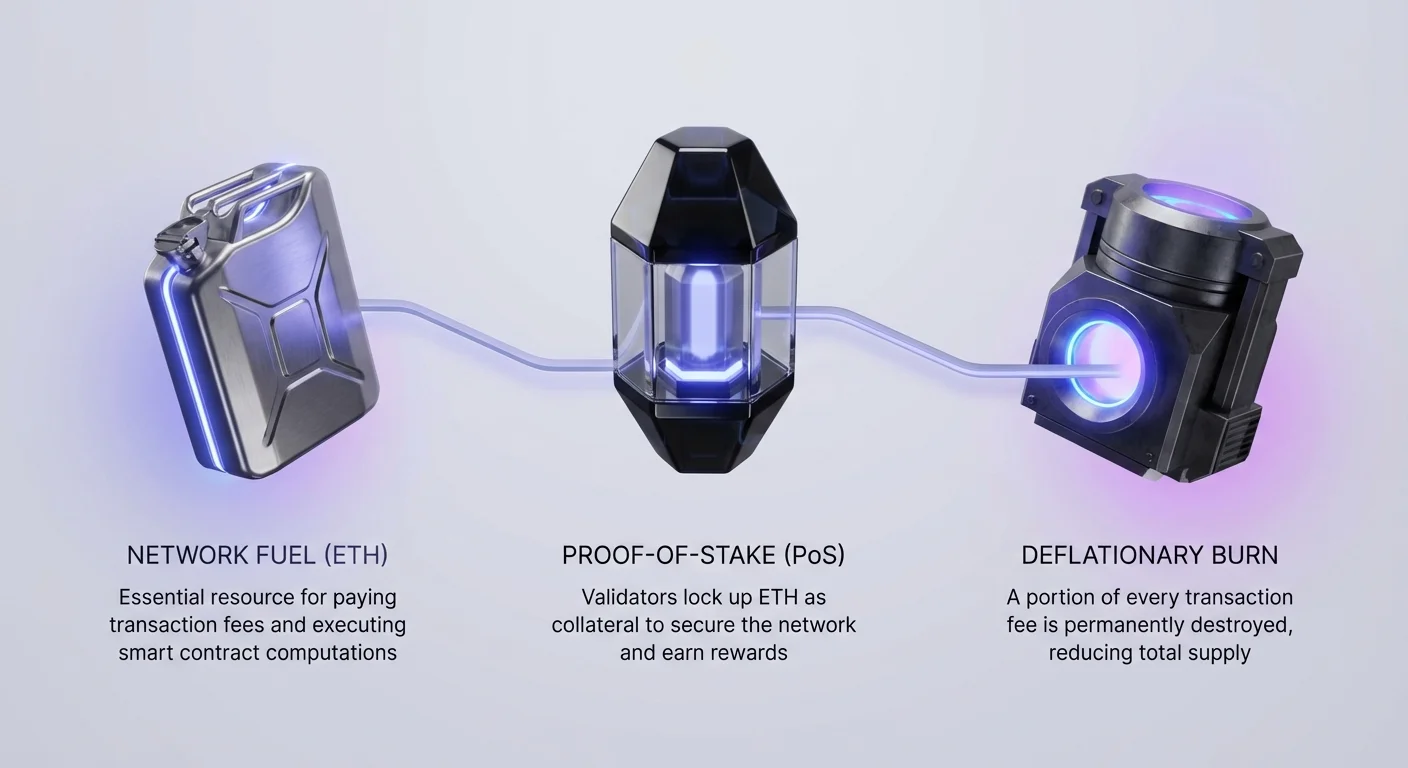
The Evolution of Monetary Policy
From Genesis to The Merge
Ethereum's supply schedule was not fixed at its launch in 2015. While Bitcoin established a hard cap of 21 million coins, Ethereum was designed without a predetermined upper limit on the total supply. Instead, the rate at which new ETH is issued is subject to change through decentralized governance processes and upgrades. Initially, the network operated under a Proof-of-Work consensus mechanism similar to Bitcoin. During this early phase, the block reward was set at 5 ETH per block, which added a significant amount of new supply roughly every 15 seconds.
As the network matured, the community implemented upgrades to reduce this inflation rate. The "Byzantium" upgrade in 2017 reduced the block reward to 3 ETH. Later, the "Constantinople" upgrade in 2019 further lowered it to 2 ETH. These reductions demonstrated the network's ability to adapt its issuance based on security needs rather than adhering to a static schedule.
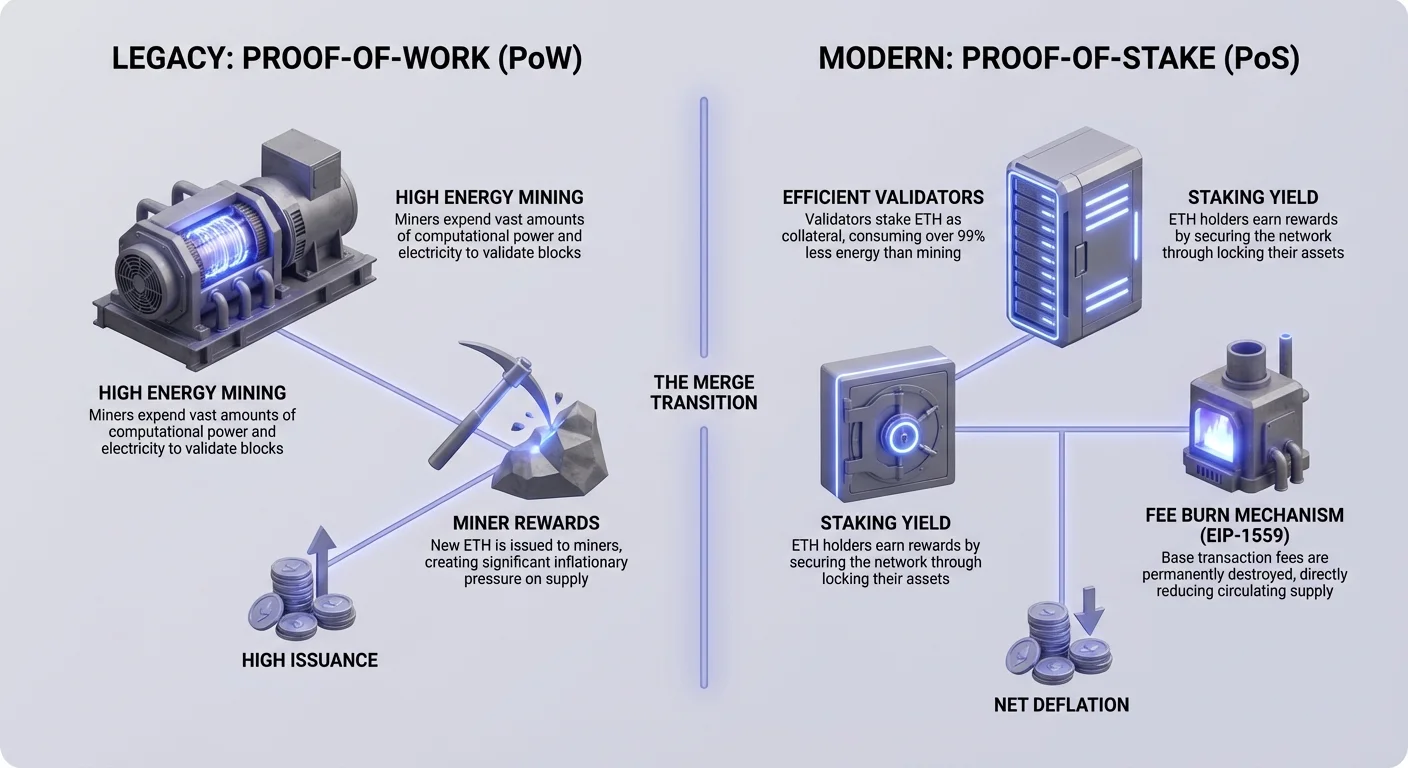
The most significant shift occurred in September 2022 with "The Merge." The network transitioned from Proof-of-Work to Proof-of-Stake, fundamentally altering the issuance model. Under the new system, the massive energy costs associated with mining were eliminated, allowing the network to reduce the issuance of new ETH by approximately 90%. This drastic reduction in the flow of new assets transformed the stock-to-flow ratio of Ethereum, making new supply significantly scarcer than in previous years.
The Deflationary Burn Mechanism
A critical component of Ethereum's modern economic structure is the "burn" mechanism introduced by Ethereum Improvement Proposal 1559 (EIP-1559). Before this upgrade, all transaction fees were paid to miners. EIP-1559 split the transaction fee into two parts: a base fee and a priority fee. The base fee is a mandatory charge required to include a transaction in a block, and crucially, this fee is destroyed (burned) rather than paid to validators.
This mechanism directly links network activity to the total supply of ETH. When the network is congested and demand for block space is high, the base fee increases. Consequently, more ETH is burned. During periods of intense activity, the amount of ETH destroyed can exceed the amount of new ETH created. This results in net deflation, where the total circulating supply of ETH actually decreases over time.
Comparatively, Bitcoin's inflation rate decreases roughly every four years through halving events but never turns negative. Ethereum's model allows for periods of supply contraction. Since the implementation of EIP-1559 in August 2021, millions of ETH have been permanently removed from circulation. This dynamic creates a unique economic pressure where increased utility and adoption directly reduce the available supply of the asset.
Governance and Adaptability
The governance of Ethereum's monetary policy differs significantly from the "code is law" immutability often associated with Bitcoin. While the lack of a hard cap might seem like a drawback to some, it provides the flexibility to ensure long-term network security. The issuance rate is minimal, just enough to incentivize validators to secure the blockchain.
Governance occurs through Ethereum Improvement Proposals (EIPs). These proposals are vetted, discussed, and approved by the community before implementation. This process allows the network to respond to technological advancements or economic necessities. For instance, if security needs change, the community can adjust staking rewards.
This adaptability ensures that the monetary policy serves the health of the network above all else. The shift to Proof-of-Stake and the introduction of fee burning were both results of this governance process. These changes have positioned ETH not just as a currency, but as a productive asset that yields rewards for staking and benefits from the systematic reduction of supply through network usage.
พลวัตค่าธรรมเนียมการทำธุรกรรมและ Gas
การทำความเข้าใจ Gas และความพยายามในการคำนวณ
เพื่อประมวลผลธุรกรรม เครือข่าย Ethereum ใช้หน่วยวัดที่เรียกว่า "gas" Gas แทนความพยายามในการคำนวณที่จำเป็นสำหรับการดำเนินการเฉพาะ การโอนเงินง่ายๆ ต้องการ gas น้อยกว่า ในขณะที่การโต้ตอบ smart contract ที่ซับซ้อนใช้มากกว่า ระบบนี้ทำให้มั่นใจว่าทรัพยากรถูกจัดสรรอย่างมีประสิทธิภาพและป้องกัน spam บนเครือข่าย.
ผู้ใช้ต้องชำระสำหรับ gas นี้โดยใช้ ETH ค่าธรรมเนียมรวมสำหรับธุรกรรมคำนวณโดยการคูณหน่วย gas ที่ใช้ด้วยราคาต่อหน่วย gas ราคาของ gas ถูกกำหนดใน "gwei" ซึ่งเป็นหน่วยเศษส่วนของ ETH (0.000000001 ETH)
| ส่วนประกอบ | คำจำกัด | ฟังก์ชัน |
|---|---|---|
| หน่วย Gas | หน่วยวัดการคำนวณ | กำหนดความซับซ้อนของงาน |
| Base Fee | ค่าธรรมเนียมเครือข่ายบังคับ | ถูกเผา (นำออกจากอุปทาน) |
| Priority Fee | ทิปให้ validator | จูงใจให้รวมเร็วขึ้น |
โครงสร้างนี้สร้างตลาดสำหรับพื้นที่บล็อก แต่ละบล็อกมีขีดจำกัดปริมาณ gas ที่สามารถมีได้ (เป้าหมาย 12.5 ล้านหน่วย) เมื่อผู้ใช้จำนวนมากต้องการทำธุรกรรมพร้อมกัน พวกเขาต้องจ่ายราคาสูงกว่าต่อหน่วย gas เพื่อชนะการประมูล สิ่งนี้ทำให้ราคาแบบไดนามิกมั่นใจว่าธุรกรรมที่เร่งด่วนที่สุดจะถูกประมวลผลก่อน แต่สามารถนำไปสู่ต้นทุนสูงในช่วงพีค.
การปรับแต่งค่าธรรมเนียมและประสบการณ์ผู้ใช้
กระเป๋าเงินสมัยใหม่ช่วยให้ผู้ใช้ปรับแต่งค่าธรรมเนียมที่พวกเขาจ่ายตามความเร่งด่วน ผู้ใช้สามารถเลือกตัวเลือกเช่น "Eco," "Fast," หรือ "Fastest" การตั้งค่า "Eco" ตั้ง priority fee ต่ำกว่า หมายถึงธุรกรรมอาจรอใน memory pool จนกว่าความต้องการจะลดลง การตั้งค่า "Fastest" จ่ายทิปสูงกว่าให้ validators เพื่อให้มั่นใจในการรวมในบล็อกถัดไปทันที.
การนำ EIP-1559 มาใช้ปรับปรุงความสามารถในการทำนายค่าธรรมเนียมเหล่านี้ ก่อนหน้านี้ ผู้ใช้ต้องเดาราคาที่ถูกต้องในโมเดล "first-price auction" มักจ่ายเกินเพื่อให้มั่นใจในความสำเร็จ ตอนนี้ base fee ถูกกำหนดโดยอัลกอริทึมจาก usage ของบล็อกก่อนหน้า หากบล็อกเต็มเกิน 50% base fee จะเพิ่มขึ้น หากน้อยกว่า 50% จะลดลง.
ความสามารถในการทำนายนี้ช่วยเหลือผู้ใช้โดยลดโอกาสของธุรกรรมติดหรือจ่ายเกินมหาศาล อย่างไรก็ตาม ต้นทุนรวมยังขึ้นอยู่กับความต้องการทั่วโลก เมื่อเครือข่ายถูกใช้งานหนักสำหรับ NFT mints หรือ DeFi trading ความถี่สูง base fee สามารถพุ่งสูงอย่างมาก ข้อจำกัดด้าน scalability นี้ขับเคลื่อนการพัฒนาโซลูชันทางเลือกและคู่แข่ง.
ความเข้ากันได้ EVM และการเปรียบเทียบคู่แข่ง
โครงสร้างค่าธรรมเนียมและแนวคิด "gas" ที่ Ethereum นำเสนอได้กลายเป็นมาตรฐานสำหรับเครือข่ายคู่แข่งหลายแห่ง Blockchains เช่น Avalanche, Polygon และ BNB Smart Chain ใช้ Ethereum Virtual Machine (EVM) หมายความว่าพวกเขาสนับสนุน smart contracts และเครื่องมือเดียวกันกับ Ethereum มักรวม logic ค่าธรรมเนียมเช่นกัน.
อย่างไรก็ตาม คู่แข่งเหล่านี้มักปรับให้เหมาะสมสำหรับ throughput สูงกว่าและค่าธรรมเนียมต่ำกว่า โดยการประมวลผลธุรกรรมต่อวินาทีมากกว่า พวกเขาคงการแข่งขันสำหรับพื้นที่บล็อกให้ต่ำกว่า ส่งผลให้ราคา gas ถูกกว่า เช่น ธุรกรรมที่อาจเสียหลายดอลลาร์บน Ethereum mainnet อาจเสียเพียงเซ็นต์บน chain ที่เข้ากันได้ EVM เช่น Polygon.
แม้จะมีความแตกต่างด้านต้นทุน Ethereum ยังคงเป็นชั้น settlement ที่เลือกสำหรับธุรกรรมมูลค่าสูงเนื่องจากความปลอดภัยและการกระจายอำนาจ คู่แข่งมักประนีประนอมด้านเหล่านี้เพื่อความเร็ว มาตรฐาน EVM ร่วมกันช่วยให้ผู้ใช้จัดการสินทรัพย์ข้าม chain ต่างๆ โดยใช้แอปกระเป๋าเงินเดียวกัน สร้างระบบนิเวศ multi-chain ที่ผู้ใช้สามารถเลือกระหว่างความปลอดภัยของ Ethereum หรือความเร็วของคู่แข่ง.
มาตรฐานโทเค็นและการทำงานร่วมกันของสินทรัพย์
มาตรฐาน ERC-20
ตัวขับเคลื่อนหลักของมูลค่าของ Ethereum คือความสามารถในการออก digital assets อื่นๆ มาตรฐาน ERC-20 กำหนดกฎชุดทั่วไปสำหรับ fungible tokens Fungible หมายถึงแต่ละโทเค็นเหมือนกัน สามารถเทียบได้กับเงินดอลลาร์ 1 ใบเท่ากับอีกใบ การมาตรฐานนี้ช่วยให้เกิดการระเบิดของ token economy รวมถึง stablecoins เช่น USDC และ USDT.
ก่อน ERC-20 ทุกโทเค็นอาจต้องการโค้ดกำหนดเองสำหรับการเก็บหรือแลกเปลี่ยน มาตรฐานนี้ทำให้มั่นใจว่าโทเค็น ERC-20 ใดๆ สามารถโต้ตอบอย่างราบรื่นกับ smart contract, decentralized exchange (DEX) หรือกระเป๋าเงินที่สนับสนุนเครือข่าย Ethereum การทำงานร่วมกันนี้เป็นรากฐานของระบบนิเวศ decentralized finance (DeFi)
ความง่ายในการ deploy โทเค็นเหล่านี้ทำให้เกิดสินทรัพย์ที่ไม่ซ้ำกันนับพันบน Ethereum ตั้งแต่ governance tokens ที่ให้สิทธิ์โหวต ไปจนถึง utility tokens สำหรับแอปเฉพาะ พวกเขาทั้งหมดพึ่งพาเครือข่ายพื้นฐาน สำคัญคือ การย้ายหรือแลกเปลี่ยน ERC-20 โทเค็นเหล่านี้ต้องชำระค่าธรรมเนียมด้วย ETH สิ่งนี้ทำให้มั่นใจว่าความสำเร็จของ token ecosystem สร้างมูลค่าให้กับสินทรัพย์พื้นฐาน ETH โดยตรง.
Wrapped Ether (WETH)
มี nuance ทางเทคนิคที่น่าสนใจเกี่ยวกับ ETH เอง เนื่องจาก ETH ถูกสร้างก่อนที่มาตรฐาน ERC-20 จะเสร็จสิ้น สกุลเงินพื้นฐานไม่ได้ปฏิบัติตามกฎ ERC-20 โดยธรรมชาติ สิ่งนี้สร้างปัญหาความเข้ากันได้เมื่อพยายามใช้ ETH ใน decentralized applications ที่ออกแบบสำหรับ ERC-20 tokens เท่านั้น.
เพื่อแก้ปัญหานี้ นักพัฒนาสร้าง Wrapped Ether (WETH) WETH คือโทเค็น ERC-20 ที่แทน ETH ในอัตราส่วน 1:1 ผู้ใช้สามารถฝาก ETH เข้า smart contract ซึ่งจะ mint WETH ในปริมาณเท่ากัน กระบวนการนี้ย้อนกลับได้: ผู้ใช้สามารถ burn WETH เพื่อแลก ETH ดั้งเดิมคืน.
WETH ทำหน้าที่เป็นสะพาน ทำให้สกุลเงินพื้นฐานทำงานเหมือนโทเค็นอื่นๆ ในระบบนิเวศ DeFi มันช่วยให้ ETH ถูกแลกเปลี่ยนบน decentralized exchanges และใช้ในโปรโตคอลทางการเงินที่ซับซ้อนโดยไม่ต้องการโค้ดกำหนดเองสำหรับสินทรัพย์พื้นฐาน การแก้ทางนี้แสดงถึงความยืดหยุ่นของ smart contracts ในการแก้ปัญหาโครงสร้างพื้นฐาน.
การยอมรับข้ามระบบนิเวศ
มาตรฐาน ERC-20 ประสบความสำเร็จมากจนถูกนำไปใช้โดยเครือข่ายที่เข้ากันได้ EVM เกือบทั้งหมด Chains เช่น BNB Smart Chain และ Avalanche ใช้มาตรฐานที่สะท้อน ERC-20 ช่วยให้นักพัฒนาย้ายแอประหว่างเครือข่ายได้ง่าย สร้างภูมิทัศน์ที่แข่งขันแต่เชื่อมโยงกัน.
ในขณะที่ chain อื่นๆ เสนอค่าธรรมเนียมต่ำกว่าสำหรับการโอนโทเค็นเหล่านี้ Ethereum ยังคงมี liquidity ใหญ่ที่สุดและระบบนิเวศสินทรัพย์ที่แข็งแกร่งที่สุด ความเด่นของมาตรฐาน ERC-20 เสริมสร้างตำแหน่งของ Ethereum ในฐานะชั้นหลักสำหรับการออก digital assets แม้โทเค็นจะถูก bridge ไป chain อื่น มูลค่าหลักและ settlement มักยังยึดกับ Ethereum.
Stablecoins แทนสัดส่วนมหาศาลของประโยชน์นี้ โทเค็นเช่น USDT มีอยู่บน Ethereum เป็น ERC-20s ช่วยให้ผู้ใช้ถือมูลค่าดอลลาร์สหรัฐบน blockchain ในขณะที่ USDT มีอยู่บน chain อื่นเพื่อลดต้นทุนโอน ปริมาณ stablecoins มหาศาลบน Ethereum ขับเคลื่อนความต้องการพื้นที่บล็อกและค่าธรรมเนียม gas อย่างมีนัยสำคัญ.
Staking and Network Security
The Proof-of-Stake Model
The transition to Ethereum 2.0 marked a fundamental shift in how the network is secured. In the previous Proof-of-Work system, security was provided by miners expending energy. In the current Proof-of-Stake (PoS) model, security is provided by validators who lock up (stake) ETH.
Validators propose and validate blocks of transactions. To participate, a user must stake ETH as collateral. If a validator acts maliciously or fails to maintain uptime, a portion of their stake can be penalized or "slashed." This economic disincentive ensures that validators act in the best interest of the network.
Staking fundamentally changes the nature of ETH as an asset. Holders can now earn a yield on their holdings by contributing to network security. This reward comes from two sources: the issuance of new ETH and the priority fees (tips) paid by users. This yield-bearing property makes ETH attractive to investors looking for passive income.
Comparison with Other Consensus Models
Many competitors in the Layer 1 space also utilize Proof-of-Stake or variations of it, such as Delegated Proof-of-Stake (DPoS). In these systems, the core economic loop is similar: stake the native asset to secure the network and earn rewards. However, Ethereum's ecosystem is distinct due to the volume of fees generated.
Because Ethereum processes high-value transactions and hosts a vast DeFi economy, the priority fees paid to validators can be substantial. On networks with negligible fees, staking rewards rely almost entirely on the inflation of the native token supply. Ethereum's ability to generate real yield from user fees reduces the reliance on inflation to pay for security.
Furthermore, the sheer value of ETH staked provides a massive economic wall against attacks. To compromise the network, an attacker would need to acquire a majority of the staked ETH, a feat that becomes increasingly expensive as the value of the asset and the participation rate grow. This high level of economic security appeals to institutional investors and high-value applications.
โซลูชัน Scaling และเศรษฐศาสตร์ในอนาคต
Layer 2 Rollups
เมื่อความต้องการ Ethereum เพิ่มขึ้น ค่าธรรมเนียม gas กลายเป็นราคาแพงเกินไปสำหรับผู้ใช้ทั่วไป สิ่งนี้ dẫn 到การพัฒนา Layer 2 scaling solutions เทคโนโลยีเหล่านี้ เช่น rollups ประมวลผลธุรกรรมนอก chain Ethereum หลัก (Layer 1) ในขณะที่สืบทอดความปลอดภัย.
Layer 2s รวมธุรกรรมหลายร้อยรายการเข้าด้วยกันและส่งเพียงสรุปข้อมูลไปยัง blockchain Ethereum หลัก สิ่งนี้ลดต้นทุนต่อธุรกรรมอย่างมาก ผู้ใช้สามารถโต้ตอบกับ dApps แลกเปลี่ยน และส่งการชำระเงินบนเครือข่าย Layer 2 ในราคาเพียงเศษเสี้ยวของ mainnet.
สำคัญคือ Layer 2s ยังคงพึ่งพา ETH พวกเขาจ่ายค่าธรรมเนียม gas ให้ mainnet เพื่อ settle batches ของธุรกรรม นอกจากนี้ ธุรกรรมภายในสภาพแวดล้อม Layer 2 มักใช้ ETH สำหรับค่าธรรมเนียมภายใน โครงสร้างนี้ทำให้มั่นใจว่าแม้กิจกรรมจะย้ายไปยังชั้นที่ถูกกว่า ความเชื่อมโยงทางเศรษฐกิจกับ main chain ยังคงอยู่.
Throughput และประสิทธิภาพ
roadmap ของ Ethereum มุ่งเน้นไปที่การสนับสนุน scaling solutions เหล่านี้ การอัปเกรดในอนาคตมุ่งนำกลไกเช่น "sharding" หรือการปรับปรุง data availability เฉพาะเพื่อลดต้นทุนการเก็บข้อมูลสำหรับ rollups สิ่งนี้จะเพิ่ม transaction throughput ของระบบนิเวศทั้งหมดอย่างมีประสิทธิภาพ.
คู่แข่งมักบรรลุ throughput สูงโดยใช้บล็อกใหญ่กว่าหรือ validator sets ที่กระจายอำนาจน้อยกว่าที่ base layer วิธีของ Ethereum ให้ความสำคัญกับการรักษา base layer ให้กระจายอำนาจและปลอดภัย ในขณะที่ผลักกิจกรรม volume สูงไป Layer 2s วิธี modular นี้พยายามแก้ "blockchain trilemma" ในการบรรลุความปลอดภัย การกระจายอำนาจ และ scalability พร้อมกัน.
เมื่อโซลูชันเหล่านี้เติบโต นโยบายการเงินจะยังคงได้รับอิทธิพลจากประสิทธิภาพของเครือข่าย ค่าธรรมเนียมต่ำกว่าบน Layer 2 อาจขับเคลื่อนการยอมรับมหาศาล นำไปสู่ volume ธุรกรรมรวมที่สูงกว่า แม้ค่าธรรมเนียมรายบุคคลต่ำ volume รวมที่ settle บน main chain สนับสนุนกลไก burn รักษาแรงกด deflationary บนสินทรัพย์.
สรุป
Ethereum ได้สร้างโมเดลทางเศรษฐกิจที่ซับซ้อนและแข็งแกร่งที่ทำให้มันแตกต่างจากทั้ง Bitcoin และคู่แข่ง smart contract ทั่วไป โดยการเปลี่ยนไปเป็น Proof-of-Stake และนำกลไกเผาค่าธรรมเนียม EIP-1559 มาใช้ เครือข่ายได้เชื่อมโยงความปลอดภัยและความขาดแคลนสินทรัพย์โดยตรงกับความต้องการ utility ของมัน เมื่อผู้ใช้โต้ตอบกับ dApps แลกเปลี่ยน NFTs หรือใช้โปรโตคอล DeFi พวกเขาบริโภคเชื้อเพลิงของเครือข่าย ลดอุปทานที่มีอยู่และสร้างแรงกด deflationary.
ความยืดหยุ่นของการกำกับดูแล Ethereum ช่วยให้ปรับตัวต่อภูมิทัศน์เทคโนโลยีที่เปลี่ยนแปลง มั่นใจความยั่งยืนระยะยาว ในขณะที่คู่แข่งอาจเสนอค่าธรรมเนียมต่ำกว่าผ่าน trade-offs ที่แตกต่างใน centralization หรือ throughput วิธี layered ของ Ethereum รักษาความปลอดภัย base-layer ในขณะที่เปิดใช้งาน scalability ผ่าน Layer 2 solutions สถาปัตยกรรมนี้ทำให้ ETH ไม่ใช่แค่สกุลเงิน แต่เป็น collateral พื้นฐานและสินทรัพย์ที่ให้ผลตอบแทนสำหรับ decentralized web.
การรวมกันของรางวัล staking และการเผาค่าธรรมเนียมเปลี่ยนการใช้งานเครือข่ายให้เป็นมูลค่าสำหรับผู้ถือทุกคน.