
Decentralizētā finansēšana ir fundamentāli mainījusi veidu, kā indivīdi mijiedarbojas ar saviem digitālajiem aktīviem. Agrāk kriptovalūtas turēšana lielākoties bija pasīva aktivitāte, kur investori gaidīja cenu pieaugumu. Šodien protokoli ļauj lietotājiem likt šos aktīvus strādāt caur sarežģītiem aizdevuma un aizņemšanās tirgiem. Šīs platformas darbojas bez starpniekiem, izmantojot viedos līgumus, lai automatizētu darījumus un nodrošinātu līdzekļus.
Aizņemšanās pret kripto aktīviem vairs nav tikai par ārkārtas naudas iegūšanu. Tā ir attīstījusies par stratēģisku rīku tirgotājiem un ilgtermiņa turētājiem. Izmantojot turētos aktīvus kā nodrošinājumu, investori var palielināt savu tirgus ekspozīciju vai iegūt likviditāti bez nodokļu izraisošiem notikumiem. Šī spēja pārvērš statisku portfeli dinamiskā finanšu dzinējā.
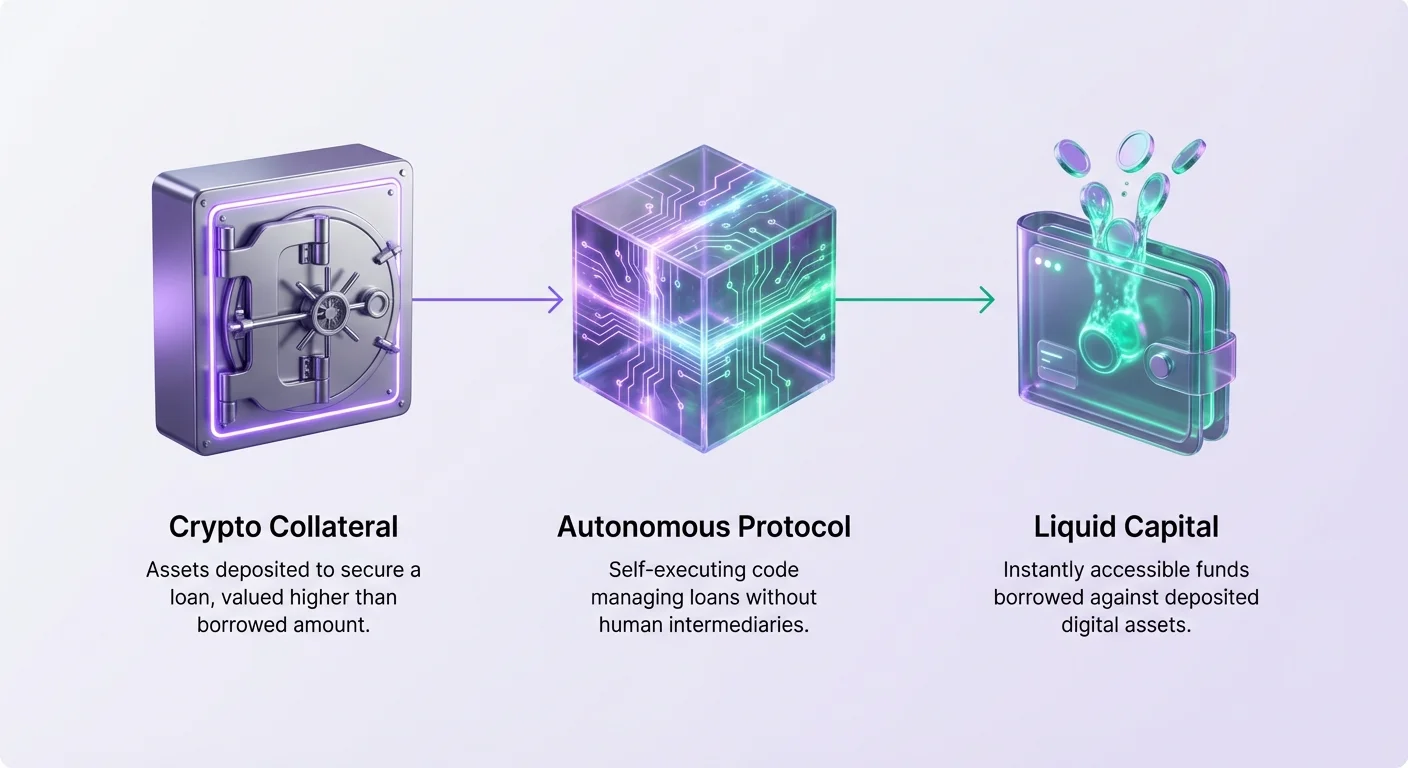
Šīs sistēmas pamats ir pārmērīgs nodrošinājums. Atšķirībā no tradicionālajām bankām, kas paļaujas uz kredītreitingiem, decentralizētie protokoli prasa aizņēmējiem iemaksāt lielāku vērtību, nekā viņi izņem. Tas nodrošina aizdevuma kopas drošību un novērš uzticēšanās vajadzību starp pusēm.
Šo mehānismu izpratne ir būtiska ikvienam, kurš vēlas maksimizēt kapitāla efektivitāti. Spēja aizdot aktīvus peļņai un vienlaikus aizņemt pret tiem atver durvis uz advancētām stratēģijām, kas iepriekš bija rezervētas institucionālajiem spēlētājiem.
The Mechanics of Decentralized Protocols
Understanding Liquidity Pools
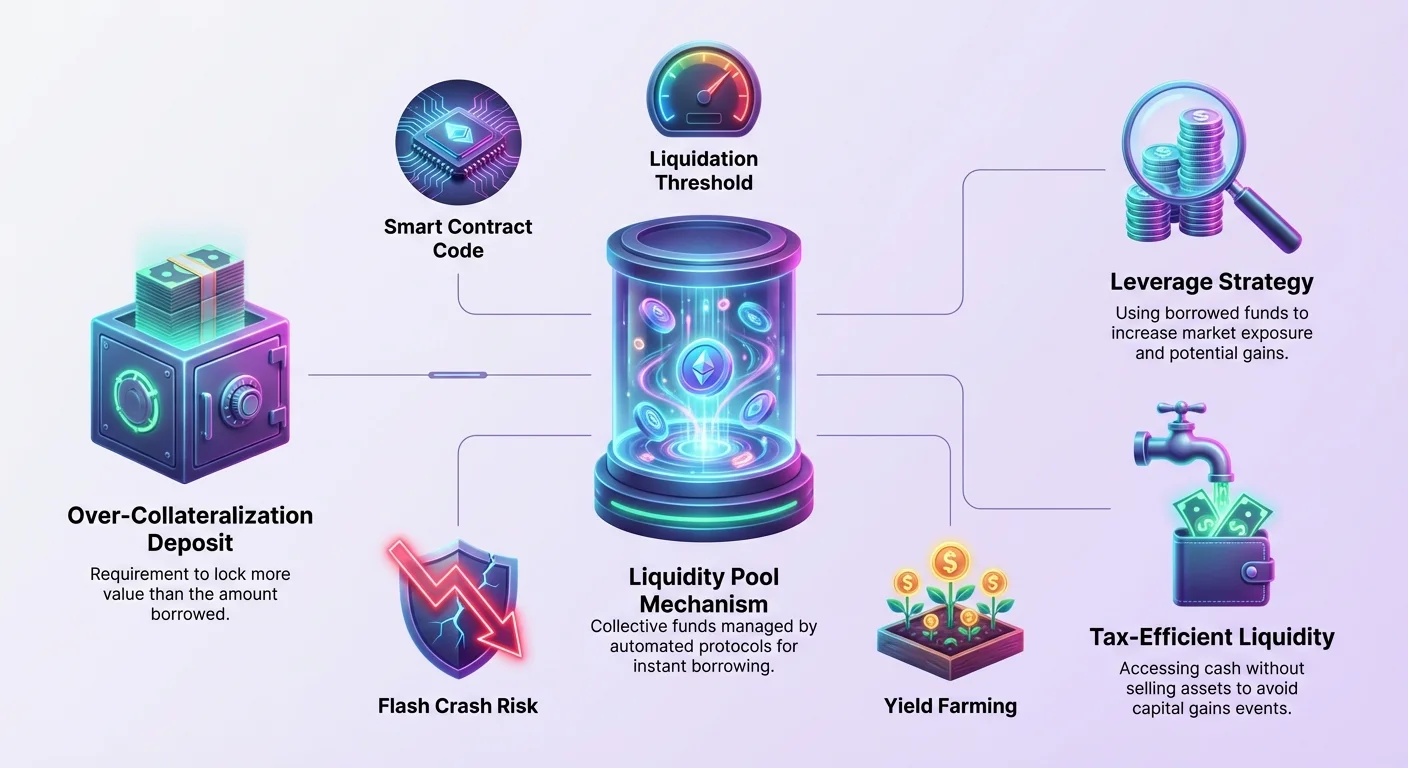
Traditional lending relies on a direct match between a lender and a borrower. Decentralized finance (DeFi) changes this model by using liquidity pools. When users deposit assets into a protocol like Aave, those funds enter a collective smart contract. Borrowers do not negotiate with lenders directly. Instead, they interact with the pool to withdraw liquidity instantly based on set parameters.
This pool-based structure ensures that funds are usually available on demand. Lenders receive interest derived from the payments made by borrowers. The rates fluctuate dynamically based on supply and demand. If many people want to borrow a specific asset, the interest rate rises to encourage more deposits.
The Role of Over-Collateralization
To borrow in a trustless environment, you must provide security. This is achieved through over-collateralization. If a user wants to borrow a specific amount of cryptocurrency, they must first deposit a greater value of assets into the protocol. This deposit acts as insurance for the protocol and its liquidity providers.
For example, to borrow $1,000 worth of a stablecoin, a user might need to deposit $1,500 worth of Ethereum. If the value of the collateral drops below a certain threshold, the protocol automatically liquidates a portion of the deposit to repay the debt. This mechanism protects the system from insolvency without human intervention.
Smart Contract Automation
The entire process is governed by smart contracts. These are self-executing lines of code that live on blockchains like Ethereum or Avalanche. When a user connects their digital wallet to a decentralized application (dApp), they are interacting directly with these contracts.
Smart contracts handle every aspect of the transaction. They calculate interest rates, monitor collateral values, and execute liquidations if necessary. This automation removes the need for a middleman, allowing the platform to operate 24/7 with high efficiency and transparency.
Leveraging Market Positions
Amplifying Long Exposure
One of the most common uses of crypto borrowing is to create leverage. Traders who are bullish on a specific asset can use borrowing to increase their position size without adding fresh capital from a bank account. This is often referred to as "looping."
In this scenario, an investor deposits an asset, such as Ethereum (ETH), into a lending protocol. They then use this collateral to borrow a stablecoin like USDC. The borrowed stablecoins are used to purchase more ETH, which is then deposited back into the protocol.
This increases the total amount of ETH held by the investor. If the price of ETH rises, the investor gains appreciation on both the original deposit and the newly purchased amount. However, this strategy also amplifies risk. If the price falls, the liquidation threshold is reached much faster.
Executing Short Strategies
Borrowing also enables traders to profit from falling prices, known as shorting. In a decentralized environment, this involves borrowing an asset that you expect to decline in value. The borrower immediately sells the borrowed asset for a stablecoin.
If the price of the asset drops as predicted, the borrower can repurchase it later at a lower price. They then repay the loan to the protocol and keep the difference as profit. This mechanism allows traders to hedge their portfolios against market downturns.
Managing Loan-to-Value Ratios
Effective leverage requires careful management of the Loan-to-Value (LTV) ratio. This metric represents the percentage of the loan relative to the value of the collateral. Protocols set maximum LTV limits for each asset.
Maintaining a healthy buffer is critical. If market volatility causes the collateral value to drop, the LTV rises. If it hits the liquidation point, the protocol sells the collateral to cover the debt. Strategic borrowers constantly monitor their LTV to ensure it remains at a safe level, often keeping it well below the maximum allowance to account for sudden price swings.
Arbitrāža un ienesīguma ģenerēšana
Procentu likmju arbitrāža
DeFi sadrumstalotais raksturs rada arbitrāžas iespējas. Aizņemšanās un aizdevuma procentu likmes bieži atšķiras starp dažādām platformām un blokķēdēm. Zinošs lietotājs var identificēt situāciju, kur aizņemšanās likme vienā protokolā ir zemāka nekā aizdevuma ienesīgums citā.
Aizņemoties aktīvu ar zemāko likmi un piegādājot to platformai ar augstāku ienesīgumu, lietotājs var iegūt starpību. Šī stratēģija, lai gan teorētiski vienkārša, prasa uzmanību darījumu komisijām. Aktīvu pārvietošanas izmaksas starp protokoliem vai ķēdēm var apēst potenciālo peļņu.
Aizņemto aktīvu staking
Vēl viena arbitrāžas forma ietver aktīvu aizņemšanos, lai piedalītos staking vai ienesīguma lauksaimniecības iespējās. Daudzas tīkli piedāvā atlīdzības par tokenu staking, lai nodrošinātu blokķēdi vai nodrošinātu likviditāti. Ja staking atlīdzības likme ir ievērojami augstāka nekā aizņemšanās izmaksas, lietotājs var ģenerēt neto peļņu.
Piemēram, lietotājs var aizņemt tokenu ar 2% gada procentu likmi. Ja tas pats tokens var tikt stakots citur par 6% atdevi, lietotājs nopelna 4% maržu. Šī stratēģija ļauj lietotājiem lauksaimniecīt ienesīgumu uz aktīviem, kurus viņi nevēlas iegādāties tieši, samazinot ekspozīciju pret konkrētā tokena ilgtermiņa cenu svārstībām.
Starķēžu iespējas
Daudzās blokķēdēs bieži ir atšķirīga likviditātes pieprasījuma līmenis. Populāra aizdevuma dApp, piemēram, Aave, pastāv vairākās ķēdēs, tostarp Ethereum un Avalanche. USDT aizņemšanās izmaksas Ethereum var atšķirties no izmaksām Avalanche lokālo tirgus apstākļu dēļ.
Lietotāji ar vairāku ķēžu maka var izmantot šīs atšķirības. Aizņemoties ķēdē ar pietiekamu likviditāti un zemām likmēm un pārvietojot līdzekļus uz ķēdi ar augstu pieprasījumu, viņi var optimizēt kapitāla efektivitāti. Rīki, piemēram, WalletConnect, atvieglo šīs mijiedarbības, nodrošinot drošus savienojumus ar dApp dažādos tīklos.
Tax Management and Efficiency
Accessing Cash Without Selling
For many investors, the primary benefit of borrowing is tax efficiency. In many jurisdictions, selling cryptocurrency is considered a taxable event that triggers capital gains tax. This can be a significant cost for long-term holders who have seen substantial appreciation in their assets.
Borrowing allows investors to unlock the value of their holdings without selling them. By depositing crypto as collateral and borrowing stablecoins, users get liquid cash to pay for expenses or make other investments. Since no sale occurred, no capital gains tax is typically triggered at the time of the loan.
Debt Repayment Dynamics
When the borrower is ready to repay the loan, they can do so using fiat currency or other stablecoins. The original collateral is then unlocked and returned to the wallet. This strategy is particularly useful for holders who believe their assets will continue to appreciate over time.
Instead of selling an asset that might double in value next year to pay a bill today, the investor keeps the asset and the potential upside. The cost of this strategy is the interest paid on the loan, which must be weighed against the potential tax savings and expected asset appreciation.
Estate Planning and Long-Term Holding
Borrowing against assets aligns well with a strategy of generational wealth transfer. By avoiding sales, investors maximize the size of their portfolio. The assets remain in their control, compounding in value or earning yield while acting as collateral.
This approach mirrors strategies used in traditional real estate and high-net-worth wealth management. The digital nature of crypto assets makes this accessible to anyone with a smartphone and a digital wallet, democratizing access to sophisticated financial planning tools.
| Strategy | Primary Goal | Risk Level |
|---|---|---|
| Leverage Long | Amplify gains from price increases | High |
| Short Selling | Profit from price decreases | High |
| Tax Liquidity | Access cash without capital gains | Low/Medium |
Operational Risks and Safety
Liquidation Cascades
The most significant risk in crypto borrowing is liquidation. Crypto markets are notoriously volatile. A sudden flash crash can reduce the value of collateral by double-digit percentages in minutes. If the collateral value falls too low, the smart contract triggers a liquidation.
When this happens, the protocol sells the collateral at a discount to liquidators to repay the loan. The borrower loses a portion, or sometimes all, of their deposited assets. It is vital to maintain a conservative health factor and not maximize borrowing capacity. Leaving a wide margin for error protects against normal market turbulence.
Smart Contract Vulnerabilities
While smart contracts remove human error from transaction processing, they introduce code risk. If a lending protocol has a bug or vulnerability in its code, hackers may exploit it to drain funds from the liquidity pools. This is a risk inherent to all DeFi interactions.
Users should stick to reputable, battle-tested platforms that have undergone multiple security audits. Established protocols with billions in Total Value Locked (TVL) generally offer higher security assurances than new, untested platforms.
Wallet Security
The security of the borrowing operation also depends on the user's wallet. Self-custodial wallets give users full control, but also full responsibility. If a user loses their private keys or interacts with a malicious site, their funds can be stolen.
Using a hardware wallet or a trusted mobile application adds layers of security. It is important to only connect to legitimate dApps and to double-check URLs. Features like WalletConnect add safety by establishing secure links between mobile wallets and desktop interfaces without exposing private keys.
Nepieciešamie rīki aizņemšanai
Pareizā maka izvēle
Lai piedalītos DeFi aizņemšanā, jums vajadzīgs Web3 iespējots maks. Labākās opcijas ir pašpārvaldnieces, kas nozīmē, ka lietotājs tur privātās atslēgas. Uzraudzības maks, kur trešā puse kontrolē līdzekļus, parasti nevar tieši mijiedarboties ar decentralizētiem aizdevuma protokoliem.
Maks kalpo kā pase uz DeFi ekosistēmu. Tas tur nodrošinājumu, paraksta darījumus un saņem aizņemtie līdzekļi. Mūsdienu maki atbalsta vairākas blokķēdes, ļaujot lietotājiem bezšuvēm medīt labākās likmes Ethereum, Polygon vai citos tīklos.
Aizdevuma platformu navigācija
Veiksmēm nepieciešama pareizās platformas izvēle. Lietotājiem jāmeklē protokoli, kas pieņem plašu kvalitātes kriptoaktīvu klāstu kā nodrošinājumu. Platformai jāpiedāvā konkurētspējīgas gada procentu likmes (APY) iemaksām un saprātīgas likmes aizņemšanai.
Saskarnes jābūt caurspīdīgām, skaidri parādot aizdevumu veselības faktoru un pašreizējo LTV. Laba panelis ļauj lietotājiem viegli izsekot uzkrātajiem procentiem un pārvaldīt savas pozīcijas.
Darījumu komisijas un gāze
Katra mijiedarbība ar blokķēdi rada darījuma komisiju, kas maksājama tīkla pamatvalūtā (piem., ETH Ethereum). Plānojot aizņemšanās stratēģiju, šīs komisijas jāiekļauj izmaksās.
Pārpildītos tīklos komisijas var būt augstas. Tas padara biežas pozīciju korekcijas dārgas. Lietotāji bieži dod priekšroku tīkliem ar zemākām komisijām stratēģijām, kas prasa aktīvu pārvaldību, piemēram, augstas frekvences arbitrāžai vai ienesīguma lauksaimniecībai.
Practical Steps to Borrow
Establishing a Connection
The process begins by navigating to the lending platform's website. Users must connect their Web3 wallet to the dApp. This is usually done via a "Connect Wallet" button, often utilizing protocols like WalletConnect for mobile integration.
Once connected, the platform reads the wallet's balances and displays available assets. The user interface will show which assets are supported for deposit and borrowing.
Supplying Collateral
Before borrowing can occur, assets must be supplied. The user selects an asset from their wallet to deposit. This transaction requires approval from the wallet and payment of a network fee.
Once the transaction is confirmed on the blockchain, the user begins earning interest on the deposit immediately. This supplied asset now creates a "borrowing power" limit based on the protocol's parameters for that specific asset.
executing the Borrow
With collateral in place, the user navigates to the borrowing section. They select the asset they wish to borrow and the amount. The interface will typically show a preview of the new health factor and LTV.
Confirming the borrow initiates another blockchain transaction. Once processed, the borrowed funds appear directly in the user's wallet. These funds are now liquid and can be moved, swapped, or cashed out as needed.
Monitoring and Repayment
The loan remains active indefinitely as long as the collateral remains sufficient. Interest accrues periodically, increasing the debt obligation over time. Users must monitor their position regularly.
To close the position, the user repays the borrowed amount plus accrued interest. This can be done in whole or in part at any time. Repayment unlocks the collateral, allowing it to be withdrawn back to the wallet.
Secinājumi
Stratēģiska aizņemšanās decentralizētajā finansēšanā piedāvā spēcīgu alternatīvu tradicionālajai aktīvu pārvaldībai. Izmantojot pārmērīgi nodrošinātus aizdevumus, investori var atbloķēt savu portfeļu vērtību bez īpašumtiesību zaudēšanas. Vai mērķis ir tirgus pozīcijas svirināšana lielākām atdevēm, sarežģītu arbitrāžas stratēģiju izpilde vai nodokļu saistību pārvaldība, rīki ir pieejami ikvienam ar pašpārvaldnieces maku.
Tomēr šīs iespējas nāk ar atšķirīgām atbildībām. Drošības tīklu neesamība nozīmē, ka riska pārvaldība pilnībā ir lietotāja ziņā. Veselības faktoru uzraudzība, likvidācijas sliekšņu izpratne un drošu protokolu izvēle ir neizbēgami panākumu nosacījumi. Paaugstinoties ekosistēmai, šie finanšu primitīvi, visticamāk, kļūs par standarta sastāvdaļām personīgajām finansēm digitālajā laikmetā.
Aizņemšanās pret jūsu kripto ļauj iegūt naudu vai palielināt peļņu, paturot ilgtermiņa aktīvus.