
Bitcoin (BTC), kas pamatā izstrādāts kā drošs, decentralizēts vērtības glabātājs, darbojas uz savas robustas, izolētas blokķēdes. Lai gan šī izolācija ir galvenais elements tā drošībai un uzticamībai — bieži dēvēta par Layer 1 —, tā rada nozīmīgu izaicinājumu mūsdienu decentralizēto finanšu (DeFi) ekosistēmas kontekstā, kas galvenokārt darbojas uz viedu līgumu platformām, piemēram, Ethereum. Lai piedalītos aizdevumos, aizņēmumos vai sarežģītā tirdzniecībā uz šīm platformām, Bitcoin ir jāspēj „pāriet pāri ķēdei.“
Šī nepieciešamība noveda pie „iesaiņotu“ Bitcoin versiju izveides. Izplatītākā metode ietver centralizētus glabātājus, kuri tur jūsu dzimto BTC rezervē un izsniedz ekvivalentu žetonu citā ķēdē, piemēram, Wrapped Bitcoin (wBTC). Lai gan efektīva, šī pieeja fundamentāli apdraud kripto pamatvērtību: uzticamību bez uzticēšanās. Tā atkal ievieš centralizētu trešo pusi (glabātāju), kuram jāuzticas solvence un godīgums, radot vienu kļūmes punktu un cenzūras risku.
tBTC (Threshold Bitcoin) radās kā kriptogrāfisks risinājums šai problēmai. Tas ir izstrādāts kā uzticamību minimizējoša, decentralizēta alternatīva glabātāju iesaiņošanai. Aizstājot cilvēkus glabātājus ar sarežģītām matemātikām un ekonomiskajiem stimuliem — īpaši izmantojot Sliekšņa parakstu shēmas (TSS) —, tBTC ļauj lietotājiem droši pārnest savu Bitcoin vērtību pāri ķēdēm, neuzticot kontroli nevienai vienai entitijai. Šis ceļvedis izpēta TSS pamat tehnoloģiju un derināšanas mehānismus, kas nodrošina tBTC, demonstrējot, kā tas panāk patiesu decentralizētu interoperabilitāti.
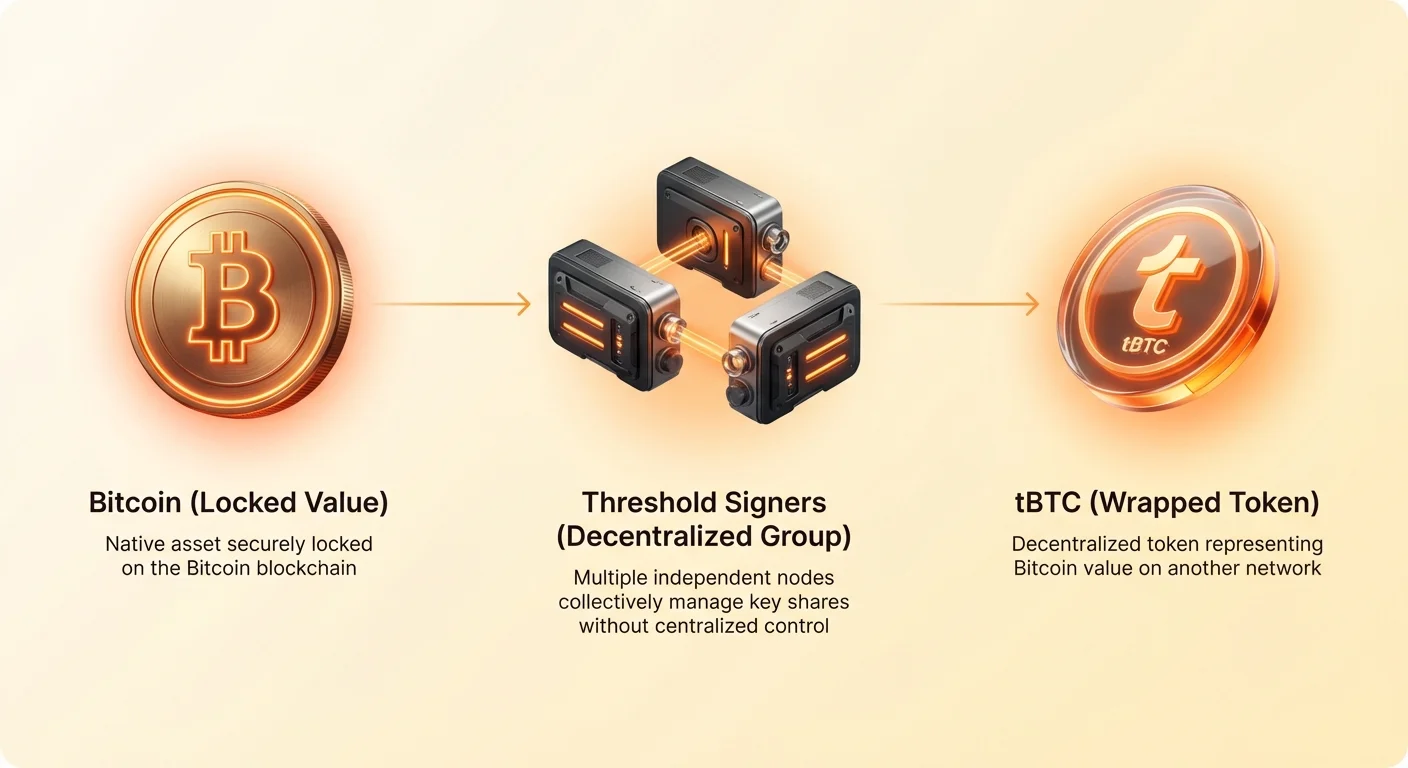
The Interoperability Challenge: Why Bitcoin Needs to Cross Chains
The world of blockchain technology is not a single, unified network; rather, it is a landscape of distinct ecosystems, each optimized for different functions. Bitcoin is optimized for security and value transfer, while chains like Ethereum are optimized for programmable money and complex applications via smart contracts. Interoperability—the ability for these distinct systems to communicate and exchange assets—is crucial for the growth of the overall digital economy.
The Limitations of Native Bitcoin
Bitcoin’s original architecture prioritizes security and immutability above all else. Its scripting language, intentionally simple and limited, ensures that transactions are highly predictable and resistant to exploits. However, this design choice means that Bitcoin’s native Layer 1 cannot easily support the advanced smart contracts required for modern DeFi activities (like automated market making or complex derivatives).
To utilize Bitcoin’s vast liquidity and store-of-value capabilities within these advanced DeFi environments, the value must be represented as a token (an asset) on the destination chain. This transfer is called "bridging," and it requires a mechanism to prove that the underlying Bitcoin has been locked away securely on its native chain, thus preventing double-spending.
Centralized Wrapping (wBTC) Risks
The most common solution, exemplified by wBTC, is centralized custody. When a user wants wBTC, they send their native BTC to a central custodian (a specific company or group of companies). That custodian locks the BTC and then mints the corresponding wBTC token on the destination chain (e.g., Ethereum).
This process is straightforward and fast, but it carries significant counterparty risk:
- Custodial Risk: The user must trust the custodian not to steal the funds or become insolvent. If the custodian fails, the wBTC tokens become worthless, even if the underlying Bitcoin is technically still on the Bitcoin blockchain.
- Censorship Risk: A centralized entity is susceptible to regulation and potential government pressure, meaning they could be forced to freeze or blacklist certain addresses.
- Audit Dependency: The solvency of the wrapped token relies entirely on regular, accurate audits proving the 1:1 ratio between the wrapped token and the reserve BTC.
tBTC addresses these risks by replacing the centralized custodian with a decentralized network of stakers and a mathematically guaranteed signing process: Threshold Signature Schemes.
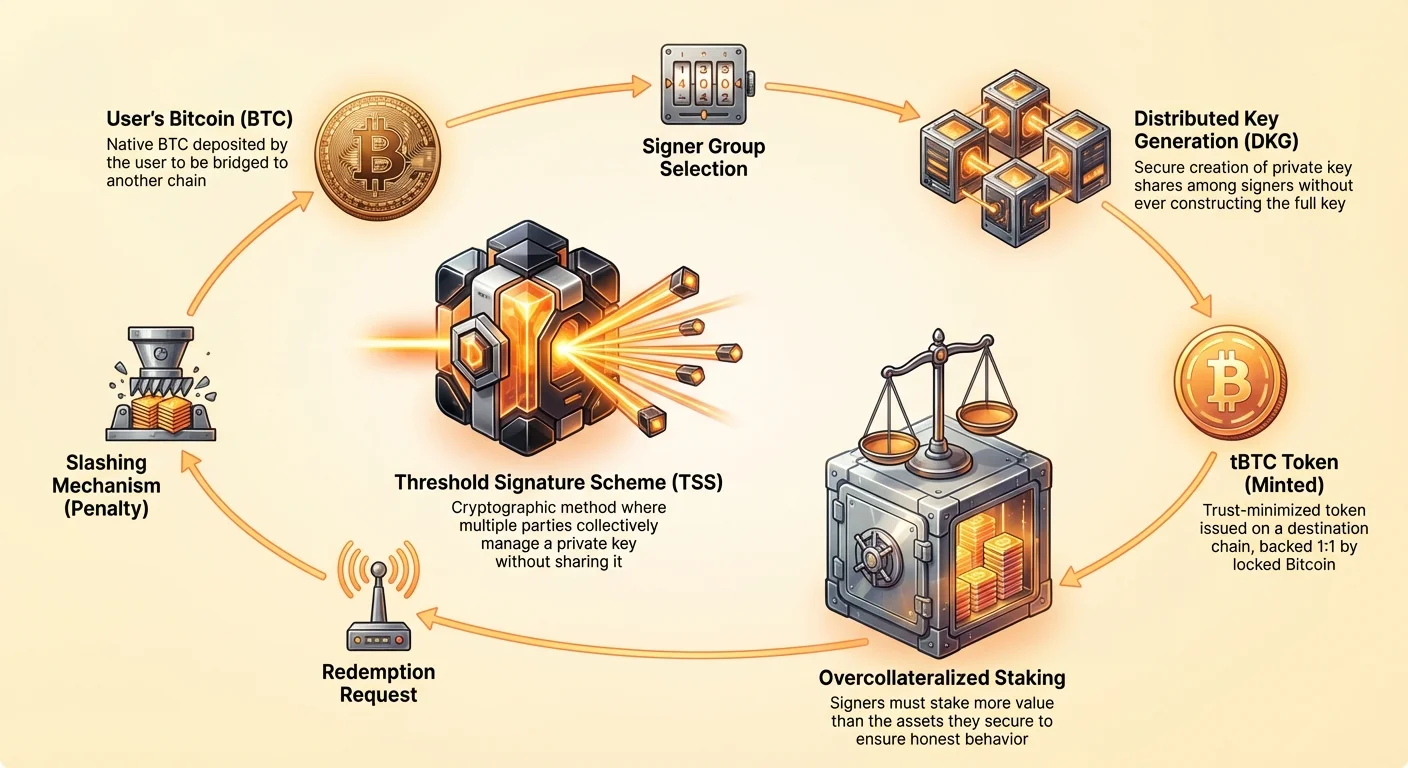
Sliekšņa parakstu shēmu (TSS) izpratne: pamattehnoloģija
Sliekšņa parakstu shēmas (TSS) ir tBTC kriptogrāfiskais stūklis. Tās ļauj dalībnieku grupai kolektīvi kontrolēt vienu kriptogrāfisko atslēgu — šajā gadījumā Bitcoin adreses privāto atslēgu —, neļaujot nevienam atsevišķam dalībniekam piekļūt pilnīgai atslēgai.
Lai izprastu TSS, palīdz vispirms atcerēties, kā darbojas standarta Bitcoin darījums. Darījumam nepieciešama digitāla paraksta, kas ģenerēts, izmantojot vienu privāto atslēgu. Ja šī atslēga ir pazaudēta vai kompromitēta, līdzekļi ir zuduši.
No vienas atslēgas uz kopīgu drošību (M no N)
TSS izmanto procesu, ko sauc par izplatītu atslēgas ģenerāciju (DKG) un „sliekšņa“ sistēmu, ko parasti dēvē par M no N.
- N: Atstāj kopējo dalībnieku (Parakstītāju) skaitu grupā, kas atbildīga par līdzekļu nodrošināšanu.
- M: Atstāj minimālo dalībnieku skaitu, kas nepieciešams sadarbībai, lai ģenerētu derīgu parakstu. M parasti ir pārliecinošā balsu vairākums (piemēram, 2/3 vai 3/4 no N).
TSS uzstādījumā privātā atslēga nekad netiek konstruēta kā viens gabals. Tā vietā katrs Parakstītājs tur tikai daļu no atslēgas. Kritiski svarīgi, šīs daļas tiek ģenerētas droši tā, lai neviens atsevišķs Parakstītājs nevarētu rekonstruēt pilnu atslēgu pats, pat ja viņi sazinās.
Kad tiek veikts tBTC izpirkšanas pieprasījums (t.i., kad lietotājs vēlas savu dzimto BTC atpakaļ), aktivizējas M no N prasība. Nepieciešamie M Parakstītāji jāsadarbina, lai kolektīvi radītu derīgo parakstu, kas atbloķē BTC no depozīta adreses. Tā kā neviena atsevišķa entitāte nepazīst atslēgu, sistēma ir fundamentāli drošāka un cenzūrai izturīgāka nekā viens glabātājs.
Atslēgas ģenerēšana un parakstīšana praksē
Process ir sadalīts divās uzticamību minimizējošās fāzēs:
1. Izplatīta atslēgas ģenerācija (DKG)
Kad tiek izveidota jauna tBTC depozīta grupa, Parakstītāji seko kriptogrāfiskam protokolam, lai izveidotu kopīgu Bitcoin adresi. Izšķiroši svarīgi šajā procesā:
- Bitcoin publiskā atslēga (adrese, uz kuras tiks nosūtīts BTC) tiek izsecināta un publiskota.
- Atbilstošās privātās atslēgas daļas tiek slepeni izplatītas starp Parakstītājiem.
- Faktiskā pilnīgā privātā atslēga nekad netiek matemātiski konstruēta vai redzama nevienam, pat īslaicīgi.
Šī DKG fāze nodrošina, ka līdzekļu glabāšana ir decentralizēta jau no paša sākuma.
2. Sliekšņa parakstīšana
Kad lietotājs uzsāk dzimtā BTC izņemšanu (izpirkšanu), Parakstītāji saņem pieprasījumu. Viņi izpilda daudzu pušu skaitļošanas (MPC) protokolu, kur:
- Katrš Parakstītājs izmanto savu slepeno atslēgas daļu un darījuma detaļas, lai ģenerētu daļēju parakstu.
- Individuālie daļējie paraksti tiek apvienoti (tīklā, nevis vienas personas) vienā derīgā parakstā, ko prasa Bitcoin tīkls.
Ja piedalās mazāk nekā M Parakstītāji, paraksts nevar tikt ģenerēts, un līdzekļi paliek aizslēgti. Tas nodrošina līdzekļu drošību, bet prasa aktīvu sadarbību no decentralizētās grupas vairākuma.
How tBTC Enables Decentralized Bitcoin Bridging
tBTC is not just the threshold signature protocol; it is a full ecosystem that utilizes TSS within a smart-contract framework to manage deposits, minting, and redemption. The system is designed to provide a trust-minimized guarantee that every tBTC token on the destination chain (e.g., Ethereum) is backed 1:1 by native BTC locked on the Bitcoin blockchain.
Minting and Redemption: The Deposit and Withdrawal Process
The lifecycle of a tBTC token involves two key processes that rely heavily on the decentralized Signer group.
Minting (Creating tBTC)
- Request and Group Selection: A user initiates a request to mint tBTC. The protocol randomly selects a decentralized group of Signers (the M-of-N group) that have staked collateral and are ready to participate.
- Key and Deposit: The selected Signer group collaboratively generates the unique public Bitcoin address using DKG. The user sends their native BTC to this address.
- Proof of Deposit: Once the deposit transaction achieves the required number of Bitcoin confirmations, the Signers provide cryptographic proof to the destination chain’s smart contract that the BTC is locked.
- Token Issuance: The smart contract on the destination chain verifies the proof and issues (mints) an equivalent amount of tBTC to the user's wallet.
Redemption (Retrieving BTC)
- Burn Request: A user sends their tBTC back to the smart contract, which immediately burns the tokens, removing them from circulation.
- Signature Request: The smart contract signals the Signer group associated with the deposit that the user is requesting withdrawal.
- Threshold Signing: The M-of-N Signer group collaboratively performs the threshold signature computation, generating the valid signature needed to spend the original locked BTC.
- Release: The signed transaction is broadcast to the Bitcoin network, releasing the native BTC back to the user’s specified address.
This full cycle ensures that no centralized entity ever touches both the native BTC and the wrapped token, maintaining trustlessness.
The Role of Signers and Staking
The Signers are the critical human component that ensures the system functions. They are node operators who dedicate computing resources and, more importantly, economic capital to the protocol.
Signers are responsible for maintaining their systems, participating promptly in DKG and signing ceremonies, and honestly reporting transaction details to the smart contract. Their willingness to execute these duties is enforced not by legal agreements, but by cryptography and economic incentive mechanisms.
To ensure honest behavior and the safety of the user’s funds, Signers are required to post collateral (stake) that is worth more than the amount of Bitcoin they are collectively responsible for securing. This collateral acts as an economic guarantee, providing financial security to the user in the event of failure or malice.
Economic Guarantees: Staking and Collateralization
The core difference between tBTC and centralized wrapped solutions is the nature of the guarantee. wBTC is guaranteed by the trustworthiness and reserves of a company; tBTC is guaranteed by verifiable cryptographic proof and substantial economic collateral staked by a decentralized network.
Overcollateralization as the Trust Mechanism
The tBTC protocol requires Signers to be overcollateralized. This means the value of the collateral they stake (often in the native token of the staking network or a stablecoin) must significantly exceed the value of the Bitcoin they are securing in the deposit address.
For instance, if a Signer group is responsible for holding 1 BTC (worth, hypothetically, $70,000), they might be required to stake collateral worth 150% or more of that value (e.g., $105,000).
This ratio serves two primary purposes:
- Price Volatility Buffer: The value of BTC can fluctuate rapidly. Overcollateralization ensures that even if BTC spikes in value, the staked collateral remains sufficient to cover the full value of the deposit.
- Disincentive for Malice: The potential profit from stealing the secured BTC is always less than the penalty (slashing) incurred by losing the staked collateral. This creates a strong financial incentive for Signers to perform their duties honestly.
The overcollateralization model creates a dynamic shield against both price fluctuations and malicious behavior, making the system economically robust.
Incentive Alignment and Slashing
The security model of tBTC is built on two concepts that align the Signers’ incentives with the users’ safety: rewards and penalties.
Rewards
Signers receive fees for every tBTC minting and redemption request they successfully process. These fees compensate them for the risk they take (by staking collateral) and the computational resources they expend (by running DKG and MPC processes). These rewards incentivize continuous, prompt, and accurate participation in the protocol.
Slashing
Slashing is the critical penalty mechanism. If a Signer group attempts to defraud the system—for example, by refusing to sign a valid redemption request, attempting to double-spend the locked BTC, or becoming unresponsive—they are penalized. The protocol detects this misbehavior through cryptographic proofs and instantly liquidates (slashes) the Signers’ staked collateral.
The liquidated collateral is then used to refund the user whose BTC was compromised or delayed. This mechanism ensures that if a technical or malicious failure occurs, the user is economically protected by the Signers’ staked assets.
Example Scenario: A user deposits 1 BTC. The Signers responsible for this deposit have staked 1.5 BTC worth of collateral. If 40% of the Signers become malicious and refuse to sign the redemption transaction, the failure is registered by the smart contract. The contract slashes the entirety of the $105,000 collateral, and the user is immediately reimbursed $70,000 worth of stablecoins or the staking asset, guaranteeing their capital is safe.
This system effectively makes the staked collateral the primary assurance of safety, rather than reliance on a company’s integrity.
The tBTC v2 Upgrade and Decentralization Evolution
The original tBTC protocol laid the groundwork, but as decentralized technology matured, updates were necessary to enhance efficiency and decentralization. tBTC v2 introduced several improvements, particularly concerning the mechanism of staking and managing collateral.
In tBTC v2, the protocol moved towards a more generalized and scalable approach to staking, often utilizing an integrated network like the Threshold Network (T), which provides the core cryptographical primitives (like DKG and TSS) as a service to various decentralized applications.
Staking Management and Governance
Instead of requiring Signers to stake only collateral specific to a single deposit, tBTC v2 often uses a continuous staking pool. Signers stake T tokens (or other assets) into this pool, and the protocol automatically assigns them to secure various deposit addresses based on their staked amount and reputation.
Key aspects of modern tBTC staking include:
- Pooled Security: Large pools of staked collateral secure multiple deposits simultaneously, increasing efficiency and liquidity.
- Dynamic Group Formation: The randomness of Signer selection is crucial to prevent collusion. The protocol dynamically shuffles groups and assigns them randomly to new deposits, making it impossible for a malicious actor to consistently target specific addresses or pre-select their co-conspirators.
- Protocol Governance: The governance layer ensures that changes to the collateral requirements, slashing rules, and fee structures are made transparently and democratically by the community of token holders, further reinforcing decentralization.
This evolution ensures that tBTC remains scalable while maintaining its fundamental commitment to trustlessness and decentralization.
Savietojamības modeļu salīdzinājums: Uzticība pret efektivitāti
Izvēloties, kā iesaiņot Bitcoin DeFi vajadzībām, lietotāji saskaras ar pamatkompromisu starp ātrumu un izmaksām (efektivitāti) pret paļaušanos uz kriptogrāfiju (uzticības minimizāciju). Šī kompromisa izpratne ir būtiska riska novērtēšanai.
| Īpašība | tBTC (Sliekšņa paraksti) | wBTC (Centralizēta glabāšana) |
|---|---|---|
| Glabāšanas modelis | Decentralizēta M-no-N parakstītāju grupa | Centralizēts glabātājs (Uzņēmums) |
| Uzticības atkarība | Kriptogrāfija & ekonomiskās garantijas (Slashing) | Trešās puses audits & regulatīvā atbilstība |
| Drošības mehānisms | Pārkolateralizēts staking | Glabātāju rezerves (Ārķēdes) |
| Cenzūras pretestība | Augsta (Nav viena kontroles punkta) | Zema (Glabātājs var iesaldēt līdzekļus) |
| Darījumu ātrums | Lēnāks (Nepieciešama daudzpusēja skaitļošana un Bitcoin apstiprinājumi) | Ātrāks (Žetona kaltuvešana ir tūlītēja pēc verifikācijas) |
| Maksas & izmaksas | Parasti augstākas (pateicoties parakstītāju atlīdzībai un kolaterāla pārvaldībai) | Parasti zemākas/fiksētas (glabātāja pakalpojuma maksas) |
Decentralizācija pret ātruma/izmaksu kompromisiem
Centralizēti risinājumi, piemēram, wBTC, bieži ir iecienīti institucionālo lietotāju vai ātrfrekvences tirgotāju vidū to gandrīz acumirklīgās kaltuvešanas/izpirkšanas procesa un zemākās darījumu slodzes dēļ. Tā kā viena vienība apstrādā bloķēšanu un izdošanu, process ir vienkāršots un augsti efektīvs.
Tomēr tBTC prioritizē uzticības minimizāciju pār ātrumu. Nepieciešamība parakstītājiem veikt DKG, gaidīt Bitcoin apstiprinājumus un pēc tam veikt sarežģītu sliekšņa parakstīšanas procesu ievieš iedzimtu aizkavi. Turklāt parakstītāju motivēšanas un augsto kapitāla prasību pārkolateralizācijai pārvaldības nepieciešamība nozīmē, ka darījumu maksas bieži ir augstākas nekā centralizētās sistēmās.
Lietotājiem, kuri prioritizē pašsuverenitāti un pretpuses riska absolūtu minimizāciju, šīs augstākās izmaksas un ilgākie gaidīšanas laiki ir pieņemami kompromisi matemātiskās pārliecības dēļ. Viņi uzskata izmaksu atšķirību par cenu, kas samaksāta par īstu bezuzticamību.
Pretpuses riska novērtēšana
Šo modeļu galvenā atšķirība slēpjas pretpuses riskā:
- wBTC risks: Ja centrālais glabātājs bankrotē, tiek uzlauzts vai cenzēts no valdības puses, iesaiņotie žetoni kļūst bez nodrošinājuma un potenciāli bezvērtīgi. Lietotāja tiesiskais ceļš ir juridisks, centralizēts un lēns.
- tBTC risks: Ja vairums parakstītāju kļūst ļaunprātīgi, protokola ekonomiskās garantijas iedarbojas. Zudums tiek segts ar kolaterālu, ko viedais līgums nekavējoties slashing. Risks tiek pārvaldīts matemātiski un automātiski, ievērojot principu „code is law“.
Pašglabāšanas lietotājam tBTC ir filozofiska nepieciešamība. Tas ļauj Bitcoin piedalīties DeFi ekosistēmās, neuzspiežot lietotājam ziedot pamatkontroli un cenzūras pretestību, kas padara Bitcoin unikālu.
Actionable Tips for Using tBTC
While tBTC is designed to be trust-minimized, understanding how to interact with it safely remains paramount.
1. Verify the Official Contracts
Always ensure you are interacting with the official, audited smart contracts for the tBTC bridge. Decentralized ecosystems are prone to scams and phishing. Use verified links from the official Threshold Network or tBTC documentation. Never rely on links provided via unsolicited messages or social media.
2. Understand the Redemption Queue and Fees
Redemption (converting tBTC back to native BTC) often involves a queuing system, especially during times of high network congestion. Be aware that the process is not instant, and ensure you factor in the current fee structure, which covers the Signers' services and the gas costs of the underlying chain.
3. Maintain Self-Custody of tBTC
Once you have received your tBTC tokens on the destination chain (e.g., Ethereum), keep them in a secure self-custody wallet (like a hardware wallet or secure software wallet). While tBTC removes custodial risk from the wrapping process, the token itself is only as secure as the wallet holding it. Losing control of your wallet means losing control of your tBTC.
4. Monitor Collateralization Ratio
While the protocol is designed to automate collateral maintenance, users should understand the economic health of the system. Resources are available (usually on the Threshold Network dashboard) to verify the current overall collateralization ratio of the Signer pool. A healthy, well-overcollateralized system provides the strongest possible guarantee.
Secinājumi
Bitcoin interoperabilitātes nepieciešamība ir neapstrīdama, bet tās sasniegšana bez uzticamības upurēšanas ir sarežģīts kriptogrāfisks izaicinājums. tBTC un pamata Sliekšņa parakstu shēmas (TSS) pārstāv decentralizētās tilta tehnoloģijas avantgarda. Aizstājot singularus, centralizētus glabātājus ar izplatītām, ekonomiski stimulētām Parakstītāju grupām, tBTC nodrošina patiesi uzticamību minimizētu iesaiņotu aktīvu.
Tiem, kas apņēmušies pašsuverenitātes un decentralizācijas etiķeti, tBTC piedāvā izšķirošo spēju izvietot Bitcoin vērtību dinamiskajā DeFi ainavā, nepaļaujoties uz uzņēmuma integritāti vai tradicionālo finanšu struktūru uzraudzību. Lai gan tas prasa tehnisko izsmalcinātību un ietver kompromisus ātrumā un izmaksās salīdzinājumā ar centralizētiem alternatīviem, tBTC nodrošina matemātiskās un ekonomiskās garantijas, kas nepieciešamas Bitcoin drošai dalībai digitālās ekonomikas nākotnē.