
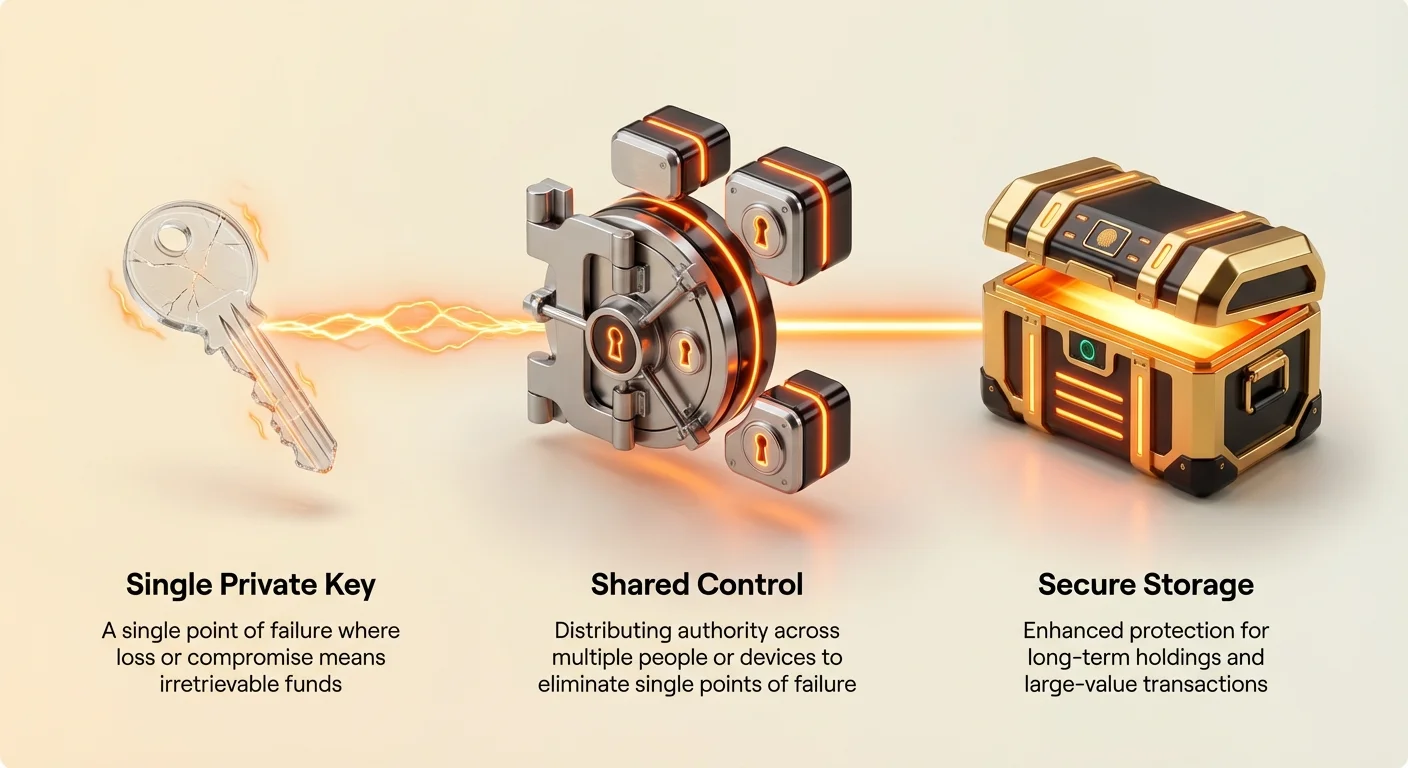
As digital assets become a larger part of financial portfolios for both organizations and families, the need for secure storage solutions has grown exponentially. Standard cryptocurrency wallets rely on a single private key for access, creating a potential single point of failure. If that key is lost, stolen, or compromised, the funds are often irretrievable.
To address this risk, advanced security protocols involving shared control have emerged. By utilizing specific wallet types and features found in desktop and hardware solutions, users can distribute authority. This approach ensures that no single person or device has complete control over the funds, significantly enhancing security for long-term holdings and large-value transactions.
The Fundamentals of Wallet Security
Before implementing shared control strategies, it is vital to understand the core mechanics of cryptocurrency wallets. A wallet does not store the actual coins; instead, it stores the cryptographic keys needed to access the funds on the blockchain. These keys come in pairs: a public key, which is used to receive funds, and a private key, which is used to sign transactions and spend funds.
Private Key Management and Custody
The most critical aspect of wallet security is the management of the private key. In a self-custodial setup, the user retains full control over this key. This model eliminates third-party risk, as no exchange or bank can freeze the assets. However, it also places the entire burden of security on the user. If the private key is lost, the assets are gone forever.
Desktop wallets and hardware wallets are frequently used for self-custody because they offer advanced features for key management. Unlike web wallets, which may manage keys on behalf of the user, self-custodial desktop and hardware solutions ensure that the private keys remain encrypted on the user's device. This distinction is the foundation of any secure shared control architecture.
The Role of Seed Phrases in Recovery
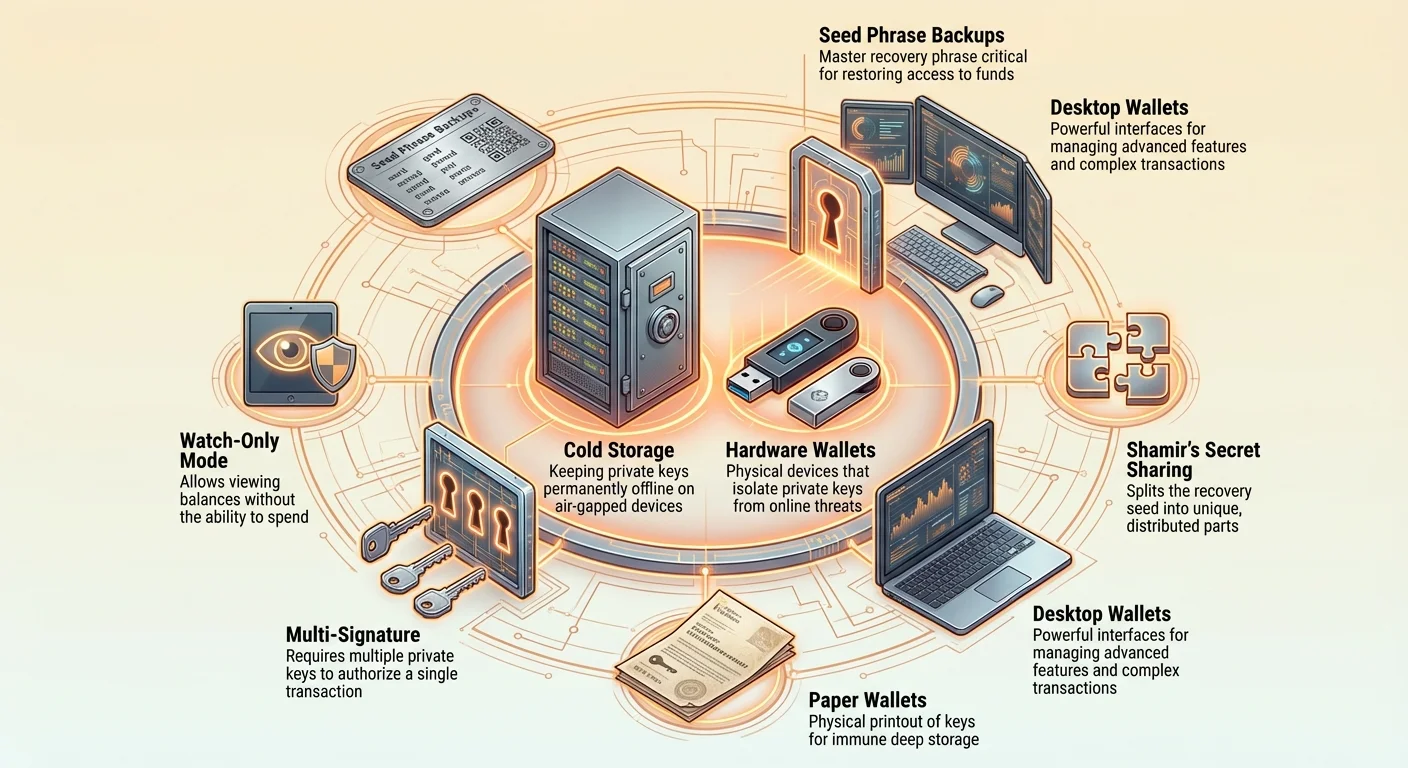
When creating a new wallet, users are typically generated a backup phrase, often called a seed phrase. This is a sequence of 12 or 24 words that functions as a master key for the wallet. If a device is damaged or lost, this phrase can restore the entire wallet and its balance on a new device.
For organizations and families implementing shared control, the management of this seed phrase is just as important as the wallet itself. Storing the seed phrase in a single location replicates the risks associated with a single private key. Advanced strategies often involve splitting or securing these backup phrases in varying physical locations to ensure redundancy without centralization.
Desktop Wallets as Control Centers
Desktop Bitcoin wallets are software applications installed directly on a computer. They are often the preferred choice for experienced users, traders, and organizations because they balance processing power with enhanced security features. Unlike mobile wallets, which are designed for convenience and daily spending, desktop environments allow for more complex transaction construction.
Advanced Transaction Features
One of the primary reasons organizations choose desktop wallets is their support for advanced protocols. Many desktop clients natively support multi-signature functionality. This feature requires more than one private key to authorize a transaction. For example, a board of directors might require three out of five members to sign a transaction before funds can move.
Desktop wallets also allow for custom transaction fees and "coin control," which lets users select exactly which incoming outputs to spend. This level of granularity is essential for accounting purposes within an organization, as it allows for precise tracking of funds and better management of transaction costs during periods of high network congestion.
Offline and Cold Storage Integration
Desktop wallets serve as excellent interfaces for cold storage setups. While the desktop wallet sits on an online computer to broadcast transactions, it can often communicate with offline devices or hardware wallets to sign them. This "watch-only" capability allows an organization to view balances and create unsigned transactions without the private keys ever touching the internet.
This setup is ideal for high-value portfolios. The finance team can prepare a payroll transaction on the desktop app, but the funds cannot leave the wallet until the transaction is physically signed by a hardware device or a private key stored on an air-gapped machine. This separation of duties is the cornerstone of shared organizational control.
Hardware Wallets and Shared Access
Hardware wallets are physical devices designed specifically to store private keys offline. They are considered the gold standard for security because they isolate the keys from computer viruses, malware, and online hackers. For families and organizations, hardware wallets provide a tangible method of securing assets that can be physically secured in a safe or vault.
Shamir’s Secret Sharing and Backups
Recent advancements in hardware wallet technology have introduced new ways to back up wallets. Some modern devices, such as specific models from Trezor, support a standard known as Shamir’s Secret Sharing. This technology allows the master backup seed to be split into multiple unique shares.
In a family setting, a 3-of-5 Shamir backup scheme could be established. Five distinct backup shares are created, and any three of them can be combined to recover the wallet. This ensures that if one family member loses their share, or if one house burns down, the funds remain safe and accessible. Conversely, no single family member can access the funds alone, preventing unauthorized spending or coercion.
Reducing the Attack Surface
Hardware wallets drastically reduce the attack surface for crypto assets. Because the transaction signing process happens inside the device, the private key never leaves the hardware. Even if the computer it connects to is compromised by malware, the attacker cannot extract the key.
For shared control, this means that an organization can distribute hardware wallets to key personnel. To execute a transfer, the transaction data is sent to the specific personnel, who verify the details on their device's trusted screen and physically confirm the action. This physical requirement adds a robust layer of security that software-based approvals cannot match.
Utilizing Paper Wallets for Long-Term Storage
A Bitcoin paper wallet is a physical printout of a public and private key pair. Because it is generated offline and exists only on paper, it is immune to digital hacking attempts. Paper wallets serve as a powerful tool for deep cold storage, often used for assets that do not need to be accessed for years, such as a family inheritance or a company's long-term reserve fund.
| Storage Method | Security Level | Accessibility | Best Use Case |
|---|---|---|---|
| Mobile Wallet | Low/Medium | Instant | Daily spending |
| Desktop Wallet | Medium/High | Moderate | Transaction management |
| Paper Wallet | Ultra-High | Low | Long-term holds |
Generating Secure Offline Keys
Creating a secure paper wallet requires strict adherence to safety protocols. The generation process should ideally happen on a computer that is not connected to the internet. Users load the wallet generator software, disconnect the device from the network, and then generate the keys. This ensures that no malware or spyware can intercept the private key during its creation.
Once generated, the keys are printed on a physical sheet of paper using a printer that is also offline. This printout contains the QR codes needed to deposit and withdraw funds. Since there is no digital copy, this paper document becomes the bearer instrument for the assets.
Physical Security and Redundancy
The primary risk with paper wallets is physical damage or loss. Paper can degrade, ink can fade, and fire or water can destroy the document. To mitigate this, families implementing shared control via paper wallets often use high-quality paper, lamination, or even metal plates engraved with the key data.
For shared redundancy, multiple copies can be created and stored in geographically operational secure locations, such as distinct bank deposit boxes. Alternatively, the private key can be split into parts, printed on separate papers, and distributed among trusted parties. This mimics the digital multi-signature process but uses purely physical mediums, making it accessible even to those with limited technical knowledge.
Mobile Wallets in a Shared Ecosystem
While mobile wallets are primarily designed for convenience and speed, they play a role in a comprehensive shared control system. Mobile apps enable users to monitor balances and receive funds instantly. For an organization, a mobile wallet might be used as a "watch-only" interface, allowing managers to check verifying deposits without having the ability to spend the funds.
Convenience vs. Security Trade-offs
Mobile wallets store private keys on the smartphone itself. While modern smartphones have advanced encryption and biometric security, they are constantly connected to the internet, making them more vulnerable than cold storage options. Therefore, mobile wallets should generally not be used as the primary storage for the bulk of an organization's or family's wealth.
However, they are excellent for small, daily operational expenses. A family might maintain a shared mobile wallet with a limited balance for everyday purchases, while keeping the majority of their savings in a multi-signature desktop or hardware setup. This tiered approach balances the need for liquidity with the requirement for deep security.
Connecting to the Decentralized Economy
Mobile and browser extension wallets are often the gateway to Web3 and decentralized finance (DeFi). They allow users to interact with decentralized applications (dApps) directly. In a shared control environment, these interactions usually require strict governance.
Some advanced wallet setups allow a mobile device to initiate a transaction that interacts with a smart contract, but the transaction still requires approval from a hardware wallet or a multi-signature consensus. This hybrid model allows organizations to participate in the growing DeFi economy without sacrificing the security protocols established for their treasury.
Implementing Cold Storage for Organizations
Setting up a cold storage protocol is a straightforward yet rigorous process. It involves creating an environment where the private keys are never exposed to a network. This is the ultimate form of protection against remote theft and is the recommended standard for any significant accumulation of digital assets.
The Setup Process
To begin, an organization must designate an offline machine. This computer should never connect to the internet. On this machine, wallet software generates the necessary addresses and keys. The public addresses can be exported to online computers to receive funds, but the private keys remain isolated.
When a transaction needs to be sent, an unsigned transaction is created on an online computer. This file is then transferred via USB stick to the offline machine. The offline machine signs the transaction using the private key and saves the signed file back to the USB. The USB is then plugged into the online computer to broadcast the signed transaction. This "air-gapped" method ensures that even if the online network is compromised, the attacker cannot reach the signing keys.
Verification and Auditing
For organizations, the ability to audit holdings is crucial. Cold storage wallets using desktop software typically provide transparent transaction histories. Because the blockchain is a public ledger, the organization can prove ownership of funds to auditors without exposing the private keys.
Using "xPub" (Extended Public Key) technology, an auditor can be given "view-only" access to the entire history of the wallet. They can generate all past and future deposit addresses to verify balances, but they cannot spend a single satoshi. This feature is invaluable for maintaining financial transparency in a corporate or non-profit environment.
Establishing Security Protocols
Technology alone is insufficient for security; it must be paired with robust human protocols. Shared control requires clear rules regarding who holds which keys, where backups are stored, and the procedure for recovering funds if a key holder becomes incapacitated.
Redundancy and Inheritance Planning
Families must consider inheritance planning as part of their crypto security strategy. If the head of the household manages the private keys and passes away unexpectedly, the assets could be lost if no one else has access. Shared control mechanisms, such as Shamir backups or simple multi-signature setups, ensure that a surviving spouse or heir can recover the funds.
A common setup is a "2-of-3" arrangement. The primary user holds one key, a lawyer or trusted executor holds a second, and a bank safety deposit box holds the third. To move funds, the primary user acts alone (if they have access to the safety box) or with the help of the lawyer. If the primary user dies, the lawyer and the heir (with the safety box key) can combine their credentials to access the inheritance.
Regular Security Reviews
Security is not a one-time setup but an ongoing process. Organizations should conduct regular drills to ensure that their recovery processes work. This involves testing backups, verifying that seed phrases are legible, and ensuring that all hardware devices have the latest firmware updates.
For paper wallets, this means periodically checking the physical condition of the paper. For hardware wallets, it involves connecting the device to the manufacturer’s software to check for critical security patches. Staying proactive prevents the "digital rot" that can occur when systems are neglected for long periods.
Conclusion
Implementing shared control for cryptocurrency assets is a proactive measure that safeguards wealth against loss, theft, and unforeseen circumstances. By moving away from single-key dependency and embracing technologies like multi-signature desktop wallets, hardware security modules, and air-gapped cold storage, organizations and families can achieve a level of financial sovereignty that was previously impossible.
Whether utilizing the advanced audit capabilities of desktop software, the physical security of hardware wallets, or the simplicity of paper backups, the core principle remains the same: decentralize the risk. No single error, accident, or malicious actor should be able to compromise the entire treasury.
True security in the digital age comes not just from encryption, but from the intelligent distribution of trust and control.