
The digital asset landscape has evolved significantly by 2025. As cryptocurrency adoption grows, the infrastructure supporting it has had to mature rapidly. For traders and investors, the primary concern has shifted from simple access to rigorous security. Selecting a platform is no longer just about low fees or a wide selection of altcoins. It is fundamentally about the safety of funds.
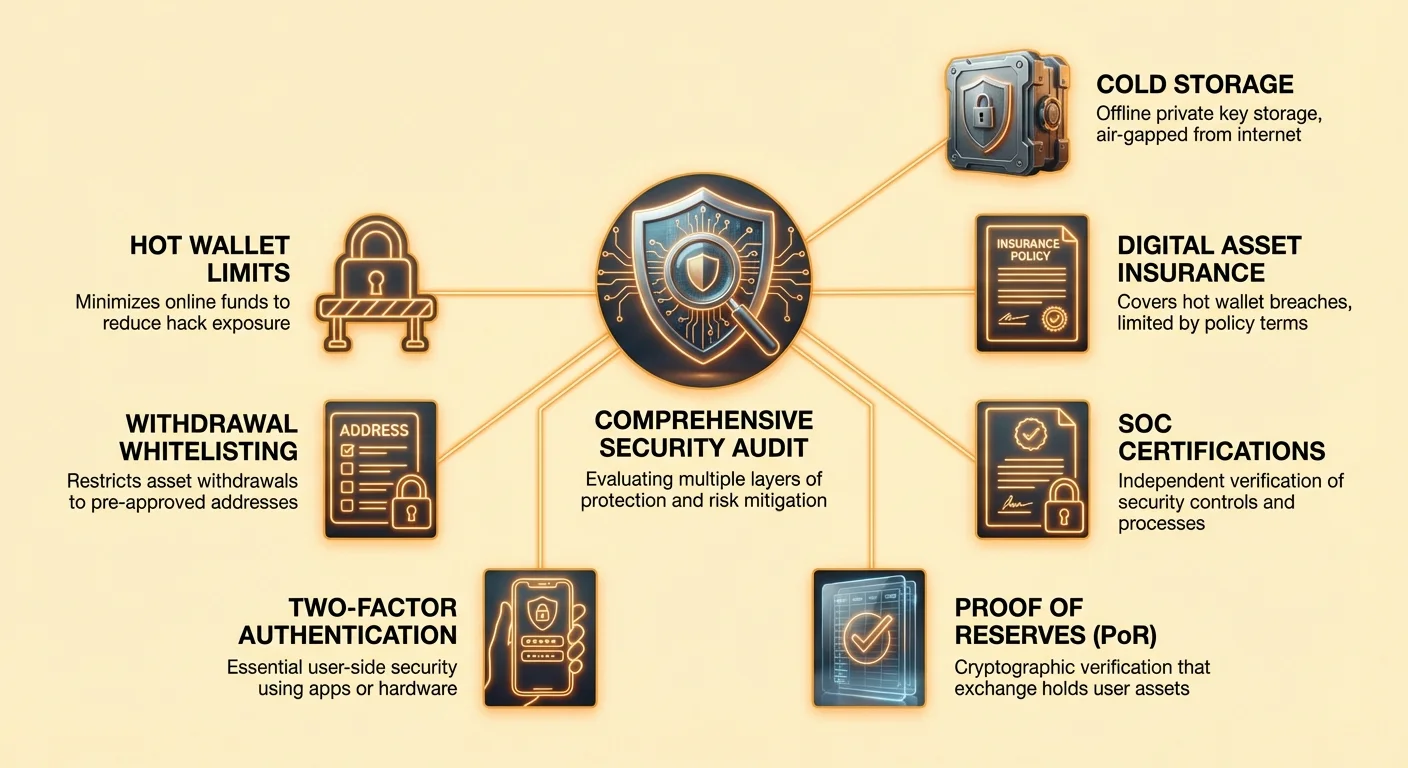
A comprehensive security audit of a crypto platform involves dissecting several layers of protection. This ranges from how the exchange handles wallet custody to the insurance policies it maintains. Understanding risk mitigation strategies is essential for anyone navigating this complex ecosystem. Users must look beyond marketing claims and understand the technical and operational realities that keep digital assets safe.
The Fundamentals of Wallet Custody
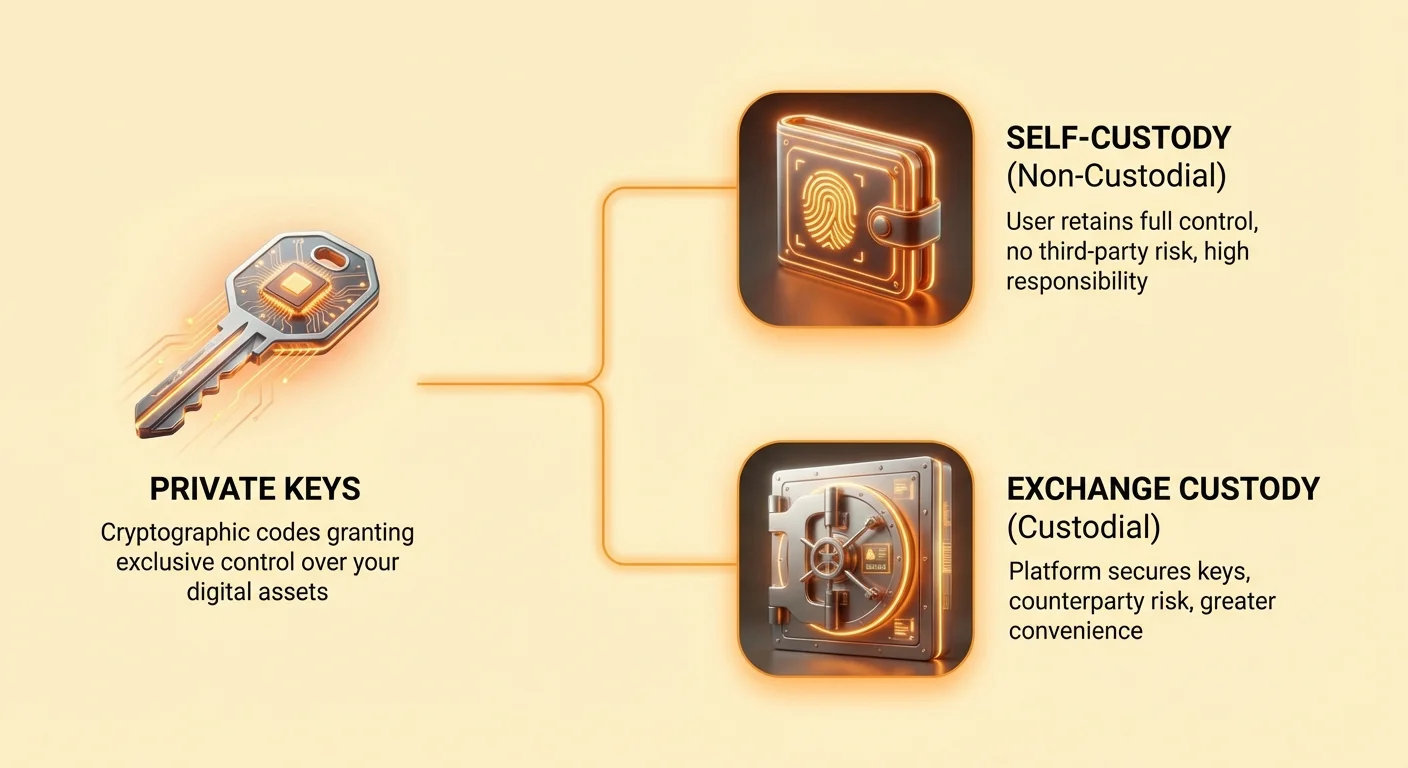
Custody is the most critical concept in cryptocurrency security. It refers to who holds the private keys that control the digital assets. In a centralized exchange environment, the platform typically acts as the custodian. They hold the keys on behalf of the user. This model mirrors traditional banking, where the bank secures the cash.
However, this convenience comes with counterparty risk. If the exchange is compromised or mismanages funds, the user’s assets are vulnerable. This reality has driven the industry toward more transparent custodial practices. Users must determine if they are comfortable delegating control to a third party or if they prefer platforms that offer non-custodial solutions.
Custodial vs. Non-Custodial Models
Centralized exchanges (CEX) generally operate on a custodial model. When you deposit Bitcoin or Ethereum, you are transferring it to a wallet controlled by the exchange. The platform then credits your internal account with a corresponding IOU. This allows for high-speed trading and instant liquidity. It eliminates the need for users to manage complex private keys for every trade.
In contrast, non-custodial or decentralized exchanges (DEX) do not hold user funds. Users trade directly from their personal wallets. This aligns with the "not your keys, not your coins" philosophy. While this reduces the risk of a central platform hack, it places the entire burden of security on the individual. If a user loses their private key or falls for a phishing scam, there is no customer support to help recover the funds.
Assisted Self-Custody Innovations
A hybrid approach has emerged to bridge the gap between security and convenience. This is often termed "assisted self-custody." In this model, the user retains control of the private keys, but the platform provides a recovery mechanism. This is a significant advancement for risk mitigation. It addresses the single greatest fear of self-custody: losing the private key.
For example, some platforms now offer vault services. These allow users to hold two of three keys in a multi-signature setup. The user holds the primary key. A backup key is held by a trusted third party or the user themselves. The platform holds a third key to co-sign transactions or assist in recovery. This structure ensures that the platform cannot move funds without the user, yet the user is not stranded if a key is lost.
| Custody Type | Key Control | Primary Risk |
|---|---|---|
| Custodial | Exchange | Platform insolvency or hack |
| Non-Custodial | User | User error or key loss |
| Assisted | Shared/User | Governance failure |
Cold Storage Protocols
The gold standard for securing digital assets on any exchange is cold storage. This refers to keeping the private keys associated with cryptocurrency wallets completely offline. They are stored on hardware that is air-gapped, meaning it is never connected to the internet. This renders the assets immune to remote hacking attempts.
Top-tier exchanges typically keep the vast majority of user funds in cold storage. The industry standard often dictates that 95% to 98% of assets should be kept offline. Only a small percentage remains in "hot wallets" (online wallets) to facilitate immediate trading liquidity and withdrawals. This asset segregation is known as cold vs hot storage.
Geographic Distribution of Keys
Effective cold storage goes beyond simple offline devices. It often involves a complex system of geographic distribution. The private keys, or the shards of keys in a multi-signature setup, are stored in secure vaults across different physical locations. This mitigates risks associated with physical theft, natural disasters, or local political instability.
When auditing a platform, look for details on their cold storage architecture. Do they use FIPS-certified hardware security modules (HSMs)? Are the storage locations kept secret? The most secure platforms use multi-signature authorization for cold storage transfers. This means that moving funds from cold storage to a hot wallet requires approval from multiple authorized personnel, often residing in different time zones.
Hot Wallet Risk Management
While cold storage protects the bulk of assets, hot wallets are necessary for daily operations. These wallets are connected to the internet to process withdrawals and deposits automatically. Because they are online, they represent the primary attack vector for hackers. Securing these wallets is a constant battle involving advanced encryption and monitoring.
To mitigate risk, exchanges limit the amount of funds kept in hot wallets. They often employ automated scripts that trigger alarms if withdrawal requests exceed a certain threshold. If a breach is detected, the system can automatically freeze the hot wallet to prevent further losses. This balance between liquidity and security is the operational heartbeat of a crypto exchange.
The Role of Insurance in Crypto
Insurance in the cryptocurrency sector is a complex topic that is often misunderstood. It is crucial to distinguish between insurance for fiat currency (like USD) and insurance for digital assets. Many users assume that because an exchange mentions "insurance," all their funds are covered. This is rarely the case.
Fiat Currency Protections
For exchanges operating in jurisdictions like the United States, fiat currency balances may be eligible for FDIC insurance. This coverage applies only to the US Dollar balance held in the user's account, not the cryptocurrency. It protects the user in case the bank holding the dollars fails. It does not protect against the failure of the crypto exchange itself, nor does it cover losses due to hacking of digital assets.
The limit for FDIC insurance is typically up to $250,000 per individual. When an exchange claims to offer this, it usually means they store user fiat funds in "pass-through" custodial accounts at insured banks. This is a vital layer of protection for traders who keep large cash balances on a platform waiting for a dip to buy.
Digital Asset Insurance Policies
Insuring cryptocurrency is much more difficult and expensive than insuring cash. Consequently, comprehensive coverage for all user assets is rare. Most platforms that carry digital asset insurance only cover the funds held in their hot wallets. This coverage is designed to reimburse the exchange (and subsequently the users) if the online wallet is breached. This type of security is known as crypto insurance.
Assets held in cold storage are rarely insured by third-party commercial insurers due to the sheer value involved. Instead, exchanges rely on the physical security of the cold storage architecture. Some platforms have established their own internal protection funds. These are pools of assets set aside specifically to cover user losses in extreme events, effectively acting as self-insurance.
Regulatory Compliance and Audits
Regulatory status is a strong indicator of a platform's commitment to security. Exchanges that operate in strict jurisdictions must adhere to rigorous security standards. For instance, obtaining a BitLicense in New York or registration with financial conduct authorities in Europe requires an exchange to demonstrate robust cyber security protocols.
SOC Certifications
One of the most rigorous standards for a technology company is the Service Organization Control (SOC) certification. A SOC 1 Type 2 audit focuses on a company's internal controls over financial reporting. A SOC 2 Type 2 audit evaluates an organization's information systems relevant to security, availability, processing integrity, confidentiality, and privacy.
When an exchange completes these audits, it means an independent third party has verified their security processes over a period of time. This is different from a "point-in-time" check. It proves that the exchange follows its own security rules consistently. For institutional investors and security-conscious traders, SOC certification is often a non-negotiable requirement.
Proof of Reserves (PoR)
Following high-profile industry failures, Proof of Reserves (PoR) has become a standard demand from users. PoR is a method of verifying that an exchange actually holds the assets it claims to hold on behalf of its clients. It prevents the dangerous practice of fractional reserve banking, where an exchange might lend out user funds without consent.
A proper PoR audit uses a cryptographic structure called a Merkle Tree. This allows users to independently verify that their specific account balance is included in the total snapshot of liabilities. Crucially, the exchange must also prove it has control over the on-chain wallet addresses holding the assets. Transparency dashboards that update in real-time are becoming a distinguishing feature for top-tier platforms.
User-Side Security Features
Even the most secure exchange cannot protect a user who compromises their own account. Therefore, the tools an exchange provides for personal account security are a vital part of any audit. The minimum standard is Two-Factor Authentication (2FA). However, the type of 2FA matters significantly.
Two-Factor Authentication Methods
SMS-based 2FA is better than nothing, but it is vulnerable to SIM swapping attacks. In this scenario, a hacker tricks a mobile carrier into transferring the victim's phone number to a new SIM card. This allows the attacker to intercept the 2FA codes.
Secure exchanges support and encourage the use of authenticator apps (like Google Authenticator) or hardware security keys (like YubiKey). Hardware keys offer the highest level of protection. They require physical possession of the device to log in. Platforms that prioritize security will often allow users to disable SMS recovery entirely to close that vulnerability loop.
Withdrawal Whitelisting
Address whitelisting is a powerful feature for preventing theft. When enabled, this feature restricts cryptocurrency withdrawals to specific addresses that the user has previously approved. Adding a new address to the whitelist usually triggers a cooling-off period, such as 24 or 48 hours.
If a hacker gains access to an account, they cannot immediately drain the funds to their own wallet. They would first have to add their address and wait out the delay. This gives the legitimate owner time to receive the notification, detect the intrusion, and freeze the account before the funds are lost.
Anti-Phishing Mechanisms
Phishing remains one of the most common ways users lose funds. Hackers send emails that appear to be from the exchange, tricking users into revealing login credentials. To combat this, secure platforms offer anti-phishing codes.
An anti-phishing code is a unique word or number selected by the user. This code appears in every legitimate email sent by the exchange. If a user receives an email claiming to be from the platform but it lacks this code, they immediately know it is a fake. This simple verification step effectively neutralizes many social engineering attacks.
The Security of Different Exchange Types
The architecture of an exchange dictates its risk profile. Security audits must be tailored to the specific type of platform being used. What works for a centralized entity does not apply to a peer-to-peer network.
Centralized Exchanges (CEX)
Centralized exchanges offer high liquidity and advanced trading tools. Their primary security risk is the concentration of funds. Because they hold billions of dollars in assets, they are high-value targets for sophisticated hacking groups. The security of a CEX relies heavily on its internal infrastructure, employee vetting, and cold storage policies. Users must trust the entity to be competent and honest.
Decentralized Exchanges (DEX)
DEXs operate via smart contracts on a blockchain. They do not take custody of funds. The security risk here shifts from the company to the code. If the smart contract contains a bug or vulnerability, hackers can drain the liquidity pools. Users of DEXs must also be wary of "fake tokens" and malicious contract approvals that can compromise their personal wallets.
| Feature | CEX Risk | DEX Risk |
|---|---|---|
| Custody | Third-party risk | Self-custody error |
| Tech Failure | Server breach | Smart contract bug |
| Regulation | Seizure/Freeze | Protocol exploit |
Peer-to-Peer (P2P) Platforms
P2P platforms connect buyers and sellers directly. The platform usually acts as an escrow service. The primary risk in P2P trading is social engineering and fraud between participants. For example, a buyer might claim they sent a fiat payment when they did not. Security on P2P platforms relies on robust dispute resolution systems and reputation scores rather than cold storage vaults.
Analyzing Trading Fees and Security
There is often a correlation between fee structures and security investments. Maintaining a robust security infrastructure is expensive. It requires hiring top-tier cyber security experts, paying for external audits, maintaining insurance policies, and upgrading hardware.
Exchanges with extremely low fees might be cutting corners on these invisible costs. While competitive fees are important for profitability, users should be wary of platforms that seem too cheap to be true. The fees paid on a reputable exchange partly fund the protection of the assets stored there.
Deposit and Withdrawal Security
The point where money enters or leaves an exchange is a critical security juncture. Secure platforms implement rigorous checks during these processes. For deposits, this might involve waiting for a sufficient number of blockchain confirmations to prevent double-spend attacks.
For withdrawals, exchanges may use manual reviews for large transactions. If a user attempts to withdraw a significant portion of their portfolio, the transaction might be flagged for human verification. This can cause a delay, but it serves as a final barrier against unauthorized draining of accounts.
Privacy vs. Security Trade-offs
There is an inherent tension between privacy and security in the crypto space. Regulatory bodies push for strict Know Your Customer (KYC) and Anti-Money Laundering (AML) protocols. These require users to submit government IDs and facial scans.
From a security standpoint, KYC helps recover accounts and track hackers. If funds are stolen, law enforcement has a better chance of tracing them if the ecosystem is identity-verified. However, this also creates a honeypot of personal data. If an exchange's user database is hacked, users risk identity theft.
Anonymous Exchanges
Anonymous or "No-KYC" exchanges prioritize user privacy. They do not require ID verification for trading. While this protects personal data privacy, it removes the safety net of account recovery. If you lose your credentials on an anonymous exchange, there is no way to prove you own the account. Furthermore, these platforms face higher regulatory risks and could be shut down by authorities without warning, potentially trapping user funds.
The Role of Customer Support in Security
Responsive customer support is a vital component of a security audit. In the event of a suspected breach, time is of the essence. A user needs to be able to contact the exchange immediately to freeze operations.
Platforms that rely solely on automated bots or have slow email response times present a security risk. The best exchanges offer 24/7 live support. They have dedicated security teams trained to handle account compromise situations. Testing the responsiveness of support before committing significant funds is a prudent step for any trader.
Evaluating Platform Reputation and History
The history of an exchange is a practical indicator of its future reliability. A security audit should include a review of past incidents. Has the exchange ever been hacked? If so, how did they handle it? Did they reimburse users from their own funds, or did they socialize the losses?
Some of the most trusted platforms in the industry have operated for over a decade without a major security breach. This longevity suggests a culture of security and a tested infrastructure. Conversely, new platforms offering high yields but lacking a track record should be approached with extreme caution.
Transparency and Real-Time Data
In the modern crypto era, transparency is a security feature. Users should look for platforms that provide real-time data on system status, wallet balances, and insurance fund values. Blockchain technology allows for this level of openness.
Exchanges that operate "black boxes" where internal operations are opaque are increasingly seen as risky. Publicly traded exchanges are subject to additional layers of scrutiny and financial reporting, which adds a layer of transparency not found in private companies.
Conclusion
Conducting a personal security audit of a crypto platform is a necessary step for any investor. The landscape of 2025 offers a diverse array of options, ranging from fully custodial, insured environments to non-custodial, privacy-focused protocols. The right choice depends on an individual's risk tolerance and technical proficiency. However, certain non-negotiables such as cold storage, 2FA, and transparency should always be present.
Ultimately, security is a shared responsibility. The exchange must provide the infrastructure, the insurance, and the audits. The user must utilize the tools provided, such as hardware keys and whitelisting, and practice good cyber hygiene. By understanding the mechanics of custody and the nuances of risk mitigation, traders can navigate the crypto market with confidence and resilience.
True security in crypto comes from understanding exactly who holds your keys and verifyng the safeguards in place.