
ایک دہائی سے زیادہ عرصے سے، Bitcoin ڈیجیٹل کمیابی اور خودمختاری کی بنیاد کے طور پر کام کرتا رہا ہے، جو بنیادی طور پر قدر کی منتقلی کے لیے ایک مضبوط، غیر تبدیل پذیر لیجر کے طور پر کام کرتا ہے۔ تاہم، ساتوشی ناکاموٹو کی طرف سے ڈیزائن کی گئی آرکیٹیکچر—اگرچہ انقلابی—اس میں پیدائشی حدود تھیں، خاص طور پر سکرپٹنگ کی لچک، رازداری، اور لین دین کی کارکردگی کے حوالے سے۔
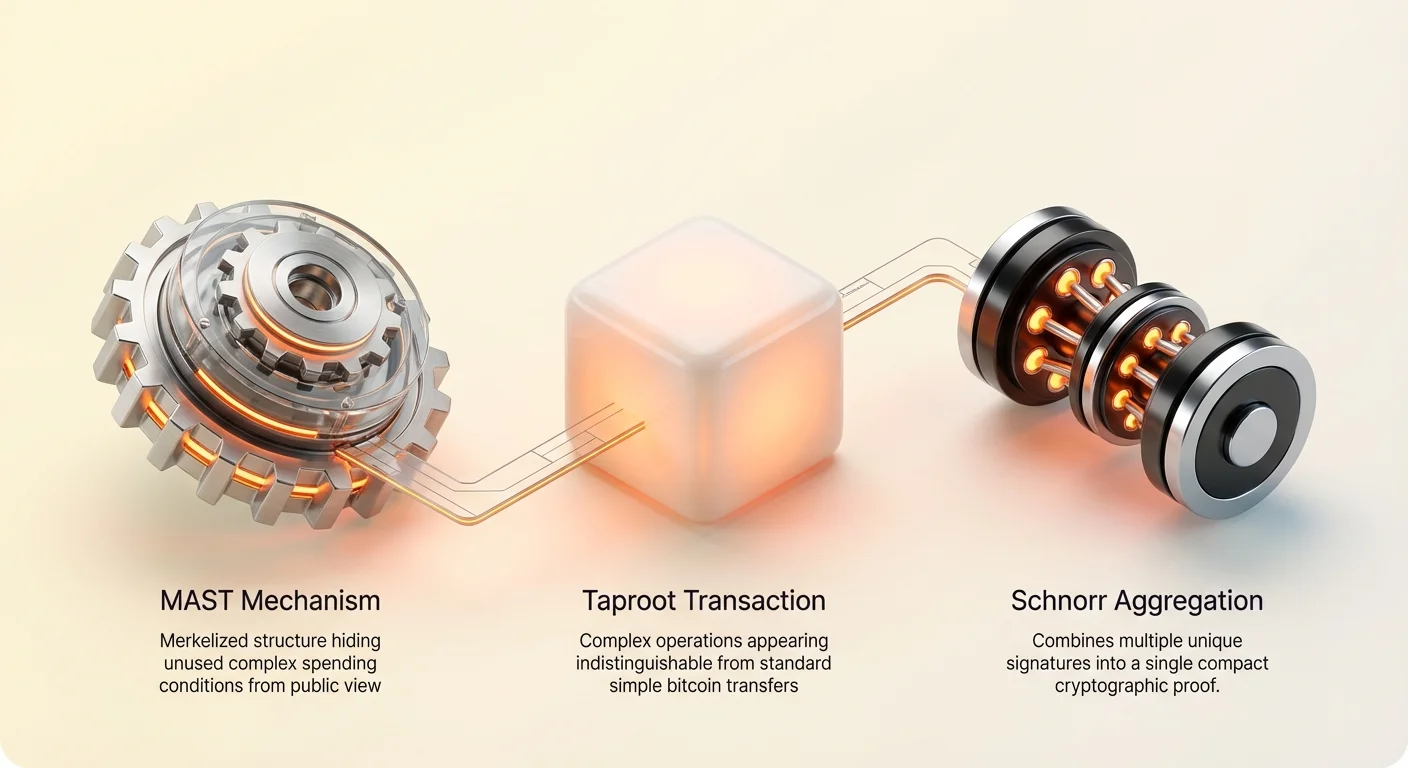
Taproot اپ گریڈ، جو 2021 کے آخر میں فعال ہوا، Bitcoin کی بیس لیئر (Layer 1) میں 2017 کے SegWit کے بعد سب سے اہم بہتری کی نمائندگی کرتا ہے۔ Taproot کوئی ایک فیچر نہیں ہے؛ بلکہ یہ تین باہم جڑے ہوئے ٹیکنالوجیز کا ایک پیچیدہ پیکج ہے: MAST (Merkelized Abstract Syntax Trees)، Schnorr Signatures، اور Pay-to-Taproot (P2TR) ایڈریسز۔
یہ اپ گریڈ نیٹ ورک پر پیچیدہ لین دین کی طرح کو بنیادی طور پر تبدیل کر دیتا ہے۔ جبکہ پرانے لین دین ہر ممکنہ خرچ کی حالت کو پوری دنیا کو براڈکاسٹ کرتے تھے—قیمتی بلاک اسپیس کو استعمال کرتے ہوئے اور حساس ڈیٹا کو ظاہر کرتے ہوئے—Taproot پیچیدہ سکرپٹس کو سادہ، سنگل سگنیچر ادائیگیوں سے غیر ممیز نظر آنے کی اجازت دیتا ہے۔ یہ آرکیٹیکچرل شفٹ رازداری کو بہت بہتر بناتی ہے، لاگت کم کرتی ہے، اور، اہم طور پر، Bitcoin کے لیے جدید سمارٹ کنٹریکٹس اور اسکیلڈ Layer 2 (L2) حلز جیسے Lightning Network کی حمایت کے لیے ضروری مضبوط انفراسٹرکچرل بنیاد رکھتی ہے۔ ہمارا فوکس یہاں صرف کیا Taproot ہے، بلکہ کیسے یہ ڈویلپرز کو دنیا کے سب سے محفوظ بلاک چین پر decentralized finance اور self-custody ٹولز کی اگلی نسل بنانے کی طاقت دیتا ہے۔
The Problem Taproot Solves: Bitcoin's Original Scripting Limitations
To understand the genius of Taproot, we must first recognize the constraints of Bitcoin’s original scripting language. Bitcoin uses a simple, stack-based language (often called Script) to define the rules for spending funds.
Anatomy of a Simple Bitcoin Transaction
Before Taproot, most Bitcoin transactions utilized either Pay-to-Public-Key-Hash (P2PKH), which is the standard single-signature payment, or Pay-to-Script-Hash (P2SH), which allowed for more complex rules like multi-signature requirements or time-locks.
When you spend funds using P2SH, the network must verify that the conditions you set (the script) are met. Crucially, when a transaction is spent, the entire script is published on the blockchain, along with the proof (the signature) that satisfies it.
For instance, if you set up a multi-signature transaction requiring 2 out of 3 keys to agree (a 2-of-3 multisig), the public record would show all three potential keys, the requirement (2-of-3), and the two required signatures, regardless of how simple the actual execution was.
The Cost of Complex Transactions
This requirement to publish the entire, potentially complex spending script had significant drawbacks:
- Reduced Privacy (Information Leakage): Revealing the entire script exposes all possible ways the funds could have been spent, even if only one path was ultimately chosen. In the 2-of-3 example, the identities of all three key holders are exposed, even if they were dormant.
- Increased Transaction Size and Fees: Complex scripts, especially those involving many participants or conditional time-locks, take up much more block space. Since fees are primarily determined by transaction size, this made sophisticated custody solutions (like corporate treasury multi-sig or intricate inheritance plans) very expensive and inefficient.
- Lack of Fungibility: Fungibility means that one unit of a currency is interchangeable with any other. When a complex script is clearly visible on the blockchain, it makes that specific transaction output look different from a standard, simple transaction output. This visual distinction can make it easier for external parties to track certain types of funds, harming the overall fungibility of Bitcoin.
MAST: Making Complex Scripts Look Simple
Merkelized Abstract Syntax Trees (MAST) is the core cryptographic concept that allows Taproot to solve the transparency and efficiency problems inherent in P2SH.
Understanding Merkel Trees
To grasp MAST, we must first understand the Merkle Tree (also known as a Hash Tree). This data structure is foundational to Bitcoin itself, as every block uses a Merkle Tree to efficiently summarize all transactions within that block.
A Merkle Tree works like a digital filing system:
- Each piece of data (in the case of MAST, this is a potential spending condition, or "script path") is individually hashed.
- These individual hashes are paired and hashed together, moving up the tree structure.
- This process continues until all the data is condensed into a single, summary hash called the Merkle Root.
The powerful advantage of the Merkle Root is that it allows anyone to verify that a specific piece of data is included in the set, simply by providing a small number of intermediate hashes (the Merkle Path) rather than having to show all the data.
How MAST Hides Unexecuted Conditions
MAST applies this Merkle Tree concept to the spending conditions of a transaction.
Imagine a complex smart contract that has four possible paths for spending funds:
- Path A: Alice and Bob both sign (standard spending).
- Path B: After 90 days, only Alice can sign (time-lock recovery).
- Path C: After 180 days, only a backup key signs (inheritance/safety).
- Path D: Requires input from an oracle (e.g., weather data trigger).
Using the old P2SH model, all four paths (A, B, C, and D) would be exposed on the blockchain when the funds are spent.
Using MAST:
- Each path (A, B, C, D) is the "leaf" of a Merkle Tree.
- All four paths are summarized into a single MAST Root.
- When Alice and Bob execute Path A, they only publish the script for Path A and the small cryptographic proof (the Merkle Path) necessary to prove that Path A is included in the MAST Root.
The critical benefit: The existence of Paths B, C, and D is revealed by the Merkle Root, but their actual scripting content remains completely private and unpublished on the chain. Only the executed path is revealed, leading to massive space savings and increased confidentiality.
Practical Example: The Multi-Sig Scenario
Consider a corporate treasury that requires a 3-of-5 multi-signature agreement for routine expenses, but also requires a simplified 1-of-5 signature path (after 6 months) for emergency liquidation if the company dissolves.
- Pre-MAST: The standard 3-of-5 script and the emergency 1-of-5 script must both be broadcast to the chain, increasing transaction size and revealing the emergency spending rules to everyone.
- With MAST: If the 3-of-5 path is used, only the 3-of-5 script is broadcast, along with the small proof that it belongs to the contract. The 1-of-5 emergency liquidation path remains hidden within the MAST Root, only revealed if it is actually executed later.
MAST fundamentally transforms complex conditions into efficient, compact, and private proofs.
شنور دستخط: کارکردگی اور رازداری کی کلید
جبکہ MAST سکرپٹ کی پیچیدگی کو حل کرتا ہے، Taproot کا دوسرا بڑا جزو—شنور دستخط—دستخط کی کارکردگی، سلامتی، اور گمنامی کو حل کرتا ہے۔ بٹ کوئن نے اصل میں Elliptic Curve Digital Signature Algorithm (ECDSA) استعمال کیا تھا۔ شنور ایک ریاضیاتی طور پر اعلیٰ متبادل ہے جو دو بڑے فوائد لاتا ہے: دستخط کی مجموعی کاری اور بہتر سلامتی کے ثبوت۔
شنور بمقابلہ ECDSA کی تکنیکی برتری
ECDSA دستخط، اگرچہ محفوظ ہیں، بھاری ہیں اور انفرادی توثیق کی ضرورت ہے۔ اگر ایک لین دین کو تین دستخط درکار ہوں تو بلاک چین کو تین الگ الگ دستخط ڈیٹا بلاکس درکار ہوتے ہیں، اور نیٹ ورک نودز کو ان تین مختلف بلاکس کو ترتیب وار توثیق کرنی پڑتی ہے۔
شنور دستخط، جو سادہ ریاضی اور سلامتی کی بنیادوں پر مبنی ہیں، ایک اہم فائدہ پیش کرتے ہیں: خطی پن۔ اس کا مطلب یہ ہے کہ متعدد پبلک کیز کو ایک واحد، درست مجموعی پبلک کی میں ملایا جا سکتا ہے، اور متعدد دستخطوں کو ایک واحد، درست مجموعی دستخط میں ملایا جا سکتا ہے۔
دستخط کی مجموعی کاری: بیچ توثیق اور کارکردگی
دستخط کی مجموعی کاری شاید Taproot کی سب سے واضح بہتری ہے جو اسکیلنگ لاتی ہے:
- ملٹی پارٹی کارکردگی: 5-of-5 ملٹی دستخط لین دین میں شنور استعمال کرتے ہوئے، پانچ مطلوبہ پبلک کیز کو کرپٹوگرافک طور پر ایک نئی پبلک کی میں ملایا جا سکتا ہے، اور پانچ متعلقہ دستخطوں کو ایک واحد، مجموعی دستخط میں ملایا جا سکتا ہے۔
- بلاک چین کی تشریح: بٹ کوئن نیٹ ورک کے باقی حصے کے لیے، یہ مجموعی لین دین بالکل ایک معیاری، سنگل دستخط ادائیگی (P2PKH) جیسا دکھائی دیتا ہے۔
- توثیق کی رفتار: نودز اس واحد مجموعی دستخط کو پانچ انفرادی ECDSA دستخطوں کی توثیق سے تیز توثیق کرتے ہیں۔ یہ بہتری ہر نیٹ ورک شریک کے لیے کمپیوٹیشنل طاقت بچاتی ہے اور پیچیدہ لین دینز کا ڈیٹا سائز نمایاں طور پر کم کرتی ہے۔
یہ صلاحیت ملٹی پارٹی ایپلی کیشنز جیسے کارپوریٹ کسٹوڈی، جوائنٹ اونرشپ والیٹس، اور سب سے اہم طور پر، لیئر 2 اسکیلنگ حلز کے لیے انقلابی ہے۔
رازداری کا منافع (کی مجموعی کاری اور P2TR فارمیٹ)
کیز اور دستخطوں کو مجموعی کرنے کی صلاحیت رازداری اور فنگیبلٹی کو اہم اضافہ دیتی ہے۔
اگر ملٹی-سگ لین دین ایک معیاری سنگل دستخط لین دین جیسا دکھائی دے تو باہر کے مبصرین یہ تعین نہیں کر سکتے کہ لین دین پیچیدہ تھا (متعدد پارٹیوں، ٹائم لاکس، یا خصوصی کنٹریکٹس درکار) یا سادہ (صرف ایک شخص پیسے بھیج رہا ہے)۔
یہ نیٹ ورک کو حقیقی آؤٹ پٹ یکسانیت متعارف کراتا ہے، یعنی مہنگے سمارٹ کنٹریکٹ آؤٹ پٹس سادہ پیئر ٹو پیئر ادائیگیوں سے فعال طور پر غیر قابلِ تمیز ہوتے ہیں۔ یہ بٹ کوئن کی فنگیبلٹی کو نمایاں طور پر مضبوط بناتا ہے، یہ یقینی بناتا ہے کہ تمام ساتوشیز مبصرین کی نظر میں برابر سلوک پائیں۔
Taproot Explained: The Seamless Integration of MAST and Schnorr
Taproot is the overarching implementation that ties MAST for conditional execution and Schnorr for signature efficiency together under a new, unified address type.
Pay-to-Taproot (P2TR) Addresses
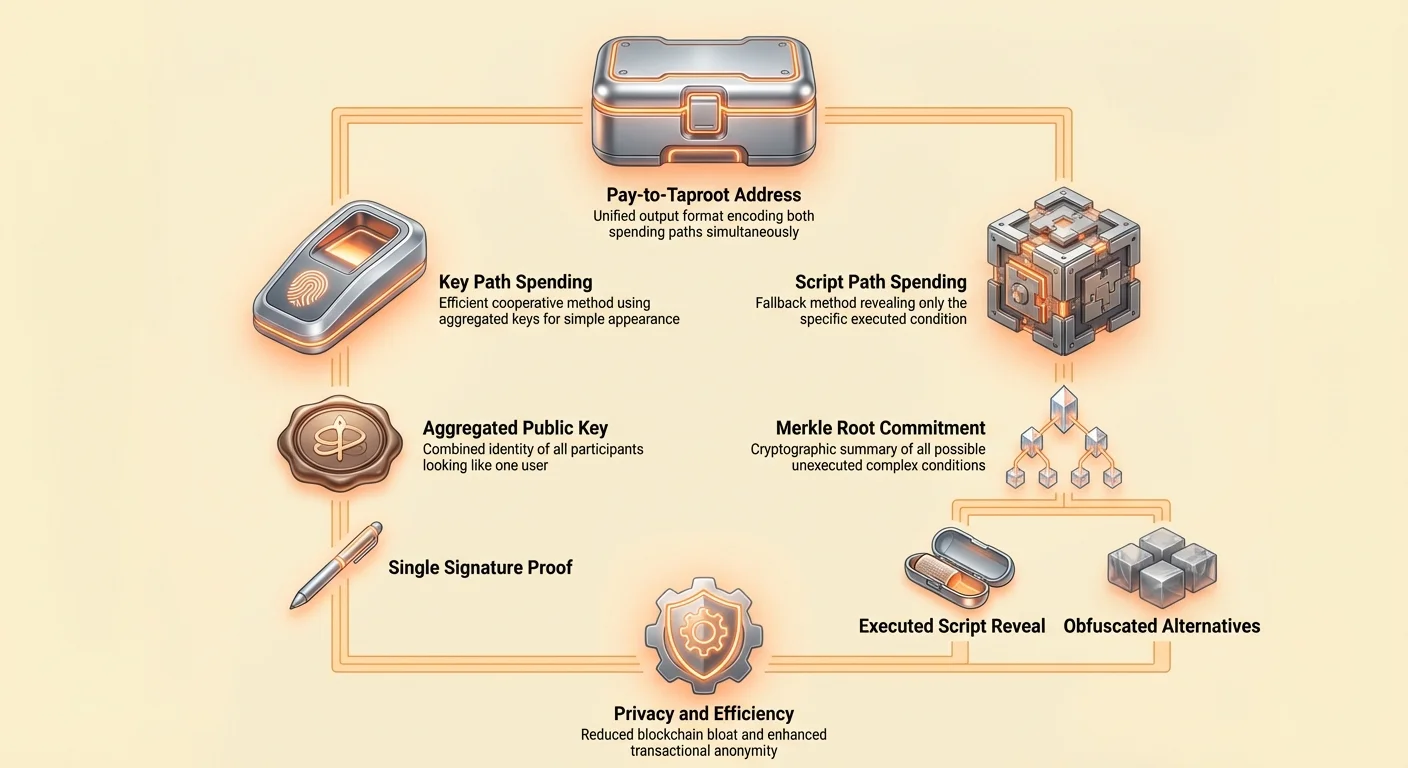
Taproot introduces a new standard output type called Pay-to-Taproot (P2TR). P2TR outputs encode not just a single public key, but a combination of a public key (for the Schnorr key aggregation path) and the Merkle Root of all potential spending scripts (for the MAST script path).
When funds are sent to a P2TR address, the transaction effectively locks the funds using two distinct methods simultaneously: the Key Path and the Script Path.
The Key Path vs. The Script Path (The Choice Mechanism)
Taproot is designed around a simple, efficient trade-off: if all parties cooperate, use the simple, cheap path; if they disagree or require complex conditions, use the slightly more expensive but robust path.
1. The Key Path (The Ideal Scenario)
The Key Path is the preferred and most efficient way to spend funds locked in a P2TR output. This path is activated when all original participants agree on the spending conditions and cooperate.
- How it works: All participants aggregate their public keys into a single Taproot key, and then aggregate their signatures into a single Schnorr signature.
- Result: The on-chain transaction looks exactly like a standard, single-signer P2PKH transfer. The entire MAST structure remains hidden, saving space and preserving privacy. This path is maximally cheap and efficient.
2. The Script Path (The Conditional Scenario)
The Script Path is activated if the participants cannot cooperate, or if the transaction requires a predetermined script condition (like a time-lock or the input of an oracle).
- How it works: The spending transaction reveals the specific script condition that was met (e.g., "Time-lock of 90 days has passed") and the small Merkle Proof required to validate that this script was indeed part of the original MAST Root.
- Result: This transaction is slightly larger than the Key Path, but still significantly smaller and more private than the old P2SH model, because it only reveals the one executed script, keeping all other potential spending conditions private.
Achieving Script Obfuscation
The combination of the Key Path and the Script Path achieves a powerful property called script obfuscation.
From the perspective of an outside observer analyzing the blockchain:
- If the Key Path is used (which is anticipated to be the most common usage for cooperative parties, especially in L2 solutions), the transaction is completely opaque and private. It looks like simple spending.
- Even if the Script Path is used, the observer only learns about the specific condition that was met, not the details of all the alternative conditions that were also possible.
This seamless integration ensures that simple, cooperative uses are highly efficient, while complex, conditional uses remain highly private—a massive leap forward for Layer 1 flexibility.
Taproot کا جدید Bitcoin ترقی پر اثر
Taproot صرف کاسمیٹک اپ گریڈ نہیں ہے؛ یہ Bitcoin کو بنیادی قدر کی منتقلی سے آگے بڑھنے اور sophisticated decentralized ایپلی کیشنز کی دنیا میں داخل ہونے کی سب سے اہم انفراسٹرکچر اپ ڈیٹ ہے۔
Layer 2 حلز کو اسکیل کرنا (Lightning Network کی کارکردگی)
Lightning Network، Bitcoin کا بنیادی L2 اسکیلنگ حل، سیکورٹی کے لیے ملٹی سگنیچر چینلز اور ٹائم لاکس پر بھاری انحصار کرتا ہے۔ Taproot ان چینلز کو کھولنے اور بند کرنے کے درد کے نقاط کو براہ راست حل کرتا ہے۔
Taproot سے پہلے، Lightning چینل کھولنا اور بند کرنا visible ملٹی سگنیچر لین دین (عام طور پر 2-of-2) درکار تھا، جو بھاری، مہنگے، اور L2 سرگرمی کے طور پر آسانی سے پہچانے جانے والے تھے۔
Taproot اور Schnorr Signatures کے ساتھ:
- Channel Opening: Lightning چینل کھولنا Key Path استعمال کر سکتا ہے۔ فنڈنگ لین دین اب چین پر سادہ 1-of-1 لین دین جیسا نظر آتا ہے، بلاک فٹ پرینٹ بہت کم کرتا ہے اور رازداری بڑھاتا ہے۔
- Cooperative Closing: اگر چینل تعاون سے بند ہو (سب سے عام منظر)، تو Key Path دوبارہ استعمال ہوتا ہے، فیس کم کرتا ہے اور معیاری ادائیگیوں سے غیر ممیز رہتا ہے۔
- Non-Cooperative Closing: اگر non-cooperative بند ضروری ہو، تو Script Path (جو ٹائم لاک حالات شامل کرتا ہے) استعمال ہوتا ہے، لیکن MAST کی وجہ سے، صرف ضروری، متعلقہ حالات شائع ہوتے ہیں، پرانے ماڈل سے اب بھی اسپیس بچاتے ہیں۔
یہ کارکردگی کا اضافہ Lightning Network میں شمولیت کی لاگت کو نمایاں طور پر کم کرتا ہے، وسیع تر اپنائو کو فروغ دیتا ہے اور فوری Bitcoin ادائیگیوں کی رفتار اور اعتبار بہتر بناتا ہے۔
پیچیدہ سمارٹ کنٹریکٹس کو ممکن بنانا
جبکہ Ethereum Turing-complete سمارٹ کنٹریکٹس کے لیے بنایا گیا تھا، Bitcoin کا ڈیزائن سیکورٹی اور immutability کو ترجیح دیتا ہے، اس کی سکرپٹنگ زبان کو intentionally محدود بناتا ہے۔ Taproot اس بنیادی فوکس کو تبدیل نہیں کرتا، لیکن Bitcoin سمارٹ کنٹریکٹس کی ایگزیکیوشن کو بہت زیادہ عملی اور سستا بنا دیتا ہے۔
Taproot سے فائدہ اٹھانے والے کلیدی علاقے:
- Discreet Log Contracts (DLCs): DLCs فریقین کو external ڈیٹا سورس (اوراکل) کی ان پٹ پر مبنی کنٹریکٹس ایگزیکیوٹ کرنے کی اجازت دیتے ہیں، جیسے کھیلوں کے سکورز یا سٹاک پرائسز، نیٹ ورک کو کنٹریکٹ کی تفصیلات ظاہر کیے بغیر۔ Taproot کا MAST اس کے لیے بہترین ہے، متعدد ممکنہ نتائج کو چھپاتا ہے اور صرف اوراکل کے منتخب کردہ واحد نتیجہ ظاہر کرتا ہے۔
- Covenants: Covenants (UTXO کو مستقبل میں خرچ کرنے کے کیسے محدود کرنے کی صلاحیت) پیچیدہ، self-enforcing مالی پروڈکٹس بنانے کے لیے طاقتور ٹولز ہیں۔ Taproot L1 سکرپٹنگ ماحول میں ضروری لچک فراہم کرتا ہے جو covenants (اکثر دیگر تجویز کردہ opcodes کے ساتھ مل کر) کو viable اور موثر بناتا ہے۔
- Advanced Treasury Management: کمپنیاں اب highly پیچیدہ، nested ملٹی سگ منظر نامے ڈیزائن کر سکتی ہیں specialized recovery کیز، ٹائم لاکس، اور ایمرجنسی لیکویڈیشن راستوں کے ساتھ، بغیر بھاری فیس یا اپنے proprietary key management سکیم کو عوام کو ظاہر کیے۔
آن چین فٹ پرینٹ اور لین دین فیس کم کرنا
Schnorr aggregation اور MAST کارکردگی کا خالص نتیجہ پیچیدہ لین دین ایگزیکیوٹ کرنے کے لیے درکار مجموعی ڈیٹا میں کمی ہے۔
ملٹی سگ اور L2 ایپلی کیشنز کے لیے اوسط لین دین سائز کو سکڑا کر، Taproot مجموعی نیٹ ورک congestion کم کرتا ہے۔ یہ براہ راست ترجمہ ہوتا ہے:
- کم فیس: کم ڈیٹا کا مطلب صارف کے لیے کم لاگت۔
- تیز کنفرمیشنز: کم ڈیٹا پروسیسنگ مائنرز اور نودز کو تیز اور موثر کام کرنے میں مدد دیتی ہے۔
- بڑھا ہوا کیپیسٹی: اگرچہ Taproot خالص بلاک سائز اضافہ نہیں ہے، اس کی لین دین ڈیٹا کی optimization functionally ایک بلاک میں فٹ ہونے والے پیچیدہ لین دین کی تعداد بڑھاتی ہے۔
فلسفیانہ اور آرکیٹیکچرل اثرات
Taproot صرف تکنیکی اپ ڈیٹ نہیں تھا؛ یہ Bitcoin کی evolution کی تصدیق کرنے والا فلسفیانہ بیان تھا جبکہ اس کے core security tenets برقرار رکھتے ہوئے۔ اس کی activation کو تقریباً متفقہ کمیونٹی سپورٹ درکار تھا ("Speedy Trial" soft fork mechanism)، جو ecosystem کی disciplined، backward-compatible growth کی وابستگی دکھاتا ہے۔
Trade-offs: Decentralization بمقابلہ Scripting Power
کریپٹو میں تاریخی بحث اکثر Bitcoin (سیکورٹی اور decentralization کو ترجیح دینے والا) کو Ethereum جیسی پلیٹ فارمز (سکرپٹنگ لچک اور فیچرز کی بھرپوری کو ترجیح دینے والا) کے خلاف رکھتی ہے۔ Taproot اس trade-off کو احتیاط سے نیویگیٹ کرتا ہے۔
اس طرح کے اپ گریڈز کے برعکس جو فل نود operability کو compromise کر سکتے ہیں یا highly پیچیدہ consensus rules متعارف کر سکتے ہیں، Taproot ایک non-controversial optimization ہے۔ یہ existing، proven cryptographic اصولوں (Merkle trees، elliptic curves) استعمال کرتا ہے کارکردگی کے فوائد حاصل کرنے کے لیے بغیر زیادہ طاقتور ہارڈ ویئر یا سیکورٹی ماڈل کی تبدیلی کے۔
Script Path کے ذریعے لچک (سمارٹ کنٹریکٹس، پیچیدہ لاجک) متعارف کرانے کی صلاحیت جبکہ Key Path کے ذریعے سادہ ادائیگیوں کی کارکردگی اور رازداری برقرار رکھتے ہوئے، یقینی بناتی ہے کہ Bitcoin advanced development کی حمایت کر سکے بغیر اپنے most robust decentralized ledger کے status کو compromise کیے۔
Taproot بطور Bitcoin DeFi کا Enabler
جبکہ "DeFi" (Decentralized Finance) کا لفظ اکثر high-speed altcoin نیٹ ورکس سے منسلک ہے، Bitcoin-backed DeFi کا robust، محفوظ فارم ابھر رہا ہے۔ Taproot اس کا مرکزی ہے۔
Bitcoin DeFi کے لیے موجودہ چیلنج یہ ہے کہ Layer 1 لین دین سست اور مہنگے ہو سکتے ہیں۔ Taproot L2/L3 ایپلی کیشنز کے لیے L1 foundations قائم کرنے کو بہت سستا بنا دیتا ہے، Bitcoin کی سیکورٹی اور DeFi کی functional ضروریات کے درمیان خلا کو پر کرتا ہے۔
مثال کے طور پر، ممکنہ مستقبل کے اپ گریڈز—جیسے طاقتور سکرپٹنگ opcode OP_CAT کو enable کرنا (جو ڈیٹا concatenation اور dynamic script construction کی اجازت دیتا ہے)—صرف Taproot کی وجہ سے واقعی viable اور موثر ہیں جو MAST کے ذریعے compact، نجی script execution کی groundwork رکھ چکا ہے۔ Taproot cryptographic رازداری اور کارکردگی سنبھالتا ہے، مستقبل کے consensus changes کو صرف logical functionality بڑھانے پر فوکس کرنے دیتا ہے۔
خلاصہ میں، Taproot وہ plumbing فراہم کرتا ہے جو ڈویلپرز کو Bitcoin کے اوپر پیچیدہ، لیکن سستے، ایپلی کیشنز بنانے کی اجازت دیتا ہے، paradigm کو Bitcoin کو صرف digital gold سے global decentralized finance کے لیے infrastructure layer میں شفٹ کرتا ہے۔
نتیجہ
Taproot اپ گریڈ، جو MAST اور Schnorr signatures کو P2TR فارمیٹ میں انٹیگریٹ کرتا ہے، Bitcoin کی آرکیٹیکچرل صلاحیت میں monumental شفٹ کی نشاندہی کرتا ہے۔ یہ سالوں کی collaborative research کا عروج ہے جو Bitcoin کی fundamental سیکورٹی برقرار رکھتے ہوئے اس کی utility کو بہت بڑھانے کا ہدف رکھتا ہے۔
نئے آنے والوں اور ڈویلپرز دونوں کے لیے، takeaway واضح ہے: Taproot Bitcoin پر ہر پیچیدہ interaction کی کارکردگی کو بنیادی طور پر optimize کرتا ہے۔ ملٹی سگنیچر لین دین، ٹائم لاکس، اور مشروط سکرپٹس کو سادہ، سنگل کی ادائیگیوں جیسا بنا کر، Taproot user رازداری بڑھاتا ہے، فیس کم کرتا ہے، اور نیٹ ورک بھر فنجیبلٹی کو یقینی بناتا ہے۔
اہم طور پر، Taproot Bitcoin کی اسکیلنگ مستقبل کی bedrock ہے۔ Lightning Network جیسی Layer 2 حلز کو سستا اور زیادہ نجی بناکر، اور DLCs جیسی advanced سمارٹ کنٹریکٹس کی موثر ایگزیکیوشن کو enable کرکے، Taproot نے Bitcoin کو self-sovereign مالی ٹولز کی اگلی نسل کے لیے درکار complexity سنبھالنے کے لیے لیس کر دیا ہے۔ یہ یقینی بناتا ہے کہ دنیا کا سب سے محفوظ مالیاتی نیٹ ورک decentralized innovation کے لیے لچکدار پلیٹ فارم بننے کے لیے تیار ہے۔