
The digital age has fundamentally reshaped how humanity communicates, works, and stores information. Yet, for much of this technological evolution, the financial systems underpinning global interaction have remained firmly rooted in traditional structures. These structures rely heavily on centralized intermediaries. Banks, payment processors, and government institutions act as gatekeepers. They control the flow of value, maintain the ledgers of ownership, and hold the ultimate authority to approve or deny transactions. While this system functions for many, it introduces critical points of failure regarding personal freedom and asset sovereignty.
Centralized systems inherently require trust. Users must trust that the institution will remain solvent, that it will protect their data, and that it will not arbitrarily freeze assets or block transfers. History has shown that this trust is not always warranted. Political unrest, economic instability, and overreaching regulations can turn these trusted third parties into security risks. This vulnerability has given rise to a demand for a new form of financial architecture. This new model prioritizes censorship resistance and immutability over centralized efficiency.
At the heart of this shift is the concept of a decentralized digital asset. Unlike traditional fiat currencies issued by nation-states, these assets operate on distributed networks. They are not controlled by any single entity, corporate board, or government agency. Instead, they function through a consensus of thousands of independent participants. This architecture ensures that the rules of the system apply equally to all users, regardless of their geographic location or political standing.
The Three Pillars of Censorship Resistance
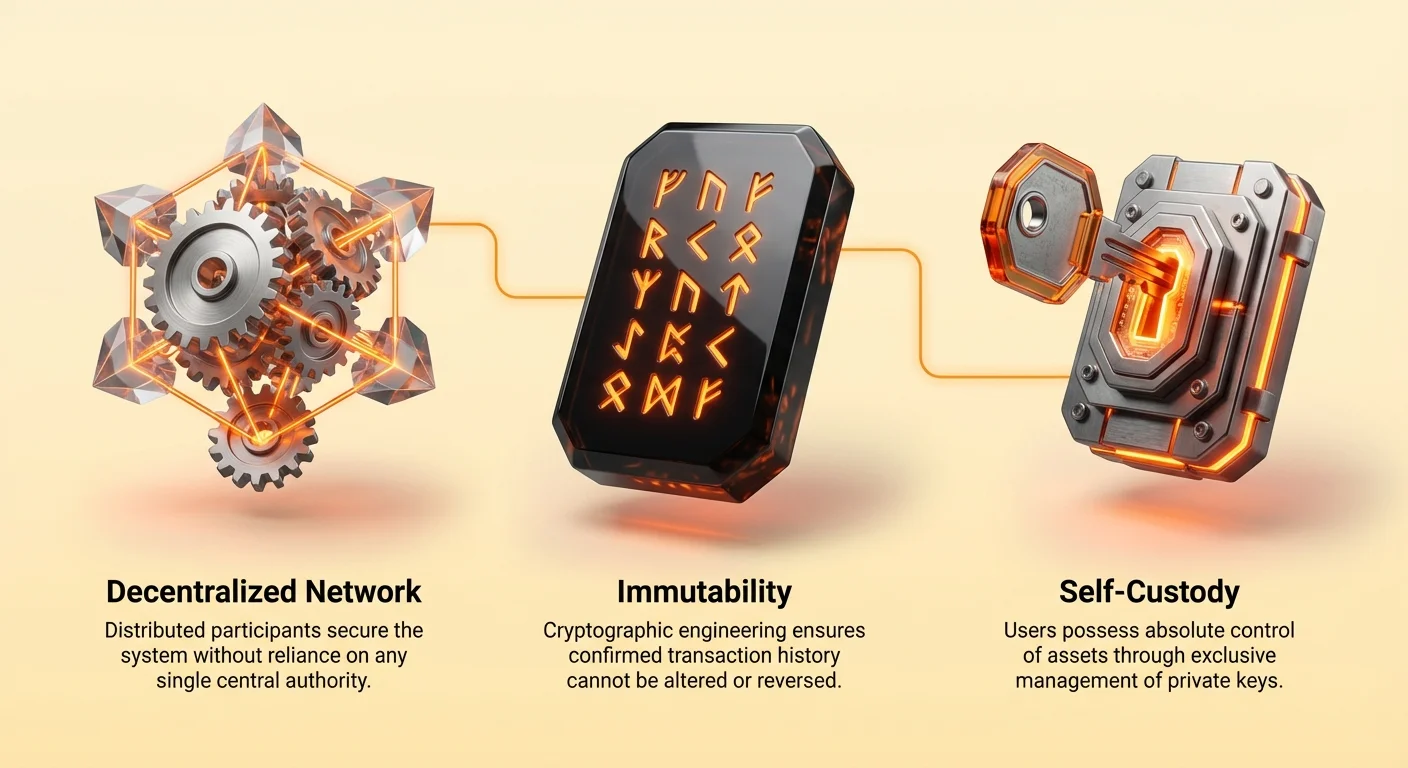
Censorship resistance is often misunderstood as merely a feature for those operating on the fringes of legality. In reality, it represents a fundamental protection of property rights in the digital realm. Within the context of cryptocurrency, censorship resistance breaks down into three distinct pillars. These are the freedom to transact, the freedom from confiscation, and the immutability of past transactions. Each pillar supports the user's ability to maintain financial sovereignty without asking for permission.
The freedom to transact ensures that no third party can prevent a user from sending or receiving value. In the traditional banking system, transactions can be flagged, delayed, or blocked based on opaque criteria. A payment processor might refuse service to a legal business due to moral objections or political pressure. In a censorship-resistant network, a transaction that follows the protocol rules is valid by definition. There is no human manager to override the code. If the user has the funds and pays the network fee, the transaction processes.
Freedom from confiscation addresses the safety of the asset itself. Bank accounts can be frozen or seized by court orders or government decrees. In severe economic crises, capital controls may prevent citizens from withdrawing their own money. A truly decentralized asset, when held in a self-custodial manner, cannot be frozen by an external authority. The ownership resides solely with the holder of the private keys. Without those keys, no government or institution can access or move the funds.
Transaction immutability ensures that history cannot be rewritten. Once a transaction is confirmed and buried under a sufficient amount of work in the blockchain, it becomes practically impossible to reverse. This prevents the "chargeback" fraud common in credit card networks. It also prevents powerful entities from altering the ledger to favor themselves. In this system, the ledger is a shared truth that no single participant can corrupt.
The Architecture of Immutability
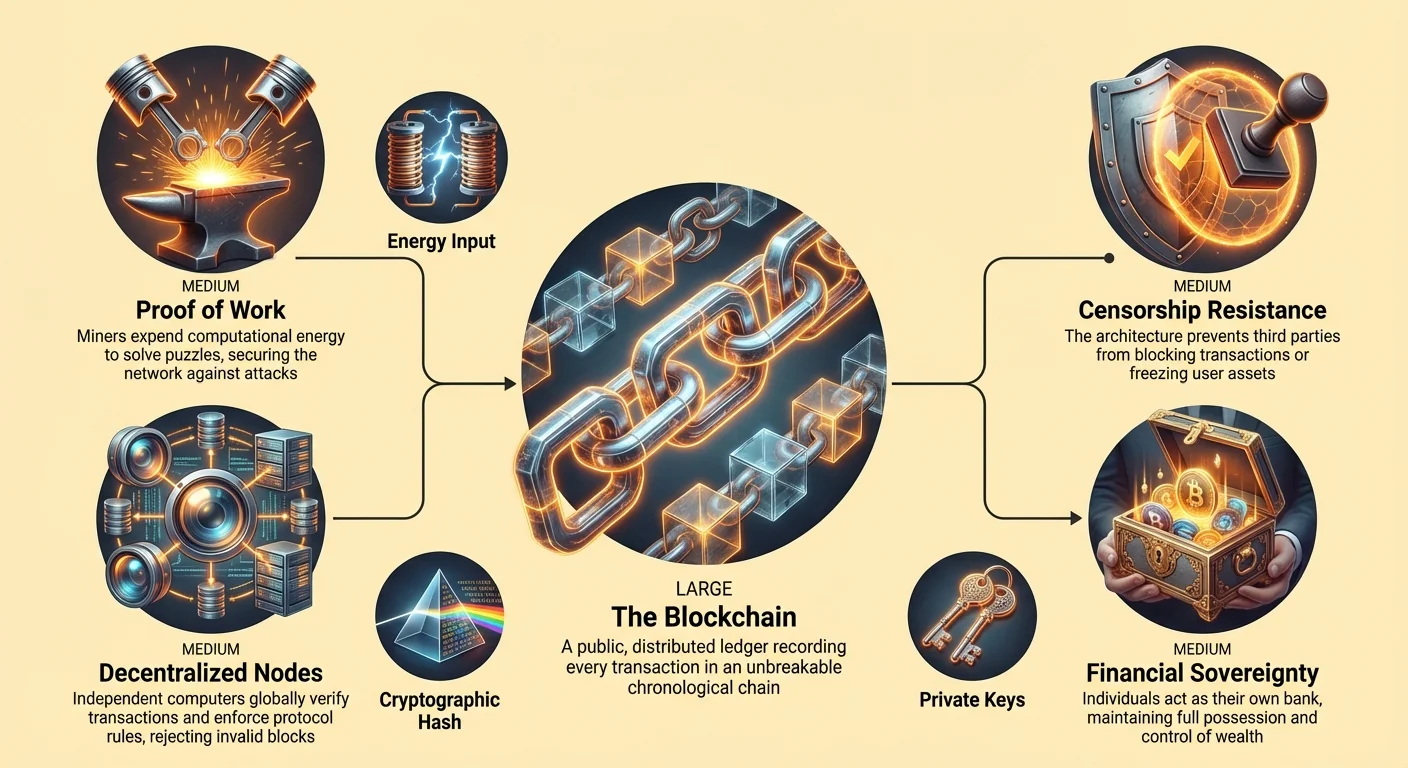
Immutability is not magic; it is the result of rigorous cryptographic engineering. The blockchain acts as a decentralized ledger that records every transaction ever made. Unlike a bank ledger, which is stored on private servers and edited by authorized employees, the blockchain is public and distributed. Copies of this ledger are held by thousands of "nodes" across the globe. These nodes are computers run by individuals who voluntarily participate in the network.
When a new transaction occurs, it is not immediately written to the permanent record. It is first broadcast to the network. Nodes check the transaction against the protocol's rules. They verify that the sender has the necessary balance and that the digital signature is valid. Once verified, the transaction waits in a pool to be included in a block. This process of verification is redundant and distributed. No single node can force a fake transaction through because other nodes would simply reject it.
The mechanism that locks these transactions into history is the chaining of blocks. Each new block contains a cryptographic reference to the previous block. This creates an unbroken chain going back to the very first transaction. If a bad actor wanted to change a record in a block from last year, they would not just have to change that one block. They would have to redo the cryptographic work for that block and every single block that came after it. This design makes tampering evident and computationally prohibitive.
Proof of Work and Energy Security
The security of this immutable ledger relies on a consensus mechanism known as Proof of Work (PoW). This system is often criticized for its energy consumption, yet this energy usage is precisely what secures the network against attacks. To add a new block of transactions to the chain, specialized computers called "miners" must solve a complex mathematical puzzle. This process requires significant computational power and electricity.
The requirement to expend energy serves as a barrier to entry for dishonest actors. It creates a "cost of production" for digital value. If someone wanted to attack the network or rewrite history, they would need to control more than half of the total computing power of the entire global network. The cost to acquire the hardware and electricity for such an attack would be astronomical. Furthermore, destroying the integrity of the network would likely render the stolen assets worthless, destroying the attacker's own incentive.
This energy wall effectively anchors the digital world to the physical world. It transforms raw electricity into digital security. While other consensus mechanisms exist, such as Proof of Stake, PoW offers a unique objective truth. There is no need to trust a list of wealthy stakeholders to determine the correct chain. One simply looks for the chain with the most accumulated work. This objective standard allows strangers to agree on the state of the ledger without knowing or trusting one another.
Vloga decentraliziranih vozlišč
Medtem ko rudarji ustvarjajo bloke, so vozlišča tista, ki uveljavljajo pravila. Za zagon vozlišča niso potrebni ogromni podatkovni centri; pogosto ga je mogoče zagnati na standardnem prenosnem računalniku. Ta dostopnost je ključna za decentralizacijo. Če bi bile zahteve glede strojne opreme previsoke, bi vozlišča lahko zaganjale samo velike korporacije, kar bi vodilo v centralizacijo. Ker je dostopno, lahko raznoliko omrežje uporabnikov neodvisno revidira verigo blokov.
Vozlišča nenehno spremljajo omrežje. Če rudar ustvari blok, ki krši pravila – na primer z ustvarjanjem več kovancev, kot jih dovoljuje urnik – ga bodo vozlišča zavrnila. Ni pomembno, koliko energije je rudar porabil za ustvarjanje tega neveljavnega bloka. Decentralizirano omrežje vozlišč deluje kot imunski sistem, ki takoj izolira in zavrže zlonamerne podatke. To ravnovesje moči med rudarji in vozlišči zagotavlja, da nobena posamezna skupina ne more narekovati sprememb protokola.
Globalna distribucija vozlišč prav tako ščiti omrežje pred fizičnimi zaustavitvami. Ker je knjiga razmnožena na tisočih računalnikih v različnih jurisdikcijah, ni centralnega strežnika, ki bi ga bilo mogoče izklopiti. Vlada lahko prepove rudarjenje ali delovanje vozlišč znotraj svojih meja, vendar ne more preprečiti delovanja omrežja v preostalem svetu. Ta odpornost je tisto, zaradi česar je omrežje robustno proti geopolitičnim napadom in lokalnim okvaram.
Self-Custody: The Key to Sovereignty
The technological infrastructure of censorship resistance is only effective if users take advantage of it properly. This brings us to the concept of self-custody. In the traditional financial world, individuals rarely hold their own money. They hold a claim on money that is technically owned and managed by a bank. If the bank fails or denies access, the user's claim may be worthless or inaccessible.
In the cryptocurrency ecosystem, self-custody allows individuals to be their own bank. This is achieved through the management of cryptographic keys. A "public key" allows a user to receive funds, similar to an email address or bank account number. A "private key" acts as the password that authorizes the spending of those funds. Crucially, this private key is generated locally by the user's wallet software and is never shared with the network.
When a user holds their own private keys, they have absolute control over their assets. There is no customer support hotline to reset a password, but there is also no compliance officer who can freeze the account. The phrase "not your keys, not your coins" summarizes this reality. Holding assets on a centralized exchange reintroduces the risks of traditional finance. The exchange becomes the custodian, and the user is once again asking for permission to withdraw their funds.
Privacy in a Public Ledger
A common misconception is that digital assets like Bitcoin are anonymous. In reality, most public blockchains are pseudonymous. Every transaction is recorded publicly, but the identities of the transactors are represented by alphanumeric strings of characters. This transparency is a double-edged sword. It allows for the radical auditing of the money supply and transaction history, preventing corruption and counterfeiting. However, it also creates potential privacy risks.
If a user's real-world identity becomes linked to their public address, their entire financial history on that address becomes visible. This linkage often happens at the point of entry or exit, such as when buying crypto on an exchange that requires identity verification (Know Your Customer or KYC checks). Once that link is established, sophisticated blockchain analysis can trace the flow of funds. This level of transparency is quite different from the opacity of the traditional banking system, where only the bank and regulators can see transaction details.
To maintain privacy within this transparent architecture, users must employ specific strategies. These include avoiding address reuse and utilizing tools designed to obscure transaction links. Privacy is an essential component of freedom. Without it, censorship resistance is weakened. If an authority can easily identify who is funding a dissident group or purchasing banned literature, they can target the individuals physically, even if they cannot stop the digital transaction itself.
The Spectrum of Censorship Resistance
Not all digital assets offer the same level of censorship resistance. It exists on a spectrum. On one end, we have traditional fiat currencies and Central Bank Digital Currencies (CBDCs), which are highly centralized and easily censored. On the other end, we have decentralized networks like Bitcoin, which prioritize security and immutability above all else. In between lie various other cryptocurrency projects with varying degrees of centralization.
Some blockchain networks prioritize speed and low transaction costs over decentralization. They might achieve this by having a small number of validators process transactions. While this makes the network efficient, it also makes it more vulnerable to pressure. It is much easier to coerce twenty validators than it is to coerce thousands of anonymous miners and node operators. Users must understand these trade-offs when choosing where to store their wealth.
| Feature | Decentralized Networks (e.g., Bitcoin) | Centralized Networks/Fiat |
|---|---|---|
| Control | Distributed among thousands of nodes | Central authority (Gov/Bank) |
| Supply | Fixed/Programmatic (e.g., 21 million) | Unlimited/Discretionary |
| Validation | Mathematical Consensus (PoW) | Trusted Intermediaries |
| Access | Permissionless (Open to all) | Permissioned (ID required) |
Ekonomske posledice omejene ponudbe (Scarcity)
Arhitektura digitalne svobode se razširja tudi na monetarno politiko. V fiat sistemih denarno ponudbo nadzorujejo centralne banke. Te lahko tiskajo novo valuto za obvladovanje gospodarskih kriz, kar je moč, ki lahko vodi do inflacije in razvrednotenja prihrankov. Ta zmožnost manipuliranja z denarno ponudbo je oblika ekonomske cenzure, saj tiho zasega kupno moč imetnikov valute.
Bitcoin in podobna sredstva to rešujejo s programirano omejeno ponudbo. Ponudba je določena s kodo, ne z odlokom. Na primer, nikoli ne bo več kot 21 milijonov bitcoinov. Ta fiksna ponudba naredi sredstvo deflacijsko, ali vsaj disinflacijsko, saj se stopnja izdajanja sčasoma zmanjšuje. Ta predvidljivost posameznikom omogoča načrtovanje prihodnosti brez strahu, da bo njihovo bogastvo razredčeno s samovoljnimi političnimi spremembami.
Ta omejena ponudba, skupaj s trajnostjo in deljivostjo, postavlja takšna sredstva kot digitalni hranilnik vrednosti. Podobno kot zlato, ki je ohranjalo bogastvo tisočletja zaradi svoje fizične omejene ponudbe, digitalna omejena ponudba ponuja zaščito pred monetarnim razvrednotenjem. Vendar pa so digitalna sredstva, za razliko od zlata, zelo prenosljiva. Milijoni dolarjev vrednosti se lahko zapomnijo kot semenska fraza ali shranijo na USB-ključ, kar beguncem ali tistim, ki bežijo pred tiranijo, omogoča, da brez napora prenesejo svoje bogastvo čez meje.
Izzivi za sistem
Kljub robustni arhitekturi grožnje digitalni svobodi vztrajajo. Regulativni pritisk je najbolj viden izziv. Vlade lahko otežijo nakup ali prodajo digitalnih sredstev z regulacijo "vhodov" in "izhodov," kjer se kripto srečuje s tradicionalnim bančnim sistemom. Prepoved rudarskih operacij ali uvedba strogih zahtev glede poročanja lahko ovira sprejemanje in potisne ekosistem v ilegalo.
Tehnični napadi so še ena teoretična skrb. "Napad 51 %" vključuje en sam subjekt, ki pridobi nadzor nad večino rudarske moči omrežja. Če je uspešen, bi ta napadalec lahko potencialno razveljavil nedavne transakcije ali dvakratno porabil kovance. Vendar pa, ko omrežje raste, postajajo stroški takšnega napada čedalje bolj nedosegljivi. Že sama količina potrebne strojne opreme in energije deluje kot ogromno gospodarsko odvračalno sredstvo.
Tu je tudi izziv uporabnosti. Upravljanje zasebnih ključev in razumevanje odtenkov transakcij v verigi blokov je lahko zastrašujoče za povprečnega človeka. Nepovratna narava transakcij pomeni, da so napake pogosto usodne; pošiljanje sredstev na napačen naslov običajno povzroči popolno izgubo. Izboljšanje uporabniške izkušnje, ne da bi pri tem ogrozili samohranitev, je glavna naloga za razvijalce na tem področju.
The Future of Digital Freedom
The rise of decentralized finance (DeFi) represents the next evolution of censorship resistance. DeFi extends the principles of basic transactions to more complex financial operations like lending, borrowing, and trading. By using smart contracts—self-executing code on the blockchain—DeFi platforms allow users to access financial services without intermediaries. This could potentially democratize access to capital and investment opportunities globally.
In this emerging landscape, the code becomes the law. Contracts execute exactly as written, removing the ambiguity and bias of human interpretation. This shift has profound implications for the unbanked population. Billions of people lack access to basic banking services due to lack of documentation, geographic isolation, or lack of wealth. A permissionless system requires only an internet connection, leveling the playing field for the global population.
As the world becomes increasingly digital, the battle for control over the digital realm intensifies. The architecture of digital freedom offers a tool for preserving individual rights in the face of surveillance and control. It provides a mechanism for opting out of failing monetary systems and protecting the fruit of one's labor.
Conclusion
Censorship resistance and immutability are not merely technical features; they are the bedrock of a new digital social contract. They shift the power dynamic from centralized institutions back to the individual. By relying on cryptographic proof rather than human trust, these systems offer a shield against confiscation, censorship, and debasement. The architecture is complex, relying on a delicate balance of incentives, energy, and code, but the result is a robust platform for economic sovereignty.
While challenges regarding regulation, privacy, and scalability remain, the fundamental value proposition endures. In a world where financial freedom is often conditional, the ability to hold and transfer value without permission is a radical and necessary innovation. As adoption grows and technology evolves, these digital tools will likely play an increasingly central role in the defense of human rights and personal liberty.
True financial ownership means possessing value that no authority can freeze, seize, or inflate away.