
Apsveicam. Ieviešot pašuzglabāšanu un pārņemot kontroli pār savām privātajām atslēgām, jūs esat sasnieguši patiesu finanšu suverenitāti. Jūs esat novērsuši atkarību no trešajām pusēm, bankām un centralizētām biržām, nodrošinot, ka jūsu bagātība ir pieejama tikai jums.
Tomēr šī brīvība nāk ar svinīgu atbildību: pārvaldīt, kas notiek, kad jūs vairs nevarat piekļūt šīm atslēgām, vai nu incapacitācijas, katastrofas vai nāves dēļ.
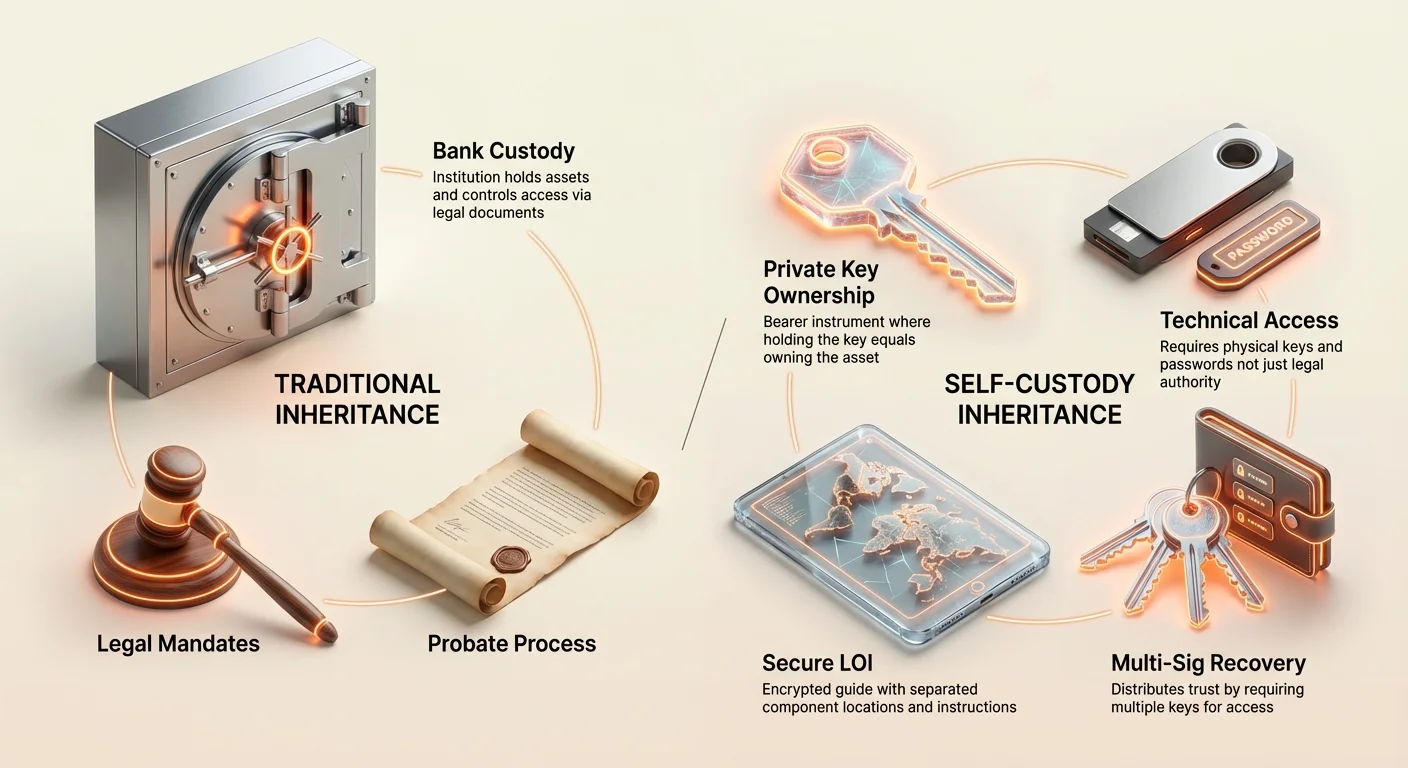
Tradicionālajās finansēs process ir skaidrs: tiek iesniegti juridiskie dokumenti, bankas ievēro testamenta pavēles, un aktīvi tiek pārņemti. Pašuzglabāšanas pasaulē nav bankas, ko zvanīt. Jūsu privātā atslēga ir noslēpums, ko zināt tikai jūs (un varbūt dažas droši saglabātas sastāvdaļas). Ja šis noslēpums mirst kopā ar jums, līdzekļi ir neatgriezeniski zuduši — ne tikai jūsu mantiniekiem, bet visai ekonomiskajai sistēmai.
Šis ceļvedis pārsniedz pamata drošību un risina viskritiskāko ilgtermiņa drošības izaicinājumu: izveidojot robustu, juridiski pamatotu un tehniski īstenojamu plānu, lai nodrošinātu jūsu digitālās mantojuma izdzīvošanu pēc jums. Mēs koncentrēsimies uz divu pretēju spēku līdzsvarošanu: saglabājot jūsu līdzekļus drošus tagad un padarot tos pieejamus uzticamām personām vēlāk.
Pašsuverenitātes paradokss: Kāpēc plānošana ir būtiska
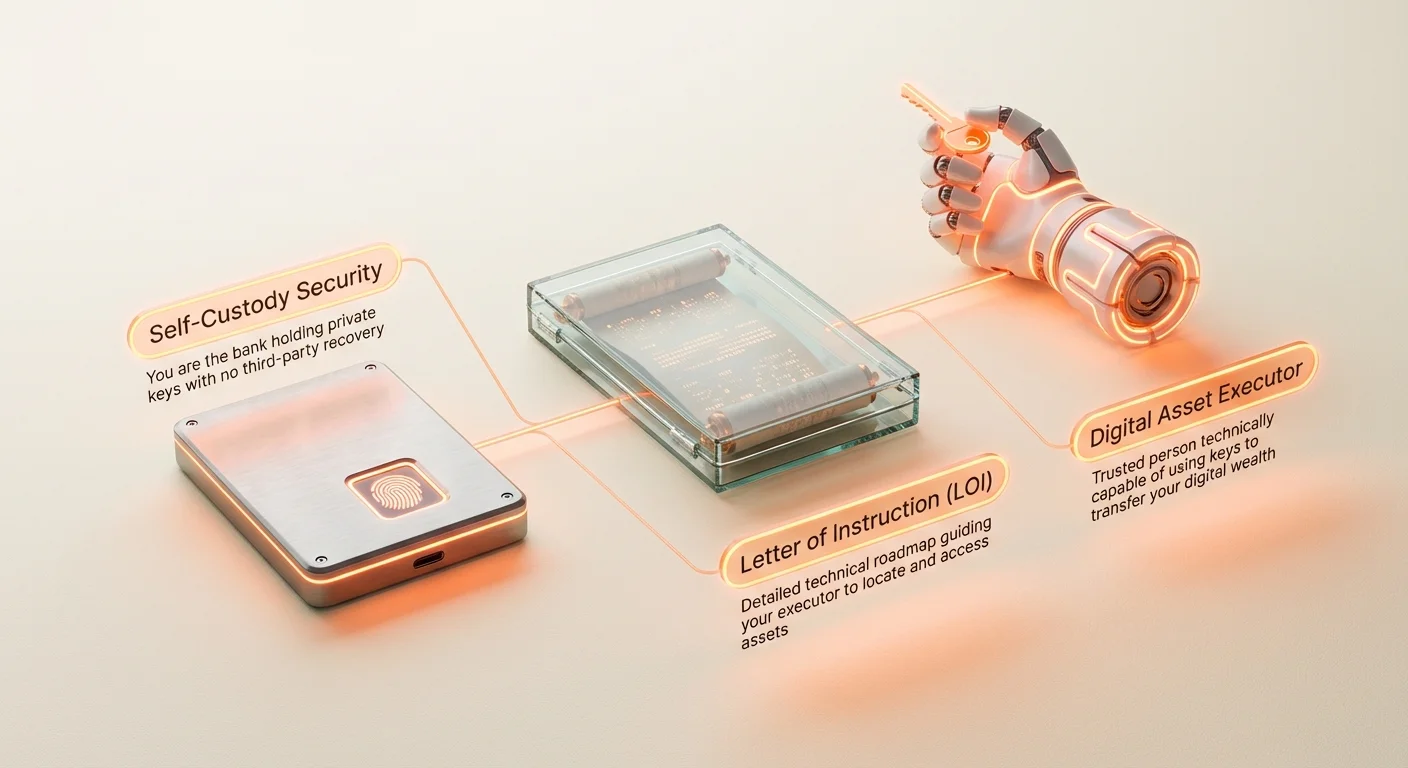
Pašuzglabāšana nozīmē, ka jūs esat banka. Ja banka zaudē seifa atslēgu, seifs paliek nepieejams. Kad jūs turat savu sēklas frāzi vai privātās atslēgas, jūs kļūstat par vienīgo kļūmes punktu savam pilnam digitālajam portfelim. Mantošanas un katastrofu plānošana nav tikai par aktīvu pārnesi; tā ir kritiska riska mazināšanas sastāvdaļa.
‘Autobusa faktors’: Vienīgā kļūmes punkta identificēšana
‘Autobusa faktors’ ir jēdziens, aizņemts no programmatūras izstrādes, kas nosaka minimālo komandas locekļu skaitu, kuri jāskār «autobusa» (t.i., jāpazūd vai kļūst incapacitēti), lai projekts pilnībā neizdotos. Pašuzglabāšanā autobusa faktors parasti ir viens: jūs.
Ja jūs esat vienīgā persona, kas zina pilnu atslēgas atrašanās vietu, šifrēšanas paroli vai specifisko aparatūras maciņa modeli, jūsu incapacitācija izraisa tūlītēju, katastrofālu kļūmi aktīvu piekļuvei. Autobusa faktora risināšana prasa zināšanu piekļuves diversifikāciju starp uzticamām, iepriekš atlasītām personām, bet tikai noteiktos, vienotos apstākļos.
Uzglabāšanas vs. Pašuzglabāšanas mantošanas izaicinājumi
Saprotot, kāpēc tradicionālās metodes neizdodas, ir izšķiroši jaunu plānošanai:
| Funkcija | Tradicionālā banku sistēma (uzglabāta) | Pašuzglabāšana (neuzglabāta) |
|---|---|---|
| Aktīva atrašanās vieta | Zināma bankai; dokumentēta ar konta numuriem. | Zināma tikai lietotājam (uz ķēdes adrese ir publiska, īpašumtiesību saikne ir noslēpums). |
| Piekļuves pilnvaras | Banka, kas pieņem juridiskos dokumentus (testamenti, trasti, nāves apliecības). | Privātās atslēgas turētājs (jūs). Trešai pusei nav tehniska pilnvaras. |
| Testamenta process | Juridiska tiesas pavēle tiek iesniegta iestādei, uzliekot pienākumu atbrīvot līdzekļus. | Juridiska tiesas pavēle ir praktiski bezjēdzīga, jo nav iestādes, kurai to iesniegt. |
| Zuduma risks | Zems (tikai ja banka sabrūk). | Augsts (ja atslēga ir zudusi, aizmirsta vai nezināma mantiniekiem). |
Tā kā kripto līdzekļi ir tehniski „pārnēsājami instrumenti” (kurš tur atslēgu, tam pieder aktīvi), jūsu plāns nevar paļauties tikai uz juridiskām pavēlēm; tam jāpaļaujas uz drošu tehnisku iespējošanu.
Nākotnes draudu modelēšana
Robustam plānam jāņem vērā dažādi piekļuves kļūmes scenāriji:
- Pēkšņa nāve: Nepieciešama tūlītēja piekļuve sēklas frāzei vai šifrēšanas metodēm no norādītās puses. Drošības prioritāte: piekļuves ātrums pēc notikuma izraisīšanas.
- Ilgtermiņa incapacitācija: Nepieciešams mehānisms, lai piešķirtu piekļuvi līdzekļiem uzturēšanai (piem., staking maksu, nodokļu saistību vai lielu svārstību pārvaldībai), nezaudējot pilnu īpašumtiesību uz visiem laikiem. Drošības prioritāte: kontrolēta, atsaucama piekļuve.
- Katastrofu atjaunošana: Nepieciešama ģeogrāfiska atslēgu sastāvdaļu redundance (piem., ja māja nodeg vai seifa depozīta kaste tiek applūdināta). Drošības prioritāte: fiziska izturība.
Foundational Pillar 1: The Secure Letter of Instruction (LOI)
The most essential component of any crypto inheritance plan, regardless of legal structure or technical complexity, is the Letter of Instruction (LOI). This document is the practical, step-by-step roadmap that guides your executor or trustee through the technical steps necessary to locate and access your digital assets.
Crucial Distinction: The LOI is not your Will. The Will tells the court who gets your assets; the LOI tells your executor how to find and access them.
What the LOI Must Contain
An effective LOI must be comprehensive, detailed, and written for a technically proficient but non-expert user.
- Inventory of Assets: A complete list of all cryptocurrencies held, noting the approximate amount and location (which blockchain/network).
- Wallet Type and Location: A list of every wallet used (Hardware Wallet 1, Hardware Wallet 2, Desktop Software Wallet, etc.). Specify the brand (Trezor, Ledger, etc.) and model.
- Seed Phrase/Key Map: Critically, the LOI should not contain the raw seed phrase itself. Instead, it should contain a clear map or guide instructing the executor where the components of the seed phrase are physically or digitally located. (E.g., "Seed Phrase Component A is in Safe Deposit Box 123; Component B is held by Attorney Smith.")
- Passwords and PINs: List all PINs, hardware wallet passphrases (25th word), or encryption passwords necessary to access the storage mediums. These must be stored separately from the LOI itself and secured via methods outlined below.
- Exchange/Account Access: If you maintain small amounts on centralized exchanges (CEXs) for trading, list the CEX URLs, usernames, and two-factor authentication (2FA) recovery methods.
- Instructions for Transfer: A clear, sequential list of instructions detailing exactly how to initiate a transaction and transfer the funds to the designated trust wallet or beneficiary addresses. Example: "To access Wallet X, retrieve the device from Location Y, enter PIN 1234, and the 25th Word stored in Vault Z."
Best Practices for Storing and Disclosing the LOI
The LOI is a single point of technical knowledge. It must be highly secure yet accessible upon the triggering event.
- Digital Encryption: The LOI should be created digitally (e.g., a PDF) and encrypted using strong, modern encryption software (like VeraCrypt or open-source equivalents). The decryption key or password must be shared with your chosen executor or stored separately in a highly secure, non-digital location.
- Physical Seclusion: A physical, printed copy of the LOI (encrypted instructions, not the seed phrase itself) should be placed inside your physical Will or Trust documentation, or secured in a solicitor’s fireproof safe. This ensures its discovery coincides with the legal process.
- Tiered Disclosure: Never give the entire LOI and all associated passwords to a single person. Your plan should use a tiered approach:
- Tier 1 (The Executor): Receives the main LOI and the location map of the physical key components.
- Tier 2 (The Key Holders): Holds physical or encrypted components of the seed phrase, but does not know what they are for, nor do they possess the LOI.
Integrating the LOI with Legal Documentation
The legal framework provides the authority, and the LOI provides the technical mechanism. They must reference each other. Your Will or Trust document should specifically state that your digital assets exist, reference the LOI (without disclosing sensitive data), and explicitly grant your Digital Asset Executor the authority to follow the instructions within that LOI.
Crucially, the Will must contain a clause that explicitly gives the Executor the power to legally bypass digital restrictions, access data, and transfer assets.
Pamata balsts 2: Juridiskās struktūras un izpildītāji
Kamēr atslēgas nodrošina tehnisko piekļuvi, juridiskās struktūras nosaka īpašumtiesības, pārvalda nodokļu saistības un nodrošina, ka nodošana notiek saskaņā ar jūsu vēlmēm, minimizējot ģimenes strīdus un probātes izmaksas.
Digitālo aktīvu izpildītāja loma
Šī ir specializētākā loma jūsu plānā. Digitālo aktīvu izpildītājs bieži ir tā pati persona kā jūsu vispārējais mantojuma izpildītājs, bet tiem jāpiemīt specifiskām īpašībām:
- Tehniskā prasmja: Viņiem jāizprot aparatūras maciņi, sēklas frāzes un pamata blokķēdes mehānikas. Viņiem jābūt ērtiem ar privāto atslēgu izmantošanu darījuma parakstīšanai.
- Absolūta uzticība: Tā kā viņi veiks faktisko līdzekļu nodošanu ārpus tradicionālās institucionālās uzraudzības, viņiem jābūt uzticamākajai personai jūsu dzīvē.
- Gatavība rīkoties: Viņiem jābūt gataviem un spējīgiem izpildīt bieži stresa pilno un laika jūtīgo uzdevumu nodrošināt līdzekļus pēc jūsu aiziešanas mūžībā.
Digitālo aktīvu izpildītājs ir atbildīgs par LOI sekošanu, sēklas frāzes daļu apkopšanu, aktīvu nodrošināšanu jaunā maciņā zem mantojuma kontroles un pēc tam līdzekļu sadalīšanu saskaņā ar Testamentu vai Trastu.
Trastu un testamenšu izmantošana kripto aktīviem
Augstas neto vērtības kripto turētājiem vienkārši labuma saņēmēju norādīšana Testamentā var nebūt pietiekama probātes tiesas laikietilpīgās dabas dēļ. Trasti piedāvā ātrāku, privātāku un izturīgāku risinājumu digitālajiem aktīviem.
Testamentārais Trasts
Trasts ļauj jums nodot jūsu aktīvu (ieskaitot kripto) īpašumtiesības trešās puses Trasta pārvaldniekam (kas var būt persona vai uzņēmums) jūsu noteikto labuma saņēmēju labā.
- Labums: Labi sastādītā Trasta turētie aktīvi pilnībā izvairās no probātes tiesas, ļaujot Trasta pārvaldniekam nekavējoties rīkoties pēc jūsu nāves. Tas ir kritiski svarīgi kriptovalūtai, kur aizkavēšanās var radīt drošības riskus vai zaudētas iespējas.
- Mehānisms: Jūsu Trasta dokuments nosaka Trasta pārvaldnieka pilnvaras, ieskaitot tiesības izgūt, pārvaldīt un nodot privātās atslēgas un aktīvus. LOI sniedz tehniskos soļus, kurus Trasta pārvaldniekam jāveic.
Jurisdikcija un juridiskās nianses
Kriptovalūta ir globāli decentralizēta, bet mantojuma tiesības ir stingri lokālas.
- Pastāvīgās dzīvesvietas nozīme: Jūsu plānam jātop izveidotam saskaņā ar tās jurisdikcijas likumiem, kur jūs galvenokārt dzīvojat (jūsu domicils). Ja jums ir pilsonība vai aktīvi vairākās valstīs, sarežģītība pieaug eksponenciāli, potenciāli prasa vairākus Testamentus vai Trastus.
- Specializēta juridiskā palīdzība: Jums jāizmanto juristi, kuri specifiski izprot digitālo aktīvu tiesības. Vispārējs mantojuma plānotājs var nejauši iekļaut formulējumus, kas ir tehniski neizpildāmi (piem., prasot kriptovalūtas biržai izpildīt nodošanas rīkojumu, kad aktīvi atrodas pašaprūpes maciņā).
- Digitālo aktīvu atklāšana: Dažās jurisdikcijās ir nepieciešama detalizēta digitālo aktīvu ziņošana nodokļu un mantojuma nolūkos. Jūsu plānam jāparedz precīza novērtēšana un atklāšana nāves brīdī.
Technical Strategies for Access and Transfer
Legal documents establish the "should," but cryptographic tools establish the "can." Technical solutions embed your inheritance instructions directly into the blockchain, often using smart contracts or advanced wallet configurations.
The 'Social Recovery' Multi-Signature Approach
Multi-signature (Multi-Sig) wallets require a specified number of private keys (signatures) out of a total possible keys (M-of-N) to approve any transaction. This is the single most effective technical tool for disaster planning.
Multi-Sig Will Structure (Example: 2-of-3):
- Key 1 (Your Primary Key): Held by you, used for day-to-day transactions.
- Key 2 (Legal Key): Held by your Digital Asset Executor or Trustee.
- Key 3 (Safety Key): Held by a solicitor, institutional custodian, or a separate family member.
Under normal circumstances, you use Keys 1 and 2 to transact. If you become incapacitated or pass away, Key 1 is inaccessible. The Executor (Key 2) can then cooperate with the Safety Key Holder (Key 3) to achieve the necessary 2-of-3 signatures to move the funds to the estate’s designated addresses.
- Benefit: This avoids requiring a single person to possess the entire master key. It distributes trust and requires consensus, minimizing the risk of a malicious or incompetent single executor.
Introduction to Time-Locked Transactions
Time-locking allows you to create a transaction that can only be executed after a specific future block height or time has passed. This is based on cryptographic protocols built into the blockchain (such as Bitcoin’s CheckSequenceVerify or smart contract logic on platforms like Ethereum).
Two common time-lock applications for inheritance:
- Delayed Access: You pre-sign a transfer transaction sending funds from your current wallet to a new wallet controlled by your executor. You set a time lock for five years from now. If you are alive and active, you periodically update the transaction, moving the time lock further out. If you stop updating it (implying incapacitation or death), the pre-signed transaction becomes valid and can be broadcast by your executor five years later, enabling them to retrieve the funds.
- Release Mechanisms: This involves a sophisticated multi-sig setup combined with a time delay. For example, Key A (yours) can access the funds immediately. Key B (Executor) can access the funds, but only after a specific time lock expires. This gives you absolute control now while providing a technical backup pathway for heirs later.
Creating a 'Dead Man's Switch'
A Dead Man’s Switch is a mechanism that automatically releases information (like the LOI or decryption passwords) if you fail to perform a periodic check-in.
Examples of Switches:
- Manual/Digital Check-ins: Using automated services that periodically email you. If you fail to click the confirmation link for 90 days, the service sends an encrypted package containing key retrieval instructions to your designated Executor’s email address.
- Blockchain Activity Monitoring: Services or bespoke code can monitor your primary wallet address. If the address remains dormant (no outgoing transactions) for a defined period (e.g., 18 months), this triggers a notification to a third party, signaling the potential need to activate the inheritance plan.
Caution: While effective, automated switches carry high risk. If accidentally triggered (e.g., due to a vacation or illness), they could expose sensitive information prematurely. Extreme caution and redundancy must be built into the trigger mechanism.
The Implementation Workflow: Building Your Plan Step-by-Step
Creating a crypto inheritance plan is a project, not a single task. It requires periodic maintenance and rigorous testing.
Step 1: Inventory and Valuation
Before writing any instructions, you must know exactly what you own and where it is located.
- Create a Comprehensive Asset Register: List every cryptocurrency, NFT, DeFi position, and the wallet address holding it. Note the chain (e.g., Ethereum Mainnet, Polygon, Solana).
- Determine Custody Status: Clearly mark which assets are in self-custody (requiring key recovery) versus assets on a centralized platform (requiring password/2FA recovery).
- Document Dependencies: Note if any assets are locked (e.g., in staking contracts, time-locked vesting schedules, or DeFi liquidity pools) and what action is required to withdraw them.
Step 2: Selecting Your Trusted Partners (The Human Element)
Your security chain is only as strong as your weakest partner. Choose partners based on trust, competence, and geographical diversity.
- The Executor: Must be highly trusted, technically competent, and aware of their responsibilities. They should receive the LOI map and the legal authority.
- The Key Holders: These individuals are responsible for holding one component of your fragmented seed phrase or multi-sig key. They should not know what the key is for, nor should they know the location of the other components. They are merely secure storage providers.
- The Witness/Advisor: A third party (often your lawyer or financial advisor) who knows the overall existence of the plan and the names of the Executor and Key Holders, but not the technical details. They act as the overseer to ensure the plan is executed smoothly.
Step 3: Test and Review the Process (The ‘Fire Drill’)
A plan that hasn't been tested is merely a hypothesis. You must perform a 'fire drill' to ensure the plan works, without exposing your actual keys.
- Simulated Retrieval: Set aside a small, temporary ‘dummy’ hardware wallet and transfer a negligible amount of crypto to it. Write the LOI for this dummy wallet.
- The Blind Test: Give the LOI and the corresponding key components to your Executor. Ask them to follow the LOI to retrieve the funds and transfer them to a designated test address.
- Review: If the Executor successfully retrieved the funds, the instructions are clear and the mechanism works. If they failed, clarify the instructions or update the process. Never use the real assets for this test, only the real process.
Step 4: Physical vs. Digital Seclusion
The fragmentation of your seed phrase and related passwords must be both secure and strategically distributed.
- Fragmentation: Never store the entire seed phrase in one place. Break the 24 words into 2-3 components (e.g., Words 1-8, 9-16, 17-24) and store them in different, geographically separated locations.
- Material Durability: Store components on fireproof, waterproof materials (like stamped metal plates). Paper degrades rapidly.
- Location Diversity: Store components in disparate locations: a home safe, a safety deposit box at a bank far away, and potentially with an international lawyer/trustee. Geographic distance protects against regional disasters.
Progresīvās drošības apsvērumi
Kad jūsu turējumi aug vai dzīves situācija mainās, jūsu mantošanas plānam jāevolūē, lai saglabātu efektivitāti un drošību.
Noplūdes minimizēšana: Sastāvdaļu un informācijas nodalīšana
Pašuzglabāšanas pamatprincips ir vienīgā kļūmes punkta minimizēšana. Tas attiecas arī uz jūsu mantošanas plānu. Ja Izpildītājam ir visas LOI instrukcijas un viņš arī tur Atslēgas sastāvdaļu A, drošība ir kompromitēta.
Trīs nodalījumu likums:
- Plāns (LOI/Instrukcijas): Ceļvedis, kā piekļūt sastāvdaļām.
- Fiziskās sastāvdaļas (Sēklas frāzes fragmenti): Faktiskās atslēgas/vārdi.
- Dekodēšanas atslēga (Parole/Parole): Atslēga, kas atbloķē šifrēto LOI vai 25. vārds, kas atbloķē aparatūras maciņu.
Nodrošiniet, ka neviena persona vai fiziska vieta netur divus no šiem trim elementiem.
Mēģināšana ar mainīgo tehnoloģiju
Kripto telpa attīstās ātri. Aparatūras maciņš, ko jūs nopirkāt šodien, var būt novecojis piecu gadu laikā vai jauns programmatūras atjauninājums var mainīt atjaunošanas procesu.
Gada pārskatīšanas cikls: Apstrādājiet savu mantošanas plānu kā „dzīvu dokumentu”, kas prasa gada pārskatīšanu:
- Aparatūras pārbaude: Vai visi aparatūras maciņi joprojām ir funkcionāli un atbalstīti ražotāja?
- Programmatūras pārbaude: Vai pārneses instrukcijas joprojām ir precīzas (piem., vai tīkla maksas struktūra vai atjaunošanas maciņa interfeiss ir mainījies)?
- Personāla pārbaude: Vai jūsu Izpildītājs un Atslēgu turētāji joprojām ir uzticami, spējīgi un sazināmi? Vai viņu dzīves situācija ir mainījusies (piem., vai viņi šķiras vai pārvācas uz ārzemēm)?
Incapacitācijas scenārijs
Plānošana incapacitācijai (ilgstoša nespēja pieņemt pareizas finanšu lēmumus slimības vai traumu dēļ) bieži ir grūtāka nekā nāves plānošana, jo lietotāja juridiskais statuss ir neskaidrs.
Incapacitācijai Pilnvaras (PoA) dokuments ir izšķirošs.
- Specifiska pilnvara: Jūsu PoA skaidri jāpiešķir jūsu norādītajam aģentam tiesības pārvaldīt digitālos aktīvus, piekļūt šifrēšanas atslēgām un parakstīt darījumus jūsu vārdā.
- Aktivizācijas izraisītājs: PoA jānosaka apstākļi, kad tā stājas spēkā (piem., apstiprinājums no diviem licencētiem ārstiem, ka jūs garīgi vai fiziski nevarat pārvaldīt savas lietas).
- Ierobežota piekļuve: Strādājot ar multisig iestatījumiem, jūs varat konfigurēt maciņu tā, ka jūsu PoA aģents saņem piekļuvi tikai sekundārajai atslēgai, ļaujot viņam sadarboties ar trešo pusi, lai pārvaldītu līdzekļus (maksāt rēķinus, pārbalansēt), nevis dotu vienskaitlīgu kontroli pār visu portfeli.
Secinājumi
Mantošana un katastrofu plānošana ir pēdējais, neapstrīdējamais solis ceļā uz patiesu pašsuverenitāti. Ja jūs esat veltījis laiku un pūles, lai izņemtu bankas no savas finanšu dzīves, jums arī jāvelta laiks un pūles, lai izveidotu drošu ceļu jūsu aktīviem pēc jūsu aiziešanas.
Sāciet vienkārši: izveidojiet visaptverošu Instrukciju vēstuli, nodrošiniet to ar spēcīgu šifrēšanu un izvēlieties vienu vai divas personas, kurām uzticaties absolūti. Tad konsultējieties ar specializētu juridisko palīdzību, lai integrētu tehnisko plānu robustā juridiskā struktūrā, ideāli izmantojot trastu ātrumam un privātumam.
Jūsu plānam jābūt pārbaudītam, gada pārskatāmam un jāuztver kā svarīgākajai apdrošināšanas polisē, ko jūs piederat. Domājot uz priekšu, jūs nodrošināt, ka jūsu jaunās digitālās ekonomikas pieņemšana gūst labumu ne tikai jums šodien, bet arī nākamajām paaudzēm, kurām jūs paredzāt nodrošināt.