暗号資産の世界に初めて足を踏み入れる際は、シンプルなモバイルウォレットで十分かもしれません。しかし、ポートフォリオが成長するにつれ、リスクも増大し、セキュリティは単なる便利なものから必要不可欠なものへと変わります。大量の資金を保有するユーザーにとって、デスクトップにキーを保管したり、基本的なシングルキーソフトウェアウォレットを使用したりする標準的なセキュリティ対策は、受け入れがたい弱点となります。銀行の金庫に相当するデジタル版が必要です。
このガイドは、基本的なセルフカストディを超えて、機関レベルのセキュリティの2つの柱を探求します:ハードウェアウォレットが提供する物理的防御と、マルチシグネチャ(マルチシグ)スキームが提供する分散型制御です。これらのシステムのトレードオフを比較し、実装方法を詳述し、キーの分散とリカバリープランの洗練された戦略を概説します。これにより、あなたの資産を盗難、紛失、単一障害点から保護します。
高額ポートフォリオのセキュリティの重要性
富裕層個人、企業、または分散型自律組織(DAO)にとって、主要な目標は少額の保護から、世代を超えた富への継続的かつ安全なアクセス確保へと移行します。小額ポートフォリオ向けに構築されたセキュリティモデルは、標的型攻撃や壊滅的な個人失敗に耐えられません。
標準ウォレットが不十分な理由
ほとんどの初心者向けウォレットは、1台のデバイス上の1人で制御される単一の秘密鍵に依存しています。これをシングル署名ウォレットと呼びます。少額には有効ですが、この設定は壊滅的な単一障害点を生み出します:
- 物理的盗難/紛失:秘密鍵を含む物理デバイスが紛失、盗難、または損傷した場合、資金にアクセスできなくなります(シードフレーズが回復されない限り)。
- ハッキング/マルウェア:デバイスがインターネットに接続され、マルウェアやフィッシング攻撃で侵害された場合、攻撃者はトランザクションに署名してウォレットを即座に空にできます。
- 強要/エラー:シングル署名設定では、1人が壊滅的なミスを犯したり、トランザクション署名を強要されたりして、チェックやバランスなしに完全損失につながります。
「機関グレード」セキュリティの定義
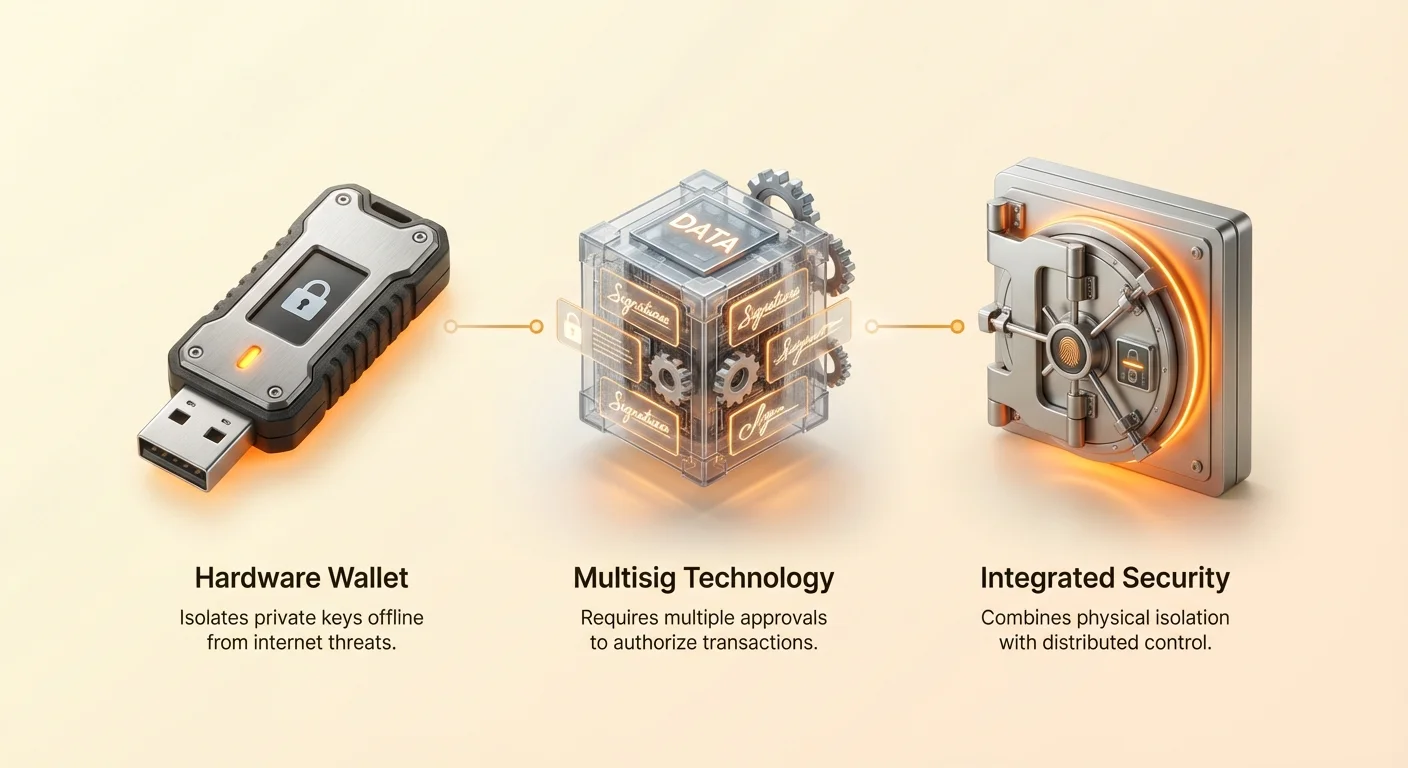
機関グレードのセキュリティは、2つの核心概念である分離と冗長性を通じて、損失リスクを最小化します。
- 分離(ハードウェアウォレット):資金を制御する実際の秘密である秘密鍵が、インターネットや悪意あるコードを実行可能なオペレーティングシステムに決して触れないようにする。
- 冗長性(マルチシグ):任意のトランザクションを検証するために複数の独立した承認(鍵)を必要とすることで単一障害点を排除します。これにより、1つの鍵を失ったり、1つの署名者が侵害されたりしても、完全損失にはつながりません。
ハードウェアウォレット:セルフカストディの基盤
ハードウェアウォレットは、専用の特殊なデバイス(USBメモリのように見えることが多い)で、1つのことだけを目的としています:秘密鍵をオフラインで安全に保管し、トランザクションに署名すること。このオフライン保管は「コールドストレージ」と呼ばれます。
ハードウェアウォレットが秘密鍵を保護する方法
ハードウェアウォレットの核心的な革新はセキュアエレメントです。これは改ざん耐性のあるチップとして特別に設計されており、マルウェア、ウイルス、または物理的な攻撃者によって内部に保存された秘密鍵を抽出することが事実上不可能です。
暗号資産を送金する場合:
- トランザクションの詳細がコンピューター(オンライン)で作成されます。
- これらの詳細がハードウェアウォレット(オフライン)に送信されます。
- デバイスの小さな画面でトランザクションを物理的に確認・承認します。
- セキュアエレメントが秘密鍵(デバイスから決して出ない)を使用してトランザクションにデジタル署名します。
- 署名済みトランザクションがコンピューターに戻され、ブロックチェーンにブロードキャストされます。
秘密鍵が隔離された環境から決して出ないため、コンピューターがマルウェアに完全に感染していても資金は安全に保たれます。
ハードウェアウォレットの重要な復元計画
ハードウェアウォレット自体は頑丈ですが、究極のセキュリティはシードフレーズ(または復元フレーズ)—通常12語または24語のリスト—に依存します。このフレーズは資金のマスターキーです。デバイスが破壊された場合、このフレーズを新しい互換性のあるデバイスに入力することでウォレットへのアクセスを復元できます。
ベストプラクティス:多層的な物理的セキュリティ
- 素材:シードフレーズをデジタルで保存しない(写真、クラウドストレージ、メール)。耐久性があり、耐火・防水の素材(例:鋼板)に手書きで記録します。
- 保管場所:フレーズをデバイス自体から物理的に分離して保管します。デバイスが自宅にある場合、フレーズは理想的に耐火の貸金庫や別の安全な場所に保管します。
- 分割(Shamirバックアップ):真に極端なセキュリティのために、Shamirの秘密共有などの高度な手法(または簡略化されたバリエーション)でシードフレーズを分割することを検討します。これにより、コンポーネントパーツの一定数(例:5つのうち3つ)がある場合にのみ完全なシードフレーズを再構築できます。
ハードウェアウォレットのトレードオフ
| 利点 | 欠点 |
|---|---|
| 完全な隔離 | 単一の物理オブジェクトへの依存。 |
| ハッキングの高い障壁 | セットアップや復元時のユーザーエラーの可能性。 |
| 使いやすさ | シードフレーズの紛失は資金の永久喪失を意味します。 |
Understanding Multi-Signature (Multisig) Technology
If hardware wallets solve the problem of isolation, multisig solves the problem of redundancy and governance. Multisig wallets are not physical devices; they are special smart contracts deployed on a blockchain (most commonly Ethereum, but also available on Bitcoin and other chains) that require multiple keys to authorize any outgoing transaction.
How Multisig Works: The N-of-M Scheme
Multisig uses an N-of-M scheme, where:
- M is the total number of private keys (signers) associated with the wallet.
- N is the minimum number of keys required to approve a transaction.
A common setup for an individual holding significant wealth might be a 2-of-3 scheme: three keys exist, but only two of them are needed to send funds.
Scenario Example (2-of-3):
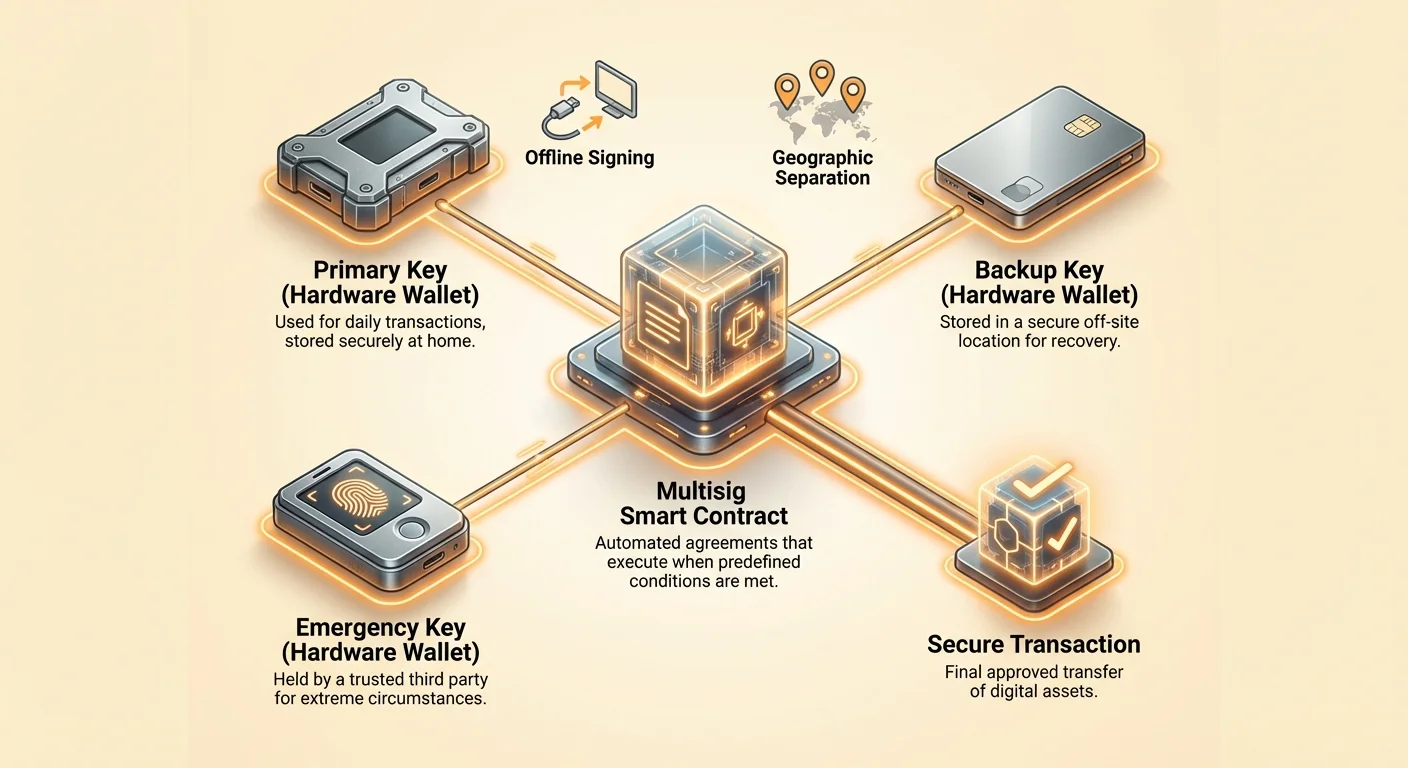
- Key 1: Held by the individual on Hardware Wallet A (Primary).
- Key 2: Held by the individual on Hardware Wallet B (Backup/Remote Location).
- Key 3: Held by a trusted family member or lawyer (Emergency Key).
If Key 1 is lost or compromised, the individual can still use Key 2 and Key 3 together to approve a transaction to a new, secure wallet, ensuring no single point of failure.
Ideal Use Cases for Multisig
Multisig is the standard security choice for any setup where control must be distributed or errors must be mitigated:
- Corporate Treasury Management: Requires multiple board members or executives to approve large expenditures, preventing rogue employees or simple internal theft.
- Decentralized Autonomous Organizations (DAOs): Used to govern community funds, requiring a majority of elected signers to approve proposals.
- Inheritance Planning/Estate Management: Allows an estate planner or designated trustee to act as one of the required signers, providing access to assets after a triggering event (such as the death or incapacitation of the primary holder).
- Advanced Personal Security: Protects the individual from loss of a single key, physical coercion, or temporary unavailability.
Multisig vs. Standard Single-Key Wallets
| Feature | Single-Key Wallet | Multisig Wallet |
|---|---|---|
| Control | Single individual/device | Distributed among multiple parties |
| Transaction Approval | One signature required | N-of-M signatures required |
| Security Type | Isolation (hardware) | Redundancy & Governance (software/contract) |
| Recovery | Dependent on one seed phrase | Dependent on having N out of M keys |
| Cost | Minimal (gas fees only) | Higher setup costs (deploying the smart contract) |
Practical Multisig Setup: A Gnosis Safe Guide
While various multisig solutions exist, Gnosis Safe (now known as Safe) is the industry standard for creating smart contract wallets on Ethereum and many L2 networks. It provides a highly audited, user-friendly interface for managing complex signing requirements.
Initial Setup and Configuration
Setting up a multisig safe involves deploying a specialized smart contract to the blockchain.
Step 1: Define Your Strategy (N-of-M) Before deployment, you must determine how many signers (M) you need and the threshold (N). For major personal portfolios, a 2-of-3 or 3-of-5 setup is common.
Step 2: Key Preparation Each signer address in the multisig should be derived from an independent, secure source. Crucially, every key involved in your multisig scheme should ideally be backed by its own, separate hardware wallet.
- Anti-Pattern: Using the same seed phrase or device for multiple keys in the multisig defeats the purpose of redundancy.
Step 3: Deploy the Safe Using the Safe interface, you designate the list of owner addresses and set the required confirmation threshold (N). Once deployed, this smart contract address is your permanent wallet address.
Step 4: Initial Funding and Test Transaction Fund the newly created Safe. Before moving significant capital, execute a small test transaction. This validates two things: 1) all designated signers can successfully connect and propose transactions, and 2) the N-of-M threshold works as expected.
Multisig Key Distribution Strategies
The effectiveness of a multisig setup hinges on the independence and security of the M keys. Sophisticated users must employ a strategy that minimizes the risk of a coordinated failure (e.g., a physical attack in one location).
1. Geographic Separation
Keys should be stored in physically disparate locations to mitigate against localized disasters (fire, flood, burglary).
- Example: Key 1 (Primary) in a home safe; Key 2 (Backup) in a secure bank vault 50 miles away; Key 3 (Emergency) with a trusted estate lawyer across the country.
2. Device and Vendor Independence
If possible, use hardware wallets from different manufacturers for different keys. If one manufacturer has a zero-day vulnerability, only one key is potentially compromised.
- Example: Key 1 on a Ledger; Key 2 on a Trezor; Key 3 on a specialized air-gapped computer running signing software.
3. Temporal Distribution (Use Cases)
Keys should only be brought out when necessary.
- Primary Key (Daily): Used for common transactions.
- Backup Key (Periodic): Stored cold and only used if the Primary Key is lost or compromised.
- Emergency Key (Rare): Held by a trusted third party, used only in extreme circumstances or as part of a death/incapacitation plan.
Key Management and Regular Audit
Multisig is not a "set-it-and-forget-it" solution. Regular, scheduled audits are essential:
- Verification: Ensure all owner addresses listed on the contract still correspond to the intended key holders and devices.
- Transaction Logs: Review all approved and pending transactions to catch unauthorized proposals quickly.
- Signer Health Check: Periodically require all signers to successfully approve a minor transaction (like a low-value self-transfer) to confirm they still possess access and understand the signing process.
セキュリティモデルの統合:ハードウェアウォレットをマルチシグ署名者として
最も堅牢なセキュリティアーキテクチャは、両方の技術の強みを組み合わせます。各必要な署名が独自のハードウェア裏付けキーから生成されることで、物理的隔離と分散型冗長性を達成します。
究極の組み合わせ:ハードウェア裏付けマルチシグ
この設定では、ハードウェアウォレットがN-of-Mスキームのキーの1つに対する暗号装置として機能します。
保護スタック:
- レイヤー1(物理):各キーはハードウェアウォレットのセキュアエレメント内に安全に保存されます。キーはインターネットに一切触れません。
- レイヤー2(冗長性):マルチシグスマートコントラクトは、資金移動を承認するためにこれらのハードウェア保護キーの2つ以上を必要とします。
この設定により、攻撃者は地理的に離れた複数のハードウェアウォレットを物理的に侵害し、対応する署名承認を成功裏に取得する必要があり、攻撃を指数関数的に複雑で高価なものにします。
ソーシャルリカバリメカニズムの実装
暗号通貨保有者の大きな懸念事項の1つは、障害を起こしたり死亡したりした場合に何が起こるかです。マルチシグはこの問題に対する強力な解決策を提供し、しばしばソーシャルリカバリと呼ばれます。
回復フレーズを単一の家族メンバーに依存する代わりに(相続人の単一障害点を作成する)信頼できる個人をマルチシグ構造自体に統合できます。
ソーシャルリカバリ例(3-of-5マルチシグ):
- キー1 & 2:個人保有(プライマリおよびバックアップハードウェアウォレット)。
- キー3:信頼できる遺産弁護士保有。
- キー4:配偶者または主要受益者保有。
- キー5:独立したファイナンシャルプランナー保有。
個人が生存し活動的な場合、資金移動にはキー1と2のみ必要です(2-of-5しきい値)。個人が障害を起こした場合、キー3、4、5が権限を組み合わせ取引を実行し、遺産指示に従って資産を移動でき、安全で信頼最小化された相続パスを提供します。
Determining Your Advanced Security Strategy
Choosing the right security strategy depends entirely on the size of your portfolio, your personal tolerance for complexity, and the specific risks you are trying to mitigate.
The Security-Complexity Trade-Off
| Strategy | Risk Mitigation Focus | Complexity | Cost/Time Investment | Best For |
|---|---|---|---|---|
| Single Hardware Wallet | Hacking, Malware, Simple Loss | Low | Low | Mid-level portfolios, high risk of online attack. |
| Multisig (2-of-3) | Coercion, Single-Key Loss, Error | Medium | Medium | Large personal portfolios, requiring key redundancy. |
| Hardware-Backed Multisig (3-of-5) | Targeted Attacks, Geographic Disaster, Inheritance | High | High | Corporate treasuries, generational wealth, DAOs. |
Risk Matrix: When to Choose 2-of-3 vs. 3-of-5
Choosing 2-of-3:
- Focus: Simplicity and swift recovery.
- Benefit: Requires fewer signers to act, meaning fewer people need to coordinate to make a transaction. Ideal for a primary holder and one secure backup key, plus one emergency key.
- Risk: If two keys are lost or compromised, the wallet is locked forever.
Choosing 3-of-5:
- Focus: Extreme resilience and robust governance.
- Benefit: Allows two signers to be lost or unavailable without jeopardizing access (you still have three remaining keys). This setup is significantly more resilient to loss and coercion.
- Risk: Coordination is harder. If you need to make a fast transaction, getting three people or three devices ready takes time. This is best suited for long-term storage and treasury management, not active trading.
Actionable Tip: Prioritize Key Independence
Regardless of the N-of-M configuration you choose, the most important element is the independence of the keys. Each signer must be geographically, digitally, and often temporally independent from the others to prevent a single event (physical break-in, computer virus) from leading to total asset loss.
結論
暗号通貨の初心者にとって、最も重要なセキュリティの教訓は 自己保管です。大きなポートフォリオを管理する上級ユーザーにとっては、その教訓は 分散型自己保管に移ります。基本的な隔離のためのハードウェアウォレットを戦略的に活用し、Gnosis Safeのような堅牢なマルチシグフレームワークにそれらを統合することで、希望や簡単なパスワードに頼る状態を超えます。冗長性、分担型ガバナンス、および検証可能な分散型制御に基づく機関投資家レベルのセキュリティフレームワークを確立し、デジタル資産に対する真の自己主権を実現します。