
Zamislite sigurnu digitalnu riznicu koja se ne oslanja na stražare, vlade ili središnje banke za svoju zaštitu. Umjesto toga, ovu riznicu štiti neprestano rastući zid sirove računalne moći, potaknut žestokom globalnom ekonomskom konkurencijom. To je stvarnost sigurnosnog modela Bitcoina.
Sigurnost Bitcoin mreže nije statična; ona je dinamična, konkurentna i kvantificirana. Mjeri se Hashrateom—čistom procesorskom snagom posvećenom rudarenju. Ali što se događa kada rudari brzo ulaze ili izlaze iz mreže, ili kada tehnologija naglo udvostruči učinkovitost rudarskog hardvera? Bez mehanizma za prilagodbu, sustav bi propao.
Ovaj vodič prodire u najgenijalniji mehanizam preživljavanja Bitcoina: Mehanizam podešavanja težine (DAM). Analizirat ćemo vječni konkurentni ciklus—Trku naoružanja hashratea—i objasniti kako ovaj naizgled složeni algoritam služi kao Bitcoina prilagodljivi obrambeni sloj, osiguravajući predvidivu radnju i kvantificiranu sigurnost protiv bilo kakvog vanjskog ekonomskog šoka.
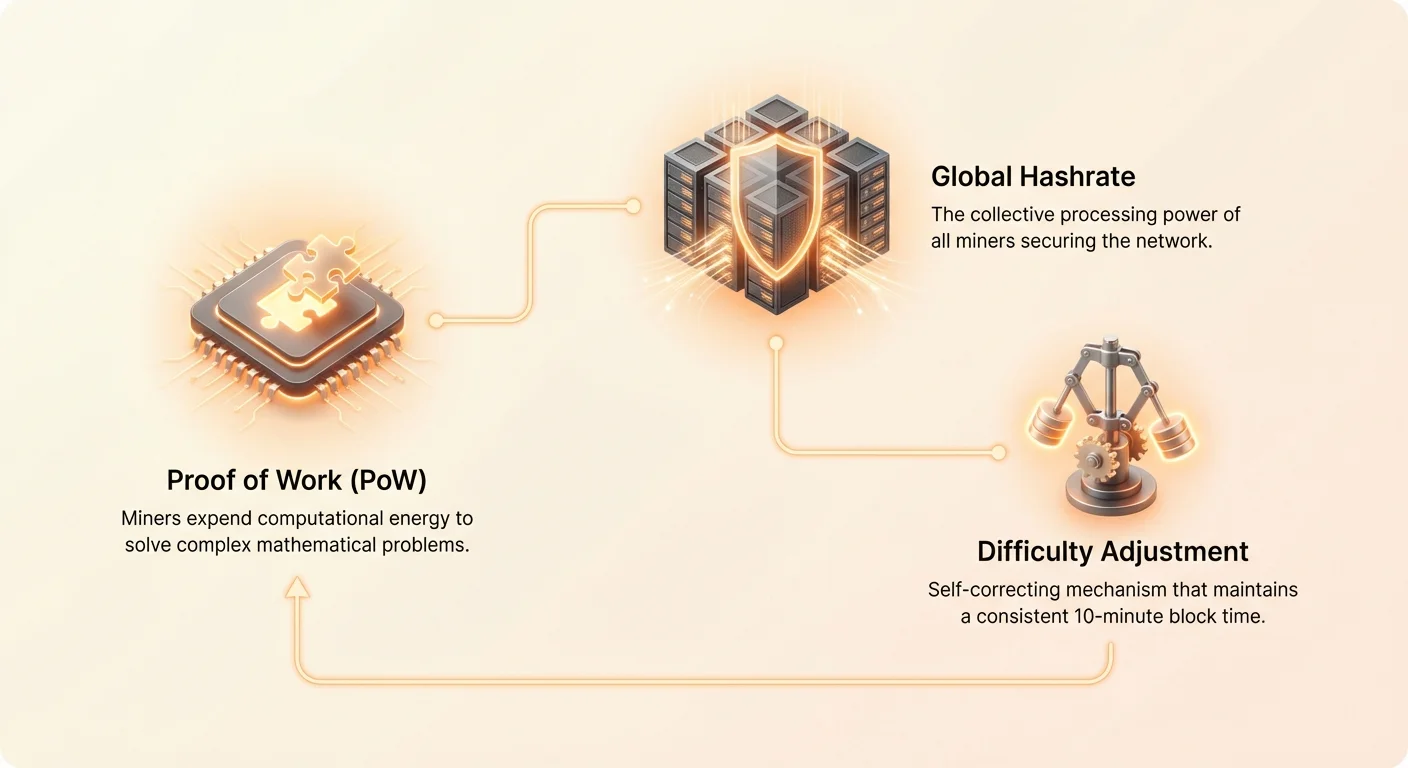
1. The Core Mechanism: Proof of Work and Hashrate
To understand network security, we must first understand the fundamental concept driving it: Proof of Work (PoW). PoW requires miners to expend energy (work) to solve a complex, randomized computational puzzle. The successful miner earns the right to add the next block of transactions to the blockchain.
This work effort is measured in a term known as Hashrate.
What is a "Hash"?
In the context of Bitcoin, a hash is the output of a cryptographic function (specifically SHA-256) that takes any input data—the transaction block header—and transforms it into a fixed-length string of letters and numbers. This process is deterministic: the same input always produces the same output.
The core challenge in PoW is not to find a hash, but to find a hash that meets a specific target requirement, known as the Difficulty Target. For example, the network might demand that the resulting hash must start with a certain number of zeros. Finding this specific target hash is purely a game of trial and error; the only way to succeed is to compute trillions upon trillions of hashes until a lucky attempt meets the target criteria.
Hashrate as a Measure of Economic Commitment
Hashrate is the measure of the aggregate computational speed of all miners combined. It is typically expressed in units like terahashes per second (TH/s) or exahashes per second (EH/s), where one exahash is $1,000,000,000,000,000,000$ hashes per second.
Crucially, Hashrate is not just a technical metric; it is an economic metric. It represents the total real-world investment—in specialized hardware, real estate, and ongoing energy consumption—that participants have dedicated to securing the network.
The Arms Race Metaphor: Miners are in a constant, competitive race. If one miner invests in more powerful, energy-efficient equipment (ASICs), they increase their individual probability of winning the block reward. This incentivizes every other miner to upgrade or risk becoming unprofitable. This self-reinforcing cycle of investment and technological improvement is the Hashrate Arms Race, and the resulting massive Hashrate is Bitcoin’s primary defense.
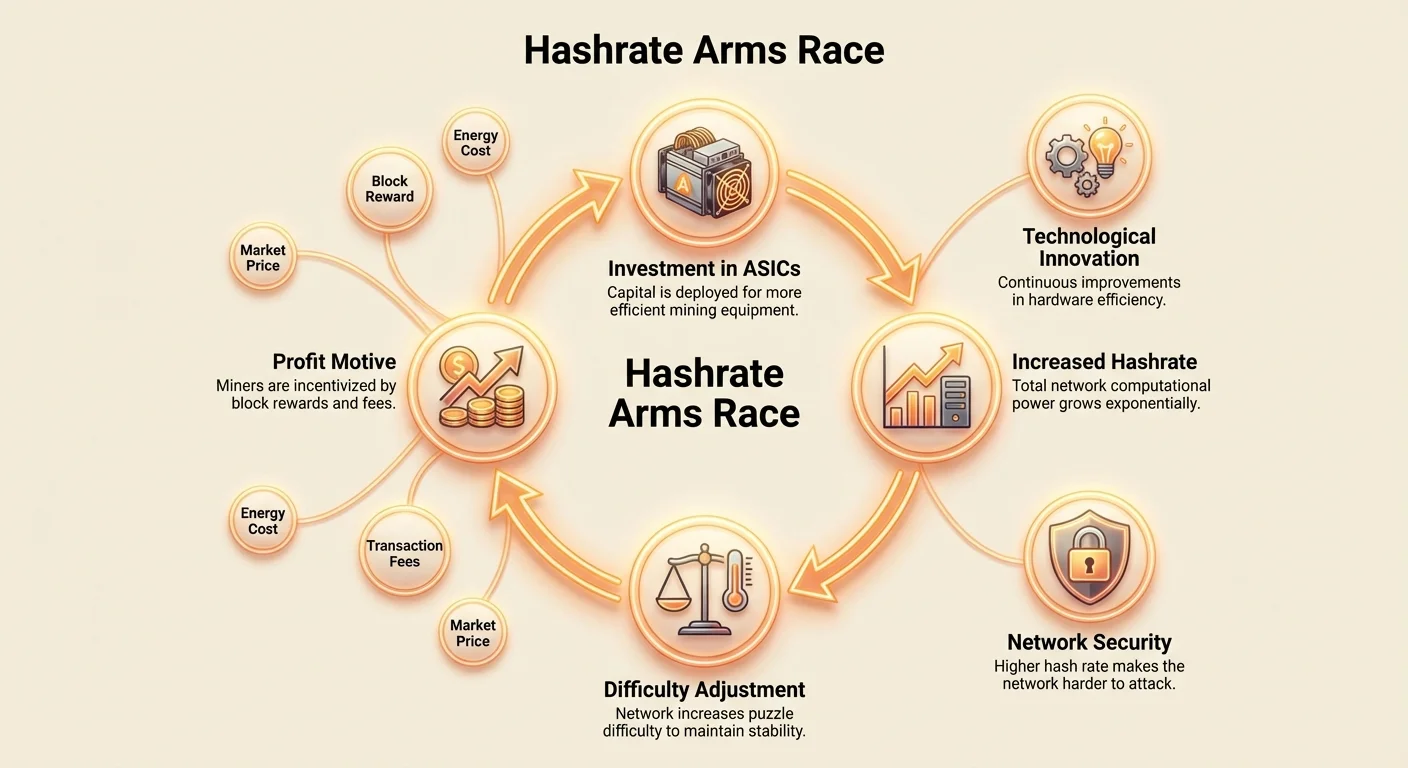
2. Bitcoin’s Clockwork: The Difficulty Adjustment Mechanism (DAM)
The fundamental design goal of the Bitcoin network is consistency: a new block must be found, on average, every 10 minutes. This 10-minute interval ensures that transactions are confirmed reliably and that the rate of new Bitcoin creation (the supply schedule) remains mathematically predictable.
However, the global Hashrate is anything but predictable. It fluctuates wildly based on the price of Bitcoin (which determines profitability), global energy costs, and breakthroughs in ASIC technology. If the Hashrate doubles overnight, blocks would be found every 5 minutes. If half the miners suddenly quit, blocks might take 20 minutes to find.
The Difficulty Adjustment Mechanism (DAM) is the algorithm that corrects this imbalance, acting as the network’s self-correcting thermostat.
Calculating the Adjustment: The 2016 Block Period
Bitcoin doesn't adjust its difficulty based on real-time Hashrate data. Instead, it adjusts the difficulty target only once every 2,016 blocks.
Why 2,016 Blocks? Since the target block time is 10 minutes, 2,016 blocks should theoretically take exactly two weeks (14 days) to be mined ().
When the 2,016th block is found, the network performs a calculation:
- Measure Actual Time: It records the total time it took the miners to complete the last 2,016 blocks.
- Compare to Target Time: It compares the actual time to the target time (14 days).
- Adjust Difficulty:
- If the blocks were found faster than 14 days (meaning the Hashrate increased), the difficulty target is adjusted upward, making the puzzle harder.
- If the blocks were found slower than 14 days (meaning the Hashrate decreased), the difficulty target is adjusted downward, making the puzzle easier.
This adjustment is essential for Bitcoin's survival, as it ensures the network adapts to technological progress and economic shifts without human intervention.
The Critical Role of Block Time Stability
The DAM’s function goes beyond simply keeping confirmations regular; it reinforces the incentive structure of the entire system.
- Preventing Hyperinflation/Deflation: The consistent 10-minute block time is the bedrock of Bitcoin's monetary policy. It guarantees the emission schedule—the rate at which new Bitcoin enters circulation—remains precisely fixed and predictable, regardless of how efficient the mining hardware becomes. This predictability is a key reason Bitcoin is considered "hard money."
- Maintaining Transaction Finality: Users rely on predictable confirmation times. If block times varied wildly, the speed and reliability of transactions would degrade, rendering the network unusable for economic activity. The DAM ensures transaction confirmation remains reliably probabilistic, stabilizing the entire user experience.
The Difficulty Ceiling and Floor
The adjustment calculation can be significant, but it is not unlimited. The difficulty is capped to prevent extreme swings. Generally, the difficulty cannot adjust more than four times the previous level, limiting the speed at which the network can react to sudden, massive changes in Hashrate (though in practice, the network usually reacts smoothly).
3. Hashrate i sigurnost: Kvantificiranje obrane
U tradicionalnom financijskom sustavu sigurnost je zajamčena pravnim okvirima, vladinom regulacijom i fizičkim trezorima. U Bitcoinu sigurnost jamči ekonomski princip prema kojem je napad na mrežu ekstremno skup. Hashrate je kvantifikacija tog troška.
Ekonomski trošak napada 51%
Primarni rizik za bilo koju mrežu s dokazom rada jest napad 51%. To se događa kada jedna entiteta ili koordinirana grupa stekne kontrolu nad više od 50% ukupnog hashratea mreže. S tom većinom napadač bi mogao efektivno cenzurirati transakcije, zaustaviti isplate na određene adrese ili, najkritičnije, provesti dvostruko trošenje.
Dvostruko trošenje podrazumijeva trošenje istih Bitcoina dva puta. Napadač bi poslao transakciju trgovcu (Transakcija A) i primio robe, dok bi istovremeno koristio svoju većinsku hashrate snagu za rudarenje zasebne, tajne lance koja uključuje kontradiktornu transakciju (Transakcija B) kojom iste Bitcoine šalje natrag sebi. Kada njihova privatna lanac postane duži od javnog lanca, mreža se prebacuje na povijest napadača, a plaćanje trgovca postaje nevažeće.
Kvantificiranje sloja obrane:
Trošak napada 51% u suštini je trošak potreban za nabavu, napajanje i hlađenje dovoljno rudarske hardvera kako bi se premašio postojeći globalni hashrate tijekom trajanja napada.
| Komponenta | Faktor troška | Implikacija za sigurnost |
|---|---|---|
| Hashrate | Mjera aktivnog sigurnosnog napora. | Viši hashrate zahtijeva eksponencijalno više kapitalnih izdataka (CAPEX) za izazivanje. |
| Težina | Algoritam koji prevodi hashrate u potrebnu potrošnju energije. | Osigurava da čak i ako hardver postane jeftiniji, volumen posla potreban za postizanje 10-minutnog prozora ostane konstantan. |
| Cijena energije | Kontinuirani operativni trošak (OPEX). | Budući da je učinkovitost rudarskog hardvera ograničena fizikom, najveći kontinuirani trošak je električna energija. Ovaj OPEX djeluje kao visoka, održiva barijera ulaska za napadače. |
Kada je hashrate visok, financijska barijera ulaska za zlonamjernog aktera je kolosalna. Uspješan napad zahtijevao bi od napadača ne samo da potroši više od kombinirane globalne rudarske industrije, već i da riskira da taj ulog postane bezvrijedan ako mreža i cijena Bitcoina kolabiraju zbog samog napada.
Zašto je težina mrežina petlja samo-korekcije
Podešavanje težine je značajka koja sprječava mrežu da postane krhka pred brzim tehnološkim napretcima ili ekonomskim krizama. To je primarni adaptivni sloj obrane Bitcoina.
Scenarij 1: Tehnološki proboj (Povećani hashrate) Pretpostavimo da je izašla nova generacija ASIC-ova, trenutno udvostručujući učinkovitost mreže.
- Bez DAM-a: Vrijeme bloka pada na 5 minuta. Mreža bi proizvodila Bitcoin dva puta brže, razbijajući monetarnu politiku.
- S DAM-om: Nakon dvije tjedna, težina se dramatično povećava, prisiljavajući rudare da obave dvostruko više računalnog rada za istu nagradu. 10-minutni interval se vraća, a sigurnost (mjereno računalnom energijom) se trajno udvostručuje.
Scenarij 2: Ekonomski šok (Smanjeni hashrate) Pretpostavimo da cijena Bitcoina padne, prisiljavajući nerentabilne rudare sa starijim hardverom da se ugase, uzrokujući pad hashratea za 40%.
- Bez DAM-a: Vrijeme bloka naglo raste, možda dosegnuvši 17 minuta ili više. Transakcije se zaustavljaju, a mreža postaje neupotrebljiva.
- S DAM-om: Nakon produžene dvotjedne razdoblja, težina se smanjuje za 40%. Preostali rudari, koji su sada rentabilniji, mogu ponovno pronaći blokove unutar 10-minutnog prozora. Mreža žrtvuje privremeni pad hashratea (sigurnosti) kako bi održala operativnu stabilnost i predvidivost, osiguravajući opstanak dok ekonomski uvjeti ne podstaknu rudare na povratak.
DAM pretvara vanjsku volatilnost u internu stabilnost, jamčeći dugovječnost sustava.
4. Ekonomski faktori koji oblikuju trku naoružanja hashratea
Trka naoružanja hashratea je globalna, višemilijardna igra potaknuta ekonomskim stvarnostima. Podešavanje težine osigurava da samo najučinkovitije i najbolje kapitalizirane operacije prežive volatilnost kripto tržišta.
Uloga aplikacijski specifičnih integriranih kola (ASIC)
Rano Bitcoin rudarenje se radilo koristeći standardne CPU-ove i GPU-ove. Međutim, učinkovitost je brzo postala ključna, što je dovelo do razvoja aplikacijski specifičnih integriranih kola (ASIC).
ASIC su specijalizirani čipovi dizajnirani za jednu svrhu: računanje SHA-256 hasheva što je brže moguće. Oni su tisućama puta učinkovitiji od opće namjenske računalne hardvera.
Ekonomski utjecaj ASIC-a:
- Profesionalizacija: ASIC su pretvorili rudarenje iz hobija u visoko kapitalizirani, industrijski posao. Ova profesionalizacija jamči robusnu, velike razmjere predanost zaštiti mreže.
- Povećani Hashrate: Svaka nova generacija ASIC-a brzo povećava ukupni Hashrate mreže, eksponencijalno povećavajući sigurnost i trošak napada.
- Kazna za neučinkovitost: Podešavanje težine osigurava da stariji, manje učinkoviti ASIC-i (ili oni na skupoj električnoj energiji) brzo izgube rentabilnost. Ovaj kontinuirani pritisak prisiljava rudare da traže najjeftinije izvore energije globalno, efektivno subvencionirajući uvođenje viška električne proizvodne kapaciteta, često u sektorima obnovljive energije.
Dinamika geografskog centraliziranja
Potjera za najnižim operativnim troškovima prirodno je dovela do geografskog centraliziranja rudarskih operacija, često se grupirajući u regijama s obilnom hidroenergijom, jeftinim prirodnim plinom ili zapuštenom obnovljivom energijom.
Iako ovo geografsko grupiranje može izgledati kao centralizacija na karti, to ne predstavlja nužno prijetnju sigurnosti, pod uvjetom da su stvarni vlasnici, bazeni i jurisdikcije raznovrsni. Osnovna sigurnost Bitcoina počiva na mreži punih nodova koji provjeravaju pravila, a ne samo na lokaciji rudara.
Problem bazena naspram problema nodova: Najkritičnija metrika decentralizacije je broj punih nodova koji pokreću softver za provjeru. Ako rudari poolaju svoj Hashrate za učinkovitost (pojava poznata kao rudarski bazeni), nekoliko velikih bazena može izgledati da kontrolira visok postotak Hashratea. Međutim, ovi bazeni obično predstavljaju sporazume s tisućama distribuiranih, neovisnih rudara. Ako bazen pokuša djelovati zlonamjerno, pojedinačni rudari mogu trenutno prebaciti bazene, a tisuće provjeravajućih punih nodova diljem svijeta odbiti će bilo koji nevažeće blokove koje bazen pokuša stvoriti.
5. Practical Implications for Users and Investors
Understanding Hashrate and Difficulty is not just an academic exercise; it provides crucial insights into the health, cost, and reliability of the network for everyday users and investors.
Transaction Fees and Hashrate Congestion
While the difficulty adjustment stabilizes block time, it does not directly stabilize transaction capacity. Bitcoin blocks have a limited size, meaning they can only hold a certain number of transactions.
When the network is congested (many users want transactions confirmed immediately), miners prioritize transactions that offer higher fees. Hashrate competition indirectly influences fees in two ways:
- High Hashrate (Competition): A high Hashrate ensures blocks are found reliably every 10 minutes, maximizing the total throughput over time. If Hashrate were low, transactions would back up far worse, leading to massive fee spikes.
- Fee Incentive: As the block subsidy (the new Bitcoin created per block) halves over time (the Halving event), transaction fees become an increasingly important part of the miner's revenue. This ensures miners remain incentivized to secure the network even when the issuance of new Bitcoin eventually stops entirely. This shift guarantees the long-term viability of the security model.
Quantifying Bitcoin Security for Investors
For investors and institutions performing due diligence, Hashrate is the most transparent and easily quantifiable measure of network security.
- Metric 1: Hashrate Trend: A consistently rising Hashrate indicates strong miner confidence in the future profitability and stability of Bitcoin. It shows that capital investment is flowing into the network’s defense.
- Metric 2: Difficulty Trend: Increases in difficulty confirm that the network is successfully adapting to the influx of new capital and maintaining its monetary policy integrity.
- Metric 3: The Cost-to-Attack Analysis: Investors can approximate the real-world cost (hardware CAPEX + energy OPEX) required to launch a 51% attack. This quantification provides a clear, economic justification for Bitcoin’s superior security compared to newer, smaller networks with low Hashrates.
Actionable Tip: Monitoring Network Health
Instead of focusing solely on the price of Bitcoin, sophisticated users and investors should periodically check network statistics, which are publicly available through various online block explorers.
| Statistic to Monitor | Why It Matters | Healthy Range |
|---|---|---|
| Current Hashrate | The total defensive effort. | As high and stable as possible. |
| Next Difficulty Adjustment | Shows the expected change in mining effort. | Look for expected adjustments to confirm the DAM is working as intended. |
| Average Block Time | Indicator of real-time stability. | Should hover consistently around 10 minutes. |
If the Hashrate were to drop significantly without a corresponding difficulty adjustment (a temporary issue), it would signal a brief window of potential vulnerability, although the inherent profitability incentives would rapidly draw dormant miners back online.
Zaključak: Samoodrživa ekonomska obrana
Trka naoružanja hashratea je stroj vječnog kretanja tehnološkog napretka i ekonomske konkurencije. Rudari ulažu milijarde, ne iz altruizma, već u racionalnoj potrazi za profitom. Ova konkurencija prisiljava na uvođenje sve veće računalne moći, koja se zauzvrat kontinuirano mjeri i modulira Mehanizmom podešavanja težine.
DAM nije samo tehnička zakrpa; to je prilagodljivi obrambeni sloj koji osigurava otpornost mreže. Jamči integritet Bitcoine monetarne ponude i predvidivost njegove operacije, apsorbirajući vanjske šokove od energetskih kriza ili tehnoloških skokova.
Pretvarajući sirovu potrošnju energije u matematički zajamčenu sigurnost, Hashrate i težina se kombiniraju kako bi stvorili verificirani, samoodrživi ekonomski obrambeni sustav—temelj na kojem se gradi nova digitalna ekonomija.