
Decentralized finance has transformed how individuals interact with their digital assets. In the traditional financial world, holding money often means letting it sit idle or accepting negligible interest rates from centralized institutions. The emergence of crypto lending protocols has shifted this dynamic entirely. By participating in these digital economies, users can put their assets to work. They can earn yields that are often significantly higher than those found in legacy finance. This process turns static holdings into productive capital without the need for intermediaries.
The core mechanism behind this innovation is the lending pool. Unlike traditional peer-to-peer lending where one person lends directly to another specific person, decentralized finance uses a peer-to-contract model. Users deposit their cryptocurrencies into a shared smart contract, commonly referred to as a liquidity pool. Borrowers then interact with this pool to take out loans. The interest paid by these borrowers is distributed back to the lenders. This creates a continuous cycle of liquidity and yield generation.
For newcomers to the cryptocurrency space, understanding the nuances of these protocols is essential. While the concept is straightforward—deposit assets and earn interest—the underlying mechanics involve specific tools and strategies. Success in this arena requires more than just holding a token. It demands a clear understanding of wallets, network fees, and the varying nature of annual yields. This guide explores the fundamental components of lending in decentralized ecosystems.
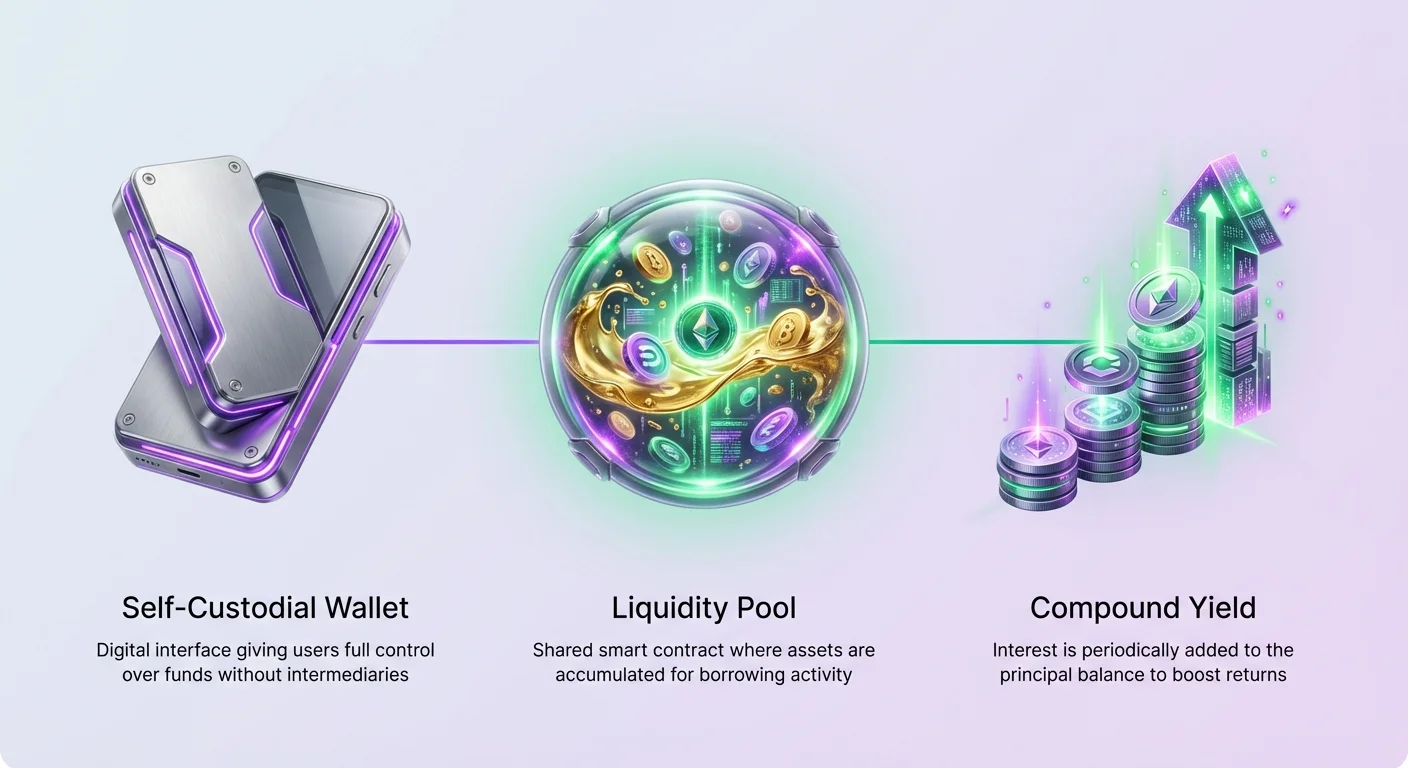
The Pillars of DeFi Lending
To participate in a lending protocol, a user must have a specific setup in place. The barrier to entry is relatively low compared to traditional banking, but it requires technical preparation. There are three primary requirements for anyone looking to lend their crypto assets. These are a digital wallet, the cryptocurrency itself, and a connection to a lending platform. Each of these plays a critical role in ensuring the security and functionality of the transaction.
The Importance of Self-Custody
The foundation of all decentralized activity is the digital wallet. These applications, often called web3 wallets, serve as the interface between the user and the blockchain. While custodial wallets exist—where a third party manages the keys—the ethos of decentralized finance favors self-custody. A self-custodial wallet ensures that the user retains full control over their funds at all times. No bank or exchange can freeze the assets or deny access.
Using a self-custodial solution is vital for security. In a custodial arrangement, the user is essentially asking permission to use their own money. In contrast, self-custody places the responsibility and authority directly in the hands of the owner. Leading wallets allow users to manage balances across multiple blockchains, such as Ethereum, Avalanche, and Polygon. This multichain capability is increasingly important as lending opportunities spread across different networks.
Native Tokens and Transaction Fees
Possessing the asset you wish to lend is only part of the equation. A common oversight for beginners is forgetting about transaction fees. Every action taken on a blockchain, whether it is depositing, withdrawing, or claiming interest, requires a fee. These fees pay the network validators who process the transactions. Crucially, these fees are paid in the blockchain's native currency.
For example, if a user wants to lend a stablecoin like USDC on the Ethereum network, they must also hold Ether (ETH) in their wallet to pay for the gas fees. If they are operating on the Avalanche network, they would need AVAX. Without a small balance of this native currency, the wallet cannot execute the smart contract functions required to deposit the assets into the lending pool.
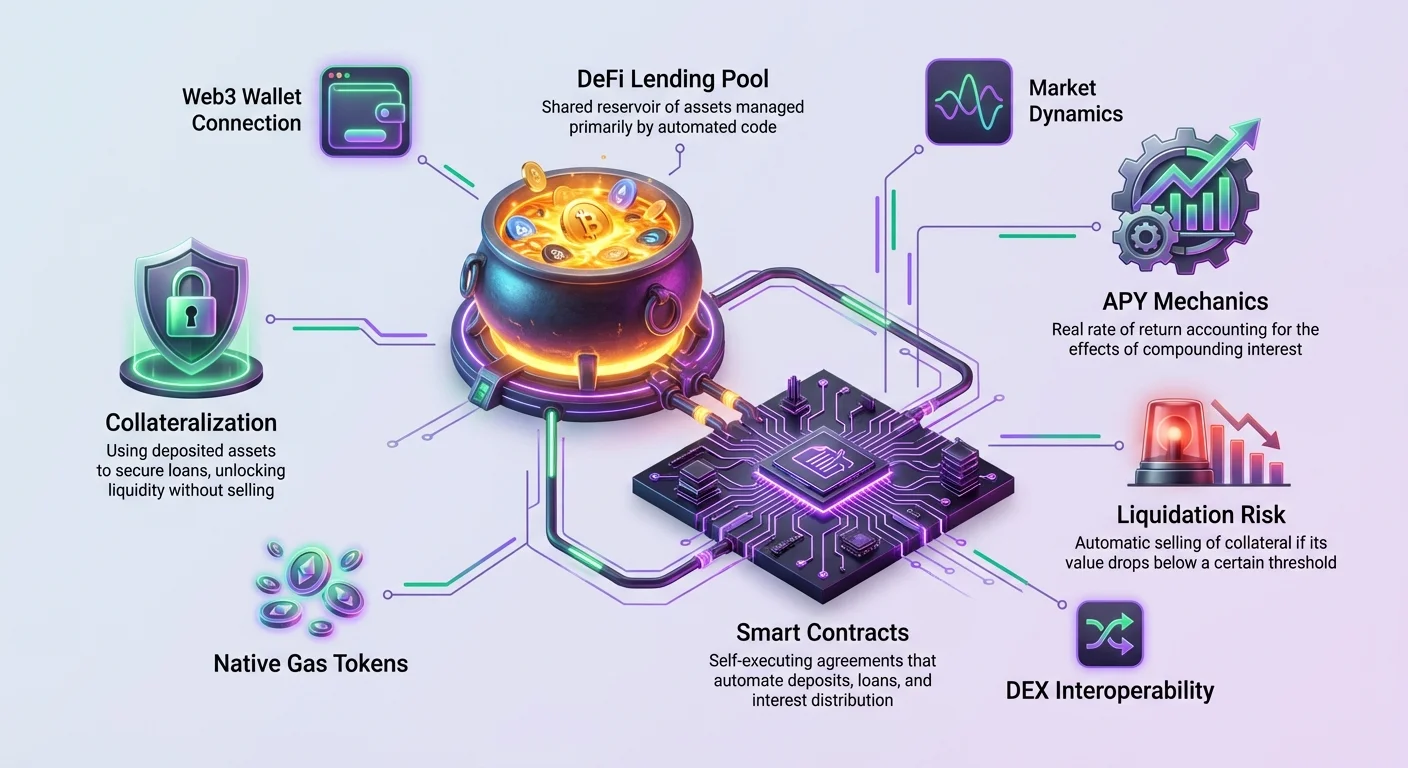
Understanding APY and Yield Mechanics
The primary motivation for lending in decentralized protocols is the Annual Percentage Yield (APY). This metric represents the real rate of return earned on a deposit over a year. Unlike simple interest, APY accounts for the effects of compound interest. This means the interest earned is periodically added to the principal balance, and future interest is calculated on this larger amount. Over time, compounding can significantly boost the total return on an investment.
Variable Rates and Market Dynamics
In decentralized finance, yields are rarely static. They fluctuate based on the laws of supply and demand within the specific liquidity pool. When a particular asset is in high demand among borrowers but has low supply from lenders, the protocol automatically raises the interest rate. This higher rate incentivizes more lenders to deposit their assets into the pool.
Conversely, if a pool is flooded with liquidity but has few borrowers, the interest rate will decrease. This dynamic adjustment ensures the protocol remains balanced. Lenders should monitor these rates, as a high APY today does not guarantee the same rate next week. The yield is a direct reflection of the market's appetite for that specific asset at that specific moment.
Comparing Yield Metrics
It is helpful to distinguish between different types of yield measurements often seen in crypto. While APY is the standard for lending, users might encounter other terms. Understanding the difference ensures accurate expectations regarding potential returns.
| Metric | Definition | Key Characteristic |
|---|---|---|
| APY | Annual Percentage Yield | Includes compound interest effects |
| APR | Annual Percentage Rate | Simple interest, no compounding |
| ROI | Return on Investment | Total profit relative to initial cost |
Lenders should always verify which metric a platform uses. A high APR might look attractive, but a slightly lower APY could actually result in higher earnings due to the frequency of compounding. In most decentralized lending protocols, interest accrues with every Ethereum block, offering a highly efficient compounding structure.
Navigating Lending Platforms
Selecting the right platform is as important as selecting the right asset. A reputable lending platform serves as the marketplace where lenders and borrowers meet. Leading decentralized applications (dApps) like Aave have established themselves by offering robust security and deep liquidity. These protocols often operate across multiple blockchains, providing users with options regarding fees and transaction speeds.
Connecting to these platforms is done via the web3 wallet. There are no lengthy sign-up forms or identity verification processes typical of traditional banks. The wallet simply connects to the dApp, and the user is granted immediate access to the markets. Once connected, the user can view a dashboard displaying available assets, current APY rates, and their personal balance.
The Deposit Process
The act of lending is technically a deposit into a smart contract. After choosing an asset and confirming the amount, the user signs a transaction with their wallet. This action transfers the crypto from the user's personal address to the protocol's pool. In return, the user often receives a representative token. This token acts as a receipt, proving their claim to the deposited funds plus any accrued interest.
Most platforms offer a user-friendly interface to track earnings. The interest usually accumulates in real-time. This provides immediate feedback on the performance of the lent assets. Users can watch their balance grow block by block, providing a level of transparency that is unmatched in the traditional financial sector.
Risks and Strategic Considerations
While lending offers attractive yields, it is not without risk. Decentralized finance shifts the responsibility of risk management from the institution to the individual. One of the primary considerations is the concept of Total Value Locked (TVL) and liquidity. When users deposit assets, they are contributing to the protocol's TVL. However, if they also choose to borrow against their deposit, they must be extremely cautious.
Collateral and Liquidation Risk
Many lending protocols allow users to use their deposited assets as collateral for loans. This effectively unlocks liquidity without selling the underlying asset. However, this introduces liquidation risk. If the value of the collateral drops significantly, or if the value of the borrowed asset rises, the protocol may sell the collateral to repay the loan.
This mechanism protects the solvency of the pool but can result in losses for the individual user. When withdrawing assets, users who have active loans must be careful. Withdrawing deposited funds reduces the collateral available to back the loan. If the withdrawal reduces the "health factor" of the account too much, it could trigger an immediate liquidation. Users must ensure they maintain a safety buffer when managing deposits that are actively securing a loan.
Smart Contract and Platform Risk
Another risk factor involves the technology itself. Lending protocols run on smart contracts—code that executes automatically on the blockchain. While reputable platforms undergo rigorous audits, no code is entirely immune to bugs or exploits. Users should prioritize platforms with a strong track record and high security standards.
Furthermore, market liquidity can impact the ability to withdraw. In extreme market conditions, if all lenders try to withdraw simultaneously and borrowers have not repaid their loans, the pool utilization could reach 100%. This would temporarily prevent withdrawals until more liquidity enters the pool or loans are repaid. While rare on major protocols, it is a structural reality of pool-based lending.
Withdrawal and Liquidity Management
One of the defining features of decentralized lending is flexibility. On most protocols, there are no lock-up periods. Lenders can withdraw their assets at any time. This liquidity is a major advantage over traditional certificates of deposit or fixed-term bonds. Users retain access to their capital and can react quickly to market changes.
To withdraw, a user simply navigates to the dashboard where their deposits are listed. The interface will provide an option to withdraw specific amounts or the entire balance. Just like the deposit process, this requires a blockchain transaction. Therefore, the user must have enough native currency in their wallet to pay the gas fee for the withdrawal.
Managing Active Loans During Withdrawal
If a user has utilized their deposit as collateral, the withdrawal process requires extra attention. The protocol will block any transaction that would leave an active loan under-collateralized. Users may need to repay a portion of their loan before they can withdraw their full deposit.
This interplay between lending and borrowing is powerful but complex. It allows for advanced strategies like leveraging, but it also requires constant monitoring. For users who are strictly lending to earn interest, the process is much simpler. They can deposit and withdraw freely without worrying about liquidation thresholds, provided the pool has sufficient liquidity.
The Role of Decentralized Exchanges (DEXs)
Lending protocols often exist in close proximity to Decentralized Exchanges (DEXs). While a lending protocol focuses on earning interest, a DEX specializes in peer-to-peer swapping of assets. Often, a user will need to use a DEX to acquire the specific asset they wish to lend. For instance, if a user has USDC but wants to lend DAI to capture a higher APY, they would first swap USDC for DAI on a DEX.
Both DEXs and lending platforms share the same philosophy: removing the intermediary. They do not require a trusted third party to facilitate transactions. This creates a composable ecosystem where money legos interact. A user can swap on a DEX, lend on a protocol, and even use the interest-bearing tokens elsewhere in the DeFi economy.
Liquidity in the Broader Context
The concept of liquidity is central to both exchanges and lending pools. In crypto, liquidity refers to how easily an asset can be converted into cash or another asset without affecting its price. Lending pools rely on financial liquidity to function. If a pool lacks liquidity, borrowers cannot take loans, and lenders cannot withdraw.
High liquidity is generally a sign of a healthy protocol. It implies that there are many participants and significant capital locked in the system. When choosing a pool, lenders should look for assets with deep liquidity. This minimizes the risk of being unable to exit the position during periods of high volatility.
Analyzing Market Trends and APY Fluctuations
Successful lending involves monitoring the broader market. The APY offered on a specific asset is often a reflection of market sentiment. In bullish markets, demand for stablecoins often rises as traders borrow them to buy volatile assets. This drives up the interest rate for stablecoin lenders. In bearish markets, the dynamic may shift.
Understanding these trends helps lenders choose the right yield opportunities. It also highlights the importance of diversification. Rather than putting all capital into a single high-yield but volatile asset, users might spread their deposits across stablecoins and blue-chip cryptocurrencies like Bitcoin or Ether. This balances the potential returns against the exposure to price volatility.
The Impact of Volatility
Volatility acts as a double-edged sword in DeFi. While it can create opportunities for high yields, it also affects the value of the deposit itself. If a user lends a volatile asset, they earn interest in that asset. If the asset's price drops by 50%, the interest earned may not cover the loss in principal value.
Stablecoins offer a solution to this specific risk. By lending assets pegged to fiat currencies, users can earn yields without being exposed to the price swings of the crypto market. This strategy is popular among risk-averse lenders who prioritize preserving the dollar value of their capital while outperforming traditional savings rates.
Advanced Concepts: Dollar-Cost Averaging
While lending is a passive strategy, entering the market can be done actively. Dollar-cost averaging (DCA) is a strategy where an investor divides the total amount to be invested across periodic purchases. This reduces the impact of volatility on the overall purchase.
In the context of lending, a user might DCA into a position. Instead of depositing a large lump sum at once, they deposit smaller amounts weekly or monthly. This builds the lending position over time. As the balance grows, the compound interest effect accelerates. This disciplined approach pairs well with the consistent nature of yield generation in lending protocols.
Regulatory and Tax Implications
Participating in DeFi lending may have tax consequences depending on the user's jurisdiction. In many regions, the interest earned on crypto deposits is treated as income. This is similar to interest earned in a bank account. Users should be aware of their local regulations and keep accurate records of their deposits and earnings.
Since DeFi protocols do not issue monthly statements like banks, the burden of record-keeping falls on the user. Many wallets and portfolio trackers help automate this process by reading the blockchain history. Being proactive about compliance ensures that the benefits of DeFi yields are not negated by unexpected tax liabilities later on.
Conclusion
Decentralized lending represents a fundamental shift in how individuals manage and grow their wealth. By removing intermediaries, protocols like Aave allow users to capture the value that was previously retained by centralized institutions. The combination of self-custodial wallets, transparent smart contracts, and dynamic yield generation creates a powerful financial toolset. However, this autonomy comes with increased responsibility. Users must navigate the technical requirements of wallets and gas fees while actively managing the risks associated with smart contracts and market volatility.
Ultimately, the choice to lend in DeFi requires a balance of research and strategy. Understanding the difference between APY and APR, monitoring pool liquidity, and maintaining a diversified portfolio are key steps toward sustainable returns. As the ecosystem matures, these protocols continue to offer compelling alternatives to traditional finance. For those willing to learn the mechanics, DeFi lending offers a transparent and efficient way to make digital assets productive.
The most important rule of crypto lending is to never invest more than you can afford to lose.